
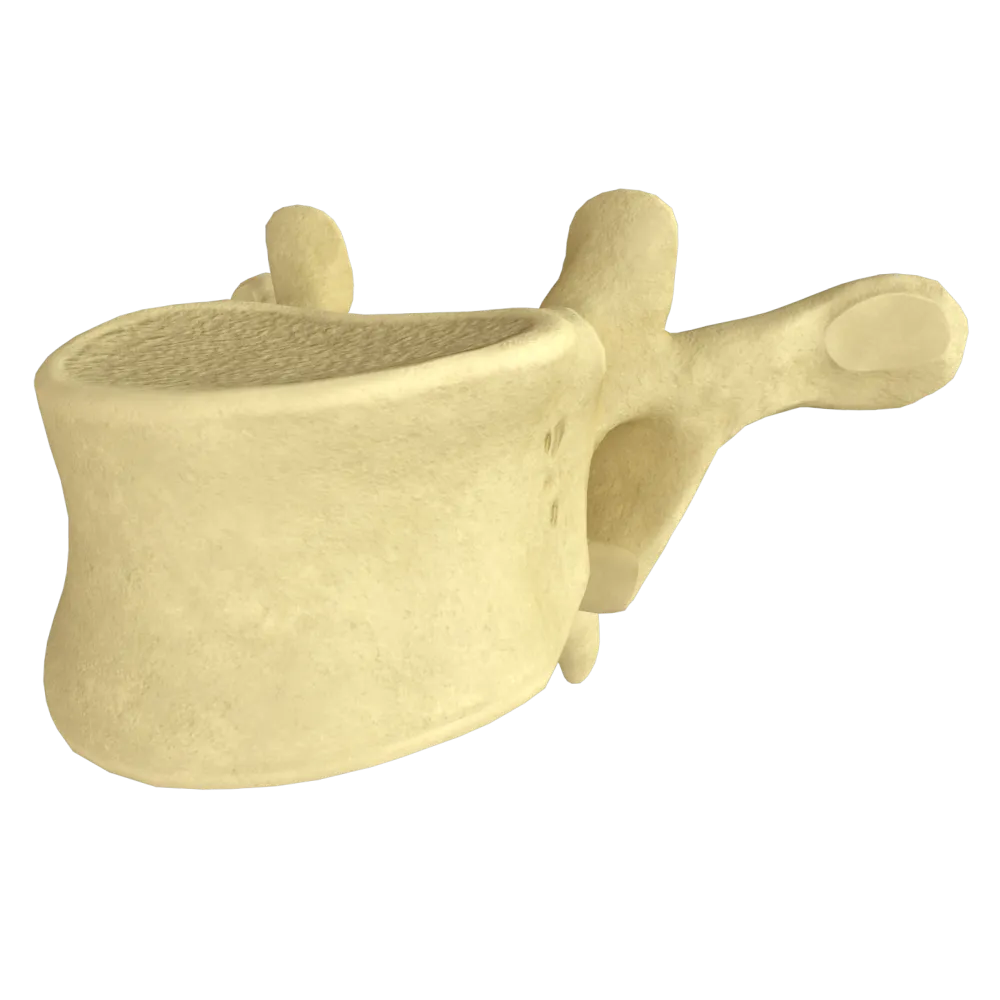
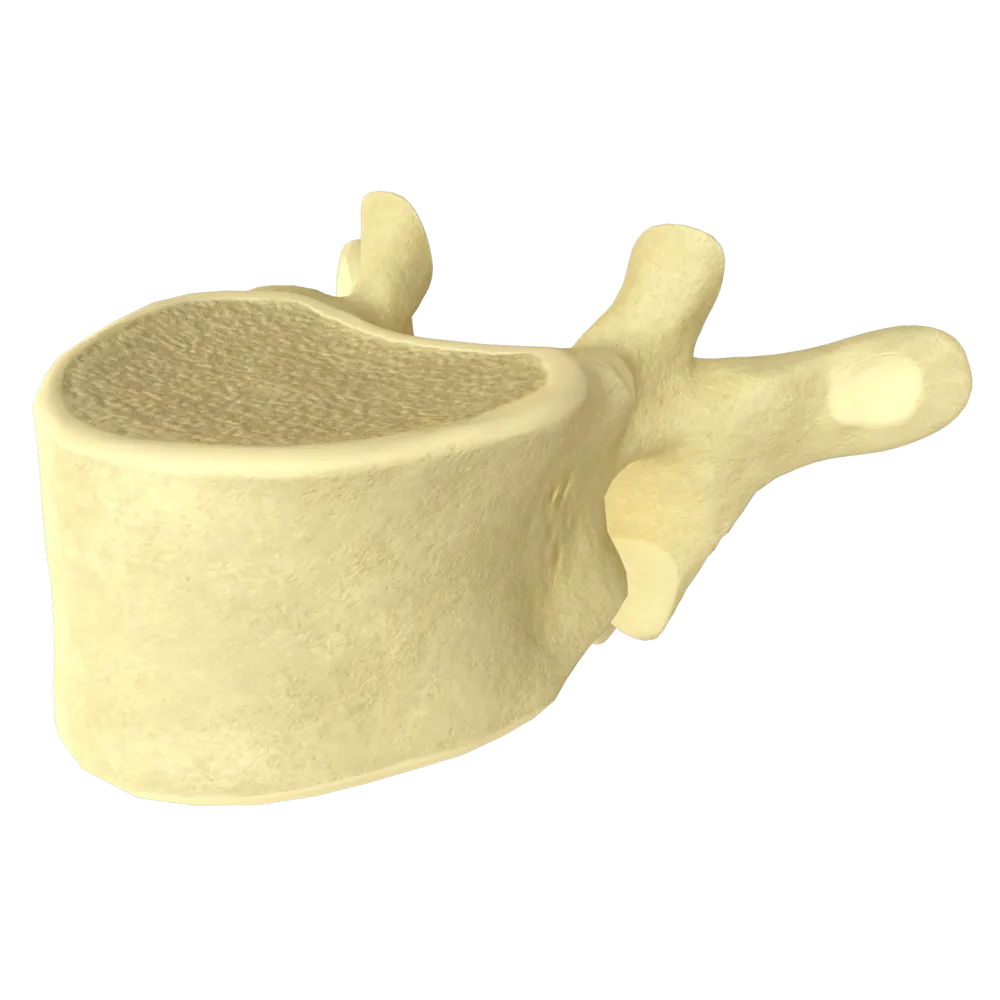
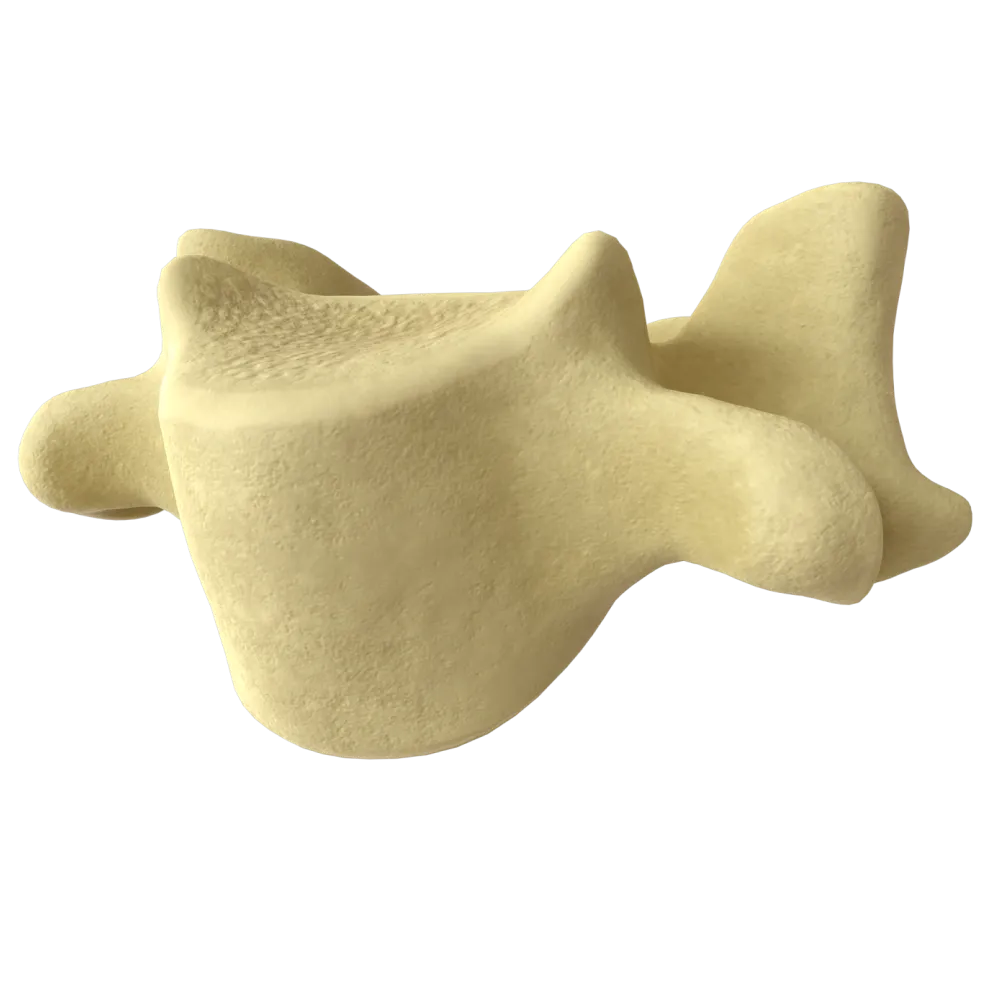
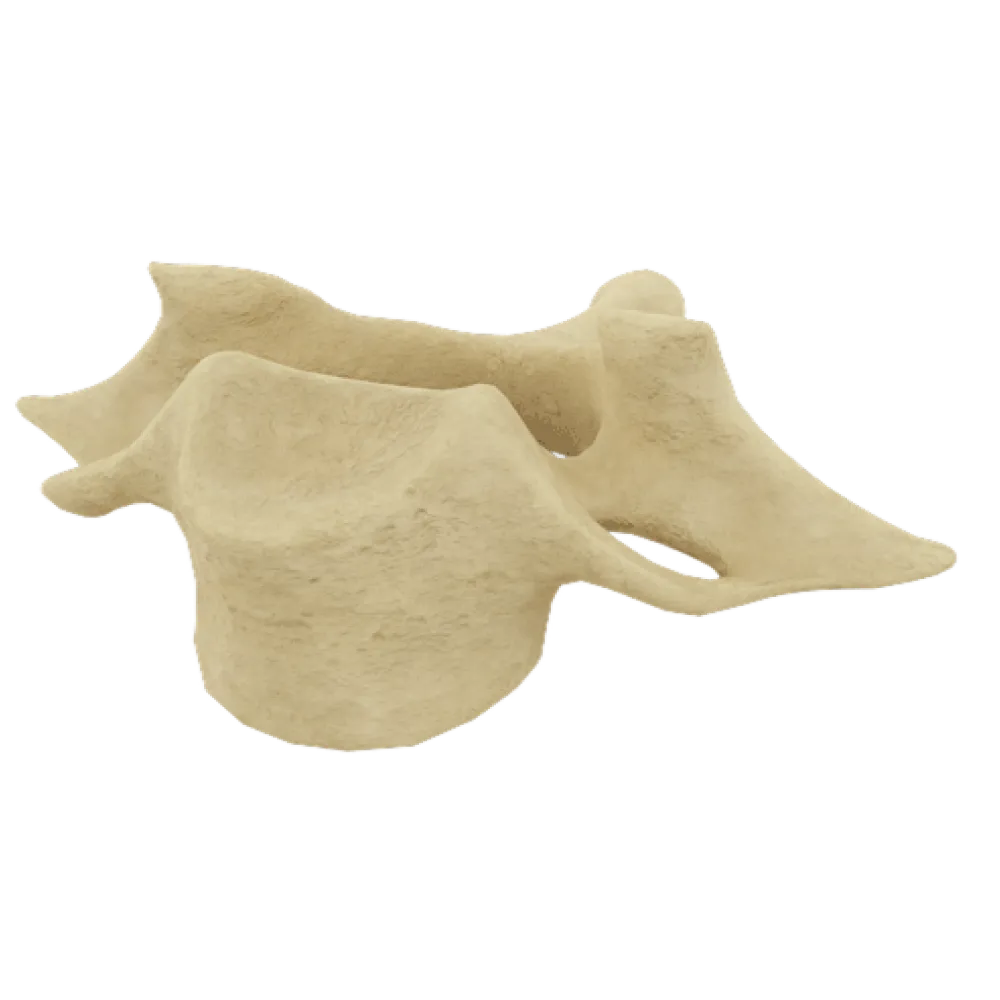
Vertebra prominens anatomy quiz
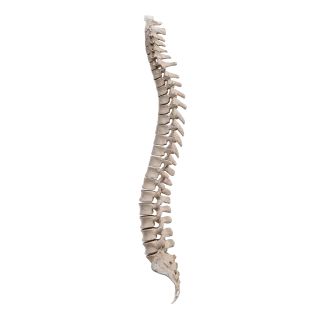
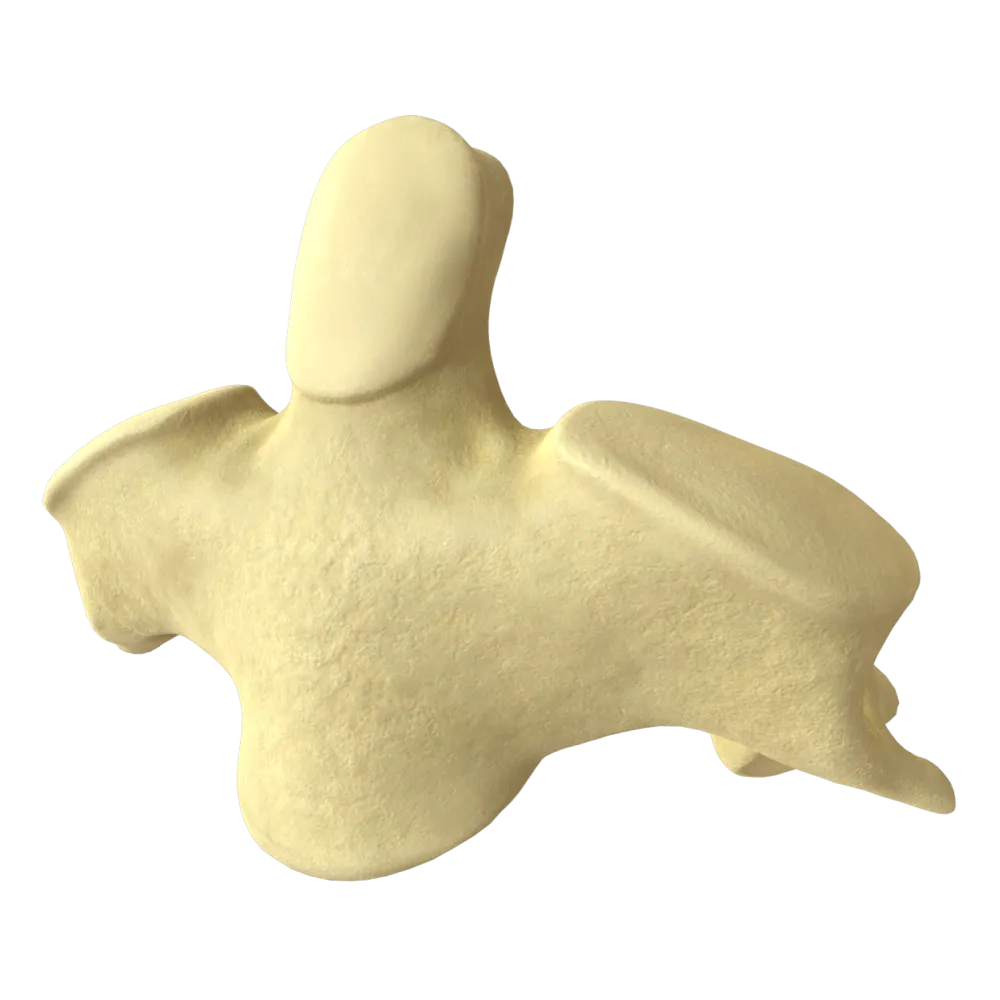
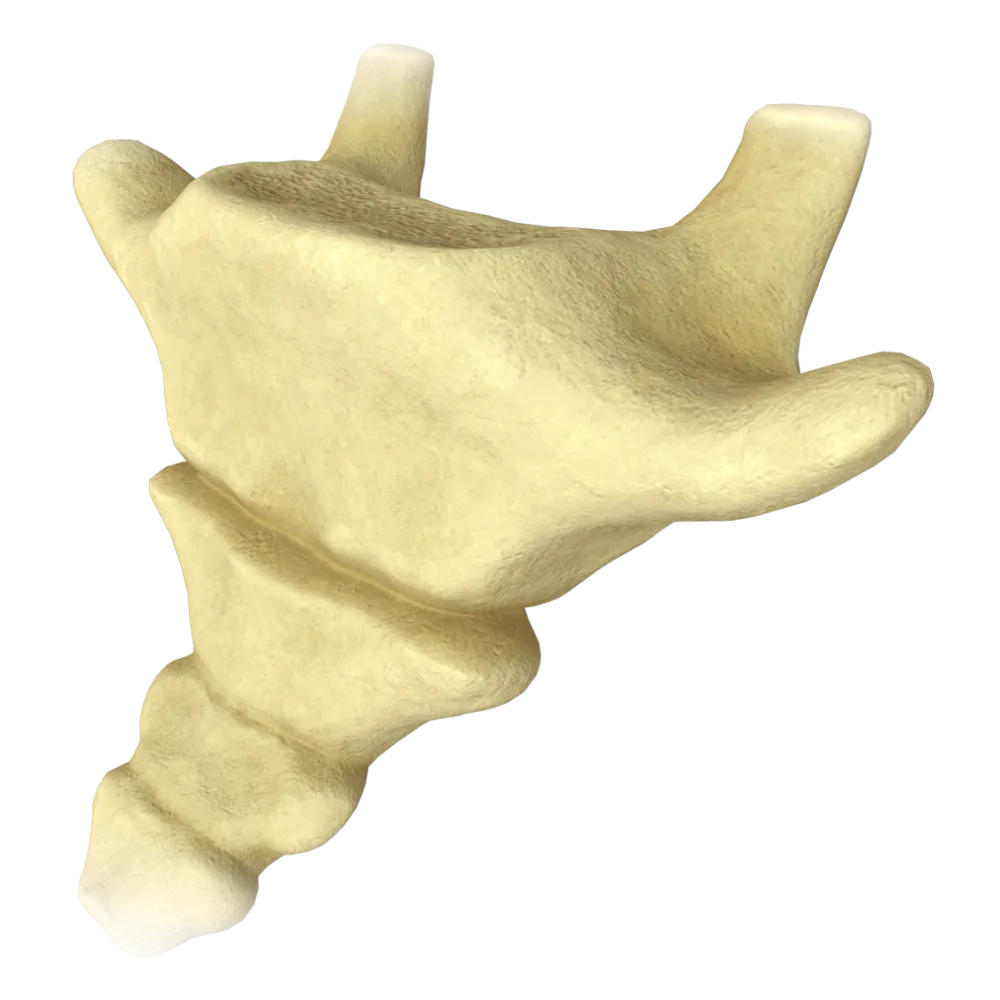
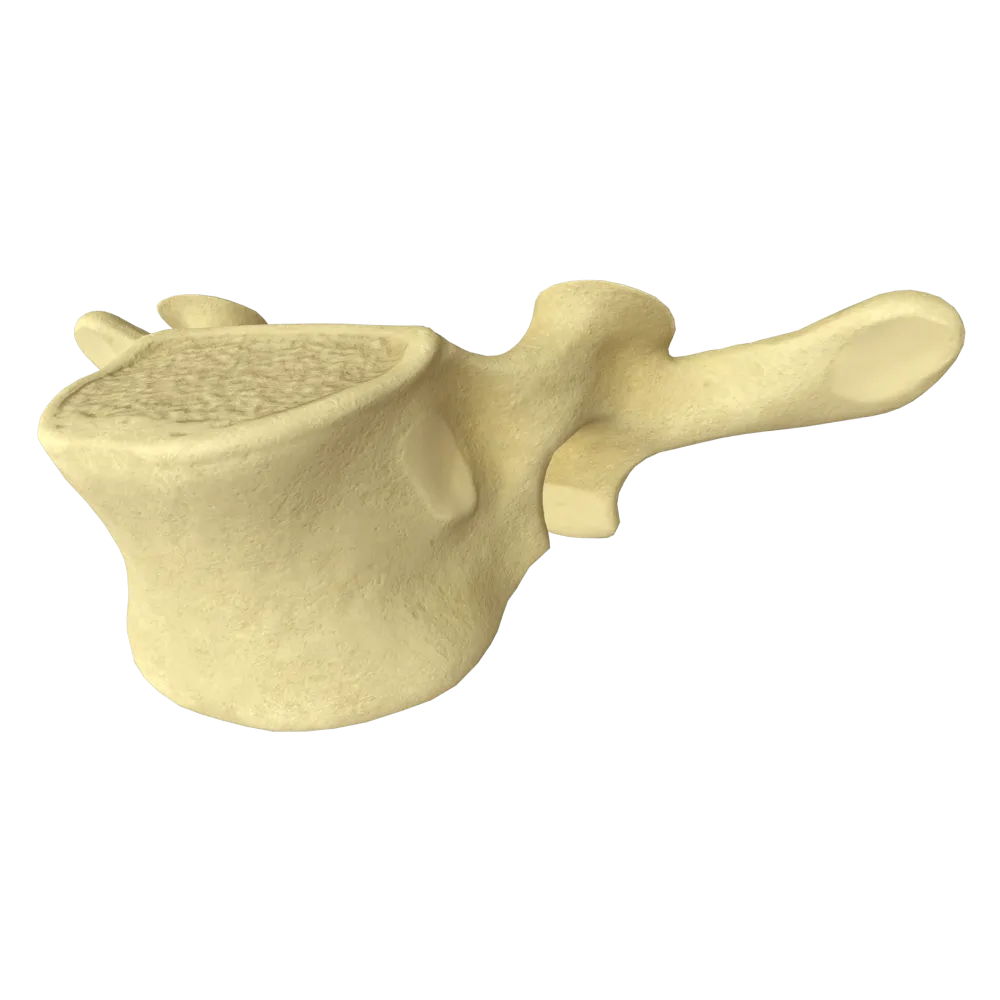
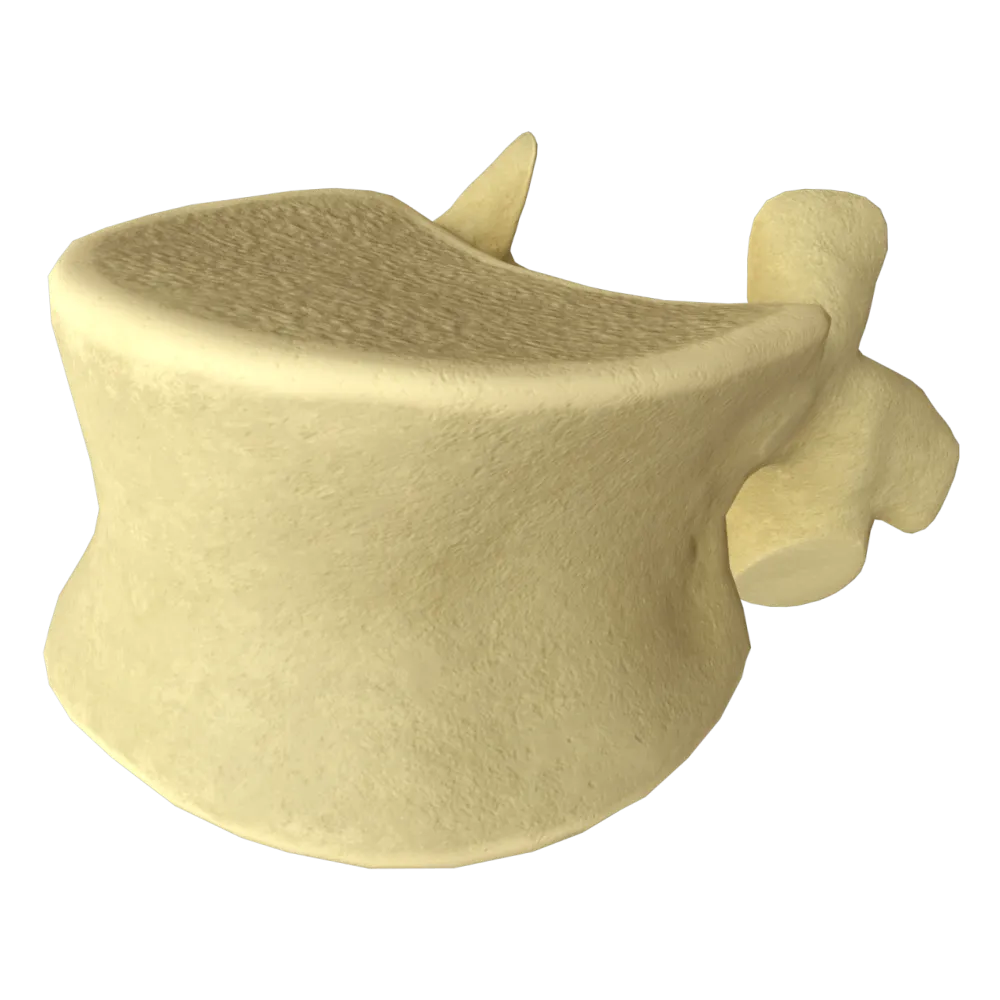
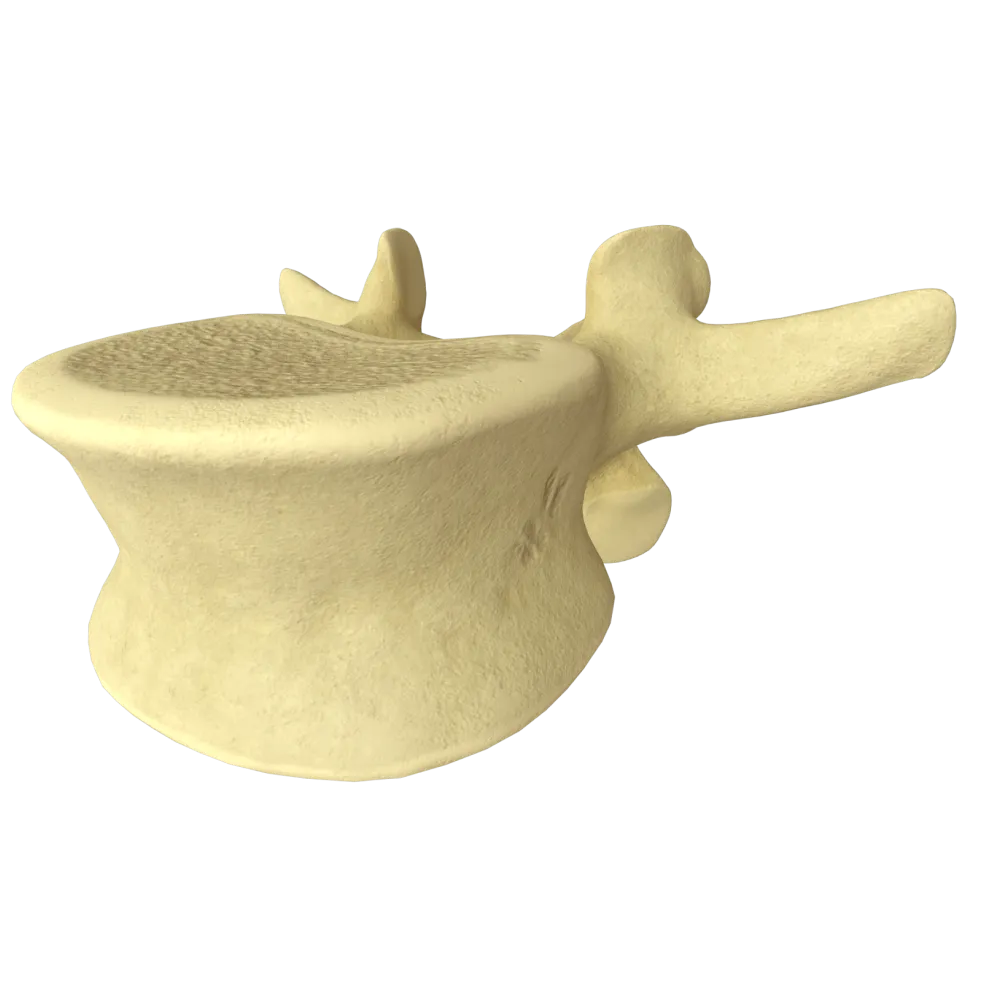
The quiz covers the anatomy of the vertebra prominens (CVII): structure, processes, joints, ligaments, vessels, and nerves.
1/20
bold
text
1. Which vertebra is called the “prominent vertebra” (vertebra prominens)?
-
CV
The seventh cervical vertebra (CVII) is called the prominent vertebra (vertebra prominens) because its spinous process is the longest and most readily palpable among the cervical vertebrae.
-
CVI
The seventh cervical vertebra (CVII) is called the prominent vertebra (vertebra prominens) because its spinous process is the longest and most readily palpable among the cervical vertebrae.
-
CVII
The seventh cervical vertebra (CVII) is called the prominent vertebra (vertebra prominens) because its spinous process is the longest and most readily palpable among the cervical vertebrae.
-
TI
The seventh cervical vertebra (CVII) is called the prominent vertebra (vertebra prominens) because its spinous process is the longest and most readily palpable among the cervical vertebrae.
-
I find it difficult to answer
The seventh cervical vertebra (CVII) is called the prominent vertebra (vertebra prominens) because its spinous process is the longest and most readily palpable among the cervical vertebrae.
2. What characteristic feature of the spinous process of the vertebra prominens distinguishes it from the other cervical vertebrae?
-
Bifid at the end and oriented horizontally
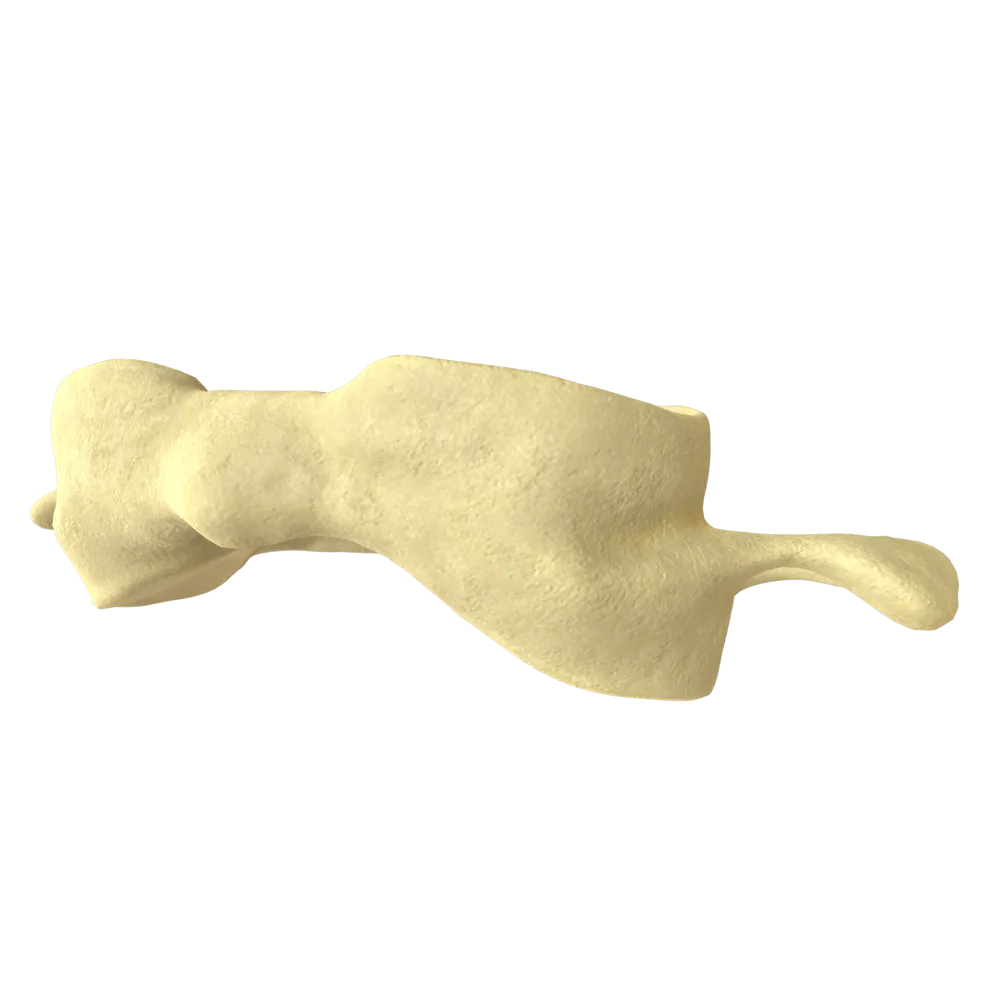
Unlike those of CII–CVI, the spinous process of CVII is generally non-bifid (or only slightly bifid), considerably longer than the other cervical spinous processes, and oriented almost horizontally, resulting in its marked prominence beneath the skin.
-
Non-bifid, long, and oriented almost horizontally
Unlike those of CII–CVI, the spinous process of CVII is generally non-bifid (or only slightly bifid), considerably longer than the other cervical spinous processes, and oriented almost horizontally, resulting in its marked prominence beneath the skin.
-
Bifid and directed caudally at a steep angle
Unlike those of CII–CVI, the spinous process of CVII is generally non-bifid (or only slightly bifid), considerably longer than the other cervical spinous processes, and oriented almost horizontally, resulting in its marked prominence beneath the skin.
-
Rudimentary and does not project beyond the contour of the neck
Unlike those of CII–CVI, the spinous process of CVII is generally non-bifid (or only slightly bifid), considerably longer than the other cervical spinous processes, and oriented almost horizontally, resulting in its marked prominence beneath the skin.
-
I find it difficult to answer
Unlike those of CII–CVI, the spinous process of CVII is generally non-bifid (or only slightly bifid), considerably longer than the other cervical spinous processes, and oriented almost horizontally, resulting in its marked prominence beneath the skin.
3. What is the clinical significance of the “prominent” vertebra (vertebra prominens, CVII)?
-
Enables rotation of the head
The spinous process of C7 is the most prominent and is readily palpable beneath the skin; therefore, it serves as a key bony landmark for counting vertebrae.
-
Serves as a landmark for counting vertebrae during medical procedures
The spinous process of C7 is the most prominent and is readily palpable beneath the skin; therefore, it serves as a key bony landmark for counting vertebrae.
-
Protects the vertebral artery
The spinous process of C7 is the most prominent and is readily palpable beneath the skin; therefore, it serves as a key bony landmark for counting vertebrae.
-
Serves as an attachment site for the ribs
The spinous process of C7 is the most prominent and is readily palpable beneath the skin; therefore, it serves as a key bony landmark for counting vertebrae.
-
I find it difficult to answer
The spinous process of C7 is the most prominent and is readily palpable beneath the skin; therefore, it serves as a key bony landmark for counting vertebrae.
4. The following normally passes through the foramen transversarium of CVII:
-
Vertebral artery and vein
Normally, the vertebral vein (v. vertebralis) or an accessory vertebral vein, rather than the vertebral artery, passes through the foramen transversarium of CVII, whereas the vertebral artery enters the transverse foraminal canal at the level of CVI.
-
Only the vertebral vein (or accessory vertebral vein)
Normally, the vertebral vein (v. vertebralis) or an accessory vertebral vein, rather than the vertebral artery, passes through the foramen transversarium of CVII, whereas the vertebral artery enters the transverse foraminal canal at the level of CVI.
-
The vertebral artery without accompanying veins
Normally, the vertebral vein (v. vertebralis) or an accessory vertebral vein, rather than the vertebral artery, passes through the foramen transversarium of CVII, whereas the vertebral artery enters the transverse foraminal canal at the level of CVI.
-
Deep cervical vein
Normally, the vertebral vein (v. vertebralis) or an accessory vertebral vein, rather than the vertebral artery, passes through the foramen transversarium of CVII, whereas the vertebral artery enters the transverse foraminal canal at the level of CVI.
-
I find it difficult to answer
Normally, the vertebral vein (v. vertebralis) or an accessory vertebral vein, rather than the vertebral artery, passes through the foramen transversarium of CVII, whereas the vertebral artery enters the transverse foraminal canal at the level of CVI.
5. What are the joints formed between the articular processes of adjacent cervical vertebrae, including at the CVII–TI level, called?
-
Uncovertebral joints (joints of Luschka)
The joints between the superior and inferior articular processes of adjacent vertebrae are called zygapophyseal joints (articulationes zygapophysiales). At the CVII–TI level, they connect the cervical and thoracic regions of the vertebral column.
-
Zygapophyseal joints = Facet joints
The joints between the superior and inferior articular processes of adjacent vertebrae are called zygapophyseal joints (articulationes zygapophysiales). At the CVII–TI level, they connect the cervical and thoracic regions of the vertebral column.
-
Joints of heads of ribs
The joints between the superior and inferior articular processes of adjacent vertebrae are called zygapophyseal joints (articulationes zygapophysiales). At the CVII–TI level, they connect the cervical and thoracic regions of the vertebral column.
-
Atlantoaxial joints
The joints between the superior and inferior articular processes of adjacent vertebrae are called zygapophyseal joints (articulationes zygapophysiales). At the CVII–TI level, they connect the cervical and thoracic regions of the vertebral column.
-
I find it difficult to answer
The joints between the superior and inferior articular processes of adjacent vertebrae are called zygapophyseal joints (articulationes zygapophysiales). At the CVII–TI level, they connect the cervical and thoracic regions of the vertebral column.
6. Which spinal nerve exits through the intervertebral foramen between CVII and TI?
-
Sixth cervical spinal nerve (C6)
According to the numbering rule for cervical spinal nerves, nerve Cn exits above vertebra Cn. The C8 nerve exits between CVII and TI because there are seven cervical vertebrae but eight cervical nerves.
-
Seventh cervical spinal nerve (C7)
According to the numbering rule for cervical spinal nerves, nerve Cn exits above vertebra Cn. The C8 nerve exits between CVII and TI because there are seven cervical vertebrae but eight cervical nerves.
-
Eighth cervical spinal nerve (C8)
According to the numbering rule for cervical spinal nerves, nerve Cn exits above vertebra Cn. The C8 nerve exits between CVII and TI because there are seven cervical vertebrae but eight cervical nerves.
-
First thoracic spinal nerve (T1)
According to the numbering rule for cervical spinal nerves, nerve Cn exits above vertebra Cn. The C8 nerve exits between CVII and TI because there are seven cervical vertebrae but eight cervical nerves.
-
I find it difficult to answer
According to the numbering rule for cervical spinal nerves, nerve Cn exits above vertebra Cn. The C8 nerve exits between CVII and TI because there are seven cervical vertebrae but eight cervical nerves.
7. The shape of the body of the vertebra prominens most closely resembles the vertebral bodies of which region?
-
It has a typical cylindrical shape, like the thoracic vertebrae
The body of CVII has transitional characteristics: the uncinate processes (processus uncinati) are considerably less prominent than those of typical cervical vertebrae CIV–CVI, reflecting the transition to a thoracic structural pattern.
-
It is elongated transversely, like typical cervical vertebrae
The body of CVII has transitional characteristics: the uncinate processes (processus uncinati) are considerably less prominent than those of typical cervical vertebrae CIV–CVI, reflecting the transition to a thoracic structural pattern.
-
It has a shape transitional between the cervical and thoracic types, with less prominent uncinate processes (processus uncinatus)
The body of CVII has transitional characteristics: the uncinate processes (processus uncinati) are considerably less prominent than those of typical cervical vertebrae CIV–CVI, reflecting the transition to a thoracic structural pattern.
-
It is identical in shape to the atlas
The body of CVII has transitional characteristics: the uncinate processes (processus uncinati) are considerably less prominent than those of typical cervical vertebrae CIV–CVI, reflecting the transition to a thoracic structural pattern.
-
I find it difficult to answer
The body of CVII has transitional characteristics: the uncinate processes (processus uncinati) are considerably less prominent than those of typical cervical vertebrae CIV–CVI, reflecting the transition to a thoracic structural pattern.
8. What are the articulations between the uncinate processes of the bodies of the cervical vertebrae called?
-
Articulationes zygapophysiales
The uncovertebral joints (articulationes uncovertabrales, joints of Luschka) are formed by the uncinate processes (processus uncinatus) of the bodies of the lower cervical vertebrae and the beveled margins of the bodies of the overlying vertebrae. At the CVII level, they are considerably less prominent.
-
Articulationes uncovertabrales (joints of Luschka)
The uncovertebral joints (articulationes uncovertabrales, joints of Luschka) are formed by the uncinate processes (processus uncinatus) of the bodies of the lower cervical vertebrae and the beveled margins of the bodies of the overlying vertebrae. At the CVII level, they are considerably less prominent.
-
Articulationes costovertabrales
The uncovertebral joints (articulationes uncovertabrales, joints of Luschka) are formed by the uncinate processes (processus uncinatus) of the bodies of the lower cervical vertebrae and the beveled margins of the bodies of the overlying vertebrae. At the CVII level, they are considerably less prominent.
-
Symphyses intervertebrales
The uncovertebral joints (articulationes uncovertabrales, joints of Luschka) are formed by the uncinate processes (processus uncinatus) of the bodies of the lower cervical vertebrae and the beveled margins of the bodies of the overlying vertebrae. At the CVII level, they are considerably less prominent.
-
I find it difficult to answer
The uncovertebral joints (articulationes uncovertabrales, joints of Luschka) are formed by the uncinate processes (processus uncinatus) of the bodies of the lower cervical vertebrae and the beveled margins of the bodies of the overlying vertebrae. At the CVII level, they are considerably less prominent.
9. What is the cervical ligament that serves as a continuation of the supraspinous ligament above the CVII level called?
-
Ligamentum nuchae
Ligamentum nuchae (nuchal ligament) is a robust sagittal fibrous sheet that attaches to the spinous processes of the cervical vertebrae from CVII to the external occipital crest.
-
Ligamentum intertransversarium
Ligamentum nuchae (nuchal ligament) is a robust sagittal fibrous sheet that attaches to the spinous processes of the cervical vertebrae from CVII to the external occipital crest.
-
Ligamentum interspinale
Ligamentum nuchae (nuchal ligament) is a robust sagittal fibrous sheet that attaches to the spinous processes of the cervical vertebrae from CVII to the external occipital crest.
-
Ligamentum flavum
Ligamentum nuchae (nuchal ligament) is a robust sagittal fibrous sheet that attaches to the spinous processes of the cervical vertebrae from CVII to the external occipital crest.
-
I find it difficult to answer
Ligamentum nuchae (nuchal ligament) is a robust sagittal fibrous sheet that attaches to the spinous processes of the cervical vertebrae from CVII to the external occipital crest.
10. How many processes in total does the seventh cervical vertebra (CVII) comprise?:
-
3
C7 (vertebra prominens) comprises 7 processes arising from the vertebral arch: 1 spinous process (processus spinosus), 2 transverse processes (processus transversi), 2 superior articular processes (processus articulares superiores), and 2 inferior articular processes (processus articulares inferiores).
-
7
C7 (vertebra prominens) comprises 7 processes arising from the vertebral arch: 1 spinous process (processus spinosus), 2 transverse processes (processus transversi), 2 superior articular processes (processus articulares superiores), and 2 inferior articular processes (processus articulares inferiores).
-
5
C7 (vertebra prominens) comprises 7 processes arising from the vertebral arch: 1 spinous process (processus spinosus), 2 transverse processes (processus transversi), 2 superior articular processes (processus articulares superiores), and 2 inferior articular processes (processus articulares inferiores).
-
9
C7 (vertebra prominens) comprises 7 processes arising from the vertebral arch: 1 spinous process (processus spinosus), 2 transverse processes (processus transversi), 2 superior articular processes (processus articulares superiores), and 2 inferior articular processes (processus articulares inferiores).
-
I find it difficult to answer
C7 (vertebra prominens) comprises 7 processes arising from the vertebral arch: 1 spinous process (processus spinosus), 2 transverse processes (processus transversi), 2 superior articular processes (processus articulares superiores), and 2 inferior articular processes (processus articulares inferiores).
11. What feature characterizes the vertebral foramen of the vertebra prominens (CVII) compared with those of typical cervical vertebrae?
-
It has a wider, triangular vertebral foramen
The vertebral foramen of CVII is transitional in shape and size: it is narrower and more rounded than the triangular foramina of typical cervical vertebrae, approaching the rounded shape of those of the thoracic vertebrae.
-
It has a narrower vertebral foramen whose shape approaches the rounded thoracic type
The vertebral foramen of CVII is transitional in shape and size: it is narrower and more rounded than the triangular foramina of typical cervical vertebrae, approaching the rounded shape of those of the thoracic vertebrae.
-
It is identical to CVI in all respects
The vertebral foramen of CVII is transitional in shape and size: it is narrower and more rounded than the triangular foramina of typical cervical vertebrae, approaching the rounded shape of those of the thoracic vertebrae.
-
It is absent
The vertebral foramen of CVII is transitional in shape and size: it is narrower and more rounded than the triangular foramina of typical cervical vertebrae, approaching the rounded shape of those of the thoracic vertebrae.
-
I find it difficult to answer
The vertebral foramen of CVII is transitional in shape and size: it is narrower and more rounded than the triangular foramina of typical cervical vertebrae, approaching the rounded shape of those of the thoracic vertebrae.
12. Which vertebral notch of the seventh cervical vertebra (CVII) is more pronounced (deeper)?
-
Superior vertebral notch (incisura vertebralis superior)
In the seventh cervical vertebra, as in most other vertebrae, the inferior vertebral notch (incisura vertebralis inferior) is considerably more pronounced and deeper, whereas the superior vertebral notch (incisura vertebralis superior) is shallow.
-
Both notches are equal in depth
In the seventh cervical vertebra, as in most other vertebrae, the inferior vertebral notch (incisura vertebralis inferior) is considerably more pronounced and deeper, whereas the superior vertebral notch (incisura vertebralis superior) is shallow.
-
Inferior vertebral notch (incisura vertebralis inferior)
In the seventh cervical vertebra, as in most other vertebrae, the inferior vertebral notch (incisura vertebralis inferior) is considerably more pronounced and deeper, whereas the superior vertebral notch (incisura vertebralis superior) is shallow.
-
Vertebral notches are absent in the C7 vertebra
In the seventh cervical vertebra, as in most other vertebrae, the inferior vertebral notch (incisura vertebralis inferior) is considerably more pronounced and deeper, whereas the superior vertebral notch (incisura vertebralis superior) is shallow.
-
I find it difficult to answer
In the seventh cervical vertebra, as in most other vertebrae, the inferior vertebral notch (incisura vertebralis inferior) is considerably more pronounced and deeper, whereas the superior vertebral notch (incisura vertebralis superior) is shallow.
13. Does the seventh cervical vertebra (CVII) have a groove for the spinal nerve (sulcus nervi spinalis), which is characteristic of typical cervical vertebrae?
-
It is present only in children; the groove disappears with age
Despite several distinctive features (a long, non-bifid spinous process and a narrow transverse foramen), the seventh cervical vertebra (C7) belongs to the cervical vertebrae and retains their general structural features. On the superior surface of its transverse process is the groove for the spinal nerve (sulcus nervi spinalis), which passes between the anterior and posterior tubercles and forms a bed for the corresponding spinal nerve.
-
No, it does not
Despite several distinctive features (a long, non-bifid spinous process and a narrow transverse foramen), the seventh cervical vertebra (C7) belongs to the cervical vertebrae and retains their general structural features. On the superior surface of its transverse process is the groove for the spinal nerve (sulcus nervi spinalis), which passes between the anterior and posterior tubercles and forms a bed for the corresponding spinal nerve.
-
Yes, it does
Despite several distinctive features (a long, non-bifid spinous process and a narrow transverse foramen), the seventh cervical vertebra (C7) belongs to the cervical vertebrae and retains their general structural features. On the superior surface of its transverse process is the groove for the spinal nerve (sulcus nervi spinalis), which passes between the anterior and posterior tubercles and forms a bed for the corresponding spinal nerve.
-
It is present only when a cervical rib is present
Despite several distinctive features (a long, non-bifid spinous process and a narrow transverse foramen), the seventh cervical vertebra (C7) belongs to the cervical vertebrae and retains their general structural features. On the superior surface of its transverse process is the groove for the spinal nerve (sulcus nervi spinalis), which passes between the anterior and posterior tubercles and forms a bed for the corresponding spinal nerve.
-
I find it difficult to answer
Despite several distinctive features (a long, non-bifid spinous process and a narrow transverse foramen), the seventh cervical vertebra (C7) belongs to the cervical vertebrae and retains their general structural features. On the superior surface of its transverse process is the groove for the spinal nerve (sulcus nervi spinalis), which passes between the anterior and posterior tubercles and forms a bed for the corresponding spinal nerve.
14. Does the seventh cervical vertebra (CVII) have anterior and posterior tubercles on the transverse process?
-
Yes, it has both tubercles
Like those of typical cervical vertebrae (C3–C6), the transverse process of the seventh cervical vertebra (C7) has anterior (tuberculum anterius) and posterior (tuberculum posterius) tubercles.
-
No, the tubercles are completely absent in CVII
Like those of typical cervical vertebrae (C3–C6), the transverse process of the seventh cervical vertebra (C7) has anterior (tuberculum anterius) and posterior (tuberculum posterius) tubercles.
-
It has only an anterior tubercle; the posterior tubercle is absent
Like those of typical cervical vertebrae (C3–C6), the transverse process of the seventh cervical vertebra (C7) has anterior (tuberculum anterius) and posterior (tuberculum posterius) tubercles.
-
It has only a posterior tubercle; the anterior tubercle is absent
Like those of typical cervical vertebrae (C3–C6), the transverse process of the seventh cervical vertebra (C7) has anterior (tuberculum anterius) and posterior (tuberculum posterius) tubercles.
-
I find it difficult to answer
Like those of typical cervical vertebrae (C3–C6), the transverse process of the seventh cervical vertebra (C7) has anterior (tuberculum anterius) and posterior (tuberculum posterius) tubercles.
15. Which part of the transverse process of CVII is generally better developed—the anterior or posterior tubercle?
-
The anterior tubercle (tuberculum anterius) is considerably better developed
At the CVII level, the anterior tubercle of the transverse process is generally rudimentary or absent, whereas the posterior tubercle is well developed. This is associated with reduction of the costal component at the CVII level.
-
Both tubercles are equally developed
At the CVII level, the anterior tubercle of the transverse process is generally rudimentary or absent, whereas the posterior tubercle is well developed. This is associated with reduction of the costal component at the CVII level.
-
The posterior tubercle (tuberculum posterius) is considerably better developed; the anterior tubercle is often rudimentary
At the CVII level, the anterior tubercle of the transverse process is generally rudimentary or absent, whereas the posterior tubercle is well developed. This is associated with reduction of the costal component at the CVII level.
-
The transverse process of CVII lacks tubercles
At the CVII level, the anterior tubercle of the transverse process is generally rudimentary or absent, whereas the posterior tubercle is well developed. This is associated with reduction of the costal component at the CVII level.
-
I find it difficult to answer
At the CVII level, the anterior tubercle of the transverse process is generally rudimentary or absent, whereas the posterior tubercle is well developed. This is associated with reduction of the costal component at the CVII level.
16. How many vertebrae comprise the cervical region of the human vertebral column?
-
5
The cervical region of the human vertebral column consists of 7 cervical vertebrae (vertebrae cervicales).
-
7
The cervical region of the human vertebral column consists of 7 cervical vertebrae (vertebrae cervicales).
-
6
The cervical region of the human vertebral column consists of 7 cervical vertebrae (vertebrae cervicales).
-
12
The cervical region of the human vertebral column consists of 7 cervical vertebrae (vertebrae cervicales).
-
I find it difficult to answer
The cervical region of the human vertebral column consists of 7 cervical vertebrae (vertebrae cervicales).
17. Can the transverse foramina be completely absent in the “prominent” vertebra (CVII)?
-
No, they are invariably present without exception
The transverse foramina (foramina transversaria) of the “prominent” vertebra (C7) are normally considerably smaller than those of the overlying cervical vertebrae because the vertebral arteries usually do not pass through them (they enter the transverse foramina above, at the C6 level). Because of developmental anomalies or abnormalities of ossification, these foramina in C7 may be extremely small, asymmetric, incomplete, or completely absent on one or both sides, which is a recognized anatomical variant.
-
Yes, they may be absent
The transverse foramina (foramina transversaria) of the “prominent” vertebra (C7) are normally considerably smaller than those of the overlying cervical vertebrae because the vertebral arteries usually do not pass through them (they enter the transverse foramina above, at the C6 level). Because of developmental anomalies or abnormalities of ossification, these foramina in C7 may be extremely small, asymmetric, incomplete, or completely absent on one or both sides, which is a recognized anatomical variant.
-
No, they are absent only in the atlas
The transverse foramina (foramina transversaria) of the “prominent” vertebra (C7) are normally considerably smaller than those of the overlying cervical vertebrae because the vertebral arteries usually do not pass through them (they enter the transverse foramina above, at the C6 level). Because of developmental anomalies or abnormalities of ossification, these foramina in C7 may be extremely small, asymmetric, incomplete, or completely absent on one or both sides, which is a recognized anatomical variant.
-
Yes, they are absent in all individuals
The transverse foramina (foramina transversaria) of the “prominent” vertebra (C7) are normally considerably smaller than those of the overlying cervical vertebrae because the vertebral arteries usually do not pass through them (they enter the transverse foramina above, at the C6 level). Because of developmental anomalies or abnormalities of ossification, these foramina in C7 may be extremely small, asymmetric, incomplete, or completely absent on one or both sides, which is a recognized anatomical variant.
-
I find it difficult to answer
The transverse foramina (foramina transversaria) of the “prominent” vertebra (C7) are normally considerably smaller than those of the overlying cervical vertebrae because the vertebral arteries usually do not pass through them (they enter the transverse foramina above, at the C6 level). Because of developmental anomalies or abnormalities of ossification, these foramina in C7 may be extremely small, asymmetric, incomplete, or completely absent on one or both sides, which is a recognized anatomical variant.
18. How is the developmental anomaly known as a “cervical rib” associated with the seventh cervical vertebra (CVII)?
-
It is fusion of the body of the seventh cervical vertebra with the first thoracic vertebra
A cervical rib (costa cervicalis) is a congenital anatomical anomaly that arises because the anterior (costal) part of the transverse process of the seventh cervical vertebra develops from a separate ossification center, does not fuse completely with the vertebra, and enlarges to form an accessory rib. Such a rib may be complete (articulating with the first thoracic rib) or incomplete and, when large, may compress the brachial plexus and subclavian artery.
-
It is bifurcation of the spinous process of CVII with protrusion of a bone fragment
A cervical rib (costa cervicalis) is a congenital anatomical anomaly that arises because the anterior (costal) part of the transverse process of the seventh cervical vertebra develops from a separate ossification center, does not fuse completely with the vertebra, and enlarges to form an accessory rib. Such a rib may be complete (articulating with the first thoracic rib) or incomplete and, when large, may compress the brachial plexus and subclavian artery.
-
It is the absence of the transverse processes of CVII
A cervical rib (costa cervicalis) is a congenital anatomical anomaly that arises because the anterior (costal) part of the transverse process of the seventh cervical vertebra develops from a separate ossification center, does not fuse completely with the vertebra, and enlarges to form an accessory rib. Such a rib may be complete (articulating with the first thoracic rib) or incomplete and, when large, may compress the brachial plexus and subclavian artery.
-
It is hypertrophy of the anterior part of the transverse process of CVII with formation of an accessory osseous or cartilaginous element
A cervical rib (costa cervicalis) is a congenital anatomical anomaly that arises because the anterior (costal) part of the transverse process of the seventh cervical vertebra develops from a separate ossification center, does not fuse completely with the vertebra, and enlarges to form an accessory rib. Such a rib may be complete (articulating with the first thoracic rib) or incomplete and, when large, may compress the brachial plexus and subclavian artery.
-
I find it difficult to answer
A cervical rib (costa cervicalis) is a congenital anatomical anomaly that arises because the anterior (costal) part of the transverse process of the seventh cervical vertebra develops from a separate ossification center, does not fuse completely with the vertebra, and enlarges to form an accessory rib. Such a rib may be complete (articulating with the first thoracic rib) or incomplete and, when large, may compress the brachial plexus and subclavian artery.
19. What is the anatomical nature of the costal part (pars costalis) of the transverse process of the cervical vertebrae?
-
The posterior tubercle of the transverse process, to which the deep muscles of the neck attach
The transverse process of the cervical vertebrae is a complex structure: its anterior lamina represents a rudimentary cervical rib (pars costalis), which fuses with the true transverse process during embryogenesis. The space between this costal part and the true transverse process forms the transverse foramen (foramen transversarium).
-
A rudiment of a cervical rib that fuses with the transverse process and forms its anterior part
The transverse process of the cervical vertebrae is a complex structure: its anterior lamina represents a rudimentary cervical rib (pars costalis), which fuses with the true transverse process during embryogenesis. The space between this costal part and the true transverse process forms the transverse foramen (foramen transversarium).
-
A superior articular process whose shape has been modified for articulation with the ribs
The transverse process of the cervical vertebrae is a complex structure: its anterior lamina represents a rudimentary cervical rib (pars costalis), which fuses with the true transverse process during embryogenesis. The space between this costal part and the true transverse process forms the transverse foramen (foramen transversarium).
-
A ligament connecting the transverse processes of adjacent cervical vertebrae
The transverse process of the cervical vertebrae is a complex structure: its anterior lamina represents a rudimentary cervical rib (pars costalis), which fuses with the true transverse process during embryogenesis. The space between this costal part and the true transverse process forms the transverse foramen (foramen transversarium).
-
I find it difficult to answer
The transverse process of the cervical vertebrae is a complex structure: its anterior lamina represents a rudimentary cervical rib (pars costalis), which fuses with the true transverse process during embryogenesis. The space between this costal part and the true transverse process forms the transverse foramen (foramen transversarium).
20. At the CVII level, the posterior longitudinal ligament (ligamentum longitudinale posterius) is located:
-
On the anterior surfaces of the vertebral bodies, within the vertebral canal
The posterior longitudinal ligament (ligamentum longitudinale posterius) runs along the posterior surfaces of the vertebral bodies within the vertebral canal, lying immediately anterior to the dura mater and spinal cord throughout the vertebral column, including at the CVII level.
-
On the posterior surfaces of the vertebral bodies, within the vertebral canal, anterior to the spinal cord
The posterior longitudinal ligament (ligamentum longitudinale posterius) runs along the posterior surfaces of the vertebral bodies within the vertebral canal, lying immediately anterior to the dura mater and spinal cord throughout the vertebral column, including at the CVII level.
-
On the posterior surfaces of the vertebral arches, posterior to the spinal cord
The posterior longitudinal ligament (ligamentum longitudinale posterius) runs along the posterior surfaces of the vertebral bodies within the vertebral canal, lying immediately anterior to the dura mater and spinal cord throughout the vertebral column, including at the CVII level.
-
Between the spinous processes
The posterior longitudinal ligament (ligamentum longitudinale posterius) runs along the posterior surfaces of the vertebral bodies within the vertebral canal, lying immediately anterior to the dura mater and spinal cord throughout the vertebral column, including at the CVII level.
-
I find it difficult to answer
The posterior longitudinal ligament (ligamentum longitudinale posterius) runs along the posterior surfaces of the vertebral bodies within the vertebral canal, lying immediately anterior to the dura mater and spinal cord throughout the vertebral column, including at the CVII level.
Retake this quiz?
Your current progress will be reset.