
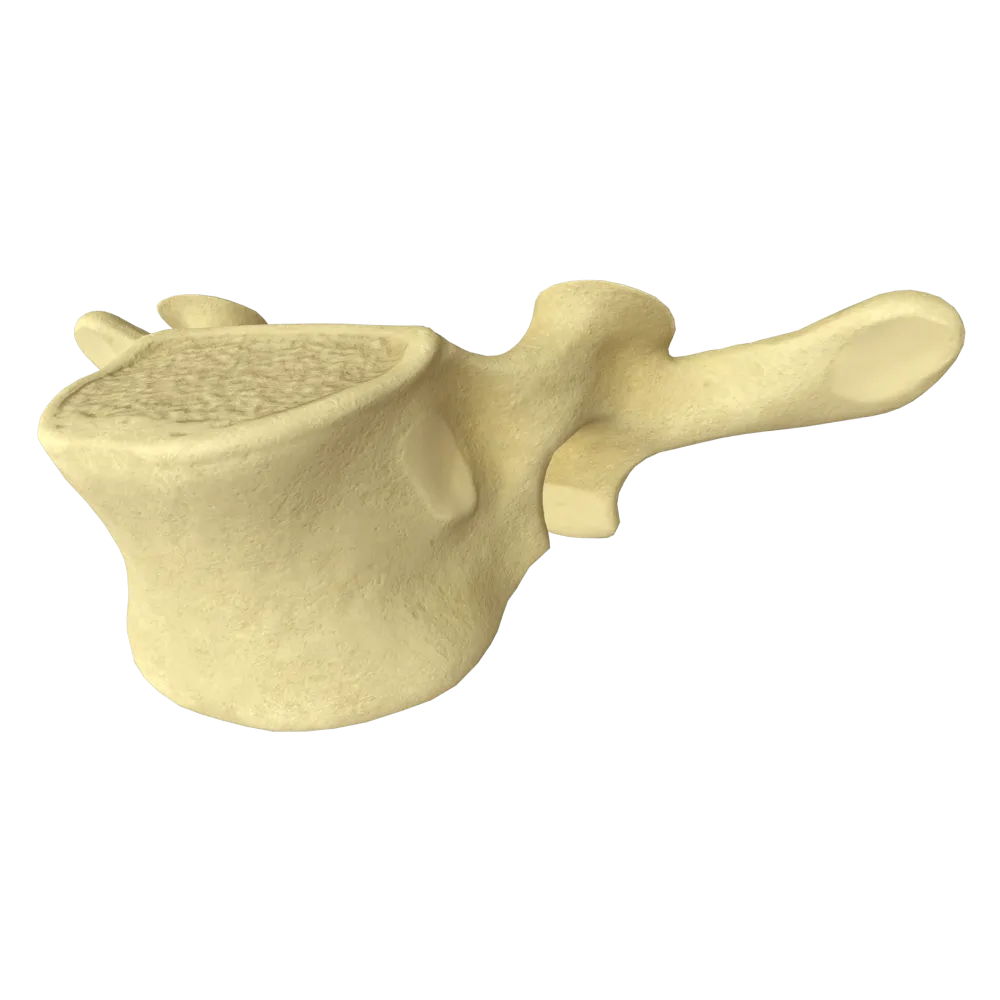
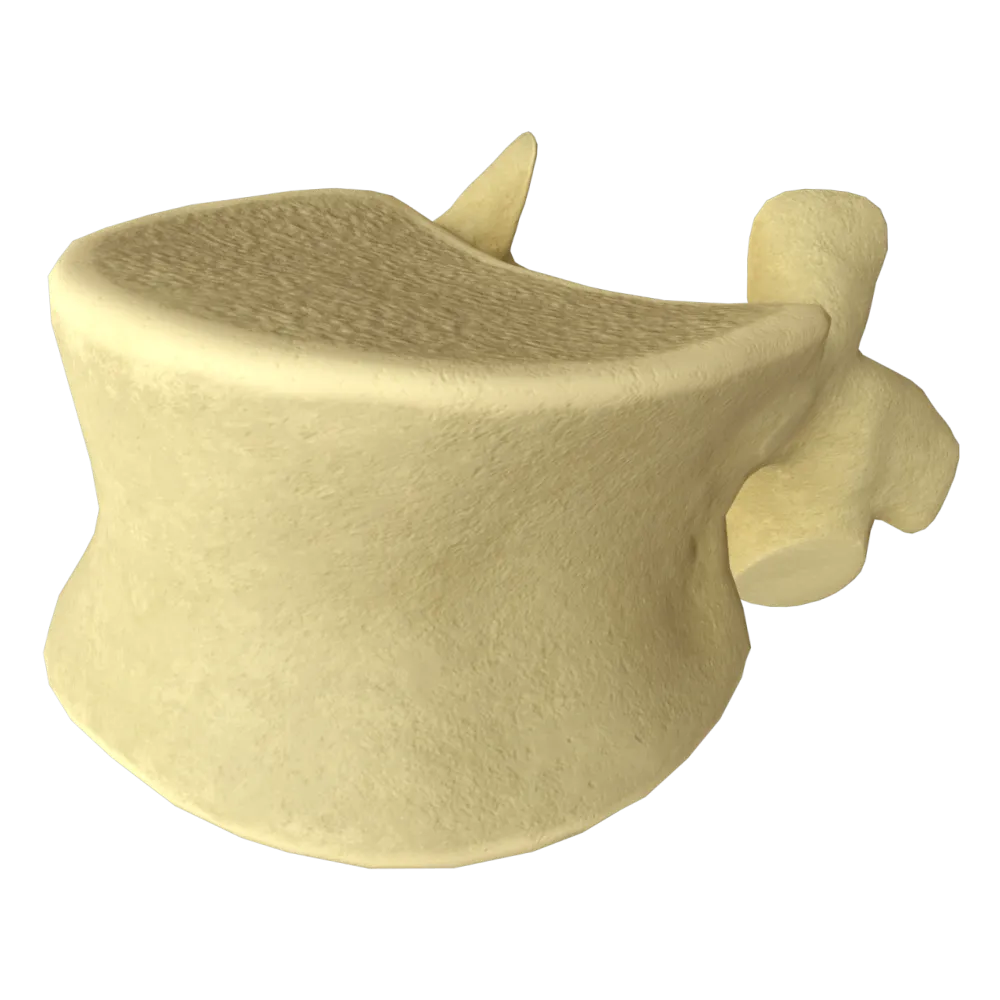
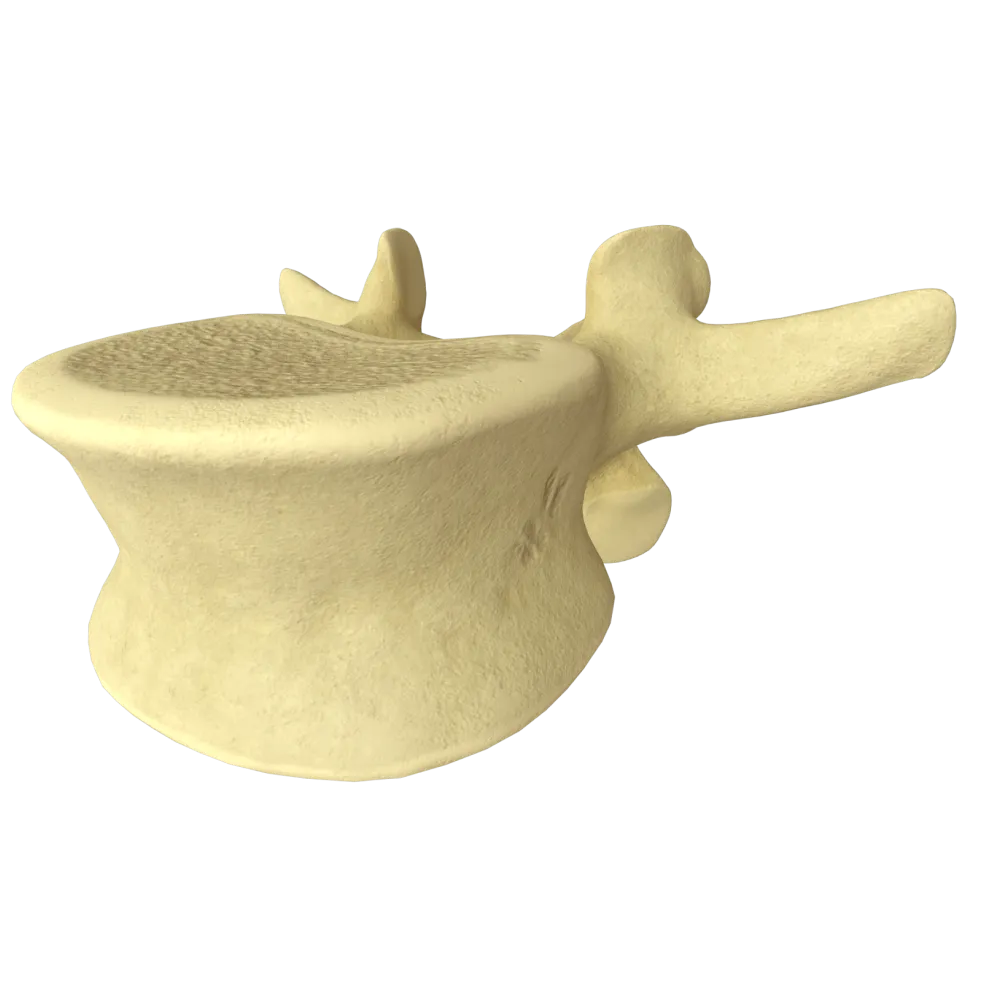
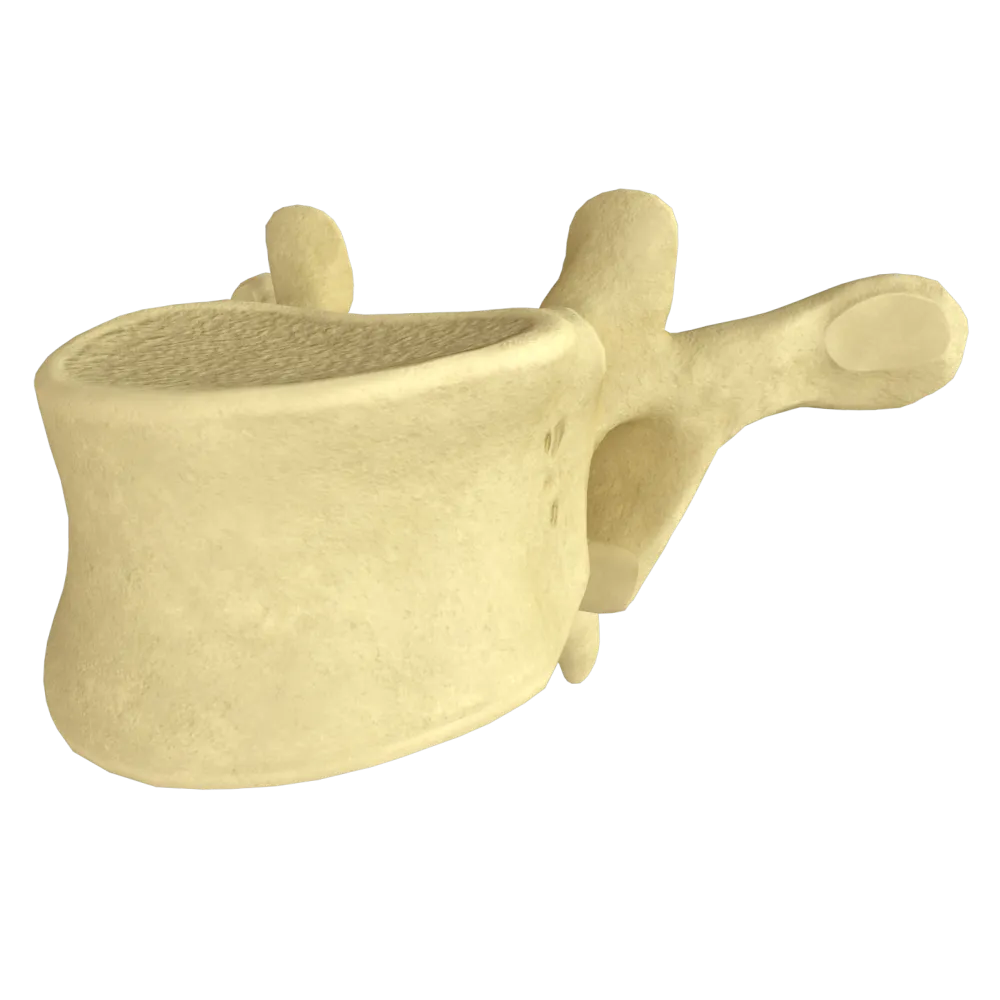
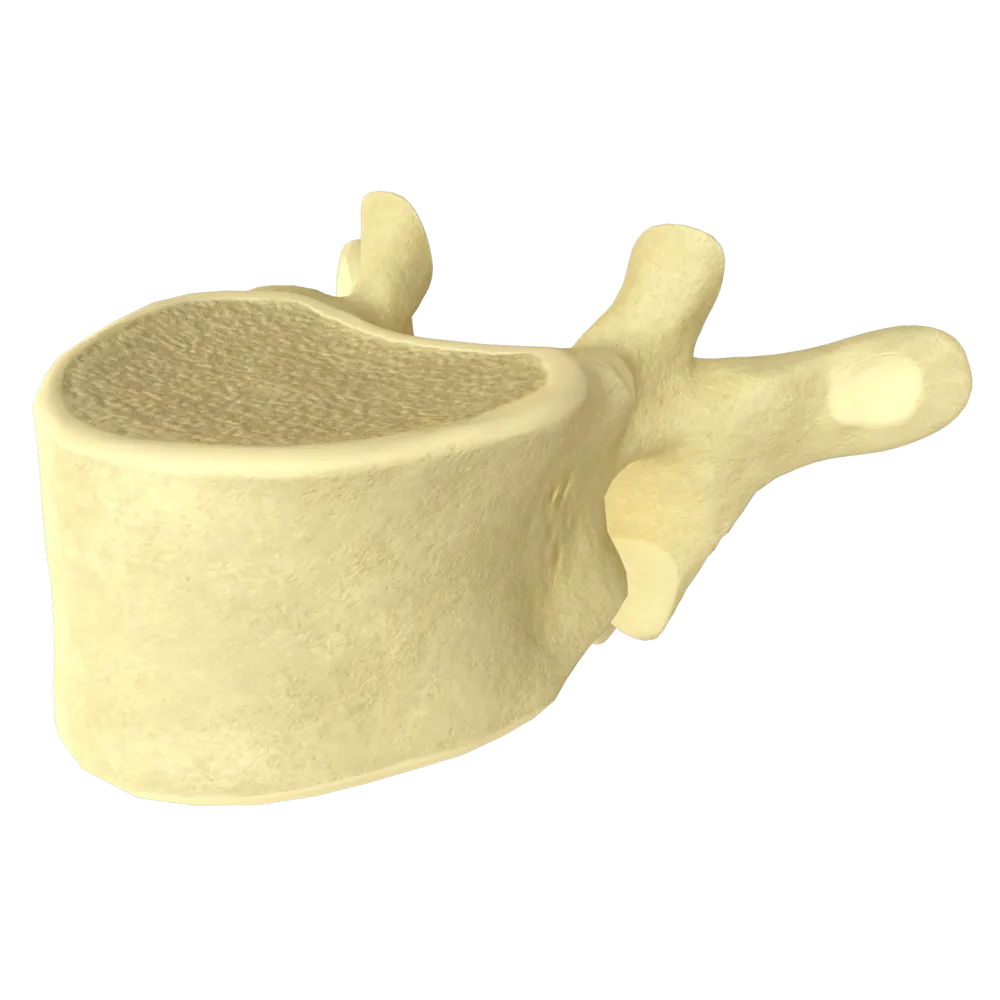
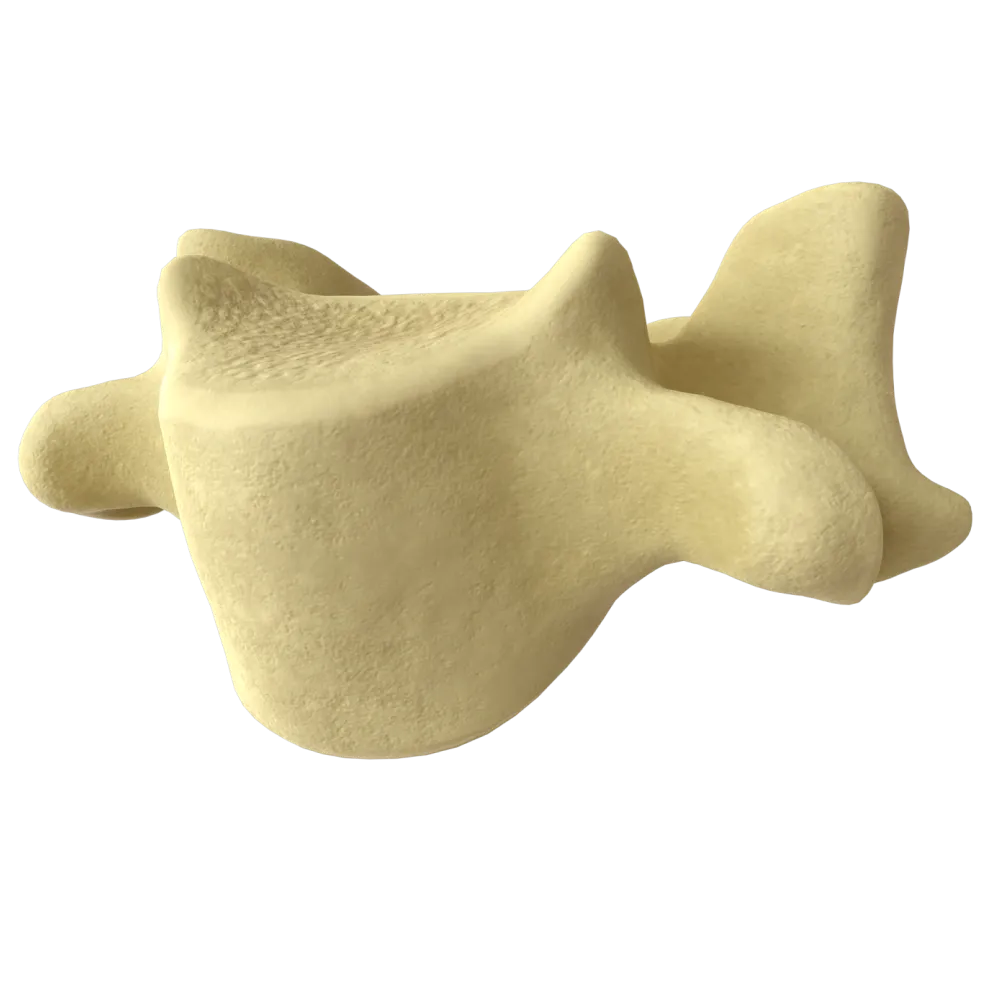
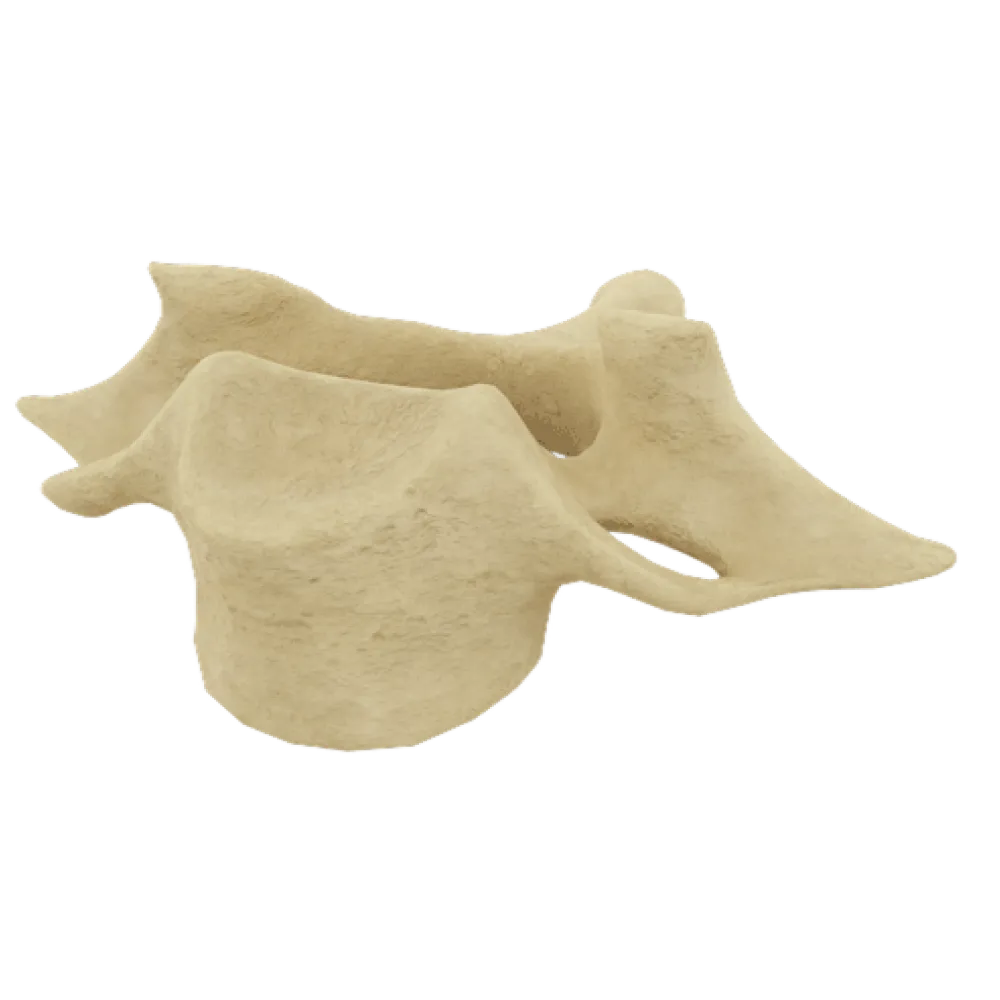
Lower thoracic vertebra anatomy quiz
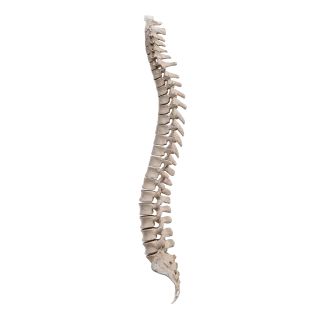
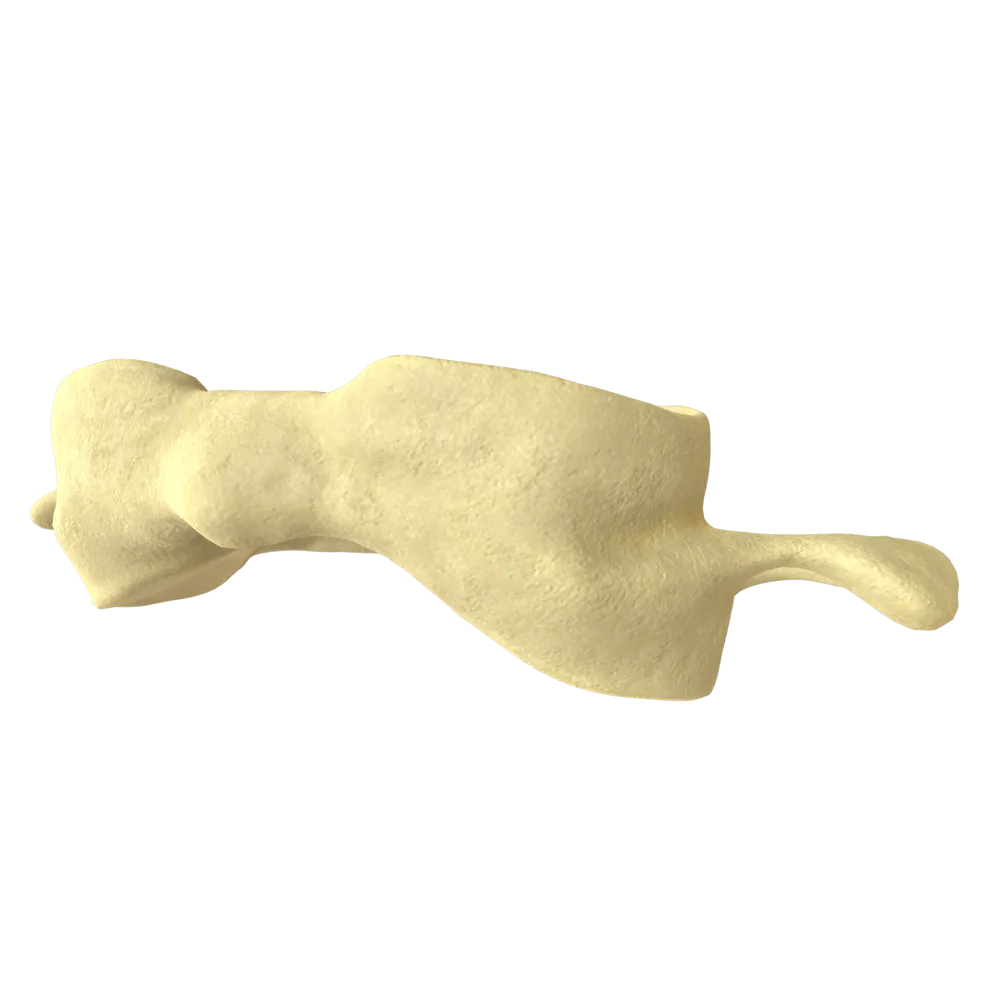
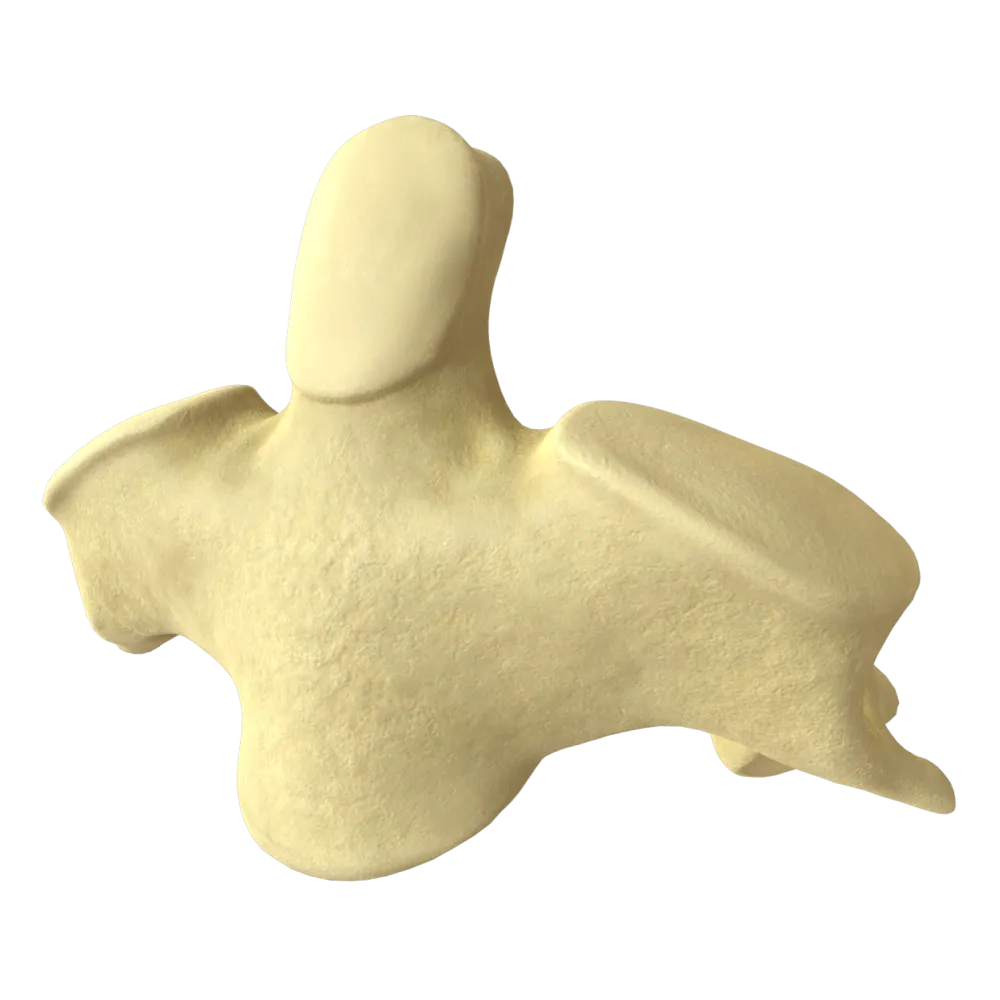
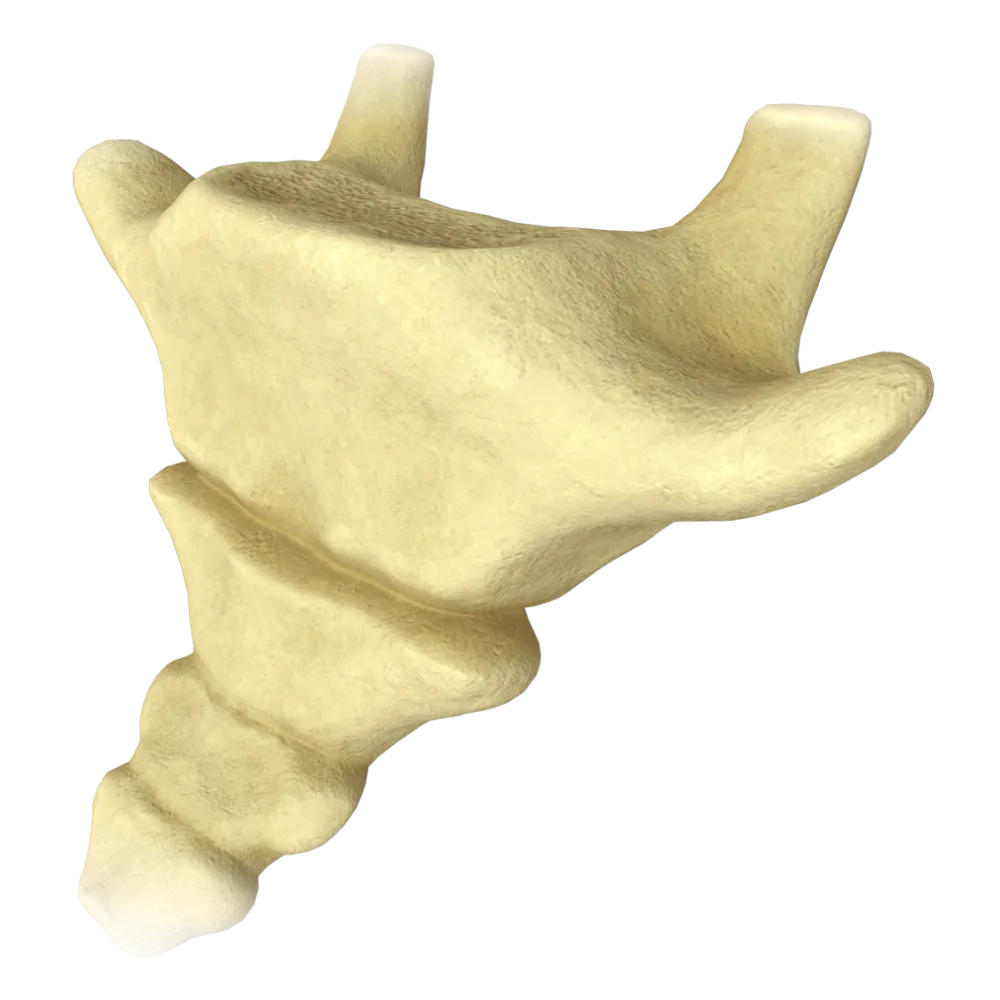
The quiz covers the systematic anatomy of the lower thoracic vertebrae: structure, joints, ligaments, vessels, and nerves.
1/20
bold
text
1. Which thoracic vertebrae have complete costal facets on their bodies?
-
Only II, III, and IV
Most thoracic vertebrae (II through IX) have two demifacets on the body (superior and inferior), which, together with the demifacets of adjacent vertebrae, form a complete facet for articulation with the head of the rib. However, thoracic vertebrae I, XI, and XII have a complete costal facet on the body for articulation with the corresponding rib.
-
I, XI, and XII
Most thoracic vertebrae (II through IX) have two demifacets on the body (superior and inferior), which, together with the demifacets of adjacent vertebrae, form a complete facet for articulation with the head of the rib. However, thoracic vertebrae I, XI, and XII have a complete costal facet on the body for articulation with the corresponding rib.
-
II through IX inclusive
Most thoracic vertebrae (II through IX) have two demifacets on the body (superior and inferior), which, together with the demifacets of adjacent vertebrae, form a complete facet for articulation with the head of the rib. However, thoracic vertebrae I, XI, and XII have a complete costal facet on the body for articulation with the corresponding rib.
-
Only I
Most thoracic vertebrae (II through IX) have two demifacets on the body (superior and inferior), which, together with the demifacets of adjacent vertebrae, form a complete facet for articulation with the head of the rib. However, thoracic vertebrae I, XI, and XII have a complete costal facet on the body for articulation with the corresponding rib.
-
I find it difficult to answer
Most thoracic vertebrae (II through IX) have two demifacets on the body (superior and inferior), which, together with the demifacets of adjacent vertebrae, form a complete facet for articulation with the head of the rib. However, thoracic vertebrae I, XI, and XII have a complete costal facet on the body for articulation with the corresponding rib.
2. Do the ribs articulate with the transverse processes of thoracic vertebrae XI and XII (Th11–Th12)?
-
Yes, they articulate, as in all other thoracic vertebrae
Ribs XI and XII are floating ribs (costae fluctuantes)—their anterior ends lie freely in the muscles of the abdominal wall, and the ribs themselves lack tubercles with articular surfaces. Consequently, they articulate only with the bodies of vertebrae Th11 and Th12 and do not attach to their transverse processes.
-
Only rib XI articulates; rib XII does not
Ribs XI and XII are floating ribs (costae fluctuantes)—their anterior ends lie freely in the muscles of the abdominal wall, and the ribs themselves lack tubercles with articular surfaces. Consequently, they articulate only with the bodies of vertebrae Th11 and Th12 and do not attach to their transverse processes.
-
No, they do not articulate
Ribs XI and XII are floating ribs (costae fluctuantes)—their anterior ends lie freely in the muscles of the abdominal wall, and the ribs themselves lack tubercles with articular surfaces. Consequently, they articulate only with the bodies of vertebrae Th11 and Th12 and do not attach to their transverse processes.
-
They articulate only by means of elastic ligaments without forming a joint
Ribs XI and XII are floating ribs (costae fluctuantes)—their anterior ends lie freely in the muscles of the abdominal wall, and the ribs themselves lack tubercles with articular surfaces. Consequently, they articulate only with the bodies of vertebrae Th11 and Th12 and do not attach to their transverse processes.
-
I find it difficult to answer
Ribs XI and XII are floating ribs (costae fluctuantes)—their anterior ends lie freely in the muscles of the abdominal wall, and the ribs themselves lack tubercles with articular surfaces. Consequently, they articulate only with the bodies of vertebrae Th11 and Th12 and do not attach to their transverse processes.
3. The costal facets on the bodies of the lower thoracic vertebrae (Th11 and Th12) are arranged as follows:
-
One complete costal facet on each side of the vertebral body
Th11 and Th12 each have one complete costal facet on each side of the body because ribs XI and XII articulate only with the correspondingly numbered vertebrae. This distinguishes them from typical thoracic vertebrae, which bear superior and inferior demifacets.
-
Two demifacets (superior and inferior) on each side, as in typical thoracic vertebrae
Th11 and Th12 each have one complete costal facet on each side of the body because ribs XI and XII articulate only with the correspondingly numbered vertebrae. This distinguishes them from typical thoracic vertebrae, which bear superior and inferior demifacets.
-
Costal facets are completely absent
Th11 and Th12 each have one complete costal facet on each side of the body because ribs XI and XII articulate only with the correspondingly numbered vertebrae. This distinguishes them from typical thoracic vertebrae, which bear superior and inferior demifacets.
-
Only inferior costal demifacets on each side
Th11 and Th12 each have one complete costal facet on each side of the body because ribs XI and XII articulate only with the correspondingly numbered vertebrae. This distinguishes them from typical thoracic vertebrae, which bear superior and inferior demifacets.
-
I find it difficult to answer
Th11 and Th12 each have one complete costal facet on each side of the body because ribs XI and XII articulate only with the correspondingly numbered vertebrae. This distinguishes them from typical thoracic vertebrae, which bear superior and inferior demifacets.
4. What distinctive feature differentiates the transverse processes of Th11 and Th12 from those of the superior thoracic vertebrae?
-
Presence of accessory processes (processus accessorii)
The transverse processes of Th11 and Th12 lack costal facets (fovea costalis processus transversalis).
-
Absence of costal facets on the transverse processes
The transverse processes of Th11 and Th12 lack costal facets (fovea costalis processus transversalis).
-
Presence of a prominent transverse costal facet
The transverse processes of Th11 and Th12 lack costal facets (fovea costalis processus transversalis).
-
Fusion of the transverse processes with one another
The transverse processes of Th11 and Th12 lack costal facets (fovea costalis processus transversalis).
-
I find it difficult to answer
The transverse processes of Th11 and Th12 lack costal facets (fovea costalis processus transversalis).
5. Why is the costal facet absent from the transverse processes of thoracic vertebrae XI and XII (Th11, Th12)?
-
Because ribs XI and XII articulate only with the sternum
The costal facet on the transverse process is required to form a joint with the tubercle of the rib (tuberculum costae). However, ribs XI and XII are floating ribs (costae fluctuantes)—they are short, terminate freely within the muscles of the abdominal wall, and lack a tubercle with an articular surface. For this reason, costal facets do not form on the transverse processes of vertebrae Th11 and Th12.
-
Because ribs XI and XII, which articulate with them, do not attach to the transverse processes of the correspondingly numbered vertebrae
The costal facet on the transverse process is required to form a joint with the tubercle of the rib (tuberculum costae). However, ribs XI and XII are floating ribs (costae fluctuantes)—they are short, terminate freely within the muscles of the abdominal wall, and lack a tubercle with an articular surface. For this reason, costal facets do not form on the transverse processes of vertebrae Th11 and Th12.
-
The transverse processes of Th11 and Th12 are completely absent
The costal facet on the transverse process is required to form a joint with the tubercle of the rib (tuberculum costae). However, ribs XI and XII are floating ribs (costae fluctuantes)—they are short, terminate freely within the muscles of the abdominal wall, and lack a tubercle with an articular surface. For this reason, costal facets do not form on the transverse processes of vertebrae Th11 and Th12.
-
Because ribs XI and XII attach to the vertebrae only by ligaments, without forming joints
The costal facet on the transverse process is required to form a joint with the tubercle of the rib (tuberculum costae). However, ribs XI and XII are floating ribs (costae fluctuantes)—they are short, terminate freely within the muscles of the abdominal wall, and lack a tubercle with an articular surface. For this reason, costal facets do not form on the transverse processes of vertebrae Th11 and Th12.
-
I find it difficult to answer
The costal facet on the transverse process is required to form a joint with the tubercle of the rib (tuberculum costae). However, ribs XI and XII are floating ribs (costae fluctuantes)—they are short, terminate freely within the muscles of the abdominal wall, and lack a tubercle with an articular surface. For this reason, costal facets do not form on the transverse processes of vertebrae Th11 and Th12.
6. The costotransverse joint (articulatio costotransversaria) in the two lowest thoracic vertebrae:
-
Is present in all lower thoracic vertebrae, including Th12
Ribs XI and XII lack an articular tubercle for articulation with the transverse processes; therefore, the articulatio costotransversaria is absent at Th11 and Th12.
-
Is absent at Th11 and Th12 because ribs XI and XII do not reach the transverse processes
Ribs XI and XII lack an articular tubercle for articulation with the transverse processes; therefore, the articulatio costotransversaria is absent at Th11 and Th12.
-
Is present only at Th9 and Th10
Ribs XI and XII lack an articular tubercle for articulation with the transverse processes; therefore, the articulatio costotransversaria is absent at Th11 and Th12.
-
Is replaced by a synchondrosis at Th11
Ribs XI and XII lack an articular tubercle for articulation with the transverse processes; therefore, the articulatio costotransversaria is absent at Th11 and Th12.
-
I find it difficult to answer
Ribs XI and XII lack an articular tubercle for articulation with the transverse processes; therefore, the articulatio costotransversaria is absent at Th11 and Th12.
7. How many thoracic vertebrae are included in the human vertebral column?
-
7
The thoracic region of the human vertebral column consists of 12 thoracic vertebrae.
-
12
The thoracic region of the human vertebral column consists of 12 thoracic vertebrae.
-
10
The thoracic region of the human vertebral column consists of 12 thoracic vertebrae.
-
5
The thoracic region of the human vertebral column consists of 12 thoracic vertebrae.
-
I find it difficult to answer
The thoracic region of the human vertebral column consists of 12 thoracic vertebrae.
8. Which anatomical feature of the vertebral body is characteristic of the 10th thoracic vertebra?
-
Presence of two complete costal facets on each side of the vertebral body
Typical thoracic vertebrae (Th2–Th9) have two demifacets—superior and inferior—on the lateral surfaces of the body because the head of one rib articulates with two adjacent vertebrae. The tenth thoracic vertebra (Th10) has only one superior costal demifacet on the body for the 10th rib.
-
Presence of only one superior costal demifacet on each side of the body for the 10th rib and absence of an inferior demifacet
Typical thoracic vertebrae (Th2–Th9) have two demifacets—superior and inferior—on the lateral surfaces of the body because the head of one rib articulates with two adjacent vertebrae. The tenth thoracic vertebra (Th10) has only one superior costal demifacet on the body for the 10th rib.
-
Complete absence of costal facets on the body and transverse processes
Typical thoracic vertebrae (Th2–Th9) have two demifacets—superior and inferior—on the lateral surfaces of the body because the head of one rib articulates with two adjacent vertebrae. The tenth thoracic vertebra (Th10) has only one superior costal demifacet on the body for the 10th rib.
-
Presence of a bifid spinous process, as in cervical vertebrae
Typical thoracic vertebrae (Th2–Th9) have two demifacets—superior and inferior—on the lateral surfaces of the body because the head of one rib articulates with two adjacent vertebrae. The tenth thoracic vertebra (Th10) has only one superior costal demifacet on the body for the 10th rib.
-
I find it difficult to answer
Typical thoracic vertebrae (Th2–Th9) have two demifacets—superior and inferior—on the lateral surfaces of the body because the head of one rib articulates with two adjacent vertebrae. The tenth thoracic vertebra (Th10) has only one superior costal demifacet on the body for the 10th rib.
9. Do the 11th and 12th thoracic vertebrae (Th11 and Th12) have articular processes?
-
No, their articular processes are completely absent, and the connection occurs only through the intervertebral discs
The 11th and 12th thoracic vertebrae have both superior and inferior articular processes (processus articulares superiores et inferiores), through which the vertebrae articulate with one another in the zygapophyseal joints. However, these vertebrae are transitional from the thoracic to the lumbar region; consequently, the inferior articular processes (particularly at Th12) turn into a sagittal orientation (facing laterally and slightly curved), assuming the shape and orientation characteristic of lumbar vertebrae.
-
Yes, articular processes are present, but the inferior articular processes (particularly at Th12) change orientation and have a lumbar vertebral configuration
The 11th and 12th thoracic vertebrae have both superior and inferior articular processes (processus articulares superiores et inferiores), through which the vertebrae articulate with one another in the zygapophyseal joints. However, these vertebrae are transitional from the thoracic to the lumbar region; consequently, the inferior articular processes (particularly at Th12) turn into a sagittal orientation (facing laterally and slightly curved), assuming the shape and orientation characteristic of lumbar vertebrae.
-
Yes, articular processes are present, and their superior and inferior surfaces are oriented in the same manner as in all typical thoracic vertebrae
The 11th and 12th thoracic vertebrae have both superior and inferior articular processes (processus articulares superiores et inferiores), through which the vertebrae articulate with one another in the zygapophyseal joints. However, these vertebrae are transitional from the thoracic to the lumbar region; consequently, the inferior articular processes (particularly at Th12) turn into a sagittal orientation (facing laterally and slightly curved), assuming the shape and orientation characteristic of lumbar vertebrae.
-
Articular processes are present only on the 11th vertebra and are absent on the 12th
The 11th and 12th thoracic vertebrae have both superior and inferior articular processes (processus articulares superiores et inferiores), through which the vertebrae articulate with one another in the zygapophyseal joints. However, these vertebrae are transitional from the thoracic to the lumbar region; consequently, the inferior articular processes (particularly at Th12) turn into a sagittal orientation (facing laterally and slightly curved), assuming the shape and orientation characteristic of lumbar vertebrae.
-
I find it difficult to answer
The 11th and 12th thoracic vertebrae have both superior and inferior articular processes (processus articulares superiores et inferiores), through which the vertebrae articulate with one another in the zygapophyseal joints. However, these vertebrae are transitional from the thoracic to the lumbar region; consequently, the inferior articular processes (particularly at Th12) turn into a sagittal orientation (facing laterally and slightly curved), assuming the shape and orientation characteristic of lumbar vertebrae.
10. The ligamenta flava (ligg. flava) of the lower thoracic vertebrae connect:
-
Spinous processes of adjacent vertebrae
Ligg flava connect the arches of adjacent vertebrae. They are rich in elastic fibers, which accounts for their yellow color.
-
Arches of adjacent vertebrae
Ligg flava connect the arches of adjacent vertebrae. They are rich in elastic fibers, which accounts for their yellow color.
-
Transverse processes of adjacent vertebrae
Ligg flava connect the arches of adjacent vertebrae. They are rich in elastic fibers, which accounts for their yellow color.
-
The bodies of adjacent vertebrae anteriorly
Ligg flava connect the arches of adjacent vertebrae. They are rich in elastic fibers, which accounts for their yellow color.
-
I find it difficult to answer
Ligg flava connect the arches of adjacent vertebrae. They are rich in elastic fibers, which accounts for their yellow color.
11. The zygapophyseal joints of the lower thoracic vertebrae are formed by:
-
The superior and inferior articular processes of adjacent vertebrae
The zygapophyseal joints are formed by the articular surfaces of the superior articular processes (processus articulares superiores) of the inferior vertebra and the inferior articular processes (processus articulares inferiores) of the superior vertebra.
-
The transverse processes and vertebral bodies
The zygapophyseal joints are formed by the articular surfaces of the superior articular processes (processus articulares superiores) of the inferior vertebra and the inferior articular processes (processus articulares inferiores) of the superior vertebra.
-
The spinous processes of adjacent vertebrae
The zygapophyseal joints are formed by the articular surfaces of the superior articular processes (processus articulares superiores) of the inferior vertebra and the inferior articular processes (processus articulares inferiores) of the superior vertebra.
-
The vertebral arches and intervertebral discs
The zygapophyseal joints are formed by the articular surfaces of the superior articular processes (processus articulares superiores) of the inferior vertebra and the inferior articular processes (processus articulares inferiores) of the superior vertebra.
-
I find it difficult to answer
The zygapophyseal joints are formed by the articular surfaces of the superior articular processes (processus articulares superiores) of the inferior vertebra and the inferior articular processes (processus articulares inferiores) of the superior vertebra.
12. How are the articular surfaces of the zygapophyseal joints oriented at the level of the lower thoracic vertebrae (Th11–Th12) compared with typical thoracic vertebrae?
-
The coronal orientation is maintained throughout the thoracic region
In typical thoracic vertebrae, the articular surfaces are oriented in the coronal plane. At the Th11–Th12 level, a gradual reorientation into the sagittal plane characteristic of lumbar vertebrae occurs, altering the biomechanics of movement.
-
The articular surfaces become reoriented into the sagittal plane, approaching the lumbar configuration
In typical thoracic vertebrae, the articular surfaces are oriented in the coronal plane. At the Th11–Th12 level, a gradual reorientation into the sagittal plane characteristic of lumbar vertebrae occurs, altering the biomechanics of movement.
-
The articular surfaces shift into the horizontal plane
In typical thoracic vertebrae, the articular surfaces are oriented in the coronal plane. At the Th11–Th12 level, a gradual reorientation into the sagittal plane characteristic of lumbar vertebrae occurs, altering the biomechanics of movement.
-
The orientation does not change until the lumbar region
In typical thoracic vertebrae, the articular surfaces are oriented in the coronal plane. At the Th11–Th12 level, a gradual reorientation into the sagittal plane characteristic of lumbar vertebrae occurs, altering the biomechanics of movement.
-
I find it difficult to answer
In typical thoracic vertebrae, the articular surfaces are oriented in the coronal plane. At the Th11–Th12 level, a gradual reorientation into the sagittal plane characteristic of lumbar vertebrae occurs, altering the biomechanics of movement.
13. Which pair of spinal nerves exits through the intervertebral foramina located between the 11th and 12th thoracic vertebrae?
-
10th thoracic nerve
In the thoracic, lumbar, and sacral regions, each nerve exits below the correspondingly numbered vertebra through the intervertebral foramen. The 11th thoracic spinal nerve exits through the foramen below vertebra Th11 (that is, between Th11 and Th12)
-
11th thoracic nerve
In the thoracic, lumbar, and sacral regions, each nerve exits below the correspondingly numbered vertebra through the intervertebral foramen. The 11th thoracic spinal nerve exits through the foramen below vertebra Th11 (that is, between Th11 and Th12)
-
12th thoracic nerve
In the thoracic, lumbar, and sacral regions, each nerve exits below the correspondingly numbered vertebra through the intervertebral foramen. The 11th thoracic spinal nerve exits through the foramen below vertebra Th11 (that is, between Th11 and Th12)
-
1st lumbar nerve
In the thoracic, lumbar, and sacral regions, each nerve exits below the correspondingly numbered vertebra through the intervertebral foramen. The 11th thoracic spinal nerve exits through the foramen below vertebra Th11 (that is, between Th11 and Th12)
-
I find it difficult to answer
In the thoracic, lumbar, and sacral regions, each nerve exits below the correspondingly numbered vertebra through the intervertebral foramen. The 11th thoracic spinal nerve exits through the foramen below vertebra Th11 (that is, between Th11 and Th12)
14. Are transverse processes present on the last two thoracic vertebrae (Th11 and Th12), and what is their anatomical feature?
-
The transverse processes are completely absent because no ribs attach to these vertebrae
Their transverse processes are present but shortened and lack costal facets.
-
Yes, they are present, are developed in the same manner as in all typical thoracic vertebrae, and have articular costal facets
Their transverse processes are present but shortened and lack costal facets.
-
Their transverse processes are present but shortened and lack costal facets
Their transverse processes are present but shortened and lack costal facets.
-
A transverse process is present only on the 11th vertebra and is completely reduced on the 12th
Their transverse processes are present but shortened and lack costal facets.
-
I find it difficult to answer
Their transverse processes are present but shortened and lack costal facets.
15. Are spinous processes present on the last two thoracic vertebrae (Th11 and Th12)?
-
No, the spinous processes of Th11 and Th12 are completely absent
The 11th and 12th thoracic vertebrae have spinous processes (processus spinosus); however, their shape and direction change substantially owing to the transition to the lumbar region.
-
Yes, spinous processes are present, but they become shorter and flatter and project almost horizontally posteriorly, approaching the shape of lumbar spinous processes
The 11th and 12th thoracic vertebrae have spinous processes (processus spinosus); however, their shape and direction change substantially owing to the transition to the lumbar region.
-
Yes, spinous processes are present, and they are long, pointed, and markedly overlap one another like roof tiles, as in the middle thoracic vertebrae
The 11th and 12th thoracic vertebrae have spinous processes (processus spinosus); however, their shape and direction change substantially owing to the transition to the lumbar region.
-
A spinous process is present only on Th11, whereas on Th12 it is divided into two halves, as in cervical vertebrae
The 11th and 12th thoracic vertebrae have spinous processes (processus spinosus); however, their shape and direction change substantially owing to the transition to the lumbar region.
-
I find it difficult to answer
The 11th and 12th thoracic vertebrae have spinous processes (processus spinosus); however, their shape and direction change substantially owing to the transition to the lumbar region.
16. How many articular surfaces does the 11th thoracic vertebra have in total?
-
6
The 11th thoracic vertebra has a total of 6 articular surfaces: 2 articular surfaces on the vertebral body (one complete costal facet on each side), 2 superior articular surfaces on the superior articular processes, and 2 inferior articular surfaces on the inferior articular processes.
-
8
The 11th thoracic vertebra has a total of 6 articular surfaces: 2 articular surfaces on the vertebral body (one complete costal facet on each side), 2 superior articular surfaces on the superior articular processes, and 2 inferior articular surfaces on the inferior articular processes.
-
10
The 11th thoracic vertebra has a total of 6 articular surfaces: 2 articular surfaces on the vertebral body (one complete costal facet on each side), 2 superior articular surfaces on the superior articular processes, and 2 inferior articular surfaces on the inferior articular processes.
-
12
The 11th thoracic vertebra has a total of 6 articular surfaces: 2 articular surfaces on the vertebral body (one complete costal facet on each side), 2 superior articular surfaces on the superior articular processes, and 2 inferior articular surfaces on the inferior articular processes.
-
I find it difficult to answer
The 11th thoracic vertebra has a total of 6 articular surfaces: 2 articular surfaces on the vertebral body (one complete costal facet on each side), 2 superior articular surfaces on the superior articular processes, and 2 inferior articular surfaces on the inferior articular processes.
17. How many articular surfaces does a typical thoracic vertebra (Th2–Th9) have in total?
-
6
A typical thoracic vertebra has 10 articular surfaces: 2 superior articular surfaces (on the superior articular processes), 2 inferior articular surfaces (on the inferior articular processes), 2 costal facets on the transverse processes, 2 superior costal demifacets on the vertebral body, and 2 inferior costal demifacets on the vertebral body = 10 articular surfaces.
-
10
A typical thoracic vertebra has 10 articular surfaces: 2 superior articular surfaces (on the superior articular processes), 2 inferior articular surfaces (on the inferior articular processes), 2 costal facets on the transverse processes, 2 superior costal demifacets on the vertebral body, and 2 inferior costal demifacets on the vertebral body = 10 articular surfaces.
-
8
A typical thoracic vertebra has 10 articular surfaces: 2 superior articular surfaces (on the superior articular processes), 2 inferior articular surfaces (on the inferior articular processes), 2 costal facets on the transverse processes, 2 superior costal demifacets on the vertebral body, and 2 inferior costal demifacets on the vertebral body = 10 articular surfaces.
-
12
A typical thoracic vertebra has 10 articular surfaces: 2 superior articular surfaces (on the superior articular processes), 2 inferior articular surfaces (on the inferior articular processes), 2 costal facets on the transverse processes, 2 superior costal demifacets on the vertebral body, and 2 inferior costal demifacets on the vertebral body = 10 articular surfaces.
-
I find it difficult to answer
A typical thoracic vertebra has 10 articular surfaces: 2 superior articular surfaces (on the superior articular processes), 2 inferior articular surfaces (on the inferior articular processes), 2 costal facets on the transverse processes, 2 superior costal demifacets on the vertebral body, and 2 inferior costal demifacets on the vertebral body = 10 articular surfaces.
18. In which anatomical structures do the primary ossification centers (centers of ossification) develop in the 12th thoracic vertebra (Th12)?
-
In the spinous process and the two transverse processes
The primary ossification centers of the 12th thoracic vertebra (as in most other vertebrae) appear as follows: 1 center in the vertebral body and 1 center in each of the two halves of the vertebral arch.
-
In the vertebral body and in each half of its arch
The primary ossification centers of the 12th thoracic vertebra (as in most other vertebrae) appear as follows: 1 center in the vertebral body and 1 center in each of the two halves of the vertebral arch.
-
In the articular processes and intervertebral disc
The primary ossification centers of the 12th thoracic vertebra (as in most other vertebrae) appear as follows: 1 center in the vertebral body and 1 center in each of the two halves of the vertebral arch.
-
Only one primary ossification center develops—in the center of the vertebral body
The primary ossification centers of the 12th thoracic vertebra (as in most other vertebrae) appear as follows: 1 center in the vertebral body and 1 center in each of the two halves of the vertebral arch.
-
I find it difficult to answer
The primary ossification centers of the 12th thoracic vertebra (as in most other vertebrae) appear as follows: 1 center in the vertebral body and 1 center in each of the two halves of the vertebral arch.
19. Compared with those of the middle thoracic vertebrae, the spinous processes of the lower thoracic vertebrae:
-
Are longer and sharply inclined inferiorly at an acute angle
In the middle thoracic region, the spinous processes are long and steeply inclined caudally (overlapping like roof tiles). Beginning at Th9–Th10, the inclination decreases, the processes shorten, and they assume a more horizontal position characteristic of the lumbar region.
-
Become shorter and less inclined, gradually approaching the horizontal position characteristic of the lumbar configuration
In the middle thoracic region, the spinous processes are long and steeply inclined caudally (overlapping like roof tiles). Beginning at Th9–Th10, the inclination decreases, the processes shorten, and they assume a more horizontal position characteristic of the lumbar region.
-
Are absent at Th12
In the middle thoracic region, the spinous processes are long and steeply inclined caudally (overlapping like roof tiles). Beginning at Th9–Th10, the inclination decreases, the processes shorten, and they assume a more horizontal position characteristic of the lumbar region.
-
Are bifid at their ends, as in the cervical region
In the middle thoracic region, the spinous processes are long and steeply inclined caudally (overlapping like roof tiles). Beginning at Th9–Th10, the inclination decreases, the processes shorten, and they assume a more horizontal position characteristic of the lumbar region.
-
I find it difficult to answer
In the middle thoracic region, the spinous processes are long and steeply inclined caudally (overlapping like roof tiles). Beginning at Th9–Th10, the inclination decreases, the processes shorten, and they assume a more horizontal position characteristic of the lumbar region.
20. In terms of size, the vertebral foramen (foramen vertebrale) of the lower thoracic vertebrae is:
-
Much narrower, forming the narrowest part of the vertebral canal
In the lower thoracic region, the vertebral foramen gradually increases in size. This widening is associated with the transition to the lumbar region, where the lumbosacral enlargement of the spinal cord and the roots of the cauda equina are located.
-
Noticeably larger, gradually widening toward the lumbar region
In the lower thoracic region, the vertebral foramen gradually increases in size. This widening is associated with the transition to the lumbar region, where the lumbosacral enlargement of the spinal cord and the roots of the cauda equina are located.
-
Exactly the same diameter in all thoracic vertebrae
In the lower thoracic region, the vertebral foramen gradually increases in size. This widening is associated with the transition to the lumbar region, where the lumbosacral enlargement of the spinal cord and the roots of the cauda equina are located.
-
Completely obliterated and reduced to microscopic dimensions
In the lower thoracic region, the vertebral foramen gradually increases in size. This widening is associated with the transition to the lumbar region, where the lumbosacral enlargement of the spinal cord and the roots of the cauda equina are located.
-
I find it difficult to answer
In the lower thoracic region, the vertebral foramen gradually increases in size. This widening is associated with the transition to the lumbar region, where the lumbosacral enlargement of the spinal cord and the roots of the cauda equina are located.
Retake this quiz?
Your current progress will be reset.