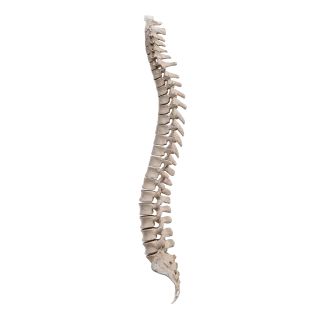
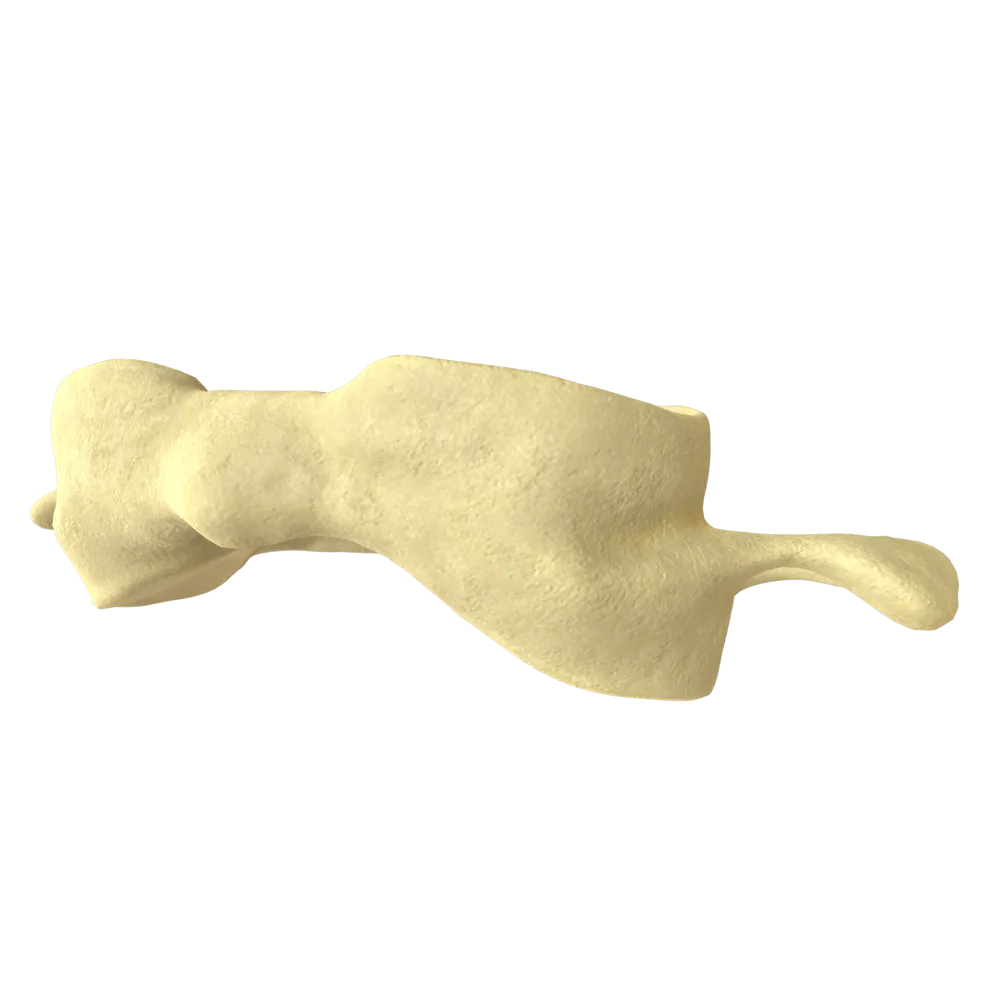
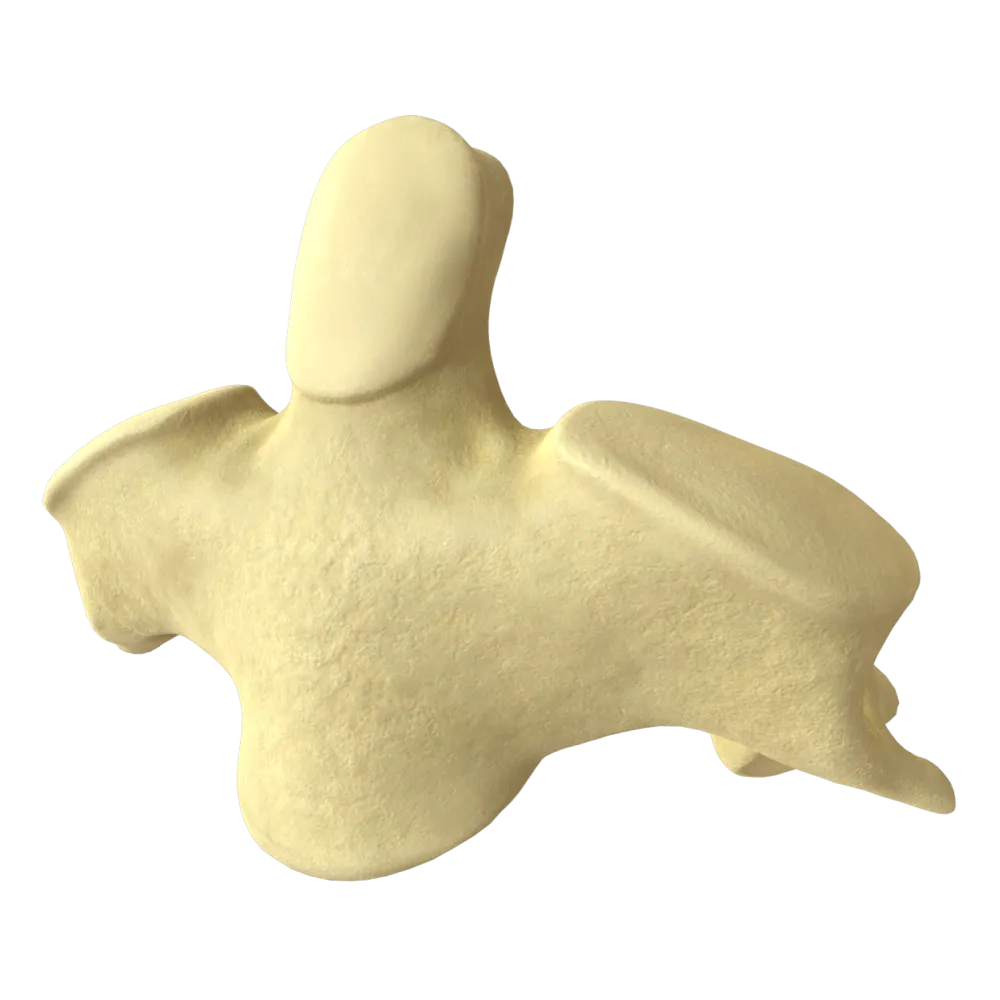

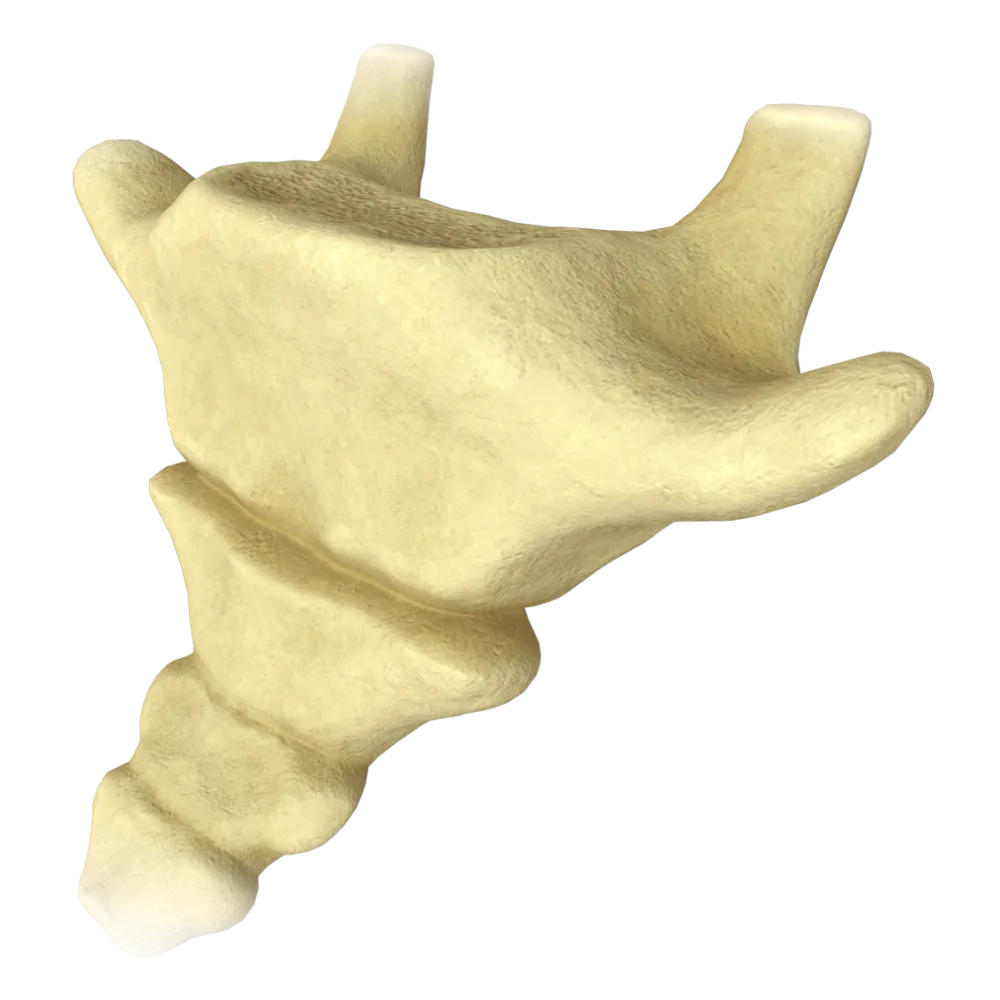
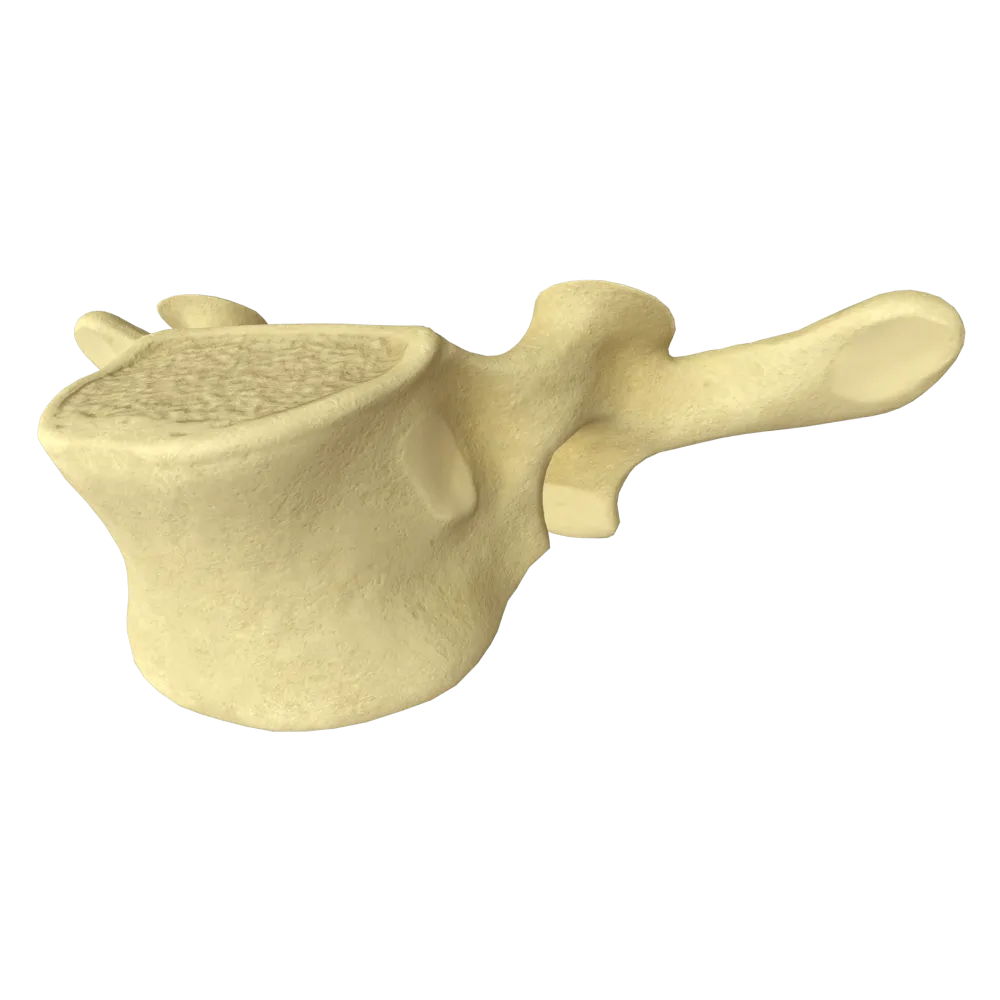
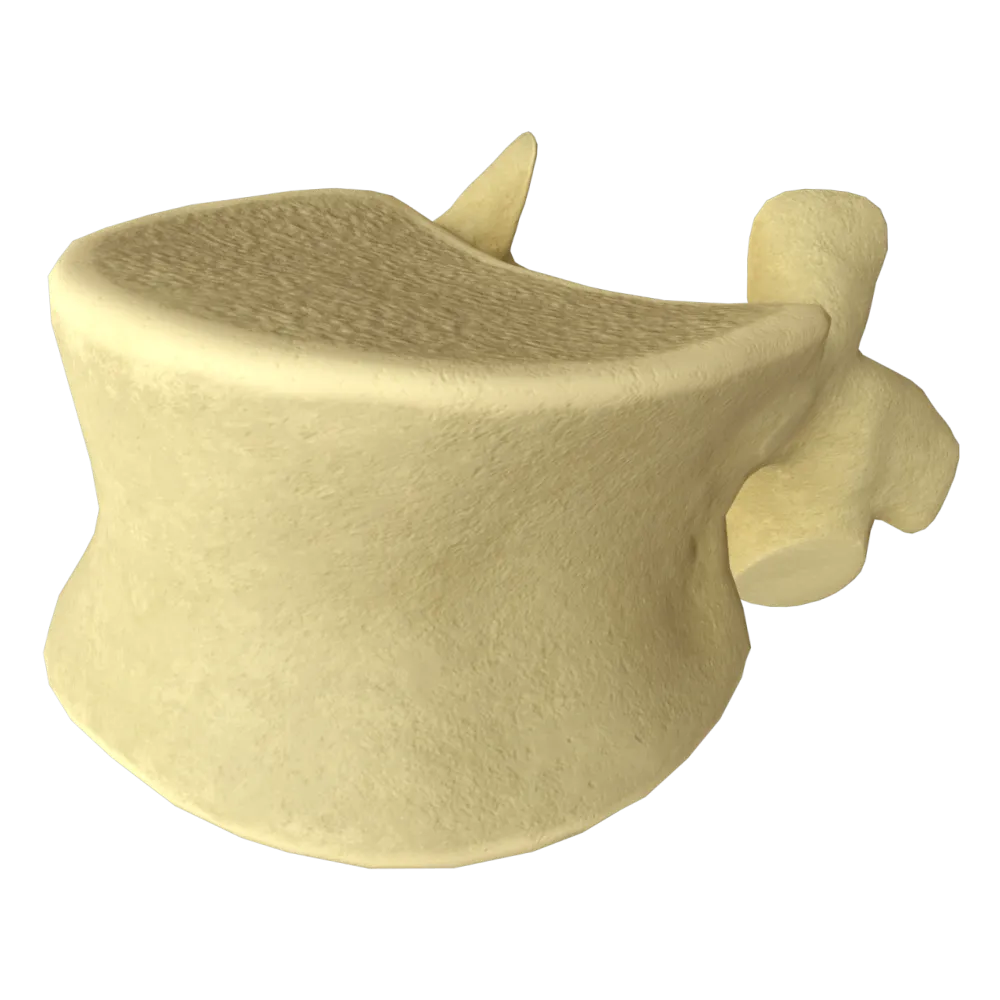
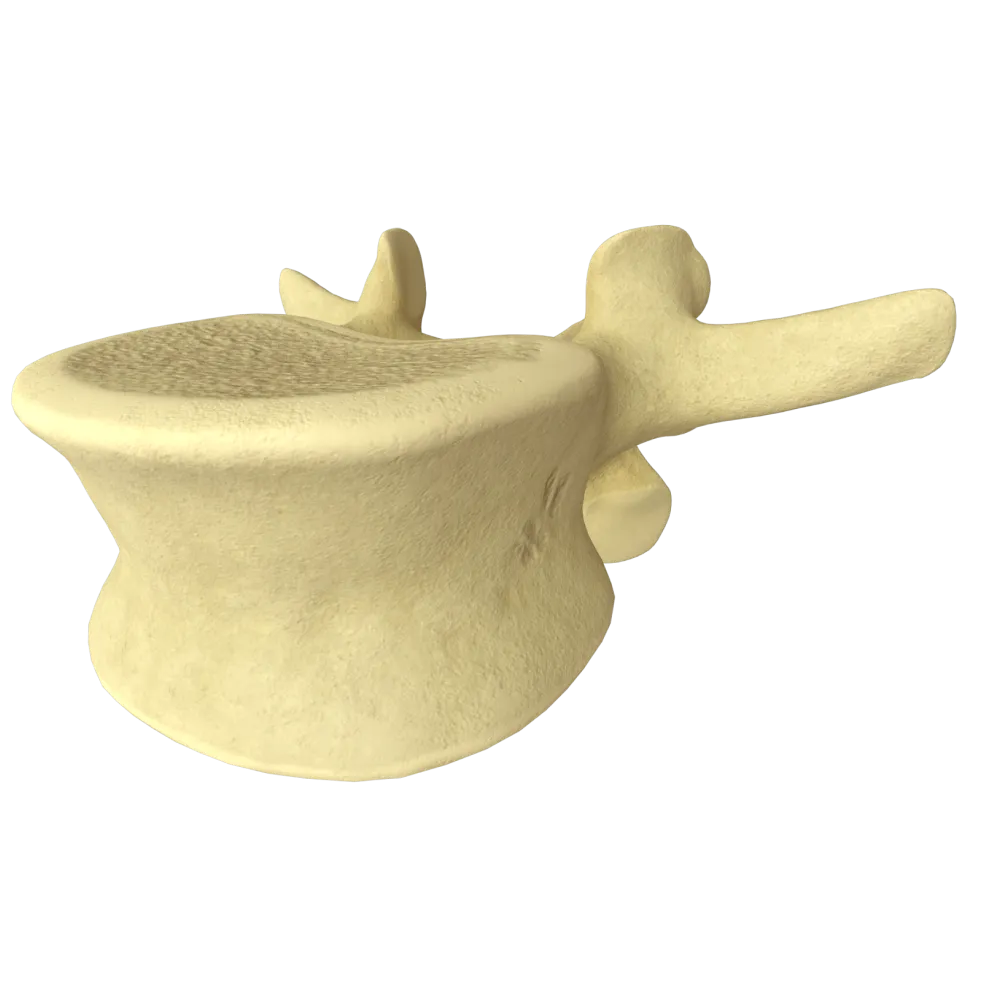
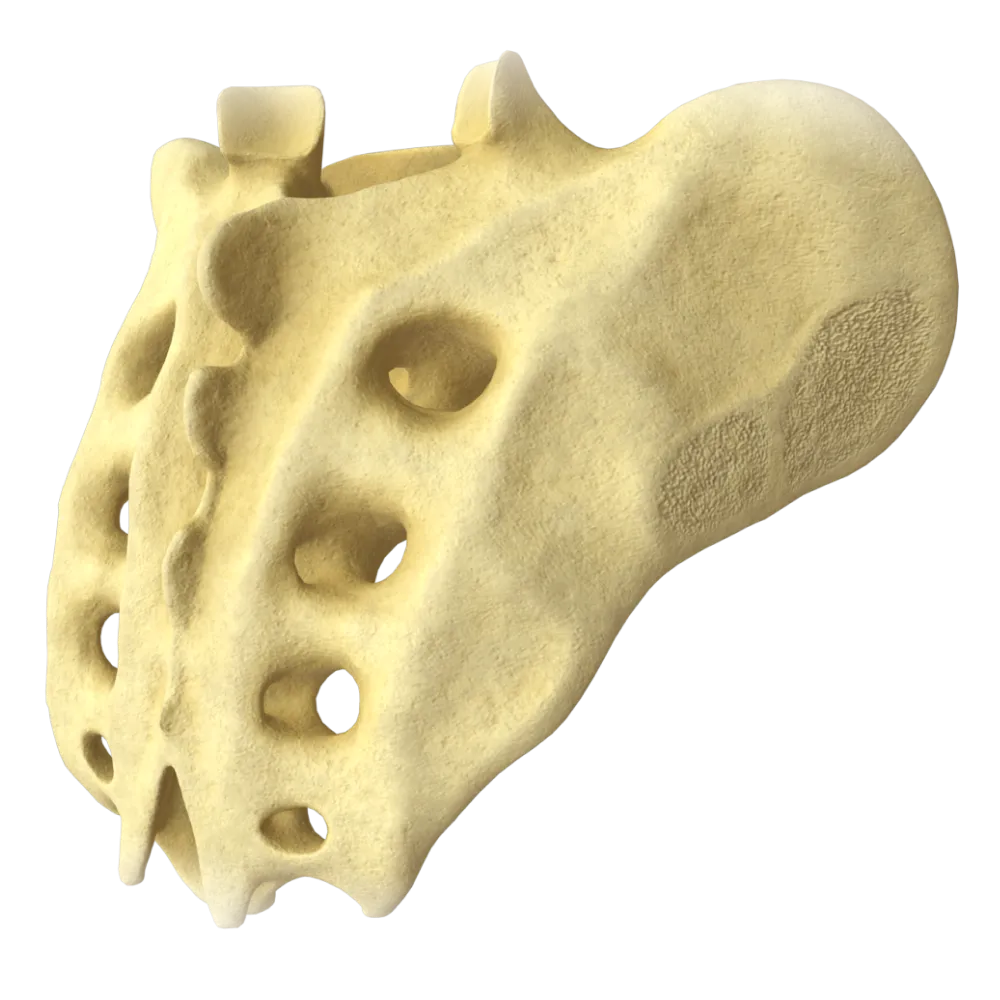
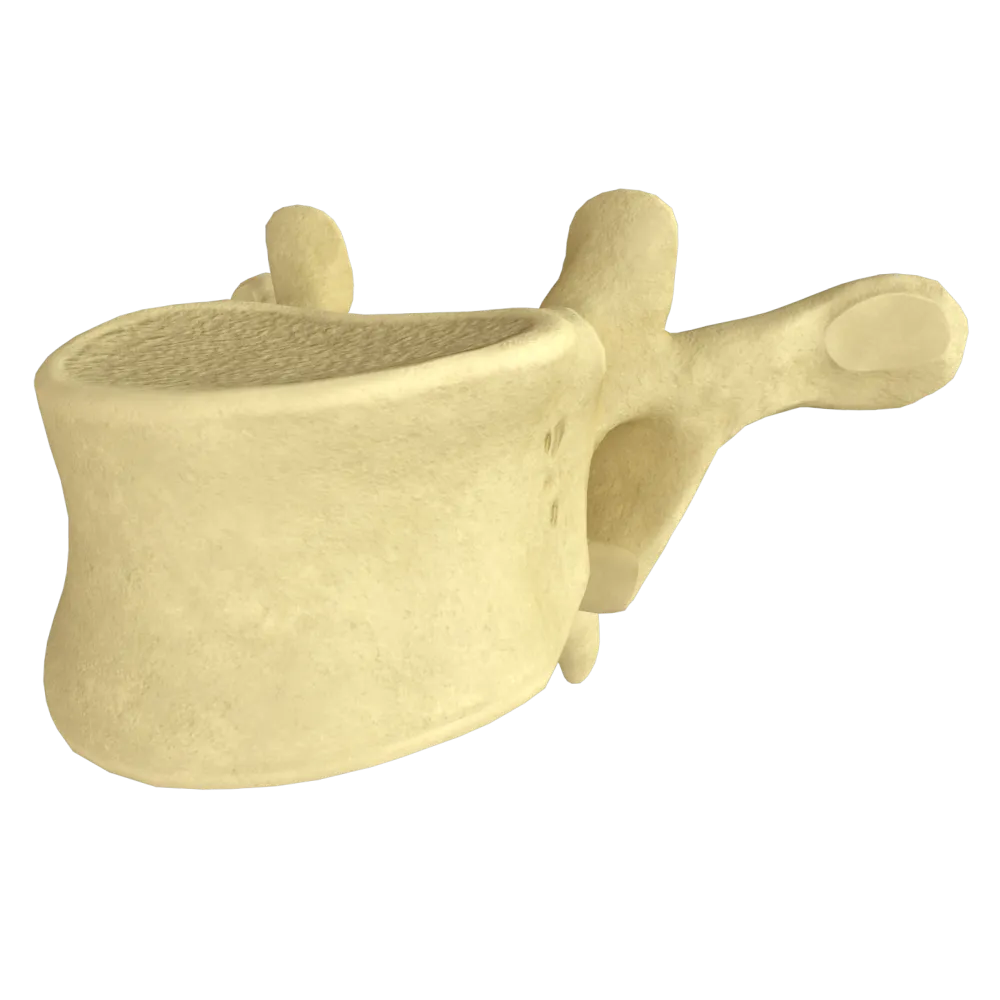
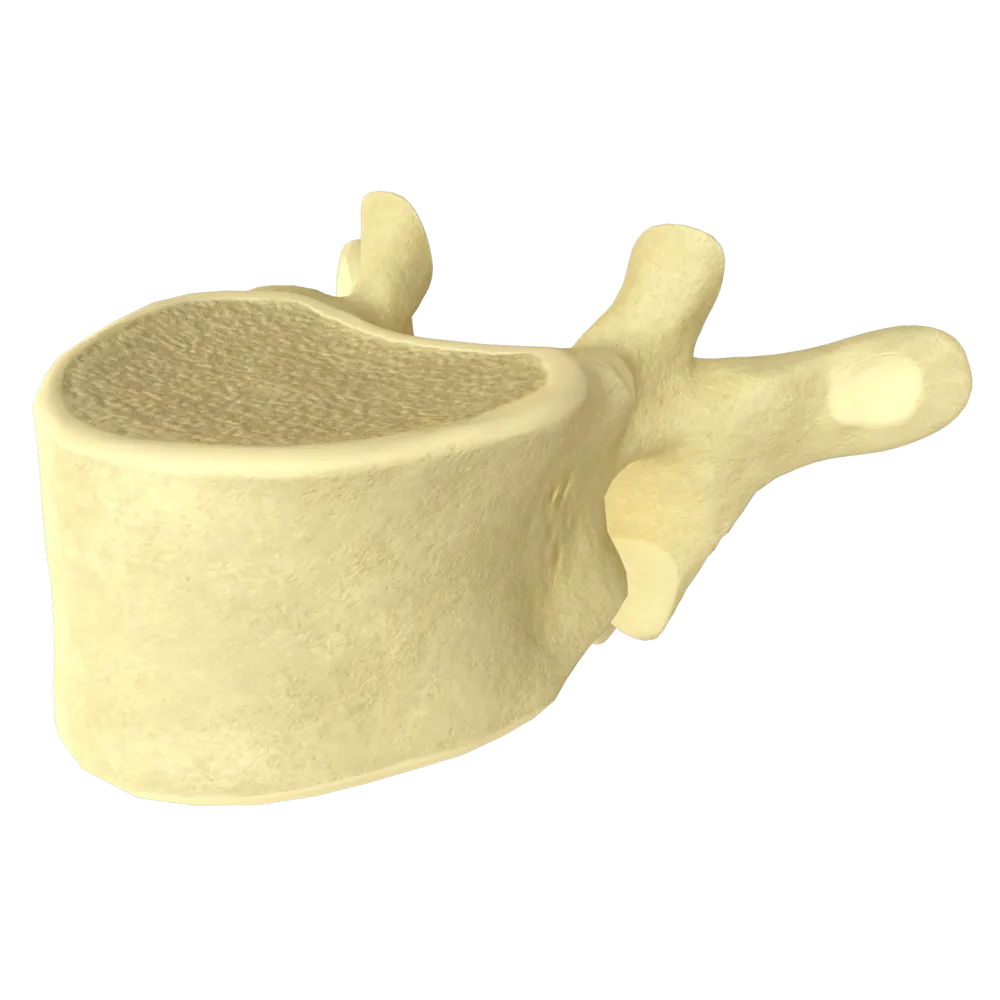
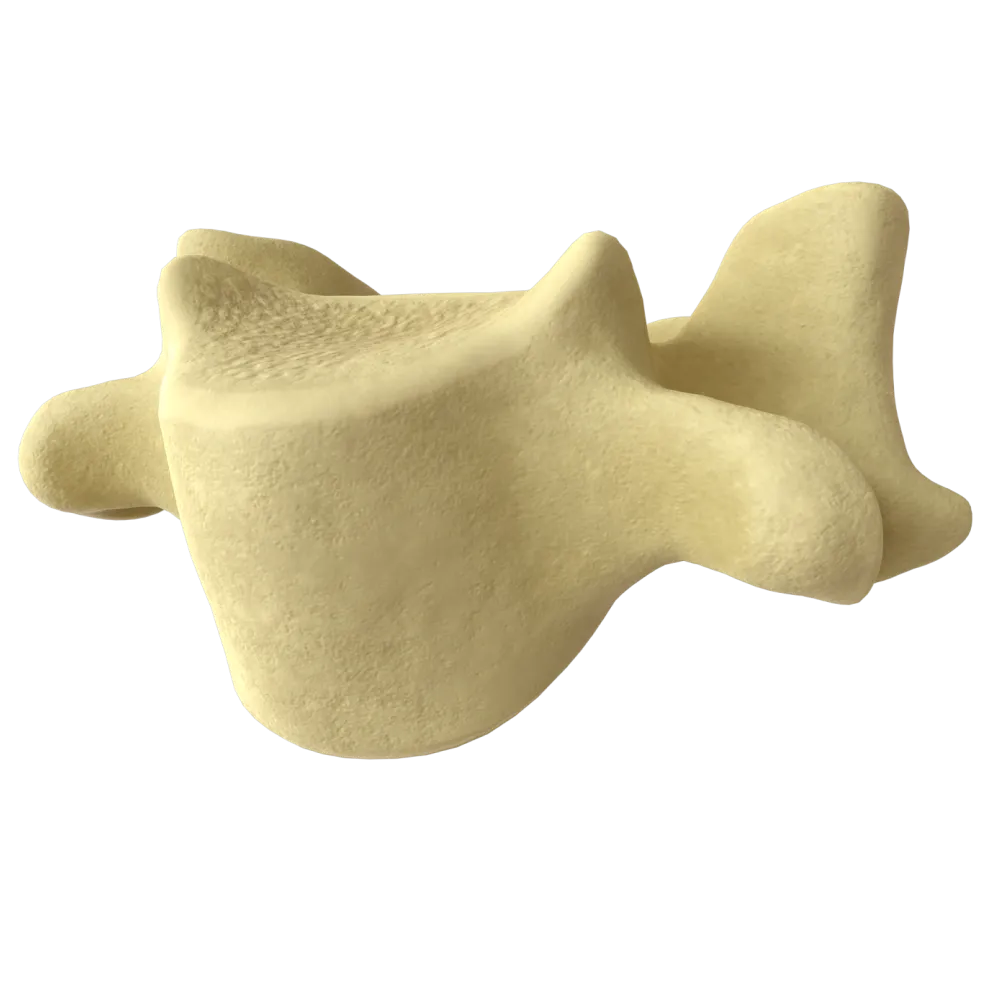
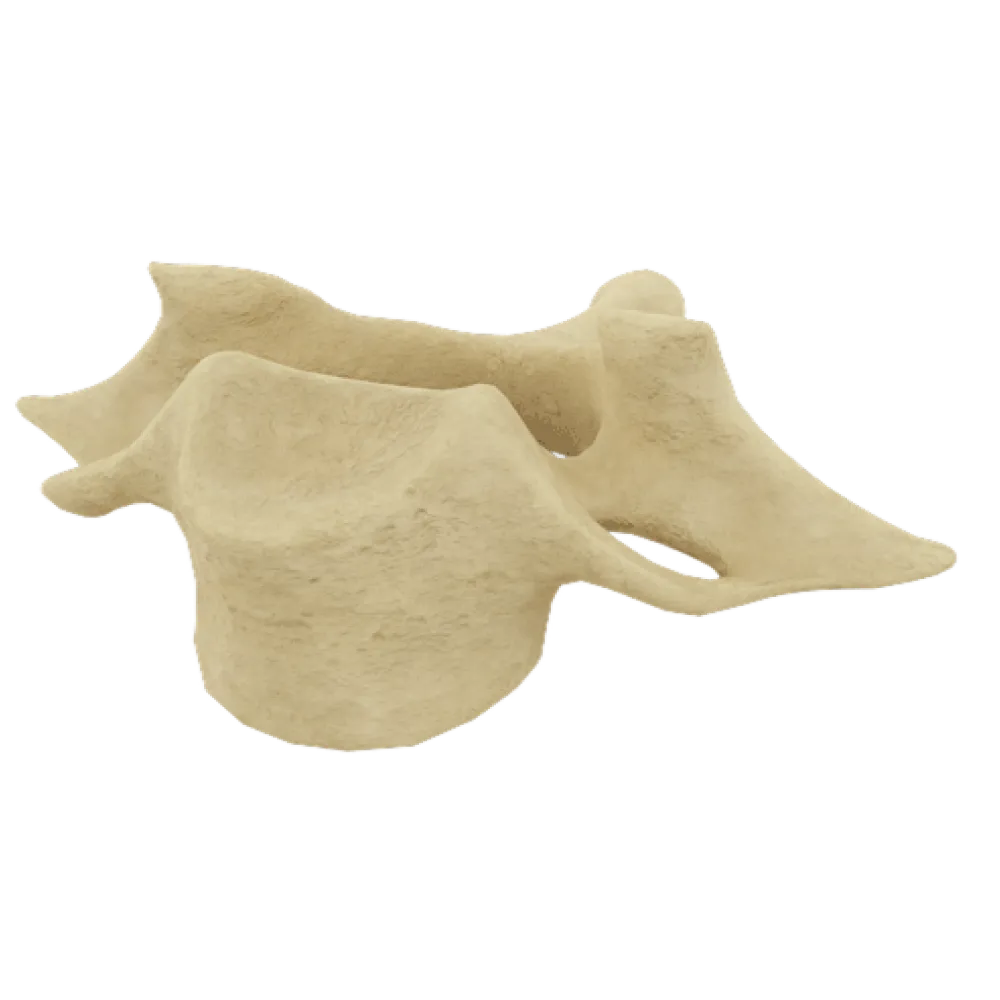
Anatomy quiz on a cervical vertebra (typical)
The quiz covers the structure of a typical cervical vertebra: processes, foramina, articular surfaces, and anatomical features.
1/20
bold
text
1. Which characteristic anatomical feature distinguishes a typical cervical vertebra from vertebrae in other regions of the vertebral column?
-
Presence of costal facets on the body
A typical cervical vertebra comprises a transverse foramen (foramen transversarium), through which the vertebral artery (a. vertebralis) passes. This is the principal distinguishing feature of the cervical vertebrae.
-
Presence of a foramen in the transverse process
A typical cervical vertebra comprises a transverse foramen (foramen transversarium), through which the vertebral artery (a. vertebralis) passes. This is the principal distinguishing feature of the cervical vertebrae.
-
Bifid articular process
A typical cervical vertebra comprises a transverse foramen (foramen transversarium), through which the vertebral artery (a. vertebralis) passes. This is the principal distinguishing feature of the cervical vertebrae.
-
Absence of a spinous process
A typical cervical vertebra comprises a transverse foramen (foramen transversarium), through which the vertebral artery (a. vertebralis) passes. This is the principal distinguishing feature of the cervical vertebrae.
-
I find it difficult to answer
A typical cervical vertebra comprises a transverse foramen (foramen transversarium), through which the vertebral artery (a. vertebralis) passes. This is the principal distinguishing feature of the cervical vertebrae.
2. Which structure passes through the foramen transversarium of a typical cervical vertebra?
-
Internal carotid artery
The vertebral artery (a. vertebralis), together with the vertebral venous plexus and sympathetic nerve fibers, passes through the foramen transversarium of the cervical vertebrae (C1–C6). As a rule, the artery does not pass through the foramen of C7.
-
Anterior spinal artery
The vertebral artery (a. vertebralis), together with the vertebral venous plexus and sympathetic nerve fibers, passes through the foramen transversarium of the cervical vertebrae (C1–C6). As a rule, the artery does not pass through the foramen of C7.
-
Vertebral artery
The vertebral artery (a. vertebralis), together with the vertebral venous plexus and sympathetic nerve fibers, passes through the foramen transversarium of the cervical vertebrae (C1–C6). As a rule, the artery does not pass through the foramen of C7.
-
Ascending cervical artery
The vertebral artery (a. vertebralis), together with the vertebral venous plexus and sympathetic nerve fibers, passes through the foramen transversarium of the cervical vertebrae (C1–C6). As a rule, the artery does not pass through the foramen of C7.
-
I find it difficult to answer
The vertebral artery (a. vertebralis), together with the vertebral venous plexus and sympathetic nerve fibers, passes through the foramen transversarium of the cervical vertebrae (C1–C6). As a rule, the artery does not pass through the foramen of C7.
3. What are the paired pointed processes (projections) located along the lateral margins of the superior surfaces of the bodies of the cervical vertebrae called?
-
Transverse processes
The lateral margins of the superior surface of the cervical vertebral body form uncinate processes—uncus corporis (processus uncinatus).
-
Uncinate processes
The lateral margins of the superior surface of the cervical vertebral body form uncinate processes—uncus corporis (processus uncinatus).
-
Spinous processes
The lateral margins of the superior surface of the cervical vertebral body form uncinate processes—uncus corporis (processus uncinatus).
-
Accessory processes
The lateral margins of the superior surface of the cervical vertebral body form uncinate processes—uncus corporis (processus uncinatus).
-
I find it difficult to answer
The lateral margins of the superior surface of the cervical vertebral body form uncinate processes—uncus corporis (processus uncinatus).
4. What is characteristic of the spinous process of a typical cervical vertebra (C3–C6)?
-
It is long, horizontally directed, and has a pointed tip
The spinous processes of typical cervical vertebrae (C3–C6) are short and comprise a bifurcated (bifid) tip—bifurcatio processus spinosi. This distinguishes them from the thoracic and lumbar vertebrae.
-
It is short and bifid at the tip
The spinous processes of typical cervical vertebrae (C3–C6) are short and comprise a bifurcated (bifid) tip—bifurcatio processus spinosi. This distinguishes them from the thoracic and lumbar vertebrae.
-
It is broad, lamellar, and directed vertically downward
The spinous processes of typical cervical vertebrae (C3–C6) are short and comprise a bifurcated (bifid) tip—bifurcatio processus spinosi. This distinguishes them from the thoracic and lumbar vertebrae.
-
It is absent and replaced by a tubercle
The spinous processes of typical cervical vertebrae (C3–C6) are short and comprise a bifurcated (bifid) tip—bifurcatio processus spinosi. This distinguishes them from the thoracic and lumbar vertebrae.
-
I find it difficult to answer
The spinous processes of typical cervical vertebrae (C3–C6) are short and comprise a bifurcated (bifid) tip—bifurcatio processus spinosi. This distinguishes them from the thoracic and lumbar vertebrae.
5. How are the articular surfaces of the superior articular processes of a typical cervical vertebra oriented?
-
Directed posteriorly and superiorly
The superior articular processes (processus articulares superiores) of typical cervical vertebrae comprise articular surfaces oriented posteriorly and superiorly (dorsocranially). The inferior articular processes are anteverted and directed inferiorly. This provides greater mobility in the cervical region.
-
Anteverted and directed inferiorly
The superior articular processes (processus articulares superiores) of typical cervical vertebrae comprise articular surfaces oriented posteriorly and superiorly (dorsocranially). The inferior articular processes are anteverted and directed inferiorly. This provides greater mobility in the cervical region.
-
Directed medially and anteverted
The superior articular processes (processus articulares superiores) of typical cervical vertebrae comprise articular surfaces oriented posteriorly and superiorly (dorsocranially). The inferior articular processes are anteverted and directed inferiorly. This provides greater mobility in the cervical region.
-
Directed laterally and superiorly
The superior articular processes (processus articulares superiores) of typical cervical vertebrae comprise articular surfaces oriented posteriorly and superiorly (dorsocranially). The inferior articular processes are anteverted and directed inferiorly. This provides greater mobility in the cervical region.
-
I find it difficult to answer
The superior articular processes (processus articulares superiores) of typical cervical vertebrae comprise articular surfaces oriented posteriorly and superiorly (dorsocranially). The inferior articular processes are anteverted and directed inferiorly. This provides greater mobility in the cervical region.
6. Which foramen is formed between the arch and body of a cervical vertebra?
-
Transverse foramen
The foramen vertebrale (vertebral foramen) is bounded anteriorly by the vertebral body and posteriorly by the arch (arcus vertebrae). In the cervical region, this foramen is relatively large and triangular, corresponding to the volume of the cervical enlargement of the spinal cord.
-
Intervertebral foramen
The foramen vertebrale (vertebral foramen) is bounded anteriorly by the vertebral body and posteriorly by the arch (arcus vertebrae). In the cervical region, this foramen is relatively large and triangular, corresponding to the volume of the cervical enlargement of the spinal cord.
-
Vertebral foramen
The foramen vertebrale (vertebral foramen) is bounded anteriorly by the vertebral body and posteriorly by the arch (arcus vertebrae). In the cervical region, this foramen is relatively large and triangular, corresponding to the volume of the cervical enlargement of the spinal cord.
-
Foramen magnum
The foramen vertebrale (vertebral foramen) is bounded anteriorly by the vertebral body and posteriorly by the arch (arcus vertebrae). In the cervical region, this foramen is relatively large and triangular, corresponding to the volume of the cervical enlargement of the spinal cord.
-
I find it difficult to answer
The foramen vertebrale (vertebral foramen) is bounded anteriorly by the vertebral body and posteriorly by the arch (arcus vertebrae). In the cervical region, this foramen is relatively large and triangular, corresponding to the volume of the cervical enlargement of the spinal cord.
7. Of which two parts does the arch (arcus vertebrae) of a typical cervical vertebra consist?
-
Pediculus and lamina
The vertebral arch consists of two pedicles (pediculus arcus vertebrae) and two laminae (lamina arcus vertebrae). The pedicles connect the arch to the vertebral body, while the laminae meet posteriorly at the midline, forming the base of the spinous process.
-
Corpus and processus spinosus
The vertebral arch consists of two pedicles (pediculus arcus vertebrae) and two laminae (lamina arcus vertebrae). The pedicles connect the arch to the vertebral body, while the laminae meet posteriorly at the midline, forming the base of the spinous process.
-
Processus transversus and processus articularis
The vertebral arch consists of two pedicles (pediculus arcus vertebrae) and two laminae (lamina arcus vertebrae). The pedicles connect the arch to the vertebral body, while the laminae meet posteriorly at the midline, forming the base of the spinous process.
-
Tuberculum anterius and tuberculum posterius
The vertebral arch consists of two pedicles (pediculus arcus vertebrae) and two laminae (lamina arcus vertebrae). The pedicles connect the arch to the vertebral body, while the laminae meet posteriorly at the midline, forming the base of the spinous process.
-
I find it difficult to answer
The vertebral arch consists of two pedicles (pediculus arcus vertebrae) and two laminae (lamina arcus vertebrae). The pedicles connect the arch to the vertebral body, while the laminae meet posteriorly at the midline, forming the base of the spinous process.
8. Which tubercle of the transverse process of a cervical vertebra is a remnant of a rib?
-
Posterior tubercle
The tuberculum anterius of the transverse process of a cervical vertebra is a remnant of a rib (costa rudimentaria). It corresponds to the head of the reduced cervical rib. At the C6 level, the anterior tubercle is particularly prominent and is called the tuberculum caroticum (Chassaignac's tubercle).
-
Anterior tubercle
The tuberculum anterius of the transverse process of a cervical vertebra is a remnant of a rib (costa rudimentaria). It corresponds to the head of the reduced cervical rib. At the C6 level, the anterior tubercle is particularly prominent and is called the tuberculum caroticum (Chassaignac's tubercle).
-
Carotid tubercle
The tuberculum anterius of the transverse process of a cervical vertebra is a remnant of a rib (costa rudimentaria). It corresponds to the head of the reduced cervical rib. At the C6 level, the anterior tubercle is particularly prominent and is called the tuberculum caroticum (Chassaignac's tubercle).
-
Accessory process
The tuberculum anterius of the transverse process of a cervical vertebra is a remnant of a rib (costa rudimentaria). It corresponds to the head of the reduced cervical rib. At the C6 level, the anterior tubercle is particularly prominent and is called the tuberculum caroticum (Chassaignac's tubercle).
-
I find it difficult to answer
The tuberculum anterius of the transverse process of a cervical vertebra is a remnant of a rib (costa rudimentaria). It corresponds to the head of the reduced cervical rib. At the C6 level, the anterior tubercle is particularly prominent and is called the tuberculum caroticum (Chassaignac's tubercle).
9. What is the groove on the superior surface of the transverse process of a typical cervical vertebra called?
-
Groove for the vertebral artery
The superior surface of the transverse process of a cervical vertebra comprises a groove for the spinal nerve—sulcus nervi spinalis (sulcus nervi cervicalis). The anterior ramus of the cervical spinal nerve, which exits through the intervertebral foramen, passes through this groove.
-
Spinal nerve groove
The superior surface of the transverse process of a cervical vertebra comprises a groove for the spinal nerve—sulcus nervi spinalis (sulcus nervi cervicalis). The anterior ramus of the cervical spinal nerve, which exits through the intervertebral foramen, passes through this groove.
-
Groove for the subclavian vein
The superior surface of the transverse process of a cervical vertebra comprises a groove for the spinal nerve—sulcus nervi spinalis (sulcus nervi cervicalis). The anterior ramus of the cervical spinal nerve, which exits through the intervertebral foramen, passes through this groove.
-
Carotid groove
The superior surface of the transverse process of a cervical vertebra comprises a groove for the spinal nerve—sulcus nervi spinalis (sulcus nervi cervicalis). The anterior ramus of the cervical spinal nerve, which exits through the intervertebral foramen, passes through this groove.
-
I find it difficult to answer
The superior surface of the transverse process of a cervical vertebra comprises a groove for the spinal nerve—sulcus nervi spinalis (sulcus nervi cervicalis). The anterior ramus of the cervical spinal nerve, which exits through the intervertebral foramen, passes through this groove.
10. The shape of the vertebral foramen (foramen vertebrale) of a typical cervical vertebra is:
-
Round
The vertebral foramen of a typical cervical vertebra comprises a triangular configuration and relatively large dimensions; this is due to the presence of the cervical enlargement of the spinal cord (intumescentia cervicalis). For comparison, it is round in the thoracic region and triangular but relatively smaller in the lumbar region.
-
Triangular
The vertebral foramen of a typical cervical vertebra comprises a triangular configuration and relatively large dimensions; this is due to the presence of the cervical enlargement of the spinal cord (intumescentia cervicalis). For comparison, it is round in the thoracic region and triangular but relatively smaller in the lumbar region.
-
Oval, elongated transversely
The vertebral foramen of a typical cervical vertebra comprises a triangular configuration and relatively large dimensions; this is due to the presence of the cervical enlargement of the spinal cord (intumescentia cervicalis). For comparison, it is round in the thoracic region and triangular but relatively smaller in the lumbar region.
-
Heart-shaped
The vertebral foramen of a typical cervical vertebra comprises a triangular configuration and relatively large dimensions; this is due to the presence of the cervical enlargement of the spinal cord (intumescentia cervicalis). For comparison, it is round in the thoracic region and triangular but relatively smaller in the lumbar region.
-
I find it difficult to answer
The vertebral foramen of a typical cervical vertebra comprises a triangular configuration and relatively large dimensions; this is due to the presence of the cervical enlargement of the spinal cord (intumescentia cervicalis). For comparison, it is round in the thoracic region and triangular but relatively smaller in the lumbar region.
11. The transverse foramen of which cervical vertebra usually does NOT contain the vertebral artery?
-
C3
The vertebral artery generally enters the foramen transversarium at the C6 level and ascends through C5–C1. At the C7 level, the foramen transversarium is present, but only the vertebral vein, not the artery, passes through it.
-
C5
The vertebral artery generally enters the foramen transversarium at the C6 level and ascends through C5–C1. At the C7 level, the foramen transversarium is present, but only the vertebral vein, not the artery, passes through it.
-
C6
The vertebral artery generally enters the foramen transversarium at the C6 level and ascends through C5–C1. At the C7 level, the foramen transversarium is present, but only the vertebral vein, not the artery, passes through it.
-
C7
The vertebral artery generally enters the foramen transversarium at the C6 level and ascends through C5–C1. At the C7 level, the foramen transversarium is present, but only the vertebral vein, not the artery, passes through it.
-
I find it difficult to answer
The vertebral artery generally enters the foramen transversarium at the C6 level and ascends through C5–C1. At the C7 level, the foramen transversarium is present, but only the vertebral vein, not the artery, passes through it.
12. What are the joints of Luschka?
-
Part of a zygapophyseal joint
The joints of Luschka (uncovertebral joints) are small paired articulations between the uncinate processes (projections on the sides of the body of the underlying vertebra) and the inferior margins of the overlying vertebra. These joints are present only in the cervical region (C3–C7) and limit lateral displacement of the vertebrae.
-
Articulations between the uncinate processes of C3–C7 and the inferolateral surfaces of the overlying vertebrae
The joints of Luschka (uncovertebral joints) are small paired articulations between the uncinate processes (projections on the sides of the body of the underlying vertebra) and the inferior margins of the overlying vertebra. These joints are present only in the cervical region (C3–C7) and limit lateral displacement of the vertebrae.
-
Articulations between the ribs and the transverse processes of the thoracic vertebrae
The joints of Luschka (uncovertebral joints) are small paired articulations between the uncinate processes (projections on the sides of the body of the underlying vertebra) and the inferior margins of the overlying vertebra. These joints are present only in the cervical region (C3–C7) and limit lateral displacement of the vertebrae.
-
Joints between the occipital bone and the first cervical vertebra (atlas)
The joints of Luschka (uncovertebral joints) are small paired articulations between the uncinate processes (projections on the sides of the body of the underlying vertebra) and the inferior margins of the overlying vertebra. These joints are present only in the cervical region (C3–C7) and limit lateral displacement of the vertebrae.
-
I find it difficult to answer
The joints of Luschka (uncovertebral joints) are small paired articulations between the uncinate processes (projections on the sides of the body of the underlying vertebra) and the inferior margins of the overlying vertebra. These joints are present only in the cervical region (C3–C7) and limit lateral displacement of the vertebrae.
13. Where is the pedicle of the vertebral arch (pediculus arcus vertebrae) located in relation to the body of a cervical vertebra?
-
On the anterior surface of the body
The pedicles of the vertebral arch (pediculi arcus vertebrae) arise from the posterolateral surfaces of the vertebral body. The superior and inferior margins of the pedicles form the superior and inferior vertebral notches (incisurae vertebrales superior et inferior), which, together with the adjacent vertebra, form the intervertebral foramen.
-
On the posterolateral surface of the body
The pedicles of the vertebral arch (pediculi arcus vertebrae) arise from the posterolateral surfaces of the vertebral body. The superior and inferior margins of the pedicles form the superior and inferior vertebral notches (incisurae vertebrales superior et inferior), which, together with the adjacent vertebra, form the intervertebral foramen.
-
On the inferior surface of the body
The pedicles of the vertebral arch (pediculi arcus vertebrae) arise from the posterolateral surfaces of the vertebral body. The superior and inferior margins of the pedicles form the superior and inferior vertebral notches (incisurae vertebrales superior et inferior), which, together with the adjacent vertebra, form the intervertebral foramen.
-
On the lateral surface of the transverse process
The pedicles of the vertebral arch (pediculi arcus vertebrae) arise from the posterolateral surfaces of the vertebral body. The superior and inferior margins of the pedicles form the superior and inferior vertebral notches (incisurae vertebrales superior et inferior), which, together with the adjacent vertebra, form the intervertebral foramen.
-
I find it difficult to answer
The pedicles of the vertebral arch (pediculi arcus vertebrae) arise from the posterolateral surfaces of the vertebral body. The superior and inferior margins of the pedicles form the superior and inferior vertebral notches (incisurae vertebrales superior et inferior), which, together with the adjacent vertebra, form the intervertebral foramen.
14. What is the cartilaginous covering of the articular surfaces of the zygapophyseal joints of a cervical vertebra called?
-
Fibrocartilage
The articular surfaces of the zygapophyseal joints (articulationes zygapophysiales) are covered with hyaline articular cartilage (cartilago articularis hyalina). The joints are surrounded by a thin articular capsule and permit gliding movements between the vertebrae.
-
Hyaline articular cartilage
The articular surfaces of the zygapophyseal joints (articulationes zygapophysiales) are covered with hyaline articular cartilage (cartilago articularis hyalina). The joints are surrounded by a thin articular capsule and permit gliding movements between the vertebrae.
-
Elastic cartilage
The articular surfaces of the zygapophyseal joints (articulationes zygapophysiales) are covered with hyaline articular cartilage (cartilago articularis hyalina). The joints are surrounded by a thin articular capsule and permit gliding movements between the vertebrae.
-
Interarticular meniscus
The articular surfaces of the zygapophyseal joints (articulationes zygapophysiales) are covered with hyaline articular cartilage (cartilago articularis hyalina). The joints are surrounded by a thin articular capsule and permit gliding movements between the vertebrae.
-
I find it difficult to answer
The articular surfaces of the zygapophyseal joints (articulationes zygapophysiales) are covered with hyaline articular cartilage (cartilago articularis hyalina). The joints are surrounded by a thin articular capsule and permit gliding movements between the vertebrae.
15. What is the shape of the body of a typical cervical vertebra when viewed from above?
-
Round
When viewed from above, the body of a typical cervical vertebra comprises an oval shape elongated in the transverse (frontal) direction. The transverse dimension of the body exceeds its anteroposterior dimension, distinguishing cervical vertebrae from thoracic and lumbar vertebrae.
-
Square
When viewed from above, the body of a typical cervical vertebra comprises an oval shape elongated in the transverse (frontal) direction. The transverse dimension of the body exceeds its anteroposterior dimension, distinguishing cervical vertebrae from thoracic and lumbar vertebrae.
-
Oval, elongated transversely
When viewed from above, the body of a typical cervical vertebra comprises an oval shape elongated in the transverse (frontal) direction. The transverse dimension of the body exceeds its anteroposterior dimension, distinguishing cervical vertebrae from thoracic and lumbar vertebrae.
-
Triangular
When viewed from above, the body of a typical cervical vertebra comprises an oval shape elongated in the transverse (frontal) direction. The transverse dimension of the body exceeds its anteroposterior dimension, distinguishing cervical vertebrae from thoracic and lumbar vertebrae.
-
I find it difficult to answer
When viewed from above, the body of a typical cervical vertebra comprises an oval shape elongated in the transverse (frontal) direction. The transverse dimension of the body exceeds its anteroposterior dimension, distinguishing cervical vertebrae from thoracic and lumbar vertebrae.
16. Which of the following processes is NOT part of the structure of a typical human cervical vertebra (C3–C6)?
-
Transverse process
The dens (dens) is a unique anatomical structure of the second cervical vertebra (C2), which is classified as an atypical cervical vertebra.
-
Spinous process
The dens (dens) is a unique anatomical structure of the second cervical vertebra (C2), which is classified as an atypical cervical vertebra.
-
Odontoid process (dens)
The dens (dens) is a unique anatomical structure of the second cervical vertebra (C2), which is classified as an atypical cervical vertebra.
-
Articular process
The dens (dens) is a unique anatomical structure of the second cervical vertebra (C2), which is classified as an atypical cervical vertebra.
-
I find it difficult to answer
The dens (dens) is a unique anatomical structure of the second cervical vertebra (C2), which is classified as an atypical cervical vertebra.
17. Through which foramen of a cervical vertebra does a spinal nerve exit?
-
Transverse foramen
Spinal nerves exit through the intervertebral foramen (foramen intervertebrale), formed by the inferior vertebral notch of the overlying vertebra and the superior vertebral notch of the underlying vertebra. In the cervical region, the nerves exit above the correspondingly numbered vertebra (C1—above C1; C8—below C7).
-
Vertebral foramen
Spinal nerves exit through the intervertebral foramen (foramen intervertebrale), formed by the inferior vertebral notch of the overlying vertebra and the superior vertebral notch of the underlying vertebra. In the cervical region, the nerves exit above the correspondingly numbered vertebra (C1—above C1; C8—below C7).
-
Intervertebral foramen
Spinal nerves exit through the intervertebral foramen (foramen intervertebrale), formed by the inferior vertebral notch of the overlying vertebra and the superior vertebral notch of the underlying vertebra. In the cervical region, the nerves exit above the correspondingly numbered vertebra (C1—above C1; C8—below C7).
-
Costotransverse foramen
Spinal nerves exit through the intervertebral foramen (foramen intervertebrale), formed by the inferior vertebral notch of the overlying vertebra and the superior vertebral notch of the underlying vertebra. In the cervical region, the nerves exit above the correspondingly numbered vertebra (C1—above C1; C8—below C7).
-
I find it difficult to answer
Spinal nerves exit through the intervertebral foramen (foramen intervertebrale), formed by the inferior vertebral notch of the overlying vertebra and the superior vertebral notch of the underlying vertebra. In the cervical region, the nerves exit above the correspondingly numbered vertebra (C1—above C1; C8—below C7).
18. Which of the following processes of a typical cervical vertebra does not participate in an articulation?
-
Superior articular process
The spinous process (processus spinosus) serves as an attachment site for muscles and ligaments but does not form joints with other osseous structures. The superior and inferior articular processes form zygapophyseal joints.
-
Inferior articular process
The spinous process (processus spinosus) serves as an attachment site for muscles and ligaments but does not form joints with other osseous structures. The superior and inferior articular processes form zygapophyseal joints.
-
Spinous process
The spinous process (processus spinosus) serves as an attachment site for muscles and ligaments but does not form joints with other osseous structures. The superior and inferior articular processes form zygapophyseal joints.
-
Uncinate process
The spinous process (processus spinosus) serves as an attachment site for muscles and ligaments but does not form joints with other osseous structures. The superior and inferior articular processes form zygapophyseal joints.
-
I find it difficult to answer
The spinous process (processus spinosus) serves as an attachment site for muscles and ligaments but does not form joints with other osseous structures. The superior and inferior articular processes form zygapophyseal joints.
19. What shape does the vertebral foramen (foramen vertebrale) comprise in the cervical vertebrae?
-
Round
In the cervical vertebrae, the vertebral foramen comprises a triangular configuration and is the largest compared with those in other regions. This is due to the enlargement of the spinal cord in the cervical region (intumescentia cervicalis) and the high mobility of the neck, which requires sufficient space to protect the neural structures.
-
Heart-shaped
In the cervical vertebrae, the vertebral foramen comprises a triangular configuration and is the largest compared with those in other regions. This is due to the enlargement of the spinal cord in the cervical region (intumescentia cervicalis) and the high mobility of the neck, which requires sufficient space to protect the neural structures.
-
Triangular
In the cervical vertebrae, the vertebral foramen comprises a triangular configuration and is the largest compared with those in other regions. This is due to the enlargement of the spinal cord in the cervical region (intumescentia cervicalis) and the high mobility of the neck, which requires sufficient space to protect the neural structures.
-
Oval, elongated vertically
In the cervical vertebrae, the vertebral foramen comprises a triangular configuration and is the largest compared with those in other regions. This is due to the enlargement of the spinal cord in the cervical region (intumescentia cervicalis) and the high mobility of the neck, which requires sufficient space to protect the neural structures.
-
I find it difficult to answer
In the cervical vertebrae, the vertebral foramen comprises a triangular configuration and is the largest compared with those in other regions. This is due to the enlargement of the spinal cord in the cervical region (intumescentia cervicalis) and the high mobility of the neck, which requires sufficient space to protect the neural structures.
20. Which of the following anatomical structures is NOT a specific feature characteristic of the cervical vertebrae?
-
Transverse foramen (foramen transversarium)
The styloid process (processus styloideus) is a slender osseous process of the temporal bone of the skull (and also of the radius and ulna of the forearm), but it is absent from the vertebrae.
-
Spinous process bifid at the tip
The styloid process (processus styloideus) is a slender osseous process of the temporal bone of the skull (and also of the radius and ulna of the forearm), but it is absent from the vertebrae.
-
Styloid process
The styloid process (processus styloideus) is a slender osseous process of the temporal bone of the skull (and also of the radius and ulna of the forearm), but it is absent from the vertebrae.
-
Uncinate processes (uncus corporis)
The styloid process (processus styloideus) is a slender osseous process of the temporal bone of the skull (and also of the radius and ulna of the forearm), but it is absent from the vertebrae.
-
I find it difficult to answer
The styloid process (processus styloideus) is a slender osseous process of the temporal bone of the skull (and also of the radius and ulna of the forearm), but it is absent from the vertebrae.
Retake this quiz?
Your current progress will be reset.