
Anatomy Quiz on the Lumbar Vertebra (Typical)
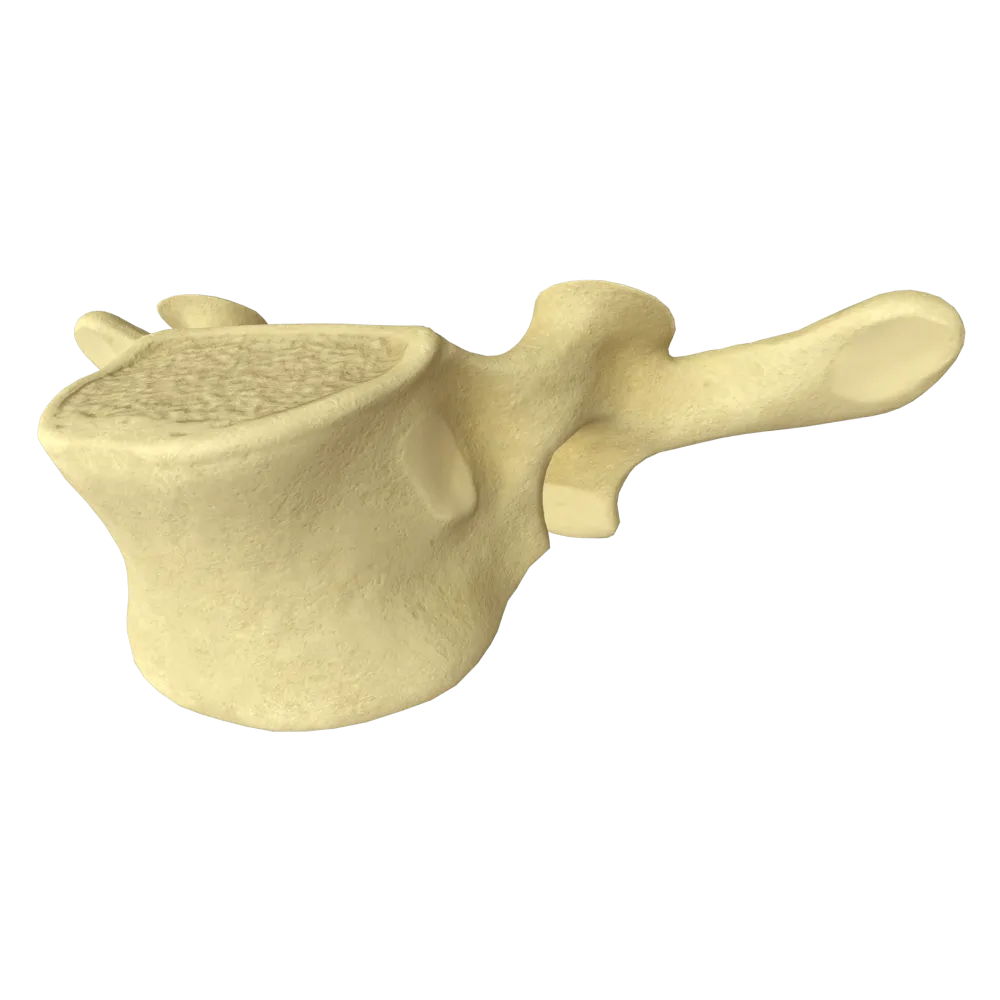
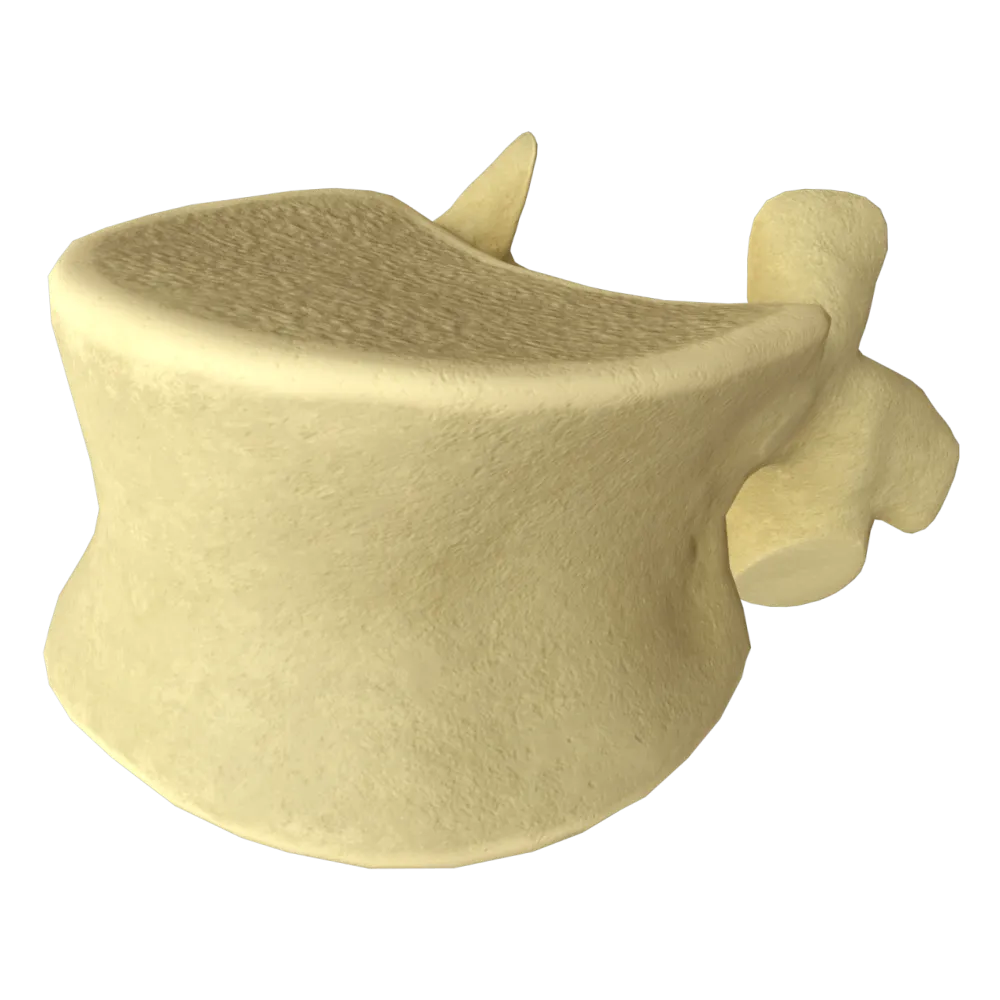
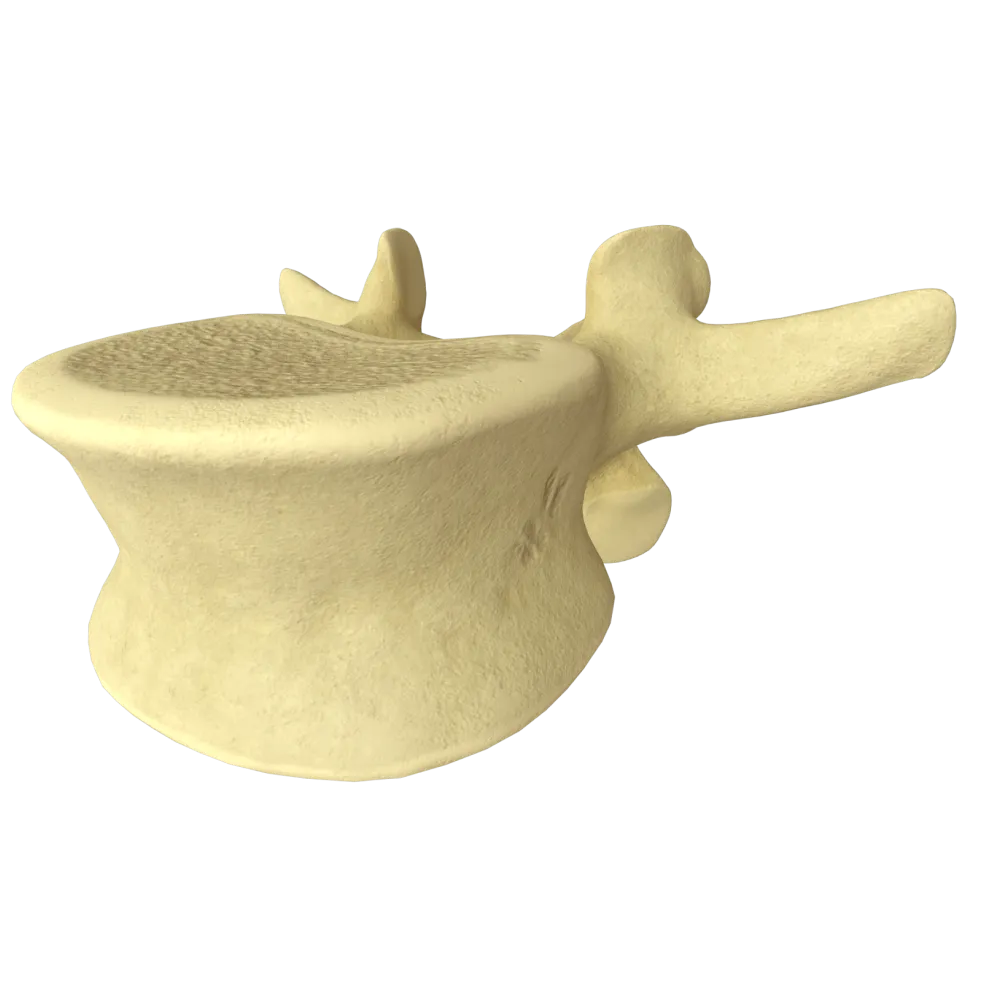
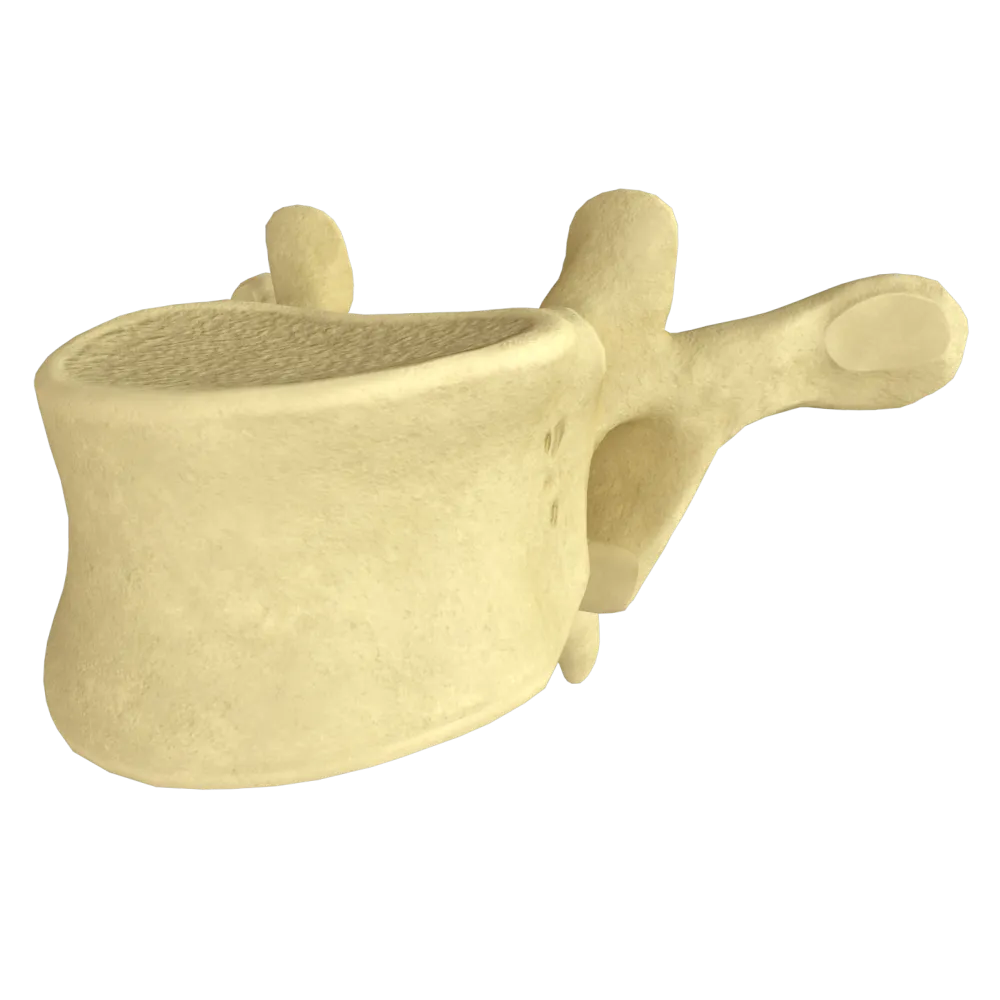
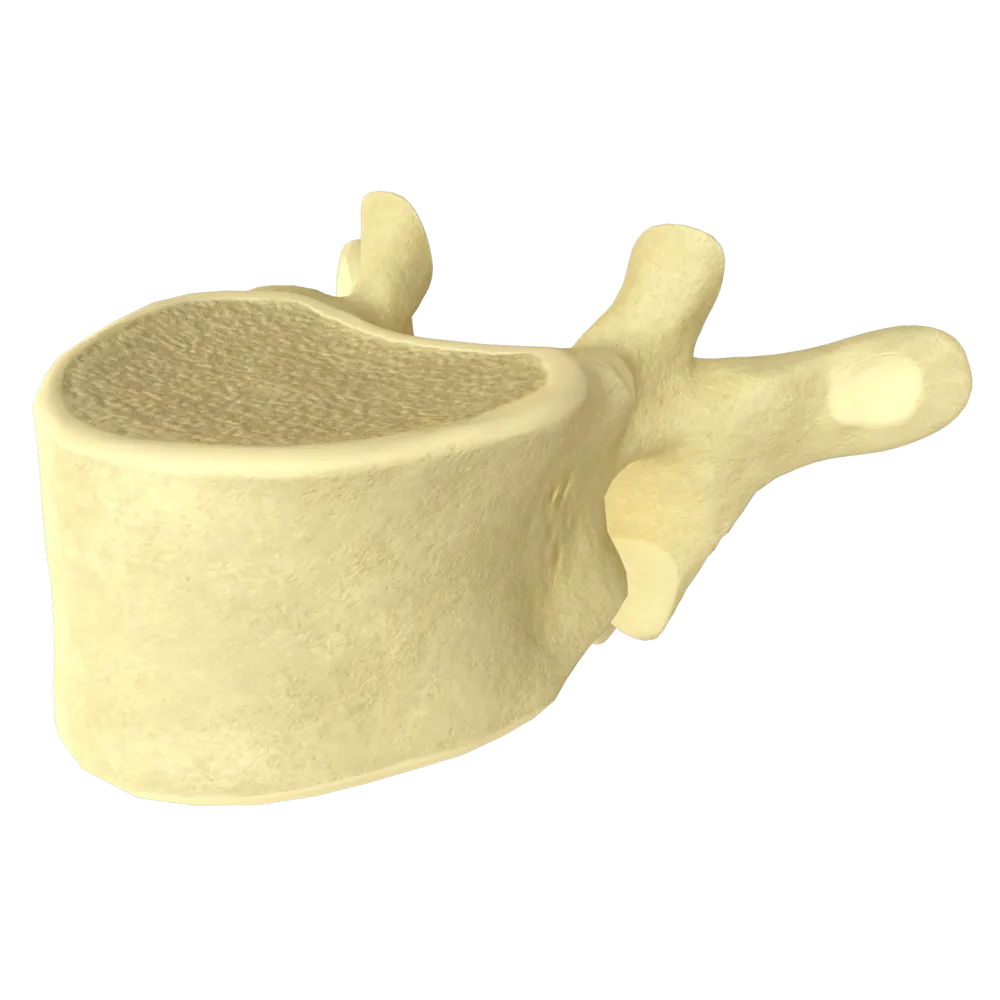
Normal anatomy quiz on the typical lumbar vertebra: structure, processes, articular surfaces, foramina, and connections.
1/20
bold
text
1. Which part of a typical lumbar vertebra is the largest compared with those in other regions of the vertebral column?
-
Vertebral arch
The bodies of the lumbar vertebrae are the most massive in the entire vertebral column because they must withstand the greatest axial load in the lower regions of the vertebral column.
-
Vertebral body
The bodies of the lumbar vertebrae are the most massive in the entire vertebral column because they must withstand the greatest axial load in the lower regions of the vertebral column.
-
Spinous process
The bodies of the lumbar vertebrae are the most massive in the entire vertebral column because they must withstand the greatest axial load in the lower regions of the vertebral column.
-
Transverse process
The bodies of the lumbar vertebrae are the most massive in the entire vertebral column because they must withstand the greatest axial load in the lower regions of the vertebral column.
-
I find it difficult to answer
The bodies of the lumbar vertebrae are the most massive in the entire vertebral column because they must withstand the greatest axial load in the lower regions of the vertebral column.
2. In which direction is the spinous process of a typical lumbar vertebra oriented?
-
Inferiorly at an acute angle, as in the thoracic vertebrae
The spinous process of a lumbar vertebra is oriented almost horizontally (perpendicular to the plane of the vertebral arch), distinguishing it from the thoracic vertebrae, in which the spinous processes are inclined sharply inferiorly.
-
Horizontally, almost perpendicular to the vertebral arch
The spinous process of a lumbar vertebra is oriented almost horizontally (perpendicular to the plane of the vertebral arch), distinguishing it from the thoracic vertebrae, in which the spinous processes are inclined sharply inferiorly.
-
Superiorly at an acute angle
The spinous process of a lumbar vertebra is oriented almost horizontally (perpendicular to the plane of the vertebral arch), distinguishing it from the thoracic vertebrae, in which the spinous processes are inclined sharply inferiorly.
-
Bifid at its tip, as in the cervical vertebrae
The spinous process of a lumbar vertebra is oriented almost horizontally (perpendicular to the plane of the vertebral arch), distinguishing it from the thoracic vertebrae, in which the spinous processes are inclined sharply inferiorly.
-
I find it difficult to answer
The spinous process of a lumbar vertebra is oriented almost horizontally (perpendicular to the plane of the vertebral arch), distinguishing it from the thoracic vertebrae, in which the spinous processes are inclined sharply inferiorly.
3. Which vertebrae comprise rudimentary ribs?
-
Only cervical vertebrae
In the cervical region, the rudimentary rib fuses with the transverse process, forming its anterior tubercle and the foramen for the vertebral artery (foramen transversarium). In the lumbar region, the rib rudiment forms a long costal process (processus costalis), which replaces the transverse process.
-
Only lumbar vertebrae
In the cervical region, the rudimentary rib fuses with the transverse process, forming its anterior tubercle and the foramen for the vertebral artery (foramen transversarium). In the lumbar region, the rib rudiment forms a long costal process (processus costalis), which replaces the transverse process.
-
Cervical and lumbar vertebrae
In the cervical region, the rudimentary rib fuses with the transverse process, forming its anterior tubercle and the foramen for the vertebral artery (foramen transversarium). In the lumbar region, the rib rudiment forms a long costal process (processus costalis), which replaces the transverse process.
-
Only thoracic vertebrae
In the cervical region, the rudimentary rib fuses with the transverse process, forming its anterior tubercle and the foramen for the vertebral artery (foramen transversarium). In the lumbar region, the rib rudiment forms a long costal process (processus costalis), which replaces the transverse process.
-
I find it difficult to answer
In the cervical region, the rudimentary rib fuses with the transverse process, forming its anterior tubercle and the foramen for the vertebral artery (foramen transversarium). In the lumbar region, the rib rudiment forms a long costal process (processus costalis), which replaces the transverse process.
4. The presence of which of the following processes is a characteristic distinguishing feature of the lumbar vertebrae?
-
Uncinate and spinous processes
The lumbar vertebrae (L1–L5) have unique processes characteristic specifically of this region: the accessory process (processus accessorius) and the mammillary process (processus mamillaris).
-
Alar and coronoid processes
The lumbar vertebrae (L1–L5) have unique processes characteristic specifically of this region: the accessory process (processus accessorius) and the mammillary process (processus mamillaris).
-
Mammillary and accessory processes
The lumbar vertebrae (L1–L5) have unique processes characteristic specifically of this region: the accessory process (processus accessorius) and the mammillary process (processus mamillaris).
-
Articular and transverse processes
The lumbar vertebrae (L1–L5) have unique processes characteristic specifically of this region: the accessory process (processus accessorius) and the mammillary process (processus mamillaris).
-
I find it difficult to answer
The lumbar vertebrae (L1–L5) have unique processes characteristic specifically of this region: the accessory process (processus accessorius) and the mammillary process (processus mamillaris).
5. How are the articular surfaces of the superior articular processes of a typical lumbar vertebra oriented?
-
In the frontal plane, directed laterally
The superior articular surfaces of the lumbar vertebrae lie in the sagittal plane and face medially (concave).
-
In the sagittal plane, directed medially (concave)
The superior articular surfaces of the lumbar vertebrae lie in the sagittal plane and face medially (concave).
-
In the horizontal plane, directed superiorly
The superior articular surfaces of the lumbar vertebrae lie in the sagittal plane and face medially (concave).
-
At an angle of 45° to the sagittal plane, anteverted
The superior articular surfaces of the lumbar vertebrae lie in the sagittal plane and face medially (concave).
-
I find it difficult to answer
The superior articular surfaces of the lumbar vertebrae lie in the sagittal plane and face medially (concave).
6. Shape of the body of a typical lumbar vertebra in horizontal section:
-
Triangular, with the apex anteverted
In horizontal section, the body of a lumbar vertebra is oval or reniform (bean-shaped), with the transverse dimension exceeding the anteroposterior dimension.
-
Oval or bean-shaped, elongated transversely
In horizontal section, the body of a lumbar vertebra is oval or reniform (bean-shaped), with the transverse dimension exceeding the anteroposterior dimension.
-
Round, equal in all diameters
In horizontal section, the body of a lumbar vertebra is oval or reniform (bean-shaped), with the transverse dimension exceeding the anteroposterior dimension.
-
Heart-shaped with an odontoid process
In horizontal section, the body of a lumbar vertebra is oval or reniform (bean-shaped), with the transverse dimension exceeding the anteroposterior dimension.
-
I find it difficult to answer
In horizontal section, the body of a lumbar vertebra is oval or reniform (bean-shaped), with the transverse dimension exceeding the anteroposterior dimension.
7. Which process of a lumbar vertebra is located at the base of the superior articular process and serves as a site of muscle attachment?
-
Costal process
The mammillary process (processus mamillaris) is located on the posterolateral surface of the superior articular process of a lumbar vertebra and serves as a site of attachment for the multifidus muscle and rotator muscles.
-
Accessory process
The mammillary process (processus mamillaris) is located on the posterolateral surface of the superior articular process of a lumbar vertebra and serves as a site of attachment for the multifidus muscle and rotator muscles.
-
Mammillary process
The mammillary process (processus mamillaris) is located on the posterolateral surface of the superior articular process of a lumbar vertebra and serves as a site of attachment for the multifidus muscle and rotator muscles.
-
Inferior articular process
The mammillary process (processus mamillaris) is located on the posterolateral surface of the superior articular process of a lumbar vertebra and serves as a site of attachment for the multifidus muscle and rotator muscles.
-
I find it difficult to answer
The mammillary process (processus mamillaris) is located on the posterolateral surface of the superior articular process of a lumbar vertebra and serves as a site of attachment for the multifidus muscle and rotator muscles.
8. What is the foramen bounded by the vertebral notches of adjacent vertebrae, through which a spinal nerve passes, called?
-
Vertebral foramen
The intervertebral foramen (foramen intervertebrale) is formed superiorly and inferiorly by the notches of the arches of adjacent vertebrae. A spinal nerve passes through it.
-
Intervertebral foramen (foramen intervertebrale)
The intervertebral foramen (foramen intervertebrale) is formed superiorly and inferiorly by the notches of the arches of adjacent vertebrae. A spinal nerve passes through it.
-
Pelvic sacral foramen
The intervertebral foramen (foramen intervertebrale) is formed superiorly and inferiorly by the notches of the arches of adjacent vertebrae. A spinal nerve passes through it.
-
Blind foramen
The intervertebral foramen (foramen intervertebrale) is formed superiorly and inferiorly by the notches of the arches of adjacent vertebrae. A spinal nerve passes through it.
-
I find it difficult to answer
The intervertebral foramen (foramen intervertebrale) is formed superiorly and inferiorly by the notches of the arches of adjacent vertebrae. A spinal nerve passes through it.
9. How many processes in total does a typical human lumbar vertebra (L1–L5) comprise?
-
5
The classical general structure of any vertebra comprises 7 principal processes: 1 spinous process, 2 transverse (costal) processes, 2 superior articular processes, and 2 inferior articular processes. However, additional specific bony projections form on the principal processes of the lumbar vertebrae: 2 mammillary processes (processus mamillares) and 2 accessory processes (processus accessorius). There are 11 processes in total.
-
7
The classical general structure of any vertebra comprises 7 principal processes: 1 spinous process, 2 transverse (costal) processes, 2 superior articular processes, and 2 inferior articular processes. However, additional specific bony projections form on the principal processes of the lumbar vertebrae: 2 mammillary processes (processus mamillares) and 2 accessory processes (processus accessorius). There are 11 processes in total.
-
11
The classical general structure of any vertebra comprises 7 principal processes: 1 spinous process, 2 transverse (costal) processes, 2 superior articular processes, and 2 inferior articular processes. However, additional specific bony projections form on the principal processes of the lumbar vertebrae: 2 mammillary processes (processus mamillares) and 2 accessory processes (processus accessorius). There are 11 processes in total.
-
9
The classical general structure of any vertebra comprises 7 principal processes: 1 spinous process, 2 transverse (costal) processes, 2 superior articular processes, and 2 inferior articular processes. However, additional specific bony projections form on the principal processes of the lumbar vertebrae: 2 mammillary processes (processus mamillares) and 2 accessory processes (processus accessorius). There are 11 processes in total.
-
I find it difficult to answer
The classical general structure of any vertebra comprises 7 principal processes: 1 spinous process, 2 transverse (costal) processes, 2 superior articular processes, and 2 inferior articular processes. However, additional specific bony projections form on the principal processes of the lumbar vertebrae: 2 mammillary processes (processus mamillares) and 2 accessory processes (processus accessorius). There are 11 processes in total.
10. Through what does the vertebral artery pass with respect to the lumbar vertebrae?
-
Through the foramina of the transverse processes of the lumbar vertebrae
The vertebral artery passes through the foramina of the transverse processes only in the cervical vertebrae (C6–C1). The lumbar vertebrae do not have foramina in the transverse processes (costal processes), and the vertebral artery does not pass through them.
-
The vertebral artery does not pass through the lumbar vertebrae
The vertebral artery passes through the foramina of the transverse processes only in the cervical vertebrae (C6–C1). The lumbar vertebrae do not have foramina in the transverse processes (costal processes), and the vertebral artery does not pass through them.
-
Through the bodies of the lumbar vertebrae in special canals
The vertebral artery passes through the foramina of the transverse processes only in the cervical vertebrae (C6–C1). The lumbar vertebrae do not have foramina in the transverse processes (costal processes), and the vertebral artery does not pass through them.
-
Through the intervertebral foramina of the lumbar region
The vertebral artery passes through the foramina of the transverse processes only in the cervical vertebrae (C6–C1). The lumbar vertebrae do not have foramina in the transverse processes (costal processes), and the vertebral artery does not pass through them.
-
I find it difficult to answer
The vertebral artery passes through the foramina of the transverse processes only in the cervical vertebrae (C6–C1). The lumbar vertebrae do not have foramina in the transverse processes (costal processes), and the vertebral artery does not pass through them.
11. What are the notches on the superior and inferior borders of the pedicle of the arch of a lumbar vertebra called?
-
Processus accessorius superior et inferior
The superior and inferior vertebral notches (incisurae vertebrales superior et inferior) are located on the superior and inferior borders of the pedicle of the arch. When adjacent vertebrae articulate, these notches form the intervertebral foramen.
-
Incisura vertebralis superior et incisura vertebralis inferior
The superior and inferior vertebral notches (incisurae vertebrales superior et inferior) are located on the superior and inferior borders of the pedicle of the arch. When adjacent vertebrae articulate, these notches form the intervertebral foramen.
-
Sulcus nervi spinalis superior et inferior
The superior and inferior vertebral notches (incisurae vertebrales superior et inferior) are located on the superior and inferior borders of the pedicle of the arch. When adjacent vertebrae articulate, these notches form the intervertebral foramen.
-
Fissura arcus vertebrae superior et inferior
The superior and inferior vertebral notches (incisurae vertebrales superior et inferior) are located on the superior and inferior borders of the pedicle of the arch. When adjacent vertebrae articulate, these notches form the intervertebral foramen.
-
I find it difficult to answer
The superior and inferior vertebral notches (incisurae vertebrales superior et inferior) are located on the superior and inferior borders of the pedicle of the arch. When adjacent vertebrae articulate, these notches form the intervertebral foramen.
12. How are the articular surfaces of the inferior articular processes of a typical lumbar vertebra oriented?
-
In the sagittal plane, directed laterally (convex)
The inferior articular processes of the lumbar vertebrae have laterally directed (convex) articular surfaces located in the sagittal plane. They articulate with the concave, medially directed surfaces of the superior articular processes of the subjacent vertebra.
-
In the horizontal plane, directed inferiorly
The inferior articular processes of the lumbar vertebrae have laterally directed (convex) articular surfaces located in the sagittal plane. They articulate with the concave, medially directed surfaces of the superior articular processes of the subjacent vertebra.
-
In the frontal plane, anteverted and directed medially
The inferior articular processes of the lumbar vertebrae have laterally directed (convex) articular surfaces located in the sagittal plane. They articulate with the concave, medially directed surfaces of the superior articular processes of the subjacent vertebra.
-
At an angle of 45°, directed posteriorly and laterally
The inferior articular processes of the lumbar vertebrae have laterally directed (convex) articular surfaces located in the sagittal plane. They articulate with the concave, medially directed surfaces of the superior articular processes of the subjacent vertebra.
-
I find it difficult to answer
The inferior articular processes of the lumbar vertebrae have laterally directed (convex) articular surfaces located in the sagittal plane. They articulate with the concave, medially directed surfaces of the superior articular processes of the subjacent vertebra.
13. How many lumbar vertebrae normally comprise the lumbar region of the vertebral column?
-
4
Normally, the lumbar region of the vertebral column consists of 5 vertebrae (L1–L5). The presence of 6 lumbar vertebrae (lumbarization) or 4 lumbar vertebrae (sacralization) constitutes developmental anomalies.
-
5
Normally, the lumbar region of the vertebral column consists of 5 vertebrae (L1–L5). The presence of 6 lumbar vertebrae (lumbarization) or 4 lumbar vertebrae (sacralization) constitutes developmental anomalies.
-
6
Normally, the lumbar region of the vertebral column consists of 5 vertebrae (L1–L5). The presence of 6 lumbar vertebrae (lumbarization) or 4 lumbar vertebrae (sacralization) constitutes developmental anomalies.
-
7
Normally, the lumbar region of the vertebral column consists of 5 vertebrae (L1–L5). The presence of 6 lumbar vertebrae (lumbarization) or 4 lumbar vertebrae (sacralization) constitutes developmental anomalies.
-
I find it difficult to answer
Normally, the lumbar region of the vertebral column consists of 5 vertebrae (L1–L5). The presence of 6 lumbar vertebrae (lumbarization) or 4 lumbar vertebrae (sacralization) constitutes developmental anomalies.
14. Which anatomical structures bound the vertebral foramen (foramen vertebrale) of a lumbar vertebra?
-
The spinous process and costal processes
The vertebral foramen (foramen vertebrale) of a lumbar vertebra (as in other regions) is formed by the junction of the posterior surface of the vertebral body (corpus vertebrae) and the vertebral arch (arcus vertebrae). .
-
The posterior surface of the vertebral body and its arch
The vertebral foramen (foramen vertebrale) of a lumbar vertebra (as in other regions) is formed by the junction of the posterior surface of the vertebral body (corpus vertebrae) and the vertebral arch (arcus vertebrae). .
-
The superior and inferior articular processes
The vertebral foramen (foramen vertebrale) of a lumbar vertebra (as in other regions) is formed by the junction of the posterior surface of the vertebral body (corpus vertebrae) and the vertebral arch (arcus vertebrae). .
-
Notches of adjacent vertebrae
The vertebral foramen (foramen vertebrale) of a lumbar vertebra (as in other regions) is formed by the junction of the posterior surface of the vertebral body (corpus vertebrae) and the vertebral arch (arcus vertebrae). .
-
I find it difficult to answer
The vertebral foramen (foramen vertebrale) of a lumbar vertebra (as in other regions) is formed by the junction of the posterior surface of the vertebral body (corpus vertebrae) and the vertebral arch (arcus vertebrae). .
15. What is the articulation formed by the superior articular process of the subjacent lumbar vertebra and the inferior articular process of the superjacent lumbar vertebra called?
-
Intervertebral symphysis
The articulation between the articular processes of adjacent vertebrae is called a zygapophysial joint (articulatio zygapophysialis). In the lumbar region, these joints are oriented predominantly in the sagittal plane.
-
Zygapophyseal joint
The articulation between the articular processes of adjacent vertebrae is called a zygapophysial joint (articulatio zygapophysialis). In the lumbar region, these joints are oriented predominantly in the sagittal plane.
-
Uncovertebral joint
The articulation between the articular processes of adjacent vertebrae is called a zygapophysial joint (articulatio zygapophysialis). In the lumbar region, these joints are oriented predominantly in the sagittal plane.
-
Cruveilhier joint
The articulation between the articular processes of adjacent vertebrae is called a zygapophysial joint (articulatio zygapophysialis). In the lumbar region, these joints are oriented predominantly in the sagittal plane.
-
I find it difficult to answer
The articulation between the articular processes of adjacent vertebrae is called a zygapophysial joint (articulatio zygapophysialis). In the lumbar region, these joints are oriented predominantly in the sagittal plane.
16. Where is the mammillary process (processus mamillaris) of a lumbar vertebra located?
-
On the tip of the spinous process
Mammillary process (processus mamillaris): A paired tubercle located on the posterolateral surface of the superior articular processes (processus articulares superiores). The deep muscles of the back attach to it.
-
On the posterolateral (external) border of the superior articular process
Mammillary process (processus mamillaris): A paired tubercle located on the posterolateral surface of the superior articular processes (processus articulares superiores). The deep muscles of the back attach to it.
-
At the base of the costal process
Mammillary process (processus mamillaris): A paired tubercle located on the posterolateral surface of the superior articular processes (processus articulares superiores). The deep muscles of the back attach to it.
-
On the inferior surface of the vertebral body
Mammillary process (processus mamillaris): A paired tubercle located on the posterolateral surface of the superior articular processes (processus articulares superiores). The deep muscles of the back attach to it.
-
I find it difficult to answer
Mammillary process (processus mamillaris): A paired tubercle located on the posterolateral surface of the superior articular processes (processus articulares superiores). The deep muscles of the back attach to it.
17. What are the characteristics of the laminae of the arch (laminae arcus) of a typical lumbar vertebra?
-
Long and narrow, overlapping one another in an imbricated manner
The laminae of the arches of the lumbar vertebrae are broad and relatively short (their height is less than that of the thoracic vertebrae); they do not overlap one another in an imbricated manner, as in the thoracic region, resulting in broad spaces filled by the ligamenta flava.
-
Broad and short; adjacent laminae do not overlap
The laminae of the arches of the lumbar vertebrae are broad and relatively short (their height is less than that of the thoracic vertebrae); they do not overlap one another in an imbricated manner, as in the thoracic region, resulting in broad spaces filled by the ligamenta flava.
-
Long and broad, with a foramen for a nerve
The laminae of the arches of the lumbar vertebrae are broad and relatively short (their height is less than that of the thoracic vertebrae); they do not overlap one another in an imbricated manner, as in the thoracic region, resulting in broad spaces filled by the ligamenta flava.
-
Rudimentary and do not form a closed arch
The laminae of the arches of the lumbar vertebrae are broad and relatively short (their height is less than that of the thoracic vertebrae); they do not overlap one another in an imbricated manner, as in the thoracic region, resulting in broad spaces filled by the ligamenta flava.
-
I find it difficult to answer
The laminae of the arches of the lumbar vertebrae are broad and relatively short (their height is less than that of the thoracic vertebrae); they do not overlap one another in an imbricated manner, as in the thoracic region, resulting in broad spaces filled by the ligamenta flava.
18. What are the key anatomical features of the spinous processes (processus spinosus) of the lumbar vertebrae compared with those of other regions?
-
They are massive, quadrangular, and directed strictly horizontally
The spinous processes of the lumbar vertebrae are broad, quadrangular plates flattened laterally, with a thickened posterior border; they are directed almost strictly posteriorly (horizontally), without an inferior inclination.
-
They are long, slender, and directed sharply inferiorly, overlapping one another in an imbricated manner
The spinous processes of the lumbar vertebrae are broad, quadrangular plates flattened laterally, with a thickened posterior border; they are directed almost strictly posteriorly (horizontally), without an inferior inclination.
-
They are short, bifid at the tip, and directed horizontally
The spinous processes of the lumbar vertebrae are broad, quadrangular plates flattened laterally, with a thickened posterior border; they are directed almost strictly posteriorly (horizontally), without an inferior inclination.
-
They are completely reduced and replaced by the ligamentous apparatus
The spinous processes of the lumbar vertebrae are broad, quadrangular plates flattened laterally, with a thickened posterior border; they are directed almost strictly posteriorly (horizontally), without an inferior inclination.
-
I find it difficult to answer
The spinous processes of the lumbar vertebrae are broad, quadrangular plates flattened laterally, with a thickened posterior border; they are directed almost strictly posteriorly (horizontally), without an inferior inclination.
19. What forms the posterior wall of the vertebral canal at the level of the lumbar vertebrae?
-
The posterior longitudinal ligament and vertebral bodies
The posterior wall of the vertebral canal in the lumbar region is formed by the laminae of the vertebral arches and the ligamenta flava (ligg. flava), which are located between the laminae of adjacent arches. The ligamenta flava contain numerous elastic fibers and are yellowish in color.
-
The laminae of the vertebral arches and ligamenta flava (ligg. flava)
The posterior wall of the vertebral canal in the lumbar region is formed by the laminae of the vertebral arches and the ligamenta flava (ligg. flava), which are located between the laminae of adjacent arches. The ligamenta flava contain numerous elastic fibers and are yellowish in color.
-
The supraspinous ligament and interspinous ligaments
The posterior wall of the vertebral canal in the lumbar region is formed by the laminae of the vertebral arches and the ligamenta flava (ligg. flava), which are located between the laminae of adjacent arches. The ligamenta flava contain numerous elastic fibers and are yellowish in color.
-
Only the laminae of the arches, without a ligamentous component
The posterior wall of the vertebral canal in the lumbar region is formed by the laminae of the vertebral arches and the ligamenta flava (ligg. flava), which are located between the laminae of adjacent arches. The ligamenta flava contain numerous elastic fibers and are yellowish in color.
-
I find it difficult to answer
The posterior wall of the vertebral canal in the lumbar region is formed by the laminae of the vertebral arches and the ligamenta flava (ligg. flava), which are located between the laminae of adjacent arches. The ligamenta flava contain numerous elastic fibers and are yellowish in color.
20. Which curvature of the vertebral column forms in the lumbar region, and in which direction is it oriented?
-
Kyphosis — posterior convexity
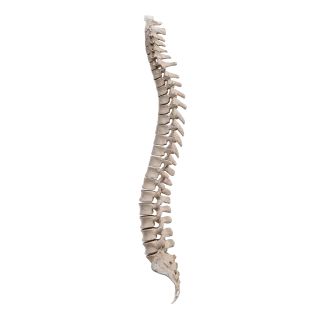
Lumbar lordosis (lordosis lumbalis) normally forms in the lumbar region; it is a physiological curvature of the vertebral column with an anteverted convexity. It is a secondary curvature that forms during postnatal development with the attainment of an upright posture.
-
Lordosis — anteverted convexity
Lumbar lordosis (lordosis lumbalis) normally forms in the lumbar region; it is a physiological curvature of the vertebral column with an anteverted convexity. It is a secondary curvature that forms during postnatal development with the attainment of an upright posture.
-
Scoliosis — lateral curvature
Lumbar lordosis (lordosis lumbalis) normally forms in the lumbar region; it is a physiological curvature of the vertebral column with an anteverted convexity. It is a secondary curvature that forms during postnatal development with the attainment of an upright posture.
-
No curvature is present; the lumbar region is straight
Lumbar lordosis (lordosis lumbalis) normally forms in the lumbar region; it is a physiological curvature of the vertebral column with an anteverted convexity. It is a secondary curvature that forms during postnatal development with the attainment of an upright posture.
-
I find it difficult to answer
Lumbar lordosis (lordosis lumbalis) normally forms in the lumbar region; it is a physiological curvature of the vertebral column with an anteverted convexity. It is a secondary curvature that forms during postnatal development with the attainment of an upright posture.
Retake this quiz?
Your current progress will be reset.