Odontogenic Sinusitis: Classification, Etiology, Clinical Presentation, Diagnosis, and Treatment
A detailed overview of odontogenic maxillary sinusitis: causes, symptoms of acute and chronic inflammation, diagnosis, and modern treatment approaches.


Anesthesia
Pain management and sedation techniques

Angiology
Arterial and venous pathologies

Cardiology
Acquired and congenital heart diseases

Dentistry
Diseases of teeth, gums, and the oral cavity

Dermatology
Disorders of the skin and subcutaneous tissue

Embryology
Stages of embryogenesis and congenital anomalies

Endocrinology
Disorders of the glands and hormonal imbalance

Gastroenterology
Stomach, intestinal, and digestive diseases

Gynecology
Diseases of female reproductive organs

Hematology
Hematopoiesis and blood-related disorders

Hepatology
Liver, gallbladder, and biliary tract diseases

Histology
Microscopic tissue and cell structures

Infectious diseases
Bacterial, viral, and parasitic infections

Neurology
Brain, spinal cord, and peripheral nerve disorders

Obstetrics
Pregnancy complications and abnormal fetal positions

Oncology
Cancer types, benign and malignant tumors

Ophthalmology
Conditions affecting the eyes and vision

Orthopedics
Bone, joint, and soft tissue disorders

Otorhinolaryngology
Ear, nose, and throat diseases

Pediatrics
Child health, development, and clinical conditions

Physiology
Biological processes within organs and systems

Plastic surgery
Reconstructive and aesthetic procedures

Pulmonology
Lung and respiratory tract diseases

Traumatology
Acute injuries and musculoskeletal trauma

Urology
Urinary tract and male reproductive disorders
Anesthesia
Pain management and sedation techniques
Angiology
Arterial and venous pathologies
Cardiology
Acquired and congenital heart diseases
Dentistry
Diseases of teeth, gums, and the oral cavity
Dermatology
Disorders of the skin and subcutaneous tissue
Embryology
Stages of embryogenesis and congenital anomalies
Endocrinology
Disorders of the glands and hormonal imbalance
Gastroenterology
Stomach, intestinal, and digestive diseases
Gynecology
Diseases of female reproductive organs
Hematology
Hematopoiesis and blood-related disorders
Hepatology
Liver, gallbladder, and biliary tract diseases
Histology
Microscopic tissue and cell structures
Infectious diseases
Bacterial, viral, and parasitic infections
Neurology
Brain, spinal cord, and peripheral nerve disorders
Obstetrics
Pregnancy complications and abnormal fetal positions
Oncology
Cancer types, benign and malignant tumors
Ophthalmology
Conditions affecting the eyes and vision
Orthopedics
Bone, joint, and soft tissue disorders
Otorhinolaryngology
Ear, nose, and throat diseases
Pediatrics
Child health, development, and clinical conditions
Physiology
Biological processes within organs and systems
Plastic surgery
Reconstructive and aesthetic procedures
Pulmonology
Lung and respiratory tract diseases
Traumatology
Acute injuries and musculoskeletal trauma
Urology
Urinary tract and male reproductive disorders
Specialties
AnesthesiaAngiologyCardiologyDentistryDermatologyEmbryologyEndocrinologyGastroenterologyGynecologyHematologyHepatologyHistologyInfectious diseasesNeurologyObstetricsOncologyOphthalmologyOrthopedicsOtorhinolaryngologyPediatricsPhysiologyPlastic surgeryPulmonologyTraumatologyUrology
This article is for informational purposes only
The content on this website, including text, graphics, and other materials, is provided for informational purposes only. It is not intended as advice or guidance. Regarding your specific medical condition or treatment, please consult your healthcare provider.
Chronic laryngitis belongs to a group of persistent inflammatory laryngeal conditions lasting longer than 3 weeks (primarily develops due to prolonged exposure to various irritants). Forms of the disease vary by etiology (cause) and the nature of pathomorphological changes in the mucosa — ranging from catarrhal inflammation to hyperplasia or atrophy. The precise identification of the form defines the treatment strategy and prognosis.
The primary clinical, morphological, and etiological forms of chronic laryngitis include:
The most common causes of chronic catarrhal laryngitis are smoking, excessive vocal strain, and allergens. The inflammatory process may spread from the nasopharynx or oropharynx, or from the lower respiratory tract. Recurrent sinusitis, rhinitis, tracheitis, and bronchitis may contribute to chronic laryngitis.
In patients with chronic laryngitis, the following bacteria are present: Staphylococcus aureus, Haemophilus influenzae, Candida albicans, Moraxella nonliquefaciens, Neisseria meningitidis, Streptococcus pneumoniae, Lactobacillus spp, Helicobacter pylori.
Chronic catarrhal laryngitis arises as a result of exposure to irritants. The laryngeal epithelium undergoes hyperplasia, with submucosal edema and catarrh observed. The mucosa becomes smooth and hyperemic. The vocal folds are also hyperemic, thickened, and fail to completely close during phonation; mucus is present in the piriform sinuses.
Leading symptoms of chronic catarrhal laryngitis include:
Diagnosis is based on anamnesis and clinical examination. Depending on the clinic’s equipment, indirect laryngoscopy or flexible video laryngoscopy is performed.
The first and most important step in treatment is identifying and removing the causal factor of the inflammation. Smoking cessation and reducing vocal strain are recommended. If the infection extends from the upper or lower airway, it is imperative to manage the primary source.
To control inflammation, inhalations with saline solutions, antibacterial agents, or glucocorticosteroids as needed are advised.
To alleviate inflammation, inhalations with saline solutions, antibiotics, and glucocorticosteroids, if necessary, are advised.
In reflux laryngitis, the etiological factor is cardia insufficiency, causing hydrochloric acid reflux into the upper airway.
Reflux laryngitis is characterized by hyperemia and edema in the interariespace, with mucus accumulation in the piriform sinuses.

Symptoms of Reflux Laryngitis:
Symptoms worsen at night and during sleep.
Diagnosis is based on anamnesis and clinical examination. Indirect laryngoscopy or video laryngoscopy is performed depending on the equipment. In reflux laryngitis, consulting a gastroenterologist, with esophagogastroduodenoscopy and esophageal pH monitoring, is essential.
In reflux laryngitis, prescribed therapy by a gastroenterologist aims to reduce gastric acid secretion. To reduce laryngeal inflammation, saline inhalations, antibiotics, and glucocorticosteroids, if necessary, are indicated.
Atrophic laryngitis is more commonly seen in elderly patients, during hormonal changes (such as menopause), or after long-term exposure to harmful working conditions (high dustiness, harmful chemicals).
In atrophic laryngitis, the number of mucous glands in the larynx diminishes. The mucosa appears parchment-like, thin, dull, and covered with thick, viscous mucus. The vocal folds are also thin and fail to close completely when phonating, leaving an oval glottal gap.
Atrophic laryngitis is characterized by the following symptoms:
Diagnosis is based on anamnesis and clinical examination. Depending on the clinic’s equipment, indirect laryngoscopy or flexible video laryngoscopy is performed.
For atrophic laryngitis, consistent hydration of the mucosa by saline inhalations or oil-based sprays is advised. Mucosal irrigation with iodine solutions incites a mild irritant response, enhancing mucus production.
Fungal laryngitis typically results from chronicization of acute fungal laryngitis. It develops due to poor or incorrect therapy for fungi such as Candida, Aspergillus, Penicillium. More common in immunocompromised patients or those chronically using inhaled corticosteroids.
In cases of fungal laryngitis caused by Candida, white, curd-like deposits are present on the hyperemic mucosa, most commonly on the epiglottis. In aspergillosis, black colonies may be seen on the irritated mucosal surface.
Fungal laryngitis presents with the following symptoms:
Diagnosis is based on medical history and physical examination. Depending on available equipment and protocols, indirect laryngoscopy or flexible video laryngoscopy may be performed. To identify the causative pathogen and assess its antimicrobial susceptibility, a bacteriological examination of laryngeal mucosal samples is performed.
Fungal laryngitis is typically managed with local or systemic antifungal agents.
To hydrate the laryngeal mucosa, saline inhalations are recommended.
This group of conditions encompasses widespread hyperplastic laryngitis and chronic edematous-polypoid laryngitis (Reinke’s edema). Notably, some authors classify Reinke’s edema as a benign laryngeal tumor.
This group of laryngeal disorders occurs predominantly in individuals with voice-dependent professions who misuse or overstrain their vocal cords. It is also commonly observed among smokers and individuals with chronic alcohol use. Less frequently, cases occur in individuals with harmful profession-related factors (dust, paint solvents, textiles, and leather).
Diffuse hyperplastic laryngitis is marked by extensive hyperplasia of the laryngeal mucosa. Various regions of the larynx become symmetrically thickened. Various regions of the larynx become symmetrically thickened. The most commonly affected areas include the free edges of the vocal folds, the arytenoid cartilages, and the interarytenoid region. Hyperplastic growths may lead to significant narrowing of the glottic airway. The mucosa appears hyperemic and uneven.
In edematous–polypoid laryngitis, there is bilateral, gelatinous swelling occurs along the entire free edge of the vocal folds. These folds fail to close completely during phonation, and the glottic airway may become narrowed due to mucosal overgrowth.
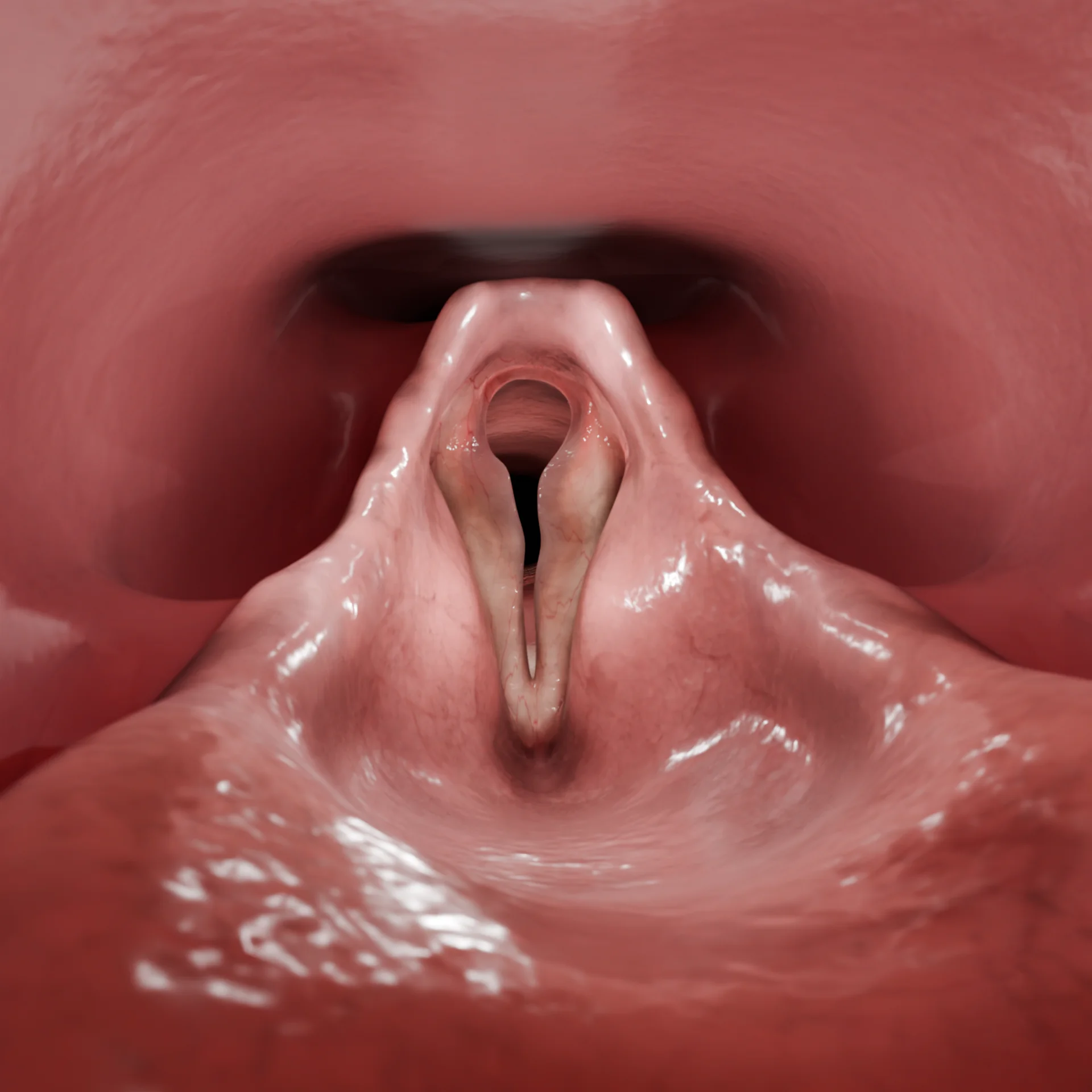
The following common symptoms are characteristic of all diseases in this group:
In cases of pronounced mucosal hyperplasia, symptoms may progress to aphonia or laryngeal stenosis secondary to significant airway narrowing.
Diagnosis is based on medical history and physical examination. Depending on available equipment and protocols, indirect laryngoscopy or flexible video laryngoscopy may be performed.
A biopsy combined with microscopic examination — most commonly carried out intraoperatively — is required.
Find more scientifically accurate content on our social media



Initial management for all patients includes eliminating contributing factors such as tobacco and alcohol use, excessive vocal strain, and occupational exposure to harmful irritants. Individuals in voice-dependent professions should consult a phoniatrist for targeted vocal therapy.
The treatment approach is typically multimodal and includes both medical therapy and surgical excision of hyperplastic lesions.
Conservative therapy:
Surgical treatment consists of the mechanical removal of altered tissues. Several methods are distinguished:
Postoperative voice rest is essential to support optimal healing and reduce the risk of recurrence.
1. What are the characteristic symptoms of chronic laryngitis?
2. What can be the cause of chronic laryngitis?
3. What complications can arise with chronic laryngitis?
4. What clinical recommendations exist for treating chronic laryngitis?
References
1.
VOKA 3D Anatomy & Pathology – Complete Anatomy and Pathology 3D Atlas. VOKA 3D Anatomy & Pathology.
Available from: https://catalog.voka.io/
2.
Sclafani AP, Dyleski RA, Pitman MJ, Schantz SP. Total otolaryngology—head and neck surgery. New York: Thieme; 2015. ISBN: 978-1-60406-646-3.
3.
Behrbohm H, Kaschke O, Nawka T, Swift A. Ear, Nose, and Throat Diseases. 2nd ed. Moscow: MEDpress-inform; 2016. 776 p. [In Russian.] ISBN 978-5-00030-322-1.
4.
Toward an Understanding of the Pathophysiology of Chronic Laryngitis. Perspect ASHA Spec Interest Groups. 2016 Mar;1(3):14-25. doi: 10.1044/persp1.sig3.14. Epub 2016 Mar 1. PMID: 32864454; PMCID: PMC8951218.
5.
Stein DJ, Noordzij JP. Incidence of chronic laryngitis. Ann Otol Rhinol Laryngol. 2013 Dec;122(12):771-4. doi: 10.1177/000348941312201207. PMID: 24592580.
6.
Zhukhovitskaya A, Verma SP. Identification and Management of Chronic Laryngitis. Otolaryngol Clin North Am. 2019 Aug;52(4):607-616. doi: 10.1016/j.otc.2019.03.004. Epub 2019 May 14. PMID: 31101358.
7.
Endoscopic approach to hyperplastic laryngeal lesions: a literature review and personal experience. The Egyptian Journal of Otolaryngology [Internet]. 2023 Aug 21;39(1).
Available from: https://doi.org/10.1186/s43163-023-00490-4
Make VOKA your preferred source
See more VOKA articles in Google Search
Table of Contents









Summarize article with AI
Choose your preferable AI assistant:
Link successfully copied to clipboard
Thank you!
Your message is sent!
Our experts will contact you shortly. If you have any additional questions, please contact us at info@voka.io