Odontogenic Sinusitis: Classification, Etiology, Clinical Presentation, Diagnosis, and Treatment
A detailed overview of odontogenic maxillary sinusitis: causes, symptoms of acute and chronic inflammation, diagnosis, and modern treatment approaches.


Anesthesia
Pain management and sedation techniques

Angiology
Arterial and venous pathologies

Cardiology
Acquired and congenital heart diseases

Dentistry
Diseases of teeth, gums, and the oral cavity

Dermatology
Disorders of the skin and subcutaneous tissue

Embryology
Stages of embryogenesis and congenital anomalies

Endocrinology
Disorders of the glands and hormonal imbalance

Gastroenterology
Stomach, intestinal, and digestive diseases

Gynecology
Diseases of female reproductive organs

Hematology
Hematopoiesis and blood-related disorders

Hepatology
Liver, gallbladder, and biliary tract diseases

Histology
Microscopic tissue and cell structures

Infectious diseases
Bacterial, viral, and parasitic infections

Neurology
Brain, spinal cord, and peripheral nerve disorders

Obstetrics
Pregnancy complications and abnormal fetal positions

Oncology
Cancer types, benign and malignant tumors

Ophthalmology
Conditions affecting the eyes and vision

Orthopedics
Bone, joint, and soft tissue disorders

Otorhinolaryngology
Ear, nose, and throat diseases

Pediatrics
Child health, development, and clinical conditions

Physiology
Biological processes within organs and systems

Plastic surgery
Reconstructive and aesthetic procedures

Pulmonology
Lung and respiratory tract diseases

Traumatology
Acute injuries and musculoskeletal trauma

Urology
Urinary tract and male reproductive disorders
Anesthesia
Pain management and sedation techniques
Angiology
Arterial and venous pathologies
Cardiology
Acquired and congenital heart diseases
Dentistry
Diseases of teeth, gums, and the oral cavity
Dermatology
Disorders of the skin and subcutaneous tissue
Embryology
Stages of embryogenesis and congenital anomalies
Endocrinology
Disorders of the glands and hormonal imbalance
Gastroenterology
Stomach, intestinal, and digestive diseases
Gynecology
Diseases of female reproductive organs
Hematology
Hematopoiesis and blood-related disorders
Hepatology
Liver, gallbladder, and biliary tract diseases
Histology
Microscopic tissue and cell structures
Infectious diseases
Bacterial, viral, and parasitic infections
Neurology
Brain, spinal cord, and peripheral nerve disorders
Obstetrics
Pregnancy complications and abnormal fetal positions
Oncology
Cancer types, benign and malignant tumors
Ophthalmology
Conditions affecting the eyes and vision
Orthopedics
Bone, joint, and soft tissue disorders
Otorhinolaryngology
Ear, nose, and throat diseases
Pediatrics
Child health, development, and clinical conditions
Physiology
Biological processes within organs and systems
Plastic surgery
Reconstructive and aesthetic procedures
Pulmonology
Lung and respiratory tract diseases
Traumatology
Acute injuries and musculoskeletal trauma
Urology
Urinary tract and male reproductive disorders
Specialties
AnesthesiaAngiologyCardiologyDentistryDermatologyEmbryologyEndocrinologyGastroenterologyGynecologyHematologyHepatologyHistologyInfectious diseasesNeurologyObstetricsOncologyOphthalmologyOrthopedicsOtorhinolaryngologyPediatricsPhysiologyPlastic surgeryPulmonologyTraumatologyUrology
This article is for informational purposes only
The content on this website, including text, graphics, and other materials, is provided for informational purposes only. It is not intended as advice or guidance. Regarding your specific medical condition or treatment, please consult your healthcare provider.
Infectious diseases of the external auditory canal (otitis externa) are localized inflammation of the skin and underlying tissues (hair follicles, subcutaneous fatty tissue, cartilage with cartilage, in some cases – temporal bone).
The following forms of otitis externa are distinguished according to clinical classification:
3D-models of otitis externa:
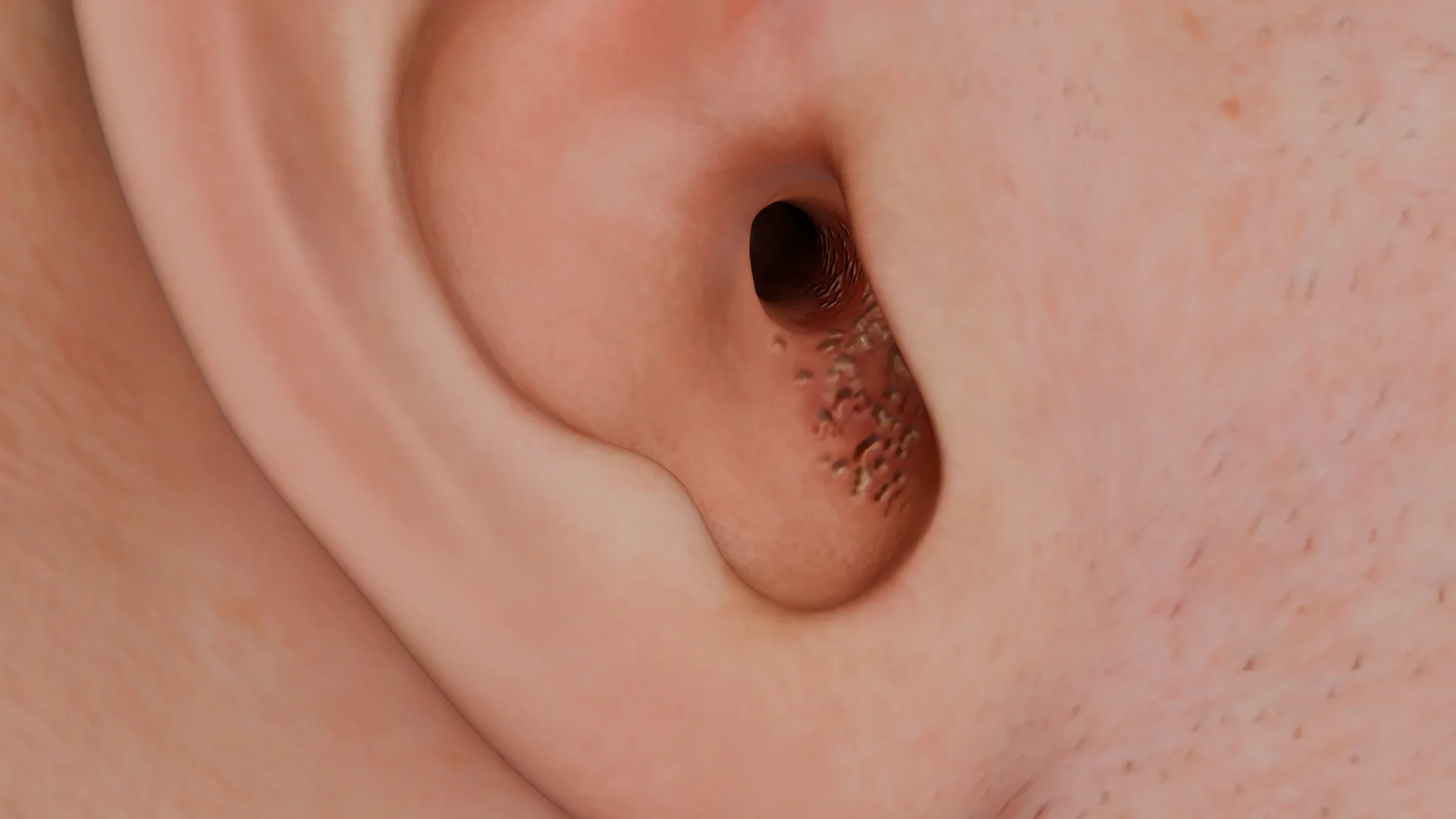 Herpetic infection of the external ear canal
 Furuncle of the external auditory canal (infiltration stage)
 Furuncle of the external auditory canal (abscessed stage)
 External diffuse bacterial otitis media
.webp) Otomycosis caused by Aspergillus niger
Otomycosis caused by Aspergillus niger.webp) Otomycosis caused by Candida albicans
Otomycosis caused by Candida albicans%20otitis%20externa_2.webp) Malignant necrotizing otitis externa
Malignant necrotizing otitis externa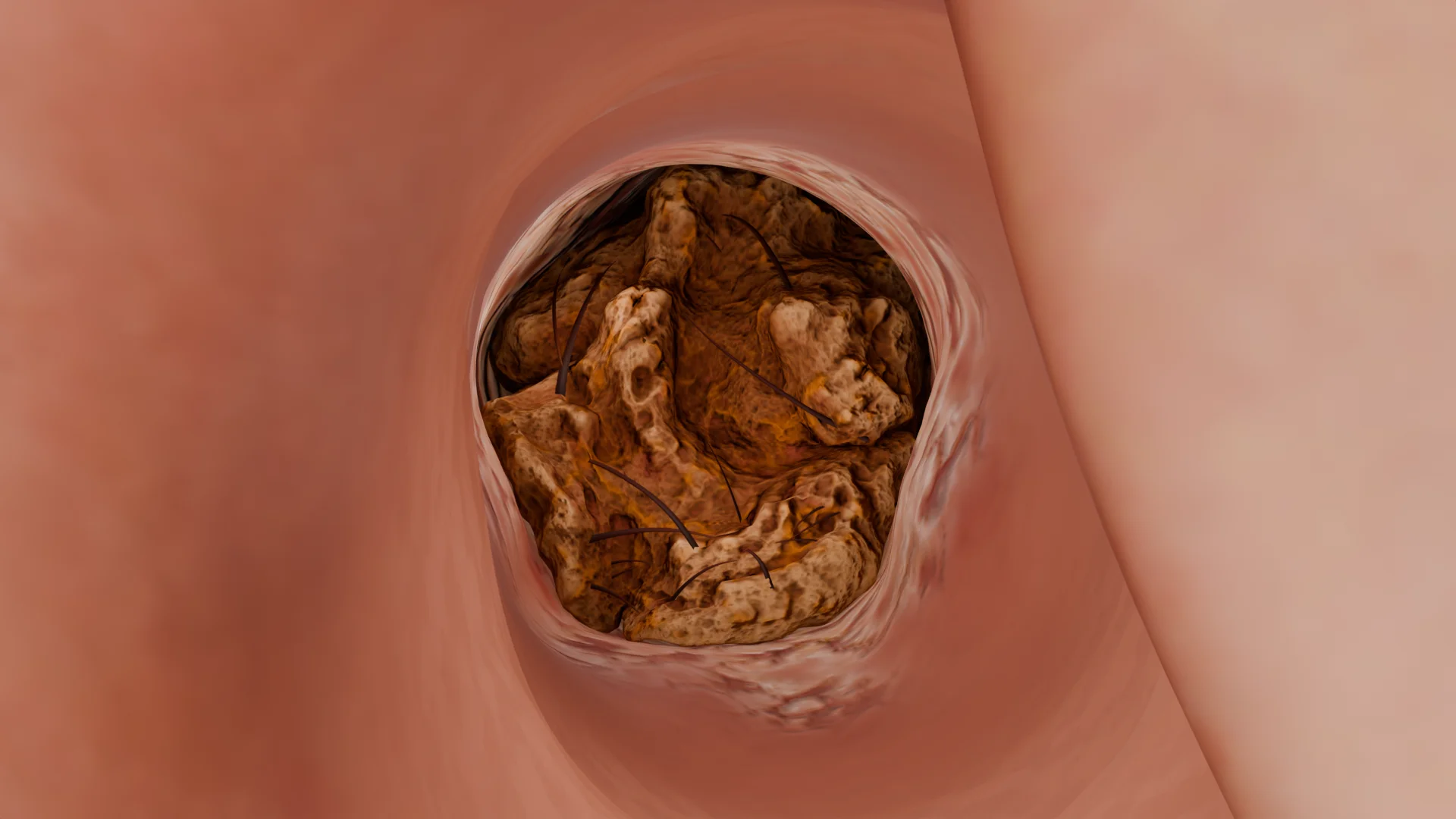 Keratosis obturans
Mixed flora (bacterial, viral, fungal) is the etiologic factor in the development of outer ear infections. The following predisposing factors should also be present:
Bacterial causative agents of external otitis media:
Herpetic infection is caused by:
Mycoses of the auditory canal are caused by:
Herpetic infection of the external auditory canal is a recurrent skin lesion caused by herpes virus type 1 or type 3.
After initial infection, the herpes virus remains latent within neural ganglia (remission phase). But under the influence of external factors (weakened immune system, stress, UV exposure, progression of chronic diseases, etc.), the virus becomes activated and spreads along nerve fibers with characteristic cutaneous manifestations (exacerbation phase).
During exacerbation, multiple vesicles appear on erythematous edematous skin. These rupture within 2–3 days and become covered with crusts. The crusts subsequently detach, followed by complete healing.
Secondary bacterial infection may occur due to scratching of vesicles or crusts, complicating and prolonging the disease course.
Features of external ear involvement in HSV-1 infection (Herpes simplex):
Features of external ear involvement in HHV-3 infection (Varicella zoster):
A furuncle of the external auditory canal (localized otitis externa) is inflammation of the hair follicle and surrounding tissues (skin, subcutaneous fat tissue, sebaceous gland). It is important to bear in mind that hair follicles in the auditory canal are located in the anterior cartilaginous portion. Infection occurs during attempts at self-cleaning of the ear canal with unwashed hands or improvised objects (paper clips, toothpicks, matches, etc.).
This infectious process is characterized by distinct stages.
Phase 1 (infiltration stage):
Phase 2 (abscess formation stage):
During recovery, the necrotic cavity is replaced by scar tissue.
Diffuse bacterial otitis externa is inflammatory changes of the skin of the external auditory canal. Based on the course, acute and chronic otitis externa (more than 6 weeks) are distinguished.
The inflammatory process develops in the setting of:
Special consideration should be given to otitis externa arising secondary to middle ear pathology, in which purulent discharge continuously enters the external auditory canal through a perforated tympanic membrane and contributes to disease progression.
Against a background of pronounced skin hyperemia, marked edema of the subcutaneous tissue develops, predominantly in the membranous-cartilaginous portion of the auditory canal. The tissues become heavily saturated with purulent discharge and desquamated epidermis. The edema may become so severe that the canal walls adhere to one another, the lumen becomes obstructed, and the deep portions and tympanic membrane cannot be visualized. In some cases, the tympanic membrane is also involved, becoming thickened, macerated, and covered with desquamated epidermis and purulent discharge.
Chronic course is characterized by less pronounced manifestations. In the presence of systemic pathology and reduced immune status, the disease may progress to malignant otitis externa.
Otomycosis is an inflammation of the skin of the external auditory canal caused by fungi Candida albicans и Aspergillus niger. These pathogens are opportunistic and, in combination with certain factors, contribute to disease development.
Penetration and spread of fungal infection require:
Within the auditory canal, characteristic deposits of specific color and consistency are observed against a background of mild edema and skin hyperemia.
In Candida albicans (candidiasis) infection, abundant white curd-like deposits form on the surface.
Aspergillus niger is characterized by formation of a thin loose black film; fungal mycelium may be visualized on magnification. After removal of pathological material, the skin appears irritated and macerated.
Malignant necrotizing otitis externa (skull base osteomyelitis) is inflammation of the external auditory canal in which the process spreads to the skin and deeply underlying tissues (bone, cartilage, cranial nerves, parotid gland). It is a complication of acute otitis externa in patients with impaired immune status, uncontrolled diabetes mellitus, oncologic diseases, and in older adults.
The causative organism is most commonly Pseudomonas aeruginosa or MRSA (Methicillin-resistant Staphylococcus aureus). Microorganisms spread through the natural openings (Santorini’s clefts) in the cartilage of the external ear canal along the base of the skull to the jugular opening. This leads to mastoiditis, temporal bone osteomyelitis, and inflammation of cranial nerves. The inflammatory process is characterized by necrosis of bone and cartilage tissue, erosions and ulcerations with formation of granulation tissue within the lumen of the external auditory canal, while the tympanic membrane remains intact.
Keratosis obturans refers to inflammatory changes of the skin of the external auditory canal caused by excessive production of epidermal-ceruminous material and obstruction of the canal lumen. Obstruction results in edema and secondary bacterial infection of the skin in the affected area. After removal of pathological material, thickened keratinized skin can be visualized.
Herpetic infection has different manifestations depending on the type of virus:
| Characteristics | HSV-1 | HHV-3 |
|---|---|---|
| Epidemiology | All individuals are at risk | Risk group: individuals with prior chickenpox, older adults, immunocompromised patients |
| Site-specific changes | Erythematous skin: vesicles distributed randomly (day 2–3) → erosions (day 3–4) → crusting → healing (day 5–7) | Erythematous skin: vesicles along the affected nerve (day 2–3) → erosions (day 5–6) → crusting (day 7) → healing with depigmented areas |
| Site-specific symptoms | Itching at lesion sites; Pain is uncommon |
Severe itching, throbbing pain, burning sensation preceding eruption |
| General symptoms | Usually absent; rarely: headache, low-grade fever several days before eruption | Fever, chills, headache, anxiety, insomnia |
| Complications | Uncommon | CNS involvement, generalized infection, facial nerve paresis/paralysis |
| Resolution | Frequent recurrences are common | Recurrence possible; oostherpetic neuralgia is quite typical (pain along the course of the affected nerve after recovery) |
| Clinical Features | – | Process is always unilateral |
Ramsay Hunt syndrome is characterized by typical clinical manifestations due to involvement of the geniculate ganglion of the facial nerve. In addition to characteristic herpetic eruptions of the external ear, severe ear pain is accompanied by facial nerve paresis or paralysis. The syndrome is often accompanied by:
Facial nerve paresis presents as a peripheral-type palsy: facial muscle weakness on the affected side, flattening of the nasolabial fold, drooping of the eye corner and lip, widened palpebral fissure, and lacrimation.
A furuncle of the external auditory canal is characterized by severe constant aching ear pain that worsens at night, as well as with palpation of the auricle, chewing, or pressure on the tragus. Pain radiates to the temporal region, temporomandibular joint, teeth, and neck, in some cases involving half of the head.
Symptoms of systemic intoxication:
Regional lymphadenitis develops.
Conductive hearing loss occurs. Patients complain of ear fullness, tinnitus in the affected ear, and autophony.
In some cases, when the furuncle is located in the posterior-upper parts against the background of pronounced edema and hyperemia of the behind-the-ear region, displacement of the cartilage of the auricle, there is a picture similar to mastoiditis, which requires careful differential diagnosis.
When the process progresses to abscess formation, purulent tissue liquefaction and cavity formation occur; pain becomes throbbing and decreases in intensity. In some cases, spontaneous rupture of the furuncle occurs on days 5–7; patients note symptomatic relief, with purulent or purulent-hemorrhagic discharge from the auditory canal, decreased pain, and restoration of hearing.
In case of diffuse bacterial otitis externa, patients complain of hearing loss and tinnitus in the affected ear. Abundant purulent discharge with an unpleasant odor is typical.
Pain occurs with chewing, pressure on the tragus, and attempts to pull the auricle. Pain may also irradiate to the upper jaw. Otoscopy is often difficult. The pathologic process develops rapidly, within a few hours. Systemic intoxication symptoms are uncommon, although low-grade fever may occur during the first few days, along with enlargement of regional lymph nodes.
Otomycosis is a recurrent condition with a tendency to become chronic, characterized by severe pruritus and pathological discharge from the external auditory canal. In some cases, attempts at self-cleaning and scratching with cotton swabs lead to formation of an obstructing plug within the canal, contributing to conductive hearing loss. Pain and systemic intoxication are extremely rare and may occur only at the beginning of the acute phase.
Malignant necrotizing otitis externa clinically presents with severe ear pain that worsens at night and headache on the affected side. Abundant purulent discharge with a foul odor is typical; with disease progression, exposed bone tissue may become visible.
At the onset of the disease, hearing loss is conductive due to obstruction of the auditory canal by pathological material; however, as the disease progresses, a sensorineural component may develop because of vestibulocochlear nerve involvement.
Facial nerve involvement causes peripheral-type paresis or paralysis (facial asymmetry, drooping of the corner of the eye and lip, flattening of the nasolabial fold, lacrimation). Regional lymphadenitis develops; nearby lymph nodes enlarge, become firm and tender, and the overlying skin may become inflamed. Systemic intoxication symptoms are uncommon.
This infection is potentially fatal due to the frequent development of complications such as sepsis, dural venous sinus thrombosis, brain abscess, and meningoencephalitis.
Obstructive keratosis is characterized by constant ear pain worsened by traction of the auricle and pressure on the tragus, conductive hearing loss, and tinnitus on the affected side.
To establish the diagnosis, the following should be performed:
For patients with malignant otitis externa, the following are recommended:
Find more scientifically accurate content on our social media


Antiviral medications such as acyclovir, valacyclovir, and famciclovir (drug of choice) are used to treat herpetic infection.
Symptomatic treatment includes:
For pain control, including postherpetic neuralgia, metamizole, gabapentin, pregabalin, tricyclic antidepressants, and in severe cases opioid analgesics (tramadol, morphine) are used.
Treatment of otitis externa and furuncles primarily involves topical medications. Combination preparations in solution form containing antibacterial, steroid, and analgesic components are effective. In cases of marked edema, a swab is inserted into the auditory canal and moistened with the medication 3–5 times daily, allowing deeper penetration of the drug. After the swab falls out, the medication may be instilled directly into the auditory canal. Oral analgesics are prescribed for severe pain syndrome. Regular cleansing of the external auditory canal with antiseptic irrigation or dry cleaning is recommended.
A furuncle in the abscess formation stage requires surgical treatment. Under local anesthesia, incision and drainage are performed at the point of maximal protrusion; caseous material is removed using antiseptic solutions, followed by placement of a drain and application of an aseptic dressing. Daily dressings are performed during the postoperative period. Oral antibacterial agents are prescribed in the absence of response to topical therapy or in severe cases.
In the treatment of otomycosis, special attention is given to mechanical removal of pathological material from the external auditory canal lumen (dry cleaning). After that topical antifungal medications are applied.
For successful treatment of this infection, combination medications containing antibacterial and steroid components should be avoided. The auditory canal should not be occluded with cotton or swabs in order to prevent a greenhouse effect and disease recurrence.
Treatment of malignant otitis externa must be carried out in an inpatient setting and, in some cases, in the intensive care unit. Before microbiologic study results are available, empiric antibiotic therapy with fluoroquinolones and penicillins is initiated, followed by adjustment according to test results.
Site-specific treatment includes cleansing of the affected area with antiseptic solutions, regular dressing changes using ointments containing antibacterial and steroid components. If necessary, surgical excision of necrotic tissue within healthy margins is performed. Controlling glucose levels is essential.
In the treatment of keratosis obturans, pathological masses must first be removed from the auditory canal lumen (usually mechanically). Adequate pain relief should be administered before the procedure (in some cases, general anesthesia is used). After canal cleansing, local treatment is performed using combination solutions containing antibacterial and hormonal components.
To prevent recurrence, these patients require regular follow-up with an ENT doctor for timely cleaning of the auditory canal, as well as periodic instillation of 3% hydrogen peroxide solution into the auditory canal.
For treatment of external auditory canal pathology, medications in solution form are recommended, as ointments contribute to formation of plugs (consisting of ointment, cerumen, hair, and desquamated epithelium), poor ventilation, and subsequently prolonged treatment duration and recurrent infection.
After resolution of acute symptoms, reduction of the pH environment of the external auditory canal using acetic acid or boric acid solutions is recommended to prevent reinfection. It should be remembered that otitis externa develops in the presence of predisposing factors, which must be eliminated to achieve a favorable treatment outcome. To prevent “swimmer’s ear,” removal of moisture from the auditory canal after swimming using a hair dryer or alcohol-based ear drops that effectively dry the skin is recommended.
1. What are the symptoms of otitis externa?
2. How can otitis externa be identified in a child?
3. What is “swimmer’s ear” and what causes it?
4. What is the difference between fungal otitis externa and bacterial otitis externa?
References
1.
VOKA 3D Anatomy & Pathology – Complete Anatomy and Pathology 3D Atlas. VOKA 3D Anatomy & Pathology.
Available from: https://catalog.voka.io/
2.
Sclafani AP, Dyleski RA, Pitman MJ, Schantz SP. Total otolaryngology—head and neck surgery. New York: Thieme Medical Publishers; 2015. ISBN: 978-1-60406-646-3.
3.
Behrbohm H, Kaschke O, Nawka T, Swift A. Bolezni ukha, gorla i nosa [Ear, nose, and throat diseases]. 2nd ed. Moscow: MEDpress-inform; 2016. 776 p. [In Russian.] ISBN 978-5-00030-322-1.
4.
Medina-Blasini Y, Sharman T. Otitis externa. 2023 Jul 31. In: StatPearls [Internet]. Treasure Island (FL): StatPearls Publishing; 2025 Jan–. PMID: 32310515.
Available from: https://www.ncbi.nlm.nih.gov/books/NBK556055/
5.
Jackson EA, Geer K. Acute Otitis Externa: Rapid Evidence Review. Am Fam Physician. 2023 Feb;107(2):145-151. PMID: 36791445.
6.
Bojanović M, Stalević M, Arsić-Arsenijević V, Ignjatović A, Ranđelović M, Golubović M, et al. Etiology, predisposing factors, clinical features and diagnostic procedure of otomycosis: a literature review. J Fungi (Basel). 2023 Jun 13;9(6):662. doi: 10.3390/jof9060662. PMID: 37367598; PMCID: PMC10302809.
7.
Al Aaraj MS, Kelley C. Necrotizing (malignant) otitis externa. 2023 Oct 29. In: StatPearls [Internet]. Treasure Island (FL): StatPearls Publishing; 2025 Jan–. PMID: 32310598.
Available from: https://www.ncbi.nlm.nih.gov/books/NBK556138/
Make VOKA your preferred source
See more VOKA articles in Google Search
Table of Contents









Summarize article with AI
Choose your preferable AI assistant:
Link successfully copied to clipboard
Thank you!
Your message is sent!
Our experts will contact you shortly. If you have any additional questions, please contact us at info@voka.io