Odontogenic Sinusitis: Classification, Etiology, Clinical Presentation, Diagnosis, and Treatment
A detailed overview of odontogenic maxillary sinusitis: causes, symptoms of acute and chronic inflammation, diagnosis, and modern treatment approaches.


Anesthesia
Pain management and sedation techniques

Angiology
Arterial and venous pathologies

Cardiology
Acquired and congenital heart diseases

Dentistry
Diseases of teeth, gums, and the oral cavity

Dermatology
Disorders of the skin and subcutaneous tissue

Embryology
Stages of embryogenesis and congenital anomalies

Endocrinology
Disorders of the glands and hormonal imbalance

Gastroenterology
Stomach, intestinal, and digestive diseases

Gynecology
Diseases of female reproductive organs

Hematology
Hematopoiesis and blood-related disorders

Hepatology
Liver, gallbladder, and biliary tract diseases

Histology
Microscopic tissue and cell structures

Infectious diseases
Bacterial, viral, and parasitic infections

Neurology
Brain, spinal cord, and peripheral nerve disorders

Obstetrics
Pregnancy complications and abnormal fetal positions

Oncology
Cancer types, benign and malignant tumors

Ophthalmology
Conditions affecting the eyes and vision

Orthopedics
Bone, joint, and soft tissue disorders

Otorhinolaryngology
Ear, nose, and throat diseases

Pediatrics
Child health, development, and clinical conditions

Physiology
Biological processes within organs and systems

Pulmonology
Lung and respiratory tract diseases

Traumatology
Acute injuries and musculoskeletal trauma

Urology
Urinary tract and male reproductive disorders
Anesthesia
Pain management and sedation techniques
Angiology
Arterial and venous pathologies
Cardiology
Acquired and congenital heart diseases
Dentistry
Diseases of teeth, gums, and the oral cavity
Dermatology
Disorders of the skin and subcutaneous tissue
Embryology
Stages of embryogenesis and congenital anomalies
Endocrinology
Disorders of the glands and hormonal imbalance
Gastroenterology
Stomach, intestinal, and digestive diseases
Gynecology
Diseases of female reproductive organs
Hematology
Hematopoiesis and blood-related disorders
Hepatology
Liver, gallbladder, and biliary tract diseases
Histology
Microscopic tissue and cell structures
Infectious diseases
Bacterial, viral, and parasitic infections
Neurology
Brain, spinal cord, and peripheral nerve disorders
Obstetrics
Pregnancy complications and abnormal fetal positions
Oncology
Cancer types, benign and malignant tumors
Ophthalmology
Conditions affecting the eyes and vision
Orthopedics
Bone, joint, and soft tissue disorders
Otorhinolaryngology
Ear, nose, and throat diseases
Pediatrics
Child health, development, and clinical conditions
Physiology
Biological processes within organs and systems
Pulmonology
Lung and respiratory tract diseases
Traumatology
Acute injuries and musculoskeletal trauma
Urology
Urinary tract and male reproductive disorders
Specialties
AnesthesiaAngiologyCardiologyDentistryDermatologyEmbryologyEndocrinologyGastroenterologyGynecologyHematologyHepatologyHistologyInfectious diseasesNeurologyObstetricsOncologyOphthalmologyOrthopedicsOtorhinolaryngologyPediatricsPhysiologyPulmonologyTraumatologyUrology
This article is for informational purposes only
The content on this website, including text, graphics, and other materials, is provided for informational purposes only. It is not intended as advice or guidance. Regarding your specific medical condition or treatment, please consult your healthcare provider.
Infectious lesions of the external nose refer to skin diseases of the external nose caused by bacterial infections that develop under favorable conditions. The affected area includes the skin, hair follicles, and subcutaneous adipose tissue, while the mucous membrane remains intact.
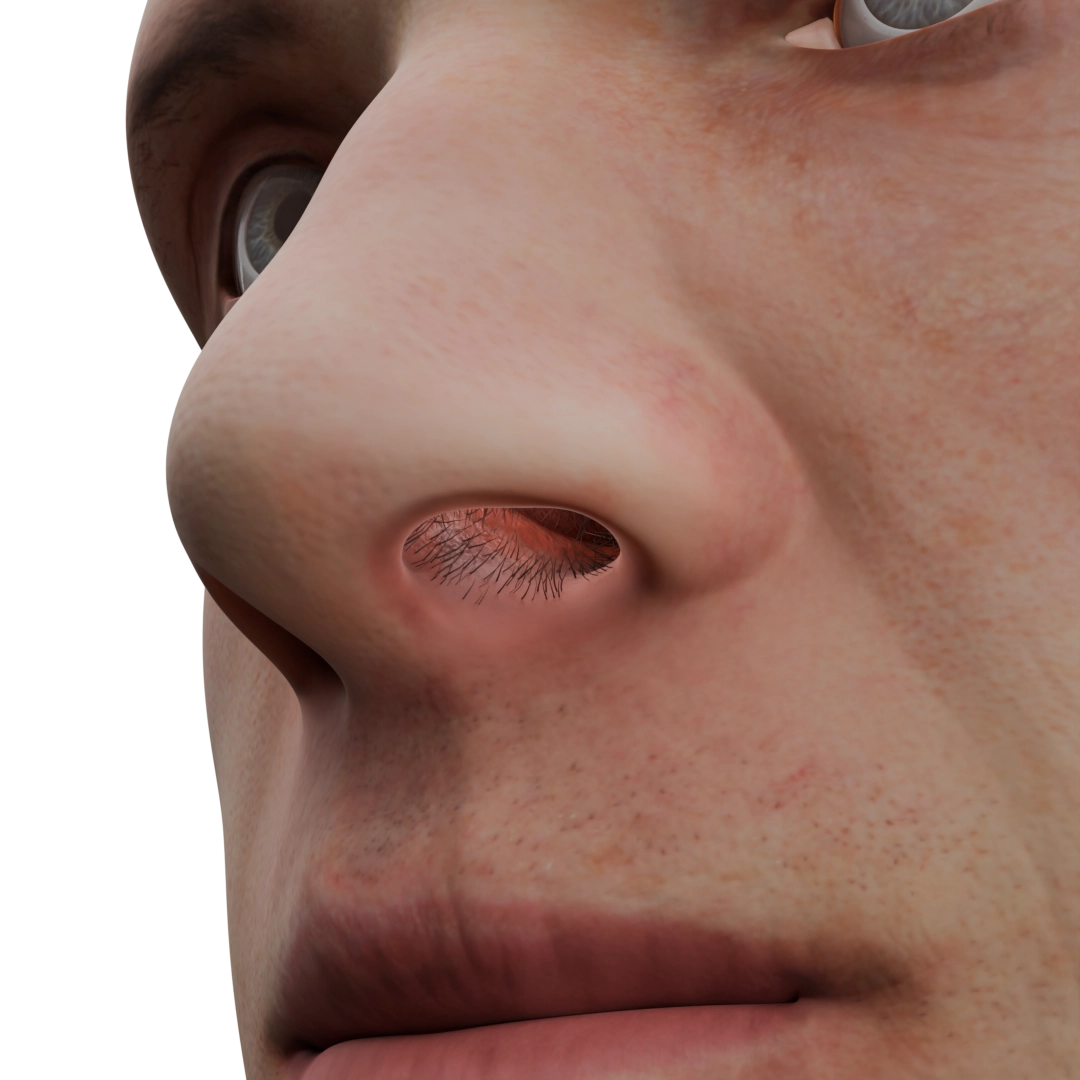
The aforementioned diseases are primarily caused by bacterial pathogens: staphylococci (S. aureus, S. epidermidis, S. saprophyticus) and streptococci (β-hemolytic group A). Infection develops due to factors such as damage to the integument (abrasions, cracks, macerations) and reduced overall body reactivity. In cases of metabolic disorders (coexistent diabetes mellitus) and immune deficiency, an extremely unfavorable course can be observed.
Nasal eczema develops due to a combination of several triggering factors:
A nasal furuncle is a purulent-necrotic lesion of the hair follicle, sebaceous gland, and surrounding tissues (subcutaneous adipose tissue, skin). The tip, wings, or vestibule of the nose, as well as the upper lip area, may become involved in the pathological process. It should be noted that the process is strictly limited to the skin and never extends to the mucous membrane of the nasal cavity, due to the absence of hair follicles (in the latter).

When multiple hair follicles in the same area are affected, the condition is referred to as a carbuncle.
A nasal furuncle follows a specific stage process: infiltration stage, abscess stage, and the healing stage. During the first stage, local infiltration, thickening, and hyperemia of the skin at the site of inflammation are noted, with a hair shaft located at the center of inflammation. Subsequently, the process progresses to the second stage in a few days, where purulent material forms with tissue liquefaction and fluctuation, which in rare cases may rupture spontaneously.
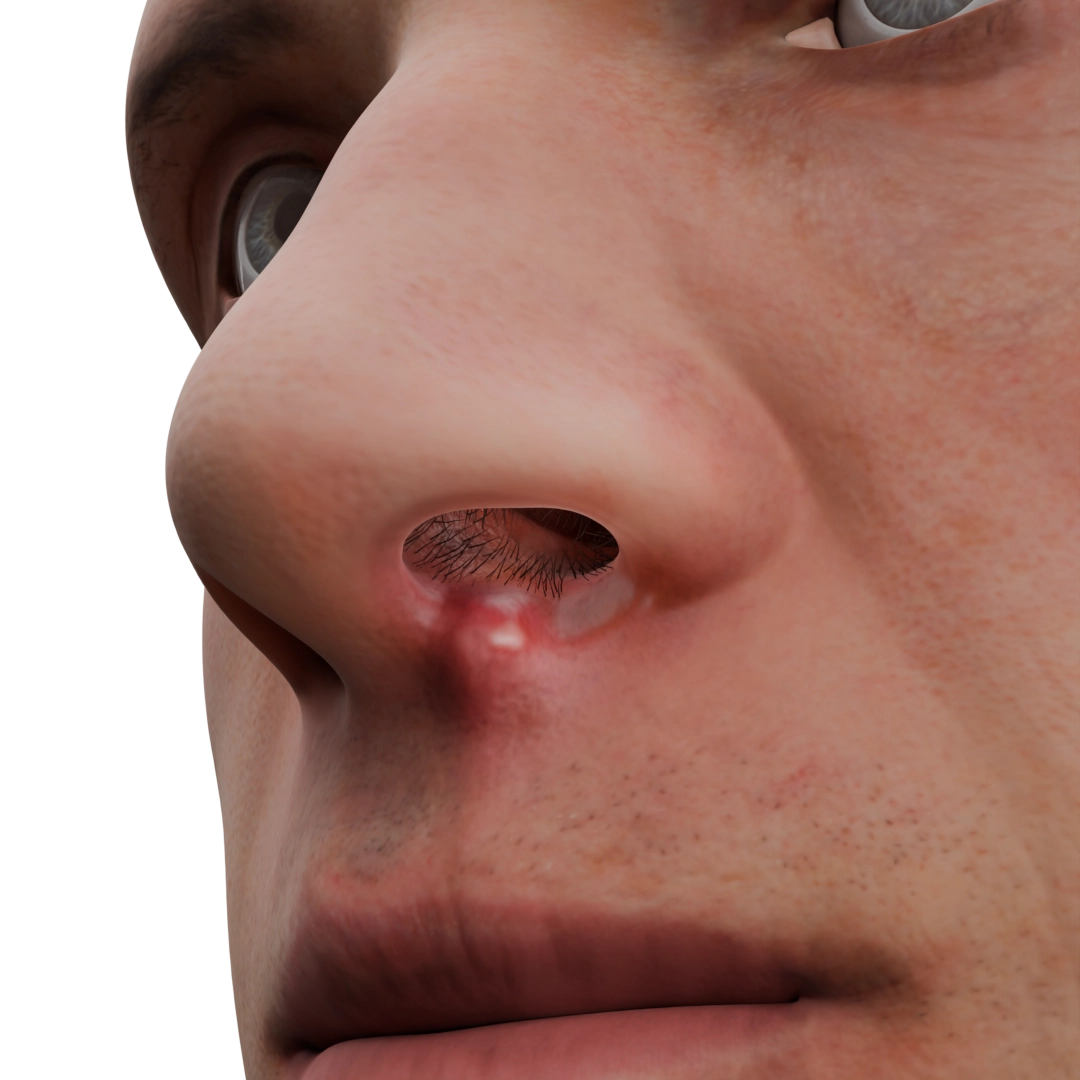
During the healing stage, the affected area is covered by connective tissue. Severe inflammation can lead to serious complications, including cavernous sinus thrombosis, brain abscess, and sepsis, which can be life-threatening. The pathogenesis involves infection along the venous drainage from the vestibule of the nose through the angular and ophthalmic veins to the cavernous sinus, where a thrombus subsequently forms.
Sycosis of the nasal vestibule (folliculitis) is characterized by damage to only the hair follicles (often in groups) in the nasal vestibule area or on the upper lip; underlying tissues remain intact. On hyperemic and infiltrated skin in the hair area, pustules with purulent content form, which open on the 2nd to 3rd day and subsequently become crusted.
Nasal eczema is a lesion of the epidermis characterized by a staged process. On hyperemic skin, papules and vesicles form, which rupture a few days later releasing serous content. Within 1–2 days, the affected area is covered by crusts and scales, which eventually fall off, sometimes leaving a depigmented area.
Erysipelas of the nose (erysipelas) is an infectious inflammation of the skin and subcutaneous adipose tissue with involvement of nearby lymphatic vessels and nodes. The skin becomes sharply hyperemic, edematous, hot; the boundaries of the lesion are well-defined. In some cases, serous or serous-hemorrhagic blisters form on the skin surface. Adjacent lymph nodes enlarge.
For a nasal furuncle in the infiltration stage, significant tenderness at the inflammation site is characteristic (after 1–2 days, the pain becomes throbbing and intensifies). The skin is hyperemic, surrounding tissues are edematous. Signs of general intoxication may appear: weakness, headache, fever reaching febrile values, and enlargement of regional lymph nodes. Within 2–3 days, as the process transitions to the abscess stage, the patient experiences significant relief in general condition as tenderness decreases. As previously noted, the purulent core can rupture and be spontaneously expelled, resulting in abundant purulent or purulent-hemorrhagic discharge from the lesion area, while signs of general intoxication subside. In recovery, a small scar is formed.
If complications like cavernous sinus thrombosis arise, the clinical picture can vary. Symptoms of general intoxication always intensify. Patients experience intense pulsating headache and eye pain, nausea, vomiting, and vision impairment; seizures or loss of consciousness may occur. Local manifestations spread to the orbital area and are accompanied by exophthalmos, chemosis, and ptosis on the affected side.
Sycosis of the nasal vestibule is characterized by itching and burning at the site of the lesion; there may be a sensation of skin tension with slight tenderness. The skin is dimly hyperemic, with sparse pinpoint edemas. Subsequently, crusts form around hair shafts, which are frequently scratched, contributing to the chronicity of the process with periods of exacerbation and remission. In rare cases, general body intoxication worsens: fever rises to 38–38.5 °C, weakness appears, and regional lymph nodes enlarge.
Nasal eczema generally tends to be chronic. During exacerbations, severe itching and significant tenderness occur in the affected area. When vesicles rupture, the skin becomes moist, then gets covered with itchy crusts. The skin thickens, and the skin pattern becomes more pronounced. Itching is so bothersome to patients that it can lead to insomnia in some cases.
Erysipelas of the nose manifests as redness and swelling of the skin. The lesion area has clear boundaries (demarcation line), and sharp tenderness is noted upon touching; the skin feels hot to the touch. In some cases, the lesion takes on a ‘butterfly’ appearance, involving the skin of the nose and cheek areas on both sides. If serous or serous-hemorrhagic blisters are present, they rupture spontaneously, forming a moist surface that then becomes crusted. Acute intoxication phenomena are especially characteristic for erysipelas with fever increasing to 39–40 °C, chills, marked weakness, headache, and possible vomiting. On the 7th to 10th day, with adequate treatment, the process is stabilized. In some cases, the inflammation can be complicated by cavernous sinus thrombosis and sepsis.
Diagnosis involves a clinical examination of the affected area. Laboratory indicators such as complete blood count (changes in leukocyte count and leukocyte formula), biochemical blood analysis (CRP, glucose level) are evaluated. Bacterial culture of wound discharge and tissues is also mandatory to identify the pathogen and determine antibiotic sensitivity. CT and MRI are performed in the event of complications. Additionally, blood culture for sterility and lumbar puncture may be prescribed. Allergy tests are performed in some cases to clarify the causes of nasal eczema.
Find more scientifically accurate content on our social media


In mild conditions (furuncle and sycosis), local treatment is predominant. Ointments with NSAIDs and antibiotics are prescribed, along with antiseptic treatment of the foci for 5–7 days until symptoms resolve. Physical therapy, especially UV radiation, demonstrates a good effect.
Surgical intervention is indicated if the condition progresses to the abscess stage: it involves incision and cleansing of the suppurative focus at the site of maximum bulging with drainage installation and aseptic dressing application. Subsequently, regular dressings are carried out until complete healing.
In some cases, at the physician’s discretion (lack of local treatment effect, severe general intoxication, prolonged course), antibacterial agents are prescribed orally for a 5–7 day course, taking sensitivity into account.
In the recovery stage, wound healing and regenerating ointments are used.
Emergency hospitalization is indicated in the case of complications.
In the treatment of eczema, local therapy is fundamental. During the acute phase, ointments with glucocorticosteroids are used; in the case of integument infection, combined drugs with antibiotics are added. The skin is regularly treated with antiseptic solutions. To reduce itching and skin scratching, antihistamines are administered orally; in some cases, sedatives are prescribed. During the healing period (formation of crusts and scales) apply healing ointments and moisturizing lotions. During remission, the skin should be abundantly and regularly moisturized to prevent exacerbations. It is important to remember that eczema is a polyetiological disease, thus, in order to successfully treat skin manifestations, coexisting chronic diseases need to be managed.
For the treatment of erysipelas, antibiotic therapy is mandatory. The drugs of choice are penicillins, with adjustments made based on bacteriological culture results, administered orally or parenterally, depending on the severity of the condition, as the disease is prone to recurrence and has several serious complications. Locally, antiseptic treatment of the affected area is performed, along with physiotherapy using UV radiation.
1. What is a nasal furuncle and why is it dangerous?
2. How does a furuncle differ from nasal vestibule sycosis?
3. How to recognize nasal eczema?
4. What is nasal erysipelas?
5. How is the diagnosis of infections of the external nose conducted?
References
1.
VOKA 3D Anatomy & Pathology – Complete Anatomy and Pathology 3D Atlas. VOKA 3D Anatomy & Pathology.
Available from: https://catalog.voka.io/
2.
Sclafani AP, Dyleski RA, Pitman MJ, Schantz SP. Total otolaryngology—head and neck surgery. New York: Thieme Medical Publishers; 2015. ISBN: 978-1-60406-646-3.
3.
Behrbohm H, Kaschke O, Nawka T, Swift A. Ear, Nose, and Throat Diseases 2nd ed. Moscow: MEDpress-inform; 2016. 776 p. [In Russian.] ISBN 978-5-00030-322-1.
4.
Marra P, Colacurcio V, De Luca P, Bisogno A, Calvanese M, Scarpa A, et al. Nasal vestibulitis and vestibular furunculosis: a systematic review about two common nasal infections and considerations about correct diagnosis and management. Clin Ter. 2022 Nov-Dec;173(6):590-596. doi: 10.7417/CT.2022.2487. PMID: 36373460.
5.
Bakshi SS. Image Diagnosis: Nasal Furunculosis-A Dangerous Nose Infection. Perm J. 2018;22:17-076. doi: 10.7812/TPP/17-076. PMID: 29236652; PMCID: PMC5737918.
Make VOKA your preferred source
See more VOKA articles in Google Search








Summarize article with AI
Choose your preferable AI assistant:
Link successfully copied to clipboard
Thank you!
Your message is sent!
Our experts will contact you shortly. If you have any additional questions, please contact us at info@voka.io