Anatomy quiz of the vomer
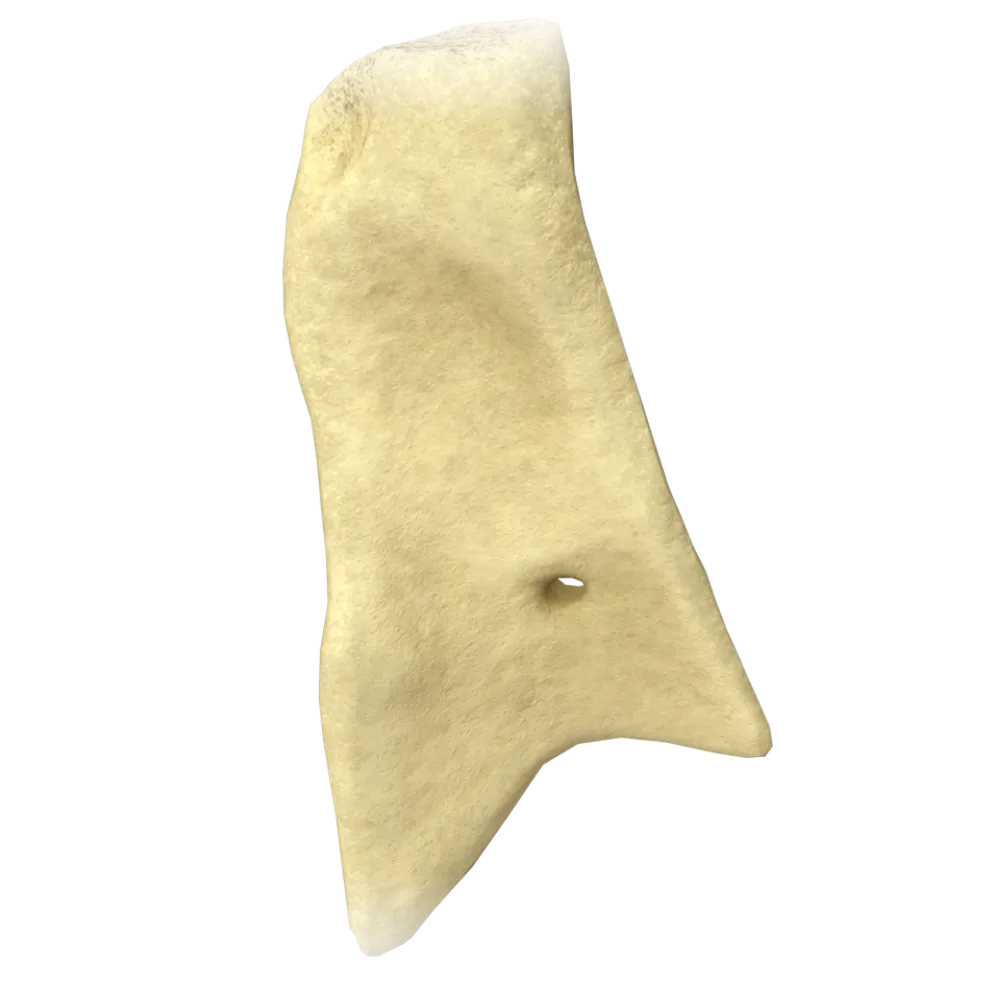
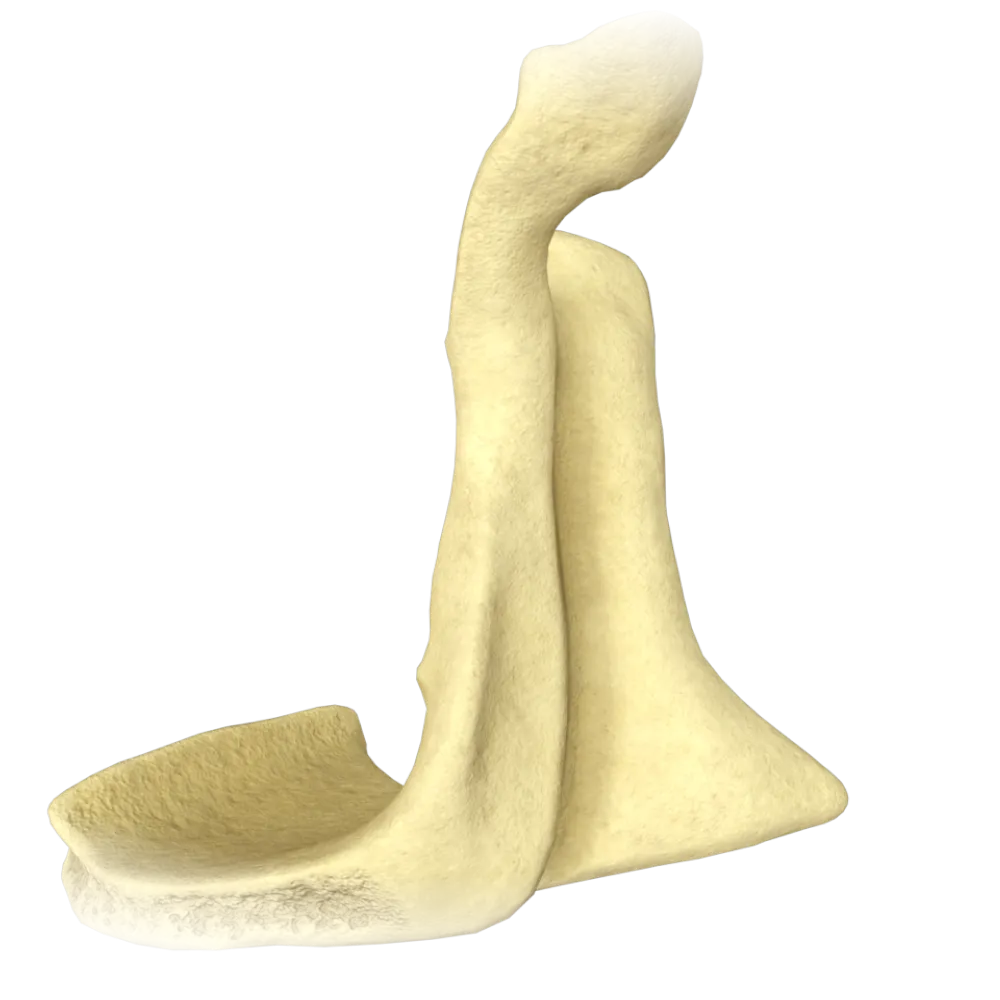
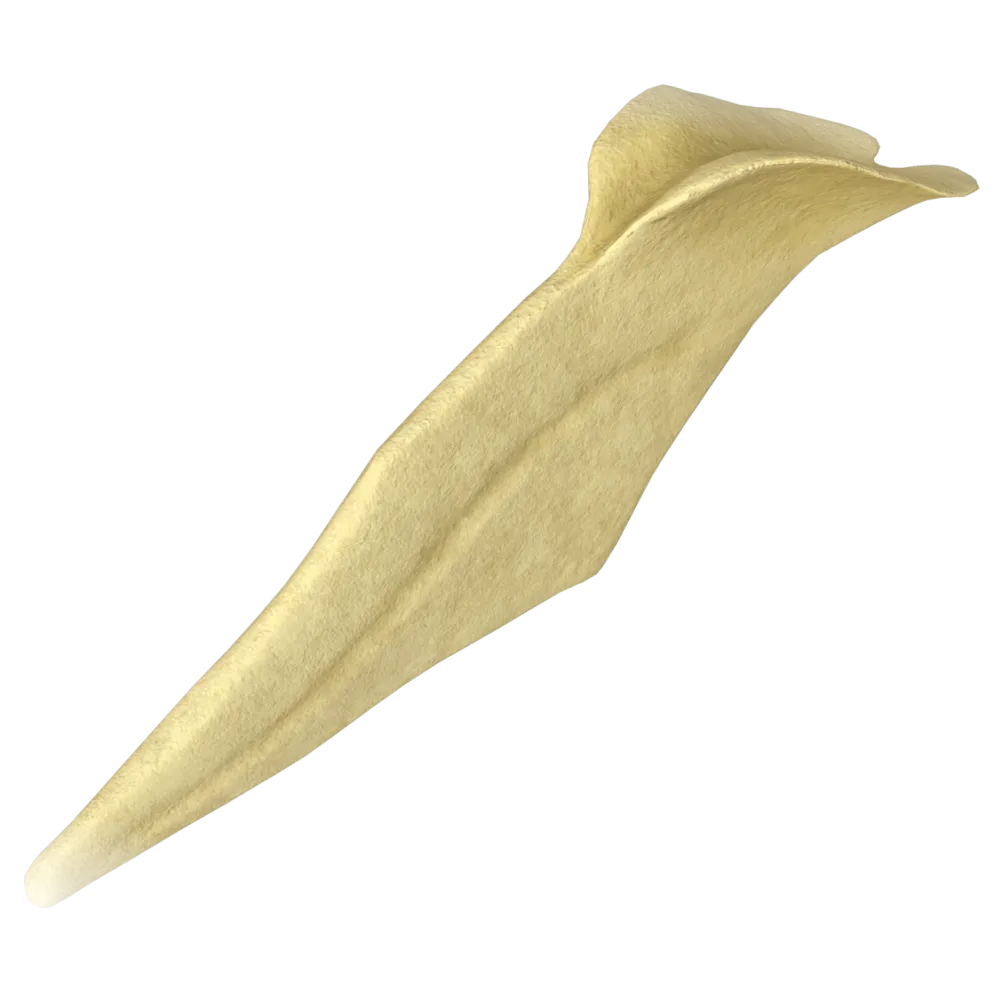
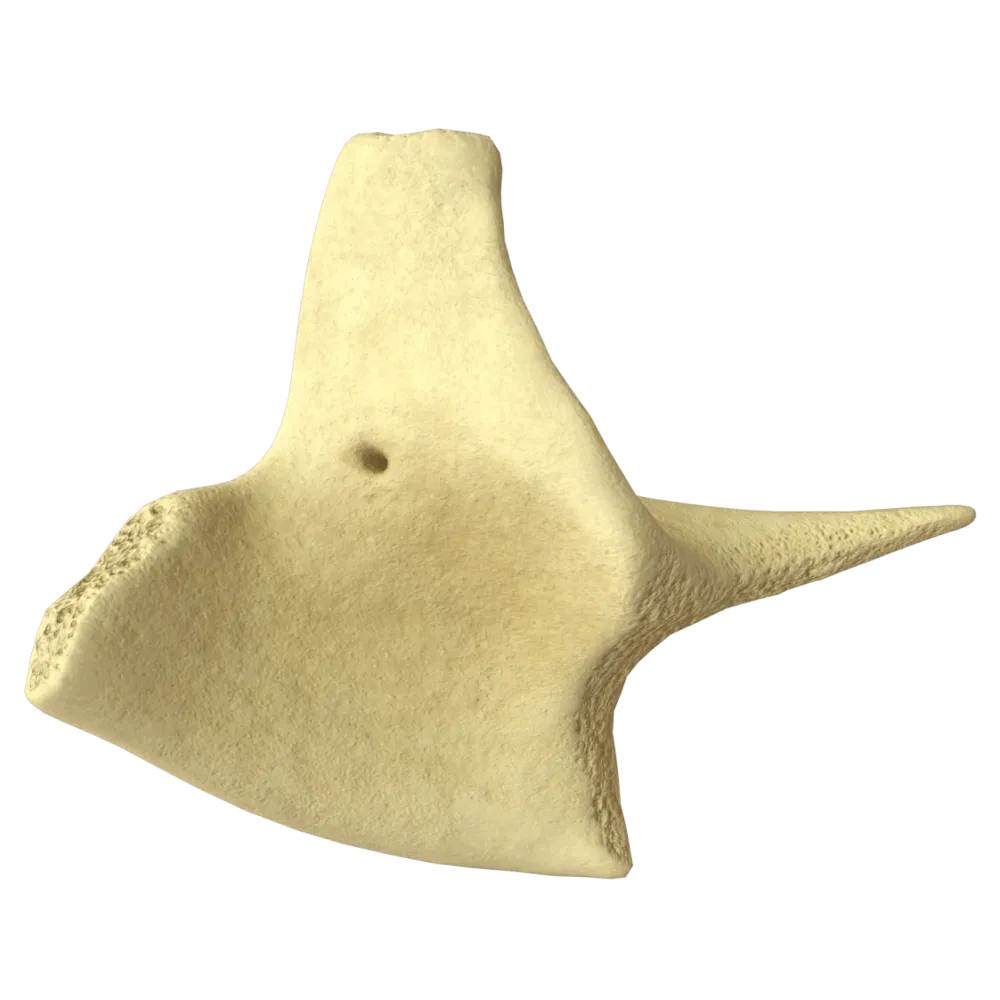
The quiz covers the anatomy of the vomer: its shape, parts, articulations, topography, and relationship to the structures of the nasal septum.
1/20
bold
text
1. To which group of bones does the vomer belong according to the classification?
-
Long tubular bone
The vomer (vomer) belongs to the flat Bones of cranium.
-
Flat bone
The vomer (vomer) belongs to the flat Bones of cranium.
-
Cancellous bone
The vomer (vomer) belongs to the flat Bones of cranium.
-
Sesamoid bone
The vomer (vomer) belongs to the flat Bones of cranium.
-
I find it difficult to answer
The vomer (vomer) belongs to the flat Bones of cranium.
2. Which structure does the vomer form together with the perpendicular plate of the ethmoid bone?
-
Bony palate
The vomer, together with the perpendicular plate of the ethmoid bone (lamina perpendicularis ossis ethmoidalis), forms the bony nasal septum (septum nasi osseum).
-
Bony nasal septum
The vomer, together with the perpendicular plate of the ethmoid bone (lamina perpendicularis ossis ethmoidalis), forms the bony nasal septum (septum nasi osseum).
-
Bony framework of the choanae
The vomer, together with the perpendicular plate of the ethmoid bone (lamina perpendicularis ossis ethmoidalis), forms the bony nasal septum (septum nasi osseum).
-
Inferior wall of the nasal cavity
The vomer, together with the perpendicular plate of the ethmoid bone (lamina perpendicularis ossis ethmoidalis), forms the bony nasal septum (septum nasi osseum).
-
I find it difficult to answer
The vomer, together with the perpendicular plate of the ethmoid bone (lamina perpendicularis ossis ethmoidalis), forms the bony nasal septum (septum nasi osseum).
3. By means of which anatomical structures does the vomer (vomer) articulate with the anteroinferior surface of the body of the sphenoid bone?
-
Alae of the vomer
The alae of the vomer (alae vomeris) are located in the posterosuperior part of the vomer; they are paired horizontal plates that surround the sphenoidal rostrum (rostrum sphenoidale).
-
Perpendicular plate and alae
The alae of the vomer (alae vomeris) are located in the posterosuperior part of the vomer; they are paired horizontal plates that surround the sphenoidal rostrum (rostrum sphenoidale).
-
Ethmoidal crest and nasal spine
The alae of the vomer (alae vomeris) are located in the posterosuperior part of the vomer; they are paired horizontal plates that surround the sphenoidal rostrum (rostrum sphenoidale).
-
Sphenoidal processes
The alae of the vomer (alae vomeris) are located in the posterosuperior part of the vomer; they are paired horizontal plates that surround the sphenoidal rostrum (rostrum sphenoidale).
-
I find it difficult to answer
The alae of the vomer (alae vomeris) are located in the posterosuperior part of the vomer; they are paired horizontal plates that surround the sphenoidal rostrum (rostrum sphenoidale).
4. Does the vomer (vomer) participate in forming the choanae (choanae), the posterior apertures of the nasal cavity, and which boundary of them does it form?
-
No, the choanae are bounded entirely by only the sphenoid and palatine bones
The choanae (choanae) are paired posterior apertures of the nasal cavity that communicate with the nasopharynx. The vomer (vomer) forms the medial (internal) boundary of each choana.
-
Yes, the vomer forms exclusively the lateral (side) boundary of each choana
The choanae (choanae) are paired posterior apertures of the nasal cavity that communicate with the nasopharynx. The vomer (vomer) forms the medial (internal) boundary of each choana.
-
Yes, the posterior free border of the vomer separates the choanae at the midline and forms their medial wall
The choanae (choanae) are paired posterior apertures of the nasal cavity that communicate with the nasopharynx. The vomer (vomer) forms the medial (internal) boundary of each choana.
-
No, the vomer is located only in the anterior part of the nasal septum and does not extend to the choanae
The choanae (choanae) are paired posterior apertures of the nasal cavity that communicate with the nasopharynx. The vomer (vomer) forms the medial (internal) boundary of each choana.
-
I find it difficult to answer
The choanae (choanae) are paired posterior apertures of the nasal cavity that communicate with the nasopharynx. The vomer (vomer) forms the medial (internal) boundary of each choana.
5. With which structure of the sphenoid bone does the vomer articulate?
-
With the pterygoid processes
The alae of the vomer surround the sphenoidal rostrum (rostrum sphenoidale).
-
With the sphenoidal rostrum
The alae of the vomer surround the sphenoidal rostrum (rostrum sphenoidale).
-
With the body of the sphenoid bone in the region of the sella turcica
The alae of the vomer surround the sphenoidal rostrum (rostrum sphenoidale).
-
With the lesser wings of the sphenoid bone
The alae of the vomer surround the sphenoidal rostrum (rostrum sphenoidale).
-
I find it difficult to answer
The alae of the vomer surround the sphenoidal rostrum (rostrum sphenoidale).
6. With which cartilage does the anteroinferior part of the vomer articulate?
-
With the major alar cartilage
The anteroinferior part of the vomer articulates with the nasal septal cartilage (cartilago septi nasi).
-
With the nasal septal cartilage
The anteroinferior part of the vomer articulates with the nasal septal cartilage (cartilago septi nasi).
-
With the minor alar cartilages
The anteroinferior part of the vomer articulates with the nasal septal cartilage (cartilago septi nasi).
-
With the lateral nasal cartilage
The anteroinferior part of the vomer articulates with the nasal septal cartilage (cartilago septi nasi).
-
I find it difficult to answer
The anteroinferior part of the vomer articulates with the nasal septal cartilage (cartilago septi nasi).
7. Which suture is formed between the vomer and the perpendicular plate of the ethmoid bone?
-
Vomeroethmoidal suture
At its superior border, the vomer articulates with the inferior border of the perpendicular plate of the ethmoid bone by means of the vomeroethmoidal suture.
-
Vomeropalatine suture
At its superior border, the vomer articulates with the inferior border of the perpendicular plate of the ethmoid bone by means of the vomeroethmoidal suture.
-
Vomerosphenoidal suture
At its superior border, the vomer articulates with the inferior border of the perpendicular plate of the ethmoid bone by means of the vomeroethmoidal suture.
-
Internasal suture
At its superior border, the vomer articulates with the inferior border of the perpendicular plate of the ethmoid bone by means of the vomeroethmoidal suture.
-
I find it difficult to answer
At its superior border, the vomer articulates with the inferior border of the perpendicular plate of the ethmoid bone by means of the vomeroethmoidal suture.
8. What is the vomerine groove (sulcus vomeris)?
-
A transverse depression on the posterior border of the vomer forming the inferior boundary of the choanae
A paired vomerine groove (sulcus vomeris) runs diagonally across both lateral (side) surfaces of the plate of the vomer. The nasopalatine nerve and its accompanying vessels lie in this groove and descend toward the incisive canal (canalis incisivus).
-
An oblique groove on the lateral surface of the vomer through which a nerve and vessels pass
A paired vomerine groove (sulcus vomeris) runs diagonally across both lateral (side) surfaces of the plate of the vomer. The nasopalatine nerve and its accompanying vessels lie in this groove and descend toward the incisive canal (canalis incisivus).
-
A groove on the anterior surface of the vomer for the septal cartilage
A paired vomerine groove (sulcus vomeris) runs diagonally across both lateral (side) surfaces of the plate of the vomer. The nasopalatine nerve and its accompanying vessels lie in this groove and descend toward the incisive canal (canalis incisivus).
-
A paired canaliculus on the superior border of the vomer for passage of the anterior ethmoidal nerve
A paired vomerine groove (sulcus vomeris) runs diagonally across both lateral (side) surfaces of the plate of the vomer. The nasopalatine nerve and its accompanying vessels lie in this groove and descend toward the incisive canal (canalis incisivus).
-
I find it difficult to answer
A paired vomerine groove (sulcus vomeris) runs diagonally across both lateral (side) surfaces of the plate of the vomer. The nasopalatine nerve and its accompanying vessels lie in this groove and descend toward the incisive canal (canalis incisivus).
9. In the formation of which of the listed structures of the nasal cavity does the vomer (vomer) directly participate?
-
Lateral wall of the nasal cavity
The vomer (vomer) is an unpaired bone of the Viscerocranium that forms the posteroinferior part of the bony nasal septum (septum nasi osseum).
-
Bony nasal septum
The vomer (vomer) is an unpaired bone of the Viscerocranium that forms the posteroinferior part of the bony nasal septum (septum nasi osseum).
-
Superior nasal meatus
The vomer (vomer) is an unpaired bone of the Viscerocranium that forms the posteroinferior part of the bony nasal septum (septum nasi osseum).
-
Roof of the nasal cavity
The vomer (vomer) is an unpaired bone of the Viscerocranium that forms the posteroinferior part of the bony nasal septum (septum nasi osseum).
-
I find it difficult to answer
The vomer (vomer) is an unpaired bone of the Viscerocranium that forms the posteroinferior part of the bony nasal septum (septum nasi osseum).
10. In the formation of which anatomical structure does the posterior free border of the vomer participate?
-
Nasal septum in its superior part
The posterior free border of the vomer is the medial boundary separating the right and left choanae (choanae), forming a septum between them in the posterior part of the nasal cavity.
-
Septum (medial wall) of the choanae
The posterior free border of the vomer is the medial boundary separating the right and left choanae (choanae), forming a septum between them in the posterior part of the nasal cavity.
-
Floor of the nasal cavity
The posterior free border of the vomer is the medial boundary separating the right and left choanae (choanae), forming a septum between them in the posterior part of the nasal cavity.
-
Fornix of the nasal cavity
The posterior free border of the vomer is the medial boundary separating the right and left choanae (choanae), forming a septum between them in the posterior part of the nasal cavity.
-
I find it difficult to answer
The posterior free border of the vomer is the medial boundary separating the right and left choanae (choanae), forming a septum between them in the posterior part of the nasal cavity.
11. With which bones does the vomer articulate by its inferior border via the nasal crest?
-
Nasal bones and frontal bone
The inferior border of the vomer articulates with the nasal crest (crista nasalis), formed by the maxillae (in the anterior part) and the horizontal plates of the palatine bones (in the posterior part).
-
Maxillae and horizontal plates of the palatine bones
The inferior border of the vomer articulates with the nasal crest (crista nasalis), formed by the maxillae (in the anterior part) and the horizontal plates of the palatine bones (in the posterior part).
-
Palatine bones and ethmoid bone
The inferior border of the vomer articulates with the nasal crest (crista nasalis), formed by the maxillae (in the anterior part) and the horizontal plates of the palatine bones (in the posterior part).
-
Zygomatic bones and maxillae
The inferior border of the vomer articulates with the nasal crest (crista nasalis), formed by the maxillae (in the anterior part) and the horizontal plates of the palatine bones (in the posterior part).
-
I find it difficult to answer
The inferior border of the vomer articulates with the nasal crest (crista nasalis), formed by the maxillae (in the anterior part) and the horizontal plates of the palatine bones (in the posterior part).
12. What is the overall shape of the vomer when viewed in the sagittal plane?
-
Trapezoidal
The vomer has the shape of an irregular quadrilateral in the sagittal plane.
-
Square
The vomer has the shape of an irregular quadrilateral in the sagittal plane.
-
An oblique-angled quadrilateral
The vomer has the shape of an irregular quadrilateral in the sagittal plane.
-
Triangular
The vomer has the shape of an irregular quadrilateral in the sagittal plane.
-
I find it difficult to answer
The vomer has the shape of an irregular quadrilateral in the sagittal plane.
13. The vomer is a bone of the:
-
Viscerocranium (viscerocranium)
The vomer (vomer) belongs to the bones of the Viscerocranium (viscerocranium). It is an unpaired bone of the facial part of the cranium and participates in forming the nasal septum.
-
Neurocranium (neurocranium)
The vomer (vomer) belongs to the bones of the Viscerocranium (viscerocranium). It is an unpaired bone of the facial part of the cranium and participates in forming the nasal septum.
-
Cranial base, belonging to neither the viscerocranial nor the neurocranial part
The vomer (vomer) belongs to the bones of the Viscerocranium (viscerocranium). It is an unpaired bone of the facial part of the cranium and participates in forming the nasal septum.
-
Mixed bone belonging to both parts of the cranium
The vomer (vomer) belongs to the bones of the Viscerocranium (viscerocranium). It is an unpaired bone of the facial part of the cranium and participates in forming the nasal septum.
-
I find it difficult to answer
The vomer (vomer) belongs to the bones of the Viscerocranium (viscerocranium). It is an unpaired bone of the facial part of the cranium and participates in forming the nasal septum.
14. A branch of which artery passes through the vomerine groove together with the nasopalatine nerve?
-
Greater palatine artery
The following pass together through the oblique vomerine groove (sulcus vomeris), located on its lateral surfaces: the nasopalatine nerve (n. nasopalatinus), the posterior septal artery (a. nasalis posterior septi)—a branch of the sphenopalatine artery (a. sphenopalatina)—and the accompanying vein of the same name. .
-
Sphenopalatine artery
The following pass together through the oblique vomerine groove (sulcus vomeris), located on its lateral surfaces: the nasopalatine nerve (n. nasopalatinus), the posterior septal artery (a. nasalis posterior septi)—a branch of the sphenopalatine artery (a. sphenopalatina)—and the accompanying vein of the same name. .
-
Facial artery
The following pass together through the oblique vomerine groove (sulcus vomeris), located on its lateral surfaces: the nasopalatine nerve (n. nasopalatinus), the posterior septal artery (a. nasalis posterior septi)—a branch of the sphenopalatine artery (a. sphenopalatina)—and the accompanying vein of the same name. .
-
Maxillary artery
The following pass together through the oblique vomerine groove (sulcus vomeris), located on its lateral surfaces: the nasopalatine nerve (n. nasopalatinus), the posterior septal artery (a. nasalis posterior septi)—a branch of the sphenopalatine artery (a. sphenopalatina)—and the accompanying vein of the same name. .
-
I find it difficult to answer
The following pass together through the oblique vomerine groove (sulcus vomeris), located on its lateral surfaces: the nasopalatine nerve (n. nasopalatinus), the posterior septal artery (a. nasalis posterior septi)—a branch of the sphenopalatine artery (a. sphenopalatina)—and the accompanying vein of the same name. .
15. Which continuous joint (suture) is formed by the articulation of the inferior border of the vomer (vomer) with the nasal crest of the maxillae (crista nasalis maxillae)?
-
Internasal suture (sutura intermasalis)
The inferior border of the vomer (vomer) articulates with the nasal crest (crista nasalis), formed by the fused palatine processes of the right and left maxillae. This plane continuous bony joint is called the vomeromaxillary suture (sutura vomeromaxillaris).
-
Lacrimomaxillary suture (sutura lacrimomaxillaris)
The inferior border of the vomer (vomer) articulates with the nasal crest (crista nasalis), formed by the fused palatine processes of the right and left maxillae. This plane continuous bony joint is called the vomeromaxillary suture (sutura vomeromaxillaris).
-
Vomeromaxillary suture (sutura vomeromaxillaris)
The inferior border of the vomer (vomer) articulates with the nasal crest (crista nasalis), formed by the fused palatine processes of the right and left maxillae. This plane continuous bony joint is called the vomeromaxillary suture (sutura vomeromaxillaris).
-
Sphenovomerine suture (sutura sphenovomeriana)
The inferior border of the vomer (vomer) articulates with the nasal crest (crista nasalis), formed by the fused palatine processes of the right and left maxillae. This plane continuous bony joint is called the vomeromaxillary suture (sutura vomeromaxillaris).
-
I find it difficult to answer
The inferior border of the vomer (vomer) articulates with the nasal crest (crista nasalis), formed by the fused palatine processes of the right and left maxillae. This plane continuous bony joint is called the vomeromaxillary suture (sutura vomeromaxillaris).
16. The perpendicular plate of the ethmoid bone and the vomer together form the nasal septum. Which of these two bones occupies predominantly the superior part of the septum?
-
Vomer
The perpendicular plate of the ethmoid bone (lamina perpendicularis ossis ethmoidalis) occupies the superior part of the bony nasal septum, whereas the vomer occupies the posteroinferior part.
-
Perpendicular plate of ethmoid bone
The perpendicular plate of the ethmoid bone (lamina perpendicularis ossis ethmoidalis) occupies the superior part of the bony nasal septum, whereas the vomer occupies the posteroinferior part.
-
Both bones occupy equal parts
The perpendicular plate of the ethmoid bone (lamina perpendicularis ossis ethmoidalis) occupies the superior part of the bony nasal septum, whereas the vomer occupies the posteroinferior part.
-
Nasal crest of the maxilla
The perpendicular plate of the ethmoid bone (lamina perpendicularis ossis ethmoidalis) occupies the superior part of the bony nasal septum, whereas the vomer occupies the posteroinferior part.
-
I find it difficult to answer
The perpendicular plate of the ethmoid bone (lamina perpendicularis ossis ethmoidalis) occupies the superior part of the bony nasal septum, whereas the vomer occupies the posteroinferior part.
17. Which of the following statements about the surfaces of the vomer is correct?
-
The vomer comprises three surfaces: superior, anterior, and posterior
The vomer is an unpaired bone comprising two lateral (side) surfaces that are normally covered by periosteum and the mucosa of the nasal septum.
-
The vomer comprises two lateral surfaces covered with mucosa
The vomer is an unpaired bone comprising two lateral (side) surfaces that are normally covered by periosteum and the mucosa of the nasal septum.
-
The vomer comprises one unpaired medial surface
The vomer is an unpaired bone comprising two lateral (side) surfaces that are normally covered by periosteum and the mucosa of the nasal septum.
-
The vomer comprises only superior and inferior surfaces
The vomer is an unpaired bone comprising two lateral (side) surfaces that are normally covered by periosteum and the mucosa of the nasal septum.
-
I find it difficult to answer
The vomer is an unpaired bone comprising two lateral (side) surfaces that are normally covered by periosteum and the mucosa of the nasal septum.
18. With which bone does the vomer NOT form a direct bony articulation?
-
Sphenoid bone = Sphenoid = Sphenoidal bone
The vomer articulates directly with the sphenoid bone, ethmoid bone, maxillae, and palatine bones. The vomer has no direct articulation with the frontal bone.
-
Ethmoid bone = Ethmoid = Ethmoidal bone
The vomer articulates directly with the sphenoid bone, ethmoid bone, maxillae, and palatine bones. The vomer has no direct articulation with the frontal bone.
-
Frontal bone
The vomer articulates directly with the sphenoid bone, ethmoid bone, maxillae, and palatine bones. The vomer has no direct articulation with the frontal bone.
-
Palatine bone
The vomer articulates directly with the sphenoid bone, ethmoid bone, maxillae, and palatine bones. The vomer has no direct articulation with the frontal bone.
-
I find it difficult to answer
The vomer articulates directly with the sphenoid bone, ethmoid bone, maxillae, and palatine bones. The vomer has no direct articulation with the frontal bone.
19. In which part of the nasal septum is the vomer located relative to the perpendicular plate of the ethmoid bone?
-
Anteriorly and superiorly
The vomer is located posteriorly and inferiorly relative to the perpendicular plate of the ethmoid bone. The perpendicular plate occupies the anterosuperior part of the septum, whereas the vomer occupies the posteroinferior part.
-
Posteriorly and inferiorly
The vomer is located posteriorly and inferiorly relative to the perpendicular plate of the ethmoid bone. The perpendicular plate occupies the anterosuperior part of the septum, whereas the vomer occupies the posteroinferior part.
-
Anteriorly and inferiorly
The vomer is located posteriorly and inferiorly relative to the perpendicular plate of the ethmoid bone. The perpendicular plate occupies the anterosuperior part of the septum, whereas the vomer occupies the posteroinferior part.
-
Directly posteriorly, at the same vertical level
The vomer is located posteriorly and inferiorly relative to the perpendicular plate of the ethmoid bone. The perpendicular plate occupies the anterosuperior part of the septum, whereas the vomer occupies the posteroinferior part.
-
I find it difficult to answer
The vomer is located posteriorly and inferiorly relative to the perpendicular plate of the ethmoid bone. The perpendicular plate occupies the anterosuperior part of the septum, whereas the vomer occupies the posteroinferior part.
20. What are the paired lateral projections of the superior border of the vomer that surround the sphenoidal rostrum called?
-
Pterygoid processes
The paired lateral projections in the posterosuperior part of the vomer are called the alae of the vomer (alae vomeris). They surround the sphenoidal rostrum (rostrum sphenoidale), forming the vomerosphenoidal joint.
-
Alae of the vomer
The paired lateral projections in the posterosuperior part of the vomer are called the alae of the vomer (alae vomeris). They surround the sphenoidal rostrum (rostrum sphenoidale), forming the vomerosphenoidal joint.
-
Nasal conchae
The paired lateral projections in the posterosuperior part of the vomer are called the alae of the vomer (alae vomeris). They surround the sphenoidal rostrum (rostrum sphenoidale), forming the vomerosphenoidal joint.
-
Horizontal plates
The paired lateral projections in the posterosuperior part of the vomer are called the alae of the vomer (alae vomeris). They surround the sphenoidal rostrum (rostrum sphenoidale), forming the vomerosphenoidal joint.
-
I find it difficult to answer
The paired lateral projections in the posterosuperior part of the vomer are called the alae of the vomer (alae vomeris). They surround the sphenoidal rostrum (rostrum sphenoidale), forming the vomerosphenoidal joint.
Retake this quiz?
Your current progress will be reset.