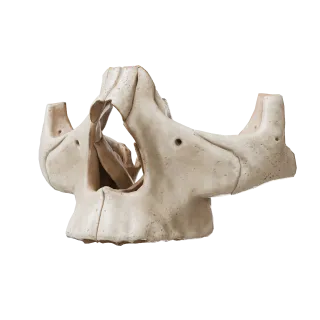
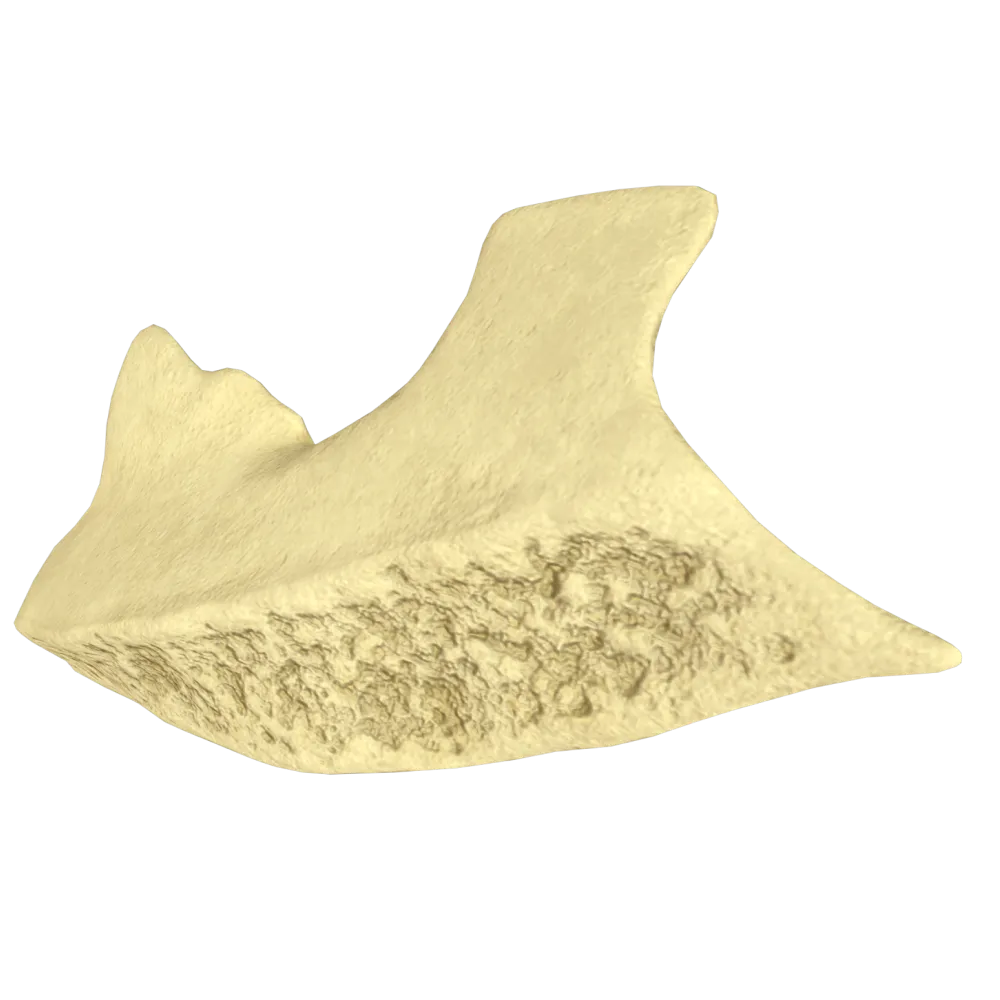
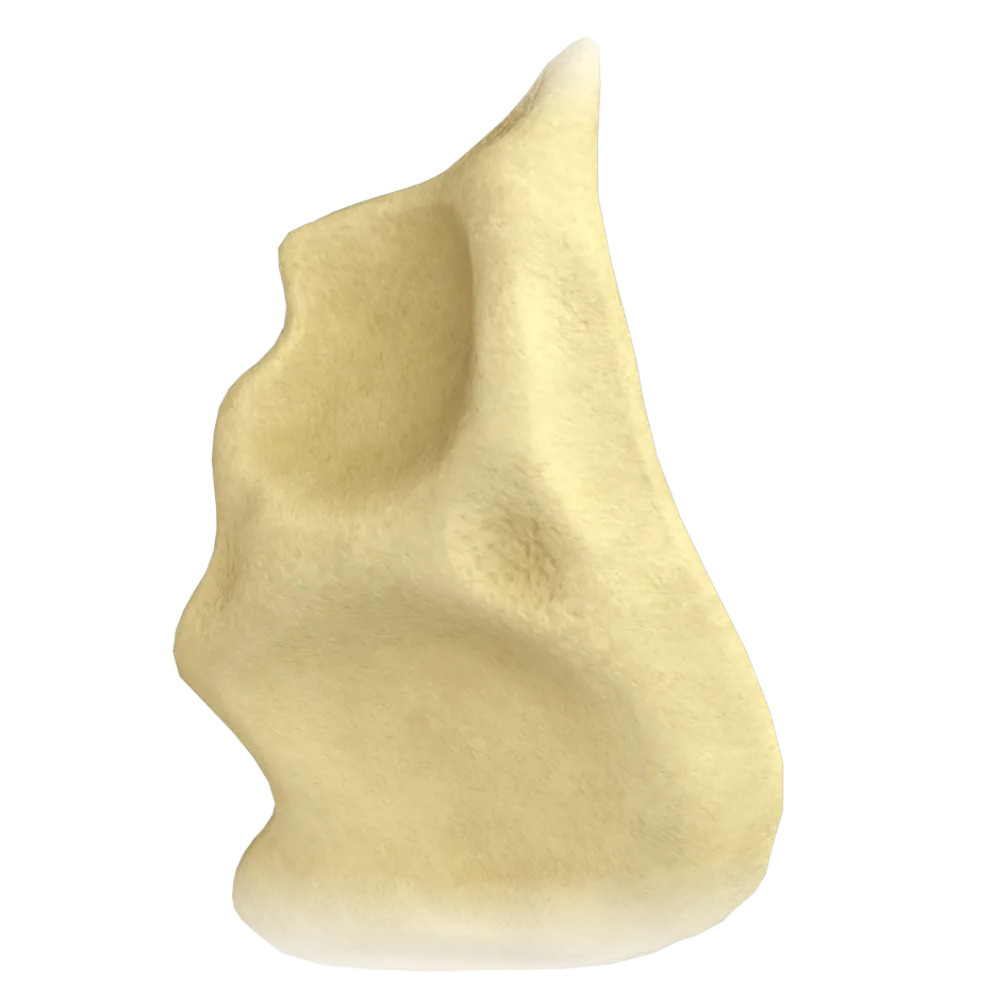
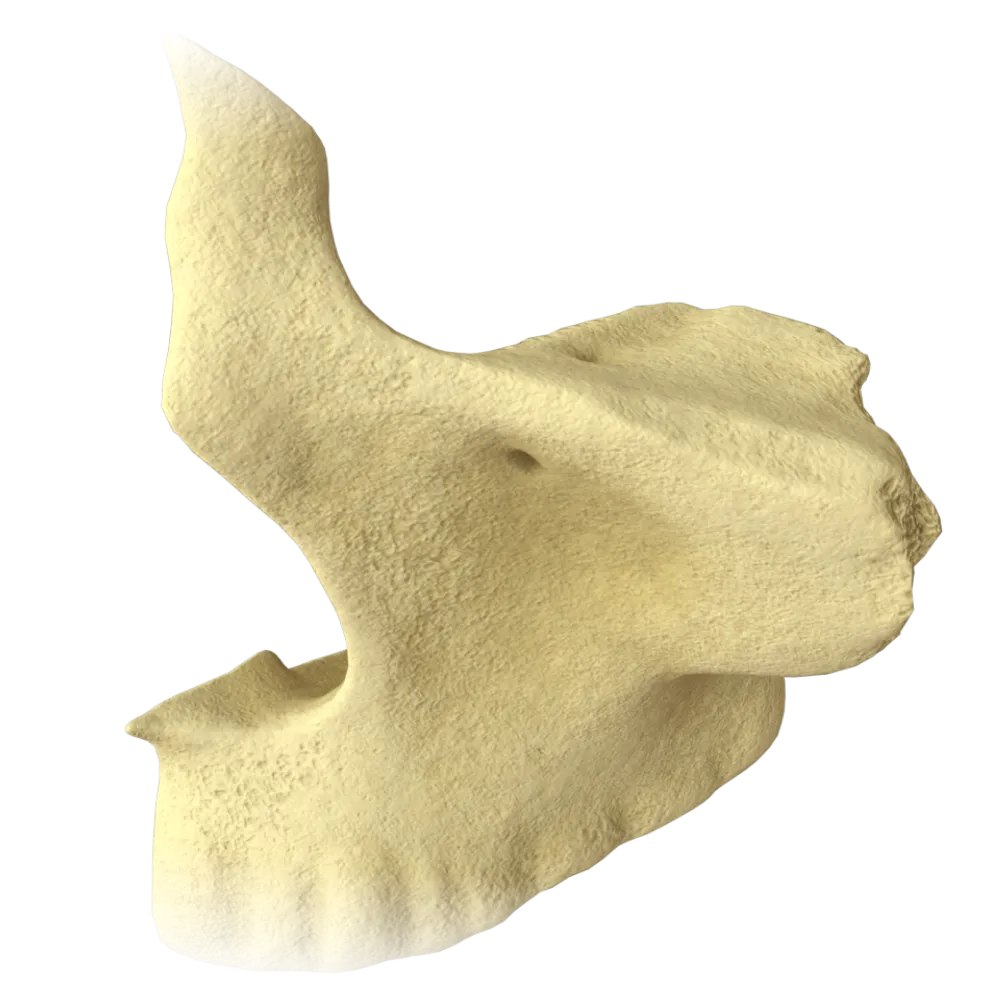
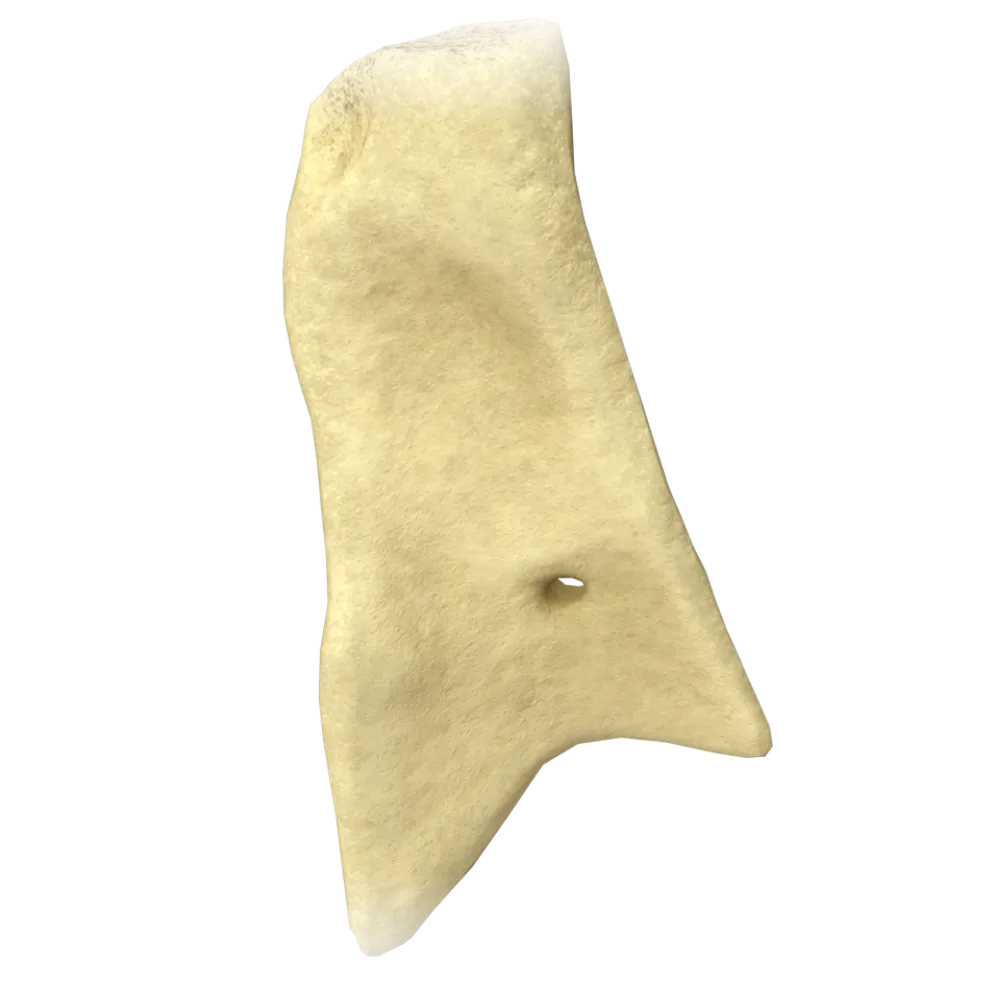
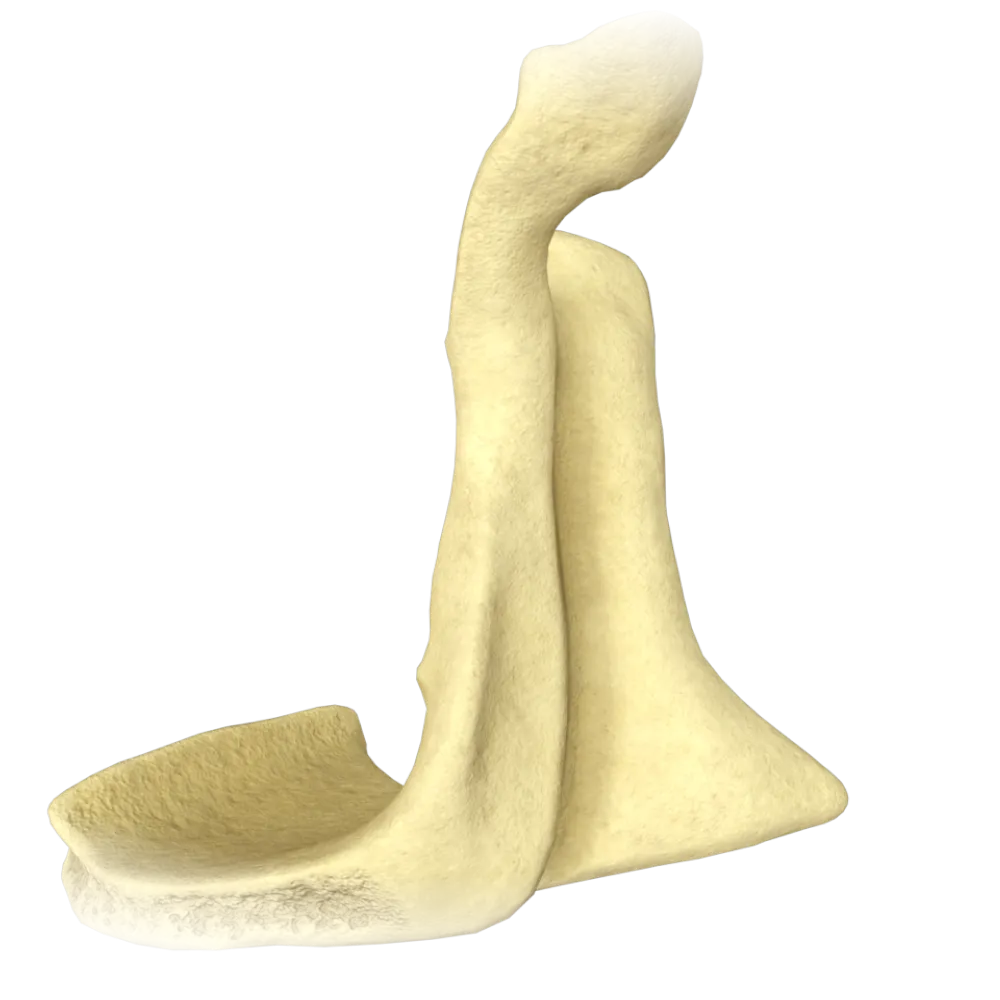
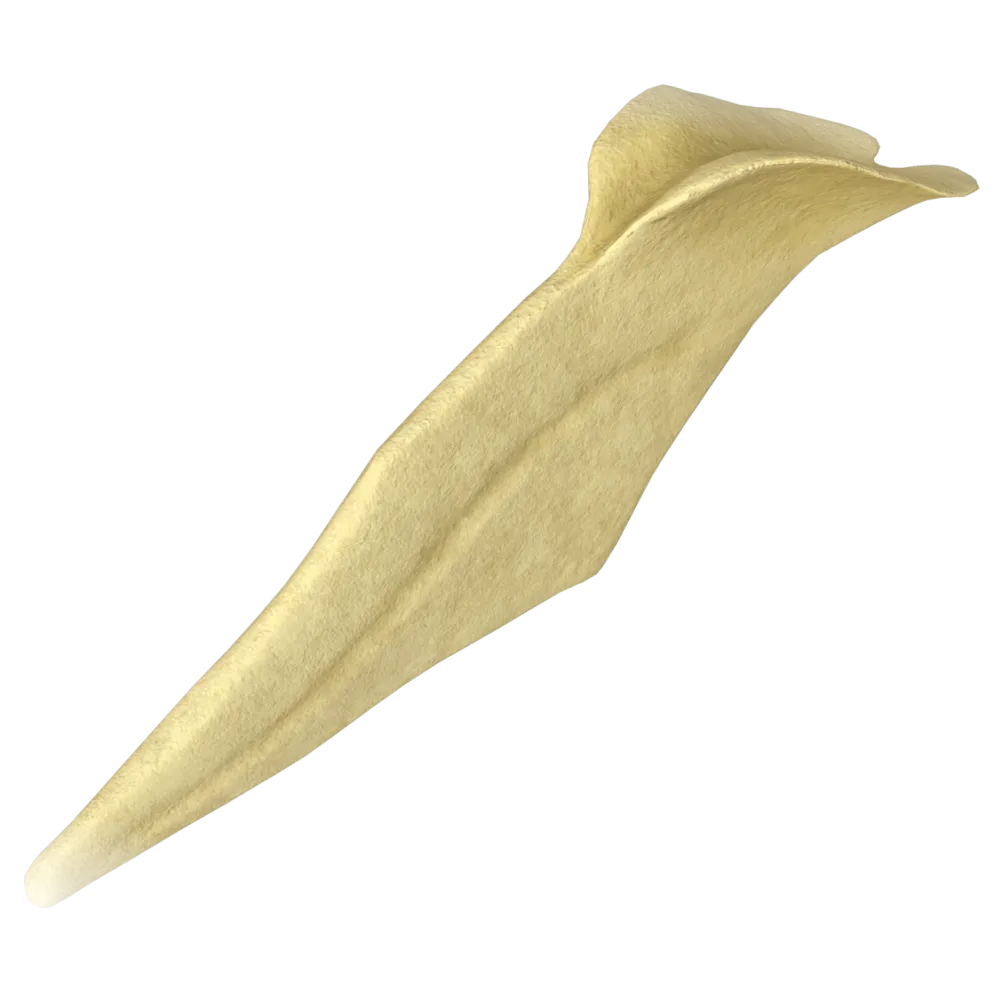
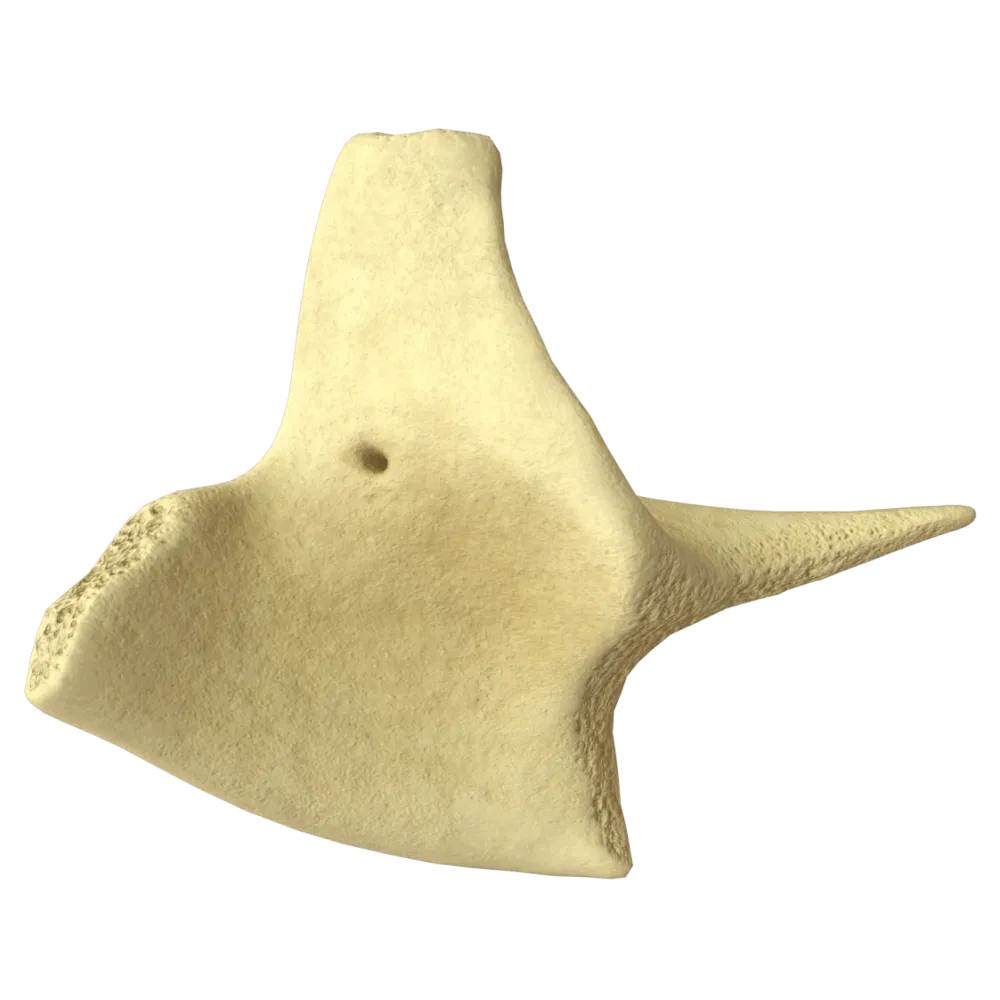
Inferior nasal concha anatomy quiz
Systematic anatomy quiz on the inferior turbinate: structure, attachments, blood supply, innervation, and topography.
1/20
bold
text
1. The inferior turbinate is an independent bone of the cranium. To which group of bones does it belong according to the classification?
-
Pneumatic bone
The inferior nasal concha (concha nasalis inferior) is an independent spongy bone consisting of a thin bony plate with a spongy structure, which distinguishes it from pneumatic, flat, and mixed bones.
-
Spongy bone
The inferior nasal concha (concha nasalis inferior) is an independent spongy bone consisting of a thin bony plate with a spongy structure, which distinguishes it from pneumatic, flat, and mixed bones.
-
Flat bone
The inferior nasal concha (concha nasalis inferior) is an independent spongy bone consisting of a thin bony plate with a spongy structure, which distinguishes it from pneumatic, flat, and mixed bones.
-
Mixed bone
The inferior nasal concha (concha nasalis inferior) is an independent spongy bone consisting of a thin bony plate with a spongy structure, which distinguishes it from pneumatic, flat, and mixed bones.
-
I find it difficult to answer
The inferior nasal concha (concha nasalis inferior) is an independent spongy bone consisting of a thin bony plate with a spongy structure, which distinguishes it from pneumatic, flat, and mixed bones.
2. With which anatomical structure of the maxilla does the inferior turbinate articulate?
-
Ethmoidal crest
The inferior turbinate (concha nasalis inferior) is an independent paired bone of the viscerocranium. The conchal crest (crista conchalis) is located on the medial (nasal) surface of the body of the maxilla, and the inferior turbinate attaches to it by its superior border.
-
Lacrimal groove
The inferior turbinate (concha nasalis inferior) is an independent paired bone of the viscerocranium. The conchal crest (crista conchalis) is located on the medial (nasal) surface of the body of the maxilla, and the inferior turbinate attaches to it by its superior border.
-
Alveolar process
The inferior turbinate (concha nasalis inferior) is an independent paired bone of the viscerocranium. The conchal crest (crista conchalis) is located on the medial (nasal) surface of the body of the maxilla, and the inferior turbinate attaches to it by its superior border.
-
Conchal crest
The inferior turbinate (concha nasalis inferior) is an independent paired bone of the viscerocranium. The conchal crest (crista conchalis) is located on the medial (nasal) surface of the body of the maxilla, and the inferior turbinate attaches to it by its superior border.
-
I find it difficult to answer
The inferior turbinate (concha nasalis inferior) is an independent paired bone of the viscerocranium. The conchal crest (crista conchalis) is located on the medial (nasal) surface of the body of the maxilla, and the inferior turbinate attaches to it by its superior border.
3. Which process of the inferior turbinate articulates with the uncinate process of the ethmoid bone?
-
Maxillary process
The ethmoidal process (processus ethmoidalis) of the inferior turbinate extends superiorly and posteriorly and articulates with the uncinate process (processus uncinatus) of the ethmoid bone.
-
Lacrimal process
The ethmoidal process (processus ethmoidalis) of the inferior turbinate extends superiorly and posteriorly and articulates with the uncinate process (processus uncinatus) of the ethmoid bone.
-
Ethmoidal process
The ethmoidal process (processus ethmoidalis) of the inferior turbinate extends superiorly and posteriorly and articulates with the uncinate process (processus uncinatus) of the ethmoid bone.
-
Palatine process
The ethmoidal process (processus ethmoidalis) of the inferior turbinate extends superiorly and posteriorly and articulates with the uncinate process (processus uncinatus) of the ethmoid bone.
-
I find it difficult to answer
The ethmoidal process (processus ethmoidalis) of the inferior turbinate extends superiorly and posteriorly and articulates with the uncinate process (processus uncinatus) of the ethmoid bone.
4. The inferior turbinate comprises three processes. Which of the listed processes articulates with the lacrimal bone?
-
Ethmoidal process
The lacrimal process (processus lacrimalis) of the inferior turbinate extends superiorly and articulates with the lacrimal bone (os lacrimale), contributing to the formation of the nasolacrimal canal.
-
Maxillary process
The lacrimal process (processus lacrimalis) of the inferior turbinate extends superiorly and articulates with the lacrimal bone (os lacrimale), contributing to the formation of the nasolacrimal canal.
-
Lacrimal process
The lacrimal process (processus lacrimalis) of the inferior turbinate extends superiorly and articulates with the lacrimal bone (os lacrimale), contributing to the formation of the nasolacrimal canal.
-
Palatine process
The lacrimal process (processus lacrimalis) of the inferior turbinate extends superiorly and articulates with the lacrimal bone (os lacrimale), contributing to the formation of the nasolacrimal canal.
-
I find it difficult to answer
The lacrimal process (processus lacrimalis) of the inferior turbinate extends superiorly and articulates with the lacrimal bone (os lacrimale), contributing to the formation of the nasolacrimal canal.
5. The inferior turbinate bounds the inferior nasal meatus. What opens into the inferior nasal meatus?
-
Opening of the sphenoidal sinus
The inferior opening of the nasolacrimal canal (canalis nasolacrimalis) opens into the inferior nasal meatus (meatus nasi inferior), allowing tears to drain into the nasal cavity.
-
Semilunar hiatus of the ethmoid bone
The inferior opening of the nasolacrimal canal (canalis nasolacrimalis) opens into the inferior nasal meatus (meatus nasi inferior), allowing tears to drain into the nasal cavity.
-
Inferior opening of the nasolacrimal canal
The inferior opening of the nasolacrimal canal (canalis nasolacrimalis) opens into the inferior nasal meatus (meatus nasi inferior), allowing tears to drain into the nasal cavity.
-
Choana
The inferior opening of the nasolacrimal canal (canalis nasolacrimalis) opens into the inferior nasal meatus (meatus nasi inferior), allowing tears to drain into the nasal cavity.
-
I find it difficult to answer
The inferior opening of the nasolacrimal canal (canalis nasolacrimalis) opens into the inferior nasal meatus (meatus nasi inferior), allowing tears to drain into the nasal cavity.
6. Indicate the number of inferior turbinates in humans:
-
One unpaired bone
The inferior turbinate (concha nasalis inferior) is an independent paired bone of the viscerocranium. Accordingly, humans have two: right and left.
-
Two.
The inferior turbinate (concha nasalis inferior) is an independent paired bone of the viscerocranium. Accordingly, humans have two: right and left.
-
Three.
The inferior turbinate (concha nasalis inferior) is an independent paired bone of the viscerocranium. Accordingly, humans have two: right and left.
-
Four.
The inferior turbinate (concha nasalis inferior) is an independent paired bone of the viscerocranium. Accordingly, humans have two: right and left.
-
I find it difficult to answer
The inferior turbinate (concha nasalis inferior) is an independent paired bone of the viscerocranium. Accordingly, humans have two: right and left.
7. On which wall of the nasal cavity is the inferior turbinate located?
-
Medial wall
The inferior turbinate (concha nasalis inferior) attaches to the lateral (side) wall of the nasal cavity. Its superior border articulates with the conchal crest of the maxilla and the perpendicular plate of the palatine bone.
-
Lateral (side) wall
The inferior turbinate (concha nasalis inferior) attaches to the lateral (side) wall of the nasal cavity. Its superior border articulates with the conchal crest of the maxilla and the perpendicular plate of the palatine bone.
-
Superior wall
The inferior turbinate (concha nasalis inferior) attaches to the lateral (side) wall of the nasal cavity. Its superior border articulates with the conchal crest of the maxilla and the perpendicular plate of the palatine bone.
-
Inferior wall
The inferior turbinate (concha nasalis inferior) attaches to the lateral (side) wall of the nasal cavity. Its superior border articulates with the conchal crest of the maxilla and the perpendicular plate of the palatine bone.
-
I find it difficult to answer
The inferior turbinate (concha nasalis inferior) attaches to the lateral (side) wall of the nasal cavity. Its superior border articulates with the conchal crest of the maxilla and the perpendicular plate of the palatine bone.
8. How many nasal conchae are identified in the human nasal cavity?
-
2 pairs
Normally, 3 pairs of nasal conchae are located on the lateral wall of each half of the nasal cavity: the inferior nasal concha, middle nasal concha, and superior nasal concha.
-
3 pairs
Normally, 3 pairs of nasal conchae are located on the lateral wall of each half of the nasal cavity: the inferior nasal concha, middle nasal concha, and superior nasal concha.
-
4 pairs
Normally, 3 pairs of nasal conchae are located on the lateral wall of each half of the nasal cavity: the inferior nasal concha, middle nasal concha, and superior nasal concha.
-
1 pair
Normally, 3 pairs of nasal conchae are located on the lateral wall of each half of the nasal cavity: the inferior nasal concha, middle nasal concha, and superior nasal concha.
-
I find it difficult to answer
Normally, 3 pairs of nasal conchae are located on the lateral wall of each half of the nasal cavity: the inferior nasal concha, middle nasal concha, and superior nasal concha.
9. Does the inferior turbinate contact (articulate with) the palatine bone?
-
Yes, it articulates with the horizontal plate of the palatine bone
Yes, it does. The posterior portion of the superior border of the inferior turbinate (concha nasalis inferior) attaches to the conchal crest (crista conchalis) of the perpendicular plate of the palatine bone.
-
No, it articulates only with the maxilla
Yes, it does. The posterior portion of the superior border of the inferior turbinate (concha nasalis inferior) attaches to the conchal crest (crista conchalis) of the perpendicular plate of the palatine bone.
-
Yes, it articulates with the perpendicular plate of the palatine bone
Yes, it does. The posterior portion of the superior border of the inferior turbinate (concha nasalis inferior) attaches to the conchal crest (crista conchalis) of the perpendicular plate of the palatine bone.
-
No, it is isolated from the other bones of the cranium
Yes, it does. The posterior portion of the superior border of the inferior turbinate (concha nasalis inferior) attaches to the conchal crest (crista conchalis) of the perpendicular plate of the palatine bone.
-
I find it difficult to answer
Yes, it does. The posterior portion of the superior border of the inferior turbinate (concha nasalis inferior) attaches to the conchal crest (crista conchalis) of the perpendicular plate of the palatine bone.
10. To which division of the cranium does the inferior turbinate (concha nasalis inferior) belong?
-
Neurocranial part (neurocranium)
The inferior turbinate (concha nasalis inferior) belongs to the visceral part of the cranium (viscerocranium).
-
Visceral part of the cranium (viscerocranium)
The inferior turbinate (concha nasalis inferior) belongs to the visceral part of the cranium (viscerocranium).
-
Calvaria (calvaria)
The inferior turbinate (concha nasalis inferior) belongs to the visceral part of the cranium (viscerocranium).
-
Cranial base (basis cranii)
The inferior turbinate (concha nasalis inferior) belongs to the visceral part of the cranium (viscerocranium).
-
I find it difficult to answer
The inferior turbinate (concha nasalis inferior) belongs to the visceral part of the cranium (viscerocranium).
11. The inferior turbinate contributes to the formation of the wall of which anatomical structure?
-
Superior nasal meatus
The inferior turbinate forms the superior wall of the inferior nasal meatus (meatus nasi inferior), which lies between the lateral wall of the nasal cavity superiorly and the floor of the nasal cavity inferiorly.
-
Middle nasal meatus
The inferior turbinate forms the superior wall of the inferior nasal meatus (meatus nasi inferior), which lies between the lateral wall of the nasal cavity superiorly and the floor of the nasal cavity inferiorly.
-
Inferior nasal meatus
The inferior turbinate forms the superior wall of the inferior nasal meatus (meatus nasi inferior), which lies between the lateral wall of the nasal cavity superiorly and the floor of the nasal cavity inferiorly.
-
Common nasal meatus
The inferior turbinate forms the superior wall of the inferior nasal meatus (meatus nasi inferior), which lies between the lateral wall of the nasal cavity superiorly and the floor of the nasal cavity inferiorly.
-
I find it difficult to answer
The inferior turbinate forms the superior wall of the inferior nasal meatus (meatus nasi inferior), which lies between the lateral wall of the nasal cavity superiorly and the floor of the nasal cavity inferiorly.
12. With which bone does the inferior turbinate articulate via the processus maxillaris?
-
Palatine bone
The maxillary process (processus maxillaris) of the inferior nasal concha attaches to the maxilla (maxilla).
-
Maxilla
The maxillary process (processus maxillaris) of the inferior nasal concha attaches to the maxilla (maxilla).
-
Ethmoid bone
The maxillary process (processus maxillaris) of the inferior nasal concha attaches to the maxilla (maxilla).
-
Vomer
The maxillary process (processus maxillaris) of the inferior nasal concha attaches to the maxilla (maxilla).
-
I find it difficult to answer
The maxillary process (processus maxillaris) of the inferior nasal concha attaches to the maxilla (maxilla).
13. Which of the listed anatomical structures is located immediately lateral to the inferior turbinate?
-
Nasal septum
The inferior turbinate attaches to the medial wall of the maxillary sinus (facies nasalis maxillae), which is located immediately lateral to the turbinate.
-
Medial wall of the maxillary sinus
The inferior turbinate attaches to the medial wall of the maxillary sinus (facies nasalis maxillae), which is located immediately lateral to the turbinate.
-
Ethmoidal cells
The inferior turbinate attaches to the medial wall of the maxillary sinus (facies nasalis maxillae), which is located immediately lateral to the turbinate.
-
Sphenoidal sinus
The inferior turbinate attaches to the medial wall of the maxillary sinus (facies nasalis maxillae), which is located immediately lateral to the turbinate.
-
I find it difficult to answer
The inferior turbinate attaches to the medial wall of the maxillary sinus (facies nasalis maxillae), which is located immediately lateral to the turbinate.
14. The mucosa of the inferior turbinate contains numerous goblet cells and pseudostratified ciliated epithelium. What function does this structure perform?
-
Olfactory function
Pseudostratified ciliated epithelium with goblet cells provides mucociliary clearance: goblet cell secretions trap particles, and the cilia transport the secretions to the nasopharynx. Simultaneously, the inhaled air is humidified and warmed.
-
Mucociliary clearance and humidification of air
Pseudostratified ciliated epithelium with goblet cells provides mucociliary clearance: goblet cell secretions trap particles, and the cilia transport the secretions to the nasopharynx. Simultaneously, the inhaled air is humidified and warmed.
-
Gustatory function
Pseudostratified ciliated epithelium with goblet cells provides mucociliary clearance: goblet cell secretions trap particles, and the cilia transport the secretions to the nasopharynx. Simultaneously, the inhaled air is humidified and warmed.
-
Photoreception
Pseudostratified ciliated epithelium with goblet cells provides mucociliary clearance: goblet cell secretions trap particles, and the cilia transport the secretions to the nasopharynx. Simultaneously, the inhaled air is humidified and warmed.
-
I find it difficult to answer
Pseudostratified ciliated epithelium with goblet cells provides mucociliary clearance: goblet cell secretions trap particles, and the cilia transport the secretions to the nasopharynx. Simultaneously, the inhaled air is humidified and warmed.
15. How many processes arise from the superior border of the inferior turbinate (concha nasalis inferior)?
-
One
Three processes arise from the superior border of the body of the inferior turbinate, enabling its articulation with the adjacent bones of the cranium: the lacrimal process (processus lacrimalis), ethmoidal process (processus ethmoidalis), and maxillary process (processus maxillaris).
-
Two
Three processes arise from the superior border of the body of the inferior turbinate, enabling its articulation with the adjacent bones of the cranium: the lacrimal process (processus lacrimalis), ethmoidal process (processus ethmoidalis), and maxillary process (processus maxillaris).
-
Three.
Three processes arise from the superior border of the body of the inferior turbinate, enabling its articulation with the adjacent bones of the cranium: the lacrimal process (processus lacrimalis), ethmoidal process (processus ethmoidalis), and maxillary process (processus maxillaris).
-
Four.
Three processes arise from the superior border of the body of the inferior turbinate, enabling its articulation with the adjacent bones of the cranium: the lacrimal process (processus lacrimalis), ethmoidal process (processus ethmoidalis), and maxillary process (processus maxillaris).
-
I find it difficult to answer
Three processes arise from the superior border of the body of the inferior turbinate, enabling its articulation with the adjacent bones of the cranium: the lacrimal process (processus lacrimalis), ethmoidal process (processus ethmoidalis), and maxillary process (processus maxillaris).
16. Unlike the middle and superior nasal conchae, the inferior turbinate is an independent bone. The middle and superior nasal conchae are parts of which bone?
-
Maxillary bone
The middle (concha nasalis media) and superior (concha nasalis superior) nasal conchae are processes of the ethmoidal labyrinth (os ethmoidale), whereas the inferior turbinate is an independent bone of the cranium.
-
Palatine bone
The middle (concha nasalis media) and superior (concha nasalis superior) nasal conchae are processes of the ethmoidal labyrinth (os ethmoidale), whereas the inferior turbinate is an independent bone of the cranium.
-
Ethmoid bone
The middle (concha nasalis media) and superior (concha nasalis superior) nasal conchae are processes of the ethmoidal labyrinth (os ethmoidale), whereas the inferior turbinate is an independent bone of the cranium.
-
Sphenoid bone
The middle (concha nasalis media) and superior (concha nasalis superior) nasal conchae are processes of the ethmoidal labyrinth (os ethmoidale), whereas the inferior turbinate is an independent bone of the cranium.
-
I find it difficult to answer
The middle (concha nasalis media) and superior (concha nasalis superior) nasal conchae are processes of the ethmoidal labyrinth (os ethmoidale), whereas the inferior turbinate is an independent bone of the cranium.
17. How many main nasal meatuses are identified in each half of the human nasal cavity?
-
2
In each half of the nasal cavity (right and left), 4 nasal meatuses are distinguished (8 meatuses in the nasal cavity in total): the inferior nasal meatus (meatus nasalis inferior), middle nasal meatus (meatus nasalis medius), superior nasal meatus (meatus nasalis superior), and common nasal meatus (meatus nasalis communis).
-
3
In each half of the nasal cavity (right and left), 4 nasal meatuses are distinguished (8 meatuses in the nasal cavity in total): the inferior nasal meatus (meatus nasalis inferior), middle nasal meatus (meatus nasalis medius), superior nasal meatus (meatus nasalis superior), and common nasal meatus (meatus nasalis communis).
-
4
In each half of the nasal cavity (right and left), 4 nasal meatuses are distinguished (8 meatuses in the nasal cavity in total): the inferior nasal meatus (meatus nasalis inferior), middle nasal meatus (meatus nasalis medius), superior nasal meatus (meatus nasalis superior), and common nasal meatus (meatus nasalis communis).
-
5
In each half of the nasal cavity (right and left), 4 nasal meatuses are distinguished (8 meatuses in the nasal cavity in total): the inferior nasal meatus (meatus nasalis inferior), middle nasal meatus (meatus nasalis medius), superior nasal meatus (meatus nasalis superior), and common nasal meatus (meatus nasalis communis).
-
I find it difficult to answer
In each half of the nasal cavity (right and left), 4 nasal meatuses are distinguished (8 meatuses in the nasal cavity in total): the inferior nasal meatus (meatus nasalis inferior), middle nasal meatus (meatus nasalis medius), superior nasal meatus (meatus nasalis superior), and common nasal meatus (meatus nasalis communis).
18. Which anatomical structure opens into the superior nasal meatus (meatus nasalis superior)?
-
Nasolacrimal duct (ductus nasolacrimalis)
The following open into the superior nasal meatus (meatus nasalis superior): the posterior cells of the ethmoidal labyrinth (cellulae ethmoidales posteriores) and the sphenoidal sinus (sinus sphenoidalis).
-
Posterior ethmoidal cells (cellulae ethmoidales posteriores)
The following open into the superior nasal meatus (meatus nasalis superior): the posterior cells of the ethmoidal labyrinth (cellulae ethmoidales posteriores) and the sphenoidal sinus (sinus sphenoidalis).
-
Maxillary (Highmore's) sinus
The following open into the superior nasal meatus (meatus nasalis superior): the posterior cells of the ethmoidal labyrinth (cellulae ethmoidales posteriores) and the sphenoidal sinus (sinus sphenoidalis).
-
Frontal sinus (sinus frontalis)
The following open into the superior nasal meatus (meatus nasalis superior): the posterior cells of the ethmoidal labyrinth (cellulae ethmoidales posteriores) and the sphenoidal sinus (sinus sphenoidalis).
-
I find it difficult to answer
The following open into the superior nasal meatus (meatus nasalis superior): the posterior cells of the ethmoidal labyrinth (cellulae ethmoidales posteriores) and the sphenoidal sinus (sinus sphenoidalis).
19. Where is the inferior nasal meatus located relative to the inferior turbinate?
-
Below the inferior turbinate
The inferior nasal meatus (meatus nasalis inferior) is located below the inferior turbinate, in the space between its inferior surface and the floor (inferior wall) of the nasal cavity.
-
Above the inferior turbinate
The inferior nasal meatus (meatus nasalis inferior) is located below the inferior turbinate, in the space between its inferior surface and the floor (inferior wall) of the nasal cavity.
-
Lateral (external) to the maxilla
The inferior nasal meatus (meatus nasalis inferior) is located below the inferior turbinate, in the space between its inferior surface and the floor (inferior wall) of the nasal cavity.
-
Anterior to the inferior turbinate
The inferior nasal meatus (meatus nasalis inferior) is located below the inferior turbinate, in the space between its inferior surface and the floor (inferior wall) of the nasal cavity.
-
I find it difficult to answer
The inferior nasal meatus (meatus nasalis inferior) is located below the inferior turbinate, in the space between its inferior surface and the floor (inferior wall) of the nasal cavity.
20. Which anatomical structures open into the middle nasal meatus (meatus nasalis medius)?
-
Nasolacrimal duct and sphenoidal sinus
The following open into the middle nasal meatus: the maxillary (Highmore's) sinus (sinus maxillaris), frontal sinus (sinus frontalis), and anterior and middle ethmoidal cells (cellulae ethmoidales anteriores et mediae).
-
Maxillary sinus, frontal sinus, and anterior and middle ethmoidal cells
The following open into the middle nasal meatus: the maxillary (Highmore's) sinus (sinus maxillaris), frontal sinus (sinus frontalis), and anterior and middle ethmoidal cells (cellulae ethmoidales anteriores et mediae).
-
Posterior ethmoidal cells and sphenoidal sinus
The following open into the middle nasal meatus: the maxillary (Highmore's) sinus (sinus maxillaris), frontal sinus (sinus frontalis), and anterior and middle ethmoidal cells (cellulae ethmoidales anteriores et mediae).
-
Nasolacrimal duct only
The following open into the middle nasal meatus: the maxillary (Highmore's) sinus (sinus maxillaris), frontal sinus (sinus frontalis), and anterior and middle ethmoidal cells (cellulae ethmoidales anteriores et mediae).
-
I find it difficult to answer
The following open into the middle nasal meatus: the maxillary (Highmore's) sinus (sinus maxillaris), frontal sinus (sinus frontalis), and anterior and middle ethmoidal cells (cellulae ethmoidales anteriores et mediae).
Retake this quiz?
Your current progress will be reset.