Acute Sinusitis (Acute Rhinosinusitis): Classification, Clinical Manifestations, Diagnosis, and Treatment
A detailed review of rhinosinusitis, including classification, symptoms, diagnostic approaches, and current treatment strategies.


Anesthesia
Pain management and sedation techniques

Angiology
Arterial and venous pathologies

Cardiology
Acquired and congenital heart diseases

Dentistry
Diseases of teeth, gums, and the oral cavity

Dermatology
Disorders of the skin and subcutaneous tissue

Endocrinology
Disorders of the glands and hormonal imbalance

Gastroenterology
Stomach, intestinal, and digestive diseases

Gynecology
Diseases of female reproductive organs

Hepatology
Liver, gallbladder, and biliary tract diseases

Neurology
Brain, spinal cord, and peripheral nerve disorders

Obstetrics
Pregnancy complications and abnormal fetal positions

Oncology
Cancer types, benign and malignant tumors

Ophthalmology
Conditions affecting the eyes and vision

Otorhinolaryngology
Ear, nose, and throat diseases

Pediatrics
Child health, development, and clinical conditions

Physiology
Biological processes within organs and systems

Pulmonology
Lung and respiratory tract diseases

Traumatology
Acute injuries and musculoskeletal trauma

Urology
Urinary tract and male reproductive disorders
Anesthesia
Pain management and sedation techniques
Angiology
Arterial and venous pathologies
Cardiology
Acquired and congenital heart diseases
Dentistry
Diseases of teeth, gums, and the oral cavity
Dermatology
Disorders of the skin and subcutaneous tissue
Endocrinology
Disorders of the glands and hormonal imbalance
Gastroenterology
Stomach, intestinal, and digestive diseases
Gynecology
Diseases of female reproductive organs
Hepatology
Liver, gallbladder, and biliary tract diseases
Neurology
Brain, spinal cord, and peripheral nerve disorders
Obstetrics
Pregnancy complications and abnormal fetal positions
Oncology
Cancer types, benign and malignant tumors
Ophthalmology
Conditions affecting the eyes and vision
Otorhinolaryngology
Ear, nose, and throat diseases
Pediatrics
Child health, development, and clinical conditions
Physiology
Biological processes within organs and systems
Pulmonology
Lung and respiratory tract diseases
Traumatology
Acute injuries and musculoskeletal trauma
Urology
Urinary tract and male reproductive disorders

This article is for informational purposes only
The content on this website, including text, graphics, and other materials, is provided for informational purposes only. It is not intended as advice or guidance. Regarding your specific medical condition or treatment, please consult your healthcare provider.
The following types of injuries are differentiated:
The cause of these conditions is a large mechanical impact on the nose area, such as falls, bites, sports injuries, traffic accidents, or work-related injuries. During warfare, stab wounds and blast injuries are the cause of nasal avulsions.
The nose is more likely to suffer traumatic injuries than other organs because it is the most protruding part of the body.
Skin abrasions are characterized by partial damage to the epidermis that does not penetrate into the deep layers of the skin. After injury, they bleed and are then covered by a hemorrhagic crust.
A laceration wound is characterized by deeper damage, affecting all layers of the dermis and the underlying fatty tissue, vessels, muscles. The edges of the wound diverge, it gapes, there is profuse bleeding. More often injured alae and tip of the nose.
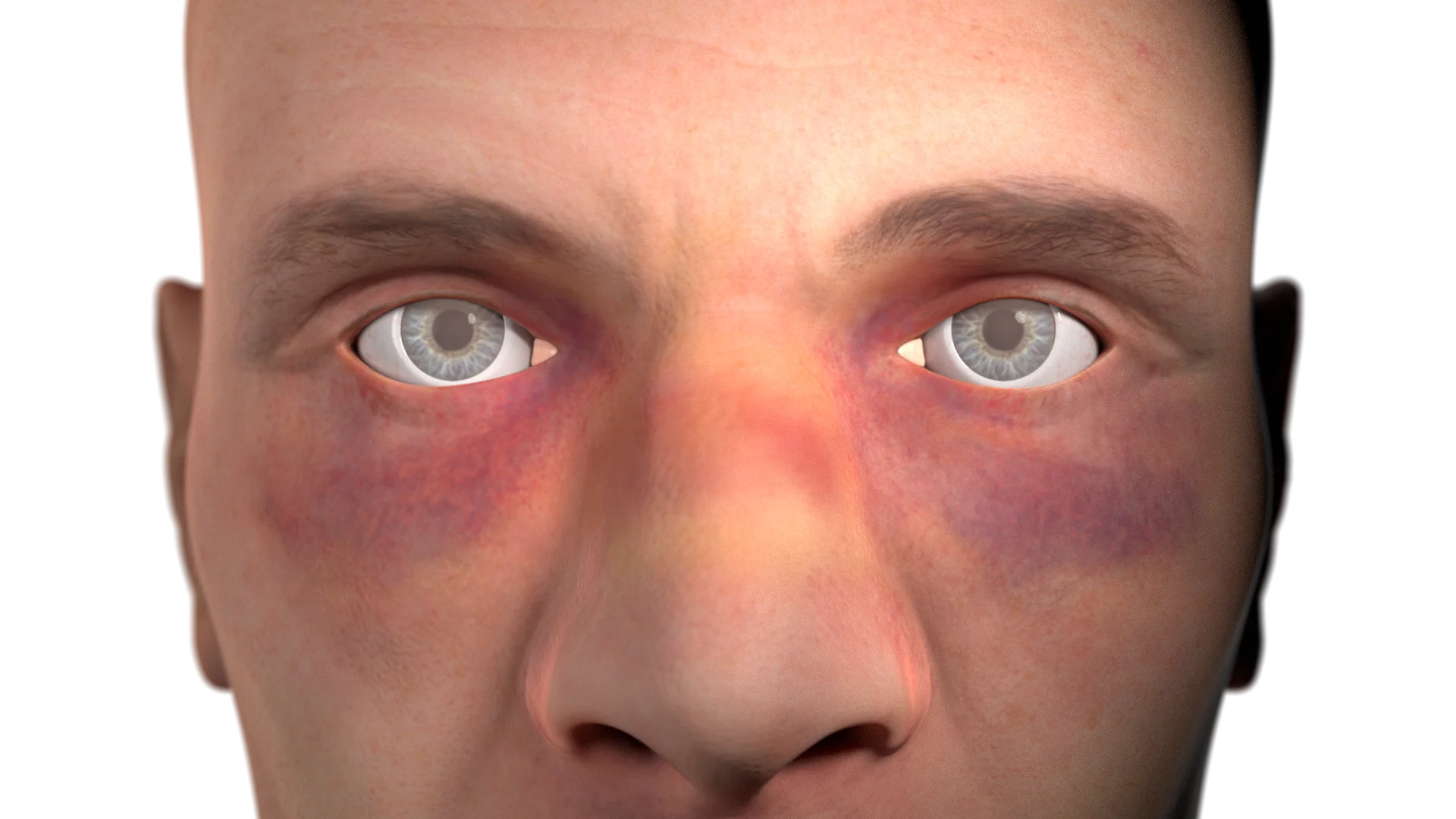
In contusions, there is a pronounced edema of soft tissue both outside and in the nasal cavity. Soft tissue hematoma develops, less often a hematoma of the nasal septum may form.
The integrity of the skin and bone tissue is not disturbed. With a pronounced force of impact may tear the mucous membrane of the nasal cavity, nasal bleeding occurs.
Abrasions are characterized by soreness at the time of injury and scant bleeding. A hemorrhagic crust then forms, under which healing occurs.
When cuts and lacerations occur, pain tends to be felt both at the time of injury and until the wound is sutured. Profuse bleeding is characteristic. Nasal breathing may be impaired due to the development of reactive edema of the nasal cavity.
In nasal contusions, there is soreness at the time of injury. Slight pain can still be felt later, especially when palpating the nose. Nasal bleeding may occur immediately after the injury. A few hours after the injury, there is noticeable soft-tissue edema and hematoma of the perinasal region, including the paraorbital region. Nasal breathing is difficult due to edema of the mucosa of the nasal cavity.
Diagnosis is based on the medical history of injuries and an otorhinolaryngologic examination.
To exclude bone fractures, radiography of the nasal bones in lateral projections and the sinuses is performed.
To rule out deeper injuries, a facial CT scan is recommended.
Find more scientifically accurate content on our social media


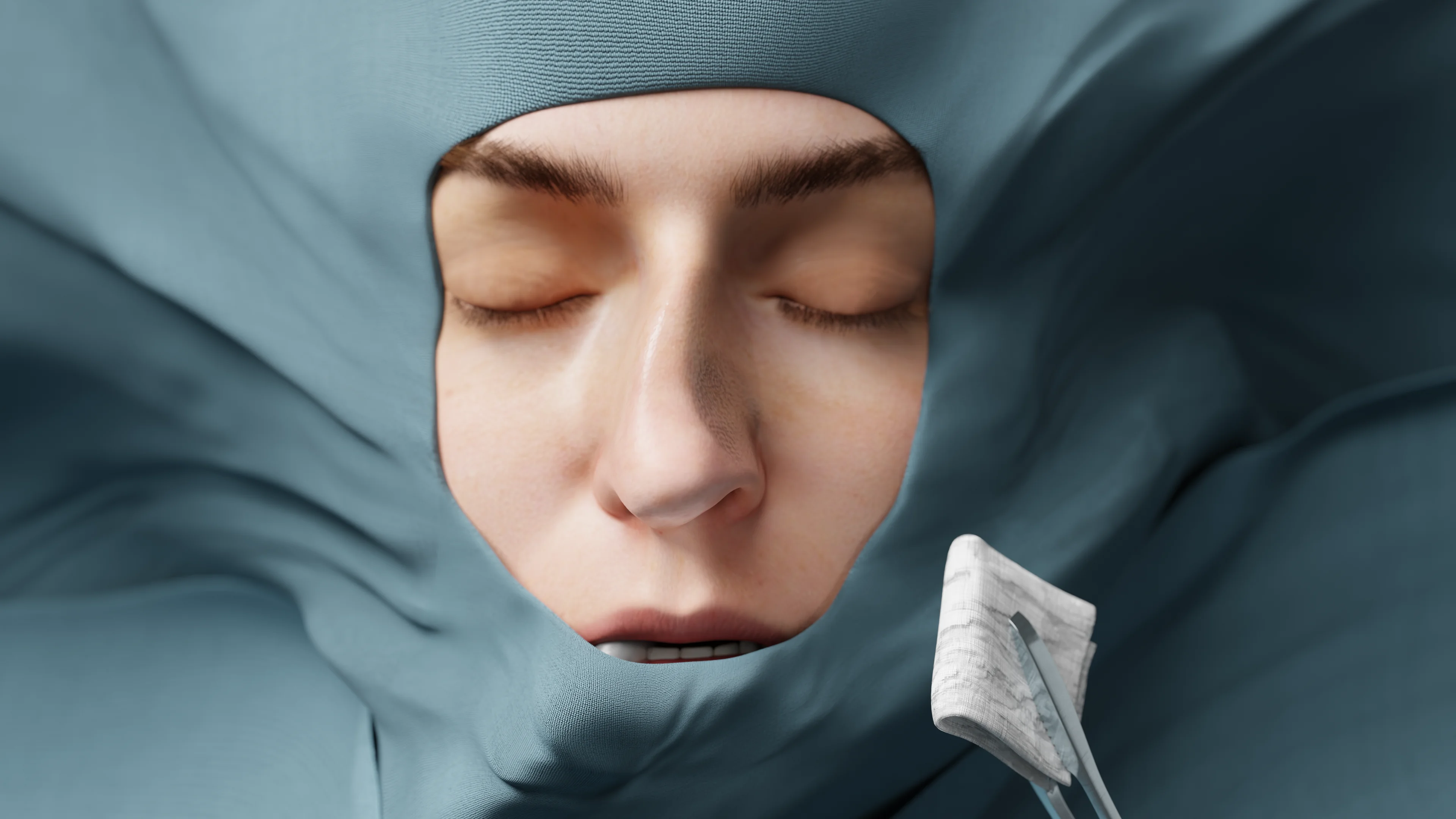
Primary surgical treatment of the wounds is performed. If necessary, the edges of the wound are excised as gently as possible. Cosmetic sutures are applied.
If the amputated nasal area is preserved and viable, reattachment is performed. If reattachment is not possible, plasty with a vascularized graft is performed later.
In the first hours after nasal contusions, cold compresses on the area of injury are recommended, and systemic NSAIDs, intranasal vasoconstrictors, and saline irrigation are prescribed.
If nasal bleeding continues, it must be stopped, including, if necessary, with an anterior nasal tamponade.
Antitetanus prophylaxis is required, and in case of animal bites, rabies post-exposure prophylaxis is, as well.
1. How does a laceration differ from an abrasion?
2. How can a soft tissue contusion be distinguished from a nasal fracture?
3. Is immunization necessary in the event of nasal trauma?
4. What are the possible consequences of soft tissue injuries of the nose?
5. When should medical attention be sought for nasal trauma?
References
1.
VOKA 3D Anatomy & Pathology – Complete Anatomy and Pathology 3D Atlas [Internet]. VOKA 3D Anatomy & Pathology.
Available from: https://catalog.voka.io/
2.
Total Otolaryngology—Head and Neck Surgery, Anthony P. Sclafani, Robin A. Dyleski, Michael J. Pitman, Stimson P. Schantz. Thieme Medical Publishers, Inc., 2015. ISBN 978-1-60406-646-3.
3.
Бербом Х. Болезни уха, горла и носа / Ханс Бербом, Оливер Кашке, Тадеус Навка, Эндрю Свифт; пер. с англ. – 2-е изд. – М. : МЕДпреcс-информ, 2016. – 776 с. : ил. ISBN 978-5-00030- 322-1.
4.
Landeen KC, Kimura K, Stephan SJ. Nasal Fractures. Facial Plast Surg Clin North Am. 2022 Feb;30(1):23-30. doi: 10.1016/j.fsc.2021.08.002. PMID: 34809884.
5.
Marston AP, O’Brien EK, Hamilton GS 3rd. Nasal Injuries in Sports. Clin Sports Med. 2017 Apr;36(2):337-353. doi: 10.1016/j.csm.2016.11.004. PMID: 28314421.
6.
Alvi S, Patel BC. Nasal Fracture Reduction. [Updated 2023 Apr 3]. In: StatPearls [Internet]. Treasure Island (FL): StatPearls Publishing; 2025 Jan-.
Available from: https://www.ncbi.nlm.nih.gov/books/NBK538299/
7.
Ramachandra T, Ries WR. Management of Nasal and Perinasal Soft Tissue Injuries. Facial Plast Surg. 2015 Jun;31(3):194-200. doi: 10.1055/s-0035-1555619. Epub 2015 Jun 30. PMID: 26126216.
8.
Kelley BP, Downey CR, Stal S. Evaluation and reduction of nasal trauma. Semin Plast Surg. 2010 Nov;24(4):339-47. doi: 10.1055/s-0030-1269763. PMID: 22550458; PMCID: PMC3324218.



Summarize article with AI
Choose your preferable AI assistant:
Link successfully copied to clipboard
Thank you!
Your message is sent!
Our experts will contact you shortly. If you have any additional questions, please contact us at info@voka.io