Varicose Veins of the Lower Extremities: Etiology, Pathogenesis, Classification, Diagnosis, Treatment Methods
Oleg K.Cardiovascular surgeon, MD
12 min read·May 06, 2025
This article is for informational purposes only
The content on this website, including text, graphics, and other materials, is provided for informational purposes only. It is not intended as advice or guidance. Regarding your specific medical condition or treatment, please consult your healthcare provider.
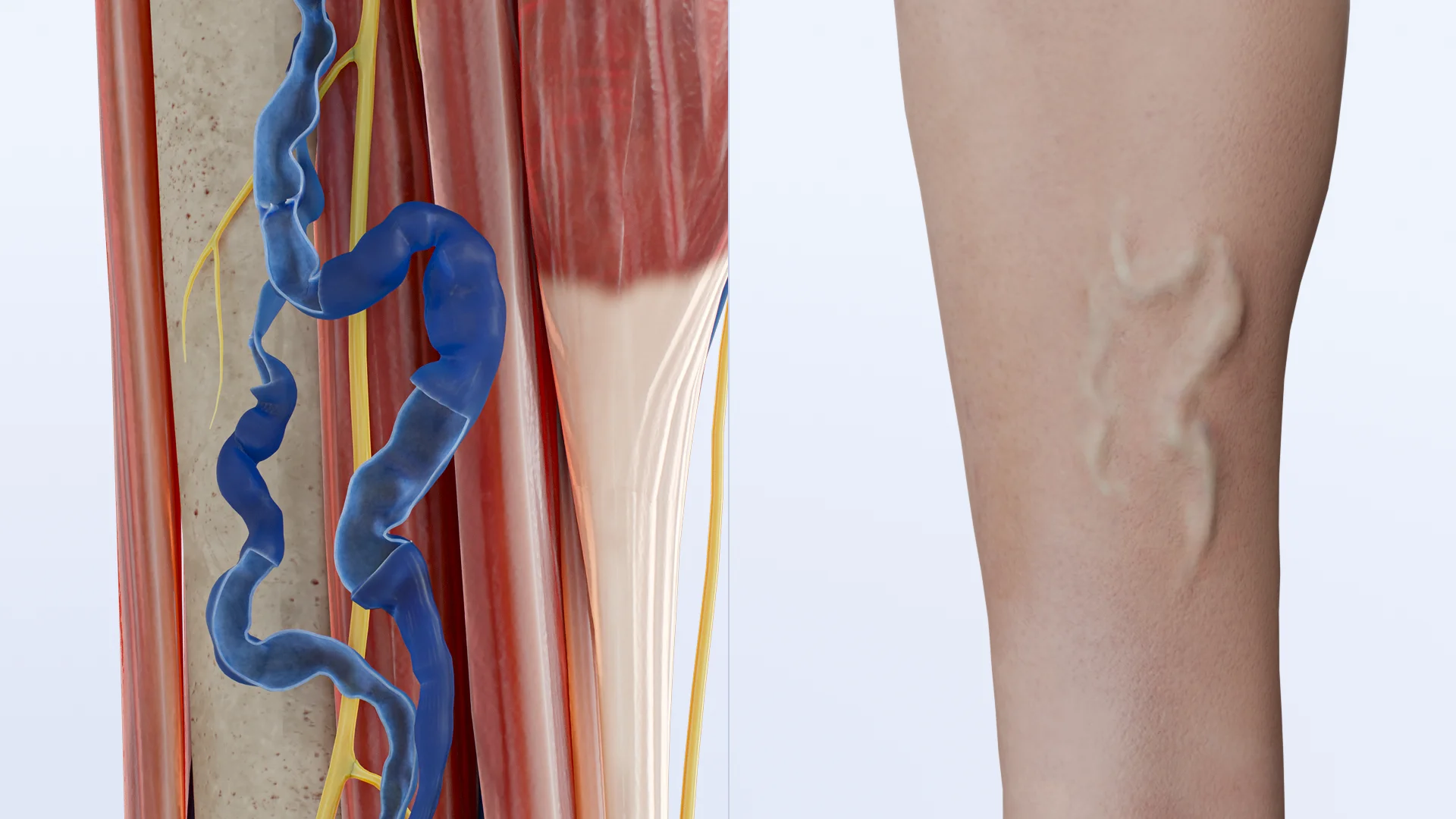
Varicose veins are a condition in which the vein wall becomes thin and the veins dilate unevenly.
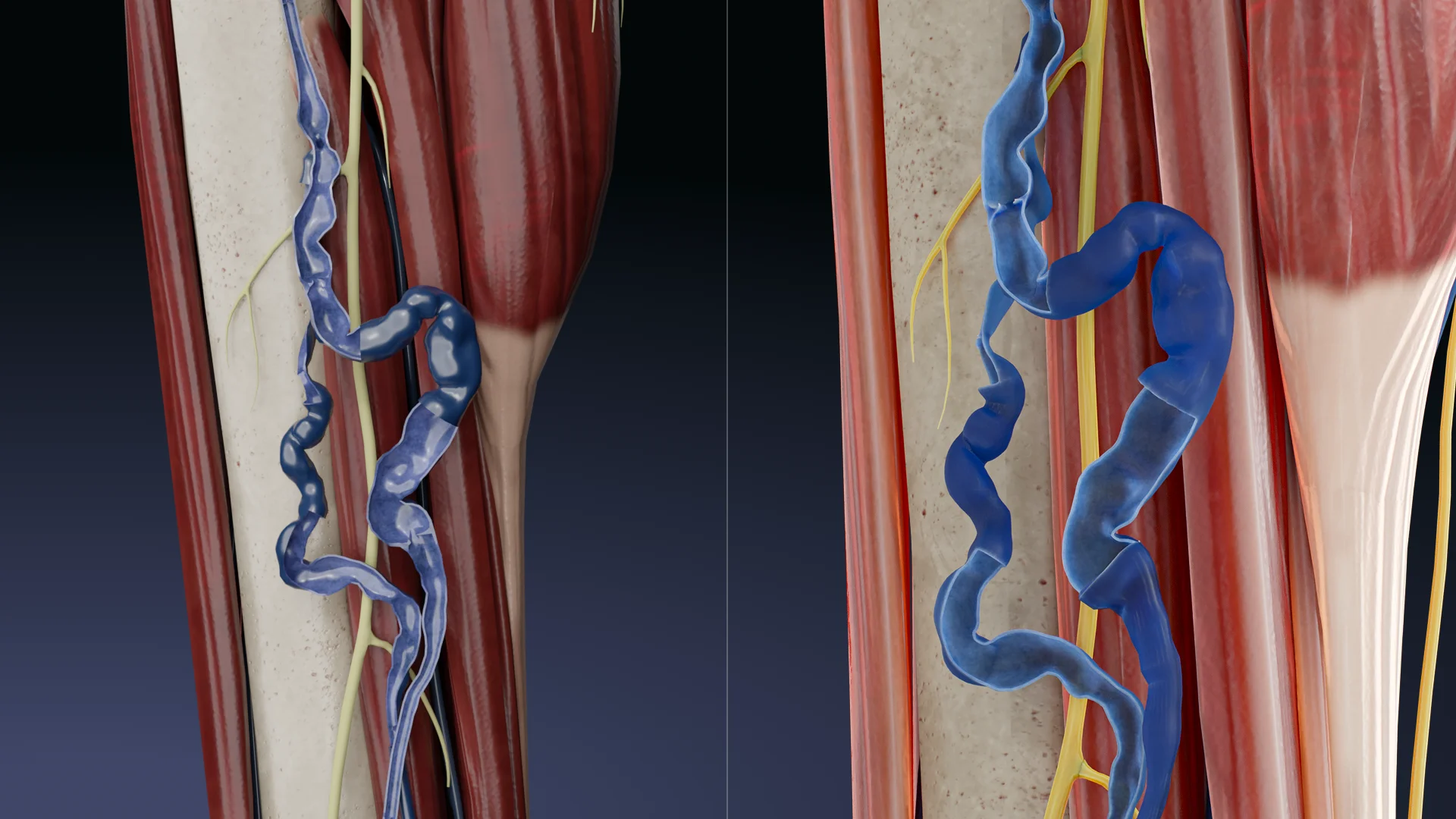
Dilated, tortuous superficial veins (great and small saphenous veins) – 3D model
Epidemiology
Varicose veins of the lower extremities (VVLE) are among the most common chronic vascular diseases. According to epidemiological studies:
Prevalence in the adult population reaches 20–30%.
Women are affected 2–3 times more often than men, associated with hormonal influences and pregnancy.
The frequency increases with age: more than 50% of women and 30% of men over the age of 60 have signs of varicose veins.
Ethnic differences are minimal, but there is evidence of a slightly lower incidence in Afro-Caribbean populations compared to Caucasians.
Etiology
The development of varicose veins is caused by a combination of factors, the main ones being:
Heredity – genetic mutations affecting the structure of the venous wall and valves.
Female sex and hormonal changes – progesterone reduces venous wall tone.
Pregnancy – increased intra-abdominal pressure and hormonal effects.
Venous hypertension leads to capillary stasis, hypoxia, and transendothelial leakage of plasma and erythrocytes. This causes edema, trophic skin changes, and, with progression, varicose ulcers, especially in the area of the medial malleolus, where hydrostatic resistance is the lowest.
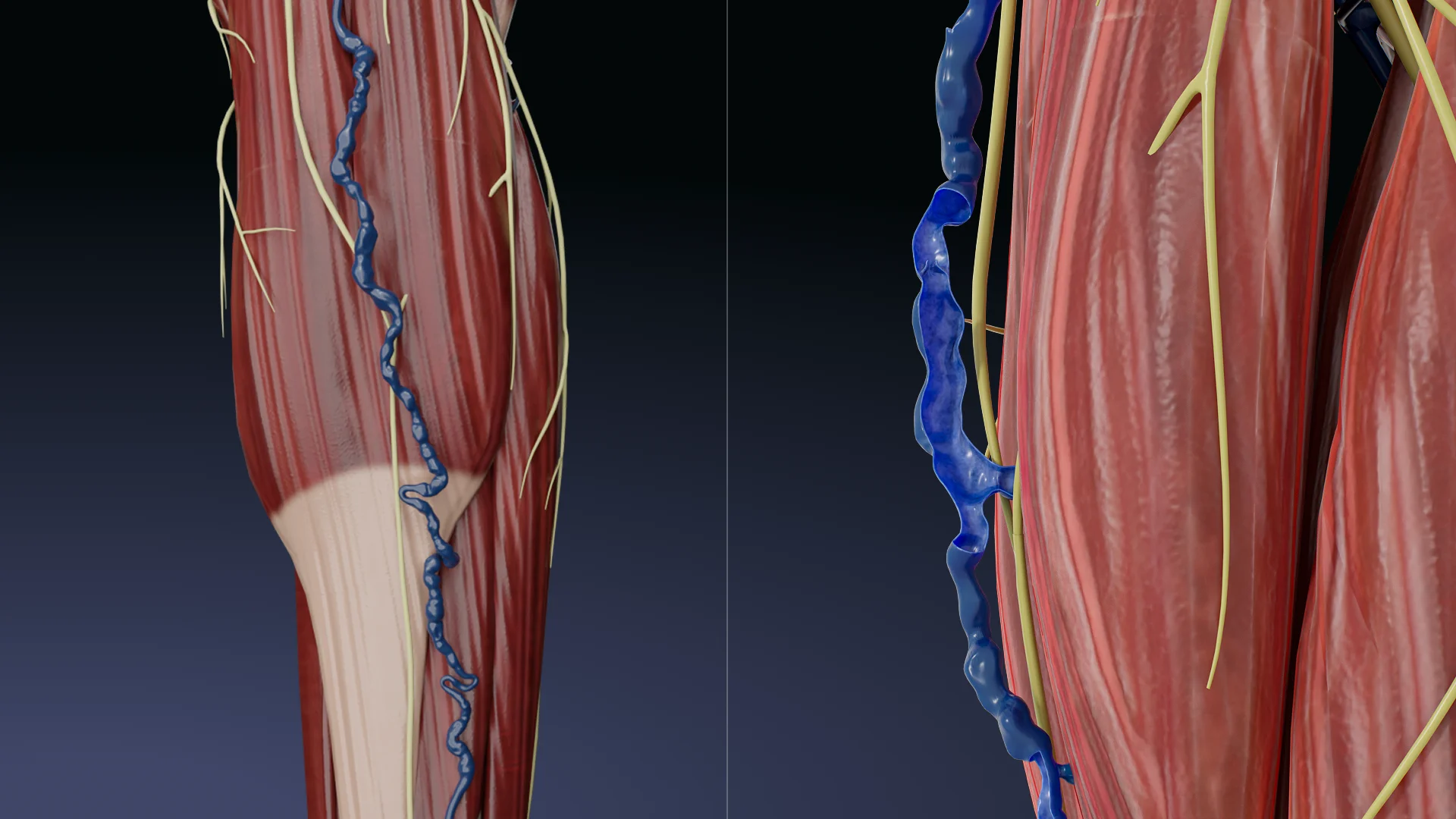
3D animation – development of varicosity of the small saphenous vein
Classification
The CEAP classification is used to assess the stage and severity of chronic venous disease: C – Clinical signs; E – Etiology; A – Anatomic location; P – Pathophysiologic mechanism.
C – Description
C0 – No visible or palpable signs of disease
C1 – Telangiectasias or reticular veins
C2 – Varicose veins (>3 mm in diameter)
C3 – Edema without skin changes
C4a – Pigmentation or eczema
C4b – Lipodermatosclerosis or white atrophy
C5 – Healed venous ulcer.
C6 – Active venous ulcer.
E – Value
Ec – Congenital
Ep – Acquired
Es – Secondary
En – Unspecified
A – Affected area
As – Superficial veins
Ap – Perforating veins
Ad – Deep veins
An – Unknown
R – Mechanism
Pr – Reflux (backflow of blood)
Po – Obstruction (e.g. thrombosis)
Pro – Reflux + Obstruction
Pn – Unknown
VV of the great saphenous vein – 3D modelVV of the small saphenous vein – 3D model
Clinical Manifestations
Symptoms range from cosmetic changes to severe trophic skin disorders:
Dilated, tortuous superficial veins.
Heaviness, fullness, and burning sensations in the legs.
Symptoms worsen with prolonged standing and improve with rest or leg elevation.
Diagnosis
Physical examination: Inspection and palpation of veins while standing.
Assessment of reflux (Trendelenburg test, Sheinis test).
Instrumental methods: Ultrasound angioscanning (duplex ultrasound) – the gold standard of diagnostics.
Imaging: Duplex ultrasound — the gold standard; reveals reflux, occlusions, vein diameter, and anatomy;
Pathologic reflux: >0.5 seconds post-compression.
Laboratory tests (in complications):
Coagulation panel — for suspected thrombosis.
Glucose, HbA1c — if diabetic angiopathy suspected.
Wound microbiota — if infected ulcers are present.
CEAP classification helps stratify risk and guide treatment decisions.
Treatment
1. Conservative Treatment
Compression therapy:
Elastic stockings come in different compression levels and are selected based on the stage of the disease and the severity of symptoms. An improperly selected garment may be ineffective or even harmful, so the type and class of compression should be prescribed by a doctor based on the examination.
They improve venous return, reduce edema, and alleviate subjective symptoms.
Venoactive drugs:
Diosmin, hesperidin, and troxerutin reduce capillary permeability and improve microcirculation.
They are used as symptomatic treatment, but do not address the underlying cause.
Lifestyle modifications:
Bodyweight management;
Moderate physical activity.
Avoiding prolonged sitting or standing
Find more scientifically accurate content on our social media
Subscribe and don’t miss out the latest resources
2. Surgical and Minimally Invasive Treatment
Indications:
Symptomatic varicose veins with confirmed reflux.
CEAP stages C2–C6.
Ineffectiveness of conservative therapy.
2.1. Endovenous laser ablation (EVLA)
Most common method.
Minimally invasive.
Laser causes thermal coagulation and vein sclerosis.
Performed under ultrasound and tumescent anesthesia.
2.2. Radiofrequency ablation (RFA)
Alternative to EVLA.
Uses radiofrequency energy.
Often better tolerated but more expensive.
2.3. Sclerotherapy
Injection of a sclerosing agent (foam or liquid) to close the vein.
Used for reticular veins and telangiectasias.
2.4. Miniphlebectomy (Müller technique)
Removal of varicose tributaries through micro-incisions.
2.5. Crossectomy and stripping
Resection of the great saphenous vein.
Used less often, when endovenous techniques are contraindicated.
Contraindications:
Acute thrombosis.
Decompensated chronic diseases.
Pregnancy (relative contraindication).
Active skin infections at the intervention site.
With timely and appropriate treatment, the prognosis is favorable. Modern endovenous techniques result in remission in 90–95% of cases. Recurrence is possible if technique is flawed or disease progresses.
Possible complications:
Thrombophlebitis.
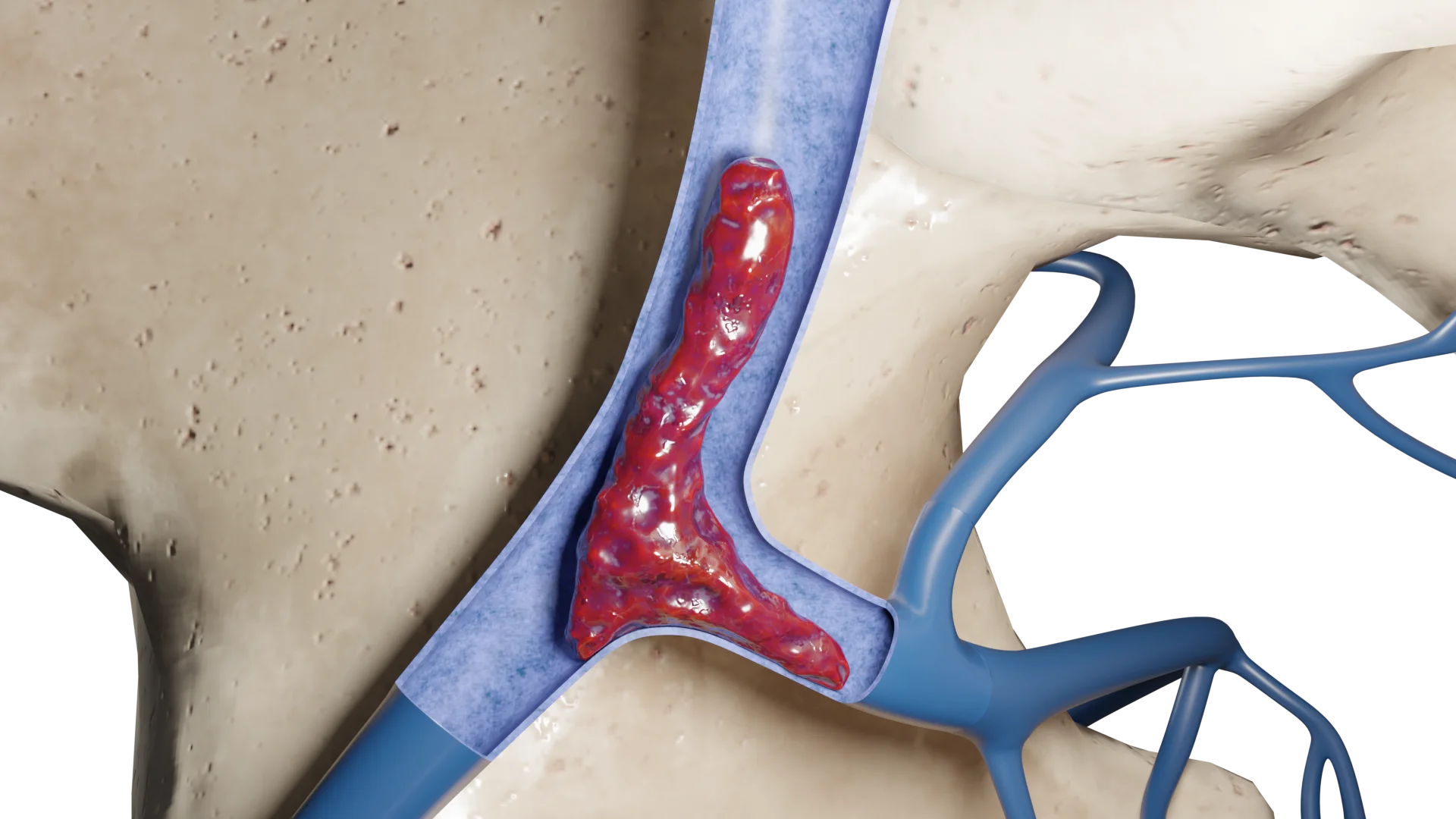
Deep vein thrombosis (DVT).
Hyperpigmentation and hyperkeratosis.
Ulcerative and necrotic skin changes.
Bleeding from a varicose vein.
FAQ
1. Can varicose veins be treated without surgery?
It’s not possible to completely eliminate varicose veins without intervention, but conservative treatment (compression stockings, venotonics) can relieve symptoms and slow progression.
2. Which compression stockings are best, and can I choose them myself?
Stockings are selected based on compression class, disease stage, and anatomy. Self-selection may be ineffective or harmful — better to consult a doctor.
3. What are the risks of untreated varicose veins?
Without treatment, the condition can progress and lead to complications such as thrombophlebitis, swelling, hyperpigmentation, trophic ulcers, and even deep vein thrombosis.
4. Which surgical method is safest and most effective?
Endovenous laser coagulation (EVLC) and radiofrequency ablation (RFA) are considered the safest and most effective methods — minimally invasive, outpatient procedures with quick recovery.
5. Can I exercise with varicose veins?
Yes, but moderate dynamic activities like walking, swimming, and cycling are preferred. Heavy static loads and lifting weights without compression should be avoided.
6. Can varicose veins return after surgery?
Recurrence is possible, especially if there is a genetic predisposition or if recommendations after treatment are not followed, but modern methods provide long-lasting effects with the correct approach.
7. Is it necessary to treat varicose veins if there is no pain and only “spider veins”?
Telangiectasias and reticular veins are an early form of the disease. Although they often have cosmetic significance, it is important to undergo an examination to rule out hidden reflux.
8. Do varicose vein pills help?
Phlebotropic drugs help reduce swelling, heaviness, and cramps, but do not eliminate pathological reflux. They are used as part of combination therapy or when surgery is not possible.
List of Sources
1.
VOKA Catalog.
https://catalog.voka.io/
2.
Gloviczki P, Lawrence PF, Wasan SM, Meissner MH, Almeida J, Brown KR, Bush RL, Di Iorio M, Fish J, Fukaya E, Gloviczki ML, Hingorani A, Jayaraj A, Kolluri R, Murad MH, Obi AT, Ozsvath KJ, Singh MJ, Vayuvegula S, Welch HJ. The 2023 Society for Vascular Surgery, American Venous Forum, and American Vein and Lymphatic Society clinical practice guidelines for the management of varicose veins of the lower extremities. Part II: Endorsed by the Society of Interventional Radiology and the Society for Vascular Medicine. J Vasc Surg Venous Lymphat Disord. 2024 Jan;12(1):101670. doi:10.1016/j.jvsv.2023.08.011.
3.
Gloviczki P, Lawrence PF, Wasan SM, Meissner MH, Almeida J, Brown KR, Bush RL, Di Iorio M, Fish J, Fukaya E, Gloviczki ML, Hingorani A, Jayaraj A, Kolluri R, Murad MH, Obi AT, Ozsvath KJ, Singh MJ, Vayuvegula S, Welch HJ. The 2022 Society for Vascular Surgery, American Venous Forum, and American Vein and Lymphatic Society clinical practice guidelines for the management of varicose veins of the lower extremities. Part I. Duplex Scanning and Treatment of Superficial Truncal Reflux: Endorsed by the Society for Vascular Medicine and the International Union of Phlebology. J Vasc Surg Venous Lymphat Disord. 2023 Mar;11(2):231-261.e6. doi: 10.1016/j.jvsv.2022.09.004.
4.
Youn YJ, Lee J. Chronic venous insufficiency and varicose veins of the lower extremities. Korean J Intern Med. 2019 Mar;34(2):269-283. doi: 10.3904/kjim.2018.230.
5.
Gwozdzinski L, Pieniazek A, Gwozdzinski K. Factors Influencing Venous Remodeling in the Development of Varicose Veins of the Lower Limbs. Int J Mol Sci. 2024 Jan 26;25(3):1560. doi: 10.3390/ijms25031560.
6.
Chung JH, Heo S. Varicose Veins and the Diagnosis of Chronic Venous Disease in the Lower Extremities. J Chest Surg. 2024 Mar 5;57(2):109-119. doi: 10.5090/jcs.23.110.
7.
Adler C, Mousa A, Rhee A, Patel MD. Varicose Veins of the Lower Extremity: Doppler US Evaluation Protocols, Patterns, and Pitfalls. Radiographics. 2022 Nov-Dec;42(7):2184-2200. doi: 10.1148/rg.220057.
8.
Gawas M, Bains A, Janghu S, Kamat P, Chawla P. A Comprehensive Review on Varicose Veins: Preventive Measures and Different Treatments. J Am Nutr Assoc. 2022 Jul;41(5):499-510. doi: 10.1080/07315724.2021.1909510.
50 Franklin Street, STE 203 Boston, MA 02110 United States
Thank you!
Your message is sent! Our experts will contact you shortly. If you have any additional questions, please contact us at info@voka.io
Cookie Consent
We use cookies to enhance your browsing experience, analyze site traffic, and deliver content. Please choose whether you accept all cookies or wish to reject non-essential tracking.
Cookie Preferences
Manage your cookie preferences below:
Essential cookies enable basic functions and are necessary for the proper function of the website.
Name
Description
Duration
Geolocation Config
This cookie is used to store the consent settings based on the visitor's location.
30 days
Cookie Preferences
This cookie is used to store the user's cookie consent preferences.
30 days
Google reCAPTCHA helps protect websites from spam and abuse by verifying user interactions through challenges.
Name
Description
Duration
_GRECAPTCHA
Google reCAPTCHA sets a necessary cookie (_GRECAPTCHA) when executed for the purpose of providing its risk analysis.
179 days
Statistics cookies collect information anonymously. This information helps us understand how visitors use our website.
Google Analytics is a powerful tool that tracks and analyzes website traffic for informed marketing decisions.
Used to monitor number of Google Analytics server requests
10 minutes
__utmb
Used to distinguish new sessions and visits. This cookie is set when the GA.js javascript library is loaded and there is no existing __utmb cookie. The cookie is updated every time data is sent to the Google Analytics server.
30 minutes after last activity
__utmc
Used only with old Urchin versions of Google Analytics and not with GA.js. Was used to distinguish between new sessions and visits at the end of a session.
End of session (browser)
__utmz
Contains information about the traffic source or campaign that directed user to the website. The cookie is set when the GA.js javascript is loaded and updated when data is sent to the Google Anaytics server
6 months after last activity
__utmv
Contains custom information set by the web developer via the _setCustomVar method in Google Analytics. This cookie is updated every time new data is sent to the Google Analytics server.
2 years after last activity
__utmx
Used to determine whether a user is included in an A / B or Multivariate test.
18 months
_ga
ID used to identify users
2 years
_gali
Used by Google Analytics to determine which links on a page are being clicked
30 seconds
_ga_
ID used to identify users
2 years
_gid
ID used to identify users for 24 hours after last activity
24 hours
_gat
Used to monitor number of Google Analytics server requests when using Google Tag Manager
1 minute
_gac_
Contains information related to marketing campaigns of the user. These are shared with Google AdWords / Google Ads when the Google Ads and Google Analytics accounts are linked together.
90 days
Clarity is a web analytics service that tracks and reports website traffic.