Odontogenic Sinusitis: Classification, Etiology, Clinical Presentation, Diagnosis, and Treatment
A detailed overview of odontogenic maxillary sinusitis: causes, symptoms of acute and chronic inflammation, diagnosis, and modern treatment approaches.


Anesthesia
Pain management and sedation techniques

Angiology
Arterial and venous pathologies

Cardiology
Acquired and congenital heart diseases

Dentistry
Diseases of teeth, gums, and the oral cavity

Dermatology
Disorders of the skin and subcutaneous tissue

Embryology
Stages of embryogenesis and congenital anomalies

Endocrinology
Disorders of the glands and hormonal imbalance

Gastroenterology
Stomach, intestinal, and digestive diseases

Gynecology
Diseases of female reproductive organs

Hematology
Hematopoiesis and blood-related disorders

Hepatology
Liver, gallbladder, and biliary tract diseases

Histology
Microscopic tissue and cell structures

Infectious diseases
Bacterial, viral, and parasitic infections

Neurology
Brain, spinal cord, and peripheral nerve disorders

Obstetrics
Pregnancy complications and abnormal fetal positions

Oncology
Cancer types, benign and malignant tumors

Ophthalmology
Conditions affecting the eyes and vision

Orthopedics
Bone, joint, and soft tissue disorders

Otorhinolaryngology
Ear, nose, and throat diseases

Pediatrics
Child health, development, and clinical conditions

Physiology
Biological processes within organs and systems

Pulmonology
Lung and respiratory tract diseases

Traumatology
Acute injuries and musculoskeletal trauma

Urology
Urinary tract and male reproductive disorders
Anesthesia
Pain management and sedation techniques
Angiology
Arterial and venous pathologies
Cardiology
Acquired and congenital heart diseases
Dentistry
Diseases of teeth, gums, and the oral cavity
Dermatology
Disorders of the skin and subcutaneous tissue
Embryology
Stages of embryogenesis and congenital anomalies
Endocrinology
Disorders of the glands and hormonal imbalance
Gastroenterology
Stomach, intestinal, and digestive diseases
Gynecology
Diseases of female reproductive organs
Hematology
Hematopoiesis and blood-related disorders
Hepatology
Liver, gallbladder, and biliary tract diseases
Histology
Microscopic tissue and cell structures
Infectious diseases
Bacterial, viral, and parasitic infections
Neurology
Brain, spinal cord, and peripheral nerve disorders
Obstetrics
Pregnancy complications and abnormal fetal positions
Oncology
Cancer types, benign and malignant tumors
Ophthalmology
Conditions affecting the eyes and vision
Orthopedics
Bone, joint, and soft tissue disorders
Otorhinolaryngology
Ear, nose, and throat diseases
Pediatrics
Child health, development, and clinical conditions
Physiology
Biological processes within organs and systems
Pulmonology
Lung and respiratory tract diseases
Traumatology
Acute injuries and musculoskeletal trauma
Urology
Urinary tract and male reproductive disorders
Specialties
AnesthesiaAngiologyCardiologyDentistryDermatologyEmbryologyEndocrinologyGastroenterologyGynecologyHematologyHepatologyHistologyInfectious diseasesNeurologyObstetricsOncologyOphthalmologyOrthopedicsOtorhinolaryngologyPediatricsPhysiologyPulmonologyTraumatologyUrology
This article is for informational purposes only
The content on this website, including text, graphics, and other materials, is provided for informational purposes only. It is not intended as advice or guidance. Regarding your specific medical condition or treatment, please consult your healthcare provider.
Dermatological disorders of the external ear accompanied by pruritus — collectively referred to as pruritic dermatoses — comprise a group of inflammatory skin conditions affecting the auricle and external auditory canal, with intense itching as the primary symptom. These disorders significantly impair patient’s quality of life and require a comprehensive treatment approach, as they often reflect underlying systemic dysfunction.
In clinical practice, the following forms of pruritic dermatoses of the external ear are recognized:
The causes of auricular and external auditory canal eczema are multifactorial. Typically, the underlying trigger is a systemic condition, such as:
These, in turn, can often coexist with various ear disorders (such as recurrent chronic suppurative otitis media or intermittent skin trauma), which can exacerbate the pathological process.
Skin irritants play a key role in the development of contact (allergic) dermatitis, including:
Eczema is a long-lasting, relapsing, cyclical skin disorder. It arises from immunologic dysfunction.
The chronic phase is characterized by dry, flaky skin and lichenification (i.e., thickened and leathery skin). Additionally, the ear canal may become blocked by keratinized epidermis.
In the acute phase, vesicular rash secondary to hyperemia may develop. Vesicles tend to rupture and ooze serous fluid, leading to weeping. Subsequently, a crust forms over the lesions. Areas affected by eczema, which are exacerbated by scratching, can become infected. In this case, vesicles evolve into pustules that can also rupture and shed purulent fluid; the lesions are then covered by purulent crusts.
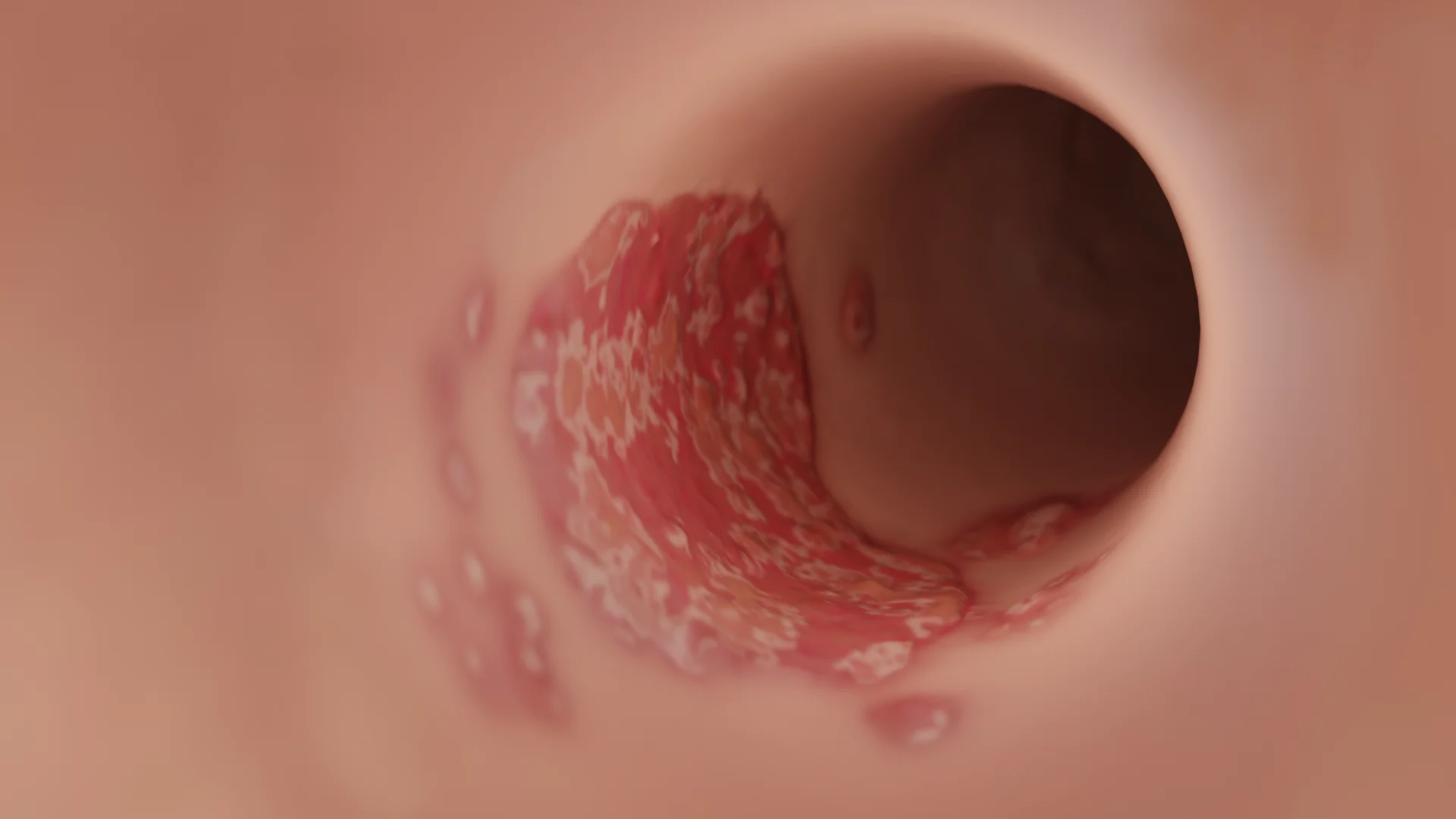
Allergic contact dermatitis is a delayed-type hypersensitivity reaction (type IV).
This condition involves pathological changes in the skin induced by either a prolonged sensitization or reexposure to an allergen.
Lesions that directly contact an allergen can develop vesicular rash and bullae filled with serous or hemorrhagic fluid. The skin is hyperemic and infiltrated. Ruptured vesicles and bullae contribute to crusting and scaling.
In the chronic phase, eczema of the auricle and the external auditory canal is identified solely by changes in skin appearance; other clinical manifestations are uncommon.
Symptoms of eczema in the acute phase:
Secondary infection can lead to purulent discharge, narrowing, and tenderness of the ear canal, which can hinder the diagnosis.
Note that eczema typically manifests with multiple lesions on the skin in the region of the radiocarpal joints, cubital fossae, face, and scalp.
Symptoms of allergic contact dermatitis:
Diagnosis is based on a patient’s medical history and physical examination.
General symptoms such as fever, chills, and signs of intoxication are rare, as well as deep auricular (ear cartilage) lesions and morphological changes.
Allergy testing may sometimes be utilized to diagnose the disorder and identify the underlying cause.
Differential diagnosis may be necessary when a secondary bacterial infection develops, in order to rule out acute otitis externa, perichondritis, acute suppurative otitis media, and other dermatitis types (including psoriasis and seborrhoea).
Find more scientifically accurate content on our social media


This category of disorders is typically subject to conservative treatment on an outpatient basis.
Contact dermatitis management can only be successful when the root cause is eliminated. Therefore, it is important to avoid any triggers, such as water contact and mechanical skin injuries, while the underlying extraorgan disease should be curtailed.
Please note that contact dermatitis management can only be successful when the root cause is eliminated. It is essential to prevent water exposure and mechanical trauma to the skin.
If a bacterial infection has developed, antibacterial ointments should be applied locally, any lesions should be regularly treated with antiseptic solutions.
Once the inflammation is under control, ointments containing glucocorticosteroids (GCS) and salicylic acid are typically recommended, with the latter having a keratolytic and regenerative effect. Oral antihistamines can help alleviate symptoms.
In the chronic phase, the skin should be regularly moisturized with liniments, while prolonged contact with water should be avoided. Physiotherapy, including UV exposure and ultra-high frequency (UHF) treatments, has been shown to contribute to positive outcomes.
1. What causes external ear eczema and contact dermatitis?
2. How do external ear dermatoses present, and what are the symptomatic differences?
3. When is differential diagnosis necessary?
4. How are external ear dermatoses treated?
5. What is the management strategy during eczema remission?
References
1.
VOKA 3D Anatomy & Pathology – Complete Anatomy and Pathology 3D Atlas. VOKA 3D Anatomy & Pathology.
Available from: https://catalog.voka.io/
2.
Sclafani AP, Dyleski RA, Pitman MJ, Schantz SP. Total Otolaryngology—Head and Neck Surgery. New York (NY): Thieme Medical Publishers; 2015.
3.
Berbom H, Kaschke O, Nawka T, Swift A. Bolezni ukha, gorla i nosa [Diseases of the ear, nose and throat]. 2nd ed. Moscow: MEDpress-inform; 2016. 776 p. [In Russian.]
4.
Wilkinson EP, Fayad JN. Allergic Contact Dermatitis of the Auricle. Ear, Nose & Throat Journal. 2007;86(5):260. doi:10.1177/014556130708600502.
5.
Sood A, Taylor JS. Allergic contact dermatitis from hearing aid materials. Dermatitis. 2004 Mar;15(1):48-50. doi: 10.2310/6620.2004.20441. PMID: 15573649.
Make VOKA your preferred source
See more VOKA articles in Google Search








Summarize article with AI
Choose your preferable AI assistant:
Link successfully copied to clipboard
Thank you!
Your message is sent!
Our experts will contact you shortly. If you have any additional questions, please contact us at info@voka.io