The content on this website, including text, graphics, and other materials, is provided for informational purposes only. It is not intended as advice or guidance. Regarding your specific medical condition or treatment, please consult your healthcare provider.
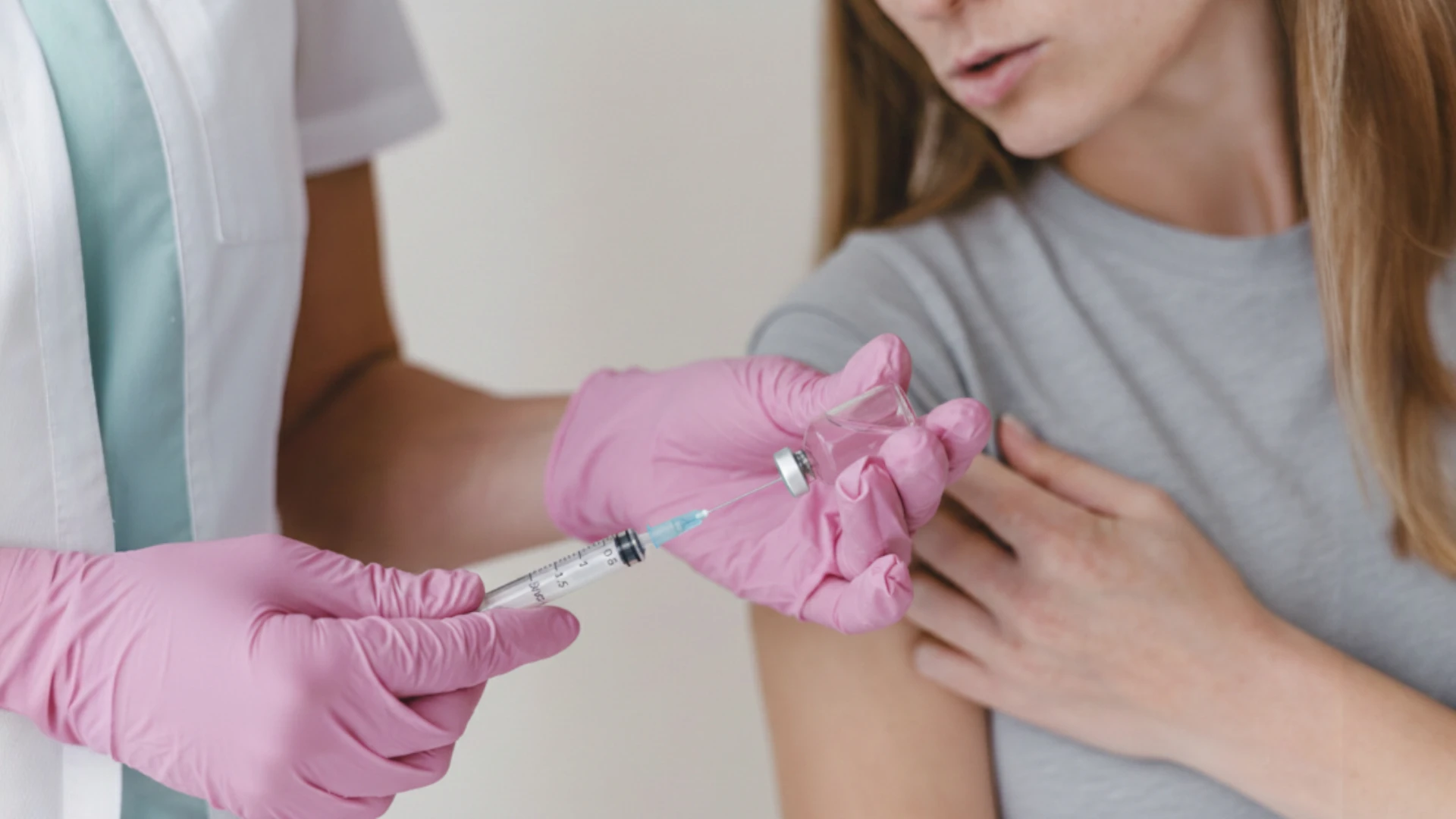
Administration of an intramuscular injection of the vaccine into the deltoid muscle of the arm
Vaccination is one of the most effective and scientifically validated methods of preventing infectious diseases, which has significantly reduced morbidity, disability, and mortality from a number of dangerous infections.
This article reviews the most common and clinically significant matters regarding vaccination based on current international guidelines and evidence-based medicine.
Recommendations before vaccination
There are no restrictions on the daily routine and diet, nor are there recommendations for taking medications on the day of vaccination.
Antipyretics taken before and immediately after vaccine administration do not reduce the likelihood of fever after vaccination and do not decrease the risk of febrile seizures; anti-allergic medications do not reduce the probability of allergic reactions, including anaphylaxis (a severe reaction with a high risk of fatal outcome).
Recommendations after vaccination
After vaccination, one should remain under monitoring of healthcare providers for 30 minutes so that they can assess the reaction to the vaccine and promptly provide assistance in the event of anaphylaxis (which most often occurs in the first 30 minutes post-vaccination).
The adhesive bandage should be removed as soon as possible to avoid the development of local skin allergic reactions.
On the day of vaccination, there is no need to limit contact with people, adjust plans, restrict diet, or adhere to a special diet.
Showering and wetting the injection site are not prohibited.
It is not recommended visiting a bathhouse or sauna, taking a hot bath, or vigorously rubbing the skin at the injection site to reduce the risk of discomfort and the development of local reactions.
If there is an increase in body temperature accompanied by feeling unwell (regardless of the thermometer reading), it is advised to use antipyretic agents (either paracetamol or ibuprofen) in the full age-appropriate dosage (reduced doses are often ineffective and unjustifiable). The medication dosage form and method of its administration (syrup, tablet orally, or suppositories rectally) are irrelevant.
Methods and techniques for vaccine administration
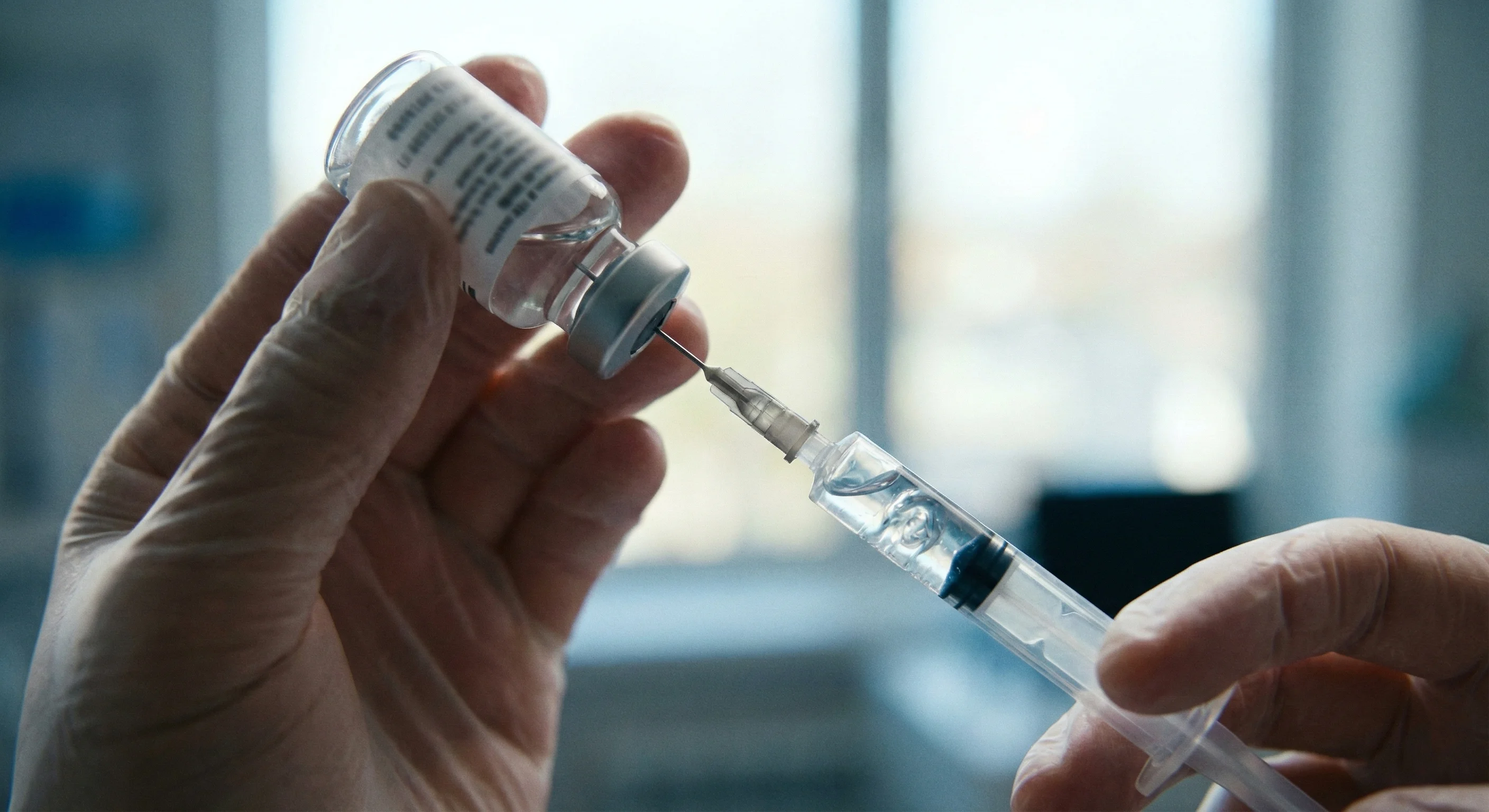
The process of preparing an injectable solution: drawing medication from the vial into a syringe
Why are some vaccines administered subcutaneously while others are administered intramuscularly?
One of the factors influencing the method of vaccine administration is the presence of an additional component—an adjuvant (a substance that enhances the immune response to the vaccine).
Typically, vaccines with adjuvants are administered intramuscularly to avoid the risk of unwanted local reactions (edema, skin redness, or formation of nodules), which frequently develop when the adjuvant gets under the skin or intradermally.
What areas of the body are suitable for intramuscular vaccine administration?
Depending on age and body mass, it is preferable to administer vaccines in the anterolateral thigh and the deltoid muscle.
Vaccines should not be administered in the gluteal region.
Is injecting a vaccine directly into an area that has a tattoo safe?
Yes, administering vaccines into a muscle or subcutaneously at the site of a tattoo is safe.
Is a healthcare worker required to wear gloves when administering vaccines?
In general, no, the use of gloves is not required during vaccination, except in cases where the healthcare worker administering the vaccine has an open wound on their hands.
Standard precautions should be observed during vaccination without gloves (hand treatment with alcohol-based antiseptic or washing with soap and water before preparing vaccines for administration and before contact with each patient).
If a healthcare worker uses gloves, they must change them after contact with each patient.
If multiple vaccines are to be administered simultaneously, can they be mixed in a single syringe?
Absolutely not. Under no circumstances should vaccines be mixed in one syringe, unless specifically authorized.
How many vaccinations can be administered in a single physician visit?
Except for rare exceptions, all vaccines (there is no maximum permissible number) can be administered within one visit.
An interval of at least 2.5 cm must be observed between vaccine administration sites to reduce the likelihood of overlapping local reactions.
The schedules for different age groups are provided in the document below.
There is no recommended sequence for vaccine administration. To minimize discomfort, it is advisable to administer the vaccine that usually causes the most significant discomfort (e.g., burning) last.
There are no specific guidelines prohibiting the administration of more than 1 ml of a vaccine into one muscle. The maximum volume to be injected for the deltoid muscle is 2 ml; for the thigh muscle, a maximum of 5 ml.
Simultaneous vaccination and stress on the immune system
What does the phrase “simultaneous vaccine administration” mean?
Simultaneous vaccination means receiving different vaccinations on the same day.
For instance, one can get vaccinated in the morning at one medical facility and then get vaccinated again in the afternoon at another medical facility, which also counts as simultaneous administration.
Does administering several vaccines in one day overload/decrease a child’s immunity?
No. There is no scientific evidence that delaying vaccination or separating vaccines by the individual antigens benefits children.
Safety of vaccines containing aluminum and mercury
Aluminum
Vaccines containing aluminum are safe.
Aluminum is widely present in the environment and regularly enters the human body from various sources:
Food products and beverages: fruits and vegetables, grains, flour, nuts, dairy products, infant formulas, honey, beer and wine, dressings/seasonings;
Household items and packaging: pots and pans, beverage cans, aluminum foil;
Medical and cosmetic products: certain medicines (including antacids—agents affecting the acidity of gastric juice), antiperspirants.
The amount of aluminum received from vaccines is significantly lower compared to everyday exposure:
In the first 6 months of life, infants receive about 4.4 mg of aluminum through vaccines.
During the same period, children:
breastfed: receive about 7 mg of aluminum;
formula-fed: receive about 38 mg;
using soy-based formulas: receive up to 117 mg.
Adults consume an average of 7–9 mg of aluminum per day.
Mercury
Not elemental mercury, but its organic compound (merthiolate, thimerosal) as a preservative is still used in the manufacture of a few vaccines. Extensive research proves that thimerosal is safe and does not cause neurological problems or autism.
Examinations and chronic conditions
Is an assessment of health status and completion of tests necessary before vaccination?
No. If there are no symptoms and signs of illness before vaccination, it is not required to measure body temperature and assess other vital signs (blood pressure and others), nor to undergo preliminary examinations (complete blood count, urinalysis, and others).
Can people with anemia or during iron treatment be vaccinated?
Routine evaluation of hemoglobin levels before each vaccination is not necessary.
Vaccination is not contraindicated for people with iron deficiency anemia with hemoglobin levels above 70 g/L, whether they are undergoing iron treatment or not.
Can people with atopic dermatitis be vaccinated?
Vaccination of individuals with atopic dermatitis is usually permitted during remission or when maximum remission is achieved.
Emergency vaccination can also be conducted during an exacerbation, provided the skin at the injection site is clean (unchanged).
Local hormonal creams and ointments do not reduce the immune response to the vaccine, so discontinuation of these treatments before vaccination is not required.
Is it safe for individuals who have previously had seizures to be vaccinated?
For individuals with seizures without a confirmed diagnosis, scheduled vaccination may be postponed until the diagnosis is clarified.
In the presence of seizures in patients with a known diagnosis, vaccination is carried out on anticonvulsant treatment.
Vaccination with any vaccine is not contraindicated in children with febrile seizures, even if they occurred post-vaccine administration.
Vaccination during acute illnesses and treatment
Can one be vaccinated during symptoms of an acute infectious disease?
Any mild acute illness (e.g., diarrhea or mild upper respiratory infection) with elevated or normal body temperature is not a contraindication for vaccination.
The limitation of vaccinating patients with moderate or severe acute illness is due to the fact that a rise in temperature after vaccination may cause confusion when prescribing treatment (for instance, it may be difficult to determine whether the fever is a reaction to the vaccine administration or is due to the illness itself).
Is it safe to be vaccinated while taking antibiotics?
Antibiotic treatment is not a contraindication for vaccination.
If a person has a moderate or severe acute illness (often regardless of antibiotic use), vaccination can be postponed until recovery.
Can one be vaccinated after contact with an infectious disease patient or in the recovery period?
In general, neither contact with an infected person, nor the infectious disease itself, nor recovery from such a disease are considered contraindications for vaccination.
However, depending on the disease, it is crucial to consider the likelihood of the vaccinated individual being contagious to others on the day of vaccination.
Vaccination in special life situations
Are there any vaccination restrictions for close contacts of a pregnant woman?
The presence of a pregnant woman in the family is not a contraindication to any vaccine for other family members.
Pregnant women should avoid close contact with a person who has been vaccinated against smallpox and monkeypox with a live vaccine within the last 28 days.
Which vaccines are permissible for breastfeeding mothers?
All vaccines, except for live vaccines against smallpox, monkeypox, and yellow fever, can be administered to breastfeeding mothers.
Allergic reactions and vaccination
Egg allergy
The yellow fever vaccine is contraindicated for individuals with a severe (anaphylactic) reaction to eggs.
An egg allergy of any severity is not a contraindication for the administration of vaccines developed using chicken embryos (for influenza, measles, and mumps).
Peanut allergy
Vaccines do not contain traces of peanuts and are safe for individuals with a peanut allergy.
Allergy to bee stings
An allergy to bee venom is not a contraindication for any vaccine.
Age-related characteristics of vaccination
Vaccines are generally not administered to children under 6 weeks of age. This is mainly because there is limited data on the safety and efficacy of vaccines administered at this term, and the vaccines are not licensed for such use.
The immune response to vaccines administered before 6 weeks is weak, and for the Hib vaccine, there may be a reduction in response to subsequent doses of the Hib vaccine. Hepatitis B and tuberculosis vaccines are exceptions.
Find more scientifically accurate content on our social media
Subscribe and don’t miss out the latest resources
Intervals between vaccines
There is no need to restart a vaccination course due to any interval longer than recommended, even if it is a year or more.
For intervals of 3 months or less, use 28 days (4 weeks) as the “month”.
For intervals of 4 months or more, consider a month as a “calendar month”: the interval from one calendar date to the next, occurring a month later.
References
1.
VOKA 3D Anatomy & Pathology – Complete Anatomy and Pathology 3D Atlas [Internet]. VOKA 3D Anatomy & Pathology.
Available from: VOKA Catalog. https://catalog.voka.io/