Basic Monitoring During Anesthesia: Standards and Mandatory Monitoring Parameters
Analysis of basic monitoring standards during anesthesia. Mandatory parameters of oxygenation, ventilation, and hemodynamics for patient safety.


Anesthesia
Pain management and sedation techniques

Angiology
Arterial and venous pathologies

Cardiology
Acquired and congenital heart diseases

Dentistry
Diseases of teeth, gums, and the oral cavity

Dermatology
Disorders of the skin and subcutaneous tissue

Endocrinology
Disorders of the glands and hormonal imbalance

Gastroenterology
Stomach, intestinal, and digestive diseases

Gynecology
Diseases of female reproductive organs

Hematology
Hematopoiesis and blood-related disorders

Hepatology
Liver, gallbladder, and biliary tract diseases

Histology
Microscopic tissue and cell structures

Infectious diseases
Bacterial, viral, and parasitic infections

Neurology
Brain, spinal cord, and peripheral nerve disorders

Obstetrics
Pregnancy complications and abnormal fetal positions

Oncology
Cancer types, benign and malignant tumors

Ophthalmology
Conditions affecting the eyes and vision

Orthopedics
Bone, joint, and soft tissue disorders

Otorhinolaryngology
Ear, nose, and throat diseases

Pediatrics
Child health, development, and clinical conditions

Physiology
Biological processes within organs and systems

Pulmonology
Lung and respiratory tract diseases

Traumatology
Acute injuries and musculoskeletal trauma

Urology
Urinary tract and male reproductive disorders
Anesthesia
Pain management and sedation techniques
Angiology
Arterial and venous pathologies
Cardiology
Acquired and congenital heart diseases
Dentistry
Diseases of teeth, gums, and the oral cavity
Dermatology
Disorders of the skin and subcutaneous tissue
Endocrinology
Disorders of the glands and hormonal imbalance
Gastroenterology
Stomach, intestinal, and digestive diseases
Gynecology
Diseases of female reproductive organs
Hematology
Hematopoiesis and blood-related disorders
Hepatology
Liver, gallbladder, and biliary tract diseases
Histology
Microscopic tissue and cell structures
Infectious diseases
Bacterial, viral, and parasitic infections
Neurology
Brain, spinal cord, and peripheral nerve disorders
Obstetrics
Pregnancy complications and abnormal fetal positions
Oncology
Cancer types, benign and malignant tumors
Ophthalmology
Conditions affecting the eyes and vision
Orthopedics
Bone, joint, and soft tissue disorders
Otorhinolaryngology
Ear, nose, and throat diseases
Pediatrics
Child health, development, and clinical conditions
Physiology
Biological processes within organs and systems
Pulmonology
Lung and respiratory tract diseases
Traumatology
Acute injuries and musculoskeletal trauma
Urology
Urinary tract and male reproductive disorders

This article is for informational purposes only
The content on this website, including text, graphics, and other materials, is provided for informational purposes only. It is not intended as advice or guidance. Regarding your specific medical condition or treatment, please consult your healthcare provider.
Rapid Sequence Induction/Intubation (RSI) is the preferred method of airway protection in critically ill patients, assuming they are at risk of gastric content aspiration.
This method includes the almost simultaneous administration of an induction agent and a neuromuscular blocking agent to create optimal intubation conditions and minimize the duration between drug-induced loss of airway protection and endotracheal tube placement, thereby reducing the risk and consequences of aspiration.
The main indication for conducting RSI is the risk of pulmonary aspiration.
An anesthesiologist has to perform rapid induction and intubation in the following situations:
Contraindications to RSI are relative. In general, it can be concluded that this method is far from the best choice. The most important contraindications are anticipated difficult intubation and inability to ensure reliable oxygenation (i.e., inability to ventilate with a mask or with supraglottic airway devices). In such cases, consideration should be given to awake intubation (with local anesthesia and/or minimal sedation) or another method that preserves spontaneous breathing to avoid sudden deterioration.
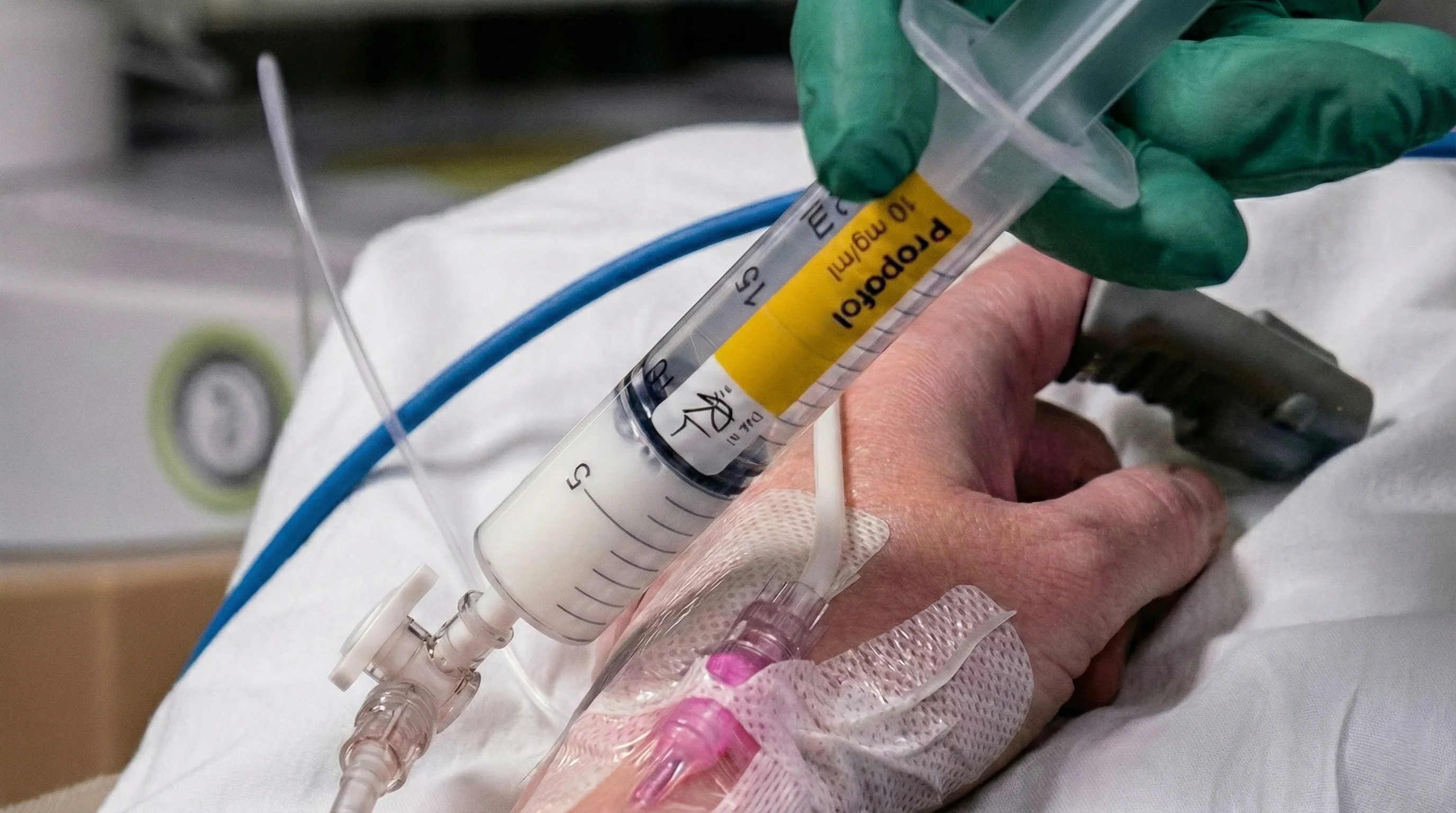
Preparation for RSI considers the following:
The goal of preoxygenation is to accumulate an oxygen reserve, which will help delay the clinically significant desaturation during the apnea period that occurs after anesthesia induction and until successful tracheal intubation.
According to clinical studies’ results, desaturation below 90% following induced apnea in properly oxygenated patients is expected at the following time intervals:
Practical aspects of preoxygenation:
This process involves recognizing and eliminating physiological vulnerabilities. It is necessary because conditions like hypoxemia, hypotension/shock, severe metabolic acidosis, and right ventricular failure most often lead to intubation decompensation, even if tracheal intubation is performed quickly and smoothly.
Practical aspects of such an optimization:
There are several categories of medications used in sequential induction and intubation, listed below.
Induction agents (sedatives) induce amnesia and prevent reflex sympathetic reactions to laryngoscopy (e.g., increase in intracranial pressure, tachycardia, hypertension, and laryngospasm), as well as improve intubation conditions.
The choice of a specific agent depends on the comorbidities, hemodynamic status, and RSI setting (intensive care unit, emergency department, etc.). The most common agents are as follows:
They are an integral part of sequential induction and intubation, improving the larynx visibility and reducing the risk of complications. During RSI, a choice is made between rocuronium and succinylcholine:
Opioid pain relievers (fentanyl at a dose of 1-3 μg/kg, alfentanil 10-50 μg/kg, remifentanil 1 μg/kg, and lidocaine 1-1.5 mg/kg) to reduce the sympathetic response to laryngoscopy should be considered for use in patients with increased intracranial pressure, aortic dissection, and severe cardiovascular diseases.
Pressure on the cricoid cartilage involves exerting force on the cricoid cartilage (force of 10N before loss of consciousness and 30N after loss of consciousness) to compress the esophagus between the posterior cricoid ring and the body of the fifth cervical vertebra. This maneuver is hypothesized to prevent aspiration of gastric contents.
Despite common use of cricoid pressure in the past, it is currently not recommended during laryngoscopy and intubation due to a lack of evidence clearly indicating a reduction in aspiration risk or improved outcomes.
Intravenous access is preferable for administering all the medications during RSI. If this is not feasible, a reasonable alternative is administering medication via intraosseous access, considering pharmacokinetic nuances.
If this access is also not feasible and there is a high risk of airway compromise, awake intubation should be considered.
Following the administration of induction agents and muscle relaxants, respiratory activity decreases and eventually ceases.
Key technical aspects of RSI at this stage:
A slight decrease in SpO₂ and blood pressure may be observed in the immediate post-intubation period. If these parameters do not restore quickly with fluids and PEEP ventilation, or if previously stable parameters suddenly deteriorate, the clinician should rule out intubation-associated adverse events, such as esophageal intubation, tension pneumothorax, breathing circuit disconnection, ETT obstruction, and ETT cuff rupture.
Find more scientifically accurate content on our social media



1. What is rapid sequence induction (RSI) and what is its purpose?
2. When is intubation using the RSI method actually necessary?
3. Are there absolute contraindications for performing RSI?
4. How to act in the event of failed venous access?
5. How to confirm the correct ETT placement after intubation?
References
1.
VOKA 3D Anatomy & Pathology – Complete Anatomy and Pathology 3D Atlas [Internet]. VOKA 3D Anatomy & Pathology.
Available from: https://catalog.voka.io/
2.
Acquisto, N.M., Mosier J.M., Bittner E.A. (2023). Society of Critical Care Medicine Clinical Practice Guidelines for Rapid Sequence Intubation in the Critically Ill Adult Patient. Critical Care Medicine 51(10):p 1411-1430. doi: 10.1097/CCM.0000000000006000.
3.
Tessarolo E., Alkhouri H., Lelos N. (2022). Review article: Effectiveness and risks of cricoid pressure during rapid sequence induction for endotracheal intubation in the emergency department: A systematic review. Emergency Medicine Australasia.34(4):484–491. doi: 10.1111/1742-6723.13993.
4.
Collins J., O’Sullivan E.P. (2022). Rapid sequence induction and intubation. BJA Education; 22(12):484–490. doi: 10.1016/j.bjae.2022.09.001.
5.
Ahmad I., El-Boghdadly K., Iliff H. (2026). Difficult Airway Society 2025 guidelines for management of unanticipated difficult tracheal intubation in adults. British Journal of Anaesthesia, 136 (1): 283—307. doi.org/10.1016/j.bja.2025.10.006.
Loading test 6 questions
Table of Contents




Summarize article with AI
Choose your preferable AI assistant:
Link successfully copied to clipboard
Thank you!
Your message is sent!
Our experts will contact you shortly. If you have any additional questions, please contact us at info@voka.io