
Axillary artery anatomy test
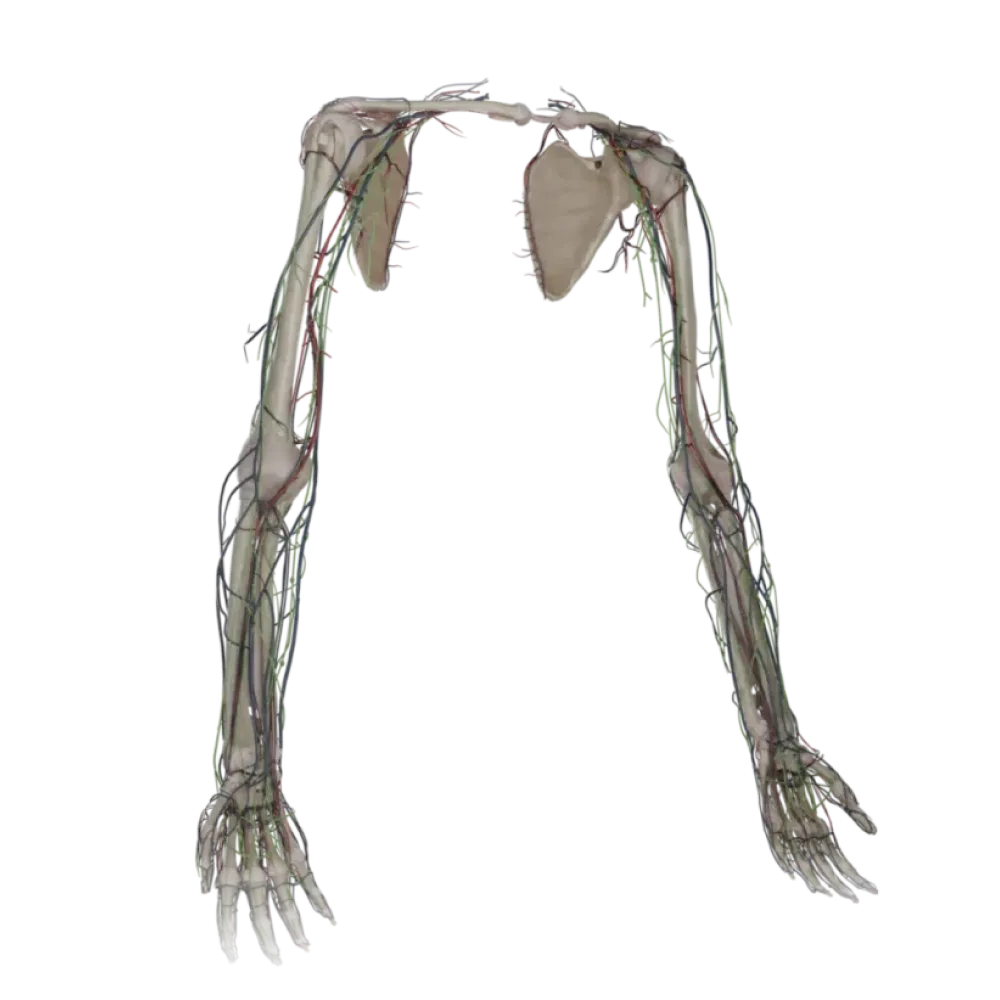
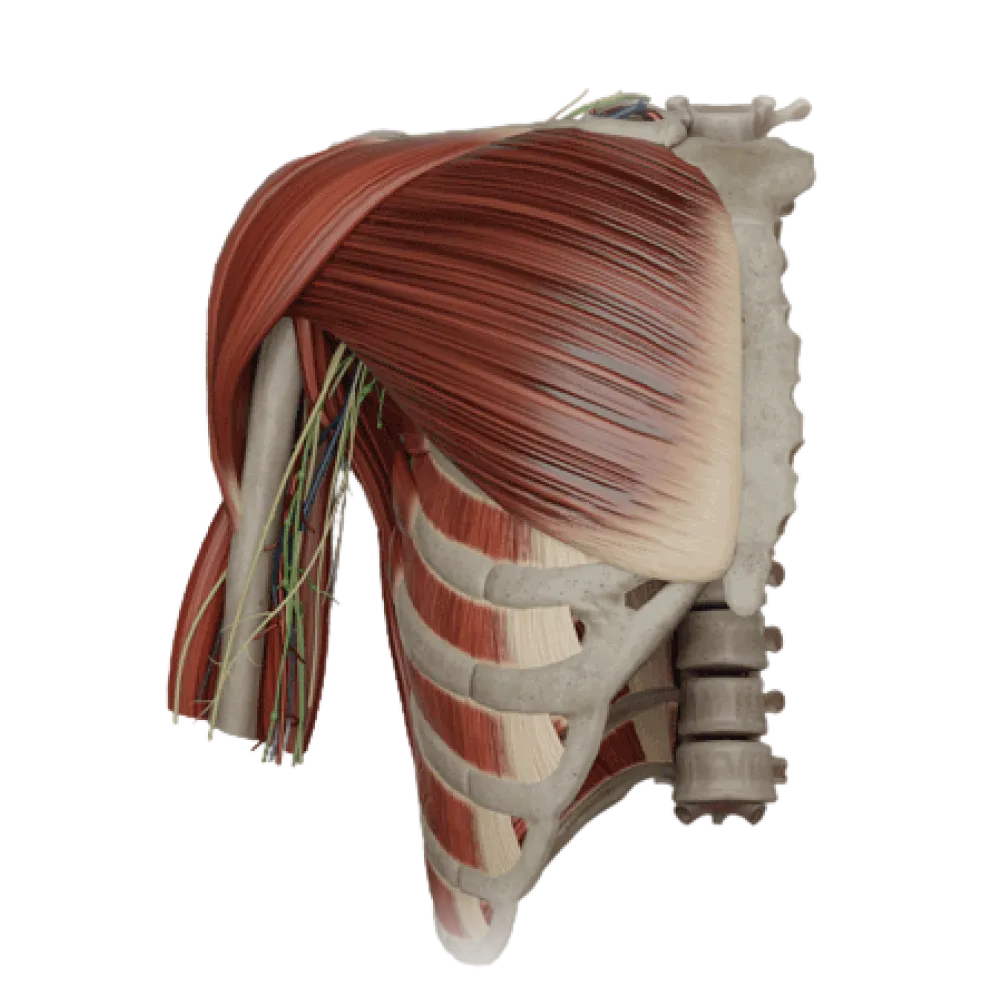
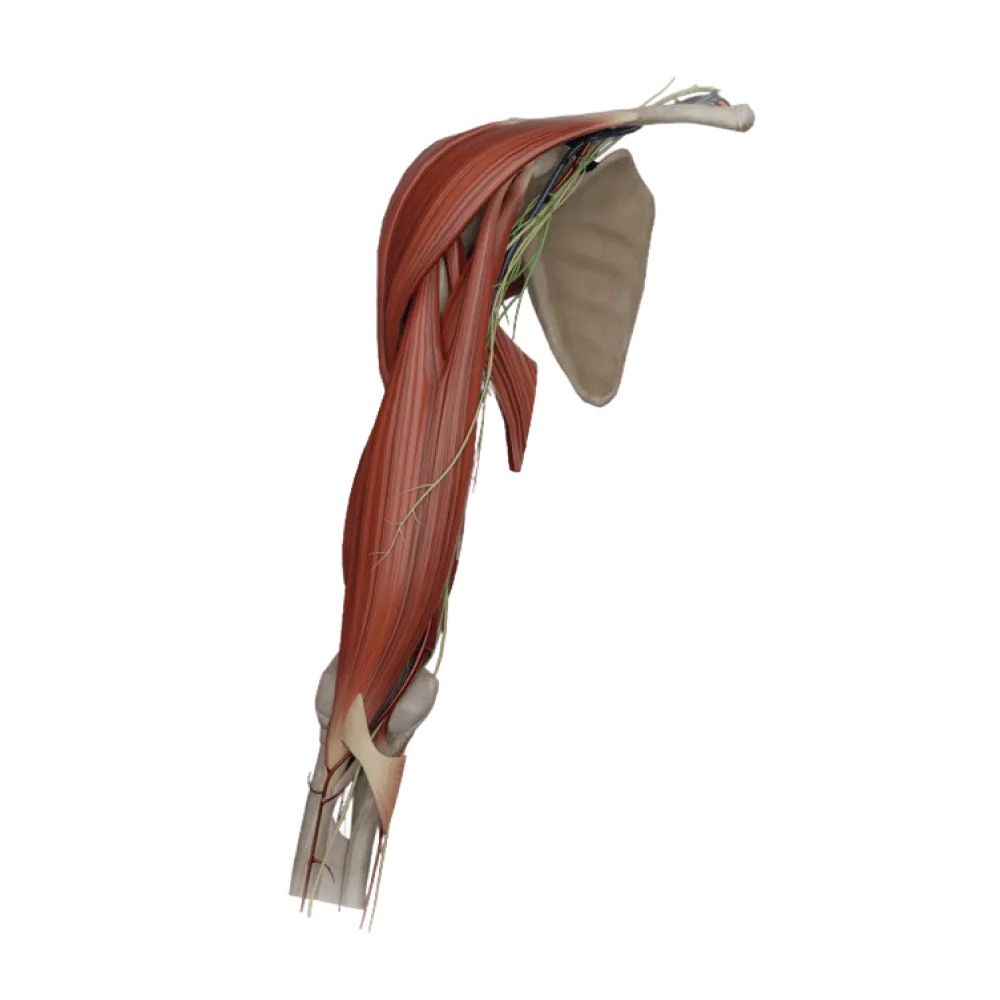
Evaluate knowledge of the axillary artery anatomy. The test assesses its topography, division into triangles, branches, anastomoses, and blood supply.
1/20
bold
text
1. As a continuation of the subclavian artery, the axillary artery starts at the level of:
-
the clavicle
The axillary artery begins at the lateral edge of the first rib, where it is a direct continuation of the subclavian artery.
-
the upper edge of the pectoralis minor muscle
The axillary artery begins at the lateral edge of the first rib, where it is a direct continuation of the subclavian artery.
-
the lower edge of the pectoralis major muscle
The axillary artery begins at the lateral edge of the first rib, where it is a direct continuation of the subclavian artery.
-
the lateral edge of the first rib
The axillary artery begins at the lateral edge of the first rib, where it is a direct continuation of the subclavian artery.
-
I find it difficult to answer
The axillary artery begins at the lateral edge of the first rib, where it is a direct continuation of the subclavian artery.
2. The axillary artery transitions into the brachial artery at the level of:
-
the surgical neck of the humerus
The boundary for the transition of the axillary artery into the brachial artery is the lower edge of the pectoralis major (or the lower edge of the latissimus dorsi muscle).
-
the attachment site of the deltoid muscle
The boundary for the transition of the axillary artery into the brachial artery is the lower edge of the pectoralis major (or the lower edge of the latissimus dorsi muscle).
-
the lower edge of the pectoralis major muscle
The boundary for the transition of the axillary artery into the brachial artery is the lower edge of the pectoralis major (or the lower edge of the latissimus dorsi muscle).
-
upper edge of the latissimus dorsi muscle
The boundary for the transition of the axillary artery into the brachial artery is the lower edge of the pectoralis major (or the lower edge of the latissimus dorsi muscle).
-
I find it difficult to answer
The boundary for the transition of the axillary artery into the brachial artery is the lower edge of the pectoralis major (or the lower edge of the latissimus dorsi muscle).
3. Into which topographic sections (triangles) is the axillary artery conventionally divided?
-
Carotid, scapulotracheal, submandibular
In relation to the anterior wall of the axilla, three triangles are distinguished: clavipectoral, pectoral, and subpectoral.
-
Clavipectoral, pectoral, subpectoral
In relation to the anterior wall of the axilla, three triangles are distinguished: clavipectoral, pectoral, and subpectoral.
-
Deltopectoral, axillary, brachial
In relation to the anterior wall of the axilla, three triangles are distinguished: clavipectoral, pectoral, and subpectoral.
-
Scapuloclavicular, pectoral, subscapular
In relation to the anterior wall of the axilla, three triangles are distinguished: clavipectoral, pectoral, and subpectoral.
-
I find it difficult to answer
In relation to the anterior wall of the axilla, three triangles are distinguished: clavipectoral, pectoral, and subpectoral.
4. Which branch departs from the axillary artery within the clavipectoral triangle?
-
Superior thoracic artery
In the clavipectoral triangle, the superior thoracic and thoracoacromial arteries branch off from the axillary artery.
-
Subscapular artery
In the clavipectoral triangle, the superior thoracic and thoracoacromial arteries branch off from the axillary artery.
-
Lateral thoracic artery
In the clavipectoral triangle, the superior thoracic and thoracoacromial arteries branch off from the axillary artery.
-
Thoracodorsal artery
In the clavipectoral triangle, the superior thoracic and thoracoacromial arteries branch off from the axillary artery.
-
I find it difficult to answer
In the clavipectoral triangle, the superior thoracic and thoracoacromial arteries branch off from the axillary artery.
5. The thoracoacromial artery pierces the clavipectoral fascia and divides into branches. Which of the listed branches does NOT belong to it?
-
Acromial branch
The circumflex scapular artery is a branch of the subscapular artery, not the thoracoacromial.
-
Deltoid branch
The circumflex scapular artery is a branch of the subscapular artery, not the thoracoacromial.
-
Clavicular branch
The circumflex scapular artery is a branch of the subscapular artery, not the thoracoacromial.
-
Circumflex scapular branch
The circumflex scapular artery is a branch of the subscapular artery, not the thoracoacromial.
-
I find it difficult to answer
The circumflex scapular artery is a branch of the subscapular artery, not the thoracoacromial.
6. In the pectoral triangle, branches from the axillary artery include:
-
Thoracoacromial artery
In the pectoral triangle, behind the pectoralis minor, the lateral thoracic artery branches off from the axillary artery.
-
Anterior circumflex humeral artery
In the pectoral triangle, behind the pectoralis minor, the lateral thoracic artery branches off from the axillary artery.
-
Lateral thoracic artery
In the pectoral triangle, behind the pectoralis minor, the lateral thoracic artery branches off from the axillary artery.
-
Posterior circumflex humeral artery
In the pectoral triangle, behind the pectoralis minor, the lateral thoracic artery branches off from the axillary artery.
-
I find it difficult to answer
In the pectoral triangle, behind the pectoralis minor, the lateral thoracic artery branches off from the axillary artery.
7. Which branch of the axillary artery departs in the subpectoral triangle and is the largest?
-
Thoracoacromial artery
The subscapular artery, the largest branch of the axillary artery, departs in the subpectoral triangle at the lower edge of the subscapularis muscle.
-
Lateral thoracic artery
The subscapular artery, the largest branch of the axillary artery, departs in the subpectoral triangle at the lower edge of the subscapularis muscle.
-
Superior thoracic artery
The subscapular artery, the largest branch of the axillary artery, departs in the subpectoral triangle at the lower edge of the subscapularis muscle.
-
Subscapular artery
The subscapular artery, the largest branch of the axillary artery, departs in the subpectoral triangle at the lower edge of the subscapularis muscle.
-
I find it difficult to answer
The subscapular artery, the largest branch of the axillary artery, departs in the subpectoral triangle at the lower edge of the subscapularis muscle.
8. Into which two major branches does the subscapular artery divide?
-
The lateral thoracic and internal thoracic arteries
The subscapular artery divides into the circumflex scapular artery (passing through the triangular space) and the thoracodorsal artery.
-
The circumflex scapular artery and the thoracodorsal artery
The subscapular artery divides into the circumflex scapular artery (passing through the triangular space) and the thoracodorsal artery.
-
The suprascapular and dorsal scapular arteries
The subscapular artery divides into the circumflex scapular artery (passing through the triangular space) and the thoracodorsal artery.
-
The anterior and posterior circumflex humeral arteries
The subscapular artery divides into the circumflex scapular artery (passing through the triangular space) and the thoracodorsal artery.
-
I find it difficult to answer
The subscapular artery divides into the circumflex scapular artery (passing through the triangular space) and the thoracodorsal artery.
9. Through which anatomical structure does the circumflex scapular artery pass?
-
Quadrangular space
The circumflex scapular artery goes to the posterior surface of the scapula through the triangular space.
-
Triangular foramen
The circumflex scapular artery goes to the posterior surface of the scapula through the triangular space.
-
Spinoglenoid notch
The circumflex scapular artery goes to the posterior surface of the scapula through the triangular space.
-
Suprascapular notch
The circumflex scapular artery goes to the posterior surface of the scapula through the triangular space.
-
I find it difficult to answer
The circumflex scapular artery goes to the posterior surface of the scapula through the triangular space.
10. The posterior circumflex humeral artery exits the axillary fossa through the quadrangular foramen along with:
-
Radial nerve
The posterior circumflex humeral artery passes through the quadrilateral foramen along with the axillary nerve.
-
Median nerve
The posterior circumflex humeral artery passes through the quadrilateral foramen along with the axillary nerve.
-
Axillary nerve
The posterior circumflex humeral artery passes through the quadrilateral foramen along with the axillary nerve.
-
Ulnar nerve
The posterior circumflex humeral artery passes through the quadrilateral foramen along with the axillary nerve.
-
I find it difficult to answer
The posterior circumflex humeral artery passes through the quadrilateral foramen along with the axillary nerve.
11. Syntopy of the neurovascular bundle: how is the axillary vein positioned relative to the axillary artery?
-
Laterally and posteriorly
The axillary vein is located medially and slightly anteriorly to the axillary artery.
-
Medially and anteriorly
The axillary vein is located medially and slightly anteriorly to the axillary artery.
-
Directly behind the artery
The axillary vein is located medially and slightly anteriorly to the axillary artery.
-
Encircles the artery in the form of a plexus
The axillary vein is located medially and slightly anteriorly to the axillary artery.
-
I find it difficult to answer
The axillary vein is located medially and slightly anteriorly to the axillary artery.
12. In the clavipectoral triangle, the fascicles of the brachial plexus are located in relation to the axillary artery:
-
From the medial side
In the upper section (clavipectoral triangle), the trunks of the brachial plexus lie laterally and behind the axillary artery.
-
Only from behind
In the upper section (clavipectoral triangle), the trunks of the brachial plexus lie laterally and behind the axillary artery.
-
Laterally and posteriorly
In the upper section (clavipectoral triangle), the trunks of the brachial plexus lie laterally and behind the axillary artery.
-
Anteriorly and medially
In the upper section (clavipectoral triangle), the trunks of the brachial plexus lie laterally and behind the axillary artery.
-
I find it difficult to answer
In the upper section (clavipectoral triangle), the trunks of the brachial plexus lie laterally and behind the axillary artery.
13. Which artery supplies the serratus anterior, descending along its outer surface?
-
Internal thoracic artery
The lateral thoracic artery descends along the serratus anterior muscle, supplying it abundantly, and also gives lateral branches to the mammary gland.
-
Superior thoracic artery
The lateral thoracic artery descends along the serratus anterior muscle, supplying it abundantly, and also gives lateral branches to the mammary gland.
-
Thoracoacromial artery
The lateral thoracic artery descends along the serratus anterior muscle, supplying it abundantly, and also gives lateral branches to the mammary gland.
-
Lateral thoracic artery
The lateral thoracic artery descends along the serratus anterior muscle, supplying it abundantly, and also gives lateral branches to the mammary gland.
-
I find it difficult to answer
The lateral thoracic artery descends along the serratus anterior muscle, supplying it abundantly, and also gives lateral branches to the mammary gland.
14. In the formation of the scapular arterial anastomosis from the axillary artery system, it participates:
-
Circumflex scapular artery
The circumflex scapular artery anastomoses in the infraspinous fossa with the suprascapular artery, forming the scapular circle.
-
Thoracoacromial artery
The circumflex scapular artery anastomoses in the infraspinous fossa with the suprascapular artery, forming the scapular circle.
-
Lateral thoracic artery
The circumflex scapular artery anastomoses in the infraspinous fossa with the suprascapular artery, forming the scapular circle.
-
Thoracodorsal artery
The circumflex scapular artery anastomoses in the infraspinous fossa with the suprascapular artery, forming the scapular circle.
-
I find it difficult to answer
The circumflex scapular artery anastomoses in the infraspinous fossa with the suprascapular artery, forming the scapular circle.
15. The anterior and posterior circumflex humeral arteries anastomose with each other at the level of:
-
Surgical neck of the humerus
Both arteries encircle the surgical neck of the humerus anteriorly and posteriorly and anastomose with each other.
-
Anatomical neck of the humerus
Both arteries encircle the surgical neck of the humerus anteriorly and posteriorly and anastomose with each other.
-
Mid-shaft of the humeral diaphysis
Both arteries encircle the surgical neck of the humerus anteriorly and posteriorly and anastomose with each other.
-
Elbow joint
Both arteries encircle the surgical neck of the humerus anteriorly and posteriorly and anastomose with each other.
-
I find it difficult to answer
Both arteries encircle the surgical neck of the humerus anteriorly and posteriorly and anastomose with each other.
16. The thoracodorsal artery is a direct continuation of the subscapular artery and predominantly supplies:
-
Pectoralis major
The thoracodorsal artery descends along the lateral border of the scapula and supplies the latissimus dorsi and the teres major muscle.
-
Teres minor muscle
The thoracodorsal artery descends along the lateral border of the scapula and supplies the latissimus dorsi and the teres major muscle.
-
Latissimus dorsi muscle
The thoracodorsal artery descends along the lateral border of the scapula and supplies the latissimus dorsi and the teres major muscle.
-
The deltoid muscle
The thoracodorsal artery descends along the lateral border of the scapula and supplies the latissimus dorsi and the teres major muscle.
-
I find it difficult to answer
The thoracodorsal artery descends along the lateral border of the scapula and supplies the latissimus dorsi and the teres major muscle.
17. Which muscle serves as a landmark for identifying the pectoral triangle of the anterior wall of the axillary fossa?
-
Pectoralis major muscle
The pectoral triangle corresponds to the outlines (contours) of the pectoralis minor.
-
Subclavius muscle
The pectoral triangle corresponds to the outlines (contours) of the pectoralis minor.
-
Serratus anterior muscle
The pectoral triangle corresponds to the outlines (contours) of the pectoralis minor.
-
Pectoralis minor muscle
The pectoral triangle corresponds to the outlines (contours) of the pectoralis minor.
-
I find it difficult to answer
The pectoral triangle corresponds to the outlines (contours) of the pectoralis minor.
18. The median nerve is formed from the medial and lateral cords of the brachial plexus in relation to the axillary artery:
-
Anterior to it (like a fork)
The medial and lateral roots of the median nerve encapsulate the axillary artery anteriorly in the subpectoral triangle.
-
Posterior to it
The medial and lateral roots of the median nerve encapsulate the axillary artery anteriorly in the subpectoral triangle.
-
Medially to the vein
The medial and lateral roots of the median nerve encapsulate the axillary artery anteriorly in the subpectoral triangle.
-
Laterally, in the bicipital groove
The medial and lateral roots of the median nerve encapsulate the axillary artery anteriorly in the subpectoral triangle.
-
I find it difficult to answer
The medial and lateral roots of the median nerve encapsulate the axillary artery anteriorly in the subpectoral triangle.
19. Which artery does NOT participate in the blood supply of the shoulder joint?
-
Anterior circumflex humeral artery
The superior thoracic artery supplies the first intercostal spaces and pectoral muscles, not reaching the capsule of the shoulder joint.
-
Superior thoracic artery
The superior thoracic artery supplies the first intercostal spaces and pectoral muscles, not reaching the capsule of the shoulder joint.
-
Thoracoacromial artery (acromial branch)
The superior thoracic artery supplies the first intercostal spaces and pectoral muscles, not reaching the capsule of the shoulder joint.
-
Posterior circumflex humeral artery
The superior thoracic artery supplies the first intercostal spaces and pectoral muscles, not reaching the capsule of the shoulder joint.
-
I find it difficult to answer
The superior thoracic artery supplies the first intercostal spaces and pectoral muscles, not reaching the capsule of the shoulder joint.
20. Syntopy of the artery: to the posterior wall of the axilla is adjacent the posterior cord of the brachial plexus. To which nerves does it divide posterior to the artery?
-
Radial and axillary
The posterior cord of the brachial plexus, positioned behind the axillary artery, gives rise to the radial and axillary nerves.
-
Median and ulnar
The posterior cord of the brachial plexus, positioned behind the axillary artery, gives rise to the radial and axillary nerves.
-
Musculocutaneous and radial
The posterior cord of the brachial plexus, positioned behind the axillary artery, gives rise to the radial and axillary nerves.
-
Ulnar and medial cutaneous nerve of the arm
The posterior cord of the brachial plexus, positioned behind the axillary artery, gives rise to the radial and axillary nerves.
-
I find it difficult to answer
The posterior cord of the brachial plexus, positioned behind the axillary artery, gives rise to the radial and axillary nerves.
Retake this quiz?
Your current progress will be reset.