
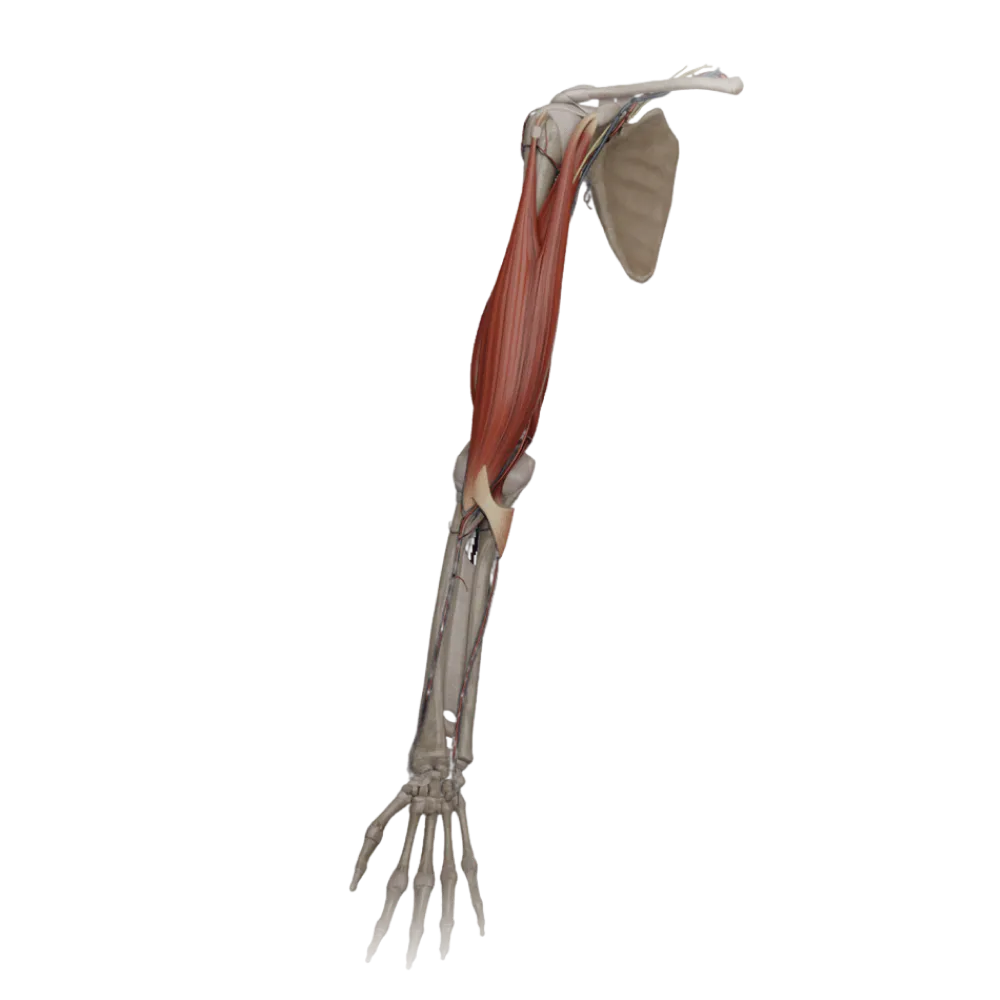

Hand Muscle Anatomy Test
Evaluate your knowledge of hand muscle anatomy. The test assesses their topography, blood supply sources, formation of palmar arches, and zones of innervation.
1/20
bold
text
1. Which hand muscle is exclusively innervated by the deep branch of the ulnar nerve?
-
Abductor pollicis brevis
Muscle, adductor pollicis (m. adductor pollicis), is innervated by the deep branch of the ulnar nerve, unlike most other thenar muscles.
-
Opponens pollicis muscle
Muscle, adductor pollicis (m. adductor pollicis), is innervated by the deep branch of the ulnar nerve, unlike most other thenar muscles.
-
Adductor pollicis muscle
Muscle, adductor pollicis (m. adductor pollicis), is innervated by the deep branch of the ulnar nerve, unlike most other thenar muscles.
-
First lumbrical muscle
Muscle, adductor pollicis (m. adductor pollicis), is innervated by the deep branch of the ulnar nerve, unlike most other thenar muscles.
-
I find it difficult to answer
Muscle, adductor pollicis (m. adductor pollicis), is innervated by the deep branch of the ulnar nerve, unlike most other thenar muscles.
2. From which vascular basin does the superficial palmar arch predominantly receive its blood supply?
-
Radial artery
The superficial palmar arch (arcus palmaris superficialis) is mainly formed by the ulnar artery, with contribution from the superficial palmar branch of the radial artery.
-
Ulnar artery
The superficial palmar arch (arcus palmaris superficialis) is mainly formed by the ulnar artery, with contribution from the superficial palmar branch of the radial artery.
-
Anterior interosseous artery
The superficial palmar arch (arcus palmaris superficialis) is mainly formed by the ulnar artery, with contribution from the superficial palmar branch of the radial artery.
-
The principal artery of the thumb
The superficial palmar arch (arcus palmaris superficialis) is mainly formed by the ulnar artery, with contribution from the superficial palmar branch of the radial artery.
-
I find it difficult to answer
The superficial palmar arch (arcus palmaris superficialis) is mainly formed by the ulnar artery, with contribution from the superficial palmar branch of the radial artery.
3. Which lumbrical muscles of the hand are innervated by the median nerve?
-
First and second
The first and second lumbrical muscles are innervated by the median nerve, whereas the third and fourth are innervated by the deep branch of the ulnar nerve.
-
Third and fourth
The first and second lumbrical muscles are innervated by the median nerve, whereas the third and fourth are innervated by the deep branch of the ulnar nerve.
-
Second and third
The first and second lumbrical muscles are innervated by the median nerve, whereas the third and fourth are innervated by the deep branch of the ulnar nerve.
-
All lumbrical muscles
The first and second lumbrical muscles are innervated by the median nerve, whereas the third and fourth are innervated by the deep branch of the ulnar nerve.
-
I find it difficult to answer
The first and second lumbrical muscles are innervated by the median nerve, whereas the third and fourth are innervated by the deep branch of the ulnar nerve.
4. Which artery forms the deep palmar arch along with the deep palmar branch of the ulnar artery?
-
Median artery
The deep palmar arch (arcus palmaris profundus) is formed by the terminal part of the radial artery and the deep palmar branch of the ulnar artery.
-
Posterior interosseous artery
The deep palmar arch (arcus palmaris profundus) is formed by the terminal part of the radial artery and the deep palmar branch of the ulnar artery.
-
Common interosseous artery
The deep palmar arch (arcus palmaris profundus) is formed by the terminal part of the radial artery and the deep palmar branch of the ulnar artery.
-
Radial artery
The deep palmar arch (arcus palmaris profundus) is formed by the terminal part of the radial artery and the deep palmar branch of the ulnar artery.
-
I find it difficult to answer
The deep palmar arch (arcus palmaris profundus) is formed by the terminal part of the radial artery and the deep palmar branch of the ulnar artery.
5. Innervation of the opponens pollicis muscle (m. opponens pollicis) is provided by branches of:
-
Ulnar nerve
The opponens pollicis muscle belongs to the thenar group and is innervated by the motor branch of the median nerve.
-
Median nerve
The opponens pollicis muscle belongs to the thenar group and is innervated by the motor branch of the median nerve.
-
Radial nerve
The opponens pollicis muscle belongs to the thenar group and is innervated by the motor branch of the median nerve.
-
Musculocutaneous nerve
The opponens pollicis muscle belongs to the thenar group and is innervated by the motor branch of the median nerve.
-
I find it difficult to answer
The opponens pollicis muscle belongs to the thenar group and is innervated by the motor branch of the median nerve.
6. Which hypothenar muscle is innervated by the superficial branch of the ulnar nerve?
-
Palmaris brevis muscle
The palmaris brevis muscle (m. palmaris brevis) is the only muscle innervated by the superficial branch of the ulnar nerve; the rest of the hypothenar muscles are innervated by the deep branch.
-
Abductor digiti minimi muscle
The palmaris brevis muscle (m. palmaris brevis) is the only muscle innervated by the superficial branch of the ulnar nerve; the rest of the hypothenar muscles are innervated by the deep branch.
-
Flexor digiti minimi brevis
The palmaris brevis muscle (m. palmaris brevis) is the only muscle innervated by the superficial branch of the ulnar nerve; the rest of the hypothenar muscles are innervated by the deep branch.
-
Opponens digiti minimi muscle
The palmaris brevis muscle (m. palmaris brevis) is the only muscle innervated by the superficial branch of the ulnar nerve; the rest of the hypothenar muscles are innervated by the deep branch.
-
I find it difficult to answer
The palmaris brevis muscle (m. palmaris brevis) is the only muscle innervated by the superficial branch of the ulnar nerve; the rest of the hypothenar muscles are innervated by the deep branch.
7. The blood supply to the muscles of the thenar eminence (thenar) is mainly provided by branches of:
-
Ulnar artery
The thenar muscles are primarily vascularized by branches of the radial artery passing through this region.
-
Anterior interosseous artery
The thenar muscles are primarily vascularized by branches of the radial artery passing through this region.
-
Common interosseous artery
The thenar muscles are primarily vascularized by branches of the radial artery passing through this region.
-
Radial artery
The thenar muscles are primarily vascularized by branches of the radial artery passing through this region.
-
I find it difficult to answer
The thenar muscles are primarily vascularized by branches of the radial artery passing through this region.
8. The palmar interossei muscles are innervated by:
-
Superficial branch of the ulnar nerve
All palmar and dorsal interossei muscles are innervated by the deep branch of the ulnar nerve.
-
Median nerve
All palmar and dorsal interossei muscles are innervated by the deep branch of the ulnar nerve.
-
Deep branch of the ulnar nerve
All palmar and dorsal interossei muscles are innervated by the deep branch of the ulnar nerve.
-
Superficial branch of the radial nerve
All palmar and dorsal interossei muscles are innervated by the deep branch of the ulnar nerve.
-
I find it difficult to answer
All palmar and dorsal interossei muscles are innervated by the deep branch of the ulnar nerve.
9. Which artery is the primary blood supply to the dorsal interossei muscles?
-
Common palmar digital arteries
The dorsal interossei muscles are primarily vascularized by the dorsal metacarpal arteries (aa. metacarpeae dorsales).
-
Dorsal metacarpal arteries
The dorsal interossei muscles are primarily vascularized by the dorsal metacarpal arteries (aa. metacarpeae dorsales).
-
Palmar metacarpal arteries
The dorsal interossei muscles are primarily vascularized by the dorsal metacarpal arteries (aa. metacarpeae dorsales).
-
The principal artery of the thumb
The dorsal interossei muscles are primarily vascularized by the dorsal metacarpal arteries (aa. metacarpeae dorsales).
-
I find it difficult to answer
The dorsal interossei muscles are primarily vascularized by the dorsal metacarpal arteries (aa. metacarpeae dorsales).
10. The abductor digiti minimi muscle (m. abductor digiti minimi) is innervated by:
-
Superficial branch of the ulnar nerve
All deep muscles of the hypothenar, including the abductor digiti minimi, receive innervation from the deep branch of the ulnar nerve.
-
Median nerve
All deep muscles of the hypothenar, including the abductor digiti minimi, receive innervation from the deep branch of the ulnar nerve.
-
Radial nerve
All deep muscles of the hypothenar, including the abductor digiti minimi, receive innervation from the deep branch of the ulnar nerve.
-
Deep branch of the ulnar nerve
All deep muscles of the hypothenar, including the abductor digiti minimi, receive innervation from the deep branch of the ulnar nerve.
-
I find it difficult to answer
All deep muscles of the hypothenar, including the abductor digiti minimi, receive innervation from the deep branch of the ulnar nerve.
11. The principal artery of the thumb (a. princeps pollicis) is usually a branch of:
-
Radial artery
The principal artery of the thumb (a. princeps pollicis) branches off from the radial artery after it passes through the first interosseous space.
-
Ulnar artery
The principal artery of the thumb (a. princeps pollicis) branches off from the radial artery after it passes through the first interosseous space.
-
Superficial palmar arch
The principal artery of the thumb (a. princeps pollicis) branches off from the radial artery after it passes through the first interosseous space.
-
Anterior interosseous artery
The principal artery of the thumb (a. princeps pollicis) branches off from the radial artery after it passes through the first interosseous space.
-
I find it difficult to answer
The principal artery of the thumb (a. princeps pollicis) branches off from the radial artery after it passes through the first interosseous space.
12. The deep head of the flexor pollicis brevis (m. flexor pollicis brevis) is innervated by:
-
Median nerve
The flexor pollicis brevis has dual innervation: the superficial head is supplied by the median nerve and the deep by the ulnar.
-
Radial nerve
The flexor pollicis brevis has dual innervation: the superficial head is supplied by the median nerve and the deep by the ulnar.
-
Ulnar nerve
The flexor pollicis brevis has dual innervation: the superficial head is supplied by the median nerve and the deep by the ulnar.
-
Musculocutaneous nerve
The flexor pollicis brevis has dual innervation: the superficial head is supplied by the median nerve and the deep by the ulnar.
-
I find it difficult to answer
The flexor pollicis brevis has dual innervation: the superficial head is supplied by the median nerve and the deep by the ulnar.
13. Which hand muscles have dual innervation (by the median and ulnar nerves)?
-
Lumbrical muscles
The first and second lumbrical muscles are innervated by the median nerve, while the third and fourth are innervated by the ulnar nerve, collectively giving the group dual innervation.
-
Dorsal interossei muscles
The first and second lumbrical muscles are innervated by the median nerve, while the third and fourth are innervated by the ulnar nerve, collectively giving the group dual innervation.
-
Palmar interossei muscles
The first and second lumbrical muscles are innervated by the median nerve, while the third and fourth are innervated by the ulnar nerve, collectively giving the group dual innervation.
-
Hypothenar muscles
The first and second lumbrical muscles are innervated by the median nerve, while the third and fourth are innervated by the ulnar nerve, collectively giving the group dual innervation.
-
I find it difficult to answer
The first and second lumbrical muscles are innervated by the median nerve, while the third and fourth are innervated by the ulnar nerve, collectively giving the group dual innervation.
14. The blood supply to the lumbrical muscles is mainly from:
-
Only the dorsal carpal network
The lumbrical muscles receive abundant blood supply from the anastomosing vessels of both palmar arches.
-
Only the princeps pollicis artery
The lumbrical muscles receive abundant blood supply from the anastomosing vessels of both palmar arches.
-
Radialis indicis artery
The lumbrical muscles receive abundant blood supply from the anastomosing vessels of both palmar arches.
-
Superficial and deep palmar arches
The lumbrical muscles receive abundant blood supply from the anastomosing vessels of both palmar arches.
-
I find it difficult to answer
The lumbrical muscles receive abundant blood supply from the anastomosing vessels of both palmar arches.
15. Which structure innervates the dorsal interossei muscles of the hand?
-
Deep branch of radial nerve
Both the palmar and dorsal interossei muscles are fully innervated by the deep branch of the ulnar nerve.
-
Deep branch of the ulnar nerve
Both the palmar and dorsal interossei muscles are fully innervated by the deep branch of the ulnar nerve.
-
Dorsal branch of ulnar nerve
Both the palmar and dorsal interossei muscles are fully innervated by the deep branch of the ulnar nerve.
-
Median nerve
Both the palmar and dorsal interossei muscles are fully innervated by the deep branch of the ulnar nerve.
-
I find it difficult to answer
Both the palmar and dorsal interossei muscles are fully innervated by the deep branch of the ulnar nerve.
16. The short abductor muscle of the thumb (m. abductor pollicis brevis) primarily receives blood from:
-
Deep palmar arch
The superficial palmary branch of the radial artery (r. palmaris superficialis a. radialis) vascularizes the superficial layer of the thenar muscles.
-
Dorsal carpal network
The superficial palmary branch of the radial artery (r. palmaris superficialis a. radialis) vascularizes the superficial layer of the thenar muscles.
-
Superficial palmar branch of the radial artery
The superficial palmary branch of the radial artery (r. palmaris superficialis a. radialis) vascularizes the superficial layer of the thenar muscles.
-
Ulnar artery
The superficial palmary branch of the radial artery (r. palmaris superficialis a. radialis) vascularizes the superficial layer of the thenar muscles.
-
I find it difficult to answer
The superficial palmary branch of the radial artery (r. palmaris superficialis a. radialis) vascularizes the superficial layer of the thenar muscles.
17. The muscle, flexor digiti minimi (m. flexor digiti minimi brevis), receives its blood supply from branches of:
-
Deep palmar branch of the ulnar artery
The deep palmar branch of the ulnar artery supplies blood to the deep structures of the hypothenar, including the flexor digiti minimi brevis.
-
Radial artery
The deep palmar branch of the ulnar artery supplies blood to the deep structures of the hypothenar, including the flexor digiti minimi brevis.
-
Anterior interosseous artery
The deep palmar branch of the ulnar artery supplies blood to the deep structures of the hypothenar, including the flexor digiti minimi brevis.
-
Median artery
The deep palmar branch of the ulnar artery supplies blood to the deep structures of the hypothenar, including the flexor digiti minimi brevis.
-
I find it difficult to answer
The deep palmar branch of the ulnar artery supplies blood to the deep structures of the hypothenar, including the flexor digiti minimi brevis.
18. Which hypothenar (little finger eminence) muscle tenses the palmar aponeurosis?
-
Opponens digiti minimi muscle
The palmaris brevis muscle (m. palmaris brevis) merges into the skin and palmar aponeurosis, aiding its tension.
-
Palmaris brevis muscle
The palmaris brevis muscle (m. palmaris brevis) merges into the skin and palmar aponeurosis, aiding its tension.
-
Abductor digiti minimi muscle
The palmaris brevis muscle (m. palmaris brevis) merges into the skin and palmar aponeurosis, aiding its tension.
-
Flexor digiti minimi brevis
The palmaris brevis muscle (m. palmaris brevis) merges into the skin and palmar aponeurosis, aiding its tension.
-
I find it difficult to answer
The palmaris brevis muscle (m. palmaris brevis) merges into the skin and palmar aponeurosis, aiding its tension.
19. The common palmar digital arteries (aa. digitales palmares communes) are branches of which artery?
-
Deep palmar arch
From the convex side of the superficial palmar arch, common palmar digital arteries branch out towards the interdigital spaces.
-
Dorsal carpal network
From the convex side of the superficial palmar arch, common palmar digital arteries branch out towards the interdigital spaces.
-
Radial artery
From the convex side of the superficial palmar arch, common palmar digital arteries branch out towards the interdigital spaces.
-
Superficial palmar arch
From the convex side of the superficial palmar arch, common palmar digital arteries branch out towards the interdigital spaces.
-
I find it difficult to answer
From the convex side of the superficial palmar arch, common palmar digital arteries branch out towards the interdigital spaces.
20. The third and fourth lumbrical muscles (m. lumbricales III et IV) are innervated by:
-
Median nerve
Unlike the first and second lumbrical muscles, the third and fourth are innervated by the deep branch of the ulnar nerve.
-
Superficial branch of the ulnar nerve
Unlike the first and second lumbrical muscles, the third and fourth are innervated by the deep branch of the ulnar nerve.
-
Deep branch of the ulnar nerve
Unlike the first and second lumbrical muscles, the third and fourth are innervated by the deep branch of the ulnar nerve.
-
Radial nerve
Unlike the first and second lumbrical muscles, the third and fourth are innervated by the deep branch of the ulnar nerve.
-
I find it difficult to answer
Unlike the first and second lumbrical muscles, the third and fourth are innervated by the deep branch of the ulnar nerve.
Retake this quiz?
Your current progress will be reset.