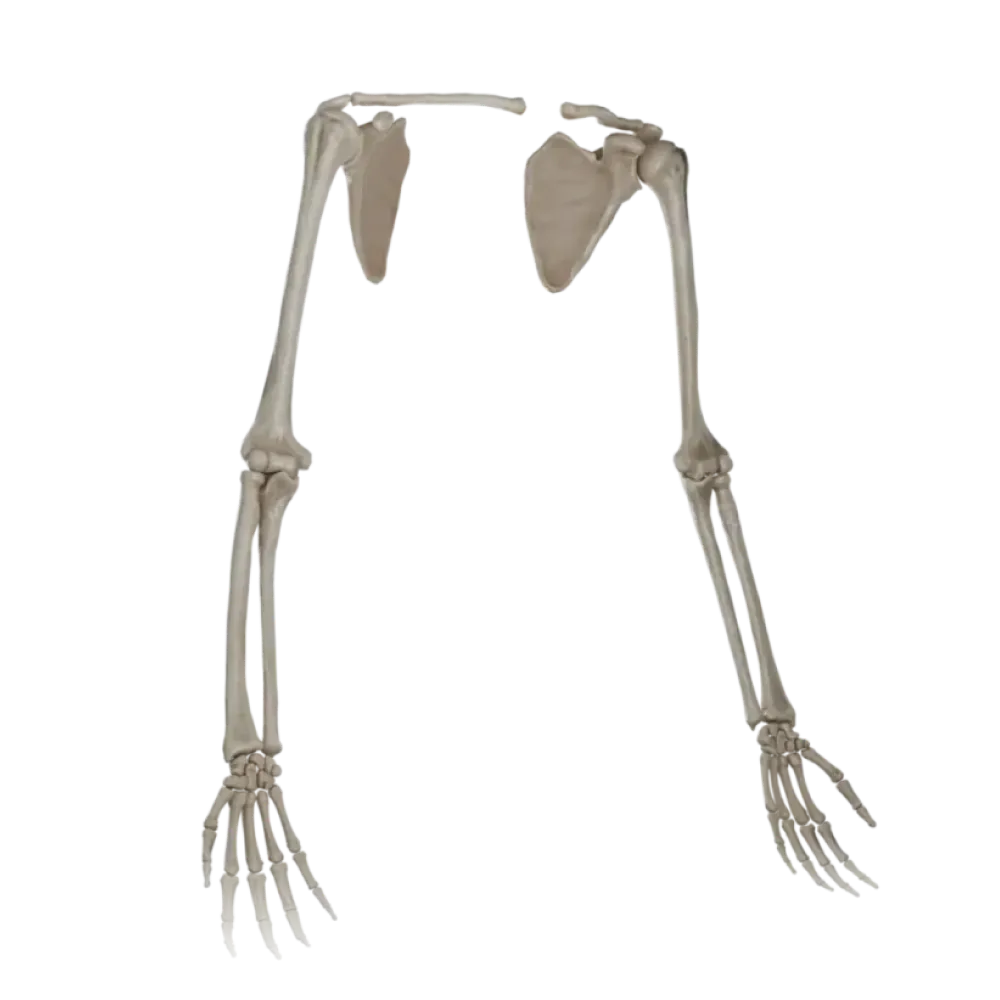
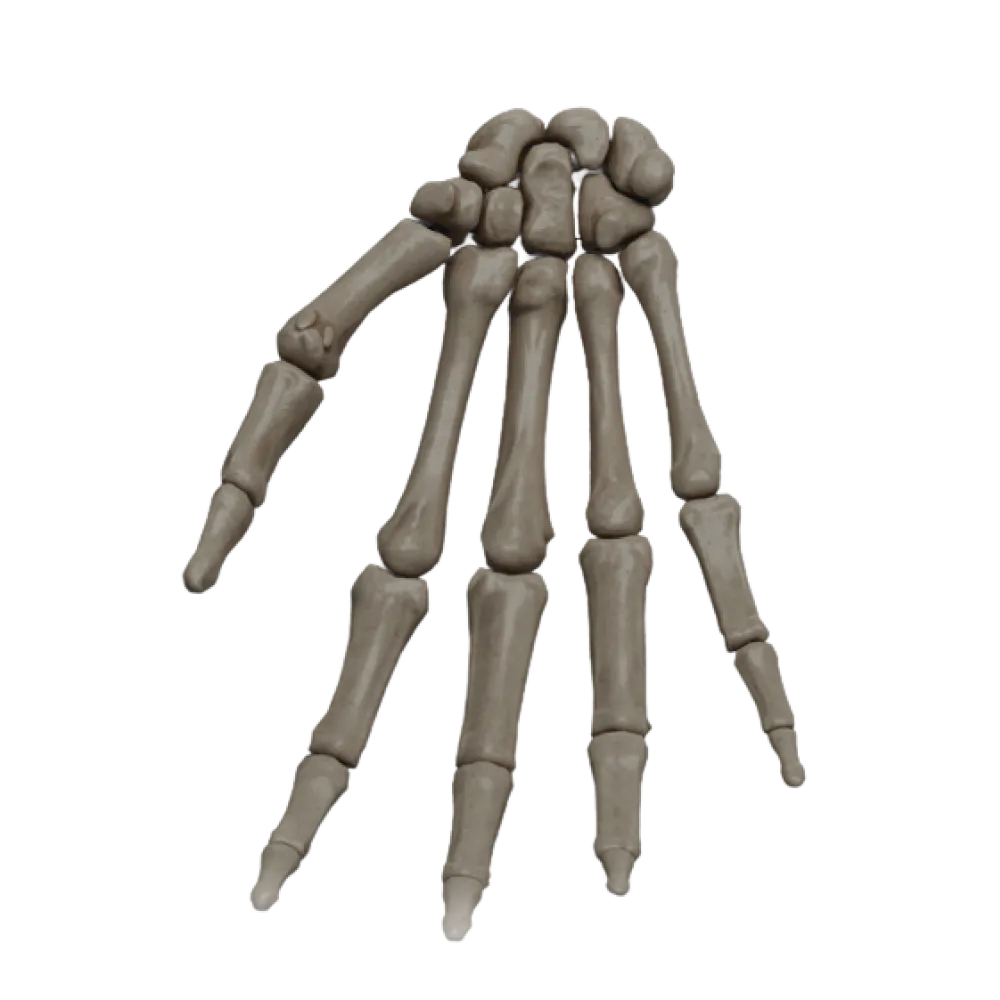
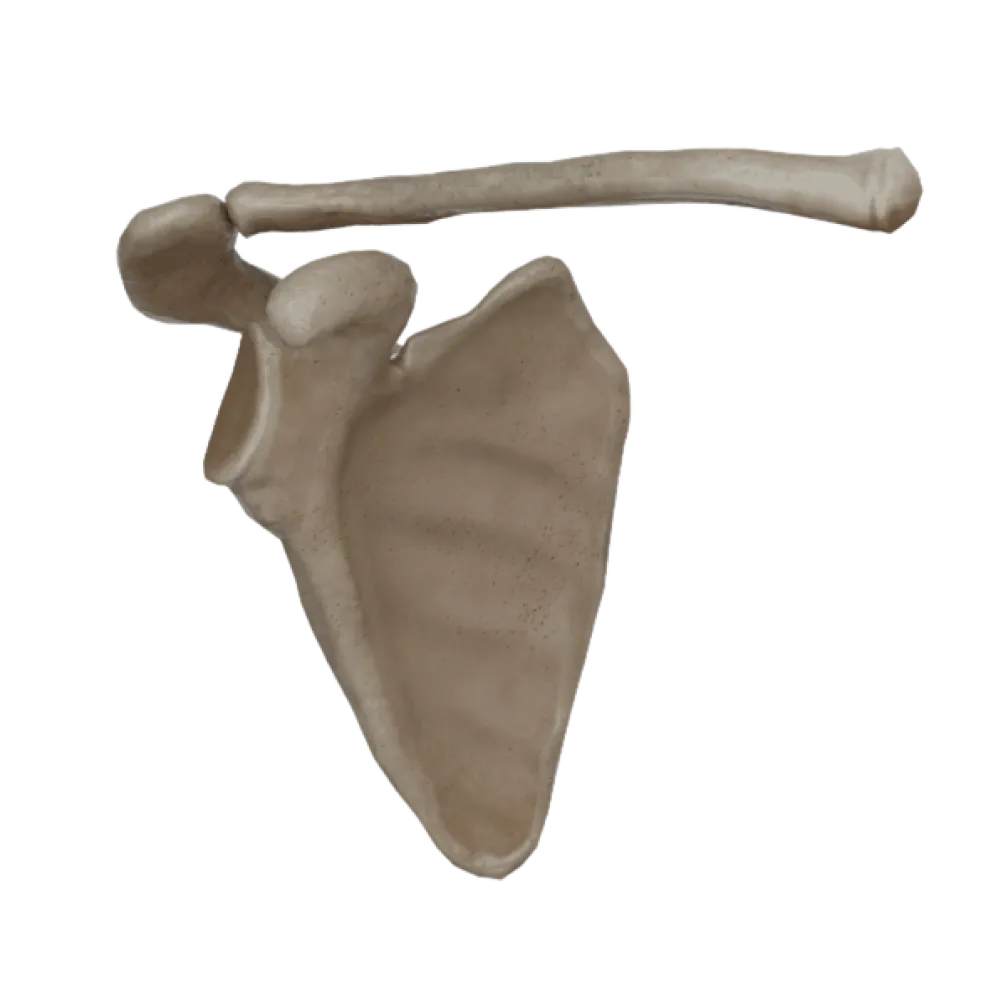

Test on the anatomy of the bones of the pectoral girdle
Check knowledge of the osteology of the pectoral girdle. The test covers the anatomy of the clavicle and scapula: their surfaces, borders, processes, and key landmarks.
1/20
bold
text
1. What structure is located on the superior border of the scapula medially to the base of the coracoid process?
-
Acromion
The scapular notch (incisura scapulae) is located on the superior border and can typically be transformed into a foramen by the superior transverse ligament.
-
Scapular notch
The scapular notch (incisura scapulae) is located on the superior border and can typically be transformed into a foramen by the superior transverse ligament.
-
Infraspinous fossa
The scapular notch (incisura scapulae) is located on the superior border and can typically be transformed into a foramen by the superior transverse ligament.
-
Subscapular fossa
The scapular notch (incisura scapulae) is located on the superior border and can typically be transformed into a foramen by the superior transverse ligament.
-
I find it difficult to answer
The scapular notch (incisura scapulae) is located on the superior border and can typically be transformed into a foramen by the superior transverse ligament.
2. Indicate the location of the conoid tubercle (tuberculum conoideum) on the clavicle.
-
Superior surface of the body
The conoid tubercle is located on the inferior surface of the acromial end of the clavicle and serves as an attachment point for the ligament of the same name.
-
Sternal end
The conoid tubercle is located on the inferior surface of the acromial end of the clavicle and serves as an attachment point for the ligament of the same name.
-
Inferior surface of the acromial end
The conoid tubercle is located on the inferior surface of the acromial end of the clavicle and serves as an attachment point for the ligament of the same name.
-
Anterior border
The conoid tubercle is located on the inferior surface of the acromial end of the clavicle and serves as an attachment point for the ligament of the same name.
-
I find it difficult to answer
The conoid tubercle is located on the inferior surface of the acromial end of the clavicle and serves as an attachment point for the ligament of the same name.
3. What scapular structure divides its dorsal surface into two fossae?
-
Coracoid process
The spine of the scapula (spina scapulae) is a prominent ridge that divides the posterior surface into supraspinous and infraspinous fossae.
-
Neck of the scapula
The spine of the scapula (spina scapulae) is a prominent ridge that divides the posterior surface into supraspinous and infraspinous fossae.
-
Subscapular fossa
The spine of the scapula (spina scapulae) is a prominent ridge that divides the posterior surface into supraspinous and infraspinous fossae.
-
Spine of the scapula
The spine of the scapula (spina scapulae) is a prominent ridge that divides the posterior surface into supraspinous and infraspinous fossae.
-
I find it difficult to answer
The spine of the scapula (spina scapulae) is a prominent ridge that divides the posterior surface into supraspinous and infraspinous fossae.
4. Where on the scapula is the glenoid cavity (cavitas glenoidalis) located?
-
Lateral angle
The glenoid cavity is located in the area of the lateral angle of the scapula and is meant for articulation with the head of the humerus.
-
Superior angle
The glenoid cavity is located in the area of the lateral angle of the scapula and is meant for articulation with the head of the humerus.
-
Inferior angle
The glenoid cavity is located in the area of the lateral angle of the scapula and is meant for articulation with the head of the humerus.
-
Medial border
The glenoid cavity is located in the area of the lateral angle of the scapula and is meant for articulation with the head of the humerus.
-
I find it difficult to answer
The glenoid cavity is located in the area of the lateral angle of the scapula and is meant for articulation with the head of the humerus.
5. On which part of the clavicle is the impression for the costoclavicular ligament (impressio ligamenti costoclavicularis) located?
-
Acromial end
This impression is located on the inferior surface of the sternal end of the clavicle and serves as an attachment point for the ligament from the first rib.
-
Inferior surface of the sternal end
This impression is located on the inferior surface of the sternal end of the clavicle and serves as an attachment point for the ligament from the first rib.
-
Superior surface of the body
This impression is located on the inferior surface of the sternal end of the clavicle and serves as an attachment point for the ligament from the first rib.
-
Posterior border
This impression is located on the inferior surface of the sternal end of the clavicle and serves as an attachment point for the ligament from the first rib.
-
I find it difficult to answer
This impression is located on the inferior surface of the sternal end of the clavicle and serves as an attachment point for the ligament from the first rib.
6. The acromion is an extension of which scapular structure?
-
Coracoid process
The acromion represents the free lateral end of the spine of the scapula, comprising an articular surface.
-
Medial border
The acromion represents the free lateral end of the spine of the scapula, comprising an articular surface.
-
Spine of the scapula
The acromion represents the free lateral end of the spine of the scapula, comprising an articular surface.
-
Subscapular fossa
The acromion represents the free lateral end of the spine of the scapula, comprising an articular surface.
-
I find it difficult to answer
The acromion represents the free lateral end of the spine of the scapula, comprising an articular surface.
7. What structure is located directly below the glenoid cavity of the scapula?
-
Coracoid tubercle
The infraglenoid tubercle (tuberculum infraglenoidale) serves as the origin for the long head of the triceps brachii muscle.
-
Supraglenoid tubercle
The infraglenoid tubercle (tuberculum infraglenoidale) serves as the origin for the long head of the triceps brachii muscle.
-
Acromial angle
The infraglenoid tubercle (tuberculum infraglenoidale) serves as the origin for the long head of the triceps brachii muscle.
-
Infraglenoid tubercle
The infraglenoid tubercle (tuberculum infraglenoidale) serves as the origin for the long head of the triceps brachii muscle.
-
I find it difficult to answer
The infraglenoid tubercle (tuberculum infraglenoidale) serves as the origin for the long head of the triceps brachii muscle.
8. What shape does the clavicular body have when viewed from above?
-
Straight line
The clavicle is an S-shaped bone, convex anteriorly in the medial part and convex posteriorly in the lateral part.
-
Spiral
The clavicle is an S-shaped bone, convex anteriorly in the medial part and convex posteriorly in the lateral part.
-
T-shaped
The clavicle is an S-shaped bone, convex anteriorly in the medial part and convex posteriorly in the lateral part.
-
S-shaped
The clavicle is an S-shaped bone, convex anteriorly in the medial part and convex posteriorly in the lateral part.
-
I find it difficult to answer
The clavicle is an S-shaped bone, convex anteriorly in the medial part and convex posteriorly in the lateral part.
9. On which surface of the scapula is the subscapular fossa (fossa subscapularis) located?
-
Dorsal
The costal (anterior) surface of the scapula is concave and forms a broad fossa for the attachment of the subscapular muscle.
-
Costal
The costal (anterior) surface of the scapula is concave and forms a broad fossa for the attachment of the subscapular muscle.
-
Lateral.
The costal (anterior) surface of the scapula is concave and forms a broad fossa for the attachment of the subscapular muscle.
-
Superior.
The costal (anterior) surface of the scapula is concave and forms a broad fossa for the attachment of the subscapular muscle.
-
I find it difficult to answer
The costal (anterior) surface of the scapula is concave and forms a broad fossa for the attachment of the subscapular muscle.
10. Where is the groove for the subclavian muscle (sulcus musculi subclavii) located?
-
Superior surface of the clavicle
This groove runs along the inferior surface of the clavicular body in its middle third.
-
Inferior surface of the clavicle
This groove runs along the inferior surface of the clavicular body in its middle third.
-
Anterior border of the scapula
This groove runs along the inferior surface of the clavicular body in its middle third.
-
Spine of the scapula
This groove runs along the inferior surface of the clavicular body in its middle third.
-
I find it difficult to answer
This groove runs along the inferior surface of the clavicular body in its middle third.
11. What structure is located at the lateral end of the spine of the scapula?
-
Acromion
The spine of the scapula, following laterally and somewhat upward, transitions into the broad acromion.
-
Sternal end
The spine of the scapula, following laterally and somewhat upward, transitions into the broad acromion.
-
Coracoid process
The spine of the scapula, following laterally and somewhat upward, transitions into the broad acromion.
-
Neck of the scapula
The spine of the scapula, following laterally and somewhat upward, transitions into the broad acromion.
-
I find it difficult to answer
The spine of the scapula, following laterally and somewhat upward, transitions into the broad acromion.
12. What is located on the scapula medially to the glenoid cavity?
-
Lateral border
The neck of the scapula (collum scapulae) is a constriction of the bone separating the glenoid cavity from the main body.
-
Inferior angle
The neck of the scapula (collum scapulae) is a constriction of the bone separating the glenoid cavity from the main body.
-
Acromion
The neck of the scapula (collum scapulae) is a constriction of the bone separating the glenoid cavity from the main body.
-
Neck of the scapula
The neck of the scapula (collum scapulae) is a constriction of the bone separating the glenoid cavity from the main body.
-
I find it difficult to answer
The neck of the scapula (collum scapulae) is a constriction of the bone separating the glenoid cavity from the main body.
13. Which surface of the acromial end of the clavicle articulates with the scapula?
-
Acromial articular surface
The acromial end of the clavicle features the acromial articular surface (facies articularis acromialis) for the formation of the acromioclavicular joint.
-
Sternal articular surface
The acromial end of the clavicle features the acromial articular surface (facies articularis acromialis) for the formation of the acromioclavicular joint.
-
Costal surface
The acromial end of the clavicle features the acromial articular surface (facies articularis acromialis) for the formation of the acromioclavicular joint.
-
Superior surface
The acromial end of the clavicle features the acromial articular surface (facies articularis acromialis) for the formation of the acromioclavicular joint.
-
I find it difficult to answer
The acromial end of the clavicle features the acromial articular surface (facies articularis acromialis) for the formation of the acromioclavicular joint.
14. Where on the scapula is the supraglenoid tubercle (tuberculum supraglenoidale) located?
-
Under the glenoid cavity
The supraglenoid tubercle is located above the cavitas glenoidalis and serves as the origin for the long head of the biceps brachii muscle.
-
Lateral to the acromion
The supraglenoid tubercle is located above the cavitas glenoidalis and serves as the origin for the long head of the biceps brachii muscle.
-
Above the glenoid cavity
The supraglenoid tubercle is located above the cavitas glenoidalis and serves as the origin for the long head of the biceps brachii muscle.
-
On the medial border
The supraglenoid tubercle is located above the cavitas glenoidalis and serves as the origin for the long head of the biceps brachii muscle.
-
I find it difficult to answer
The supraglenoid tubercle is located above the cavitas glenoidalis and serves as the origin for the long head of the biceps brachii muscle.
15. What structure is located on the inferior surface of the acromial end of the clavicle lateral to the conoid tubercle?
-
Trapezoid line
The trapezoid line (linea trapezoidea) is located laterally to the tubercle and serves as a fixation point for the ligament.
-
Nutrient foramen
The trapezoid line (linea trapezoidea) is located laterally to the tubercle and serves as a fixation point for the ligament.
-
Costal impression
The trapezoid line (linea trapezoidea) is located laterally to the tubercle and serves as a fixation point for the ligament.
-
Deltoid tubercle
The trapezoid line (linea trapezoidea) is located laterally to the tubercle and serves as a fixation point for the ligament.
-
I find it difficult to answer
The trapezoid line (linea trapezoidea) is located laterally to the tubercle and serves as a fixation point for the ligament.
16. To which type of bone does the scapula belong according to the classification?
-
Tubular
The scapula is a typical flat bone, having two surfaces and three borders.
-
Flat
The scapula is a typical flat bone, having two surfaces and three borders.
-
Pneumatized
The scapula is a typical flat bone, having two surfaces and three borders.
-
Mixed
The scapula is a typical flat bone, having two surfaces and three borders.
-
I find it difficult to answer
The scapula is a typical flat bone, having two surfaces and three borders.
17. Which border of the scapula is the thinnest and shortest?
-
Lateral
The superior border of the scapula (margo superior) is the shortest, with the scapular notch located on it.
-
Medial
The superior border of the scapula (margo superior) is the shortest, with the scapular notch located on it.
-
Superior
The superior border of the scapula (margo superior) is the shortest, with the scapular notch located on it.
-
Anterior
The superior border of the scapula (margo superior) is the shortest, with the scapular notch located on it.
-
I find it difficult to answer
The superior border of the scapula (margo superior) is the shortest, with the scapular notch located on it.
18. What bony structure of the scapula is directed forward and laterally, located above the neck?
-
Spine of the scapula
The coracoid process (processus coracoideus) branches out from the superior border and is an important landmark.
-
Medial border
The coracoid process (processus coracoideus) branches out from the superior border and is an important landmark.
-
Inferior angle
The coracoid process (processus coracoideus) branches out from the superior border and is an important landmark.
-
Coracoid process
The coracoid process (processus coracoideus) branches out from the superior border and is an important landmark.
-
I find it difficult to answer
The coracoid process (processus coracoideus) branches out from the superior border and is an important landmark.
19. How is the sternal end of the clavicle characterized compared to the acromial end?
-
Flatter
The sternal end (extremitas sternalis) is significantly thicker and carries the articular surface for articulation with the manubrium of the sternum.
-
Heavier and more rounded
The sternal end (extremitas sternalis) is significantly thicker and carries the articular surface for articulation with the manubrium of the sternum.
-
Shorter
The sternal end (extremitas sternalis) is significantly thicker and carries the articular surface for articulation with the manubrium of the sternum.
-
Smooth
The sternal end (extremitas sternalis) is significantly thicker and carries the articular surface for articulation with the manubrium of the sternum.
-
I find it difficult to answer
The sternal end (extremitas sternalis) is significantly thicker and carries the articular surface for articulation with the manubrium of the sternum.
20. What structure of the scapula connects the superior and medial borders?
-
Inferior angle
The superior angle (angulus superior) of the scapula is formed at the junction of its superior and medial borders.
-
Superior angle
The superior angle (angulus superior) of the scapula is formed at the junction of its superior and medial borders.
-
Lateral angle
The superior angle (angulus superior) of the scapula is formed at the junction of its superior and medial borders.
-
Glenoid cavity
The superior angle (angulus superior) of the scapula is formed at the junction of its superior and medial borders.
-
I find it difficult to answer
The superior angle (angulus superior) of the scapula is formed at the junction of its superior and medial borders.
Retake this quiz?
Your current progress will be reset.