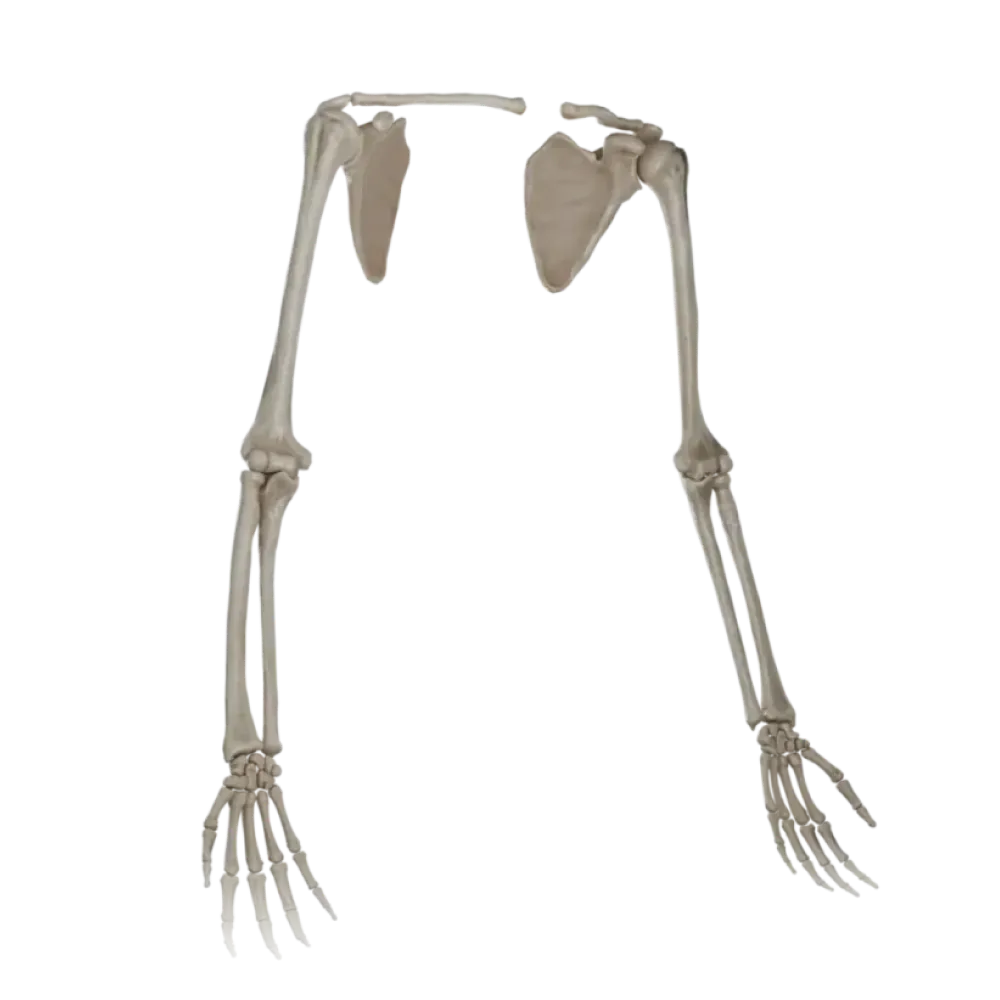
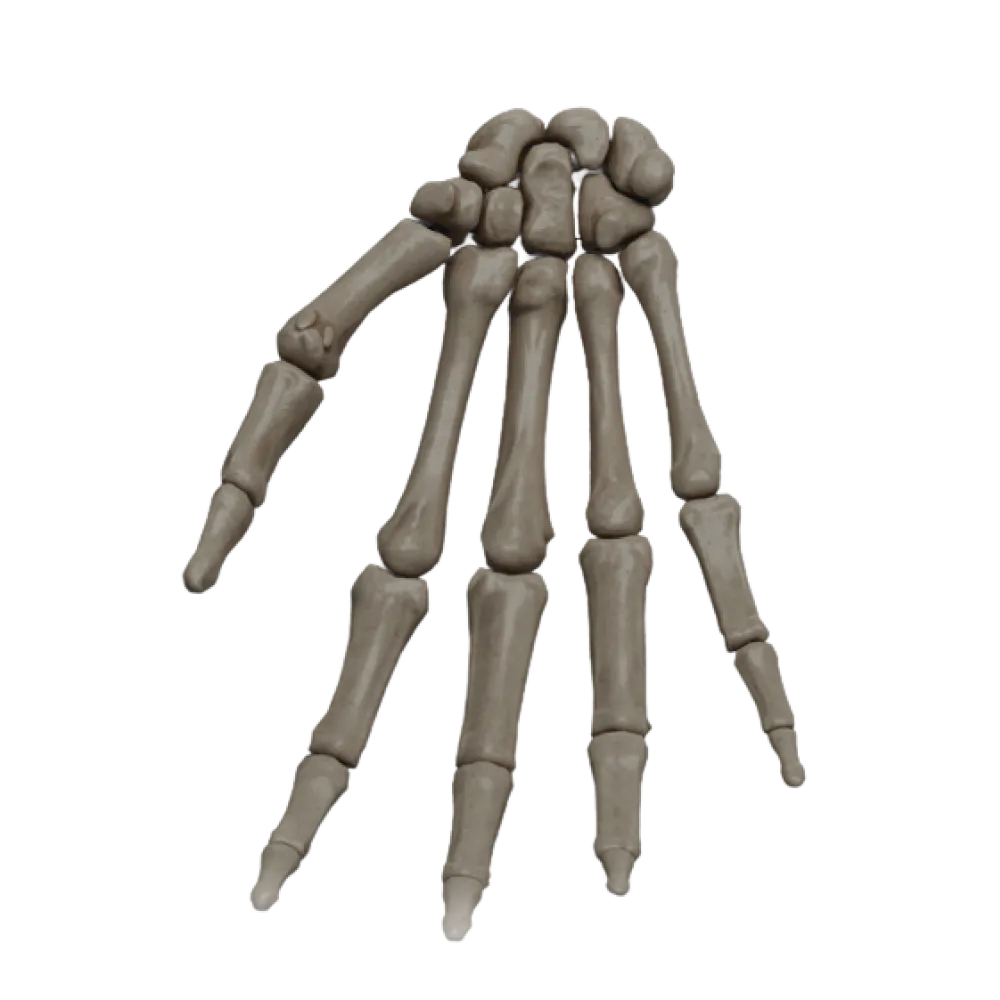
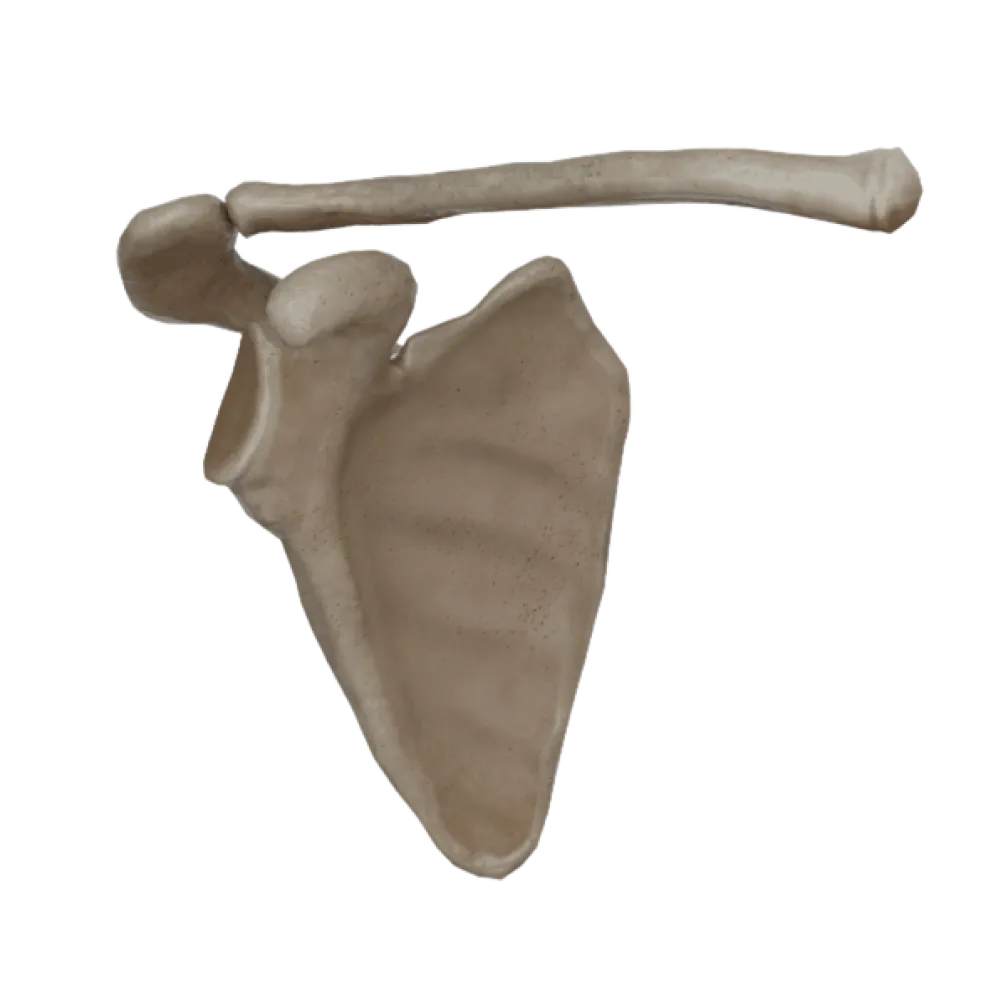

Test on the anatomy of the bones of the free upper limb.
Evaluate the knowledge of anatomy of the bones of the free upper limb. The test covers the structure of the humerus, ulna, radius, and hand bones.
1/20
bold
text
1. What structure is located on the posterior surface of the humerus diaphysis?
-
Coronoid fossa
The radial nerve groove (sulcus nervi radialis) spirals along the posterior surface of the body of the humerus.
-
Radial nerve groove
The radial nerve groove (sulcus nervi radialis) spirals along the posterior surface of the body of the humerus.
-
Deltoid tuberosity
The radial nerve groove (sulcus nervi radialis) spirals along the posterior surface of the body of the humerus.
-
Surgical neck
The radial nerve groove (sulcus nervi radialis) spirals along the posterior surface of the body of the humerus.
-
I find it difficult to answer
The radial nerve groove (sulcus nervi radialis) spirals along the posterior surface of the body of the humerus.
2. Which bone of the proximal carpal row is most laterally located?
-
Navicular bone.
The scaphoid bone (os scaphoideum) occupies the most lateral position in the proximal row of the wrist.
-
Lunate bone
The scaphoid bone (os scaphoideum) occupies the most lateral position in the proximal row of the wrist.
-
Trihedral bone
The scaphoid bone (os scaphoideum) occupies the most lateral position in the proximal row of the wrist.
-
Pisiform bone
The scaphoid bone (os scaphoideum) occupies the most lateral position in the proximal row of the wrist.
-
I find it difficult to answer
The scaphoid bone (os scaphoideum) occupies the most lateral position in the proximal row of the wrist.
3. Which anatomical structure limits the trochlear notch of the ulna from above and posteriorly?
-
Coronoid process
The olecranon (olecranon) limits the trochlear notch from above and posteriorly.
-
Ulnar tuberosity
The olecranon (olecranon) limits the trochlear notch from above and posteriorly.
-
Olecranon
The olecranon (olecranon) limits the trochlear notch from above and posteriorly.
-
Head of the ulna.
The olecranon (olecranon) limits the trochlear notch from above and posteriorly.
-
I find it difficult to answer
The olecranon (olecranon) limits the trochlear notch from above and posteriorly.
4. Where is the radial tuberosity topographically located?
-
Laterally on the distal epiphysis.
The radial tuberosity (tuberositas radii) is located distally of the neck on the anteromedial surface.
-
On the head of the radius.
The radial tuberosity (tuberositas radii) is located distally of the neck on the anteromedial surface.
-
On the dorsal surface of the shaft.
The radial tuberosity (tuberositas radii) is located distally of the neck on the anteromedial surface.
-
Below the neck on the anteromedial side.
The radial tuberosity (tuberositas radii) is located distally of the neck on the anteromedial surface.
-
I find it difficult to answer
The radial tuberosity (tuberositas radii) is located distally of the neck on the anteromedial surface.
5. With which carpal bone does the base of the first metacarpal bone articulate?
-
Trapezoid
The trapezium (os trapezium) has a saddle-shaped articular surface for articulation with the first metacarpal bone.
-
Trapezium
The trapezium (os trapezium) has a saddle-shaped articular surface for articulation with the first metacarpal bone.
-
Capitate bone
The trapezium (os trapezium) has a saddle-shaped articular surface for articulation with the first metacarpal bone.
-
Navicular bone.
The trapezium (os trapezium) has a saddle-shaped articular surface for articulation with the first metacarpal bone.
-
I find it difficult to answer
The trapezium (os trapezium) has a saddle-shaped articular surface for articulation with the first metacarpal bone.
6. What structure separates the greater and lesser tubercles of the humerus?
-
Intertubercular groove
The intertubercular groove (sulcus intertubercularis) runs between the tubercles and continues onto the shaft.
-
Anatomical neck
The intertubercular groove (sulcus intertubercularis) runs between the tubercles and continues onto the shaft.
-
Surgical neck
The intertubercular groove (sulcus intertubercularis) runs between the tubercles and continues onto the shaft.
-
Crest of the greater tubercle
The intertubercular groove (sulcus intertubercularis) runs between the tubercles and continues onto the shaft.
-
I find it difficult to answer
The intertubercular groove (sulcus intertubercularis) runs between the tubercles and continues onto the shaft.
7. On what feature of the humerus is the ulnar nerve groove located?
-
Lateral epicondyle.
The ulnar nerve groove (sulcus nervi ulnaris) is located on the posterior surface of the medial epicondyle.
-
Anatomical neck
The ulnar nerve groove (sulcus nervi ulnaris) is located on the posterior surface of the medial epicondyle.
-
Medial epicondyle.
The ulnar nerve groove (sulcus nervi ulnaris) is located on the posterior surface of the medial epicondyle.
-
Head of the condyle.
The ulnar nerve groove (sulcus nervi ulnaris) is located on the posterior surface of the medial epicondyle.
-
I find it difficult to answer
The ulnar nerve groove (sulcus nervi ulnaris) is located on the posterior surface of the medial epicondyle.
8. Which carpal bone is the largest and occupies the center of the distal row?
-
Uncinate bone
The capitate bone (os capitatum) is the largest carpal bone, located at the center of the distal row.
-
Trapezoid
The capitate bone (os capitatum) is the largest carpal bone, located at the center of the distal row.
-
Navicular bone.
The capitate bone (os capitatum) is the largest carpal bone, located at the center of the distal row.
-
Capitate bone
The capitate bone (os capitatum) is the largest carpal bone, located at the center of the distal row.
-
I find it difficult to answer
The capitate bone (os capitatum) is the largest carpal bone, located at the center of the distal row.
9. Where on the radius is the ulnar notch located?
-
Medially on the proximal epiphysis.
The ulnar notch (incisura ulnaris) is located on the medial side of the distal epiphysis of the radius.
-
Medially on the distal epiphysis.
The ulnar notch (incisura ulnaris) is located on the medial side of the distal epiphysis of the radius.
-
On the anterior surface of the shaft.
The ulnar notch (incisura ulnaris) is located on the medial side of the distal epiphysis of the radius.
-
Laterally on the distal epiphysis.
The ulnar notch (incisura ulnaris) is located on the medial side of the distal epiphysis of the radius.
-
I find it difficult to answer
The ulnar notch (incisura ulnaris) is located on the medial side of the distal epiphysis of the radius.
10. Which bone of the hand is a sesamoid bone by origin?
-
Pisiform bone
The pisiform bone (os pisiforme) is a sesamoid bone located in the tendon of the flexor carpi ulnaris.
-
Trihedral bone
The pisiform bone (os pisiforme) is a sesamoid bone located in the tendon of the flexor carpi ulnaris.
-
Navicular bone.
The pisiform bone (os pisiforme) is a sesamoid bone located in the tendon of the flexor carpi ulnaris.
-
Trapezium
The pisiform bone (os pisiforme) is a sesamoid bone located in the tendon of the flexor carpi ulnaris.
-
I find it difficult to answer
The pisiform bone (os pisiforme) is a sesamoid bone located in the tendon of the flexor carpi ulnaris.
11. What depression is on the distal epiphysis of the humerus anteriorly above the trochlea?
-
Radial fossa.
The coronoid fossa (fossa coronoidea) is located on the anterior surface of the humerus above the trochlea.
-
Olecranon fossa.
The coronoid fossa (fossa coronoidea) is located on the anterior surface of the humerus above the trochlea.
-
Coronoid fossa
The coronoid fossa (fossa coronoidea) is located on the anterior surface of the humerus above the trochlea.
-
Intertubercular groove
The coronoid fossa (fossa coronoidea) is located on the anterior surface of the humerus above the trochlea.
-
I find it difficult to answer
The coronoid fossa (fossa coronoidea) is located on the anterior surface of the humerus above the trochlea.
12. Which bone of the distal row of the carpus has a characteristic hook-like process?
-
Trapezoid
The hamate bone (os hamatum) has a hooked process (hamulus) on the palmar surface.
-
Capitate bone
The hamate bone (os hamatum) has a hooked process (hamulus) on the palmar surface.
-
Trapezium
The hamate bone (os hamatum) has a hooked process (hamulus) on the palmar surface.
-
Uncinate bone
The hamate bone (os hamatum) has a hooked process (hamulus) on the palmar surface.
-
I find it difficult to answer
The hamate bone (os hamatum) has a hooked process (hamulus) on the palmar surface.
13. Where on the radius is the articular surface for articulation with the carpal bones?
-
On the proximal head.
The carpal articular surface (facies articularis carpalis) is located on the inferior (distal) side of the radius.
-
On the distal epiphysis.
The carpal articular surface (facies articularis carpalis) is located on the inferior (distal) side of the radius.
-
On the ulnar notch.
The carpal articular surface (facies articularis carpalis) is located on the inferior (distal) side of the radius.
-
On the anterior surface of the shaft.
The carpal articular surface (facies articularis carpalis) is located on the inferior (distal) side of the radius.
-
I find it difficult to answer
The carpal articular surface (facies articularis carpalis) is located on the inferior (distal) side of the radius.
14. Which part of the humerus is most frequently fractured and is located below the tubercles?
-
Surgical neck
The surgical neck (collum chirurgicum) is the narrowed part of the humerus below the tubercles.
-
Anatomical neck
The surgical neck (collum chirurgicum) is the narrowed part of the humerus below the tubercles.
-
Body of the humerus.
The surgical neck (collum chirurgicum) is the narrowed part of the humerus below the tubercles.
-
Crest of the lesser tubercle
The surgical neck (collum chirurgicum) is the narrowed part of the humerus below the tubercles.
-
I find it difficult to answer
The surgical neck (collum chirurgicum) is the narrowed part of the humerus below the tubercles.
15. Which bone of the distal carpal row is located between the trapezium and capitate bones?
-
Navicular bone.
The trapezoid bone (os trapezoideum) is located in the distal row between os trapezium and os capitatum.
-
Lunate bone
The trapezoid bone (os trapezoideum) is located in the distal row between os trapezium and os capitatum.
-
Trapezoid
The trapezoid bone (os trapezoideum) is located in the distal row between os trapezium and os capitatum.
-
Trihedral bone
The trapezoid bone (os trapezoideum) is located in the distal row between os trapezium and os capitatum.
-
I find it difficult to answer
The trapezoid bone (os trapezoideum) is located in the distal row between os trapezium and os capitatum.
16. Where on the ulna is the radial notch located?
-
On the olecranon, superiorly.
The radial notch (incisura radialis) is located on the lateral side of the coronoid process of the ulna.
-
Laterally on the distal epiphysis.
The radial notch (incisura radialis) is located on the lateral side of the coronoid process of the ulna.
-
On the anterior surface of the shaft.
The radial notch (incisura radialis) is located on the lateral side of the coronoid process of the ulna.
-
On the lateral side of the coronoid process.
The radial notch (incisura radialis) is located on the lateral side of the coronoid process of the ulna.
-
I find it difficult to answer
The radial notch (incisura radialis) is located on the lateral side of the coronoid process of the ulna.
17. In which part of the humerus is the deltoid tuberosity located?
-
On the medial surface of the shaft.
The deltoid tuberosity (tuberositas deltoidea) is located above the midpoint of the lateral surface of the humeral body.
-
On the lateral surface of the shaft.
The deltoid tuberosity (tuberositas deltoidea) is located above the midpoint of the lateral surface of the humeral body.
-
On the proximal epiphysis.
The deltoid tuberosity (tuberositas deltoidea) is located above the midpoint of the lateral surface of the humeral body.
-
On the distal epiphysis.
The deltoid tuberosity (tuberositas deltoidea) is located above the midpoint of the lateral surface of the humeral body.
-
I find it difficult to answer
The deltoid tuberosity (tuberositas deltoidea) is located above the midpoint of the lateral surface of the humeral body.
18. What does the distal epiphysis of the ulna form?
-
Trochlea.
Unlike the radius, the head of the ulna (caput ulnae) is located at its distal end.
-
Coronoid process
Unlike the radius, the head of the ulna (caput ulnae) is located at its distal end.
-
Head of the ulna.
Unlike the radius, the head of the ulna (caput ulnae) is located at its distal end.
-
Olecranon
Unlike the radius, the head of the ulna (caput ulnae) is located at its distal end.
-
I find it difficult to answer
Unlike the radius, the head of the ulna (caput ulnae) is located at its distal end.
19. What structure on the humerus serves for articulation with the ulna?
-
Head of the condyle.
The trochlea of the humerus (trochlea humeri) articulates with the trochlear notch of the ulna.
-
Greater tubercle.
The trochlea of the humerus (trochlea humeri) articulates with the trochlear notch of the ulna.
-
Trochlea of the humerus.
The trochlea of the humerus (trochlea humeri) articulates with the trochlear notch of the ulna.
-
Anatomical neck
The trochlea of the humerus (trochlea humeri) articulates with the trochlear notch of the ulna.
-
I find it difficult to answer
The trochlea of the humerus (trochlea humeri) articulates with the trochlear notch of the ulna.
20. Which bone of the proximal row of the carpus articulates with the pisiform bone?
-
Navicular bone.
The pisiform bone articulates only with the palmar surface of the triquetral bone (os triquetrum).
-
Lunate bone
The pisiform bone articulates only with the palmar surface of the triquetral bone (os triquetrum).
-
Uncinate bone
The pisiform bone articulates only with the palmar surface of the triquetral bone (os triquetrum).
-
Trihedral bone
The pisiform bone articulates only with the palmar surface of the triquetral bone (os triquetrum).
-
I find it difficult to answer
The pisiform bone articulates only with the palmar surface of the triquetral bone (os triquetrum).
Retake this quiz?
Your current progress will be reset.