1/20
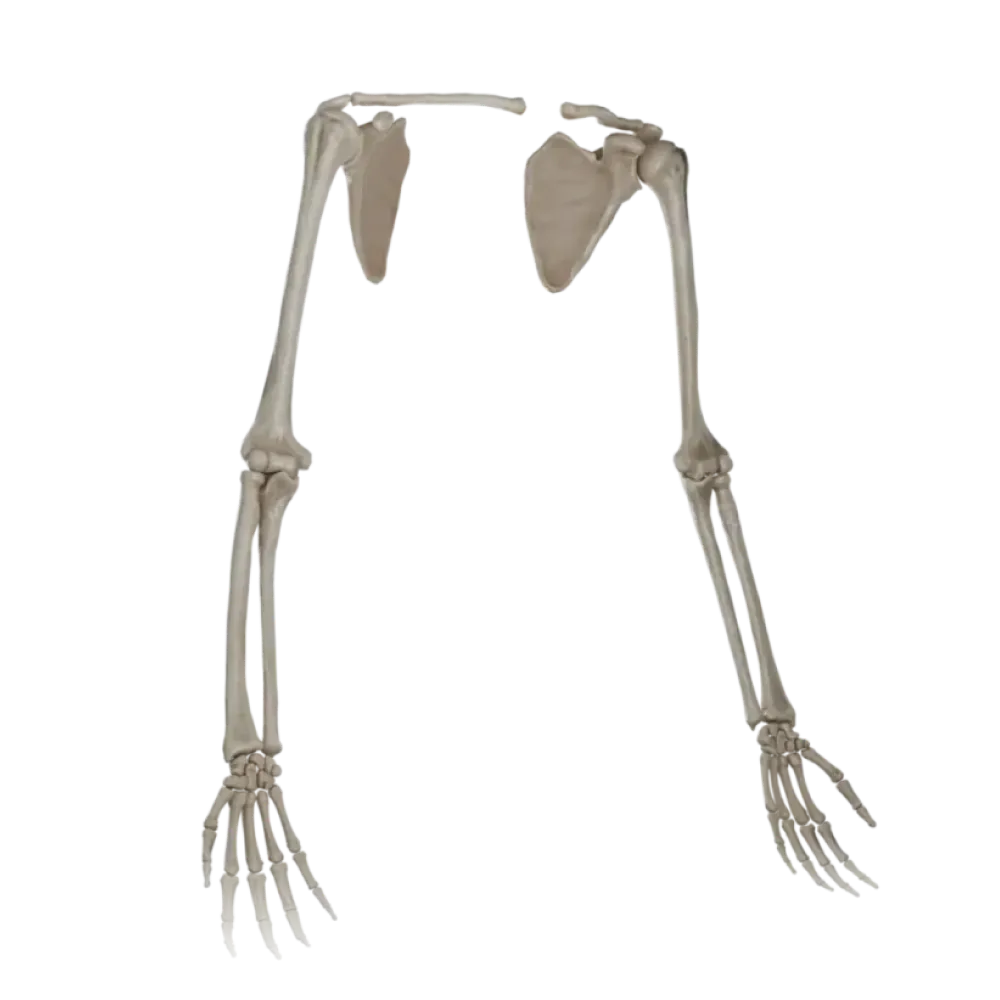
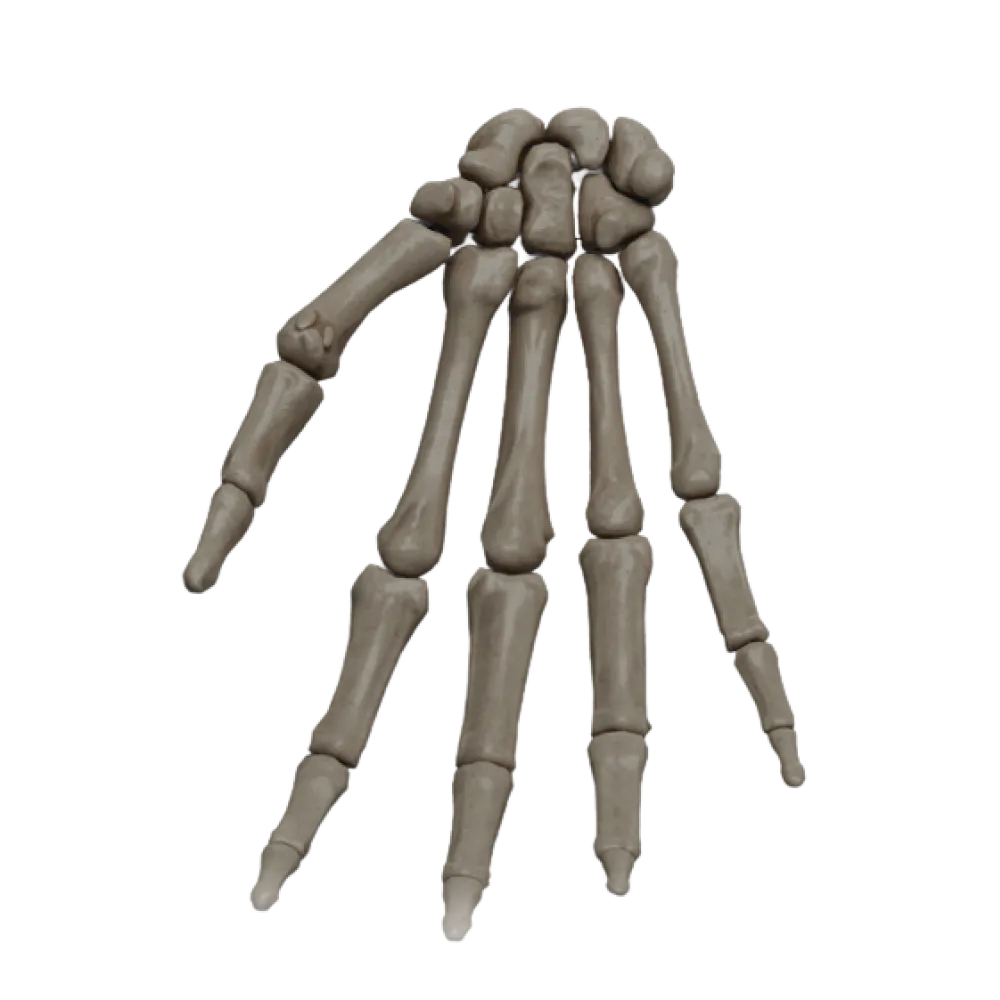
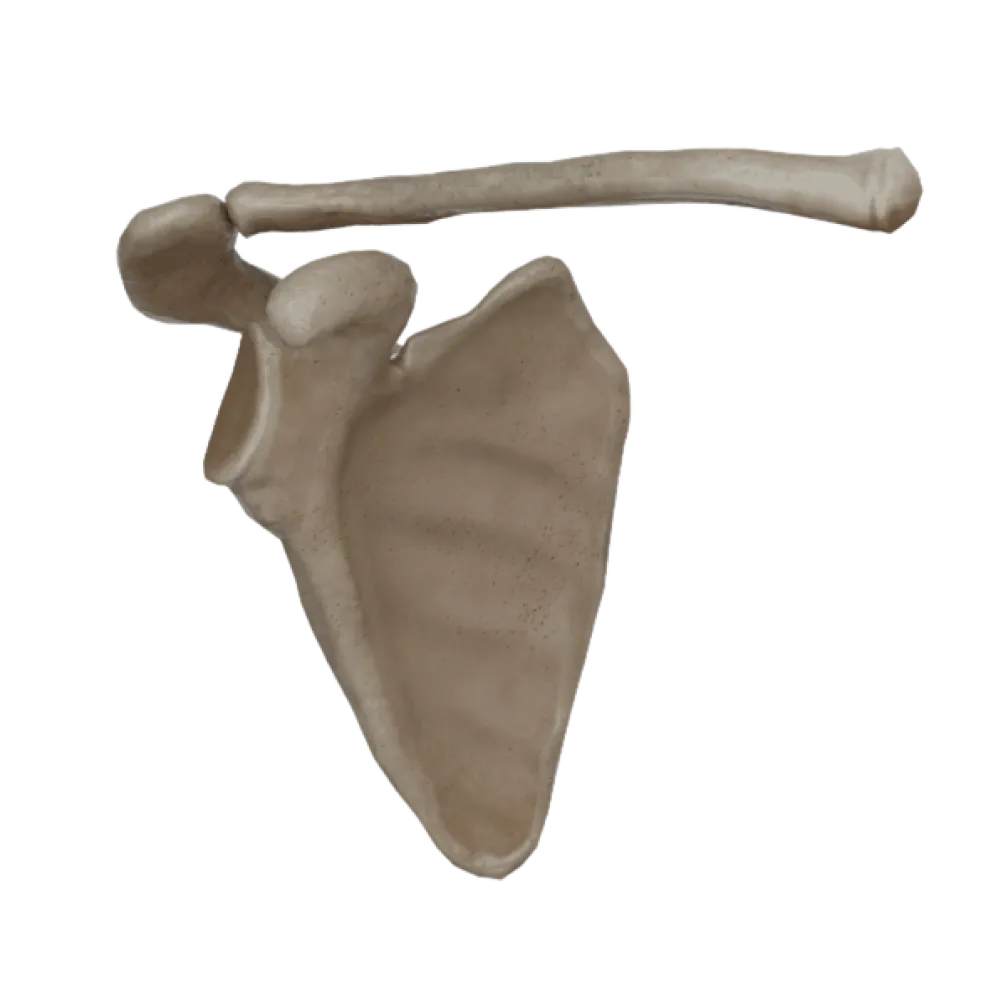

Upper limb bones anatomy test
Evaluate the knowledge of upper limb osteology. The test examines the morphology of the scapula, clavicle, humerus, ulna, radius, and bones of the hand.
1. What structure is located on the posterior surface of the humerus diaphysis?
-
Radial nerve groove
On the posterior surface of the humerus, the sulcus nervi radialis spirals downward and laterally.
-
Ulnar nerve groove
On the posterior surface of the humerus, the sulcus nervi radialis spirals downward and laterally.
-
Deltoid tuberosity
On the posterior surface of the humerus, the sulcus nervi radialis spirals downward and laterally.
-
Nutrient foramen
On the posterior surface of the humerus, the sulcus nervi radialis spirals downward and laterally.
-
I find it difficult to answer
On the posterior surface of the humerus, the sulcus nervi radialis spirals downward and laterally.
2. Where is the conoid tubercle (tuberculum conoideum) located?
-
On the inferior surface of the acromial end of the clavicle
The conoid tubercle is located on the inferior acromial surface of the clavicle.
-
On the superior surface of the sternal end of the clavicle
The conoid tubercle is located on the inferior acromial surface of the clavicle.
-
On the coracoid process of the scapula
The conoid tubercle is located on the inferior acromial surface of the clavicle.
-
On the crest of the lesser tubercle of the humerus
The conoid tubercle is located on the inferior acromial surface of the clavicle.
-
I find it difficult to answer
The conoid tubercle is located on the inferior acromial surface of the clavicle.
3. Which carpal bone has a hook (hamulus)?
-
Pisiform bone
The hamate bone (os hamatum) is characterized by the presence of the hamulus ossis hamati on the palmar surface.
-
Capitate bone
The hamate bone (os hamatum) is characterized by the presence of the hamulus ossis hamati on the palmar surface.
-
Uncinate bone
The hamate bone (os hamatum) is characterized by the presence of the hamulus ossis hamati on the palmar surface.
-
Trapezoid
The hamate bone (os hamatum) is characterized by the presence of the hamulus ossis hamati on the palmar surface.
-
I find it difficult to answer
The hamate bone (os hamatum) is characterized by the presence of the hamulus ossis hamati on the palmar surface.
4. On which border of the scapula is the scapular notch (incisura scapulae) located?
-
Medial border
The scapular notch is located on the superior border of the scapula, medial to the base of the coracoid process.
-
Lateral border
The scapular notch is located on the superior border of the scapula, medial to the base of the coracoid process.
-
Upper border
The scapular notch is located on the superior border of the scapula, medial to the base of the coracoid process.
-
Inferior angle
The scapular notch is located on the superior border of the scapula, medial to the base of the coracoid process.
-
I find it difficult to answer
The scapular notch is located on the superior border of the scapula, medial to the base of the coracoid process.
5. What does the articular fossa of the radial head (fovea articularis radii) articulate with?
-
With the trochlea of the humerus
The articular fossa of the radial head articulates with the capitulum of the humerus.
-
With the head of the humeral condyle
The articular fossa of the radial head articulates with the capitulum of the humerus.
-
With the olecranon
The articular fossa of the radial head articulates with the capitulum of the humerus.
-
With the coronoid process
The articular fossa of the radial head articulates with the capitulum of the humerus.
-
I find it difficult to answer
The articular fossa of the radial head articulates with the capitulum of the humerus.
6. What separates the greater and lesser tubercles of the humerus?
-
Anatomical neck
Between the greater and lesser tubercles of the humerus is the intertubercular groove.
-
Surgical neck
Between the greater and lesser tubercles of the humerus is the intertubercular groove.
-
Intertubercular groove
Between the greater and lesser tubercles of the humerus is the intertubercular groove.
-
Deltoid tuberosity
Between the greater and lesser tubercles of the humerus is the intertubercular groove.
-
I find it difficult to answer
Between the greater and lesser tubercles of the humerus is the intertubercular groove.
7. Where is the radial notch (incisura radialis) located?
-
On the lateral side of the coronoid process of the ulna
The radial notch of the ulna is located on the lateral surface of the coronoid process.
-
On the medial side of the radial head
The radial notch of the ulna is located on the lateral surface of the coronoid process.
-
On the distal epiphysis of the humerus
The radial notch of the ulna is located on the lateral surface of the coronoid process.
-
On the neck of the radius
The radial notch of the ulna is located on the lateral surface of the coronoid process.
-
I find it difficult to answer
The radial notch of the ulna is located on the lateral surface of the coronoid process.
8. Which of the listed bones is NOT part of the proximal row of the carpus?
-
Navicular bone
The trapezium bone (os trapezium) belongs to the distal row of carpal bones.
-
Lunate bone
The trapezium bone (os trapezium) belongs to the distal row of carpal bones.
-
Trihedral bone
The trapezium bone (os trapezium) belongs to the distal row of carpal bones.
-
Trapezium
The trapezium bone (os trapezium) belongs to the distal row of carpal bones.
-
I find it difficult to answer
The trapezium bone (os trapezium) belongs to the distal row of carpal bones.
9. Where is the surgical neck of the humerus located?
-
Above the tubercles
The surgical neck is located distal to the greater and lesser tubercles, at the transition of the proximal epiphysis to the diaphysis.
-
Below the tubercles
The surgical neck is located distal to the greater and lesser tubercles, at the transition of the proximal epiphysis to the diaphysis.
-
At the level of the mid-diaphysis
The surgical neck is located distal to the greater and lesser tubercles, at the transition of the proximal epiphysis to the diaphysis.
-
Between the head and tubercles
The surgical neck is located distal to the greater and lesser tubercles, at the transition of the proximal epiphysis to the diaphysis.
-
I find it difficult to answer
The surgical neck is located distal to the greater and lesser tubercles, at the transition of the proximal epiphysis to the diaphysis.
10. The acromion is a continuation of what?
-
Coracoid process
The acromion is a lateral extension of the spine of the scapula.
-
Medial border of the scapula
The acromion is a lateral extension of the spine of the scapula.
-
Spine of the scapula
The acromion is a lateral extension of the spine of the scapula.
-
Lateral angle of the scapula
The acromion is a lateral extension of the spine of the scapula.
-
I find it difficult to answer
The acromion is a lateral extension of the spine of the scapula.
11. Where is the coronoid fossa (fossa coronoidea) located?
-
On the posterior surface of the distal epiphysis of the humerus
The coronoid fossa is located on the anterior surface of the humerus just above the trochlea.
-
On the anterior surface of the distal epiphysis of the humerus
The coronoid fossa is located on the anterior surface of the humerus just above the trochlea.
-
On the proximal epiphysis of the ulna
The coronoid fossa is located on the anterior surface of the humerus just above the trochlea.
-
On the lateral surface of the scapula
The coronoid fossa is located on the anterior surface of the humerus just above the trochlea.
-
I find it difficult to answer
The coronoid fossa is located on the anterior surface of the humerus just above the trochlea.
12. What feature is located on the lateral side of the distal epiphysis of the radius?
-
Styloid process
The styloid process of the radius is located on the lateral surface of its distal end.
-
Ulnar notch
The styloid process of the radius is located on the lateral surface of its distal end.
-
Radial tuberosity
The styloid process of the radius is located on the lateral surface of its distal end.
-
Head of the radius
The styloid process of the radius is located on the lateral surface of its distal end.
-
I find it difficult to answer
The styloid process of the radius is located on the lateral surface of its distal end.
13. Where does the biceps brachii tendon attach on the forearm bones?
-
Ulnar tuberosity
The tuberosity of the radius serves as the attachment point for the biceps brachii. biceps brachii.
-
Radial tuberosity
The tuberosity of the radius serves as the attachment point for the biceps brachii. biceps brachii.
-
Coronoid process
The tuberosity of the radius serves as the attachment point for the biceps brachii. biceps brachii.
-
Styloid process of the radius
The tuberosity of the radius serves as the attachment point for the biceps brachii. biceps brachii.
-
I find it difficult to answer
The tuberosity of the radius serves as the attachment point for the biceps brachii. biceps brachii.
14. On which surface of the humerus is the deltoid tuberosity located?
-
Medial surface
The deltoid tuberosity is located on the lateral surface of the humerus above the middle of the bone's shaft.
-
Lateral surface
The deltoid tuberosity is located on the lateral surface of the humerus above the middle of the bone's shaft.
-
Posterior surface
The deltoid tuberosity is located on the lateral surface of the humerus above the middle of the bone's shaft.
-
Anterior surface
The deltoid tuberosity is located on the lateral surface of the humerus above the middle of the bone's shaft.
-
I find it difficult to answer
The deltoid tuberosity is located on the lateral surface of the humerus above the middle of the bone's shaft.
15. Which feature of the ulna articulates with the trochlea of the humerus?
-
Radial notch
The trochlear notch of the ulna encompasses the trochlea of the humerus, constrained by the olecranon and coronoid process.
-
Trochlear notch
The trochlear notch of the ulna encompasses the trochlea of the humerus, constrained by the olecranon and coronoid process.
-
Coronoid process
The trochlear notch of the ulna encompasses the trochlea of the humerus, constrained by the olecranon and coronoid process.
-
Olecranon
The trochlear notch of the ulna encompasses the trochlea of the humerus, constrained by the olecranon and coronoid process.
-
I find it difficult to answer
The trochlear notch of the ulna encompasses the trochlea of the humerus, constrained by the olecranon and coronoid process.
16. Where is the infraglenoid tubercle (tuberculum infraglenoidale) located?
-
Under the acromion
The infraglenoid tubercle is located on the lateral border of the scapula directly below the glenoid cavity.
-
Under the coracoid process
The infraglenoid tubercle is located on the lateral border of the scapula directly below the glenoid cavity.
-
Under the scapular glenoid cavity
The infraglenoid tubercle is located on the lateral border of the scapula directly below the glenoid cavity.
-
On the neck of the humerus
The infraglenoid tubercle is located on the lateral border of the scapula directly below the glenoid cavity.
-
I find it difficult to answer
The infraglenoid tubercle is located on the lateral border of the scapula directly below the glenoid cavity.
17. Which carpal bone is sesamoid?
-
Pisiform bone
The pisiform bone (os pisiforme) is a sesamoid bone embedded within the tendon of the muscle. flexor carpi ulnaris.
-
Trihedral bone
The pisiform bone (os pisiforme) is a sesamoid bone embedded within the tendon of the muscle. flexor carpi ulnaris.
-
Navicular bone
The pisiform bone (os pisiforme) is a sesamoid bone embedded within the tendon of the muscle. flexor carpi ulnaris.
-
Uncinate bone
The pisiform bone (os pisiforme) is a sesamoid bone embedded within the tendon of the muscle. flexor carpi ulnaris.
-
I find it difficult to answer
The pisiform bone (os pisiforme) is a sesamoid bone embedded within the tendon of the muscle. flexor carpi ulnaris.
18. What does the distal epiphysis of the radius articulate with medially?
-
With the head of the ulna
On the medial side of the distal end of the radial bone, there is an ulnar notch for articulation with the head of the ulna.
-
With the coronoid process
On the medial side of the distal end of the radial bone, there is an ulnar notch for articulation with the head of the ulna.
-
With the trapezium bone
On the medial side of the distal end of the radial bone, there is an ulnar notch for articulation with the head of the ulna.
-
With the capitate bone
On the medial side of the distal end of the radial bone, there is an ulnar notch for articulation with the head of the ulna.
-
I find it difficult to answer
On the medial side of the distal end of the radial bone, there is an ulnar notch for articulation with the head of the ulna.
19. Where is the groove for the ulnar nerve (sulcus nervi ulnaris)?
-
Behind the lateral epicondyle of the humerus
The sulcus nervi ulnaris passes on the posterior surface of the medial epicondyle of the humerus.
-
Behind the medial epicondyle of the humerus
The sulcus nervi ulnaris passes on the posterior surface of the medial epicondyle of the humerus.
-
On the posterior surface of the diaphysis of the humerus
The sulcus nervi ulnaris passes on the posterior surface of the medial epicondyle of the humerus.
-
On the olecranon
The sulcus nervi ulnaris passes on the posterior surface of the medial epicondyle of the humerus.
-
I find it difficult to answer
The sulcus nervi ulnaris passes on the posterior surface of the medial epicondyle of the humerus.
20. How many phalanges does the thumb (pollex) have?
-
One
The first (thumb) digit of the hand consists of only two phalanges: phalanx proximalis and phalanx distalis.
-
Two
The first (thumb) digit of the hand consists of only two phalanges: phalanx proximalis and phalanx distalis.
-
Three
The first (thumb) digit of the hand consists of only two phalanges: phalanx proximalis and phalanx distalis.
-
Four
The first (thumb) digit of the hand consists of only two phalanges: phalanx proximalis and phalanx distalis.
-
I find it difficult to answer
The first (thumb) digit of the hand consists of only two phalanges: phalanx proximalis and phalanx distalis.
Retake this quiz?
Your current progress will be reset.
Bones of the upper limb
Bones of the free upper limb
0/20