


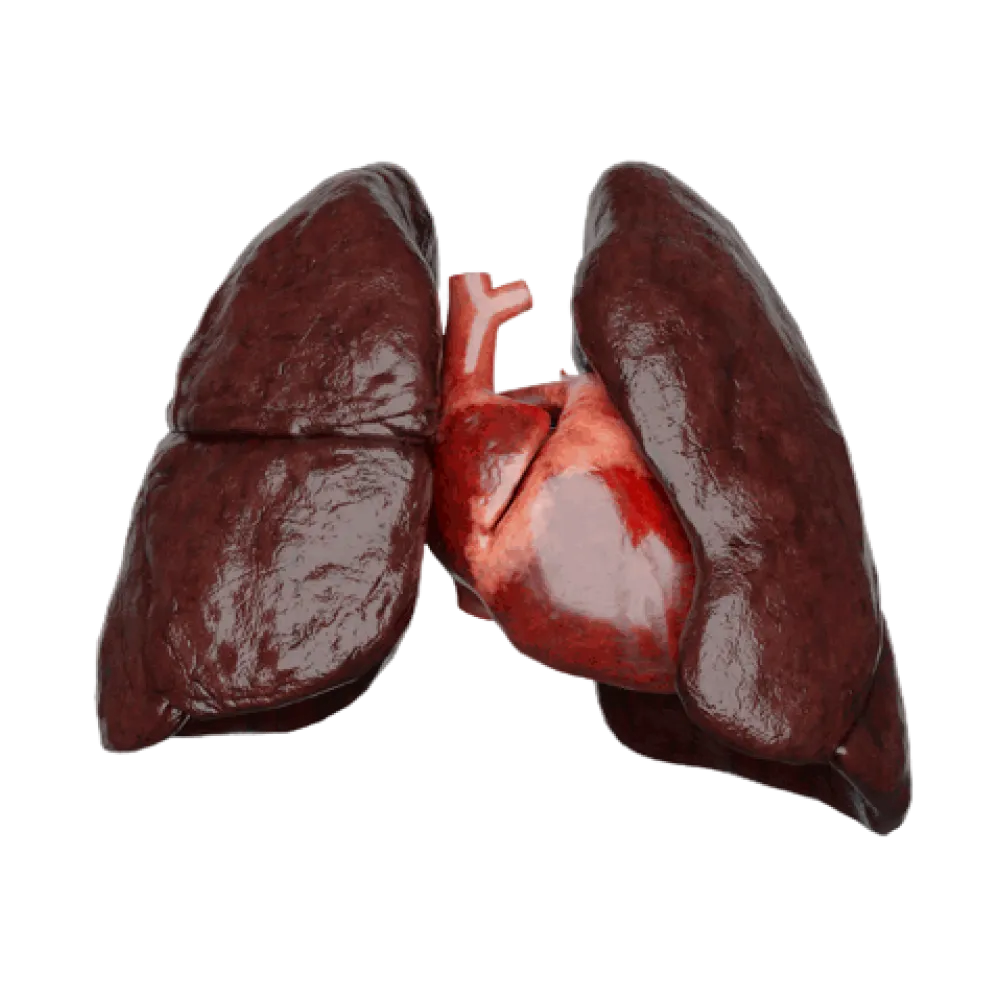


Anatomy test on pulmonary circulation
Evaluate your knowledge of pulmonary circulation anatomy. The test examines the topography of vessels, syntopy of lung hila, and characteristics of blood flow.
1/20
bold
text
1. Where does the pulmonary circulation start?
-
In the left ventricle
The pulmonary circulation begins in the right ventricle, where venous blood enters the pulmonary trunk.
-
In the right atrium
The pulmonary circulation begins in the right ventricle, where venous blood enters the pulmonary trunk.
-
In the right ventricle
The pulmonary circulation begins in the right ventricle, where venous blood enters the pulmonary trunk.
-
In the left atrium
The pulmonary circulation begins in the right ventricle, where venous blood enters the pulmonary trunk.
-
I find it difficult to answer
The pulmonary circulation begins in the right ventricle, where venous blood enters the pulmonary trunk.
2. In which heart chamber does the pulmonary circulation end?
-
In the left atrium
Oxygen-rich blood returns to the left atrium via four pulmonary veins, completing the pulmonary circuit.
-
In the right ventricle
Oxygen-rich blood returns to the left atrium via four pulmonary veins, completing the pulmonary circuit.
-
In the left ventricle
Oxygen-rich blood returns to the left atrium via four pulmonary veins, completing the pulmonary circuit.
-
In the right atrium
Oxygen-rich blood returns to the left atrium via four pulmonary veins, completing the pulmonary circuit.
-
I find it difficult to answer
Oxygen-rich blood returns to the left atrium via four pulmonary veins, completing the pulmonary circuit.
3. Which major blood vessel exits the right ventricle?
-
Superior vena cava
The pulmonary trunk (truncus pulmonalis) exits from the right ventricle and carries venous blood to the lungs.
-
Pulmonary trunk
The pulmonary trunk (truncus pulmonalis) exits from the right ventricle and carries venous blood to the lungs.
-
Aorta
The pulmonary trunk (truncus pulmonalis) exits from the right ventricle and carries venous blood to the lungs.
-
Inferior vena cava
The pulmonary trunk (truncus pulmonalis) exits from the right ventricle and carries venous blood to the lungs.
-
I find it difficult to answer
The pulmonary trunk (truncus pulmonalis) exits from the right ventricle and carries venous blood to the lungs.
4. At what skeletotopic level does the bifurcation of the pulmonary trunk occur?
-
At the level of the second thoracic vertebra
The bifurcation of the pulmonary trunk (bifurcatio trunci pulmonalis) is located under the aortic arch at the level of the IV-V thoracic vertebrae.
-
At the level of the arch of the cricoid cartilage
The bifurcation of the pulmonary trunk (bifurcatio trunci pulmonalis) is located under the aortic arch at the level of the IV-V thoracic vertebrae.
-
At the level of the seventh cervical vertebra
The bifurcation of the pulmonary trunk (bifurcatio trunci pulmonalis) is located under the aortic arch at the level of the IV-V thoracic vertebrae.
-
At the level of the fourth to fifth thoracic vertebrae
The bifurcation of the pulmonary trunk (bifurcatio trunci pulmonalis) is located under the aortic arch at the level of the IV-V thoracic vertebrae.
-
I find it difficult to answer
The bifurcation of the pulmonary trunk (bifurcatio trunci pulmonalis) is located under the aortic arch at the level of the IV-V thoracic vertebrae.
5. What type of blood circulates in the branches of the pulmonary trunk in an adult?
-
Arterial
Venous blood flows from the right ventricle to the lungs through the pulmonary trunk and pulmonary arteries.
-
Mixed with an arterial predominance
Venous blood flows from the right ventricle to the lungs through the pulmonary trunk and pulmonary arteries.
-
Venous
Venous blood flows from the right ventricle to the lungs through the pulmonary trunk and pulmonary arteries.
-
Mixed with a venous predominance
Venous blood flows from the right ventricle to the lungs through the pulmonary trunk and pulmonary arteries.
-
I find it difficult to answer
Venous blood flows from the right ventricle to the lungs through the pulmonary trunk and pulmonary arteries.
6. How many pulmonary veins normally open into the left atrium?
-
Two.
Typically, four pulmonary veins (two from each lung: superior and inferior) enter the left atrium.
-
Three.
Typically, four pulmonary veins (two from each lung: superior and inferior) enter the left atrium.
-
Five
Typically, four pulmonary veins (two from each lung: superior and inferior) enter the left atrium.
-
Four.
Typically, four pulmonary veins (two from each lung: superior and inferior) enter the left atrium.
-
I find it difficult to answer
Typically, four pulmonary veins (two from each lung: superior and inferior) enter the left atrium.
7. Which of the following is the function of the pulmonary valve?
-
Prevention of blood regurgitation from the pulmonary trunk into the right ventricle
The pulmonary valve prevents backflow of blood from the trunk into the right ventricle during diastole.
-
Prevention of blood backflow from the right atrium into the right ventricle
The pulmonary valve prevents backflow of blood from the trunk into the right ventricle during diastole.
-
Ensuring a unidirectional flow of blood from the pulmonary veins
The pulmonary valve prevents backflow of blood from the trunk into the right ventricle during diastole.
-
Reducing pressure in the pulmonary circulation
The pulmonary valve prevents backflow of blood from the trunk into the right ventricle during diastole.
-
I find it difficult to answer
The pulmonary valve prevents backflow of blood from the trunk into the right ventricle during diastole.
8. How is the right pulmonary artery topographically positioned relative to the ascending aorta and superior vena cava?
-
In front of them
The right pulmonary artery is longer than the left and heads to the hilum of the right lung behind the ascending aorta and superior vena cava.
-
Behind them
The right pulmonary artery is longer than the left and heads to the hilum of the right lung behind the ascending aorta and superior vena cava.
-
Laterally and anteriorly
The right pulmonary artery is longer than the left and heads to the hilum of the right lung behind the ascending aorta and superior vena cava.
-
Medially and above
The right pulmonary artery is longer than the left and heads to the hilum of the right lung behind the ascending aorta and superior vena cava.
-
I find it difficult to answer
The right pulmonary artery is longer than the left and heads to the hilum of the right lung behind the ascending aorta and superior vena cava.
9. What blood flows through the pulmonary veins in an adult?
-
Venous
Pulmonary veins carry oxygenated (arterial) blood from the lungs to the left atrium.
-
Arterial
Pulmonary veins carry oxygenated (arterial) blood from the lungs to the left atrium.
-
Mixed
Pulmonary veins carry oxygenated (arterial) blood from the lungs to the left atrium.
-
Capillary
Pulmonary veins carry oxygenated (arterial) blood from the lungs to the left atrium.
-
I find it difficult to answer
Pulmonary veins carry oxygenated (arterial) blood from the lungs to the left atrium.
10. What is the mutual positioning of the elements of the right lung root (top to bottom)?
-
Bronchus, artery, veins
At the root of the right lung, the elements are arranged in the order (top to bottom): main bronchus, pulmonary artery, pulmonary veins (BA V rule).
-
Artery, bronchus, veins
At the root of the right lung, the elements are arranged in the order (top to bottom): main bronchus, pulmonary artery, pulmonary veins (BA V rule).
-
Veins, artery, bronchus
At the root of the right lung, the elements are arranged in the order (top to bottom): main bronchus, pulmonary artery, pulmonary veins (BA V rule).
-
Veins, bronchus, artery
At the root of the right lung, the elements are arranged in the order (top to bottom): main bronchus, pulmonary artery, pulmonary veins (BA V rule).
-
I find it difficult to answer
At the root of the right lung, the elements are arranged in the order (top to bottom): main bronchus, pulmonary artery, pulmonary veins (BA V rule).
11. What is the mutual positioning of the elements of the left lung root (top to bottom)?
-
Bronchus, artery, veins
At the root of the left lung, the pulmonary artery is on top, below is the main bronchus, and further below are the pulmonary veins (ABC rule).
-
Veins, artery, bronchus
At the root of the left lung, the pulmonary artery is on top, below is the main bronchus, and further below are the pulmonary veins (ABC rule).
-
Artery, bronchus, veins
At the root of the left lung, the pulmonary artery is on top, below is the main bronchus, and further below are the pulmonary veins (ABC rule).
-
Artery, veins, bronchus
At the root of the left lung, the pulmonary artery is on top, below is the main bronchus, and further below are the pulmonary veins (ABC rule).
-
I find it difficult to answer
At the root of the left lung, the pulmonary artery is on top, below is the main bronchus, and further below are the pulmonary veins (ABC rule).
12. Where is the arterial ligament (ligamentum arteriosum) normally located?
-
Between the right and left atria
The arterial (Botallo's) ligament is an obliterated ductus arteriosus, connecting the pulmonary trunk with the aortic arch.
-
Between the superior and inferior vena cavae
The arterial (Botallo's) ligament is an obliterated ductus arteriosus, connecting the pulmonary trunk with the aortic arch.
-
Between the pulmonary trunk and the aortic arch
The arterial (Botallo's) ligament is an obliterated ductus arteriosus, connecting the pulmonary trunk with the aortic arch.
-
Between the pulmonary veins and the left atrium
The arterial (Botallo's) ligament is an obliterated ductus arteriosus, connecting the pulmonary trunk with the aortic arch.
-
I find it difficult to answer
The arterial (Botallo's) ligament is an obliterated ductus arteriosus, connecting the pulmonary trunk with the aortic arch.
13. Where are the openings of the pulmonary veins in the heart located?
-
On the anterior wall of the right atrium
The orifices of the four pulmonary veins open on the posterior (posterior-superior) wall of the left atrium.
-
On the posterior wall of the left atrium
The orifices of the four pulmonary veins open on the posterior (posterior-superior) wall of the left atrium.
-
On the medial wall of the right ventricle
The orifices of the four pulmonary veins open on the posterior (posterior-superior) wall of the left atrium.
-
At the apex of the left ventricle
The orifices of the four pulmonary veins open on the posterior (posterior-superior) wall of the left atrium.
-
I find it difficult to answer
The orifices of the four pulmonary veins open on the posterior (posterior-superior) wall of the left atrium.
14. Through what structure do the elements of the pulmonary circuit penetrate the lung parenchyma?
-
Pulmonary ligament
The pulmonary artery and pulmonary veins pass through the lung hilum (hilum pulmonis), located on the medial surface of the organ.
-
Cardiac notch
The pulmonary artery and pulmonary veins pass through the lung hilum (hilum pulmonis), located on the medial surface of the organ.
-
Oblique fissure
The pulmonary artery and pulmonary veins pass through the lung hilum (hilum pulmonis), located on the medial surface of the organ.
-
Lung hilum
The pulmonary artery and pulmonary veins pass through the lung hilum (hilum pulmonis), located on the medial surface of the organ.
-
I find it difficult to answer
The pulmonary artery and pulmonary veins pass through the lung hilum (hilum pulmonis), located on the medial surface of the organ.
15. Into which vessels does the pulmonary trunk directly divide?
-
Right and left pulmonary arteries
The pulmonary trunk divides into two main branches: right and left pulmonary arteries (a. pulmonalis dextra et a. pulmonalis sinistra).
-
Lobar arteries
The pulmonary trunk divides into two main branches: right and left pulmonary arteries (a. pulmonalis dextra et a. pulmonalis sinistra).
-
Segmental arteries
The pulmonary trunk divides into two main branches: right and left pulmonary arteries (a. pulmonalis dextra et a. pulmonalis sinistra).
-
Bronchial arteries
The pulmonary trunk divides into two main branches: right and left pulmonary arteries (a. pulmonalis dextra et a. pulmonalis sinistra).
-
I find it difficult to answer
The pulmonary trunk divides into two main branches: right and left pulmonary arteries (a. pulmonalis dextra et a. pulmonalis sinistra).
16. How do the pulmonary arteries branch within the lungs?
-
Form arterial arches
The branching of the pulmonary arteries exactly replicates the branching of the bronchial tree (lobar, segmental, subsegmental branches).
-
Radiate from the hilum to the periphery independently from the bronchi
The branching of the pulmonary arteries exactly replicates the branching of the bronchial tree (lobar, segmental, subsegmental branches).
-
Corresponding to the branching of the bronchial tree
The branching of the pulmonary arteries exactly replicates the branching of the bronchial tree (lobar, segmental, subsegmental branches).
-
Form porto-caval anastomoses
The branching of the pulmonary arteries exactly replicates the branching of the bronchial tree (lobar, segmental, subsegmental branches).
-
I find it difficult to answer
The branching of the pulmonary arteries exactly replicates the branching of the bronchial tree (lobar, segmental, subsegmental branches).
17. What is the morphological substrate of the aerohematic barrier in the pulmonary circuit?
-
Wall of the terminal bronchiole
Gas exchange occurs through the aerohematic barrier composed of capillary endothelium, basal membrane, and alveolar epithelium.
-
Wall of the pulmonary artery
Gas exchange occurs through the aerohematic barrier composed of capillary endothelium, basal membrane, and alveolar epithelium.
-
Wall of the pulmonary vein
Gas exchange occurs through the aerohematic barrier composed of capillary endothelium, basal membrane, and alveolar epithelium.
-
Wall of the blood capillary and alveolar wall
Gas exchange occurs through the aerohematic barrier composed of capillary endothelium, basal membrane, and alveolar epithelium.
-
I find it difficult to answer
Gas exchange occurs through the aerohematic barrier composed of capillary endothelium, basal membrane, and alveolar epithelium.
18. Which blood vessel in the pulmonary circulation is the shortest and widest?
-
Right pulmonary artery
The pulmonary trunk is a short (about 5 cm) and wide (about 3 cm) vessel originating from the right ventricle.
-
Pulmonary trunk
The pulmonary trunk is a short (about 5 cm) and wide (about 3 cm) vessel originating from the right ventricle.
-
Left inferior pulmonary vein
The pulmonary trunk is a short (about 5 cm) and wide (about 3 cm) vessel originating from the right ventricle.
-
Left pulmonary artery
The pulmonary trunk is a short (about 5 cm) and wide (about 3 cm) vessel originating from the right ventricle.
-
I find it difficult to answer
The pulmonary trunk is a short (about 5 cm) and wide (about 3 cm) vessel originating from the right ventricle.
19. Where does blood from the alveolar capillary network drain?
-
Into bronchial veins
Oxygen-enriched blood from the alveolar capillaries drains into venules which then merge into larger pulmonary veins.
-
Into the azygos vein.
Oxygen-enriched blood from the alveolar capillaries drains into venules which then merge into larger pulmonary veins.
-
Into the pulmonary artery system
Oxygen-enriched blood from the alveolar capillaries drains into venules which then merge into larger pulmonary veins.
-
Into postcapillary venules of the pulmonary circuit
Oxygen-enriched blood from the alveolar capillaries drains into venules which then merge into larger pulmonary veins.
-
I find it difficult to answer
Oxygen-enriched blood from the alveolar capillaries drains into venules which then merge into larger pulmonary veins.
20. What is the primary physiological role of the pulmonary circulation vessels?
-
Supplying the lung parenchyma with nutrients
The main function of the pulmonary circulation is the oxygenation of blood and the exchange of carbon dioxide (gas exchange).
-
Ensuring gas exchange between blood and alveolar air
The main function of the pulmonary circulation is the oxygenation of blood and the exchange of carbon dioxide (gas exchange).
-
Blood deposition in the abdominal cavity
The main function of the pulmonary circulation is the oxygenation of blood and the exchange of carbon dioxide (gas exchange).
-
Thermoregulation of the upper airways
The main function of the pulmonary circulation is the oxygenation of blood and the exchange of carbon dioxide (gas exchange).
-
I find it difficult to answer
The main function of the pulmonary circulation is the oxygenation of blood and the exchange of carbon dioxide (gas exchange).
Retake this quiz?
Your current progress will be reset.