


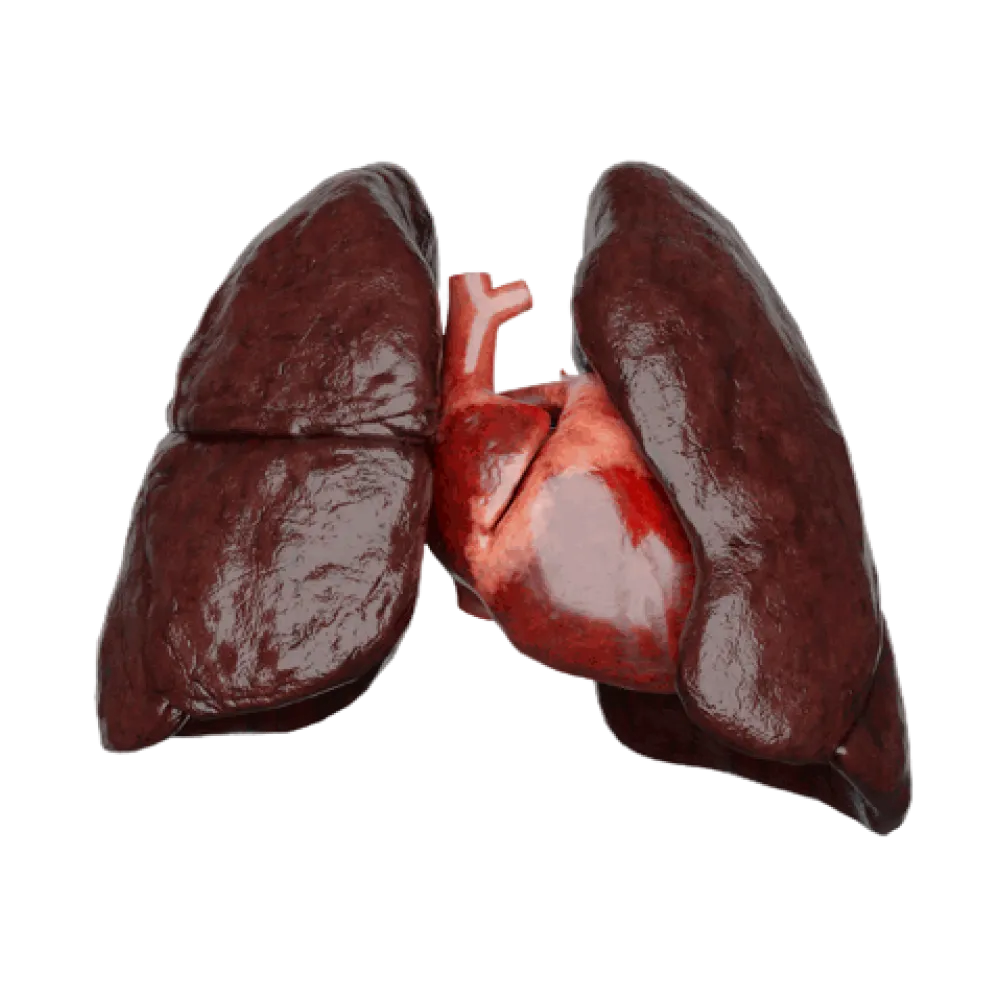


Anatomy test of thoracic cavity lymphatic drainage
Evaluate your knowledge of the thoracic lymphatic system. This test covers the topography of the thoracic and right lymphatic ducts, lymphatic drainage paths from mediastinal organs, and the location of parietal and visceral lymph nodes.
1/20
bold
text
1. Through which diaphragm opening does the thoracic duct enter the thoracic cavity from the abdominal cavity?
-
Esophageal opening
The thoracic duct (ductus thoracicus) passes through the hiatus aorticus of the diaphragm along with the aorta.
-
Foramen of the inferior vena cava
The thoracic duct (ductus thoracicus) passes through the hiatus aorticus of the diaphragm along with the aorta.
-
Aortic hiatus
The thoracic duct (ductus thoracicus) passes through the hiatus aorticus of the diaphragm along with the aorta.
-
Sternocostal triangle
The thoracic duct (ductus thoracicus) passes through the hiatus aorticus of the diaphragm along with the aorta.
-
I find it difficult to answer
The thoracic duct (ductus thoracicus) passes through the hiatus aorticus of the diaphragm along with the aorta.
2. Into which vessel does the right lymphatic duct typically drain?
-
Into the right venous angle
The right lymphatic duct (ductus lymphaticus dexter) drains into the right venous angle, formed by the confluence of the internal jugular and subclavian veins.
-
Into the superior vena cava
The right lymphatic duct (ductus lymphaticus dexter) drains into the right venous angle, formed by the confluence of the internal jugular and subclavian veins.
-
Into the left venous angle
The right lymphatic duct (ductus lymphaticus dexter) drains into the right venous angle, formed by the confluence of the internal jugular and subclavian veins.
-
Into the azygos vein.
The right lymphatic duct (ductus lymphaticus dexter) drains into the right venous angle, formed by the confluence of the internal jugular and subclavian veins.
-
I find it difficult to answer
The right lymphatic duct (ductus lymphaticus dexter) drains into the right venous angle, formed by the confluence of the internal jugular and subclavian veins.
3. Which lymph nodes are located along the course of the internal thoracic artery?
-
Anterior mediastinal nodes
Parasternal lymph nodes (nodi lymphatici parasternales) are located along the internal thoracic vessels.
-
Intercostal nodes
Parasternal lymph nodes (nodi lymphatici parasternales) are located along the internal thoracic vessels.
-
Superior phrenic nodes
Parasternal lymph nodes (nodi lymphatici parasternales) are located along the internal thoracic vessels.
-
Parasternal nodes
Parasternal lymph nodes (nodi lymphatici parasternales) are located along the internal thoracic vessels.
-
I find it difficult to answer
Parasternal lymph nodes (nodi lymphatici parasternales) are located along the internal thoracic vessels.
4. From which of the following areas does lymph NOT drain into the right lymphatic duct?
-
From the right upper limb
Lymph from the left half of the thoracic cavity drains into the left bronchomediastinal trunk and then into the thoracic duct.
-
From the left half of the thoracic cavity
Lymph from the left half of the thoracic cavity drains into the left bronchomediastinal trunk and then into the thoracic duct.
-
From the right side of the head and neck
Lymph from the left half of the thoracic cavity drains into the left bronchomediastinal trunk and then into the thoracic duct.
-
From the right lung
Lymph from the left half of the thoracic cavity drains into the left bronchomediastinal trunk and then into the thoracic duct.
-
I find it difficult to answer
Lymph from the left half of the thoracic cavity drains into the left bronchomediastinal trunk and then into the thoracic duct.
5. Where are the inferior tracheobronchial (bifurcation) lymph nodes located topographically?
-
Above the aortic arch
The inferior tracheobronchial lymph nodes (nodi lymphatici tracheobronchiales inferiores) are located below the tracheal bifurcation.
-
Below the tracheal bifurcation
The inferior tracheobronchial lymph nodes (nodi lymphatici tracheobronchiales inferiores) are located below the tracheal bifurcation.
-
Along the right main bronchus
The inferior tracheobronchial lymph nodes (nodi lymphatici tracheobronchiales inferiores) are located below the tracheal bifurcation.
-
In the root of the left lung
The inferior tracheobronchial lymph nodes (nodi lymphatici tracheobronchiales inferiores) are located below the tracheal bifurcation.
-
I find it difficult to answer
The inferior tracheobronchial lymph nodes (nodi lymphatici tracheobronchiales inferiores) are located below the tracheal bifurcation.
6. Which of the listed lymph nodes belong to the visceral nodes of the thoracic cavity?
-
Prevertebral ganglia
Bronchopulmonary, tracheobronchial, and mediastinal nodes are visceral lymph nodes of the thoracic cavity.
-
Parasternal nodes
Bronchopulmonary, tracheobronchial, and mediastinal nodes are visceral lymph nodes of the thoracic cavity.
-
Bronchopulmonary nodes
Bronchopulmonary, tracheobronchial, and mediastinal nodes are visceral lymph nodes of the thoracic cavity.
-
Intercostal nodes
Bronchopulmonary, tracheobronchial, and mediastinal nodes are visceral lymph nodes of the thoracic cavity.
-
I find it difficult to answer
Bronchopulmonary, tracheobronchial, and mediastinal nodes are visceral lymph nodes of the thoracic cavity.
7. Into which vessel do the efferent vessels of the parasternal lymph nodes predominantly drain?
-
Into the bronchomediastinal trunk
Efferent vessels of the parasternal nodes merge with those of the tracheobronchial nodes, forming the bronchomediastinal trunk.
-
Directly into the thoracic duct
Efferent vessels of the parasternal nodes merge with those of the tracheobronchial nodes, forming the bronchomediastinal trunk.
-
Into the jugular trunk
Efferent vessels of the parasternal nodes merge with those of the tracheobronchial nodes, forming the bronchomediastinal trunk.
-
Into the subclavian trunk
Efferent vessels of the parasternal nodes merge with those of the tracheobronchial nodes, forming the bronchomediastinal trunk.
-
I find it difficult to answer
Efferent vessels of the parasternal nodes merge with those of the tracheobronchial nodes, forming the bronchomediastinal trunk.
8. Where do the efferent lymphatic vessels from the medial quadrants of the breast drain?
-
To the axillary nodes
Lymph from the medial part of the breast drains to the nodi parasternales, penetrating the intercostal muscles.
-
To the supraclavicular nodes
Lymph from the medial part of the breast drains to the nodi parasternales, penetrating the intercostal muscles.
-
To the intercostal nodes
Lymph from the medial part of the breast drains to the nodi parasternales, penetrating the intercostal muscles.
-
To the parasternal nodes
Lymph from the medial part of the breast drains to the nodi parasternales, penetrating the intercostal muscles.
-
I find it difficult to answer
Lymph from the medial part of the breast drains to the nodi parasternales, penetrating the intercostal muscles.
9. In which section of the mediastinum is the thoracic duct located topographically at the level of the fifth thoracic vertebra?
-
In the anterior mediastinum
The thoracic duct passes in the posterior mediastinum, located on the anterior surface of the vertebrae.
-
In the middle mediastinum
The thoracic duct passes in the posterior mediastinum, located on the anterior surface of the vertebrae.
-
In the posterior mediastinum
The thoracic duct passes in the posterior mediastinum, located on the anterior surface of the vertebrae.
-
In the superior mediastinum
The thoracic duct passes in the posterior mediastinum, located on the anterior surface of the vertebrae.
-
I find it difficult to answer
The thoracic duct passes in the posterior mediastinum, located on the anterior surface of the vertebrae.
10. With the fusion of which trunks is the right lymphatic duct formed?
-
Left jugular, left subclavian, and intestinal
The right lymphatic duct is formed by merging tr. right jugular trunk. subclavius dexter and tr. right bronchomediastinal trunk.
-
Right jugular, right subclavian, and right bronchomediastinal
The right lymphatic duct is formed by merging tr. right jugular trunk. subclavius dexter and tr. right bronchomediastinal trunk.
-
Lumbar trunks and intestinal trunk
The right lymphatic duct is formed by merging tr. right jugular trunk. subclavius dexter and tr. right bronchomediastinal trunk.
-
Right and left bronchomediastinal trunks
The right lymphatic duct is formed by merging tr. right jugular trunk. subclavius dexter and tr. right bronchomediastinal trunk.
-
I find it difficult to answer
The right lymphatic duct is formed by merging tr. right jugular trunk. subclavius dexter and tr. right bronchomediastinal trunk.
11. Where do the intercostal lymph nodes predominantly drain?
-
Into the thoracic duct
Efferent vessels of intercostal nodes (nodi intercostales) drain into the initial segment of the thoracic duct.
-
Into the right lymphatic duct
Efferent vessels of intercostal nodes (nodi intercostales) drain into the initial segment of the thoracic duct.
-
Into the axillary nodes
Efferent vessels of intercostal nodes (nodi intercostales) drain into the initial segment of the thoracic duct.
-
Into the lumbar trunks
Efferent vessels of intercostal nodes (nodi intercostales) drain into the initial segment of the thoracic duct.
-
I find it difficult to answer
Efferent vessels of intercostal nodes (nodi intercostales) drain into the initial segment of the thoracic duct.
12. Which lymph nodes collect lymph predominantly from the parietal pleura of the posterior wall of the thoracic cavity?
-
Bronchopulmonary nodes
Lymph from the posterior wall of the thoracic cavity and parietal pleura drains to nodi intercostales and nodi prevertebrales.
-
Anterior mediastinal nodes
Lymph from the posterior wall of the thoracic cavity and parietal pleura drains to nodi intercostales and nodi prevertebrales.
-
Superior phrenic nodes
Lymph from the posterior wall of the thoracic cavity and parietal pleura drains to nodi intercostales and nodi prevertebrales.
-
Intercostal and prevertebral nodes
Lymph from the posterior wall of the thoracic cavity and parietal pleura drains to nodi intercostales and nodi prevertebrales.
-
I find it difficult to answer
Lymph from the posterior wall of the thoracic cavity and parietal pleura drains to nodi intercostales and nodi prevertebrales.
13. Between which blood vessels is the thoracic duct located in the lower part of the posterior mediastinum?
-
Between the superior and inferior vena cavae
In the posterior mediastinum, the thoracic duct lies in front of the vertebrae, between the aorta thoracica on the left and v. azygos on the right.
-
Between the thoracic aorta and azygos vein
In the posterior mediastinum, the thoracic duct lies in front of the vertebrae, between the aorta thoracica on the left and v. azygos on the right.
-
Between the esophagus and hemiazygos vein
In the posterior mediastinum, the thoracic duct lies in front of the vertebrae, between the aorta thoracica on the left and v. azygos on the right.
-
Between the pulmonary trunk and the aortic arch
In the posterior mediastinum, the thoracic duct lies in front of the vertebrae, between the aorta thoracica on the left and v. azygos on the right.
-
I find it difficult to answer
In the posterior mediastinum, the thoracic duct lies in front of the vertebrae, between the aorta thoracica on the left and v. azygos on the right.
14. To which lymph nodes does lymph from heart structures predominantly drain?
-
To the intercostal and parasternal
The efferent lymphatic vessels of the heart are directed to nodi mediastinales anteriores and nodi tracheobronchiales.
-
To the supraclavicular and cervical
The efferent lymphatic vessels of the heart are directed to nodi mediastinales anteriores and nodi tracheobronchiales.
-
To the anterior mediastinal and tracheobronchial
The efferent lymphatic vessels of the heart are directed to nodi mediastinales anteriores and nodi tracheobronchiales.
-
To the posterior mediastinal and prevertebral
The efferent lymphatic vessels of the heart are directed to nodi mediastinales anteriores and nodi tracheobronchiales.
-
I find it difficult to answer
The efferent lymphatic vessels of the heart are directed to nodi mediastinales anteriores and nodi tracheobronchiales.
15. Which anatomical structure in the abdominal cavity marks the start of the thoracic duct?
-
Cisterna chyli
The thoracic duct begins in the abdominal cavity (often at the Th12-L2 level) as an expansion—the cisterna chyli.
-
Hepatic node
The thoracic duct begins in the abdominal cavity (often at the Th12-L2 level) as an expansion—the cisterna chyli.
-
Intestinal trunk
The thoracic duct begins in the abdominal cavity (often at the Th12-L2 level) as an expansion—the cisterna chyli.
-
Lumbar lymph node
The thoracic duct begins in the abdominal cavity (often at the Th12-L2 level) as an expansion—the cisterna chyli.
-
I find it difficult to answer
The thoracic duct begins in the abdominal cavity (often at the Th12-L2 level) as an expansion—the cisterna chyli.
16. Which lymph nodes are located directly in front of the brachiocephalic veins and the superior vena cava?
-
Parasternal nodes
Anterior mediastinal nodes (nodi mediastinales anteriores) lie in the anterior mediastinum in front of large blood vessels.
-
Anterior mediastinal nodes
Anterior mediastinal nodes (nodi mediastinales anteriores) lie in the anterior mediastinum in front of large blood vessels.
-
Prevertebral ganglia
Anterior mediastinal nodes (nodi mediastinales anteriores) lie in the anterior mediastinum in front of large blood vessels.
-
Posterior mediastinal nodes
Anterior mediastinal nodes (nodi mediastinales anteriores) lie in the anterior mediastinum in front of large blood vessels.
-
I find it difficult to answer
Anterior mediastinal nodes (nodi mediastinales anteriores) lie in the anterior mediastinum in front of large blood vessels.
17. From which organs do the posterior mediastinal lymph nodes predominantly collect lymph?
-
From the thymus and anterior pericardium
The posterior mediastinal nodes (nodi mediastinales posteriores) are located along the esophagus and thoracic aorta, collecting lymph from adjacent organs.
-
From the heart and ascending aorta
The posterior mediastinal nodes (nodi mediastinales posteriores) are located along the esophagus and thoracic aorta, collecting lymph from adjacent organs.
-
From the lungs and main bronchi
The posterior mediastinal nodes (nodi mediastinales posteriores) are located along the esophagus and thoracic aorta, collecting lymph from adjacent organs.
-
From the esophagus and posterior part of the pericardium
The posterior mediastinal nodes (nodi mediastinales posteriores) are located along the esophagus and thoracic aorta, collecting lymph from adjacent organs.
-
I find it difficult to answer
The posterior mediastinal nodes (nodi mediastinales posteriores) are located along the esophagus and thoracic aorta, collecting lymph from adjacent organs.
18. Which lymphatic trunk directly drains lymph from the lung tissue and visceral pleura?
-
Intestinal trunk
The lymph from the lungs, after passing through a chain of visceral nodes, drains into the right and left bronchomediastinal trunks.
-
Jugular trunk
The lymph from the lungs, after passing through a chain of visceral nodes, drains into the right and left bronchomediastinal trunks.
-
Bronchomediastinal trunk
The lymph from the lungs, after passing through a chain of visceral nodes, drains into the right and left bronchomediastinal trunks.
-
Subclavian trunk
The lymph from the lungs, after passing through a chain of visceral nodes, drains into the right and left bronchomediastinal trunks.
-
I find it difficult to answer
The lymph from the lungs, after passing through a chain of visceral nodes, drains into the right and left bronchomediastinal trunks.
19. At what level does the thoracic duct usually deviate to the left, heading towards the left venous angle?
-
At the level of the third to fifth thoracic vertebrae
Approximately at the level of Th3-Th5, the thoracic duct deviates to the left, exits into the superior mediastinum, and proceeds towards the neck.
-
At the level of the eighth to tenth thoracic vertebrae
Approximately at the level of Th3-Th5, the thoracic duct deviates to the left, exits into the superior mediastinum, and proceeds towards the neck.
-
At the level of the seventh cervical vertebra
Approximately at the level of Th3-Th5, the thoracic duct deviates to the left, exits into the superior mediastinum, and proceeds towards the neck.
-
At the level of the first to second lumbar vertebrae
Approximately at the level of Th3-Th5, the thoracic duct deviates to the left, exits into the superior mediastinum, and proceeds towards the neck.
-
I find it difficult to answer
Approximately at the level of Th3-Th5, the thoracic duct deviates to the left, exits into the superior mediastinum, and proceeds towards the neck.
20. To which lymph nodes does the lymph from the lower third of the thoracic part of the esophagus predominantly drain?
-
To the tracheobronchial nodes
The lymph from the lower third of the esophagus drains downward to the nodi gastrici sinistri (via the hiatus esophageus), as well as to the nodi mediastinales posteriores.
-
To the left gastric and posterior mediastinal nodes
The lymph from the lower third of the esophagus drains downward to the nodi gastrici sinistri (via the hiatus esophageus), as well as to the nodi mediastinales posteriores.
-
To the parasternal nodes
The lymph from the lower third of the esophagus drains downward to the nodi gastrici sinistri (via the hiatus esophageus), as well as to the nodi mediastinales posteriores.
-
To the bronchopulmonary nodes
The lymph from the lower third of the esophagus drains downward to the nodi gastrici sinistri (via the hiatus esophageus), as well as to the nodi mediastinales posteriores.
-
I find it difficult to answer
The lymph from the lower third of the esophagus drains downward to the nodi gastrici sinistri (via the hiatus esophageus), as well as to the nodi mediastinales posteriores.
Retake this quiz?
Your current progress will be reset.