1/20


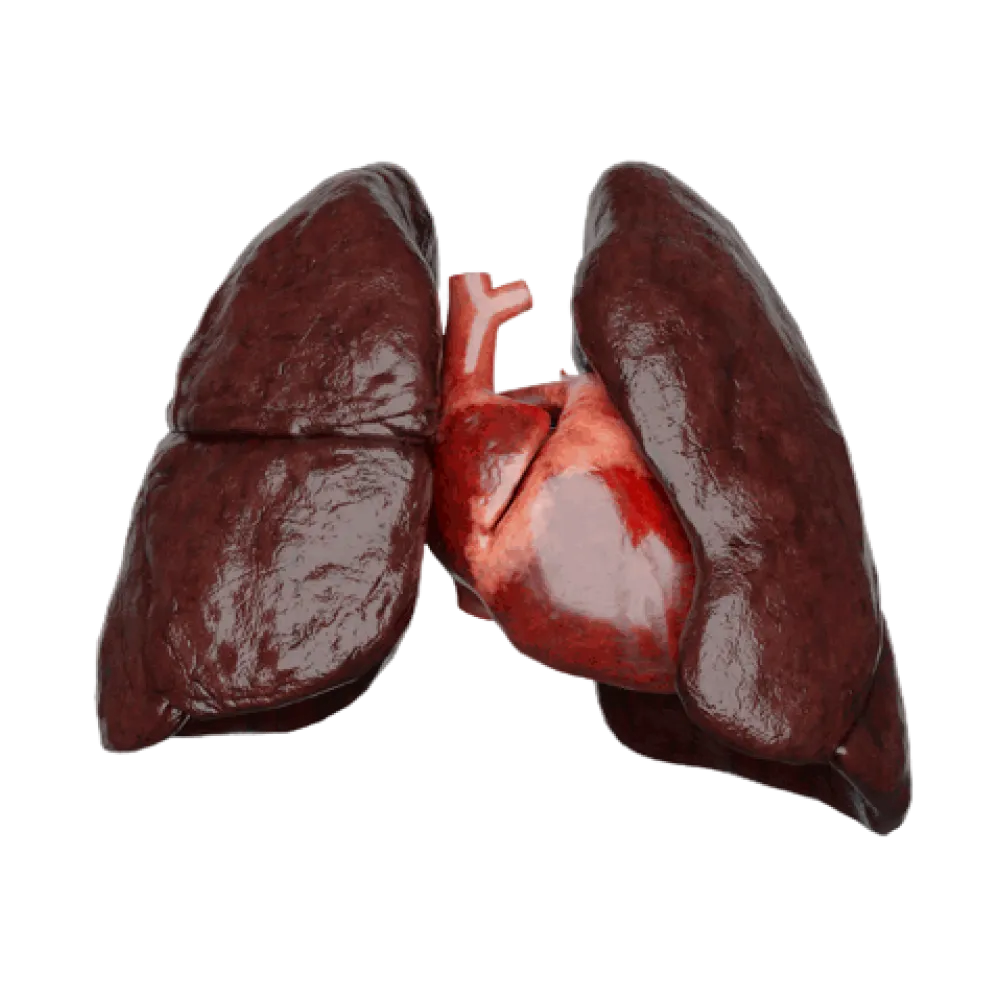


Thoracic vessels anatomy test.
Test your knowledge of thoracic vessels. The test covers the topography of the aorta, pulmonary trunk, azygos and hemiazygos veins, their branches and anastomoses.
1. Which vessels are the only branches of the ascending part of the aorta (pars ascendens aortae)?
-
Brachiocephalic trunk and left common carotid artery.
From the ascending part of the aorta at its bulb, only the right and left coronary arteries arise, supplying the heart.
-
Right and left coronary arteries.
From the ascending part of the aorta at its bulb, only the right and left coronary arteries arise, supplying the heart.
-
Pericardial and mediastinal branches.
From the ascending part of the aorta at its bulb, only the right and left coronary arteries arise, supplying the heart.
-
Bronchial and esophageal arteries.
From the ascending part of the aorta at its bulb, only the right and left coronary arteries arise, supplying the heart.
-
I find it difficult to answer
From the ascending part of the aorta at its bulb, only the right and left coronary arteries arise, supplying the heart.
2. Which major blood vessel is first to branch off the aortic arch (arcus aortae) from right to left?
-
Left subclavian artery.
The branches of the aortic arch from right to left are: brachiocephalic trunk (truncus brachiocephalicus), left common carotid and left subclavian arteries.
-
Left common carotid artery.
The branches of the aortic arch from right to left are: brachiocephalic trunk (truncus brachiocephalicus), left common carotid and left subclavian arteries.
-
Right common carotid artery.
The branches of the aortic arch from right to left are: brachiocephalic trunk (truncus brachiocephalicus), left common carotid and left subclavian arteries.
-
Brachiocephalic trunk.
The branches of the aortic arch from right to left are: brachiocephalic trunk (truncus brachiocephalicus), left common carotid and left subclavian arteries.
-
I find it difficult to answer
The branches of the aortic arch from right to left are: brachiocephalic trunk (truncus brachiocephalicus), left common carotid and left subclavian arteries.
3. At the level of which intercostal space does the internal thoracic artery (a. thoracica interna) divide into its terminal branches?
-
Fourth intercostal space.
The internal thoracic artery divides into the musculophrenic and superior epigastric arteries at the level of the sixth rib cartilage (or sixth intercostal space).
-
Fifth intercostal space.
The internal thoracic artery divides into the musculophrenic and superior epigastric arteries at the level of the sixth rib cartilage (or sixth intercostal space).
-
Sixth intercostal space.
The internal thoracic artery divides into the musculophrenic and superior epigastric arteries at the level of the sixth rib cartilage (or sixth intercostal space).
-
Seventh intercostal space.
The internal thoracic artery divides into the musculophrenic and superior epigastric arteries at the level of the sixth rib cartilage (or sixth intercostal space).
-
I find it difficult to answer
The internal thoracic artery divides into the musculophrenic and superior epigastric arteries at the level of the sixth rib cartilage (or sixth intercostal space).
4. Which of the listed vessels belong to the parietal branches of the thoracic aorta?
-
Upper diaphragmatic and posterior intercostal arteries (III-XI)
The parietal branches of the thoracic aorta include the upper diaphragmatic arteries and 10 pairs (III–XI intercostal and subcostal) of posterior intercostal arteries.
-
Pericardial and mediastinal branches.
The parietal branches of the thoracic aorta include the upper diaphragmatic arteries and 10 pairs (III–XI intercostal and subcostal) of posterior intercostal arteries.
-
Bronchial arteries and subcostal arteries.
The parietal branches of the thoracic aorta include the upper diaphragmatic arteries and 10 pairs (III–XI intercostal and subcostal) of posterior intercostal arteries.
-
Internal thoracic and musculophrenic arteries.
The parietal branches of the thoracic aorta include the upper diaphragmatic arteries and 10 pairs (III–XI intercostal and subcostal) of posterior intercostal arteries.
-
I find it difficult to answer
The parietal branches of the thoracic aorta include the upper diaphragmatic arteries and 10 pairs (III–XI intercostal and subcostal) of posterior intercostal arteries.
5. Into which vessel does the azygos vein (v. azygos) directly flow?
-
Into the superior vena cava
The azygos vein ascends in the posterior mediastinum, forms an arch over the right main bronchus, and drains into the superior vena cava.
-
Into the inferior vena cava
The azygos vein ascends in the posterior mediastinum, forms an arch over the right main bronchus, and drains into the superior vena cava.
-
Into the right atrium
The azygos vein ascends in the posterior mediastinum, forms an arch over the right main bronchus, and drains into the superior vena cava.
-
Into the right brachiocephalic vein.
The azygos vein ascends in the posterior mediastinum, forms an arch over the right main bronchus, and drains into the superior vena cava.
-
I find it difficult to answer
The azygos vein ascends in the posterior mediastinum, forms an arch over the right main bronchus, and drains into the superior vena cava.
6. At the level of which thoracic vertebrae does the hemiazygos vein (v. hemiazygos) usually deviate to the right, crossing the spine to flow into the azygos vein?
-
Th5 - Th6
The hemiazygos vein ascends to the left of the spine and at the level of the seventh-eighth (rarely ninth) thoracic vertebra turns right, entering the azygos vein.
-
Th7 - Th8 (sometimes Th9)
The hemiazygos vein ascends to the left of the spine and at the level of the seventh-eighth (rarely ninth) thoracic vertebra turns right, entering the azygos vein.
-
Th10 - Th11
The hemiazygos vein ascends to the left of the spine and at the level of the seventh-eighth (rarely ninth) thoracic vertebra turns right, entering the azygos vein.
-
Th3 - Th4
The hemiazygos vein ascends to the left of the spine and at the level of the seventh-eighth (rarely ninth) thoracic vertebra turns right, entering the azygos vein.
-
I find it difficult to answer
The hemiazygos vein ascends to the left of the spine and at the level of the seventh-eighth (rarely ninth) thoracic vertebra turns right, entering the azygos vein.
7. How many pulmonary veins (vv. pulmonales) typically enter the left atrium?
-
One.
Usually, four pulmonary veins (two from each lung: superior and inferior) carrying arterial blood enter the left atrium.
-
Two.
Usually, four pulmonary veins (two from each lung: superior and inferior) carrying arterial blood enter the left atrium.
-
Three.
Usually, four pulmonary veins (two from each lung: superior and inferior) carrying arterial blood enter the left atrium.
-
Four.
Usually, four pulmonary veins (two from each lung: superior and inferior) carrying arterial blood enter the left atrium.
-
I find it difficult to answer
Usually, four pulmonary veins (two from each lung: superior and inferior) carrying arterial blood enter the left atrium.
8. Which veinsmerge to form the brachiocephalic vein (v. brachiocephalica)?
-
Internal jugular and external jugular veins.
Each brachiocephalic vein is formed behind the sternoclavicular joint from the merger of the internal jugular and subclavian veins (forming a venous angle).
-
Subclavian and axillary veins.
Each brachiocephalic vein is formed behind the sternoclavicular joint from the merger of the internal jugular and subclavian veins (forming a venous angle).
-
Internal jugular and subclavian veins.
Each brachiocephalic vein is formed behind the sternoclavicular joint from the merger of the internal jugular and subclavian veins (forming a venous angle).
-
Superior vena cava and azygos veins.
Each brachiocephalic vein is formed behind the sternoclavicular joint from the merger of the internal jugular and subclavian veins (forming a venous angle).
-
I find it difficult to answer
Each brachiocephalic vein is formed behind the sternoclavicular joint from the merger of the internal jugular and subclavian veins (forming a venous angle).
9. From which artery do the first and second posterior intercostal arteries (aa. intercostales posteriores I et II) originate?
-
From the internal thoracic artery
The first and second posterior intercostal arteries arise from the supreme intercostal artery (a. intercostalis suprema), which is a branch of the costocervical trunk.
-
From the thoracic aorta.
The first and second posterior intercostal arteries arise from the supreme intercostal artery (a. intercostalis suprema), which is a branch of the costocervical trunk.
-
From the transverse cervical artery.
The first and second posterior intercostal arteries arise from the supreme intercostal artery (a. intercostalis suprema), which is a branch of the costocervical trunk.
-
From the supreme intercostal artery
The first and second posterior intercostal arteries arise from the supreme intercostal artery (a. intercostalis suprema), which is a branch of the costocervical trunk.
-
I find it difficult to answer
The first and second posterior intercostal arteries arise from the supreme intercostal artery (a. intercostalis suprema), which is a branch of the costocervical trunk.
10. Into where does the thoracic duct (ductus thoracicus), which collects lymph from most of the body, typically drain?
-
Into the left venous angle
The thoracic lymphatic duct drains into the left venous angle (the junction of the left internal jugular and left subclavian veins).
-
Into the right venous angle
The thoracic lymphatic duct drains into the left venous angle (the junction of the left internal jugular and left subclavian veins).
-
Into the superior vena cava
The thoracic lymphatic duct drains into the left venous angle (the junction of the left internal jugular and left subclavian veins).
-
Into the azygos vein.
The thoracic lymphatic duct drains into the left venous angle (the junction of the left internal jugular and left subclavian veins).
-
I find it difficult to answer
The thoracic lymphatic duct drains into the left venous angle (the junction of the left internal jugular and left subclavian veins).
11. At what anatomical landmark does the pulmonary trunk (truncus pulmonalis) divide into the right and left pulmonary arteries?
-
At the level of the jugular notch of the sternum.
The bifurcation of the pulmonary trunk is located below the aortic arch at the level of the intervertebral disc between the fourth and fifth thoracic vertebrae.
-
Below the aortic arch at the Th4-Th5 level.
The bifurcation of the pulmonary trunk is located below the aortic arch at the level of the intervertebral disc between the fourth and fifth thoracic vertebrae.
-
At the level of the sternal angle (Th2).
The bifurcation of the pulmonary trunk is located below the aortic arch at the level of the intervertebral disc between the fourth and fifth thoracic vertebrae.
-
At the hilum of the lungs at the Th6-Th7 level.
The bifurcation of the pulmonary trunk is located below the aortic arch at the level of the intervertebral disc between the fourth and fifth thoracic vertebrae.
-
I find it difficult to answer
The bifurcation of the pulmonary trunk is located below the aortic arch at the level of the intervertebral disc between the fourth and fifth thoracic vertebrae.
12. Which vessels belong to the visceral branches of the descending thoracic aorta?
-
Posterior intercostal and subcostal arteries.
The visceral branches of the thoracic aorta supply mediastinal organs and include bronchial, esophageal, pericardial, and mediastinal branches.
-
Pericardiacophrenic and superior epigastric arteries.
The visceral branches of the thoracic aorta supply mediastinal organs and include bronchial, esophageal, pericardial, and mediastinal branches.
-
Esophageal, bronchial, and mediastinal branches.
The visceral branches of the thoracic aorta supply mediastinal organs and include bronchial, esophageal, pericardial, and mediastinal branches.
-
Musculophrenic and superior diaphragmatic arteries.
The visceral branches of the thoracic aorta supply mediastinal organs and include bronchial, esophageal, pericardial, and mediastinal branches.
-
I find it difficult to answer
The visceral branches of the thoracic aorta supply mediastinal organs and include bronchial, esophageal, pericardial, and mediastinal branches.
13. What is the typical topographical position of the internal thoracic artery (a. thoracica interna) in relation to the structures of the thoracic wall?
-
Anterior to the costal cartilages, underneath the pectoralis major muscle.
The internal thoracic artery runs parallel to the edge of the sternum on the posterior surface of the costal cartilages, positioned anterior to the transverse thoracic muscle.
-
Between the external and internal intercostal muscles.
The internal thoracic artery runs parallel to the edge of the sternum on the posterior surface of the costal cartilages, positioned anterior to the transverse thoracic muscle.
-
Along the inferior edge of the rib in the costal groove.
The internal thoracic artery runs parallel to the edge of the sternum on the posterior surface of the costal cartilages, positioned anterior to the transverse thoracic muscle.
-
Behind the costal cartilages, in front of the transverse thoracic muscle and intrathoracic fascia.
The internal thoracic artery runs parallel to the edge of the sternum on the posterior surface of the costal cartilages, positioned anterior to the transverse thoracic muscle.
-
I find it difficult to answer
The internal thoracic artery runs parallel to the edge of the sternum on the posterior surface of the costal cartilages, positioned anterior to the transverse thoracic muscle.
14. At what skeleton-level landmark is the superior vena cava (v. cava superior) formed by the union of the brachiocephalic veins?
-
Behind the junction of the right first rib cartilage with the sternum.
The superior vena cava is formed by the confluence of the right and left brachiocephalic veins behind the right sternoclavicular joint and the cartilage of the first rib.
-
At the level of the sternal angle (junction of the second rib).
The superior vena cava is formed by the confluence of the right and left brachiocephalic veins behind the right sternoclavicular joint and the cartilage of the first rib.
-
At the level of the jugular notch.
The superior vena cava is formed by the confluence of the right and left brachiocephalic veins behind the right sternoclavicular joint and the cartilage of the first rib.
-
At the level of the upper edge of the right third rib.
The superior vena cava is formed by the confluence of the right and left brachiocephalic veins behind the right sternoclavicular joint and the cartilage of the first rib.
-
I find it difficult to answer
The superior vena cava is formed by the confluence of the right and left brachiocephalic veins behind the right sternoclavicular joint and the cartilage of the first rib.
15. How are the elements of the neurovascular bundle arranged in a typical intercostal space (in the costal groove) from top to bottom?
-
Artery, vein, nerve
In the costal groove (sulcus costae), structures are arranged from top to bottom: intercostal vein, artery, nerve (VAN - Vein, Artery, Nerve).
-
Vein, artery, nerve
In the costal groove (sulcus costae), structures are arranged from top to bottom: intercostal vein, artery, nerve (VAN - Vein, Artery, Nerve).
-
Nerve, artery, vein
In the costal groove (sulcus costae), structures are arranged from top to bottom: intercostal vein, artery, nerve (VAN - Vein, Artery, Nerve).
-
Vein, nerve, artery.
In the costal groove (sulcus costae), structures are arranged from top to bottom: intercostal vein, artery, nerve (VAN - Vein, Artery, Nerve).
-
I find it difficult to answer
In the costal groove (sulcus costae), structures are arranged from top to bottom: intercostal vein, artery, nerve (VAN - Vein, Artery, Nerve).
16. How is the right pulmonary artery (a. pulmonalis dextra) positioned relative to the ascending aorta and the superior vena cava?
-
Anterior to both structures.
The right pulmonary artery travels horizontally behind the ascending aorta and superior vena cava as it heads toward the hilum of the right lung.
-
Behind the ascending aorta but in front of the superior vena cava.
The right pulmonary artery travels horizontally behind the ascending aorta and superior vena cava as it heads toward the hilum of the right lung.
-
Behind the ascending aorta and superior vena cava.
The right pulmonary artery travels horizontally behind the ascending aorta and superior vena cava as it heads toward the hilum of the right lung.
-
Above the aortic arch.
The right pulmonary artery travels horizontally behind the ascending aorta and superior vena cava as it heads toward the hilum of the right lung.
-
I find it difficult to answer
The right pulmonary artery travels horizontally behind the ascending aorta and superior vena cava as it heads toward the hilum of the right lung.
17. From where do the left bronchial arteries (aa. bronchiales sinistrae) typically originate?
-
Directly from the anterior surface of the thoracic aorta.
The left bronchial arteries (usually two) branch directly from the thoracic aorta and proceed towards the hilum of the left lung.
-
From the left internal thoracic artery.
The left bronchial arteries (usually two) branch directly from the thoracic aorta and proceed towards the hilum of the left lung.
-
From the aortic arch.
The left bronchial arteries (usually two) branch directly from the thoracic aorta and proceed towards the hilum of the left lung.
-
From the left pulmonary artery.
The left bronchial arteries (usually two) branch directly from the thoracic aorta and proceed towards the hilum of the left lung.
-
I find it difficult to answer
The left bronchial arteries (usually two) branch directly from the thoracic aorta and proceed towards the hilum of the left lung.
18. At the level of which vertebra does the inferior vena cava (v. cava inferior) pass through the central tendon of the diaphragm into the thoracic cavity?
-
Th12
The opening for the inferior vena cava in the diaphragm is positioned high, projecting at the level of the body of the eighth thoracic vertebra (Th8).
-
Th10
The opening for the inferior vena cava in the diaphragm is positioned high, projecting at the level of the body of the eighth thoracic vertebra (Th8).
-
L1
The opening for the inferior vena cava in the diaphragm is positioned high, projecting at the level of the body of the eighth thoracic vertebra (Th8).
-
Th8
The opening for the inferior vena cava in the diaphragm is positioned high, projecting at the level of the body of the eighth thoracic vertebra (Th8).
-
I find it difficult to answer
The opening for the inferior vena cava in the diaphragm is positioned high, projecting at the level of the body of the eighth thoracic vertebra (Th8).
19. What structures are connected by the ligamentum arteriosum in an adult?
-
The left and right pulmonary arteries
The ligamentum arteriosum (obliterated ductus arteriosus) connects the site of the division of the pulmonary trunk (or the beginning of the left pulmonary artery) with the concave part of the aortic arch.
-
The beginning of the left pulmonary artery and the concave surface of the aortic arch
The ligamentum arteriosum (obliterated ductus arteriosus) connects the site of the division of the pulmonary trunk (or the beginning of the left pulmonary artery) with the concave part of the aortic arch.
-
Ascendant aorta and the superior vena cava
The ligamentum arteriosum (obliterated ductus arteriosus) connects the site of the division of the pulmonary trunk (or the beginning of the left pulmonary artery) with the concave part of the aortic arch.
-
Pulmonary trunk and the left auricle of the heart
The ligamentum arteriosum (obliterated ductus arteriosus) connects the site of the division of the pulmonary trunk (or the beginning of the left pulmonary artery) with the concave part of the aortic arch.
-
I find it difficult to answer
The ligamentum arteriosum (obliterated ductus arteriosus) connects the site of the division of the pulmonary trunk (or the beginning of the left pulmonary artery) with the concave part of the aortic arch.
20. Where does the blood from the anterior intercostal veins (vv. intercostales anteriores) of the six upper intercostal spaces drain into?
-
Into the azygos vein.
The anterior intercostal veins of the upper intercostal spaces drain into the internal thoracic veins (vv. thoracicae internae), which accompany the arteries of the same name.
-
Into the hemiazygos vein
The anterior intercostal veins of the upper intercostal spaces drain into the internal thoracic veins (vv. thoracicae internae), which accompany the arteries of the same name.
-
Into the internal thoracic veins
The anterior intercostal veins of the upper intercostal spaces drain into the internal thoracic veins (vv. thoracicae internae), which accompany the arteries of the same name.
-
Into the lateral thoracic vein
The anterior intercostal veins of the upper intercostal spaces drain into the internal thoracic veins (vv. thoracicae internae), which accompany the arteries of the same name.
-
I find it difficult to answer
The anterior intercostal veins of the upper intercostal spaces drain into the internal thoracic veins (vv. thoracicae internae), which accompany the arteries of the same name.
Retake this quiz?
Your current progress will be reset.