1/20

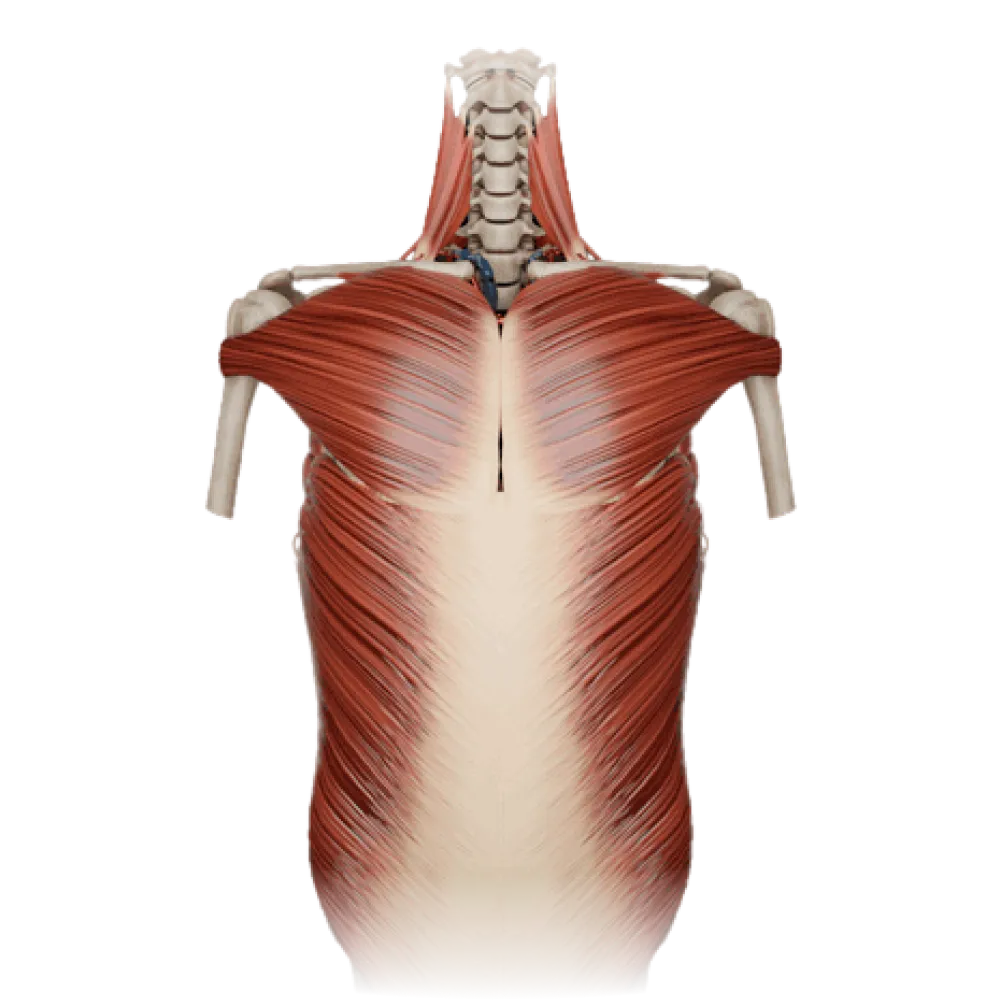
Test on the anatomy of the connections of the thoracic cage.
Evaluate your knowledge of the anatomy of the thoracic cage connections. The test checks the joints, ligaments, and cartilages connecting the ribs to the sternum and vertebrae.
1. What articular surfaces form the joint of the rib head in ribs II-X?
-
Articular surface of the rib head and full costal facet on the vertebral body.
The head of ribs 2-10 articulates with the demifacets of two adjacent vertebrae.
-
Articular surface of the rib head and upper and lower costal facets of adjacent vertebrae.
The head of ribs 2-10 articulates with the demifacets of two adjacent vertebrae.
-
Articular surface of the rib tubercle and costal facet of the transverse process.
The head of ribs 2-10 articulates with the demifacets of two adjacent vertebrae.
-
Articular surface of the rib neck and vertebral body.
The head of ribs 2-10 articulates with the demifacets of two adjacent vertebrae.
-
I find it difficult to answer
The head of ribs 2-10 articulates with the demifacets of two adjacent vertebrae.
2. Which ribs lack the intraarticular ligament of the rib head?
-
Only the first rib.
Ribs I, XI, and XII articulate with complete facets on the vertebral bodies, thus lacking a crest of the head and intraarticular ligament.
-
Ribs VIII, IX, and X.
Ribs I, XI, and XII articulate with complete facets on the vertebral bodies, thus lacking a crest of the head and intraarticular ligament.
-
Ribs X, XI, and XII.
Ribs I, XI, and XII articulate with complete facets on the vertebral bodies, thus lacking a crest of the head and intraarticular ligament.
-
Ribs I, XI, and XII.
Ribs I, XI, and XII articulate with complete facets on the vertebral bodies, thus lacking a crest of the head and intraarticular ligament.
-
I find it difficult to answer
Ribs I, XI, and XII articulate with complete facets on the vertebral bodies, thus lacking a crest of the head and intraarticular ligament.
3. With which structures does the rib tubercle articulate to form the costotransverse joint?
-
With the body of the overlying vertebra.
The costotransverse joint is formed by the articular surface of the rib tubercle and the costal facet of the transverse process.
-
With the spinous process of the corresponding vertebra.
The costotransverse joint is formed by the articular surface of the rib tubercle and the costal facet of the transverse process.
-
With the transverse process of the corresponding vertebra.
The costotransverse joint is formed by the articular surface of the rib tubercle and the costal facet of the transverse process.
-
With the articular processes of adjacent vertebrae.
The costotransverse joint is formed by the articular surface of the rib tubercle and the costal facet of the transverse process.
-
I find it difficult to answer
The costotransverse joint is formed by the articular surface of the rib tubercle and the costal facet of the transverse process.
4. Which rib connects to the sternum via a synchondrosis (without forming a true joint)?
-
First rib.
The cartilage of the first rib fuses with the sternum, creating a permanent hyaline synchondrosis.
-
Second rib.
The cartilage of the first rib fuses with the sternum, creating a permanent hyaline synchondrosis.
-
Seventh rib.
The cartilage of the first rib fuses with the sternum, creating a permanent hyaline synchondrosis.
-
Tenth rib.
The cartilage of the first rib fuses with the sternum, creating a permanent hyaline synchondrosis.
-
I find it difficult to answer
The cartilage of the first rib fuses with the sternum, creating a permanent hyaline synchondrosis.
5. Which sternocostal joint consistently contains an intraarticular sternocostal ligament?
-
In the joint of rib I.
The intraarticular ligament of the 2nd rib attaches to the rib cartilage and the angle of the sternum, dividing the joint cavity into two parts.
-
In the joint of rib V.
The intraarticular ligament of the 2nd rib attaches to the rib cartilage and the angle of the sternum, dividing the joint cavity into two parts.
-
In the joint of rib VII.
The intraarticular ligament of the 2nd rib attaches to the rib cartilage and the angle of the sternum, dividing the joint cavity into two parts.
-
In the joint of rib II.
The intraarticular ligament of the 2nd rib attaches to the rib cartilage and the angle of the sternum, dividing the joint cavity into two parts.
-
I find it difficult to answer
The intraarticular ligament of the 2nd rib attaches to the rib cartilage and the angle of the sternum, dividing the joint cavity into two parts.
6. Which ligament reinforces the capsule of the rib head joint from the outside (anteriorly)?
-
Radiate ligament of the head of the rib.
The radiate ligament of the head of the rib fans out from the rib head to the bodies of adjacent vertebrae and to the intervertebral disc.
-
Intraarticular ligament of the head of the rib.
The radiate ligament of the head of the rib fans out from the rib head to the bodies of adjacent vertebrae and to the intervertebral disc.
-
Superior costotransverse ligament.
The radiate ligament of the head of the rib fans out from the rib head to the bodies of adjacent vertebrae and to the intervertebral disc.
-
Lateral costotransverse ligament.
The radiate ligament of the head of the rib fans out from the rib head to the bodies of adjacent vertebrae and to the intervertebral disc.
-
I find it difficult to answer
The radiate ligament of the head of the rib fans out from the rib head to the bodies of adjacent vertebrae and to the intervertebral disc.
7. What anatomical structure is formed by the radiate sternocostal ligaments on the anterior surface of the sternum?
-
Sterno-pericardiac ligament.
The radiate sternocostal ligaments intertwine with the periosteum of the sternum, forming a dense sternal membrane.
-
Internal intercostal membrane.
The radiate sternocostal ligaments intertwine with the periosteum of the sternum, forming a dense sternal membrane.
-
Sternal membrane.
The radiate sternocostal ligaments intertwine with the periosteum of the sternum, forming a dense sternal membrane.
-
External intercostal membrane.
The radiate sternocostal ligaments intertwine with the periosteum of the sternum, forming a dense sternal membrane.
-
I find it difficult to answer
The radiate sternocostal ligaments intertwine with the periosteum of the sternum, forming a dense sternal membrane.
8. Which ribs lack costotransverse joints?
-
Ribs I and II.
Ribs 11 and 12 lack articular surfaces on their tubercles, and thus do not form costotransverse joints.
-
Ribs VIII, IX, and X.
Ribs 11 and 12 lack articular surfaces on their tubercles, and thus do not form costotransverse joints.
-
Only rib XII.
Ribs 11 and 12 lack articular surfaces on their tubercles, and thus do not form costotransverse joints.
-
Ribs XI and XII.
Ribs 11 and 12 lack articular surfaces on their tubercles, and thus do not form costotransverse joints.
-
I find it difficult to answer
Ribs 11 and 12 lack articular surfaces on their tubercles, and thus do not form costotransverse joints.
9. To which type of connections does the symphysis of the sternal manubrium belong?
-
Synovial connection (diarthrosis).
The symphysis of the sternal manubrium is a transitional connection form containing a fibrocartilaginous disc, often with a narrow slit inside.
-
Cartilaginous connection (amphiarthrosis).
The symphysis of the sternal manubrium is a transitional connection form containing a fibrocartilaginous disc, often with a narrow slit inside.
-
Bony connection (synostosis).
The symphysis of the sternal manubrium is a transitional connection form containing a fibrocartilaginous disc, often with a narrow slit inside.
-
Fibrous connection (syndesmosis).
The symphysis of the sternal manubrium is a transitional connection form containing a fibrocartilaginous disc, often with a narrow slit inside.
-
I find it difficult to answer
The symphysis of the sternal manubrium is a transitional connection form containing a fibrocartilaginous disc, often with a narrow slit inside.
10. What is the name of the ligament extending from the rib neck to the transverse process of the overlying vertebra?
-
Superior costotransverse ligament.
The superior costotransverse ligament originates from the superior surface of the rib neck and attaches to the transverse process of the overlying vertebra.
-
Lateral costotransverse ligament.
The superior costotransverse ligament originates from the superior surface of the rib neck and attaches to the transverse process of the overlying vertebra.
-
Radiate ligament of the head of the rib.
The superior costotransverse ligament originates from the superior surface of the rib neck and attaches to the transverse process of the overlying vertebra.
-
Intraarticular ligament of the head of the rib.
The superior costotransverse ligament originates from the superior surface of the rib neck and attaches to the transverse process of the overlying vertebra.
-
I find it difficult to answer
The superior costotransverse ligament originates from the superior surface of the rib neck and attaches to the transverse process of the overlying vertebra.
11. With which joint does the costotransverse joint functionally combine during thoracic cage movements?
-
With the intervertebral symphysis.
Joint of the head of a rib and costotransverse joint function together, forming a single axis of rotation through the rib neck.
-
With the sternocostal joint of the same rib.
Joint of the head of a rib and costotransverse joint function together, forming a single axis of rotation through the rib neck.
-
With the joint of the head of the same rib.
Joint of the head of a rib and costotransverse joint function together, forming a single axis of rotation through the rib neck.
-
With the zygapophyseal joint.
Joint of the head of a rib and costotransverse joint function together, forming a single axis of rotation through the rib neck.
-
I find it difficult to answer
Joint of the head of a rib and costotransverse joint function together, forming a single axis of rotation through the rib neck.
12. Intercartilaginous joints are most commonly formed between the cartilages of:
-
Ribs I-III.
The cartilages of ribs 7, 8, and 9 connect to each other via connective tissue or form intercartilaginous synovial joints.
-
Ribs IV-V.
The cartilages of ribs 7, 8, and 9 connect to each other via connective tissue or form intercartilaginous synovial joints.
-
Ribs XI-XII.
The cartilages of ribs 7, 8, and 9 connect to each other via connective tissue or form intercartilaginous synovial joints.
-
Ribs VII-IX.
The cartilages of ribs 7, 8, and 9 connect to each other via connective tissue or form intercartilaginous synovial joints.
-
I find it difficult to answer
The cartilages of ribs 7, 8, and 9 connect to each other via connective tissue or form intercartilaginous synovial joints.
13. How are the sternocostal joints (ribs II-VII) categorized based on the shape of their articular surfaces?
-
Ball-and-socket joints.
Sternocostal joints have flat articular surfaces and possess limited mobility.
-
Planar joints
Sternocostal joints have flat articular surfaces and possess limited mobility.
-
Hinge joints.
Sternocostal joints have flat articular surfaces and possess limited mobility.
-
Ellipsoid joints.
Sternocostal joints have flat articular surfaces and possess limited mobility.
-
I find it difficult to answer
Sternocostal joints have flat articular surfaces and possess limited mobility.
14. Where does the lateral costotransverse ligament attach?
-
Between the rib tubercle and the end of the transverse process.
The lateral costotransverse ligament connects the apex of the transverse process to the posterior surface of the rib tubercle.
-
Between the rib neck and the vertebral body.
The lateral costotransverse ligament connects the apex of the transverse process to the posterior surface of the rib tubercle.
-
Between the rib head and the intervertebral disc.
The lateral costotransverse ligament connects the apex of the transverse process to the posterior surface of the rib tubercle.
-
Between the cartilages of adjacent ribs.
The lateral costotransverse ligament connects the apex of the transverse process to the posterior surface of the rib tubercle.
-
I find it difficult to answer
The lateral costotransverse ligament connects the apex of the transverse process to the posterior surface of the rib tubercle.
15. Which structure covers the intercostal spaces from the rib angles to the spine?
-
External intercostal membrane.
The internal intercostal membrane continues the internal intercostal muscles posteriorly up to the spine.
-
Transversalis fascia of the thorax.
The internal intercostal membrane continues the internal intercostal muscles posteriorly up to the spine.
-
Internal intercostal membrane.
The internal intercostal membrane continues the internal intercostal muscles posteriorly up to the spine.
-
Sternal membrane
The internal intercostal membrane continues the internal intercostal muscles posteriorly up to the spine.
-
I find it difficult to answer
The internal intercostal membrane continues the internal intercostal muscles posteriorly up to the spine.
16. The synchondrosis of the xiphoid process in the elderly typically undergoes:
-
Conversion into a symphysis.
With age, the cartilaginous connection between the body of the sternum and the xiphoid process often ossifies, becoming a synostosis.
-
Ossification (synostosis).
With age, the cartilaginous connection between the body of the sternum and the xiphoid process often ossifies, becoming a synostosis.
-
Resorption.
With age, the cartilaginous connection between the body of the sternum and the xiphoid process often ossifies, becoming a synostosis.
-
Formation of a synovial joint.
With age, the cartilaginous connection between the body of the sternum and the xiphoid process often ossifies, becoming a synostosis.
-
I find it difficult to answer
With age, the cartilaginous connection between the body of the sternum and the xiphoid process often ossifies, becoming a synostosis.
17. The external intercostal membrane is located in the intercostal spaces from:
-
Angles of the ribs to the spine.
The external intercostal membrane replaces the external intercostal muscles in the anterior portions of the intercostal spaces.
-
From rib head to rib angles.
The external intercostal membrane replaces the external intercostal muscles in the anterior portions of the intercostal spaces.
-
From the mid-axillary line to the scapular line.
The external intercostal membrane replaces the external intercostal muscles in the anterior portions of the intercostal spaces.
-
From the rib cartilages to the sternum.
The external intercostal membrane replaces the external intercostal muscles in the anterior portions of the intercostal spaces.
-
I find it difficult to answer
The external intercostal membrane replaces the external intercostal muscles in the anterior portions of the intercostal spaces.
18. The axis of rotation of the rib during respiratory movements passes through:
-
Joint of the head of a rib and rib tubercle.
The movements of the rib occur around the axis passing through the center of the joint of head of rib and the costotransverse joint.
-
Sternocostal joint and interchondral joint.
The movements of the rib occur around the axis passing through the center of the joint of head of rib and the costotransverse joint.
-
Joint of head of rib and sternocostal joint.
The movements of the rib occur around the axis passing through the center of the joint of head of rib and the costotransverse joint.
-
Rib angle and xiphoid process.
The movements of the rib occur around the axis passing through the center of the joint of head of rib and the costotransverse joint.
-
I find it difficult to answer
The movements of the rib occur around the axis passing through the center of the joint of head of rib and the costotransverse joint.
19. What anatomical structure does the cartilage of rib VII articulate with?
-
Only with the manubrium of the sternum.
The cartilage of the 7th rib attaches to the lower part of the body of the sternum and the base of the xiphoid process.
-
With the body of the sternum and xiphoid process.
The cartilage of the 7th rib attaches to the lower part of the body of the sternum and the base of the xiphoid process.
-
Only with the cartilage of rib VI.
The cartilage of the 7th rib attaches to the lower part of the body of the sternum and the base of the xiphoid process.
-
With the free ends of ribs XI and XII.
The cartilage of the 7th rib attaches to the lower part of the body of the sternum and the base of the xiphoid process.
-
I find it difficult to answer
The cartilage of the 7th rib attaches to the lower part of the body of the sternum and the base of the xiphoid process.
20. What structures form the costal arch (arcus costalis)?
-
Ribs I-VII.
The costal arch is formed by the cartilages of ribs 7-10, which are sequentially connected to each other.
-
Ribs XI-XII.
The costal arch is formed by the cartilages of ribs 7-10, which are sequentially connected to each other.
-
Cartilages of ribs VII-X.
The costal arch is formed by the cartilages of ribs 7-10, which are sequentially connected to each other.
-
Ribs I-X.
The costal arch is formed by the cartilages of ribs 7-10, which are sequentially connected to each other.
-
I find it difficult to answer
The costal arch is formed by the cartilages of ribs 7-10, which are sequentially connected to each other.
Retake this quiz?
Your current progress will be reset.