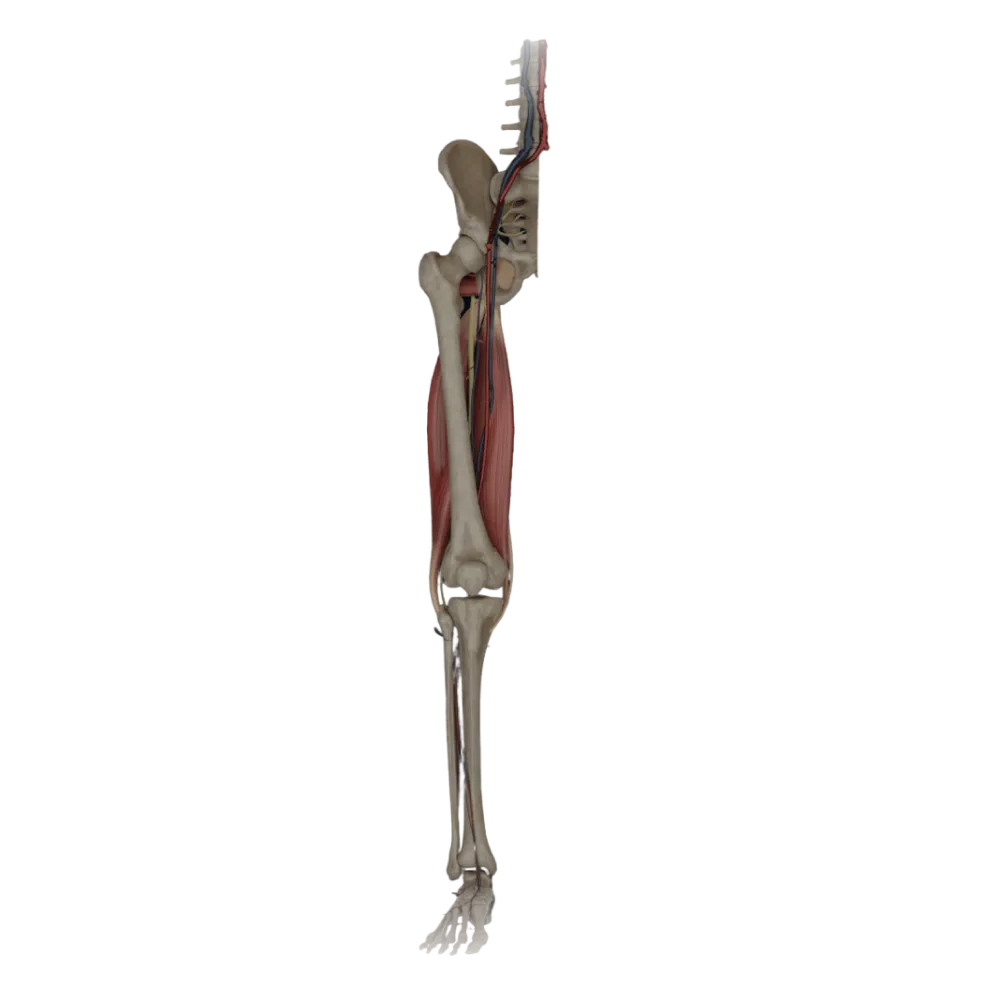
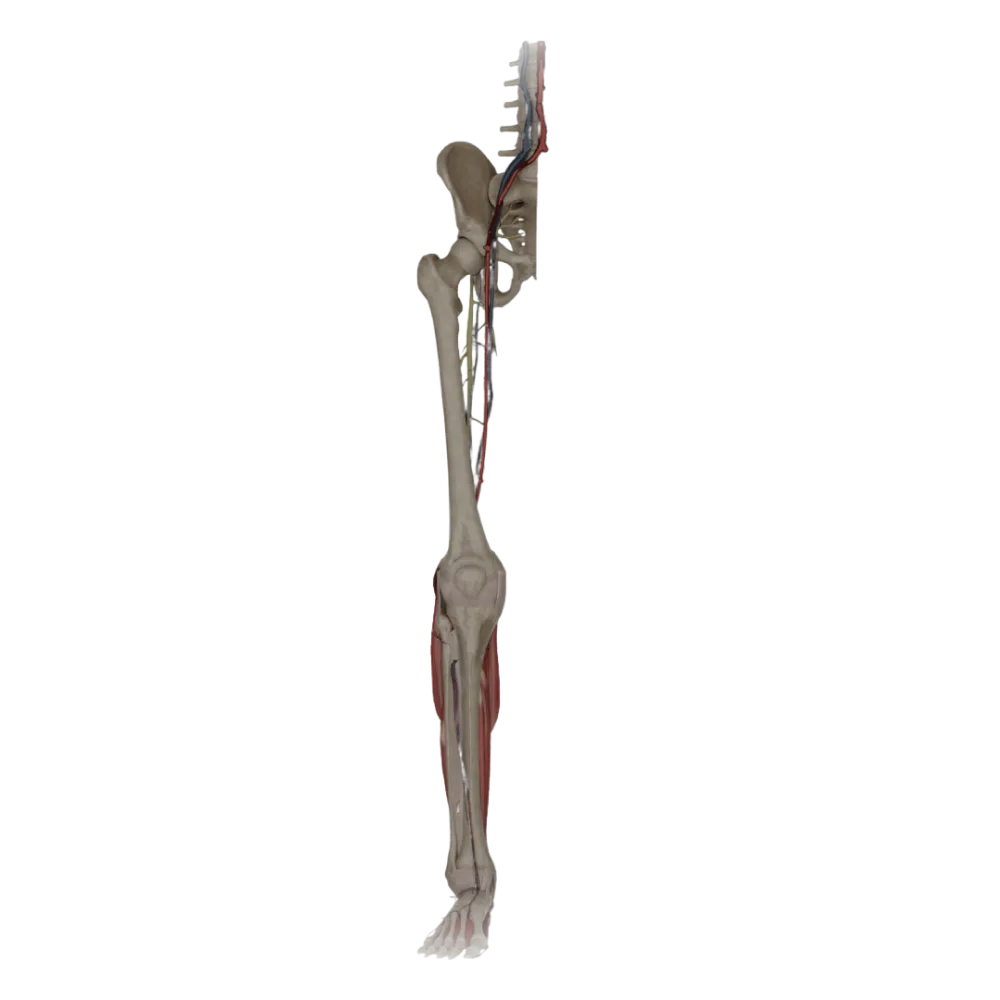
Sciatic nerve anatomy test
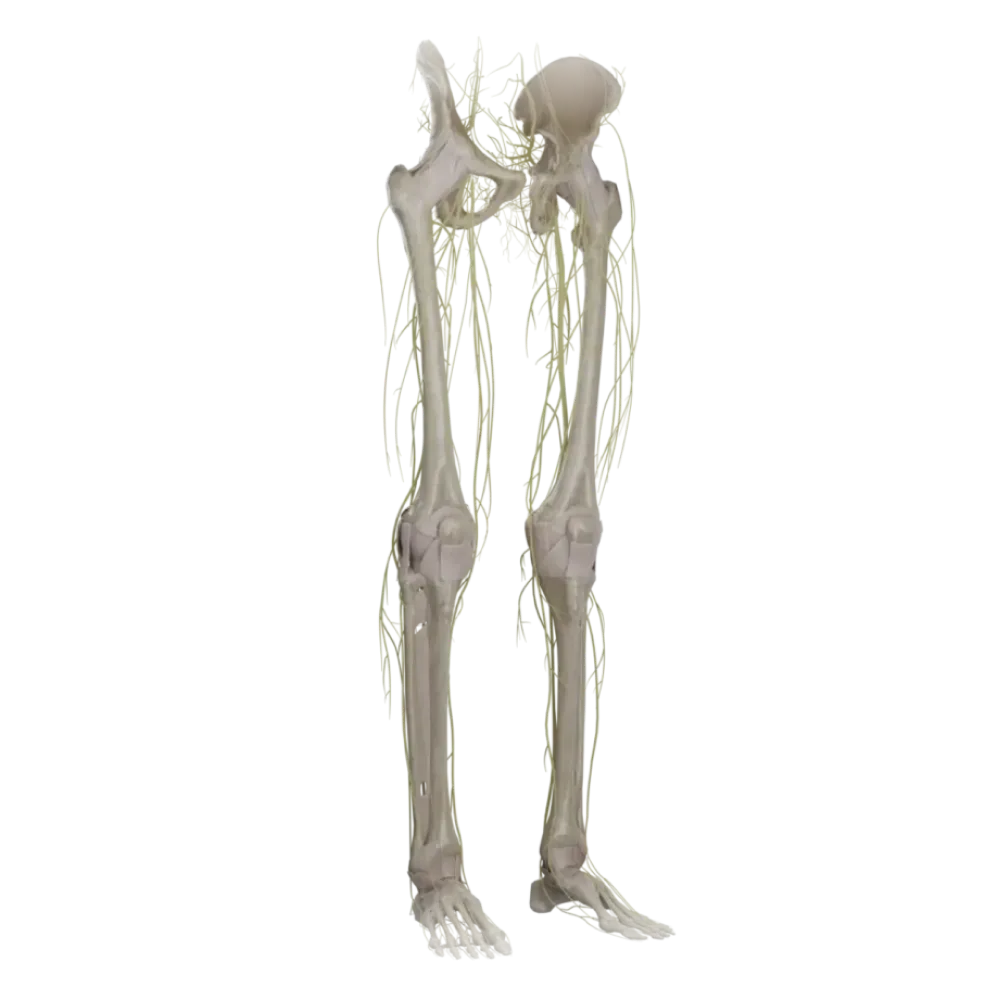
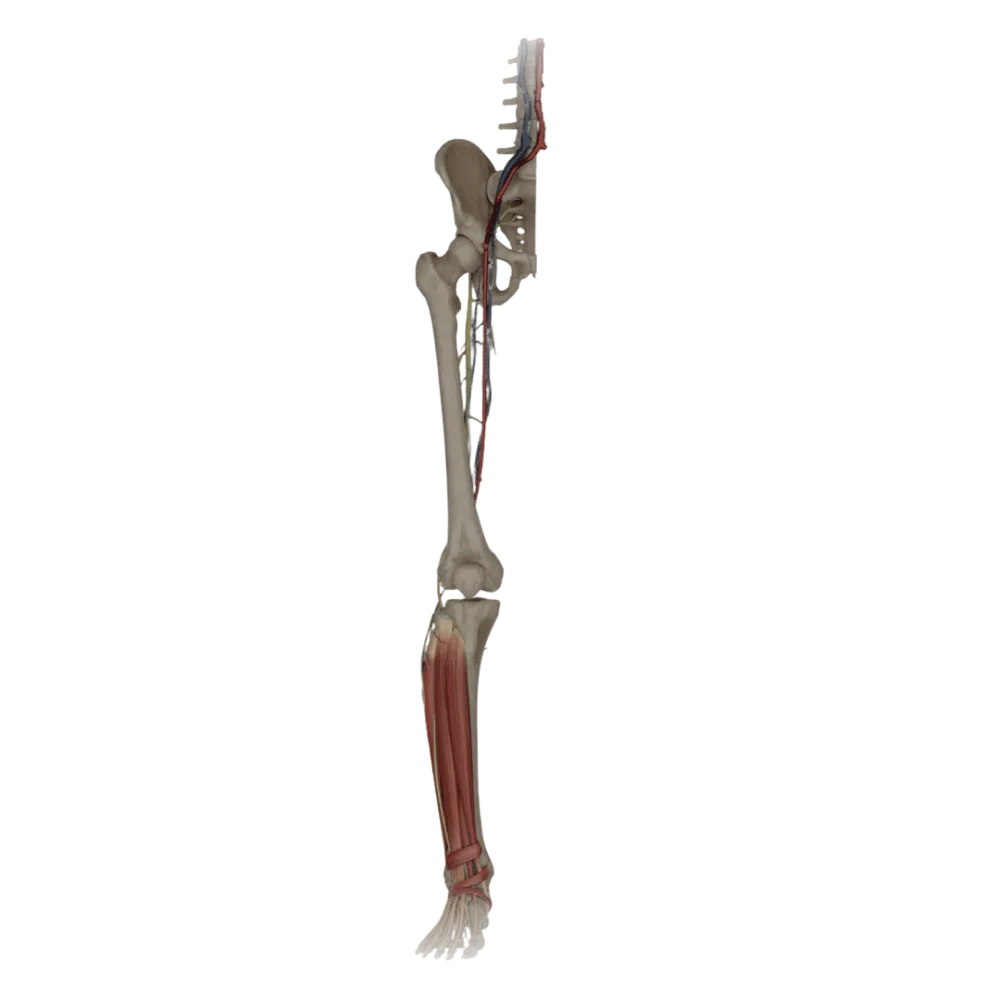
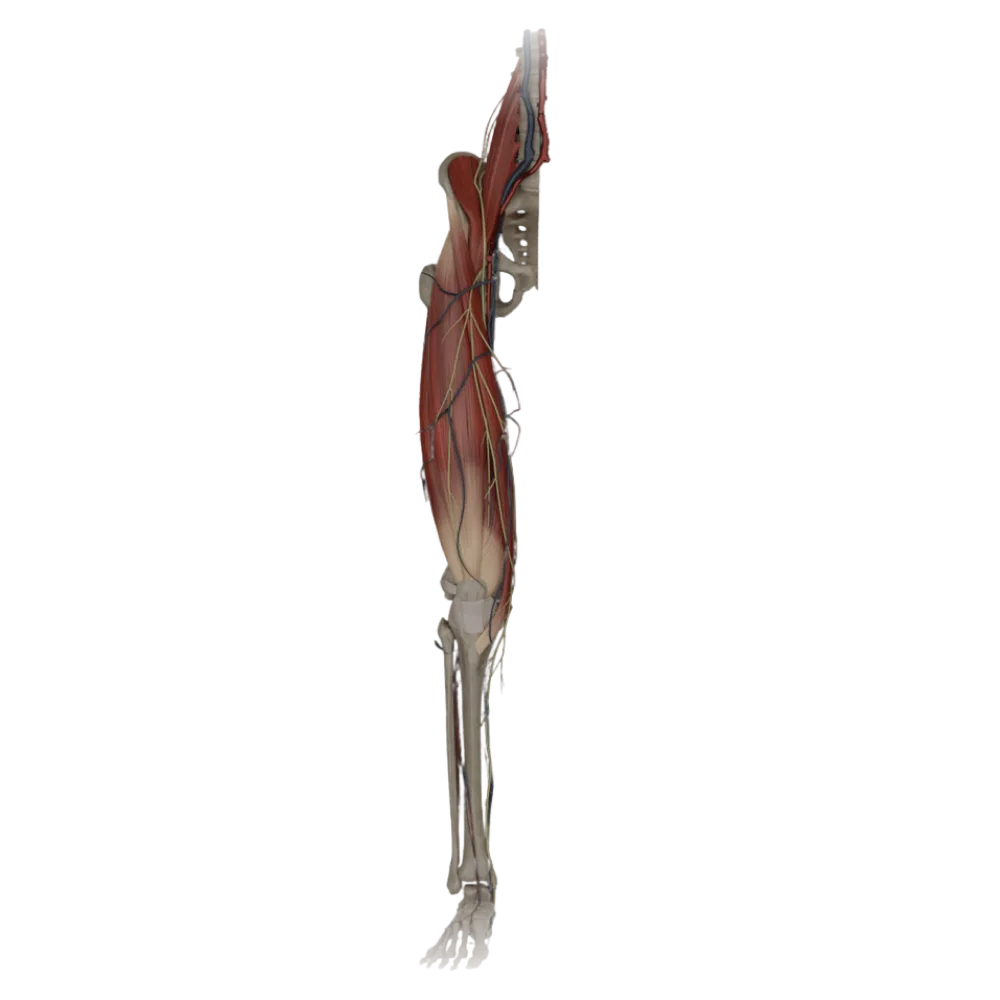
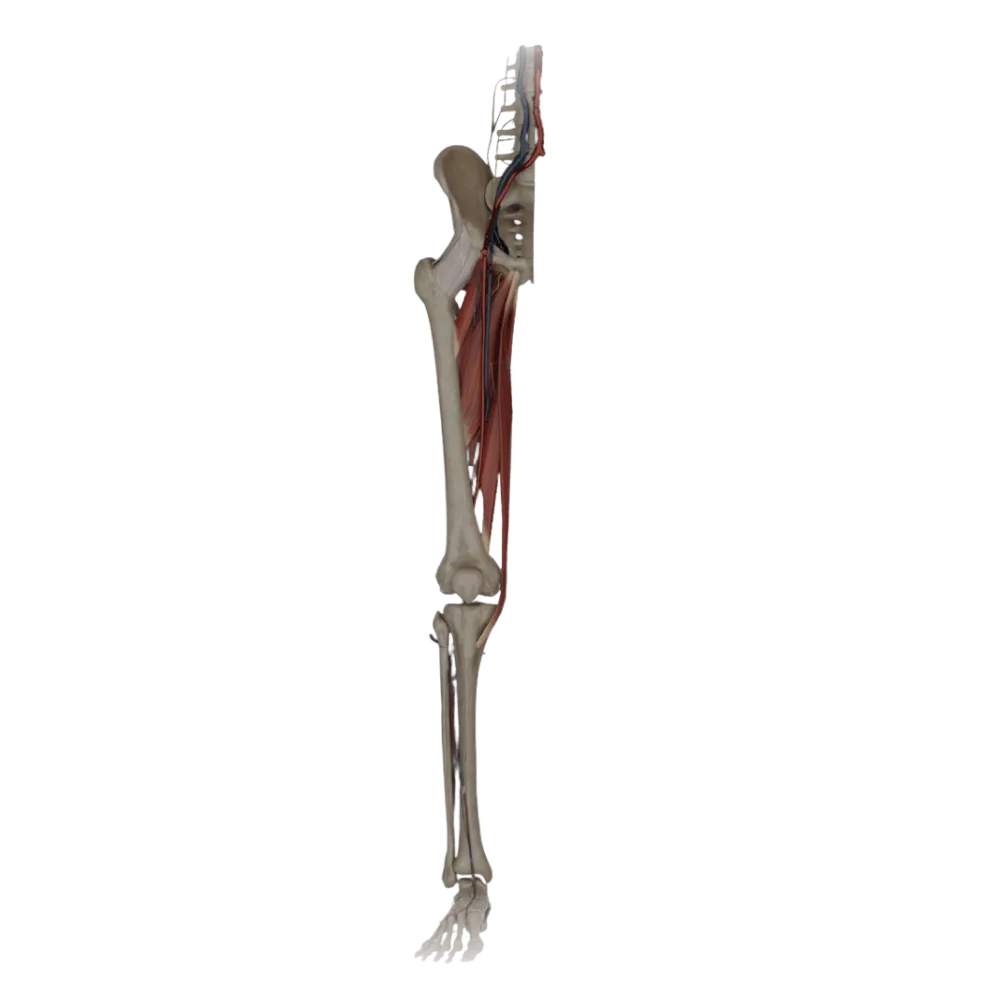
Evaluate the knowledge of sciatic nerve anatomy. The test examines its topography, branches, areas of blood supply, and innervation concerning the thigh and leg.
1/20
bold
text
1. Which plexus does the sciatic nerve branch from?
-
Lumbar
The sciatic nerve is the largest branch of the sacral plexus.
-
Coccygeal
The sciatic nerve is the largest branch of the sacral plexus.
-
Sacral
The sciatic nerve is the largest branch of the sacral plexus.
-
Pudendal
The sciatic nerve is the largest branch of the sacral plexus.
-
I find it difficult to answer
The sciatic nerve is the largest branch of the sacral plexus.
2. From which spinal nerves is the sciatic nerve formed?
-
L4 - S3
The sciatic nerve is formed from the anterior branches of spinal nerves L4-L5 and S1-S3.
-
L1-L4
The sciatic nerve is formed from the anterior branches of spinal nerves L4-L5 and S1-S3.
-
S1-S4
The sciatic nerve is formed from the anterior branches of spinal nerves L4-L5 and S1-S3.
-
L5-S5
The sciatic nerve is formed from the anterior branches of spinal nerves L4-L5 and S1-S3.
-
I find it difficult to answer
The sciatic nerve is formed from the anterior branches of spinal nerves L4-L5 and S1-S3.
3. Through which foramen does the sciatic nerve exit the pelvic cavity?
-
Suprapiriform
In the gluteal region, the sciatic nerve exits the pelvic cavity through the infrapiriform foramen.
-
Obturator
In the gluteal region, the sciatic nerve exits the pelvic cavity through the infrapiriform foramen.
-
Lesser sciatic
In the gluteal region, the sciatic nerve exits the pelvic cavity through the infrapiriform foramen.
-
Infrapiriform
In the gluteal region, the sciatic nerve exits the pelvic cavity through the infrapiriform foramen.
-
I find it difficult to answer
In the gluteal region, the sciatic nerve exits the pelvic cavity through the infrapiriform foramen.
4. Which muscle is located directly anterior (deeper) to the sciatic nerve as it exits the pelvis?
-
Gluteus maximus muscle.
After leaving the pelvis, the nerve lies on the gemellus muscles, the internal obturator, and the quadratus femoris muscle.
-
Quadratus femoris muscle.
After leaving the pelvis, the nerve lies on the gemellus muscles, the internal obturator, and the quadratus femoris muscle.
-
Tensor fasciae latae
After leaving the pelvis, the nerve lies on the gemellus muscles, the internal obturator, and the quadratus femoris muscle.
-
Gluteus medius muscle.
After leaving the pelvis, the nerve lies on the gemellus muscles, the internal obturator, and the quadratus femoris muscle.
-
I find it difficult to answer
After leaving the pelvis, the nerve lies on the gemellus muscles, the internal obturator, and the quadratus femoris muscle.
5. In which third of the thigh does the sciatic nerve most frequently divide into its terminal branches?
-
In the upper third of the thigh
In most cases, the division into the tibial and common fibular nerves occurs at the apex of the popliteal fossa.
-
In the middle third of the thigh
In most cases, the division into the tibial and common fibular nerves occurs at the apex of the popliteal fossa.
-
In the lower third (at the apex of the popliteal fossa)
In most cases, the division into the tibial and common fibular nerves occurs at the apex of the popliteal fossa.
-
At the level of the medial malleolus
In most cases, the division into the tibial and common fibular nerves occurs at the apex of the popliteal fossa.
-
I find it difficult to answer
In most cases, the division into the tibial and common fibular nerves occurs at the apex of the popliteal fossa.
6. What terminal branches does the sciatic nerve form?
-
Tibial and common fibular nerves
The terminal branches of the sciatic nerve are the tibial and common fibular nerves.
-
Femoral and obturator nerves
The terminal branches of the sciatic nerve are the tibial and common fibular nerves.
-
Sural and saphenous nerves
The terminal branches of the sciatic nerve are the tibial and common fibular nerves.
-
Pudendal and coccygeal nerves
The terminal branches of the sciatic nerve are the tibial and common fibular nerves.
-
I find it difficult to answer
The terminal branches of the sciatic nerve are the tibial and common fibular nerves.
7. Which group of thigh muscles is innervated by the sciatic nerve before its division?
-
Anterior.
The muscular branches of the sciatic nerve in the thigh innervate the posterior group of muscles (knee flexors).
-
Medial
The muscular branches of the sciatic nerve in the thigh innervate the posterior group of muscles (knee flexors).
-
Lateral.
The muscular branches of the sciatic nerve in the thigh innervate the posterior group of muscles (knee flexors).
-
Posterior
The muscular branches of the sciatic nerve in the thigh innervate the posterior group of muscles (knee flexors).
-
I find it difficult to answer
The muscular branches of the sciatic nerve in the thigh innervate the posterior group of muscles (knee flexors).
8. Which of the listed muscles is innervated by the muscular branches of the sciatic nerve?
-
Sartorius muscle.
The semitendinosus muscle belongs to the posterior group of thigh muscles and is innervated by the sciatic nerve.
-
Semitendinosus muscle.
The semitendinosus muscle belongs to the posterior group of thigh muscles and is innervated by the sciatic nerve.
-
Pectineus muscle.
The semitendinosus muscle belongs to the posterior group of thigh muscles and is innervated by the sciatic nerve.
-
Gracilis muscle.
The semitendinosus muscle belongs to the posterior group of thigh muscles and is innervated by the sciatic nerve.
-
I find it difficult to answer
The semitendinosus muscle belongs to the posterior group of thigh muscles and is innervated by the sciatic nerve.
9. The short head of the biceps femoris is innervated by the portion of the sciatic nerve, which later forms the:
-
Tibial nerve.
The short head of the biceps femoris is innervated by the fibers forming the common fibular nerve.
-
Sural nerve.
The short head of the biceps femoris is innervated by the fibers forming the common fibular nerve.
-
Common fibular nerve.
The short head of the biceps femoris is innervated by the fibers forming the common fibular nerve.
-
Saphenous nerve.
The short head of the biceps femoris is innervated by the fibers forming the common fibular nerve.
-
I find it difficult to answer
The short head of the biceps femoris is innervated by the fibers forming the common fibular nerve.
10. Which artery supplies (acts as a companion artery to) the sciatic nerve in the gluteal region?
-
Inferior gluteal artery
The artery accompanying the sciatic nerve (a. comitans nervi ischiadici) originates from the inferior gluteal artery.
-
Superior gluteal artery
The artery accompanying the sciatic nerve (a. comitans nervi ischiadici) originates from the inferior gluteal artery.
-
Obturator artery.
The artery accompanying the sciatic nerve (a. comitans nervi ischiadici) originates from the inferior gluteal artery.
-
Internal pudendal artery
The artery accompanying the sciatic nerve (a. comitans nervi ischiadici) originates from the inferior gluteal artery.
-
I find it difficult to answer
The artery accompanying the sciatic nerve (a. comitans nervi ischiadici) originates from the inferior gluteal artery.
11. What is the syntopic relationship of the sciatic nerve to the long head of the biceps femoris muscle on the posterior surface of the thigh?
-
The nerve passes posteriorly (more superficial) to the muscle
The long head of the biceps femoris muscle crosses the sciatic nerve posteriorly, lying more superficial to it.
-
The nerve passes anteriorly (deeper) to the muscle
The long head of the biceps femoris muscle crosses the sciatic nerve posteriorly, lying more superficial to it.
-
The nerve pierces the belly of the muscle
The long head of the biceps femoris muscle crosses the sciatic nerve posteriorly, lying more superficial to it.
-
The nerve passes medially to the muscle outside the fascial compartment
The long head of the biceps femoris muscle crosses the sciatic nerve posteriorly, lying more superficial to it.
-
I find it difficult to answer
The long head of the biceps femoris muscle crosses the sciatic nerve posteriorly, lying more superficial to it.
12. Between which muscles does the sciatic nerve pass in the middle third of the thigh?
-
Between the biceps femoris and the semimembranosus muscle
In the thigh, the nerve is positioned between the adductor magnus (anteriorly) and the posterior group of muscles (posteriorly).
-
Between the semitendinosus and semimembranosus muscles
In the thigh, the nerve is positioned between the adductor magnus (anteriorly) and the posterior group of muscles (posteriorly).
-
Between the sartorius and gracilis muscles
In the thigh, the nerve is positioned between the adductor magnus (anteriorly) and the posterior group of muscles (posteriorly).
-
Between the adductor magnus and the long head of the biceps femoris muscle
In the thigh, the nerve is positioned between the adductor magnus (anteriorly) and the posterior group of muscles (posteriorly).
-
I find it difficult to answer
In the thigh, the nerve is positioned between the adductor magnus (anteriorly) and the posterior group of muscles (posteriorly).
13. Does the sciatic nerve directly innervate the skin in the buttock or thigh region?
-
No, it does not provide cutaneous branches above the knee joint
The sciatic nerve does not have cutaneous branches in the thigh and buttocks; its sensory innervation starts at the leg.
-
Yes, it innervates the skin of the gluteal region
The sciatic nerve does not have cutaneous branches in the thigh and buttocks; its sensory innervation starts at the leg.
-
Yes, it innervates the skin of the anterior thigh
The sciatic nerve does not have cutaneous branches in the thigh and buttocks; its sensory innervation starts at the leg.
-
Yes, it innervates the skin of the entire posterior thigh
The sciatic nerve does not have cutaneous branches in the thigh and buttocks; its sensory innervation starts at the leg.
-
I find it difficult to answer
The sciatic nerve does not have cutaneous branches in the thigh and buttocks; its sensory innervation starts at the leg.
14. Which of the leg muscles is NOT innervated by the branches of the sciatic nerve?
-
Triceps surae muscle
All the muscles of the leg are innervated by the terminal branches of the sciatic nerve: tibial and common fibular.
-
Tibialis anterior muscle.
All the muscles of the leg are innervated by the terminal branches of the sciatic nerve: tibial and common fibular.
-
All muscles of the leg are innervated by its branches
All the muscles of the leg are innervated by the terminal branches of the sciatic nerve: tibial and common fibular.
-
Fibularis longus muscle.
All the muscles of the leg are innervated by the terminal branches of the sciatic nerve: tibial and common fibular.
-
I find it difficult to answer
All the muscles of the leg are innervated by the terminal branches of the sciatic nerve: tibial and common fibular.
15. In which fascial space or intermuscular interval is the sciatic nerve located in the gluteal region?
-
In the subcutaneous tissue
In the gluteal region, the nerve is covered by the gluteus maximus muscle and lies in a deep subfascial space.
-
In the subfascial space beneath the gluteus maximus
In the gluteal region, the nerve is covered by the gluteus maximus muscle and lies in a deep subfascial space.
-
Between the gluteus medius and minimus muscles
In the gluteal region, the nerve is covered by the gluteus maximus muscle and lies in a deep subfascial space.
-
Within the ischioanal fossa
In the gluteal region, the nerve is covered by the gluteus maximus muscle and lies in a deep subfascial space.
-
I find it difficult to answer
In the gluteal region, the nerve is covered by the gluteus maximus muscle and lies in a deep subfascial space.
16. In cases of high (atypical) division of the sciatic nerve, which branch most often pierces the piriformis muscle?
-
Tibial nerve.
During high division, the common fibular nerve often emerges through or above the piriformis muscle.
-
Inferior gluteal nerve.
During high division, the common fibular nerve often emerges through or above the piriformis muscle.
-
Posterior femoral cutaneous nerve.
During high division, the common fibular nerve often emerges through or above the piriformis muscle.
-
Common fibular nerve.
During high division, the common fibular nerve often emerges through or above the piriformis muscle.
-
I find it difficult to answer
During high division, the common fibular nerve often emerges through or above the piriformis muscle.
17. What is the relation of the sciatic nerve to the ischial tuberosity and the greater trochanter of the femur?
-
It passes between the ischial tuberosity and the greater trochanter
The nerve is projected into the midpoint between the ischial tuberosity and the greater trochanter of the femur.
-
It passes lateral to the greater trochanter
The nerve is projected into the midpoint between the ischial tuberosity and the greater trochanter of the femur.
-
It passes medial to the ischial tuberosity
The nerve is projected into the midpoint between the ischial tuberosity and the greater trochanter of the femur.
-
It closely adheres to the periosteum of the ischial tuberosity
The nerve is projected into the midpoint between the ischial tuberosity and the greater trochanter of the femur.
-
I find it difficult to answer
The nerve is projected into the midpoint between the ischial tuberosity and the greater trochanter of the femur.
18. In the formation of which structure does the tibial nerve participate, being a branch of the sciatic?
-
The neurovascular bundle of the anterior leg region
The tibial nerve is the main nerve of the posterior neurovascular bundle of the leg.
-
Femoral triangle
The tibial nerve is the main nerve of the posterior neurovascular bundle of the leg.
-
The neurovascular bundle of the posterior leg region
The tibial nerve is the main nerve of the posterior neurovascular bundle of the leg.
-
The adductor canal
The tibial nerve is the main nerve of the posterior neurovascular bundle of the leg.
-
I find it difficult to answer
The tibial nerve is the main nerve of the posterior neurovascular bundle of the leg.
19. Which muscle from the posterior group of the thigh is innervated by the tibial portion of the sciatic nerve?
-
Only the semitendinosus muscle
The tibial portion innervates the semitendinosus, semimembranosus muscles, and the long head of the biceps femoris.
-
Semitendinosus, semimembranosus, and the long head of the biceps femoris muscle
The tibial portion innervates the semitendinosus, semimembranosus muscles, and the long head of the biceps femoris.
-
Only the semimembranosus muscle
The tibial portion innervates the semitendinosus, semimembranosus muscles, and the long head of the biceps femoris.
-
Short head of biceps femoris
The tibial portion innervates the semitendinosus, semimembranosus muscles, and the long head of the biceps femoris.
-
I find it difficult to answer
The tibial portion innervates the semitendinosus, semimembranosus muscles, and the long head of the biceps femoris.
20. Does the sciatic nerve (through its branches) innervate the joints of the lower limb?
-
Innervates only the hip joint
The sciatic nerve gives off articular branches to the hip joint, and its terminal branches to the knee and foot joints.
-
Innervates only the joints of the foot
The sciatic nerve gives off articular branches to the hip joint, and its terminal branches to the knee and foot joints.
-
Does not innervate the joints
The sciatic nerve gives off articular branches to the hip joint, and its terminal branches to the knee and foot joints.
-
Innervates the hip, knee, and ankle joints
The sciatic nerve gives off articular branches to the hip joint, and its terminal branches to the knee and foot joints.
-
I find it difficult to answer
The sciatic nerve gives off articular branches to the hip joint, and its terminal branches to the knee and foot joints.
Retake this quiz?
Your current progress will be reset.