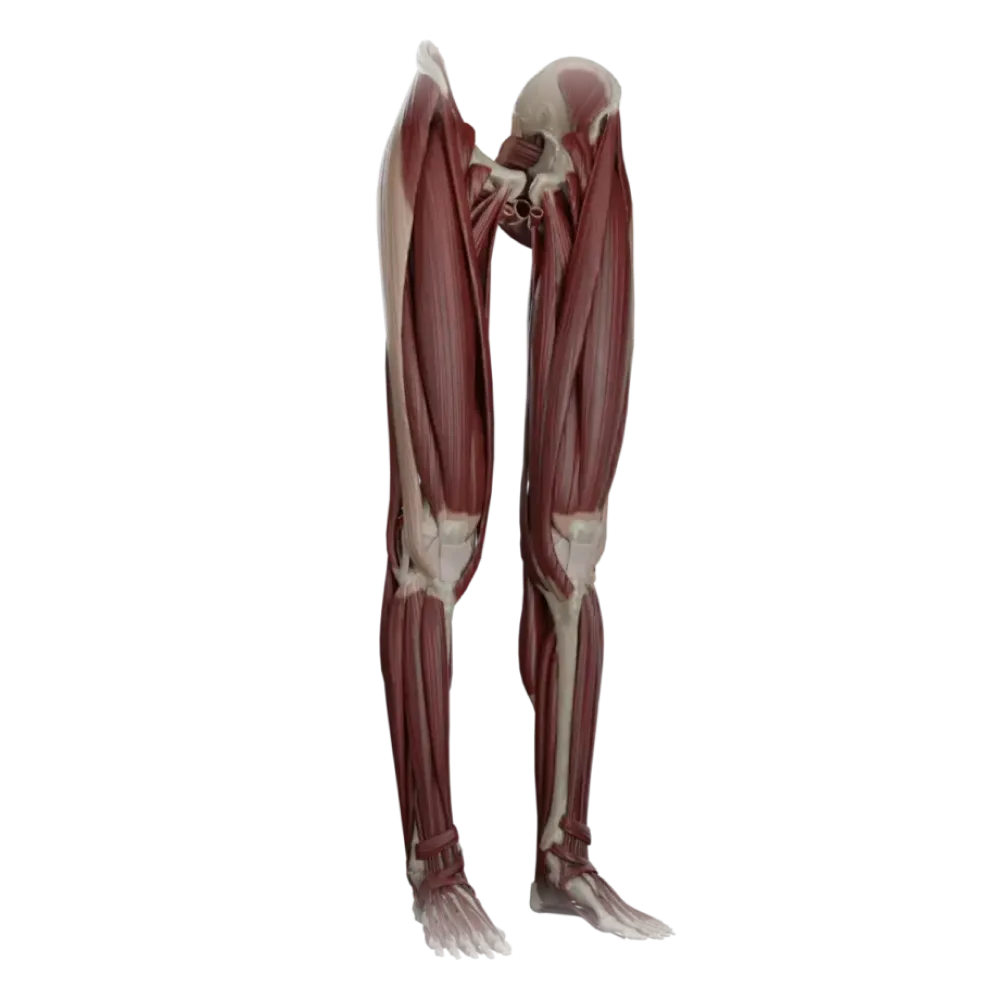
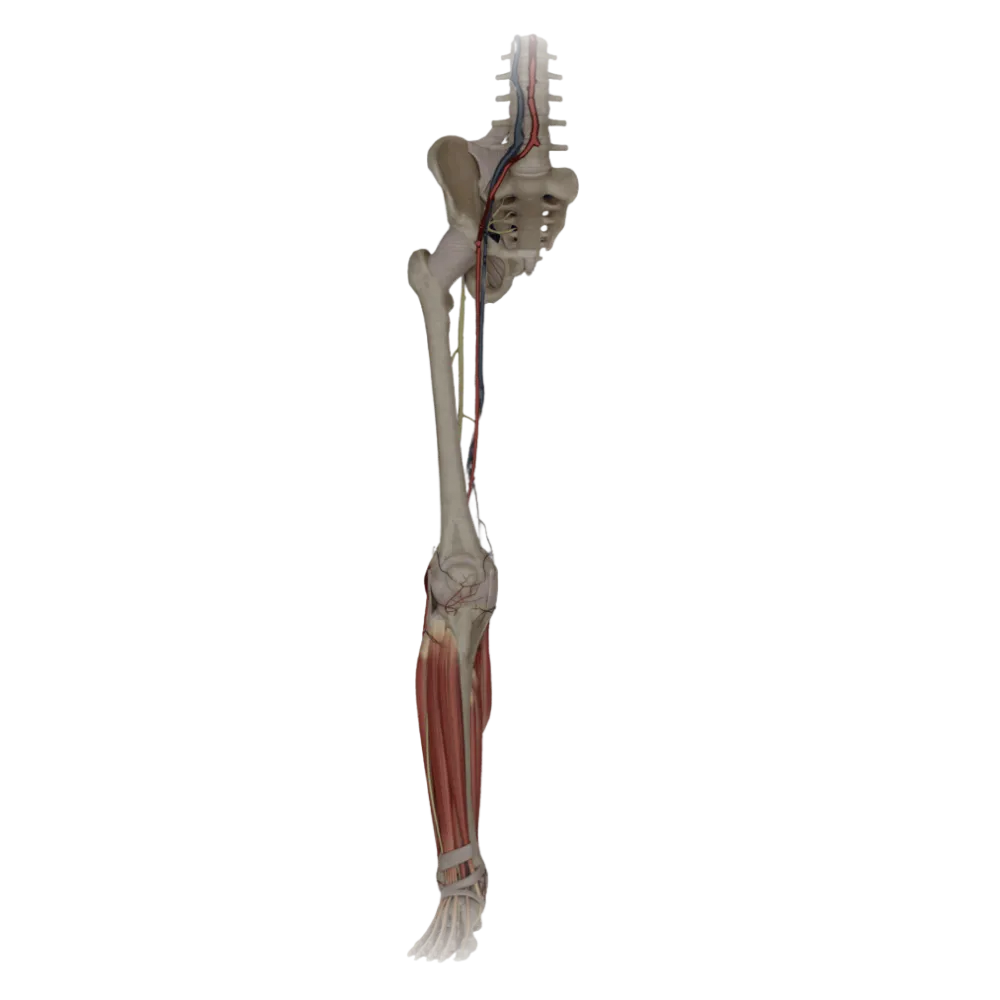
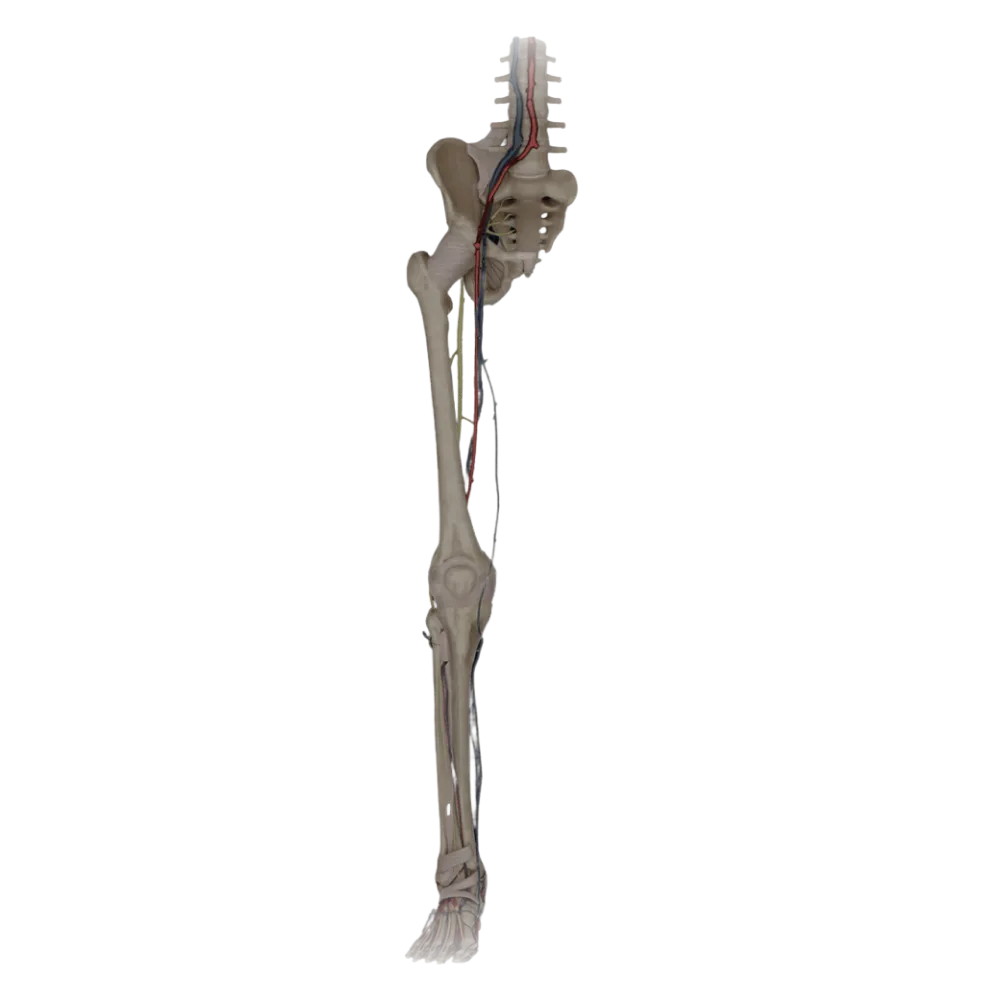

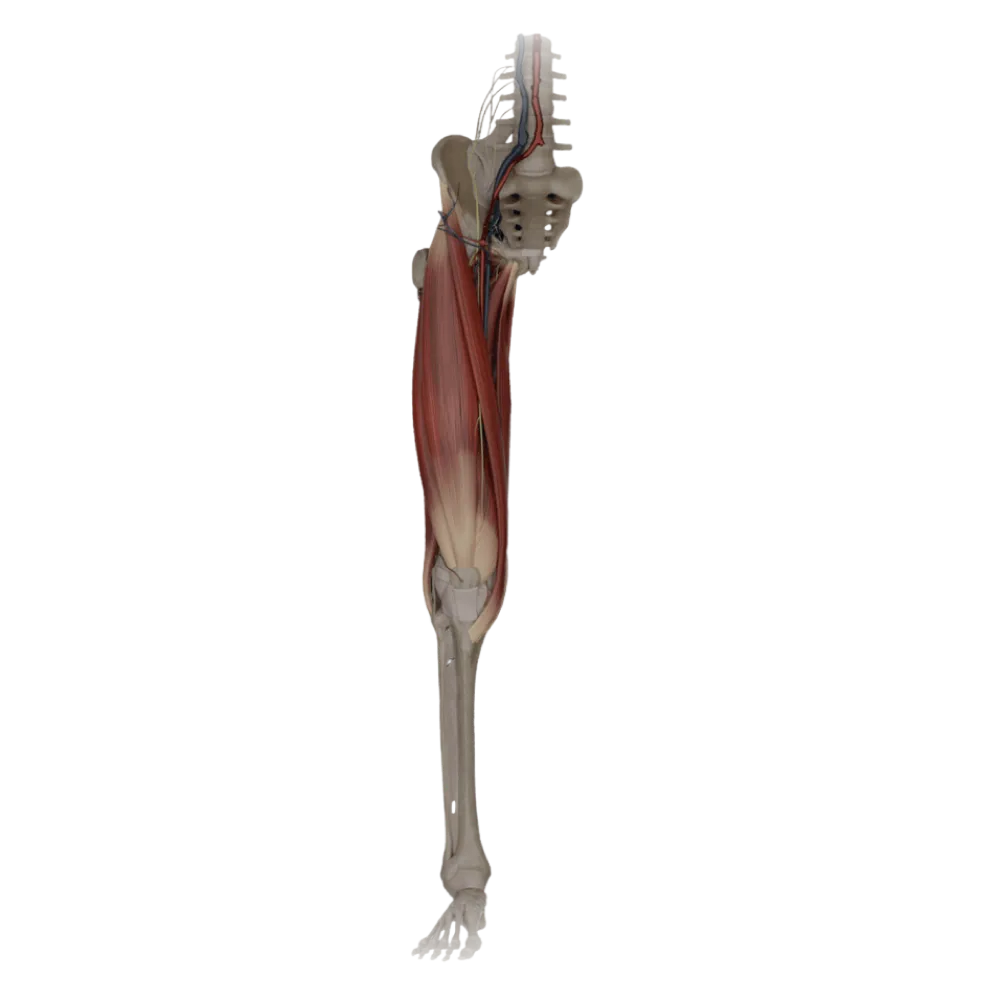
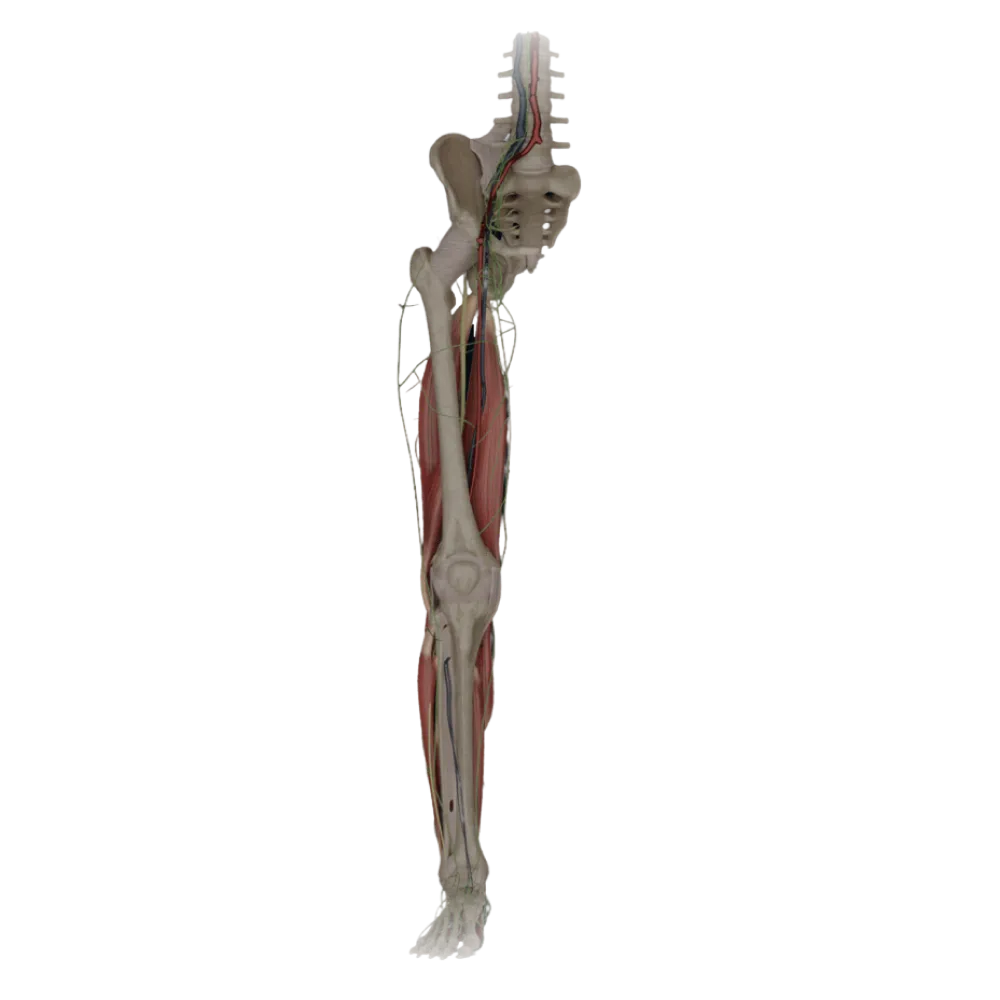
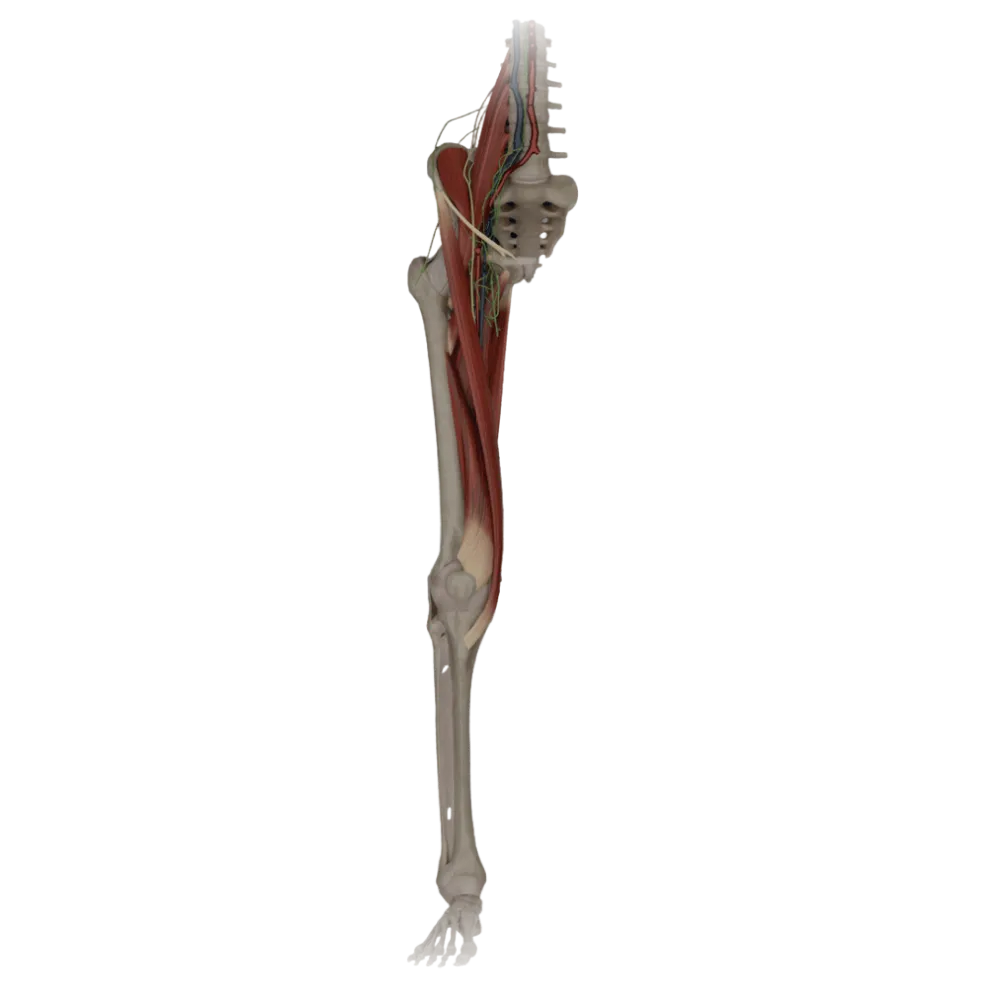
Anatomy test of lower leg muscles
Assess your knowledge of lower leg muscle anatomy. The test strictly evaluates their topography, arterial blood supply, innervation, and fascial compartments.
1/20
bold
text
1. Which lower leg muscle is innervated by the deep fibular nerve?
-
Fibularis longus muscle.
The deep fibular nerve innervates the anterior group of lower leg muscles, including the tibialis anterior.
-
Tibialis anterior muscle.
The deep fibular nerve innervates the anterior group of lower leg muscles, including the tibialis anterior.
-
Soleus muscle.
The deep fibular nerve innervates the anterior group of lower leg muscles, including the tibialis anterior.
-
Tibialis posterior muscle.
The deep fibular nerve innervates the anterior group of lower leg muscles, including the tibialis anterior.
-
I find it difficult to answer
The deep fibular nerve innervates the anterior group of lower leg muscles, including the tibialis anterior.
2. From which vessel does the anterior tibial artery, supplying the anterior group of lower leg muscles, originate?
-
Posterior tibial artery.
The anterior tibial artery is one of the two terminal branches of the popliteal artery.
-
Femoral artery.
The anterior tibial artery is one of the two terminal branches of the popliteal artery.
-
Fibular artery
The anterior tibial artery is one of the two terminal branches of the popliteal artery.
-
Popliteal artery.
The anterior tibial artery is one of the two terminal branches of the popliteal artery.
-
I find it difficult to answer
The anterior tibial artery is one of the two terminal branches of the popliteal artery.
3. Which nerve provides motor innervation to the fibularis longus and brevis muscles?
-
The superficial fibular nerve
The lateral group of lower leg muscles is innervated by the superficial fibular nerve.
-
The deep fibular nerve.
The lateral group of lower leg muscles is innervated by the superficial fibular nerve.
-
Tibial nerve
The lateral group of lower leg muscles is innervated by the superficial fibular nerve.
-
The sural nerve.
The lateral group of lower leg muscles is innervated by the superficial fibular nerve.
-
I find it difficult to answer
The lateral group of lower leg muscles is innervated by the superficial fibular nerve.
4. Which artery is the primary blood supply to the lateral group of lower leg muscles?
-
Anterior tibial artery.
The lateral fascial compartment of the leg is supplied by branches of the fibular artery.
-
Descending genicular artery
The lateral fascial compartment of the leg is supplied by branches of the fibular artery.
-
Fibular artery
The lateral fascial compartment of the leg is supplied by branches of the fibular artery.
-
Obturator artery.
The lateral fascial compartment of the leg is supplied by branches of the fibular artery.
-
I find it difficult to answer
The lateral fascial compartment of the leg is supplied by branches of the fibular artery.
5. Which nerve's branch innervates the triceps surae muscle of the leg?
-
Common fibular nerve
All posterior group lower leg muscles, including the triceps surae muscle, are innervated by the tibial nerve.
-
Tibial nerve
All posterior group lower leg muscles, including the triceps surae muscle, are innervated by the tibial nerve.
-
Femoral nerve
All posterior group lower leg muscles, including the triceps surae muscle, are innervated by the tibial nerve.
-
Superficial fibular nerve
All posterior group lower leg muscles, including the triceps surae muscle, are innervated by the tibial nerve.
-
I find it difficult to answer
All posterior group lower leg muscles, including the triceps surae muscle, are innervated by the tibial nerve.
6. Which vessels and nerve traverse the canalis cruropopliteus (cruro-popliteal canal)?
-
Posterior tibial artery, veins, and tibial nerve
The canalis cruropopliteus serves as a receptacle for the posterior tibial neurovascular bundle.
-
Anterior tibial artery, veins, and deep fibular nerve
The canalis cruropopliteus serves as a receptacle for the posterior tibial neurovascular bundle.
-
Fibular artery, veins, and superficial fibular nerve
The canalis cruropopliteus serves as a receptacle for the posterior tibial neurovascular bundle.
-
Popliteal artery, veins, and common fibular nerve
The canalis cruropopliteus serves as a receptacle for the posterior tibial neurovascular bundle.
-
I find it difficult to answer
The canalis cruropopliteus serves as a receptacle for the posterior tibial neurovascular bundle.
7. Which artery gives rise to the sural arteries (aa. surales), supplying the gastrocnemius muscle?
-
Posterior tibial artery.
The sural arteries directly branch from the popliteal artery in the popliteal fossa.
-
Anterior tibial artery.
The sural arteries directly branch from the popliteal artery in the popliteal fossa.
-
Popliteal artery.
The sural arteries directly branch from the popliteal artery in the popliteal fossa.
-
Femoral artery.
The sural arteries directly branch from the popliteal artery in the popliteal fossa.
-
I find it difficult to answer
The sural arteries directly branch from the popliteal artery in the popliteal fossa.
8. Which muscle in the deep layer of the posterior group of lower leg muscles is innervated by the tibial nerve and flexes the distal phalanx of the great toe?
-
Extensor hallucis longus
The flexor hallucis longus lies in the deep layer of the posterior group and is innervated by the tibial nerve.
-
Fibularis longus muscle.
The flexor hallucis longus lies in the deep layer of the posterior group and is innervated by the tibial nerve.
-
Tibialis posterior muscle.
The flexor hallucis longus lies in the deep layer of the posterior group and is innervated by the tibial nerve.
-
Flexor hallucis longus.
The flexor hallucis longus lies in the deep layer of the posterior group and is innervated by the tibial nerve.
-
I find it difficult to answer
The flexor hallucis longus lies in the deep layer of the posterior group and is innervated by the tibial nerve.
9. Which nerve runs in the upper muscular-fibular canal of the lower leg?
-
Deep fibular nerve.
The superficial fibular nerve descends in the upper muscular-fibular canal between the fibula and the fibularis longus muscle.
-
Superficial fibular nerve.
The superficial fibular nerve descends in the upper muscular-fibular canal between the fibula and the fibularis longus muscle.
-
Tibial nerve.
The superficial fibular nerve descends in the upper muscular-fibular canal between the fibula and the fibularis longus muscle.
-
Sural nerve.
The superficial fibular nerve descends in the upper muscular-fibular canal between the fibula and the fibularis longus muscle.
-
I find it difficult to answer
The superficial fibular nerve descends in the upper muscular-fibular canal between the fibula and the fibularis longus muscle.
10. Which artery runs in the lower muscular-fibular canal?
-
Fibular artery
The lower muscular-fibular canal is a branch of the canalis cruropopliteus and contains the fibular artery and veins.
-
Anterior tibial artery.
The lower muscular-fibular canal is a branch of the canalis cruropopliteus and contains the fibular artery and veins.
-
Posterior tibial artery.
The lower muscular-fibular canal is a branch of the canalis cruropopliteus and contains the fibular artery and veins.
-
Medial plantar artery
The lower muscular-fibular canal is a branch of the canalis cruropopliteus and contains the fibular artery and veins.
-
I find it difficult to answer
The lower muscular-fibular canal is a branch of the canalis cruropopliteus and contains the fibular artery and veins.
11. Which nerve accompanies the anterior tibial artery on the interosseous membrane of the leg?
-
Superficial fibular nerve.
In the anterior fascial compartment of the leg, the neurovascular bundle consists of the anterior tibial artery and deep fibular nerve.
-
Saphenous nerve.
In the anterior fascial compartment of the leg, the neurovascular bundle consists of the anterior tibial artery and deep fibular nerve.
-
Tibial nerve.
In the anterior fascial compartment of the leg, the neurovascular bundle consists of the anterior tibial artery and deep fibular nerve.
-
Deep fibular nerve.
In the anterior fascial compartment of the leg, the neurovascular bundle consists of the anterior tibial artery and deep fibular nerve.
-
I find it difficult to answer
In the anterior fascial compartment of the leg, the neurovascular bundle consists of the anterior tibial artery and deep fibular nerve.
12. Which lower leg muscle is primarily supplied by the posterior tibial artery and innervated by the tibial nerve, attaching to the tuberosity of the navicular bone?
-
Tibialis anterior muscle.
The posterior tibial muscle occupies a central position in the deep layer of the posterior group of lower leg muscles.
-
Flexor digitorum longus
The posterior tibial muscle occupies a central position in the deep layer of the posterior group of lower leg muscles.
-
Tibialis posterior muscle.
The posterior tibial muscle occupies a central position in the deep layer of the posterior group of lower leg muscles.
-
Fibularis brevis muscle.
The posterior tibial muscle occupies a central position in the deep layer of the posterior group of lower leg muscles.
-
I find it difficult to answer
The posterior tibial muscle occupies a central position in the deep layer of the posterior group of lower leg muscles.
13. Which muscle is innervated by the tibial nerve and participates in inward rotation of the leg (pronation/flexion), located on the posterior capsule of the knee joint?
-
Popliteal muscle.
The popliteus muscle belongs to the deep layer of the posterior group of lower leg muscles and is innervated by the tibial nerve.
-
Plantar muscle
The popliteus muscle belongs to the deep layer of the posterior group of lower leg muscles and is innervated by the tibial nerve.
-
Soleus muscle.
The popliteus muscle belongs to the deep layer of the posterior group of lower leg muscles and is innervated by the tibial nerve.
-
Gastrocnemius muscle.
The popliteus muscle belongs to the deep layer of the posterior group of lower leg muscles and is innervated by the tibial nerve.
-
I find it difficult to answer
The popliteus muscle belongs to the deep layer of the posterior group of lower leg muscles and is innervated by the tibial nerve.
14. The artery, encircling the fibula (r. circumflexus fibulae), contributing to the blood supply of the upper third of the leg, branches from which artery?
-
The anterior tibial artery
The artery encircling the fibula usually arises from the initial segment of the posterior tibial artery.
-
The posterior tibial artery
The artery encircling the fibula usually arises from the initial segment of the posterior tibial artery.
-
The popliteal artery
The artery encircling the fibula usually arises from the initial segment of the posterior tibial artery.
-
The fibular artery
The artery encircling the fibula usually arises from the initial segment of the posterior tibial artery.
-
I find it difficult to answer
The artery encircling the fibula usually arises from the initial segment of the posterior tibial artery.
15. How does the deep fibular nerve penetrate into the anterior compartment of the leg?
-
It passes through the canalis cruropopliteus
After branching from the common fibular nerve, the deep branch pierces the anterior intermuscular septum to enter the anterior compartment.
-
It passes through the superior muscular-peroneal canal
After branching from the common fibular nerve, the deep branch pierces the anterior intermuscular septum to enter the anterior compartment.
-
It pierces the anterior intermuscular septum of the leg
After branching from the common fibular nerve, the deep branch pierces the anterior intermuscular septum to enter the anterior compartment.
-
It rounds the medial condyle of the tibia
After branching from the common fibular nerve, the deep branch pierces the anterior intermuscular septum to enter the anterior compartment.
-
I find it difficult to answer
After branching from the common fibular nerve, the deep branch pierces the anterior intermuscular septum to enter the anterior compartment.
16. The plantaris muscle (m. plantaris) of the leg is innervated by:
-
Common fibular nerve
The plantaris muscle, like other muscles of the superficial layer of the posterior group of lower leg muscles, is innervated by the tibial nerve.
-
The superficial fibular nerve
The plantaris muscle, like other muscles of the superficial layer of the posterior group of lower leg muscles, is innervated by the tibial nerve.
-
The deep fibular nerve.
The plantaris muscle, like other muscles of the superficial layer of the posterior group of lower leg muscles, is innervated by the tibial nerve.
-
Tibial nerve
The plantaris muscle, like other muscles of the superficial layer of the posterior group of lower leg muscles, is innervated by the tibial nerve.
-
I find it difficult to answer
The plantaris muscle, like other muscles of the superficial layer of the posterior group of lower leg muscles, is innervated by the tibial nerve.
17. Which artery supplies the extensor digitorum longus on the lower leg?
-
Posterior tibial artery.
The extensor digitorum longus is located in the anterior fascial compartment and is supplied by the anterior tibial artery.
-
Anterior tibial artery.
The extensor digitorum longus is located in the anterior fascial compartment and is supplied by the anterior tibial artery.
-
Fibular artery
The extensor digitorum longus is located in the anterior fascial compartment and is supplied by the anterior tibial artery.
-
Perforating branch of the fibular artery
The extensor digitorum longus is located in the anterior fascial compartment and is supplied by the anterior tibial artery.
-
I find it difficult to answer
The extensor digitorum longus is located in the anterior fascial compartment and is supplied by the anterior tibial artery.
18. From which nerve trunk does the common fibular nerve, providing branches to the lower leg muscles, originate?
-
Sciatic nerve
The common fibular nerve is one of the two terminal branches of the sciatic nerve.
-
Femoral nerve.
The common fibular nerve is one of the two terminal branches of the sciatic nerve.
-
Obturator nerve.
The common fibular nerve is one of the two terminal branches of the sciatic nerve.
-
Pudendal nerve
The common fibular nerve is one of the two terminal branches of the sciatic nerve.
-
I find it difficult to answer
The common fibular nerve is one of the two terminal branches of the sciatic nerve.
19. The soleus muscle predominantly receives its blood supply from:
-
The anterior tibial artery
The soleus muscle has an extensive vascular network supplied by branches of both the posterior tibial and fibular arteries.
-
The popliteal artery
The soleus muscle has an extensive vascular network supplied by branches of both the posterior tibial and fibular arteries.
-
Posterior tibial and fibular arteries
The soleus muscle has an extensive vascular network supplied by branches of both the posterior tibial and fibular arteries.
-
The femoral artery
The soleus muscle has an extensive vascular network supplied by branches of both the posterior tibial and fibular arteries.
-
I find it difficult to answer
The soleus muscle has an extensive vascular network supplied by branches of both the posterior tibial and fibular arteries.
20. Which structure lies most medially in the lower third of the anterior surface of the lower leg (medial to the neurovascular bundle)?
-
Tendon of the extensor pollicis longus muscle
The order of structures from the medial malleolus to the lateral: tendon of the tibialis anterior, tendon of the extensor hallucis longus, vessels and nerve, tendon of the extensor digitorum longus.
-
Tendon of the extensor digitorum longus
The order of structures from the medial malleolus to the lateral: tendon of the tibialis anterior, tendon of the extensor hallucis longus, vessels and nerve, tendon of the extensor digitorum longus.
-
Deep fibular nerve.
The order of structures from the medial malleolus to the lateral: tendon of the tibialis anterior, tendon of the extensor hallucis longus, vessels and nerve, tendon of the extensor digitorum longus.
-
Tendon of the tibialis anterior
The order of structures from the medial malleolus to the lateral: tendon of the tibialis anterior, tendon of the extensor hallucis longus, vessels and nerve, tendon of the extensor digitorum longus.
-
I find it difficult to answer
The order of structures from the medial malleolus to the lateral: tendon of the tibialis anterior, tendon of the extensor hallucis longus, vessels and nerve, tendon of the extensor digitorum longus.
Retake this quiz?
Your current progress will be reset.