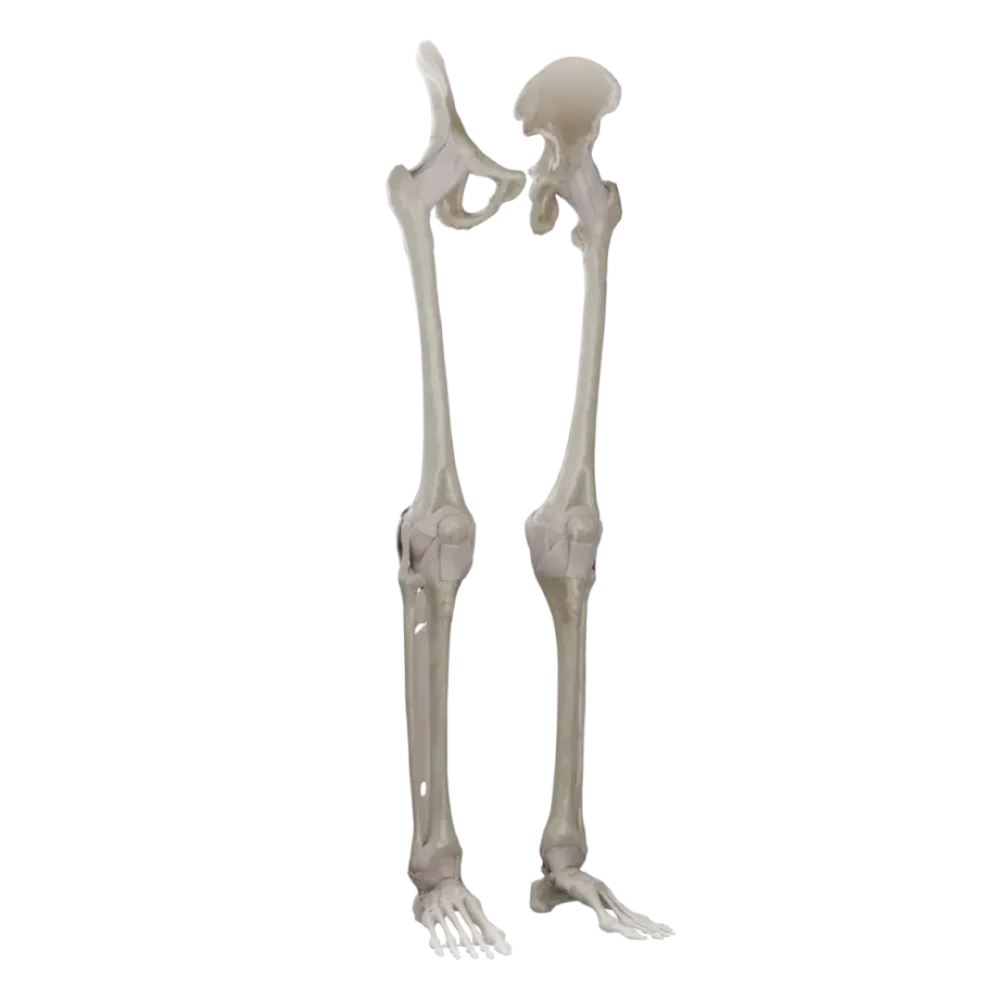

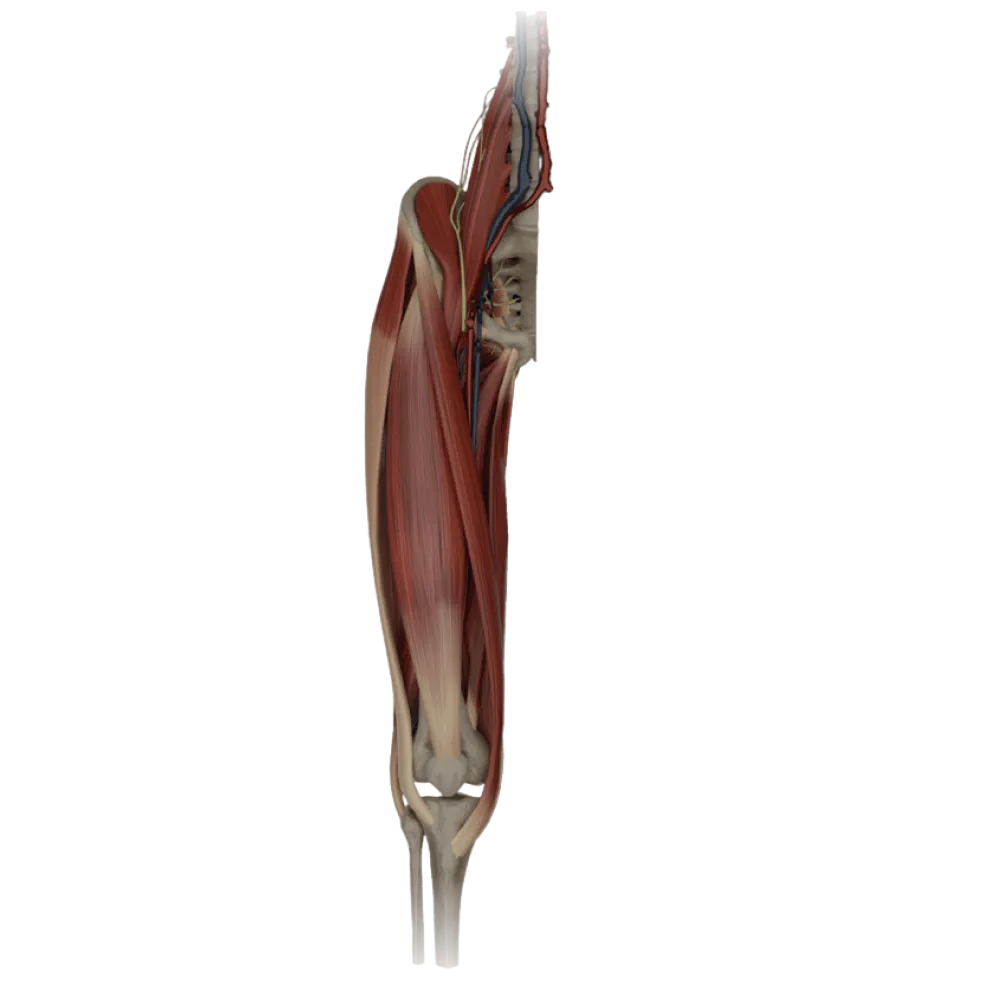
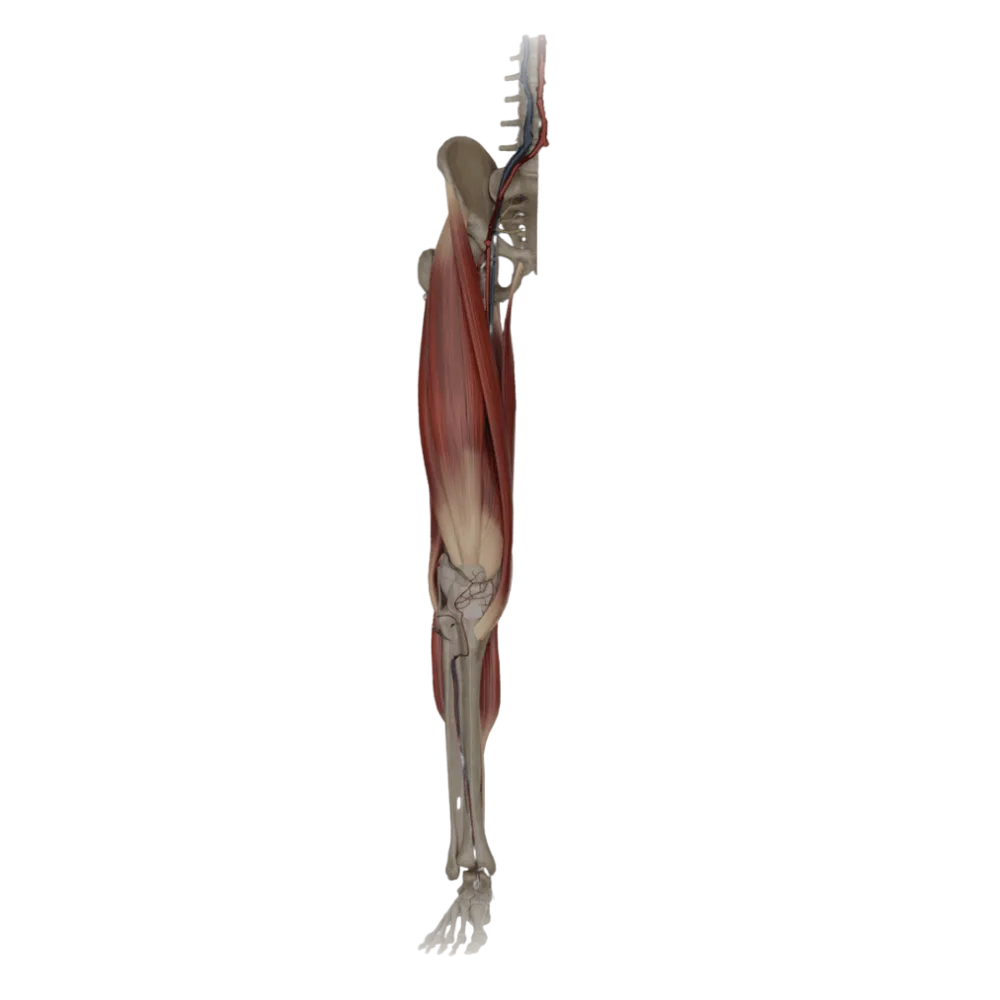
Test on the anatomy of the ankle joint and joints of foot.
Check your knowledge of the anatomy of the ankle joint and foot. The test covers the ligamentous apparatus, muscles, blood supply, and innervation.
1/20
bold
text
1. Which ligament primarily prevents excessive supination (inversion) of the foot at the ankle joint?
-
Deltoid ligament.
The calcaneofibular ligament is part of the lateral ligamentous apparatus of the ankle joint and is stretched in inversion (supination) of the foot.
-
Calcaneofibular ligament.
The calcaneofibular ligament is part of the lateral ligamentous apparatus of the ankle joint and is stretched in inversion (supination) of the foot.
-
Plantar calcaneonavicular ligament.
The calcaneofibular ligament is part of the lateral ligamentous apparatus of the ankle joint and is stretched in inversion (supination) of the foot.
-
Long plantar ligament.
The calcaneofibular ligament is part of the lateral ligamentous apparatus of the ankle joint and is stretched in inversion (supination) of the foot.
-
I find it difficult to answer
The calcaneofibular ligament is part of the lateral ligamentous apparatus of the ankle joint and is stretched in inversion (supination) of the foot.
2. Which nerve provides motor innervation to the muscles that enable pronation (eversion) of the foot?
-
Deep fibular nerve.
The superficial fibular nerve innervates the long and short fibular muscles that effect pronation (eversion) of the foot.
-
Tibial nerve.
The superficial fibular nerve innervates the long and short fibular muscles that effect pronation (eversion) of the foot.
-
Sural nerve.
The superficial fibular nerve innervates the long and short fibular muscles that effect pronation (eversion) of the foot.
-
Superficial fibular nerve.
The superficial fibular nerve innervates the long and short fibular muscles that effect pronation (eversion) of the foot.
-
I find it difficult to answer
The superficial fibular nerve innervates the long and short fibular muscles that effect pronation (eversion) of the foot.
3. Which muscle is the main supinator of the foot, also participating in its dorsiflexion?
-
Extensor digitorum longus.
The tibialis anterior muscle attaches to the medial cuneiform and first metatarsal bones, performing dorsiflexion and supination of the foot.
-
Tibialis posterior muscle.
The tibialis anterior muscle attaches to the medial cuneiform and first metatarsal bones, performing dorsiflexion and supination of the foot.
-
Tibialis anterior muscle.
The tibialis anterior muscle attaches to the medial cuneiform and first metatarsal bones, performing dorsiflexion and supination of the foot.
-
Fibularis tertius muscle.
The tibialis anterior muscle attaches to the medial cuneiform and first metatarsal bones, performing dorsiflexion and supination of the foot.
-
I find it difficult to answer
The tibialis anterior muscle attaches to the medial cuneiform and first metatarsal bones, performing dorsiflexion and supination of the foot.
4. Which joints collectively form the transverse tarsal joint (Chopart's joint)?
-
Tarsometatarsal and intermetatarsal.
Chopart's joint (transverse tarsal joint) anatomically consists of two joints: the talonavicular (part of the talocalcaneonavicular) and the calcaneocuboid.
-
Cuneonavicular and tarsometatarsal.
Chopart's joint (transverse tarsal joint) anatomically consists of two joints: the talonavicular (part of the talocalcaneonavicular) and the calcaneocuboid.
-
Subtalar and talocalcaneonavicular.
Chopart's joint (transverse tarsal joint) anatomically consists of two joints: the talonavicular (part of the talocalcaneonavicular) and the calcaneocuboid.
-
Talonavicular and calcaneocuboid.
Chopart's joint (transverse tarsal joint) anatomically consists of two joints: the talonavicular (part of the talocalcaneonavicular) and the calcaneocuboid.
-
I find it difficult to answer
Chopart's joint (transverse tarsal joint) anatomically consists of two joints: the talonavicular (part of the talocalcaneonavicular) and the calcaneocuboid.
5. Which ligament is a key structure for maintaining the medial longitudinal arch of the foot ("spring ligament")?
-
Plantar calcaneonavicular ligament.
The plantar calcaneonavicular ligament supports the head of the talus, playing a crucial role in maintaining the medial longitudinal arch.
-
Long plantar ligament.
The plantar calcaneonavicular ligament supports the head of the talus, playing a crucial role in maintaining the medial longitudinal arch.
-
Plantar aponeurosis.
The plantar calcaneonavicular ligament supports the head of the talus, playing a crucial role in maintaining the medial longitudinal arch.
-
Short plantar ligament.
The plantar calcaneonavicular ligament supports the head of the talus, playing a crucial role in maintaining the medial longitudinal arch.
-
I find it difficult to answer
The plantar calcaneonavicular ligament supports the head of the talus, playing a crucial role in maintaining the medial longitudinal arch.
6. Which artery is the direct continuation of the anterior tibial artery on the foot?
-
Medial plantar artery
The anterior tibial artery, passing under the extensor retinacula, transitions to the dorsum of the foot and is renamed dorsalis pedis artery.
-
Lateral plantar artery
The anterior tibial artery, passing under the extensor retinacula, transitions to the dorsum of the foot and is renamed dorsalis pedis artery.
-
Dorsalis pedis artery
The anterior tibial artery, passing under the extensor retinacula, transitions to the dorsum of the foot and is renamed dorsalis pedis artery.
-
Perforating branch of the fibular artery
The anterior tibial artery, passing under the extensor retinacula, transitions to the dorsum of the foot and is renamed dorsalis pedis artery.
-
I find it difficult to answer
The anterior tibial artery, passing under the extensor retinacula, transitions to the dorsum of the foot and is renamed dorsalis pedis artery.
7. Which bones form Lisfranc's joint (tarsometatarsal joints)?
-
Cuboid, navicular, and all the bases of metatarsal bones.
Lisfranc's joint (tarsometatarsal joints) is formed by articulations of the medial, intermediate, lateral cuneiforms, and cuboid bones with the bases of the metatarsal bones.
-
Three cuneiforms, cuboid, and bases of I-V metatarsal bones.
Lisfranc's joint (tarsometatarsal joints) is formed by articulations of the medial, intermediate, lateral cuneiforms, and cuboid bones with the bases of the metatarsal bones.
-
Talus, calcaneus, and bases of I-V metatarsal bones.
Lisfranc's joint (tarsometatarsal joints) is formed by articulations of the medial, intermediate, lateral cuneiforms, and cuboid bones with the bases of the metatarsal bones.
-
Navicular, three cuneiforms, and bases of I-III metatarsal bones.
Lisfranc's joint (tarsometatarsal joints) is formed by articulations of the medial, intermediate, lateral cuneiforms, and cuboid bones with the bases of the metatarsal bones.
-
I find it difficult to answer
Lisfranc's joint (tarsometatarsal joints) is formed by articulations of the medial, intermediate, lateral cuneiforms, and cuboid bones with the bases of the metatarsal bones.
8. Which nerve innervates the skin of the first interdigital space on the dorsum of the foot?
-
Deep fibular nerve.
The deep fibular nerve emerges on the dorsum of the foot and provides sensory innervation to the skin of the first interdigital space.
-
Saphenous nerve.
The deep fibular nerve emerges on the dorsum of the foot and provides sensory innervation to the skin of the first interdigital space.
-
Sural nerve.
The deep fibular nerve emerges on the dorsum of the foot and provides sensory innervation to the skin of the first interdigital space.
-
Superficial fibular nerve.
The deep fibular nerve emerges on the dorsum of the foot and provides sensory innervation to the skin of the first interdigital space.
-
I find it difficult to answer
The deep fibular nerve emerges on the dorsum of the foot and provides sensory innervation to the skin of the first interdigital space.
9. Which muscle's tendon attaches to the tuberosity of the fifth metatarsal bone?
-
Fibularis longus muscle.
The tendon of the fibularis brevis muscle attaches to the tuberosity of the fifth metatarsal bone.
-
Tibialis posterior muscle.
The tendon of the fibularis brevis muscle attaches to the tuberosity of the fifth metatarsal bone.
-
Fibularis tertius muscle.
The tendon of the fibularis brevis muscle attaches to the tuberosity of the fifth metatarsal bone.
-
Fibularis brevis muscle.
The tendon of the fibularis brevis muscle attaches to the tuberosity of the fifth metatarsal bone.
-
I find it difficult to answer
The tendon of the fibularis brevis muscle attaches to the tuberosity of the fifth metatarsal bone.
10. The formation of the deep plantar arch (arcus plantaris profundus) involves:
-
Medial plantar artery and deep plantar branch of dorsalis pedis artery.
The deep plantar arch is formed by the anastomosis of the terminal part of the lateral plantar artery with the deep plantar branch from the dorsalis pedis artery.
-
Lateral plantar artery and deep plantar branch of dorsalis pedis artery.
The deep plantar arch is formed by the anastomosis of the terminal part of the lateral plantar artery with the deep plantar branch from the dorsalis pedis artery.
-
Lateral and medial plantar arteries.
The deep plantar arch is formed by the anastomosis of the terminal part of the lateral plantar artery with the deep plantar branch from the dorsalis pedis artery.
-
Dorsalis pedis artery and perforating branches of the fibular artery.
The deep plantar arch is formed by the anastomosis of the terminal part of the lateral plantar artery with the deep plantar branch from the dorsalis pedis artery.
-
I find it difficult to answer
The deep plantar arch is formed by the anastomosis of the terminal part of the lateral plantar artery with the deep plantar branch from the dorsalis pedis artery.
11. Which structure passes behind the medial malleolus as part of the neurovascular bundle?
-
Deep fibular nerve.
Behind the medial malleolus pass the tendons of flexor muscles, as well as the posterior tibial artery, accompanying veins, and tibial nerve.
-
Anterior tibial artery.
Behind the medial malleolus pass the tendons of flexor muscles, as well as the posterior tibial artery, accompanying veins, and tibial nerve.
-
Posterior tibial artery.
Behind the medial malleolus pass the tendons of flexor muscles, as well as the posterior tibial artery, accompanying veins, and tibial nerve.
-
Superficial fibular nerve.
Behind the medial malleolus pass the tendons of flexor muscles, as well as the posterior tibial artery, accompanying veins, and tibial nerve.
-
I find it difficult to answer
Behind the medial malleolus pass the tendons of flexor muscles, as well as the posterior tibial artery, accompanying veins, and tibial nerve.
12. The muscles of the big toe elevation (except the lateral head of the short flexor) are innervated by:
-
The sural nerve.
The medial plantar nerve innervates the abductor hallucis, the medial head of the flexor hallucis brevis, and the flexor digitorum brevis.
-
The lateral plantar nerve.
The medial plantar nerve innervates the abductor hallucis, the medial head of the flexor hallucis brevis, and the flexor digitorum brevis.
-
The deep fibular nerve.
The medial plantar nerve innervates the abductor hallucis, the medial head of the flexor hallucis brevis, and the flexor digitorum brevis.
-
The medial plantar nerve.
The medial plantar nerve innervates the abductor hallucis, the medial head of the flexor hallucis brevis, and the flexor digitorum brevis.
-
I find it difficult to answer
The medial plantar nerve innervates the abductor hallucis, the medial head of the flexor hallucis brevis, and the flexor digitorum brevis.
13. Which muscle's tendon crosses over the cuboid bone on the sole, supporting the transverse arch of the foot?
-
Fibularis longus muscle.
The tendon of the fibularis longus muscle passes in the groove of the cuboid bone and crosses the sole obliquely, forming and supporting the transverse arch of the foot.
-
Fibularis brevis muscle.
The tendon of the fibularis longus muscle passes in the groove of the cuboid bone and crosses the sole obliquely, forming and supporting the transverse arch of the foot.
-
Tibialis posterior muscle
The tendon of the fibularis longus muscle passes in the groove of the cuboid bone and crosses the sole obliquely, forming and supporting the transverse arch of the foot.
-
Quadratus plantae.
The tendon of the fibularis longus muscle passes in the groove of the cuboid bone and crosses the sole obliquely, forming and supporting the transverse arch of the foot.
-
I find it difficult to answer
The tendon of the fibularis longus muscle passes in the groove of the cuboid bone and crosses the sole obliquely, forming and supporting the transverse arch of the foot.
14. The interosseous muscles of the foot receive motor innervation from:
-
Medial plantar nerve.
The lateral plantar nerve innervates all dorsal and plantar interosseous muscles, the quadratus plantae, and the muscles of the fifth toe.
-
Deep fibular nerve.
The lateral plantar nerve innervates all dorsal and plantar interosseous muscles, the quadratus plantae, and the muscles of the fifth toe.
-
Lateral plantar nerve.
The lateral plantar nerve innervates all dorsal and plantar interosseous muscles, the quadratus plantae, and the muscles of the fifth toe.
-
Superficial fibular nerve
The lateral plantar nerve innervates all dorsal and plantar interosseous muscles, the quadratus plantae, and the muscles of the fifth toe.
-
I find it difficult to answer
The lateral plantar nerve innervates all dorsal and plantar interosseous muscles, the quadratus plantae, and the muscles of the fifth toe.
15. Which ligament is the weakest structure of the lateral complex of the ankle joint and is the first to be stretched during plantar flexion with inversion?
-
Deltoid ligament.
The anterior talofibular ligament is the weakest of the lateral ligaments of the ankle joint and is the first to be stretched during inversion movements.
-
Anterior talofibular ligament.
The anterior talofibular ligament is the weakest of the lateral ligaments of the ankle joint and is the first to be stretched during inversion movements.
-
Plantar calcaneonavicular ligament.
The anterior talofibular ligament is the weakest of the lateral ligaments of the ankle joint and is the first to be stretched during inversion movements.
-
Bifurcate ligament.
The anterior talofibular ligament is the weakest of the lateral ligaments of the ankle joint and is the first to be stretched during inversion movements.
-
I find it difficult to answer
The anterior talofibular ligament is the weakest of the lateral ligaments of the ankle joint and is the first to be stretched during inversion movements.
16. Which muscle of the foot aids in flexing the proximal and extending the middle and distal phalanges of the second to fifth toes?
-
Quadratus plantae muscle.
The lumbrical muscles originate from the tendons of the flexor digitorum longus and insert into the dorsal aponeurosis, flexing the proximal phalanges and extending the others.
-
Flexor digitorum brevis muscle.
The lumbrical muscles originate from the tendons of the flexor digitorum longus and insert into the dorsal aponeurosis, flexing the proximal phalanges and extending the others.
-
Dorsal interossei muscles
The lumbrical muscles originate from the tendons of the flexor digitorum longus and insert into the dorsal aponeurosis, flexing the proximal phalanges and extending the others.
-
Lumbrical muscles
The lumbrical muscles originate from the tendons of the flexor digitorum longus and insert into the dorsal aponeurosis, flexing the proximal phalanges and extending the others.
-
I find it difficult to answer
The lumbrical muscles originate from the tendons of the flexor digitorum longus and insert into the dorsal aponeurosis, flexing the proximal phalanges and extending the others.
17. The medial marginal vein of the foot continues in the leg as:
-
Great saphenous vein
The great saphenous vein (v. saphena magna) begins at the medial part of the dorsal venous network of the foot and ascends in front of the medial malleolus.
-
Small saphenous vein
The great saphenous vein (v. saphena magna) begins at the medial part of the dorsal venous network of the foot and ascends in front of the medial malleolus.
-
Anterior tibial vein
The great saphenous vein (v. saphena magna) begins at the medial part of the dorsal venous network of the foot and ascends in front of the medial malleolus.
-
Posterior tibial vein
The great saphenous vein (v. saphena magna) begins at the medial part of the dorsal venous network of the foot and ascends in front of the medial malleolus.
-
I find it difficult to answer
The great saphenous vein (v. saphena magna) begins at the medial part of the dorsal venous network of the foot and ascends in front of the medial malleolus.
18. Which muscle from the group of deep leg muscles performs plantar flexion, as well as supination and adduction of the foot?
-
Flexor hallucis longus.
The tibialis posterior muscle passes behind the medial malleolus, attaching to the navicular and cuneiform bones, facilitating supination, adduction, and plantar flexion of the foot.
-
Flexor digitorum longus
The tibialis posterior muscle passes behind the medial malleolus, attaching to the navicular and cuneiform bones, facilitating supination, adduction, and plantar flexion of the foot.
-
Tibialis posterior muscle.
The tibialis posterior muscle passes behind the medial malleolus, attaching to the navicular and cuneiform bones, facilitating supination, adduction, and plantar flexion of the foot.
-
Soleus muscle.
The tibialis posterior muscle passes behind the medial malleolus, attaching to the navicular and cuneiform bones, facilitating supination, adduction, and plantar flexion of the foot.
-
I find it difficult to answer
The tibialis posterior muscle passes behind the medial malleolus, attaching to the navicular and cuneiform bones, facilitating supination, adduction, and plantar flexion of the foot.
19. The sensory innervation of the lateral edge of the foot is provided by:
-
The medial plantar nerve.
The sural nerve (n. suralis) passes behind the lateral malleolus and provides sensory innervation to the lateral edge of the foot and the fifth digit.
-
Saphenous nerve
The sural nerve (n. suralis) passes behind the lateral malleolus and provides sensory innervation to the lateral edge of the foot and the fifth digit.
-
The superficial fibular nerve
The sural nerve (n. suralis) passes behind the lateral malleolus and provides sensory innervation to the lateral edge of the foot and the fifth digit.
-
The sural nerve.
The sural nerve (n. suralis) passes behind the lateral malleolus and provides sensory innervation to the lateral edge of the foot and the fifth digit.
-
I find it difficult to answer
The sural nerve (n. suralis) passes behind the lateral malleolus and provides sensory innervation to the lateral edge of the foot and the fifth digit.
20. Which joint is biomechanically a hinge, allowing only dorsiflexion and plantar flexion of the foot?
-
Ankle joint
The ankle joint is a typical hinge joint, where movements around the frontal axis occur — dorsiflexion and plantar flexion.
-
Subtalar joint
The ankle joint is a typical hinge joint, where movements around the frontal axis occur — dorsiflexion and plantar flexion.
-
Talocalcaneonavicular joint
The ankle joint is a typical hinge joint, where movements around the frontal axis occur — dorsiflexion and plantar flexion.
-
Transverse tarsal joint
The ankle joint is a typical hinge joint, where movements around the frontal axis occur — dorsiflexion and plantar flexion.
-
I find it difficult to answer
The ankle joint is a typical hinge joint, where movements around the frontal axis occur — dorsiflexion and plantar flexion.
Retake this quiz?
Your current progress will be reset.