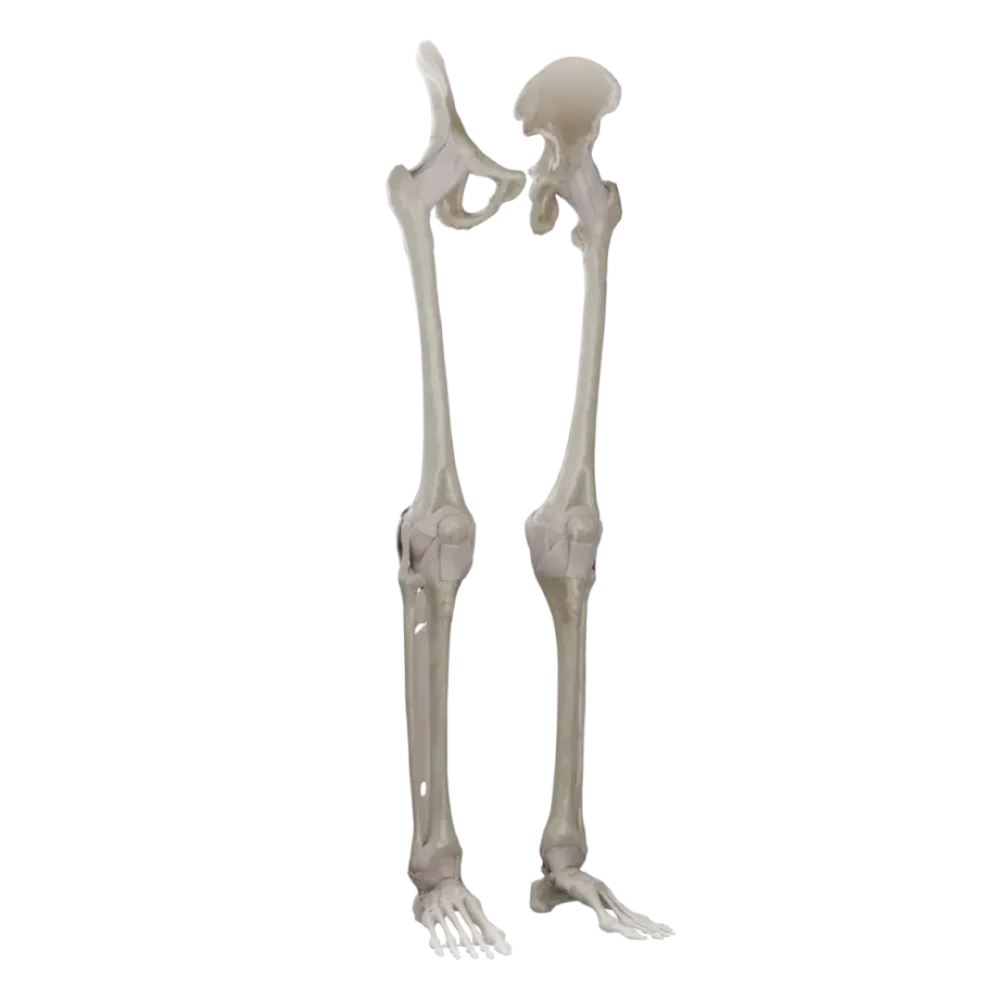

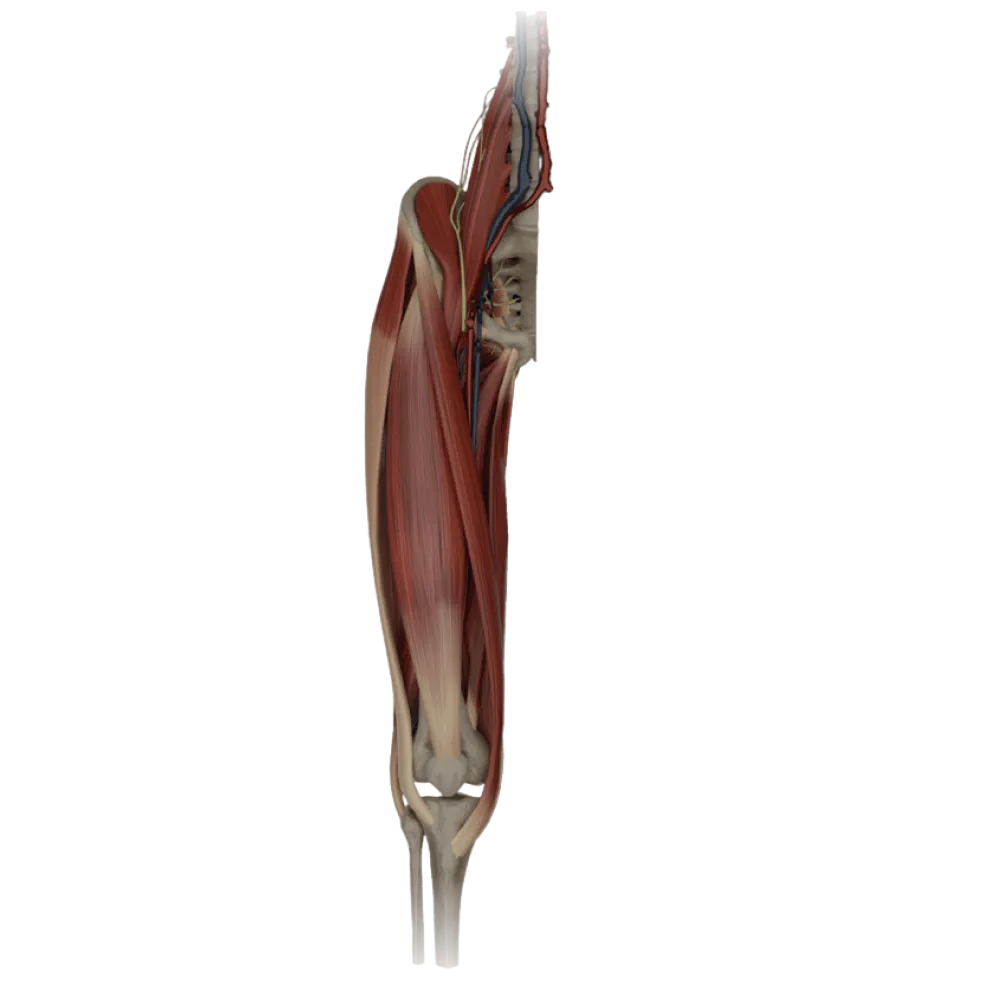
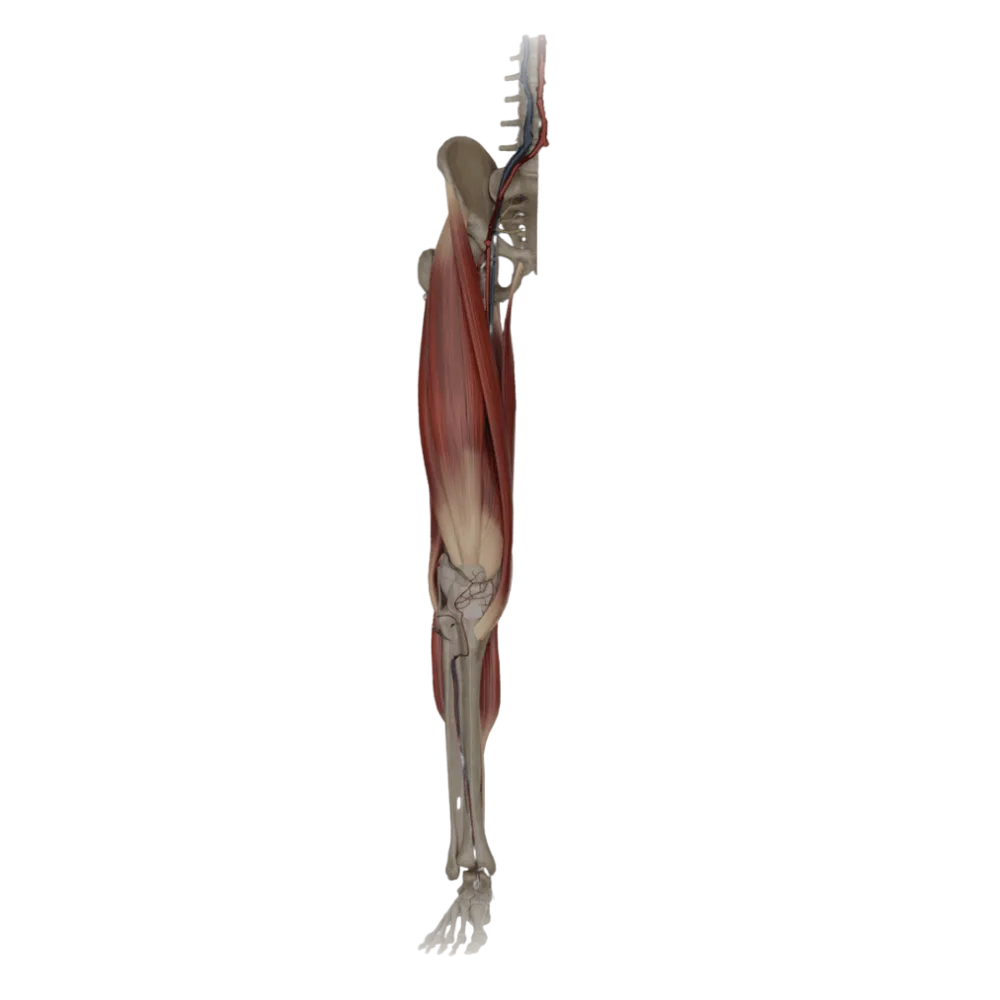
Hip joint anatomy test
Evaluate knowledge of hip joint anatomy. The test strictly evaluates muscle topography, blood supply, innervation, and ligamentous structures.
1/20
bold
text
1. Which of the following muscles is the primary flexor of the hip joint?
-
M. gluteus maximus
The iliopsoas muscle is the most powerful flexor of the hip joint.
-
M. iliopsoas
The iliopsoas muscle is the most powerful flexor of the hip joint.
-
M. biceps femoris
The iliopsoas muscle is the most powerful flexor of the hip joint.
-
M. quadratus femoris
The iliopsoas muscle is the most powerful flexor of the hip joint.
-
I find it difficult to answer
The iliopsoas muscle is the most powerful flexor of the hip joint.
2. Which artery passes through the thickness of the ligament of the femoral head?
-
Ramus acetabularis a. obturatoriae
The acetabular branch of the obturator artery passes through lig. capitis femoris and supplies the head of the femur in childhood.
-
A. circumflexa femoris medialis
The acetabular branch of the obturator artery passes through lig. capitis femoris and supplies the head of the femur in childhood.
-
A. glutea inferior
The acetabular branch of the obturator artery passes through lig. capitis femoris and supplies the head of the femur in childhood.
-
A. pudenda interna
The acetabular branch of the obturator artery passes through lig. capitis femoris and supplies the head of the femur in childhood.
-
I find it difficult to answer
The acetabular branch of the obturator artery passes through lig. capitis femoris and supplies the head of the femur in childhood.
3. Which nerve provides innervation to the medial part of the hip joint capsule?
-
N. ischiadicus
The obturator nerve innervates the medial group of thigh muscles and gives branches to the medial part of the hip joint capsule.
-
N. femoralis
The obturator nerve innervates the medial group of thigh muscles and gives branches to the medial part of the hip joint capsule.
-
N. obturatorius
The obturator nerve innervates the medial group of thigh muscles and gives branches to the medial part of the hip joint capsule.
-
N. gluteus superior
The obturator nerve innervates the medial group of thigh muscles and gives branches to the medial part of the hip joint capsule.
-
I find it difficult to answer
The obturator nerve innervates the medial group of thigh muscles and gives branches to the medial part of the hip joint capsule.
4. Which muscle extends the thigh at the hip joint?
-
M. pectineus
The gluteus maximus muscle is the main and most powerful extensor of the hip joint.
-
M. rectus femoris
The gluteus maximus muscle is the main and most powerful extensor of the hip joint.
-
M. gluteus maximus
The gluteus maximus muscle is the main and most powerful extensor of the hip joint.
-
M. sartorius
The gluteus maximus muscle is the main and most powerful extensor of the hip joint.
-
I find it difficult to answer
The gluteus maximus muscle is the main and most powerful extensor of the hip joint.
5. From which arterial basin does the medial artery circumflexing the femur originate?
-
A. iliaca externa
The medial artery circumflexing the femur is one of the main branches of the deep femoral artery.
-
A. profunda femoris
The medial artery circumflexing the femur is one of the main branches of the deep femoral artery.
-
A. obturatoria
The medial artery circumflexing the femur is one of the main branches of the deep femoral artery.
-
A. iliaca interna
The medial artery circumflexing the femur is one of the main branches of the deep femoral artery.
-
I find it difficult to answer
The medial artery circumflexing the femur is one of the main branches of the deep femoral artery.
6. Which muscle is the main supinator (external rotator) of the thigh?
-
M. gluteus minimus
The piriformis muscle, along with other pelvic muscles, is a powerful supinator of the thigh.
-
M. tensor fasciae latae
The piriformis muscle, along with other pelvic muscles, is a powerful supinator of the thigh.
-
M. piriformis
The piriformis muscle, along with other pelvic muscles, is a powerful supinator of the thigh.
-
M. semimembranosus
The piriformis muscle, along with other pelvic muscles, is a powerful supinator of the thigh.
-
I find it difficult to answer
The piriformis muscle, along with other pelvic muscles, is a powerful supinator of the thigh.
7. Which ligament of the hip joint is the strongest and inhibits extension?
-
Lig ischiofemorale
The iliofemoral ligament (Bertini's ligament) is the strongest in the human body, preventing excessive extension.
-
Lig pubofemorale
The iliofemoral ligament (Bertini's ligament) is the strongest in the human body, preventing excessive extension.
-
Lig capitis femoris
The iliofemoral ligament (Bertini's ligament) is the strongest in the human body, preventing excessive extension.
-
Lig iliofemorale
The iliofemoral ligament (Bertini's ligament) is the strongest in the human body, preventing excessive extension.
-
I find it difficult to answer
The iliofemoral ligament (Bertini's ligament) is the strongest in the human body, preventing excessive extension.
8. Which branches provide the main blood supply to the neck and head of the femur in adults?
-
Branches of the obturator artery
In adults, the main source of blood supply to the head and neck of the femur is the retinacular vessels from a. circumflexa femoris medialis.
-
Retinacular arteries from a. circumflex femoris medialis
In adults, the main source of blood supply to the head and neck of the femur is the retinacular vessels from a. circumflexa femoris medialis.
-
Branches of the inferior gluteal artery
In adults, the main source of blood supply to the head and neck of the femur is the retinacular vessels from a. circumflexa femoris medialis.
-
Perforating arteries
In adults, the main source of blood supply to the head and neck of the femur is the retinacular vessels from a. circumflexa femoris medialis.
-
I find it difficult to answer
In adults, the main source of blood supply to the head and neck of the femur is the retinacular vessels from a. circumflexa femoris medialis.
9. Which muscle abducts the thigh and holds the pelvis from tilting to the opposite side when fixed?
-
M. gluteus medius
The gluteus medius muscle abducts the thigh and plays a key role in pelvic stabilization during walking.
-
M. adductor magnus
The gluteus medius muscle abducts the thigh and plays a key role in pelvic stabilization during walking.
-
M. gracilis
The gluteus medius muscle abducts the thigh and plays a key role in pelvic stabilization during walking.
-
M. quadratus femoris
The gluteus medius muscle abducts the thigh and plays a key role in pelvic stabilization during walking.
-
I find it difficult to answer
The gluteus medius muscle abducts the thigh and plays a key role in pelvic stabilization during walking.
10. Which nerve innervates the posterior part of the hip joint capsule?
-
N. femoralis
The sciatic nerve and the nerve of the quadratus femoris give articular branches to the posterior surface of the capsule.
-
N. ischiadicus
The sciatic nerve and the nerve of the quadratus femoris give articular branches to the posterior surface of the capsule.
-
N. pudendus
The sciatic nerve and the nerve of the quadratus femoris give articular branches to the posterior surface of the capsule.
-
N. ilioinguinalis
The sciatic nerve and the nerve of the quadratus femoris give articular branches to the posterior surface of the capsule.
-
I find it difficult to answer
The sciatic nerve and the nerve of the quadratus femoris give articular branches to the posterior surface of the capsule.
11. Which muscle attaches to the lesser trochanter of the femur?
-
M. gluteus medius
The iliopsoas muscle passes under the inguinal ligament and attaches to the lesser trochanter (trochanter minor).
-
M. obturatorius internus
The iliopsoas muscle passes under the inguinal ligament and attaches to the lesser trochanter (trochanter minor).
-
M. iliopsoas
The iliopsoas muscle passes under the inguinal ligament and attaches to the lesser trochanter (trochanter minor).
-
M. piriformis
The iliopsoas muscle passes under the inguinal ligament and attaches to the lesser trochanter (trochanter minor).
-
I find it difficult to answer
The iliopsoas muscle passes under the inguinal ligament and attaches to the lesser trochanter (trochanter minor).
12. From where does the lateral artery circumscribing the femur originate?
-
A. femoralis
The lateral artery circumflexing the femur branches from the deep femoral artery near its origin.
-
A. iliaca interna
The lateral artery circumflexing the femur branches from the deep femoral artery near its origin.
-
A. profunda femoris
The lateral artery circumflexing the femur branches from the deep femoral artery near its origin.
-
A. glutea superior
The lateral artery circumflexing the femur branches from the deep femoral artery near its origin.
-
I find it difficult to answer
The lateral artery circumflexing the femur branches from the deep femoral artery near its origin.
13. Which muscle pronates (internally rotates) the thigh at the hip joint?
-
M. gluteus minimus (anterior fibers)
The anterior fibers of the gluteus minimus and medius muscles, along with the tensor fasciae latae, participate in internal rotation.
-
M. piriformis
The anterior fibers of the gluteus minimus and medius muscles, along with the tensor fasciae latae, participate in internal rotation.
-
M. gemellus superior
The anterior fibers of the gluteus minimus and medius muscles, along with the tensor fasciae latae, participate in internal rotation.
-
M. obturatorius externus
The anterior fibers of the gluteus minimus and medius muscles, along with the tensor fasciae latae, participate in internal rotation.
-
I find it difficult to answer
The anterior fibers of the gluteus minimus and medius muscles, along with the tensor fasciae latae, participate in internal rotation.
14. Which ligament limits excessive abduction of the thigh?
-
Lig pubofemorale
The pubofemoral ligament is located on the medial-inferior surface of the joint and is tightened during abduction of the thigh.
-
Lig iliofemorale
The pubofemoral ligament is located on the medial-inferior surface of the joint and is tightened during abduction of the thigh.
-
Lig ischiofemorale
The pubofemoral ligament is located on the medial-inferior surface of the joint and is tightened during abduction of the thigh.
-
Lig transversum acetabuli
The pubofemoral ligament is located on the medial-inferior surface of the joint and is tightened during abduction of the thigh.
-
I find it difficult to answer
The pubofemoral ligament is located on the medial-inferior surface of the joint and is tightened during abduction of the thigh.
15. Which muscles form the adductor group of the thigh?
-
M. biceps femoris, m. semitendinosus
The hip adductors are located in the medial group of thigh muscles and include the pectineus, gracilis, and adductors.
-
M. pectineus, m. adductor longus, brevis et magnus, m. gracilis
The hip adductors are located in the medial group of thigh muscles and include the pectineus, gracilis, and adductors.
-
M. rectus femoris, m. vastus lateralis, medialis, and intermedius
The hip adductors are located in the medial group of thigh muscles and include the pectineus, gracilis, and adductors.
-
M. gluteus maximus, medius, and minimus
The hip adductors are located in the medial group of thigh muscles and include the pectineus, gracilis, and adductors.
-
I find it difficult to answer
The hip adductors are located in the medial group of thigh muscles and include the pectineus, gracilis, and adductors.
16. Which artery is involved in the formation of the cruciate anastomosis of the thigh?
-
A. circumflexa ilium profunda
The cruciate anastomosis is formed by the branches of A. glutea inferior, and A. circumflexa femoris medialis et lateralis, and A. Perforans prima.
-
A. glutea inferior
The cruciate anastomosis is formed by the branches of A. glutea inferior, and A. circumflexa femoris medialis et lateralis, and A. Perforans prima.
-
A. pudenda interna
The cruciate anastomosis is formed by the branches of A. glutea inferior, and A. circumflexa femoris medialis et lateralis, and A. Perforans prima.
-
A. epigastrica inferior
The cruciate anastomosis is formed by the branches of A. glutea inferior, and A. circumflexa femoris medialis et lateralis, and A. Perforans prima.
-
I find it difficult to answer
The cruciate anastomosis is formed by the branches of A. glutea inferior, and A. circumflexa femoris medialis et lateralis, and A. Perforans prima.
17. To which bony structure does the gluteus maximus muscle attach?
-
Lesser trochanter
The gluteus maximus muscle attaches to the gluteal tuberosity of the femur and is intertwined with the iliotibial tract.
-
Trochanteric fossa
The gluteus maximus muscle attaches to the gluteal tuberosity of the femur and is intertwined with the iliotibial tract.
-
Gluteal tuberosity and iliotibial tract
The gluteus maximus muscle attaches to the gluteal tuberosity of the femur and is intertwined with the iliotibial tract.
-
Pectineal line
The gluteus maximus muscle attaches to the gluteal tuberosity of the femur and is intertwined with the iliotibial tract.
-
I find it difficult to answer
The gluteus maximus muscle attaches to the gluteal tuberosity of the femur and is intertwined with the iliotibial tract.
18. Which muscle passes through the greater sciatic foramen?
-
M. obturatorius internus
The piriformis muscle exits the pelvis through the greater sciatic foramen, dividing it into two.
-
M. piriformis
The piriformis muscle exits the pelvis through the greater sciatic foramen, dividing it into two.
-
M. quadratus femoris
The piriformis muscle exits the pelvis through the greater sciatic foramen, dividing it into two.
-
M. gemellus inferior
The piriformis muscle exits the pelvis through the greater sciatic foramen, dividing it into two.
-
I find it difficult to answer
The piriformis muscle exits the pelvis through the greater sciatic foramen, dividing it into two.
19. Which nerve passes through the infrapiriform foramen along with the sciatic nerve?
-
N. gluteus superior
Through the infrapiriform foramen exit the sciatic nerve, posterior femoral cutaneous nerve, inferior gluteal nerve, and pudendal nerve.
-
Inferior gluteal nerve
Through the infrapiriform foramen exit the sciatic nerve, posterior femoral cutaneous nerve, inferior gluteal nerve, and pudendal nerve.
-
N. obturatorius
Through the infrapiriform foramen exit the sciatic nerve, posterior femoral cutaneous nerve, inferior gluteal nerve, and pudendal nerve.
-
N. femoralis
Through the infrapiriform foramen exit the sciatic nerve, posterior femoral cutaneous nerve, inferior gluteal nerve, and pudendal nerve.
-
I find it difficult to answer
Through the infrapiriform foramen exit the sciatic nerve, posterior femoral cutaneous nerve, inferior gluteal nerve, and pudendal nerve.
20. What is the distal attachment site of the iliofemoral ligament (lig. iliofemorale)?
-
Intertrochanteric line
The iliofemoral ligament fans out and attaches to the intertrochanteric line of the femur.
-
Intertrochanteric crest
The iliofemoral ligament fans out and attaches to the intertrochanteric line of the femur.
-
Lesser trochanter
The iliofemoral ligament fans out and attaches to the intertrochanteric line of the femur.
-
Trochanteric fossa
The iliofemoral ligament fans out and attaches to the intertrochanteric line of the femur.
-
I find it difficult to answer
The iliofemoral ligament fans out and attaches to the intertrochanteric line of the femur.
Retake this quiz?
Your current progress will be reset.