Trigeminal nerve anatomy test
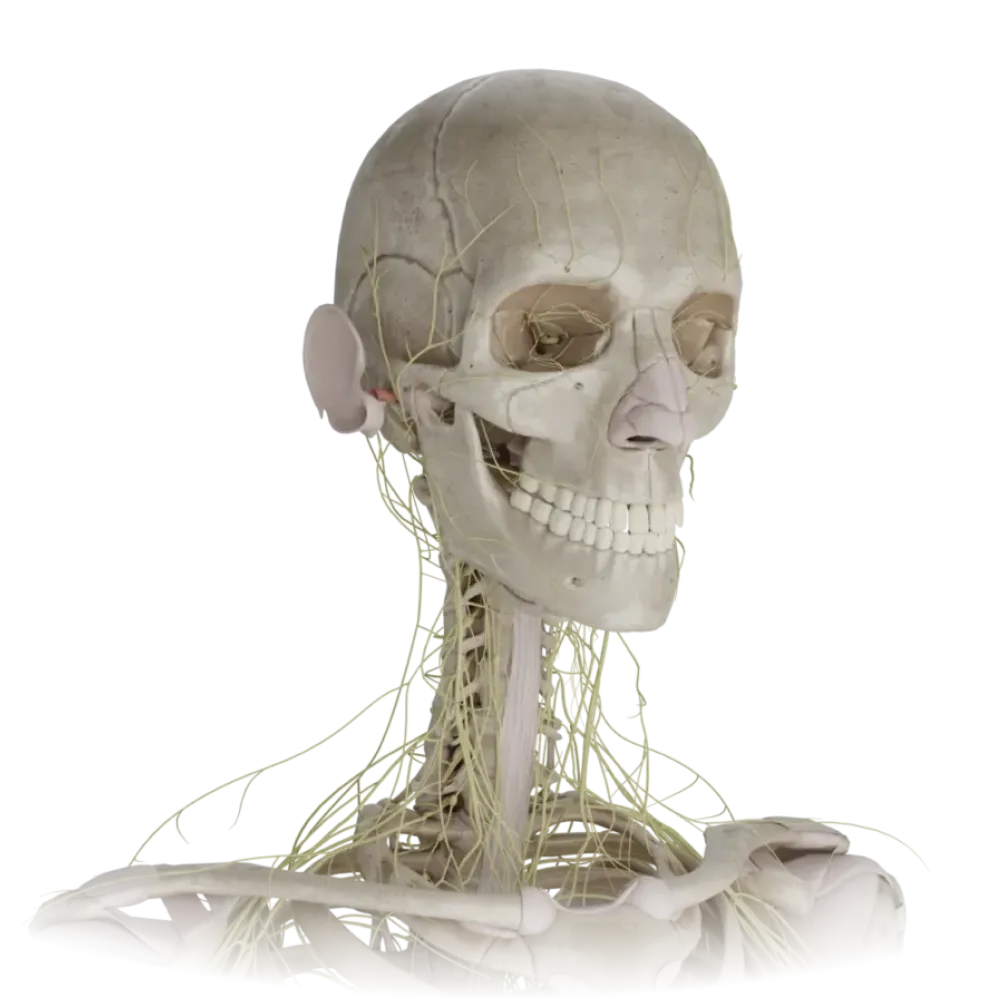
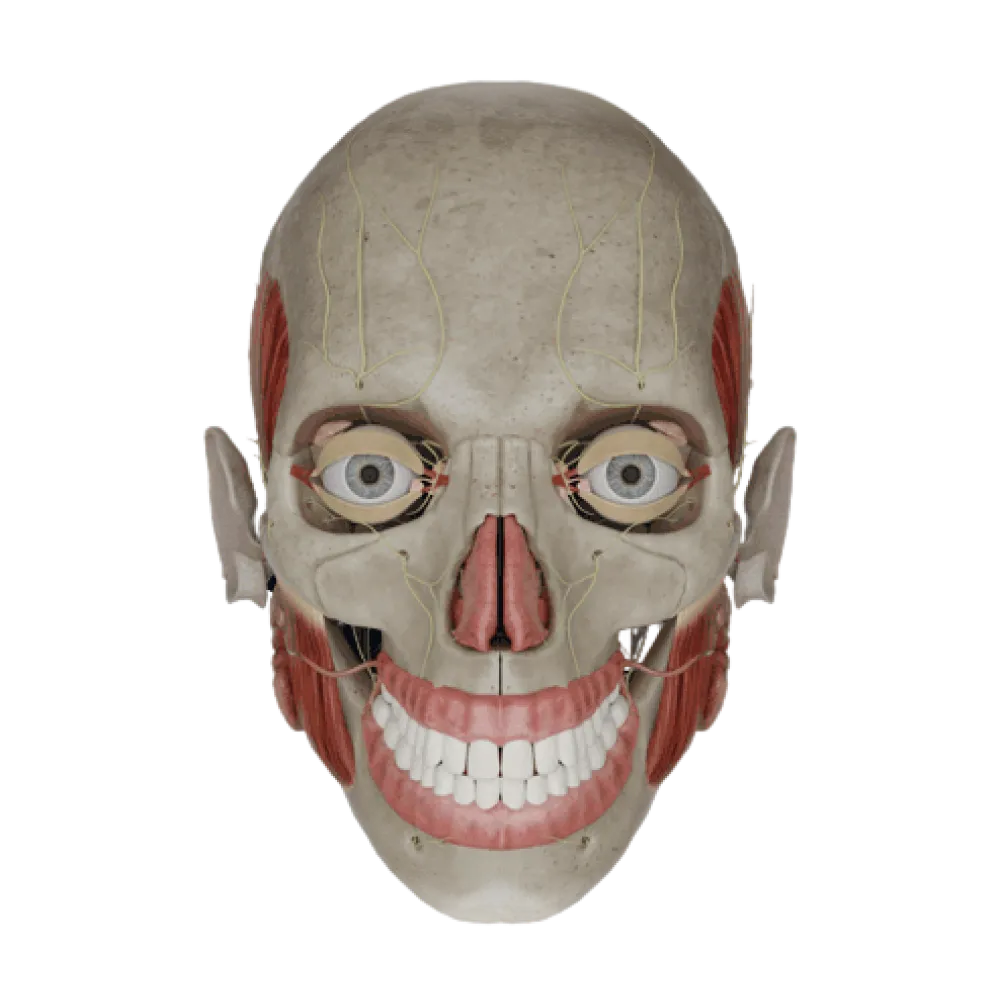
Evaluate your knowledge of trigeminal nerve anatomy. The test covers the topography of branches, exit points from the skull, innervation zones, and parasympathetic connections.
1/20
bold
text
1. Where is the trigeminal ganglion (Gasserian ganglion) located?
-
In the pterygopalatine fossa
The trigeminal ganglion is located in the trigeminal cave (cavum trigeminale) on the anterior surface of the temporal bone.
-
In the infratemporal fossa
The trigeminal ganglion is located in the trigeminal cave (cavum trigeminale) on the anterior surface of the temporal bone.
-
On the anterior surface of the temporal bone in the trigeminal impression
The trigeminal ganglion is located in the trigeminal cave (cavum trigeminale) on the anterior surface of the temporal bone.
-
On the posterior surface of the temporal bone
The trigeminal ganglion is located in the trigeminal cave (cavum trigeminale) on the anterior surface of the temporal bone.
-
I find it difficult to answer
The trigeminal ganglion is located in the trigeminal cave (cavum trigeminale) on the anterior surface of the temporal bone.
2. Through which foramen does the ophthalmic nerve (the first branch of the trigeminal nerve) exit the cranial cavity?
-
Foramen rotundum
The ophthalmic nerve (n. ophthalmicus) exits the cranial cavity into the orbit through the superior orbital fissure (fissura orbitalis superior).
-
Foramen ovale
The ophthalmic nerve (n. ophthalmicus) exits the cranial cavity into the orbit through the superior orbital fissure (fissura orbitalis superior).
-
Foramen spinosum
The ophthalmic nerve (n. ophthalmicus) exits the cranial cavity into the orbit through the superior orbital fissure (fissura orbitalis superior).
-
Superior orbital fissure
The ophthalmic nerve (n. ophthalmicus) exits the cranial cavity into the orbit through the superior orbital fissure (fissura orbitalis superior).
-
I find it difficult to answer
The ophthalmic nerve (n. ophthalmicus) exits the cranial cavity into the orbit through the superior orbital fissure (fissura orbitalis superior).
3. Which foramen serves as the exit for the maxillary nerve (the second branch) from the cranial cavity?
-
Foramen rotundum
The maxillary nerve (n. maxillaris) exits the cranial cavity through the foramen rotundum, passing into the pterygopalatine fossa.
-
Foramen lacerum
The maxillary nerve (n. maxillaris) exits the cranial cavity through the foramen rotundum, passing into the pterygopalatine fossa.
-
Superior orbital fissure
The maxillary nerve (n. maxillaris) exits the cranial cavity through the foramen rotundum, passing into the pterygopalatine fossa.
-
Foramen ovale
The maxillary nerve (n. maxillaris) exits the cranial cavity through the foramen rotundum, passing into the pterygopalatine fossa.
-
I find it difficult to answer
The maxillary nerve (n. maxillaris) exits the cranial cavity through the foramen rotundum, passing into the pterygopalatine fossa.
4. The mandibular nerve (the third branch of the trigeminal nerve) exits the cranial cavity through:
-
Foramen rotundum
The mandibular nerve (n. mandibularis) exits the skull through the foramen ovale, entering the infratemporal fossa.
-
Foramen ovale
The mandibular nerve (n. mandibularis) exits the skull through the foramen ovale, entering the infratemporal fossa.
-
Foramen spinosum
The mandibular nerve (n. mandibularis) exits the skull through the foramen ovale, entering the infratemporal fossa.
-
Jugular foramen
The mandibular nerve (n. mandibularis) exits the skull through the foramen ovale, entering the infratemporal fossa.
-
I find it difficult to answer
The mandibular nerve (n. mandibularis) exits the skull through the foramen ovale, entering the infratemporal fossa.
5. Which branch of the ophthalmic nerve provides sensory innervation to the cornea?
-
Frontal nerve
The nasociliary nerve (n. nasociliaris) gives off long ciliary nerves, which innervate the cornea, sclera, and choroid of the eye.
-
Lacrimal nerve
The nasociliary nerve (n. nasociliaris) gives off long ciliary nerves, which innervate the cornea, sclera, and choroid of the eye.
-
Nasociliary nerve
The nasociliary nerve (n. nasociliaris) gives off long ciliary nerves, which innervate the cornea, sclera, and choroid of the eye.
-
Zygomatic nerve
The nasociliary nerve (n. nasociliaris) gives off long ciliary nerves, which innervate the cornea, sclera, and choroid of the eye.
-
I find it difficult to answer
The nasociliary nerve (n. nasociliaris) gives off long ciliary nerves, which innervate the cornea, sclera, and choroid of the eye.
6. Which of the following muscles is NOT innervated by the motor branches of the mandibular nerve?
-
Masseter muscle
The buccinator muscle (m. buccinator) is a facial muscle innervated by the facial nerve, while the buccal nerve from the V3 system provides only sensory innervation to the mucosa of the cheek.
-
Buccinator
The buccinator muscle (m. buccinator) is a facial muscle innervated by the facial nerve, while the buccal nerve from the V3 system provides only sensory innervation to the mucosa of the cheek.
-
Temporalis muscle
The buccinator muscle (m. buccinator) is a facial muscle innervated by the facial nerve, while the buccal nerve from the V3 system provides only sensory innervation to the mucosa of the cheek.
-
Lateral pterygoid muscle
The buccinator muscle (m. buccinator) is a facial muscle innervated by the facial nerve, while the buccal nerve from the V3 system provides only sensory innervation to the mucosa of the cheek.
-
I find it difficult to answer
The buccinator muscle (m. buccinator) is a facial muscle innervated by the facial nerve, while the buccal nerve from the V3 system provides only sensory innervation to the mucosa of the cheek.
7. The infraorbital nerve is a direct continuation of:
-
Ophthalmic nerve
The infraorbital nerve (n. infraorbitalis) is the terminal branch of the maxillary nerve (V2), passing through the inferior orbital fissure into the infraorbital canal.
-
Mandibular nerve
The infraorbital nerve (n. infraorbitalis) is the terminal branch of the maxillary nerve (V2), passing through the inferior orbital fissure into the infraorbital canal.
-
Maxillary nerve
The infraorbital nerve (n. infraorbitalis) is the terminal branch of the maxillary nerve (V2), passing through the inferior orbital fissure into the infraorbital canal.
-
Facial nerve
The infraorbital nerve (n. infraorbitalis) is the terminal branch of the maxillary nerve (V2), passing through the inferior orbital fissure into the infraorbital canal.
-
I find it difficult to answer
The infraorbital nerve (n. infraorbitalis) is the terminal branch of the maxillary nerve (V2), passing through the inferior orbital fissure into the infraorbital canal.
8. Which nerve encircles the middle meningeal artery with its two roots?
-
Auriculotemporal nerve
The auriculotemporal nerve (n. auriculotemporalis), a branch of V3, begins with two roots that encircle the middle meningeal artery before joining into a single trunk.
-
Lingual nerve
The auriculotemporal nerve (n. auriculotemporalis), a branch of V3, begins with two roots that encircle the middle meningeal artery before joining into a single trunk.
-
Inferior alveolar nerve
The auriculotemporal nerve (n. auriculotemporalis), a branch of V3, begins with two roots that encircle the middle meningeal artery before joining into a single trunk.
-
Buccal nerve
The auriculotemporal nerve (n. auriculotemporalis), a branch of V3, begins with two roots that encircle the middle meningeal artery before joining into a single trunk.
-
I find it difficult to answer
The auriculotemporal nerve (n. auriculotemporalis), a branch of V3, begins with two roots that encircle the middle meningeal artery before joining into a single trunk.
9. Which branch arises from the inferior alveolar nerve before it enters the mandibular canal?
-
Mental nerve
The mylohyoid nerve (n. mylohyoideus) arises from the inferior alveolar nerve before its entry into the mandibular foramen and contains motor fibers.
-
Lingual nerve
The mylohyoid nerve (n. mylohyoideus) arises from the inferior alveolar nerve before its entry into the mandibular foramen and contains motor fibers.
-
Mylohyoid nerve
The mylohyoid nerve (n. mylohyoideus) arises from the inferior alveolar nerve before its entry into the mandibular foramen and contains motor fibers.
-
Masseteric nerve
The mylohyoid nerve (n. mylohyoideus) arises from the inferior alveolar nerve before its entry into the mandibular foramen and contains motor fibers.
-
I find it difficult to answer
The mylohyoid nerve (n. mylohyoideus) arises from the inferior alveolar nerve before its entry into the mandibular foramen and contains motor fibers.
10. General sensory innervation of the anterior 2/3 of the tongue (general sensation) is provided by:
-
Glossopharyngeal nerve.
The lingual nerve (n. lingualis), a branch of the mandibular nerve, provides general sensory innervation to the mucosa of the anterior 2/3 of the tongue.
-
Chorda tympani
The lingual nerve (n. lingualis), a branch of the mandibular nerve, provides general sensory innervation to the mucosa of the anterior 2/3 of the tongue.
-
Hypoglossal nerve
The lingual nerve (n. lingualis), a branch of the mandibular nerve, provides general sensory innervation to the mucosa of the anterior 2/3 of the tongue.
-
Lingual nerve
The lingual nerve (n. lingualis), a branch of the mandibular nerve, provides general sensory innervation to the mucosa of the anterior 2/3 of the tongue.
-
I find it difficult to answer
The lingual nerve (n. lingualis), a branch of the mandibular nerve, provides general sensory innervation to the mucosa of the anterior 2/3 of the tongue.
11. The zygomatic nerve (n. zygomaticus) arises from:
-
Ophthalmic nerve
The zygomatic nerve is a branch of the maxillary nerve (V2), arising from it in the pterygopalatine fossa, innervating the skin of the zygomatic and temporal regions.
-
Maxillary nerve
The zygomatic nerve is a branch of the maxillary nerve (V2), arising from it in the pterygopalatine fossa, innervating the skin of the zygomatic and temporal regions.
-
Mandibular nerve
The zygomatic nerve is a branch of the maxillary nerve (V2), arising from it in the pterygopalatine fossa, innervating the skin of the zygomatic and temporal regions.
-
Facial nerve
The zygomatic nerve is a branch of the maxillary nerve (V2), arising from it in the pterygopalatine fossa, innervating the skin of the zygomatic and temporal regions.
-
I find it difficult to answer
The zygomatic nerve is a branch of the maxillary nerve (V2), arising from it in the pterygopalatine fossa, innervating the skin of the zygomatic and temporal regions.
12. Through which foramen does the mental nerve (the terminal branch of the inferior alveolar nerve) exit onto the face?
-
Infraorbital foramen
The mental nerve (n. mentalis) exits the mandibular canal through the mental foramen, innervating the skin of the chin and lower lip.
-
Foramen ovale
The mental nerve (n. mentalis) exits the mandibular canal through the mental foramen, innervating the skin of the chin and lower lip.
-
Mental foramen
The mental nerve (n. mentalis) exits the mandibular canal through the mental foramen, innervating the skin of the chin and lower lip.
-
Incisive foramen
The mental nerve (n. mentalis) exits the mandibular canal through the mental foramen, innervating the skin of the chin and lower lip.
-
I find it difficult to answer
The mental nerve (n. mentalis) exits the mandibular canal through the mental foramen, innervating the skin of the chin and lower lip.
13. The motor root of the trigeminal nerve (radix motoria) joins with:
-
Ophthalmic nerve
The motor root passes beneath the trigeminal ganglion without entering it and fully joins the mandibular nerve (V3), making it mixed.
-
Maxillary nerve
The motor root passes beneath the trigeminal ganglion without entering it and fully joins the mandibular nerve (V3), making it mixed.
-
Mandibular nerve
The motor root passes beneath the trigeminal ganglion without entering it and fully joins the mandibular nerve (V3), making it mixed.
-
All three branches of the trigeminal nerve
The motor root passes beneath the trigeminal ganglion without entering it and fully joins the mandibular nerve (V3), making it mixed.
-
I find it difficult to answer
The motor root passes beneath the trigeminal ganglion without entering it and fully joins the mandibular nerve (V3), making it mixed.
14. Which branches of the maxillary nerve form the superior dental plexus?
-
Superior alveolar nerves
The superior alveolar nerves (nn. alveolares superiores: anterior, middle, and posterior) anastomose in the thickness of the maxilla, forming the superior dental plexus.
-
Inferior alveolar nerves
The superior alveolar nerves (nn. alveolares superiores: anterior, middle, and posterior) anastomose in the thickness of the maxilla, forming the superior dental plexus.
-
Palatine nerves
The superior alveolar nerves (nn. alveolares superiores: anterior, middle, and posterior) anastomose in the thickness of the maxilla, forming the superior dental plexus.
-
Pterygopalatine nerves
The superior alveolar nerves (nn. alveolares superiores: anterior, middle, and posterior) anastomose in the thickness of the maxilla, forming the superior dental plexus.
-
I find it difficult to answer
The superior alveolar nerves (nn. alveolares superiores: anterior, middle, and posterior) anastomose in the thickness of the maxilla, forming the superior dental plexus.
15. The apparent origin of the trigeminal nerve from the brain is at:
-
Cerebellopontine angle
The trigeminal nerve exits the brainstem on the anterior surface of the pons, at the junction with the middle cerebellar peduncles.
-
Junction of the pons and the middle cerebellar peduncles
The trigeminal nerve exits the brainstem on the anterior surface of the pons, at the junction with the middle cerebellar peduncles.
-
Olives of the medulla oblongata
The trigeminal nerve exits the brainstem on the anterior surface of the pons, at the junction with the middle cerebellar peduncles.
-
Interpeduncular fossa
The trigeminal nerve exits the brainstem on the anterior surface of the pons, at the junction with the middle cerebellar peduncles.
-
I find it difficult to answer
The trigeminal nerve exits the brainstem on the anterior surface of the pons, at the junction with the middle cerebellar peduncles.
16. Which branch of the ophthalmic nerve gives off the communicating branch to the ciliary ganglion (radix sensoria ganglii ciliaris)?
-
Frontal nerve
The nasociliary nerve (n. nasociliaris) gives off the sensory root to the parasympathetic ciliary ganglion.
-
Lacrimal nerve
The nasociliary nerve (n. nasociliaris) gives off the sensory root to the parasympathetic ciliary ganglion.
-
Supratrochlear nerve
The nasociliary nerve (n. nasociliaris) gives off the sensory root to the parasympathetic ciliary ganglion.
-
Nasociliary nerve
The nasociliary nerve (n. nasociliaris) gives off the sensory root to the parasympathetic ciliary ganglion.
-
I find it difficult to answer
The nasociliary nerve (n. nasociliaris) gives off the sensory root to the parasympathetic ciliary ganglion.
17. Secretory parasympathetic fibers to the lacrimal gland enter the lacrimal nerve via an anastomosis with:
-
Frontal nerve
The zygomatic nerve (a branch of V2) carries postganglionic parasympathetic fibers from the pterygopalatine ganglion, transferring them to the lacrimal nerve (a branch of V1) for lacrimal gland innervation.
-
Zygomatic nerve
The zygomatic nerve (a branch of V2) carries postganglionic parasympathetic fibers from the pterygopalatine ganglion, transferring them to the lacrimal nerve (a branch of V1) for lacrimal gland innervation.
-
Nasociliary nerve
The zygomatic nerve (a branch of V2) carries postganglionic parasympathetic fibers from the pterygopalatine ganglion, transferring them to the lacrimal nerve (a branch of V1) for lacrimal gland innervation.
-
Infraorbital nerve
The zygomatic nerve (a branch of V2) carries postganglionic parasympathetic fibers from the pterygopalatine ganglion, transferring them to the lacrimal nerve (a branch of V1) for lacrimal gland innervation.
-
I find it difficult to answer
The zygomatic nerve (a branch of V2) carries postganglionic parasympathetic fibers from the pterygopalatine ganglion, transferring them to the lacrimal nerve (a branch of V1) for lacrimal gland innervation.
18. Which neck muscle is innervated by the branch of the mandibular nerve (V3)?
-
Sternocleidomastoid muscle
The anterior belly of the digastric muscle is innervated by the mylohyoid nerve (a branch of V3), while the posterior belly is innervated by the facial nerve.
-
Platysma (platysma)
The anterior belly of the digastric muscle is innervated by the mylohyoid nerve (a branch of V3), while the posterior belly is innervated by the facial nerve.
-
Anterior belly of the digastric muscle.
The anterior belly of the digastric muscle is innervated by the mylohyoid nerve (a branch of V3), while the posterior belly is innervated by the facial nerve.
-
Posterior belly of the digastric muscle.
The anterior belly of the digastric muscle is innervated by the mylohyoid nerve (a branch of V3), while the posterior belly is innervated by the facial nerve.
-
I find it difficult to answer
The anterior belly of the digastric muscle is innervated by the mylohyoid nerve (a branch of V3), while the posterior belly is innervated by the facial nerve.
19. The greater palatine nerve (n. palatinus major) descends into the oral cavity through:
-
Incisive canal
The greater palatine nerve (a branch of V2, arising from the pterygopalatine ganglion) passes through the greater palatine canal to the hard palate.
-
Greater palatine canal
The greater palatine nerve (a branch of V2, arising from the pterygopalatine ganglion) passes through the greater palatine canal to the hard palate.
-
Foramen lacerum
The greater palatine nerve (a branch of V2, arising from the pterygopalatine ganglion) passes through the greater palatine canal to the hard palate.
-
Sphenopalatine foramen
The greater palatine nerve (a branch of V2, arising from the pterygopalatine ganglion) passes through the greater palatine canal to the hard palate.
-
I find it difficult to answer
The greater palatine nerve (a branch of V2, arising from the pterygopalatine ganglion) passes through the greater palatine canal to the hard palate.
20. The skin of the upper lip is innervated by branches of:
-
Ophthalmic nerve
The upper lip receives sensory innervation from the superior labial branches (rr. labiales superiores) of the infraorbital nerve, which is a continuation of the maxillary nerve (V2).
-
Maxillary nerve
The upper lip receives sensory innervation from the superior labial branches (rr. labiales superiores) of the infraorbital nerve, which is a continuation of the maxillary nerve (V2).
-
Mandibular nerve
The upper lip receives sensory innervation from the superior labial branches (rr. labiales superiores) of the infraorbital nerve, which is a continuation of the maxillary nerve (V2).
-
Facial nerve
The upper lip receives sensory innervation from the superior labial branches (rr. labiales superiores) of the infraorbital nerve, which is a continuation of the maxillary nerve (V2).
-
I find it difficult to answer
The upper lip receives sensory innervation from the superior labial branches (rr. labiales superiores) of the infraorbital nerve, which is a continuation of the maxillary nerve (V2).
Retake this quiz?
Your current progress will be reset.