




Cranial bone anatomy test
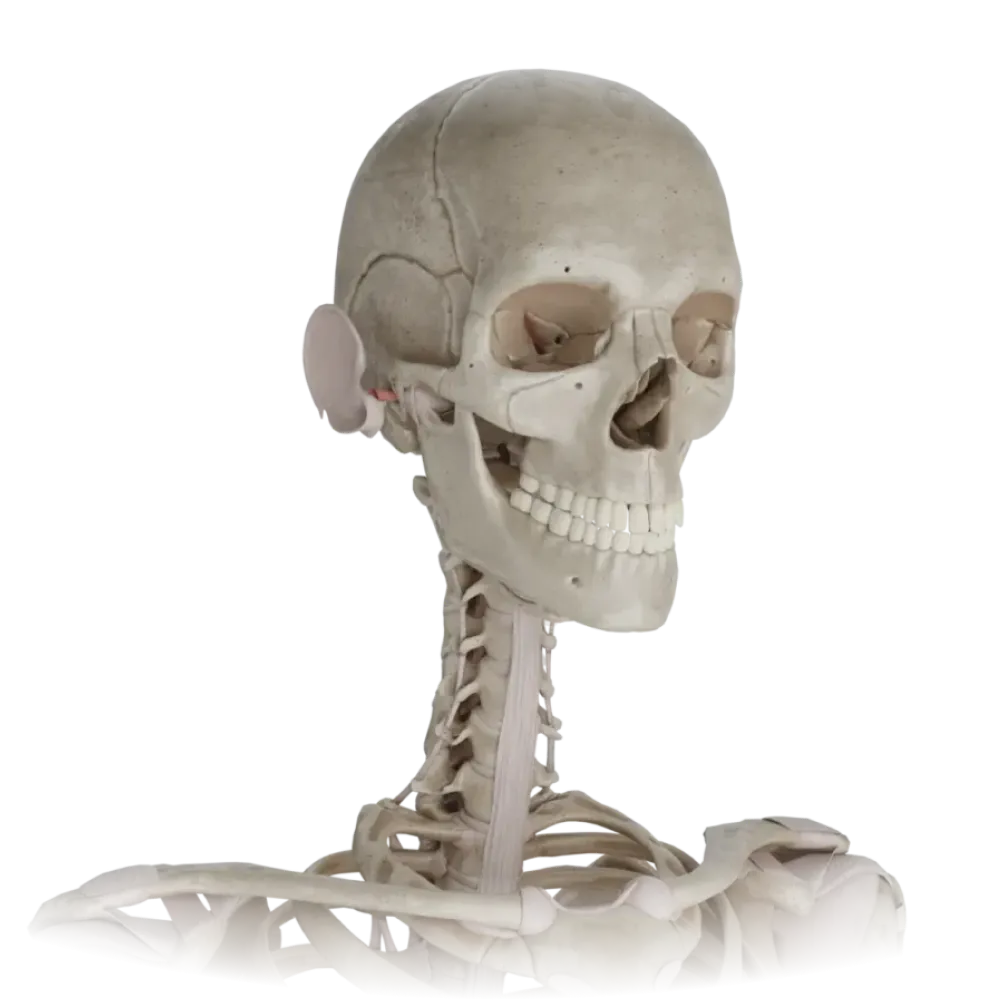
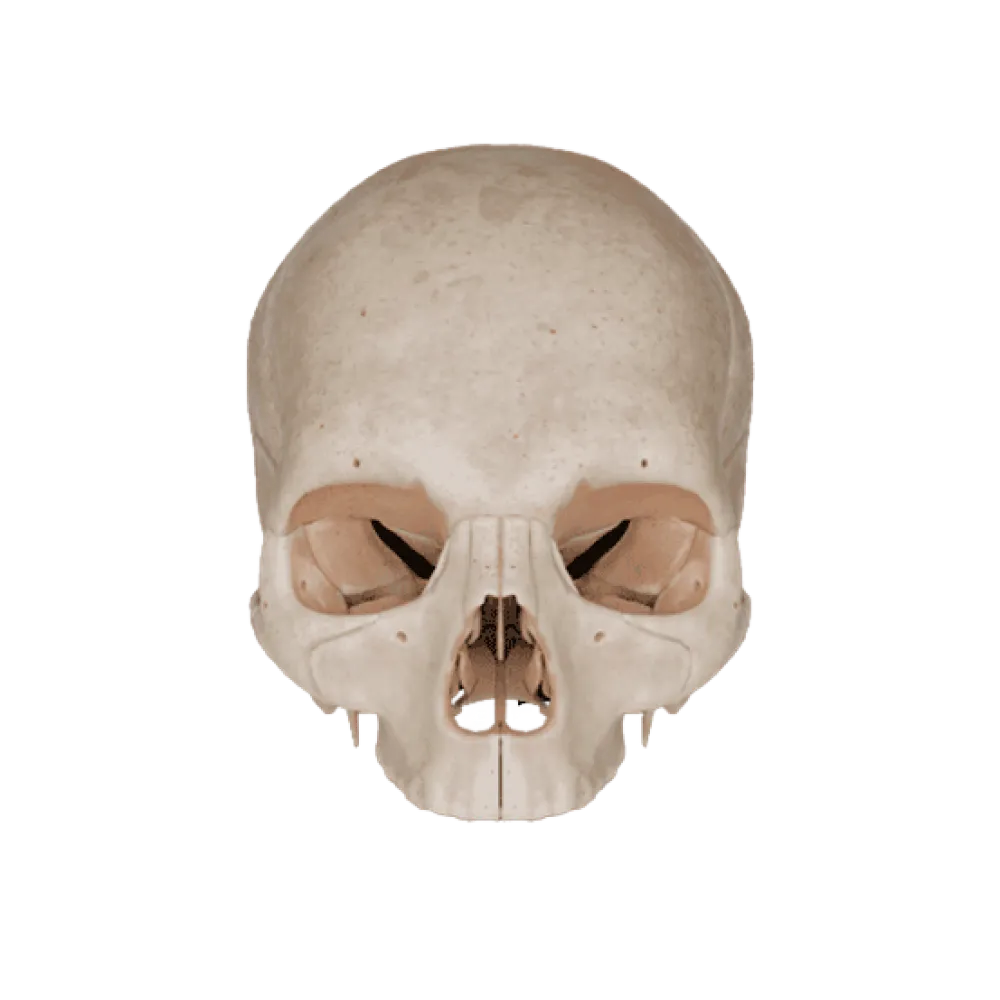
Test your knowledge of the bones of cranium anatomy. The test covers the topography, internal structure of the bones, cranial fossae, foramina, and canals.
1/20
bold
text
1. Which structure of the sphenoid bone contains the hypophyseal fossa?
-
Sella turcica
The hypophyseal fossa is the central depression of the sella turcica of the sphenoid bone.
-
Clivus
The hypophyseal fossa is the central depression of the sella turcica of the sphenoid bone.
-
Pterygoid process
The hypophyseal fossa is the central depression of the sella turcica of the sphenoid bone.
-
Lesser wing
The hypophyseal fossa is the central depression of the sella turcica of the sphenoid bone.
-
I find it difficult to answer
The hypophyseal fossa is the central depression of the sella turcica of the sphenoid bone.
2. Through which foramen does the middle meningeal artery pass?
-
Foramen rotundum
The middle meningeal artery enters the cranial cavity through the foramen spinosum of the sphenoid bone.
-
Foramen spinosum
The middle meningeal artery enters the cranial cavity through the foramen spinosum of the sphenoid bone.
-
Foramen ovale
The middle meningeal artery enters the cranial cavity through the foramen spinosum of the sphenoid bone.
-
Foramen lacerum
The middle meningeal artery enters the cranial cavity through the foramen spinosum of the sphenoid bone.
-
I find it difficult to answer
The middle meningeal artery enters the cranial cavity through the foramen spinosum of the sphenoid bone.
3. Which bone forms the inferior turbinate?
-
Ethmoid bone = Ethmoid = Ethmoidal bone
The inferior turbinate is an independent paired bone of the viscerocranium.
-
Maxilla
The inferior turbinate is an independent paired bone of the viscerocranium.
-
Independent bone
The inferior turbinate is an independent paired bone of the viscerocranium.
-
Palatine bone
The inferior turbinate is an independent paired bone of the viscerocranium.
-
I find it difficult to answer
The inferior turbinate is an independent paired bone of the viscerocranium.
4. The stylomastoid foramen of the temporal bone serves as the exit point for:
-
Trigeminal nerve.
The facial nerve exits the facial canal of the temporal bone through the stylomastoid foramen.
-
Glossopharyngeal nerve.
The facial nerve exits the facial canal of the temporal bone through the stylomastoid foramen.
-
Vagus nerve.
The facial nerve exits the facial canal of the temporal bone through the stylomastoid foramen.
-
Facial nerve
The facial nerve exits the facial canal of the temporal bone through the stylomastoid foramen.
-
I find it difficult to answer
The facial nerve exits the facial canal of the temporal bone through the stylomastoid foramen.
5. Which part of the ethmoid bone contributes to the formation of the nasal septum?
-
Perpendicular plate
The perpendicular plate of the ethmoid bone, together with the vomer, forms the nasal septum.
-
Cribriform plate
The perpendicular plate of the ethmoid bone, together with the vomer, forms the nasal septum.
-
Smooth orbital plate
The perpendicular plate of the ethmoid bone, together with the vomer, forms the nasal septum.
-
Ethmoidal labyrinth
The perpendicular plate of the ethmoid bone, together with the vomer, forms the nasal septum.
-
I find it difficult to answer
The perpendicular plate of the ethmoid bone, together with the vomer, forms the nasal septum.
6. Which anatomical structure is bounded by the greater and lesser wings of the sphenoid bone?
-
Optic canal
The superior orbital fissure is located between the lesser and greater wings of the sphenoid bone.
-
Superior orbital fissure
The superior orbital fissure is located between the lesser and greater wings of the sphenoid bone.
-
Inferior orbital fissure
The superior orbital fissure is located between the lesser and greater wings of the sphenoid bone.
-
Foramen rotundum
The superior orbital fissure is located between the lesser and greater wings of the sphenoid bone.
-
I find it difficult to answer
The superior orbital fissure is located between the lesser and greater wings of the sphenoid bone.
7. The foramen rotundum communicates the middle cranial fossa with:
-
Infratemporal fossa
The foramen rotundum opens into the pterygopalatine fossa, allowing the passage of the maxillary nerve.
-
Pterygopalatine fossa
The foramen rotundum opens into the pterygopalatine fossa, allowing the passage of the maxillary nerve.
-
Orbit
The foramen rotundum opens into the pterygopalatine fossa, allowing the passage of the maxillary nerve.
-
Nasal cavity
The foramen rotundum opens into the pterygopalatine fossa, allowing the passage of the maxillary nerve.
-
I find it difficult to answer
The foramen rotundum opens into the pterygopalatine fossa, allowing the passage of the maxillary nerve.
8. On which surface of the petrous part of the temporal bone is the internal acoustic meatus located?
-
Anterior surface
The internal acoustic meatus, leading to the internal auditory canal, is located on the posterior surface of the petrous part of the temporal bone.
-
Inferior surface
The internal acoustic meatus, leading to the internal auditory canal, is located on the posterior surface of the petrous part of the temporal bone.
-
Posterior surface
The internal acoustic meatus, leading to the internal auditory canal, is located on the posterior surface of the petrous part of the temporal bone.
-
Lateral surface
The internal acoustic meatus, leading to the internal auditory canal, is located on the posterior surface of the petrous part of the temporal bone.
-
I find it difficult to answer
The internal acoustic meatus, leading to the internal auditory canal, is located on the posterior surface of the petrous part of the temporal bone.
9. Which structure forms the superior wall of the orbit?
-
Greater wing of sphenoid bone
The superior wall of the orbit is formed by the orbital part of the frontal bone and is supplemented posteriorly by the lesser wing of the sphenoid bone.
-
Orbital plate of the ethmoid bone
The superior wall of the orbit is formed by the orbital part of the frontal bone and is supplemented posteriorly by the lesser wing of the sphenoid bone.
-
Frontal process of the maxilla
The superior wall of the orbit is formed by the orbital part of the frontal bone and is supplemented posteriorly by the lesser wing of the sphenoid bone.
-
Orbital part of frontal bone and lesser wing of sphenoid
The superior wall of the orbit is formed by the orbital part of the frontal bone and is supplemented posteriorly by the lesser wing of the sphenoid bone.
-
I find it difficult to answer
The superior wall of the orbit is formed by the orbital part of the frontal bone and is supplemented posteriorly by the lesser wing of the sphenoid bone.
10. In which bone is the hypoglossal canal located?
-
Occipital bone
The hypoglossal canal passes through the lateral parts of the occipital bone above the condyles.
-
Sphenoid bone
The hypoglossal canal passes through the lateral parts of the occipital bone above the condyles.
-
Temporal bone
The hypoglossal canal passes through the lateral parts of the occipital bone above the condyles.
-
Parietal bone
The hypoglossal canal passes through the lateral parts of the occipital bone above the condyles.
-
I find it difficult to answer
The hypoglossal canal passes through the lateral parts of the occipital bone above the condyles.
11. Which bone bears the crista galli?
-
Sphenoid
The crista galli rises above the cribriform plate of the ethmoid bone in the anterior cranial fossa.
-
Frontal
The crista galli rises above the cribriform plate of the ethmoid bone in the anterior cranial fossa.
-
Ethmoid
The crista galli rises above the cribriform plate of the ethmoid bone in the anterior cranial fossa.
-
Occipital
The crista galli rises above the cribriform plate of the ethmoid bone in the anterior cranial fossa.
-
I find it difficult to answer
The crista galli rises above the cribriform plate of the ethmoid bone in the anterior cranial fossa.
12. Through which foramen does the internal jugular vein exit the cranial cavity?
-
Foramen lacerum
The internal jugular vein originates from the sigmoid sinus in the area of the jugular foramen.
-
Foramen magnum
The internal jugular vein originates from the sigmoid sinus in the area of the jugular foramen.
-
Foramen ovale
The internal jugular vein originates from the sigmoid sinus in the area of the jugular foramen.
-
Jugular foramen
The internal jugular vein originates from the sigmoid sinus in the area of the jugular foramen.
-
I find it difficult to answer
The internal jugular vein originates from the sigmoid sinus in the area of the jugular foramen.
13. Which structure of the temporal bone forms the articular fossa for articulation with the mandible?
-
Mammillary process
The mandibular fossa is located on the inferior surface of the squamous part of the temporal bone at the base of the zygomatic process.
-
Squamous part
The mandibular fossa is located on the inferior surface of the squamous part of the temporal bone at the base of the zygomatic process.
-
Tympanic part
The mandibular fossa is located on the inferior surface of the squamous part of the temporal bone at the base of the zygomatic process.
-
Petrous part
The mandibular fossa is located on the inferior surface of the squamous part of the temporal bone at the base of the zygomatic process.
-
I find it difficult to answer
The mandibular fossa is located on the inferior surface of the squamous part of the temporal bone at the base of the zygomatic process.
14. Which bones contribute to the formation of the hard palate?
-
Palatine processes of the maxillae and horizontal plates of the palatine bones
The hard palate is formed by the palatine processes of the maxillae anteriorly and the horizontal plates of the palatine bones posteriorly.
-
Alveolar processes of the maxillae and pterygoid processes
The hard palate is formed by the palatine processes of the maxillae anteriorly and the horizontal plates of the palatine bones posteriorly.
-
Horizontal plates of the palatine bones and vomer
The hard palate is formed by the palatine processes of the maxillae anteriorly and the horizontal plates of the palatine bones posteriorly.
-
Palatine processes of the maxillae and perpendicular plates of the palatine bones
The hard palate is formed by the palatine processes of the maxillae anteriorly and the horizontal plates of the palatine bones posteriorly.
-
I find it difficult to answer
The hard palate is formed by the palatine processes of the maxillae anteriorly and the horizontal plates of the palatine bones posteriorly.
15. The infraorbital foramen (foramen infraorbitale) serves as an anatomical landmark on:
-
Zygomatic bone
The infraorbital foramen is located on the anterior (facial) surface of the body of the maxilla.
-
Frontal bone
The infraorbital foramen is located on the anterior (facial) surface of the body of the maxilla.
-
Maxilla
The infraorbital foramen is located on the anterior (facial) surface of the body of the maxilla.
-
Lacrimal bone
The infraorbital foramen is located on the anterior (facial) surface of the body of the maxilla.
-
I find it difficult to answer
The infraorbital foramen is located on the anterior (facial) surface of the body of the maxilla.
16. Where is the trigeminal impression located?
-
On the anterior surface of the petrous part of the temporal bone
The trigeminal impression, where the trigeminal ganglion lies, is located on the anterior surface of the petrous part of the temporal bone at its apex.
-
On the posterior surface of the temporal bone
The trigeminal impression, where the trigeminal ganglion lies, is located on the anterior surface of the petrous part of the temporal bone at its apex.
-
On the greater wing of the sphenoid bone
The trigeminal impression, where the trigeminal ganglion lies, is located on the anterior surface of the petrous part of the temporal bone at its apex.
-
On the squama of the occipital bone
The trigeminal impression, where the trigeminal ganglion lies, is located on the anterior surface of the petrous part of the temporal bone at its apex.
-
I find it difficult to answer
The trigeminal impression, where the trigeminal ganglion lies, is located on the anterior surface of the petrous part of the temporal bone at its apex.
17. With which bone does the vomer articulate with its superior edge?
-
With the ethmoid bone
The superior edge of the vomer is bifurcated and encircles the rostrum of the sphenoid bone.
-
With the sphenoid bone
The superior edge of the vomer is bifurcated and encircles the rostrum of the sphenoid bone.
-
With the palatine bone
The superior edge of the vomer is bifurcated and encircles the rostrum of the sphenoid bone.
-
With the maxilla
The superior edge of the vomer is bifurcated and encircles the rostrum of the sphenoid bone.
-
I find it difficult to answer
The superior edge of the vomer is bifurcated and encircles the rostrum of the sphenoid bone.
18. Which part of the occipital bone contains the groove for the inferior petrosal sinus?
-
Basilar part
On the lateral margins of the basilar part of the occipital bone run the grooves for the inferior petrosal sinus.
-
Lateral part
On the lateral margins of the basilar part of the occipital bone run the grooves for the inferior petrosal sinus.
-
Squamous part of occipital bone
On the lateral margins of the basilar part of the occipital bone run the grooves for the inferior petrosal sinus.
-
Occipital condyle
On the lateral margins of the basilar part of the occipital bone run the grooves for the inferior petrosal sinus.
-
I find it difficult to answer
On the lateral margins of the basilar part of the occipital bone run the grooves for the inferior petrosal sinus.
19. The optic canal (canalis opticus) pierces:
-
Base of the pterygoid process
The optic canal passes through the base of each lesser wing of the sphenoid bone, connecting the orbit with the cranial cavity.
-
Greater wing of sphenoid bone
The optic canal passes through the base of each lesser wing of the sphenoid bone, connecting the orbit with the cranial cavity.
-
Base of the lesser wing of the sphenoid bone
The optic canal passes through the base of each lesser wing of the sphenoid bone, connecting the orbit with the cranial cavity.
-
Orbital plate of the ethmoid bone
The optic canal passes through the base of each lesser wing of the sphenoid bone, connecting the orbit with the cranial cavity.
-
I find it difficult to answer
The optic canal passes through the base of each lesser wing of the sphenoid bone, connecting the orbit with the cranial cavity.
20. The condylar process of the mandible comprises:
-
Coronoid process
The condylar (articular) process of the mandible ends with a head, below which lies a constricted part—the neck.
-
Head and neck
The condylar (articular) process of the mandible ends with a head, below which lies a constricted part—the neck.
-
Mandibular foramen
The condylar (articular) process of the mandible ends with a head, below which lies a constricted part—the neck.
-
Mental spine
The condylar (articular) process of the mandible ends with a head, below which lies a constricted part—the neck.
-
I find it difficult to answer
The condylar (articular) process of the mandible ends with a head, below which lies a constricted part—the neck.
Retake this quiz?
Your current progress will be reset.