


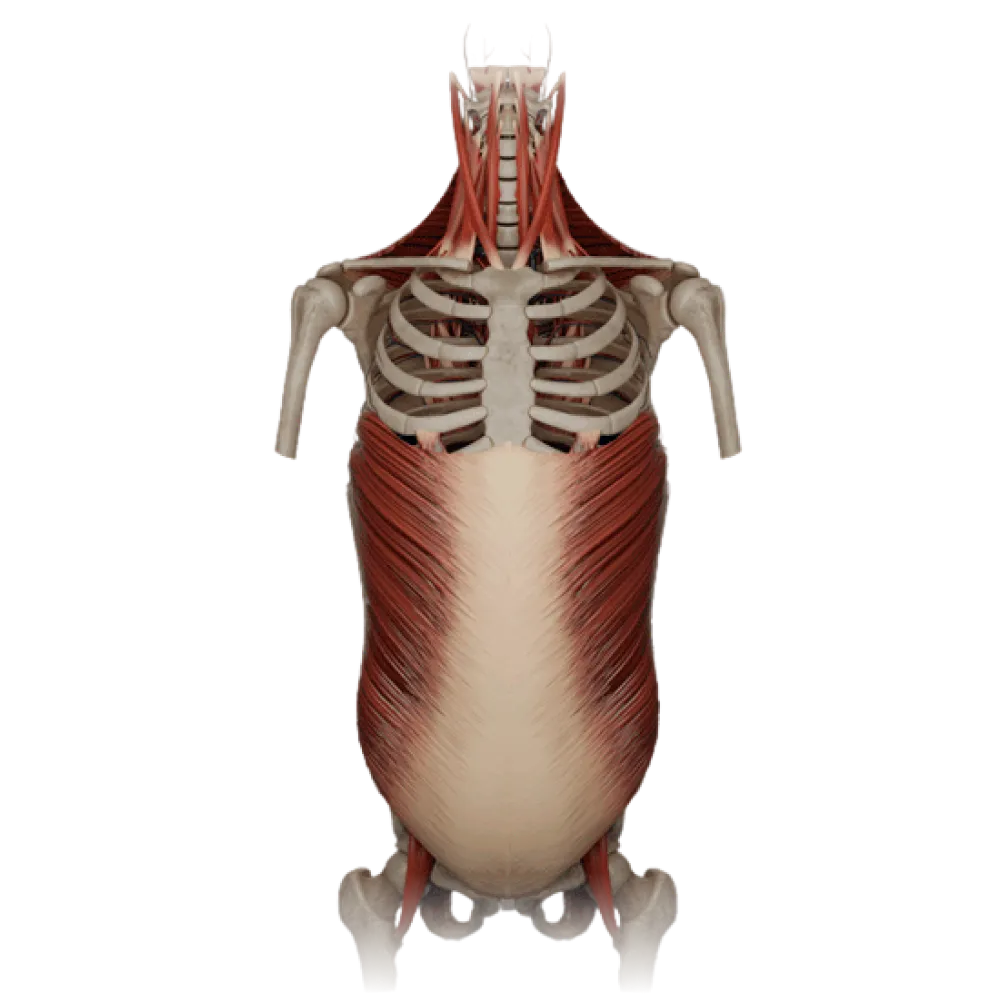
Anatomy test of fibrous joints of the spine
Evaluate the knowledge of fibrous joints of the vertebral column. The test assesses the topography, attachment points, and biomechanics of the ligamentous apparatus.
1/20
bold
text
1. Which ligament prevents excessive extension of the vertebral column?
-
Posterior longitudinal ligament
The anterior longitudinal ligament runs along the anterior surface of the vertebral bodies and is the only ligament limiting extension.
-
Ligamenta flava.
The anterior longitudinal ligament runs along the anterior surface of the vertebral bodies and is the only ligament limiting extension.
-
Anterior longitudinal ligament
The anterior longitudinal ligament runs along the anterior surface of the vertebral bodies and is the only ligament limiting extension.
-
Interspinous ligaments
The anterior longitudinal ligament runs along the anterior surface of the vertebral bodies and is the only ligament limiting extension.
-
I find it difficult to answer
The anterior longitudinal ligament runs along the anterior surface of the vertebral bodies and is the only ligament limiting extension.
2. Where is the posterior longitudinal ligament located?
-
Within the vertebral canal on the posterior surface of the vertebral bodies
The posterior longitudinal ligament passes inside the vertebral canal along the posterior surface of the vertebral bodies and intervertebral discs.
-
On the anterior surface of the vertebral bodies
The posterior longitudinal ligament passes inside the vertebral canal along the posterior surface of the vertebral bodies and intervertebral discs.
-
Between the transverse processes
The posterior longitudinal ligament passes inside the vertebral canal along the posterior surface of the vertebral bodies and intervertebral discs.
-
Between the spinous processes
The posterior longitudinal ligament passes inside the vertebral canal along the posterior surface of the vertebral bodies and intervertebral discs.
-
I find it difficult to answer
The posterior longitudinal ligament passes inside the vertebral canal along the posterior surface of the vertebral bodies and intervertebral discs.
3. Which ligaments connect the arches of adjacent vertebrae?
-
Intertransverse ligaments
The ligamenta flava (ligamenta flava) connect the arches of neighboring vertebrae, enclosing the vertebral canal posteriorly and laterally.
-
Ligamenta flava.
The ligamenta flava (ligamenta flava) connect the arches of neighboring vertebrae, enclosing the vertebral canal posteriorly and laterally.
-
Cruciform ligament
The ligamenta flava (ligamenta flava) connect the arches of neighboring vertebrae, enclosing the vertebral canal posteriorly and laterally.
-
Alar ligaments
The ligamenta flava (ligamenta flava) connect the arches of neighboring vertebrae, enclosing the vertebral canal posteriorly and laterally.
-
I find it difficult to answer
The ligamenta flava (ligamenta flava) connect the arches of neighboring vertebrae, enclosing the vertebral canal posteriorly and laterally.
4. What causes the characteristic color of the ligamenta flava?
-
High content of collagen fibers
Ligamenta flava are composed of elastic connective tissue, which gives them a yellowish color and high elasticity.
-
Presence of adipose tissue
Ligamenta flava are composed of elastic connective tissue, which gives them a yellowish color and high elasticity.
-
Rich blood supply
Ligamenta flava are composed of elastic connective tissue, which gives them a yellowish color and high elasticity.
-
High content of elastic fibers
Ligamenta flava are composed of elastic connective tissue, which gives them a yellowish color and high elasticity.
-
I find it difficult to answer
Ligamenta flava are composed of elastic connective tissue, which gives them a yellowish color and high elasticity.
5. Which ligament is continued by the nuchal ligament in the cervical region?
-
Supraspinous ligament
The nuchal ligament (lig. nuchae) is a thickened continuation of the supraspinous ligament in the cervical region.
-
Anterior longitudinal ligament
The nuchal ligament (lig. nuchae) is a thickened continuation of the supraspinous ligament in the cervical region.
-
Posterior longitudinal ligament
The nuchal ligament (lig. nuchae) is a thickened continuation of the supraspinous ligament in the cervical region.
-
Ligamenta flava
The nuchal ligament (lig. nuchae) is a thickened continuation of the supraspinous ligament in the cervical region.
-
I find it difficult to answer
The nuchal ligament (lig. nuchae) is a thickened continuation of the supraspinous ligament in the cervical region.
6. Where is the upper attachment point of the anterior longitudinal ligament?
-
Dens of the axis
The anterior longitudinal ligament originates from the pharyngeal tubercle of the occipital bone and the anterior tubercle of the anterior arch of the atlas.
-
Pharyngeal tubercle of occipital bone and anterior tubercle of atlas
The anterior longitudinal ligament originates from the pharyngeal tubercle of the occipital bone and the anterior tubercle of the anterior arch of the atlas.
-
Posterior arch of the atlas
The anterior longitudinal ligament originates from the pharyngeal tubercle of the occipital bone and the anterior tubercle of the anterior arch of the atlas.
-
Foramen magnum
The anterior longitudinal ligament originates from the pharyngeal tubercle of the occipital bone and the anterior tubercle of the anterior arch of the atlas.
-
I find it difficult to answer
The anterior longitudinal ligament originates from the pharyngeal tubercle of the occipital bone and the anterior tubercle of the anterior arch of the atlas.
7. Which ligaments limit the lateral flexions of the vertebral column?
-
Interspinous ligaments
The intertransverse ligaments are stretched between the transverse processes and limit lateral flexions of the spine to the opposite side.
-
Supraspinal ligament
The intertransverse ligaments are stretched between the transverse processes and limit lateral flexions of the spine to the opposite side.
-
Intertransverse ligaments
The intertransverse ligaments are stretched between the transverse processes and limit lateral flexions of the spine to the opposite side.
-
Nuchal ligament
The intertransverse ligaments are stretched between the transverse processes and limit lateral flexions of the spine to the opposite side.
-
I find it difficult to answer
The intertransverse ligaments are stretched between the transverse processes and limit lateral flexions of the spine to the opposite side.
8. At what level does the posterior longitudinal ligament transition into the tectorial membrane (membrana tectoria)?
-
C7-T1
At the level of the axis (C2), the posterior longitudinal ligament expands and continues upwards as the tectorial membrane.
-
T12-L1
At the level of the axis (C2), the posterior longitudinal ligament expands and continues upwards as the tectorial membrane.
-
C1-C2
At the level of the axis (C2), the posterior longitudinal ligament expands and continues upwards as the tectorial membrane.
-
L5-S1
At the level of the axis (C2), the posterior longitudinal ligament expands and continues upwards as the tectorial membrane.
-
I find it difficult to answer
At the level of the axis (C2), the posterior longitudinal ligament expands and continues upwards as the tectorial membrane.
9. In which part of the vertebral column are the interspinous ligaments most strongly developed?
-
Lumbar
The interspinous ligaments are the thickest and widest in the lumbar region, where they bear the greatest load during flexion.
-
Cervical
The interspinous ligaments are the thickest and widest in the lumbar region, where they bear the greatest load during flexion.
-
Thoracic
The interspinous ligaments are the thickest and widest in the lumbar region, where they bear the greatest load during flexion.
-
Sacral
The interspinous ligaments are the thickest and widest in the lumbar region, where they bear the greatest load during flexion.
-
I find it difficult to answer
The interspinous ligaments are the thickest and widest in the lumbar region, where they bear the greatest load during flexion.
10. How is the anterior longitudinal ligament attached to the structures of the vertebral column?
-
Tightly to the intervertebral discs, loosely to the vertebral bodies
The anterior longitudinal ligament is firmly joined to the vertebral bodies and loosely spans over the intervertebral discs.
-
To the vertebral arches
The anterior longitudinal ligament is firmly joined to the vertebral bodies and loosely spans over the intervertebral discs.
-
Tightly to the vertebral bodies, loosely to the intervertebral discs
The anterior longitudinal ligament is firmly joined to the vertebral bodies and loosely spans over the intervertebral discs.
-
To the spinous processes
The anterior longitudinal ligament is firmly joined to the vertebral bodies and loosely spans over the intervertebral discs.
-
I find it difficult to answer
The anterior longitudinal ligament is firmly joined to the vertebral bodies and loosely spans over the intervertebral discs.
11. Which ligament participates in the formation of the posterior wall of the vertebral canal?
-
Posterior longitudinal ligament
The ligamenta flava are stretched between the arches of vertebrae, forming the posterior wall of the vertebral canal.
-
Ligamenta flava.
The ligamenta flava are stretched between the arches of vertebrae, forming the posterior wall of the vertebral canal.
-
Nuchal ligament
The ligamenta flava are stretched between the arches of vertebrae, forming the posterior wall of the vertebral canal.
-
Supraspinal ligament
The ligamenta flava are stretched between the arches of vertebrae, forming the posterior wall of the vertebral canal.
-
I find it difficult to answer
The ligamenta flava are stretched between the arches of vertebrae, forming the posterior wall of the vertebral canal.
12. Which movement is primarily restricted by the posterior longitudinal ligament?
-
Excessive flexion (hyperflexion)
Located posterior to the axis of rotation of the vertebral bodies, the posterior longitudinal ligament becomes taut and restricts excessive flexion.
-
Excessive extension (hyperextension)
Located posterior to the axis of rotation of the vertebral bodies, the posterior longitudinal ligament becomes taut and restricts excessive flexion.
-
Lateral bending
Located posterior to the axis of rotation of the vertebral bodies, the posterior longitudinal ligament becomes taut and restricts excessive flexion.
-
Axial rotation
Located posterior to the axis of rotation of the vertebral bodies, the posterior longitudinal ligament becomes taut and restricts excessive flexion.
-
I find it difficult to answer
Located posterior to the axis of rotation of the vertebral bodies, the posterior longitudinal ligament becomes taut and restricts excessive flexion.
13. What are the fibrous joints between the transverse processes of the vertebrae called?
-
Ligamenta flava.
The intertransverse ligaments (ligg. intertransversaria) connect the apices of the transverse processes of adjacent vertebrae.
-
Interspinous ligaments
The intertransverse ligaments (ligg. intertransversaria) connect the apices of the transverse processes of adjacent vertebrae.
-
Nuchal ligament
The intertransverse ligaments (ligg. intertransversaria) connect the apices of the transverse processes of adjacent vertebrae.
-
Intertransverse ligaments
The intertransverse ligaments (ligg. intertransversaria) connect the apices of the transverse processes of adjacent vertebrae.
-
I find it difficult to answer
The intertransverse ligaments (ligg. intertransversaria) connect the apices of the transverse processes of adjacent vertebrae.
14. Where does the supraspinous ligament normally end inferiorly?
-
Apex of coccyx
The supraspinous ligament extends from the seventh cervical vertebra and attaches inferiorly to the median sacral crest.
-
Spinous process of L5
The supraspinous ligament extends from the seventh cervical vertebra and attaches inferiorly to the median sacral crest.
-
Iliac crest.
The supraspinous ligament extends from the seventh cervical vertebra and attaches inferiorly to the median sacral crest.
-
Median sacral crest
The supraspinous ligament extends from the seventh cervical vertebra and attaches inferiorly to the median sacral crest.
-
I find it difficult to answer
The supraspinous ligament extends from the seventh cervical vertebra and attaches inferiorly to the median sacral crest.
15. In which region are the ligamenta flava the thickest?
-
Cervical
The ligamenta flava reach maximum thickness in the lumbar region, where the vertebral column experiences the greatest static and dynamic loads.
-
Thoracic
The ligamenta flava reach maximum thickness in the lumbar region, where the vertebral column experiences the greatest static and dynamic loads.
-
Lumbar
The ligamenta flava reach maximum thickness in the lumbar region, where the vertebral column experiences the greatest static and dynamic loads.
-
Sacral
The ligamenta flava reach maximum thickness in the lumbar region, where the vertebral column experiences the greatest static and dynamic loads.
-
I find it difficult to answer
The ligamenta flava reach maximum thickness in the lumbar region, where the vertebral column experiences the greatest static and dynamic loads.
16. What is the characteristic of the attachment of the posterior longitudinal ligament to the intervertebral discs?
-
It does not attach to them
Unlike the anterior longitudinal ligament, the posterior one firmly merges with the intervertebral discs, forming serrated expansions.
-
Firmly merges, expanding at the level of the discs
Unlike the anterior longitudinal ligament, the posterior one firmly merges with the intervertebral discs, forming serrated expansions.
-
Loosely spans across them
Unlike the anterior longitudinal ligament, the posterior one firmly merges with the intervertebral discs, forming serrated expansions.
-
Forms synovial bursae
Unlike the anterior longitudinal ligament, the posterior one firmly merges with the intervertebral discs, forming serrated expansions.
-
I find it difficult to answer
Unlike the anterior longitudinal ligament, the posterior one firmly merges with the intervertebral discs, forming serrated expansions.
17. What structures does the nuchal ligament connect?
-
External occipital protuberance and spinous processes of cervical vertebrae
The nuchal ligament is stretched from the external occipital protuberance and nuchal line to the spinous processes of all cervical vertebrae.
-
Transverse processes of cervical vertebrae
The nuchal ligament is stretched from the external occipital protuberance and nuchal line to the spinous processes of all cervical vertebrae.
-
Dens of axis and occipital condyles
The nuchal ligament is stretched from the external occipital protuberance and nuchal line to the spinous processes of all cervical vertebrae.
-
Anterior arch of the atlas and occipital bone
The nuchal ligament is stretched from the external occipital protuberance and nuchal line to the spinous processes of all cervical vertebrae.
-
I find it difficult to answer
The nuchal ligament is stretched from the external occipital protuberance and nuchal line to the spinous processes of all cervical vertebrae.
18. What is the predominant tissue composing the supraspinous ligament?
-
Elastic connective tissue
The supraspinous ligament, unlike ligamenta flava, is composed primarily of dense connective tissue with a predominance of collagen fibers.
-
Reticular tissue
The supraspinous ligament, unlike ligamenta flava, is composed primarily of dense connective tissue with a predominance of collagen fibers.
-
Dense regular collagenous connective tissue
The supraspinous ligament, unlike ligamenta flava, is composed primarily of dense connective tissue with a predominance of collagen fibers.
-
Cartilaginous tissue
The supraspinous ligament, unlike ligamenta flava, is composed primarily of dense connective tissue with a predominance of collagen fibers.
-
I find it difficult to answer
The supraspinous ligament, unlike ligamenta flava, is composed primarily of dense connective tissue with a predominance of collagen fibers.
19. Which of the listed ligaments acts as a synergist to the posterior longitudinal ligament in restricting spinal flexion?
-
Supraspinal ligament
The supraspinous ligament, along with the posterior longitudinal, interspinous, and yellow ligaments, counters excessive flexion of the vertebral column.
-
Anterior longitudinal ligament
The supraspinous ligament, along with the posterior longitudinal, interspinous, and yellow ligaments, counters excessive flexion of the vertebral column.
-
Radiate ligament of the rib head
The supraspinous ligament, along with the posterior longitudinal, interspinous, and yellow ligaments, counters excessive flexion of the vertebral column.
-
Intraarticular ligament of the head of the rib.
The supraspinous ligament, along with the posterior longitudinal, interspinous, and yellow ligaments, counters excessive flexion of the vertebral column.
-
I find it difficult to answer
The supraspinous ligament, along with the posterior longitudinal, interspinous, and yellow ligaments, counters excessive flexion of the vertebral column.
20. To which structure does the anterior longitudinal ligament extend caudally?
-
Promontory (promontory)
The anterior longitudinal ligament descends, continues onto the sacrum, and firmly interweaves into the periosteum of its pelvic (anterior) surface.
-
Apex of coccyx
The anterior longitudinal ligament descends, continues onto the sacrum, and firmly interweaves into the periosteum of its pelvic (anterior) surface.
-
Pubic symphysis
The anterior longitudinal ligament descends, continues onto the sacrum, and firmly interweaves into the periosteum of its pelvic (anterior) surface.
-
Pelvic (anterior) surface of the sacrum
The anterior longitudinal ligament descends, continues onto the sacrum, and firmly interweaves into the periosteum of its pelvic (anterior) surface.
-
I find it difficult to answer
The anterior longitudinal ligament descends, continues onto the sacrum, and firmly interweaves into the periosteum of its pelvic (anterior) surface.
Retake this quiz?
Your current progress will be reset.