


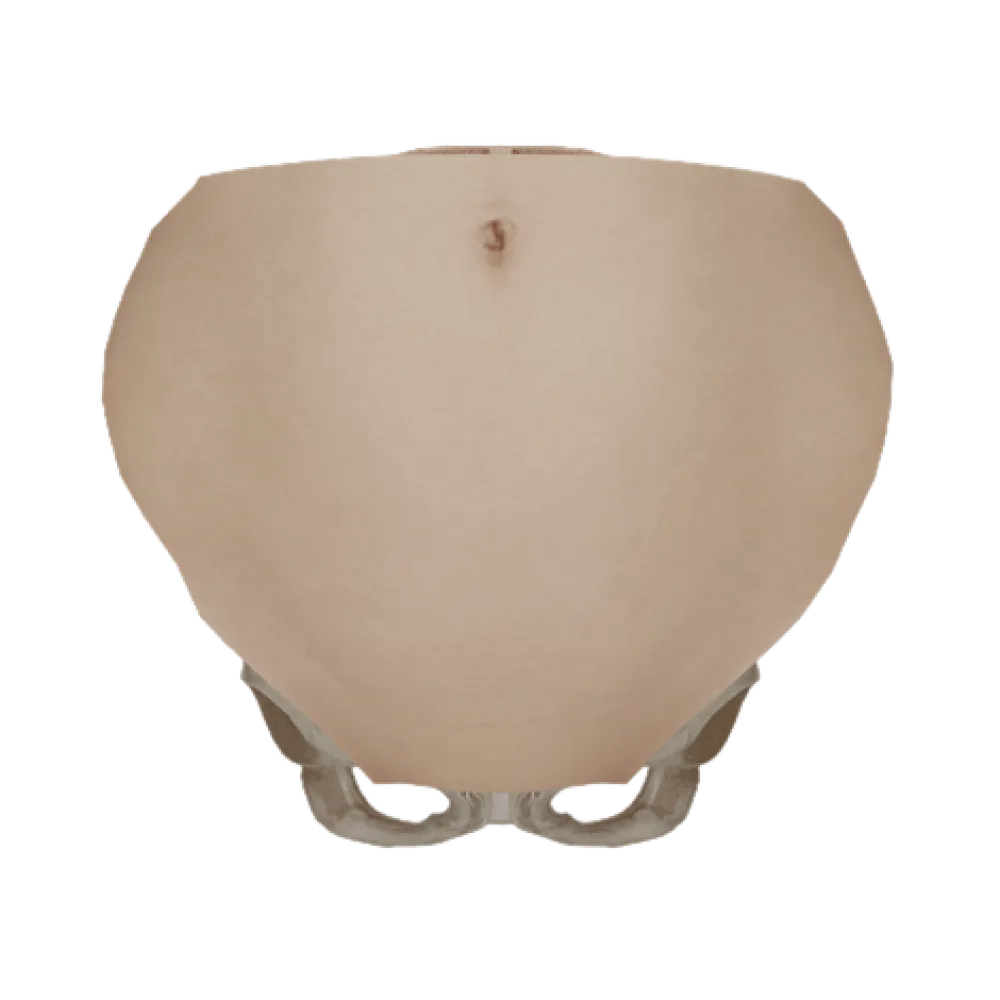

Test on the anatomy of the abdomen and pelvis in women.
Assess the knowledge of female pelvic anatomy. The test evaluates the topography, blood supply, innervation, and structure of the uterus, adnexa, and perineum.
1/20
bold
text
1. What is the normal position of the uterus in the pelvic cavity relative to the pelvic and vaginal longitudinal axis?
-
Retroversion and retroflexion
Normally, the uterus is in anteversio (tilted forward in relation to the vagina) and anteflexio (bent forward between the body and cervix).
-
Anteversion and anteflexion
Normally, the uterus is in anteversio (tilted forward in relation to the vagina) and anteflexio (bent forward between the body and cervix).
-
Anteversion and retroflexion
Normally, the uterus is in anteversio (tilted forward in relation to the vagina) and anteflexio (bent forward between the body and cervix).
-
Retroversion and anteflexion
Normally, the uterus is in anteversio (tilted forward in relation to the vagina) and anteflexio (bent forward between the body and cervix).
-
I find it difficult to answer
Normally, the uterus is in anteversio (tilted forward in relation to the vagina) and anteflexio (bent forward between the body and cervix).
2. From which blood vessel does the ovarian artery (a. ovarica) directly branch off?
-
Abdominal part of the aorta
The ovarian artery directly arises from the anterior surface of the abdominal aorta, slightly below the renal arteries.
-
Internal iliac artery
The ovarian artery directly arises from the anterior surface of the abdominal aorta, slightly below the renal arteries.
-
External iliac artery
The ovarian artery directly arises from the anterior surface of the abdominal aorta, slightly below the renal arteries.
-
Renal artery
The ovarian artery directly arises from the anterior surface of the abdominal aorta, slightly below the renal arteries.
-
I find it difficult to answer
The ovarian artery directly arises from the anterior surface of the abdominal aorta, slightly below the renal arteries.
3. In which part of the fallopian tube does fertilization most often occur?
-
Uterine part
The ampulla of the fallopian tube (ampulla tubae uterinae) is the widest and longest section where fertilization usually occurs.
-
Isthmus
The ampulla of the fallopian tube (ampulla tubae uterinae) is the widest and longest section where fertilization usually occurs.
-
Infundibulum
The ampulla of the fallopian tube (ampulla tubae uterinae) is the widest and longest section where fertilization usually occurs.
-
Ampulla
The ampulla of the fallopian tube (ampulla tubae uterinae) is the widest and longest section where fertilization usually occurs.
-
I find it difficult to answer
The ampulla of the fallopian tube (ampulla tubae uterinae) is the widest and longest section where fertilization usually occurs.
4. How is the ureter positioned relative to the uterine artery at the base of the broad ligament?
-
It passes laterally and above the artery.
The ureter passes under the uterine artery (behind and below it) at a distance of about 1.5-2 cm from the cervix ("water flows under the bridge").
-
It passes behind and below the artery.
The ureter passes under the uterine artery (behind and below it) at a distance of about 1.5-2 cm from the cervix ("water flows under the bridge").
-
It passes in front and above the artery.
The ureter passes under the uterine artery (behind and below it) at a distance of about 1.5-2 cm from the cervix ("water flows under the bridge").
-
It passes medially and parallel to the artery.
The ureter passes under the uterine artery (behind and below it) at a distance of about 1.5-2 cm from the cervix ("water flows under the bridge").
-
I find it difficult to answer
The ureter passes under the uterine artery (behind and below it) at a distance of about 1.5-2 cm from the cervix ("water flows under the bridge").
5. Which structure passes through the inguinal canal in women?
-
Infundibulopelvic ligament
The round ligament of the uterus (lig. teres uteri) passes through the inguinal canal and is interwoven with the connective tissue of the labia majora.
-
Proper ovarian ligament
The round ligament of the uterus (lig. teres uteri) passes through the inguinal canal and is interwoven with the connective tissue of the labia majora.
-
Round ligament of the uterus
The round ligament of the uterus (lig. teres uteri) passes through the inguinal canal and is interwoven with the connective tissue of the labia majora.
-
Broad ligament of the uterus
The round ligament of the uterus (lig. teres uteri) passes through the inguinal canal and is interwoven with the connective tissue of the labia majora.
-
I find it difficult to answer
The round ligament of the uterus (lig. teres uteri) passes through the inguinal canal and is interwoven with the connective tissue of the labia majora.
6. Which vaginal fornix is the deepest and is closely related to the rectouterine pouch?
-
Posterior fornix
The posterior fornix of the vagina is the deepest and is contiguous with the rectouterine pouch (Douglas' space).
-
Anterior fornix
The posterior fornix of the vagina is the deepest and is contiguous with the rectouterine pouch (Douglas' space).
-
Right lateral fornix
The posterior fornix of the vagina is the deepest and is contiguous with the rectouterine pouch (Douglas' space).
-
Left lateral fornix
The posterior fornix of the vagina is the deepest and is contiguous with the rectouterine pouch (Douglas' space).
-
I find it difficult to answer
The posterior fornix of the vagina is the deepest and is contiguous with the rectouterine pouch (Douglas' space).
7. Which of the following is NOT a branch of the internal iliac artery?
-
Uterine artery
The superior rectal artery is the terminal branch of the inferior mesenteric artery, not the internal iliac.
-
Internal pudendal artery
The superior rectal artery is the terminal branch of the inferior mesenteric artery, not the internal iliac.
-
Vaginal artery.
The superior rectal artery is the terminal branch of the inferior mesenteric artery, not the internal iliac.
-
Superior rectal artery
The superior rectal artery is the terminal branch of the inferior mesenteric artery, not the internal iliac.
-
I find it difficult to answer
The superior rectal artery is the terminal branch of the inferior mesenteric artery, not the internal iliac.
8. Which lymph nodes are primary for lymphatic drainage from the ovaries?
-
Lumbar lymph nodes
Lymph from the ovaries drains along the course of the ovarian vessels directly into the lumbar (para-aortic) lymph nodes.
-
Internal iliac lymph nodes
Lymph from the ovaries drains along the course of the ovarian vessels directly into the lumbar (para-aortic) lymph nodes.
-
Superficial inguinal lymph nodes
Lymph from the ovaries drains along the course of the ovarian vessels directly into the lumbar (para-aortic) lymph nodes.
-
Sacral lymph nodes
Lymph from the ovaries drains along the course of the ovarian vessels directly into the lumbar (para-aortic) lymph nodes.
-
I find it difficult to answer
Lymph from the ovaries drains along the course of the ovarian vessels directly into the lumbar (para-aortic) lymph nodes.
9. In which ligament do the ovarian artery and vein pass through?
-
Broad ligament of the uterus
The suspensory ligament of the ovary (lig. suspensorium ovarii) contains the ovarian vessels (artery and vein) and a nerve plexus.
-
Proper ovarian ligament
The suspensory ligament of the ovary (lig. suspensorium ovarii) contains the ovarian vessels (artery and vein) and a nerve plexus.
-
Suspensory ligament of the ovary
The suspensory ligament of the ovary (lig. suspensorium ovarii) contains the ovarian vessels (artery and vein) and a nerve plexus.
-
Cardinal ligament
The suspensory ligament of the ovary (lig. suspensorium ovarii) contains the ovarian vessels (artery and vein) and a nerve plexus.
-
I find it difficult to answer
The suspensory ligament of the ovary (lig. suspensorium ovarii) contains the ovarian vessels (artery and vein) and a nerve plexus.
10. Which muscle is the primary structure of the pelvic diaphragm?
-
Levator ani muscle
The levator ani muscle (m. levator ani), together with the coccygeal muscle, forms the muscular base of the pelvic diaphragm.
-
Piriformis muscle.
The levator ani muscle (m. levator ani), together with the coccygeal muscle, forms the muscular base of the pelvic diaphragm.
-
Obturator internus muscle.
The levator ani muscle (m. levator ani), together with the coccygeal muscle, forms the muscular base of the pelvic diaphragm.
-
Superficial transverse perineal muscle
The levator ani muscle (m. levator ani), together with the coccygeal muscle, forms the muscular base of the pelvic diaphragm.
-
I find it difficult to answer
The levator ani muscle (m. levator ani), together with the coccygeal muscle, forms the muscular base of the pelvic diaphragm.
11. Where is the external opening of the female urethra located?
-
In the vestibule of the vagina, behind the vaginal opening.
The external urethral orifice opens into the vestibule of the vagina, located between the clitoris (anteriorly) and the vaginal opening (posteriorly).
-
On the glans of the clitoris
The external urethral orifice opens into the vestibule of the vagina, located between the clitoris (anteriorly) and the vaginal opening (posteriorly).
-
In the area of the labia minora, lateral to the clitoris.
The external urethral orifice opens into the vestibule of the vagina, located between the clitoris (anteriorly) and the vaginal opening (posteriorly).
-
In the vestibule of the vagina, anterior to the vaginal opening.
The external urethral orifice opens into the vestibule of the vagina, located between the clitoris (anteriorly) and the vaginal opening (posteriorly).
-
I find it difficult to answer
The external urethral orifice opens into the vestibule of the vagina, located between the clitoris (anteriorly) and the vaginal opening (posteriorly).
12. Which part of the uterus lacks a peritoneal covering (not covered by serosa) on its anterior surface?
-
Body of the uterus
The anterior surface of the supravaginal part of the cervix is not covered by the peritoneum, as it transitions to cover the urinary bladder, forming the vesicouterine excavation.
-
Supravaginal part of the cervix
The anterior surface of the supravaginal part of the cervix is not covered by the peritoneum, as it transitions to cover the urinary bladder, forming the vesicouterine excavation.
-
Fundus of the uterus
The anterior surface of the supravaginal part of the cervix is not covered by the peritoneum, as it transitions to cover the urinary bladder, forming the vesicouterine excavation.
-
Posterior surface of the isthmus
The anterior surface of the supravaginal part of the cervix is not covered by the peritoneum, as it transitions to cover the urinary bladder, forming the vesicouterine excavation.
-
I find it difficult to answer
The anterior surface of the supravaginal part of the cervix is not covered by the peritoneum, as it transitions to cover the urinary bladder, forming the vesicouterine excavation.
13. What forms the inferior border of the rectouterine pouch (Douglas' space)?
-
Peritoneo-perineal aponeurosis (Denonvilliers' fascia)
The rectouterine pouch extends down to the posterior vaginal fornix and is bordered inferiorly by the transition of the peritoneum from the rectum to the posterior wall of the vagina.
-
Vesicovaginal septum
The rectouterine pouch extends down to the posterior vaginal fornix and is bordered inferiorly by the transition of the peritoneum from the rectum to the posterior wall of the vagina.
-
Rectovaginal fold of the peritoneum
The rectouterine pouch extends down to the posterior vaginal fornix and is bordered inferiorly by the transition of the peritoneum from the rectum to the posterior wall of the vagina.
-
Cervix
The rectouterine pouch extends down to the posterior vaginal fornix and is bordered inferiorly by the transition of the peritoneum from the rectum to the posterior wall of the vagina.
-
I find it difficult to answer
The rectouterine pouch extends down to the posterior vaginal fornix and is bordered inferiorly by the transition of the peritoneum from the rectum to the posterior wall of the vagina.
14. Which nerve provides somatic innervation to the perineal muscles and the skin of the external genital organs?
-
Pudendal nerve (n. pudendus)
The pudendal nerve, originating from the sacral plexus (S2-S4), provides the main motor and sensory innervation of the perineum.
-
Genitofemoral nerve
The pudendal nerve, originating from the sacral plexus (S2-S4), provides the main motor and sensory innervation of the perineum.
-
Ilioinguinal nerve
The pudendal nerve, originating from the sacral plexus (S2-S4), provides the main motor and sensory innervation of the perineum.
-
Obturator nerve.
The pudendal nerve, originating from the sacral plexus (S2-S4), provides the main motor and sensory innervation of the perineum.
-
I find it difficult to answer
The pudendal nerve, originating from the sacral plexus (S2-S4), provides the main motor and sensory innervation of the perineum.
15. Where are Bartholin's glands (greater vestibular glands) located?
-
In the thickness of the labia minora
The greater vestibular glands (Bartholin's glands) are located in the deep portions of the posterior third of the labia majora, behind the vestibular bulb.
-
In the anterior wall of the vagina
The greater vestibular glands (Bartholin's glands) are located in the deep portions of the posterior third of the labia majora, behind the vestibular bulb.
-
In the area of the clitoral hood
The greater vestibular glands (Bartholin's glands) are located in the deep portions of the posterior third of the labia majora, behind the vestibular bulb.
-
At the base of the labia majora, behind the vestibular bulb.
The greater vestibular glands (Bartholin's glands) are located in the deep portions of the posterior third of the labia majora, behind the vestibular bulb.
-
I find it difficult to answer
The greater vestibular glands (Bartholin's glands) are located in the deep portions of the posterior third of the labia majora, behind the vestibular bulb.
16. What is the name of the dense fibrous tissue located on either side of the cervix, through which the uterine vessels pass?
-
Perimetrium
The parametrium is an area of periuterine adipose tissue with fibrous strands, located between the layers of the broad ligament of the uterus, containing the uterine artery and vein.
-
Parametrium
The parametrium is an area of periuterine adipose tissue with fibrous strands, located between the layers of the broad ligament of the uterus, containing the uterine artery and vein.
-
Myometrium
The parametrium is an area of periuterine adipose tissue with fibrous strands, located between the layers of the broad ligament of the uterus, containing the uterine artery and vein.
-
Endometrium
The parametrium is an area of periuterine adipose tissue with fibrous strands, located between the layers of the broad ligament of the uterus, containing the uterine artery and vein.
-
I find it difficult to answer
The parametrium is an area of periuterine adipose tissue with fibrous strands, located between the layers of the broad ligament of the uterus, containing the uterine artery and vein.
17. The venous outflow from the left ovary normally drains into the:
-
Left internal iliac vein
The left ovarian vein drains into the left renal vein at a right angle, whereas the right drains directly into the inferior vena cava.
-
Inferior vena cava
The left ovarian vein drains into the left renal vein at a right angle, whereas the right drains directly into the inferior vena cava.
-
Left renal vein
The left ovarian vein drains into the left renal vein at a right angle, whereas the right drains directly into the inferior vena cava.
-
Portal vein of the liver
The left ovarian vein drains into the left renal vein at a right angle, whereas the right drains directly into the inferior vena cava.
-
I find it difficult to answer
The left ovarian vein drains into the left renal vein at a right angle, whereas the right drains directly into the inferior vena cava.
18. What structures form the crura of the clitoris (crura clitoridis)?
-
Bulbospongiosus muscle
The crura of the clitoris are formed by the divergent proximal parts of the corpora cavernosa, which attach to the ischiopubic rami.
-
Corpora cavernosa (corpora cavernosa)
The crura of the clitoris are formed by the divergent proximal parts of the corpora cavernosa, which attach to the ischiopubic rami.
-
Corpus spongiosum (corpus spongiosum)
The crura of the clitoris are formed by the divergent proximal parts of the corpora cavernosa, which attach to the ischiopubic rami.
-
Ischiocavernosus muscles
The crura of the clitoris are formed by the divergent proximal parts of the corpora cavernosa, which attach to the ischiopubic rami.
-
I find it difficult to answer
The crura of the clitoris are formed by the divergent proximal parts of the corpora cavernosa, which attach to the ischiopubic rami.
19. Which vessel passes through the ischioanal fossa?
-
Uterine artery
The internal pudendal artery and the pudendal nerve pass along the lateral wall of the ischioanal fossa in the pudendal (Alcock's) canal.
-
Superior gluteal artery
The internal pudendal artery and the pudendal nerve pass along the lateral wall of the ischioanal fossa in the pudendal (Alcock's) canal.
-
The external pudendal artery
The internal pudendal artery and the pudendal nerve pass along the lateral wall of the ischioanal fossa in the pudendal (Alcock's) canal.
-
Internal pudendal artery
The internal pudendal artery and the pudendal nerve pass along the lateral wall of the ischioanal fossa in the pudendal (Alcock's) canal.
-
I find it difficult to answer
The internal pudendal artery and the pudendal nerve pass along the lateral wall of the ischioanal fossa in the pudendal (Alcock's) canal.
20. Which part of the fallopian tube directly opens into the uterine cavity?
-
Uterine part (pars uterina)
The uterine part (pars uterina) is the narrowest section of the tube, passing through the thickness of the uterine wall and opening into its cavity.
-
Ampulla
The uterine part (pars uterina) is the narrowest section of the tube, passing through the thickness of the uterine wall and opening into its cavity.
-
Isthmus
The uterine part (pars uterina) is the narrowest section of the tube, passing through the thickness of the uterine wall and opening into its cavity.
-
Infundibulum
The uterine part (pars uterina) is the narrowest section of the tube, passing through the thickness of the uterine wall and opening into its cavity.
-
I find it difficult to answer
The uterine part (pars uterina) is the narrowest section of the tube, passing through the thickness of the uterine wall and opening into its cavity.
Retake this quiz?
Your current progress will be reset.