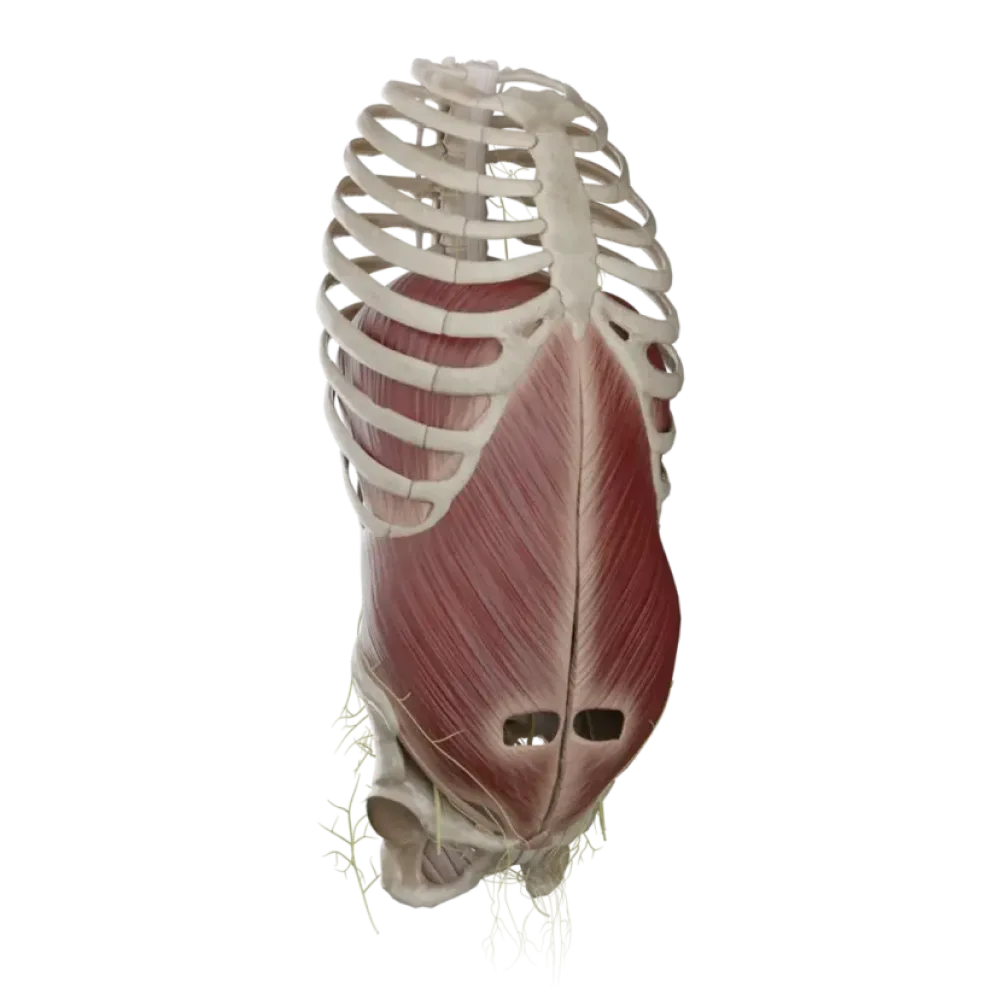


Anatomy test of abdominal and pelvic nerves of women
Evaluate the knowledge of the anatomy of abdominal and pelvic nerves in women. The test checks the topography and innervation of the uterus, adnexae, vagina, and perineum.
1/20
bold
text
1. Which nerve in the female pelvis runs along the lateral pelvic wall, forming the lateral boundary of the ovarian fossa (fossa ovarica)?
-
N. ischiadicus
The obturator nerve (n. obturatorius) runs along the lateral pelvic wall, forming the lateral boundary of the ovarian fossa where the ovary is situated.
-
N. pudendus
The obturator nerve (n. obturatorius) runs along the lateral pelvic wall, forming the lateral boundary of the ovarian fossa where the ovary is situated.
-
N. obturatorius
The obturator nerve (n. obturatorius) runs along the lateral pelvic wall, forming the lateral boundary of the ovarian fossa where the ovary is situated.
-
N. genitofemoralis
The obturator nerve (n. obturatorius) runs along the lateral pelvic wall, forming the lateral boundary of the ovarian fossa where the ovary is situated.
-
I find it difficult to answer
The obturator nerve (n. obturatorius) runs along the lateral pelvic wall, forming the lateral boundary of the ovarian fossa where the ovary is situated.
2. Which nerve plexus runs through the supporting ligament of the ovary (ligamentum suspensorium ovarii) together with the homonymous artery?
-
Uterovaginal plexus
The ovarian plexus (plexus ovaricus), originating from the aortic and renal plexuses, accompanies the ovarian artery in the lig. suspensorium ovarii
-
Ovarian plexus
The ovarian plexus (plexus ovaricus), originating from the aortic and renal plexuses, accompanies the ovarian artery in the lig. suspensorium ovarii
-
Inferior hypogastric plexus
The ovarian plexus (plexus ovaricus), originating from the aortic and renal plexuses, accompanies the ovarian artery in the lig. suspensorium ovarii
-
Inferior mesenteric plexus
The ovarian plexus (plexus ovaricus), originating from the aortic and renal plexuses, accompanies the ovarian artery in the lig. suspensorium ovarii
-
I find it difficult to answer
The ovarian plexus (plexus ovaricus), originating from the aortic and renal plexuses, accompanies the ovarian artery in the lig. suspensorium ovarii
3. Which nerve branches provide sensory innervation to the anterior parts of the labia majora pudendi?
-
Nn. labiales posteriores from n. pudendus
Anterior labial nerves are the terminal branches of the ilioinguinal nerve (n. ilioinguinalis) and innervate the anterior part of the labia majora.
-
Rr. perineales from n. posterior femoral cutaneous nerve
Anterior labial nerves are the terminal branches of the ilioinguinal nerve (n. ilioinguinalis) and innervate the anterior part of the labia majora.
-
N. dorsalis clitoridis
Anterior labial nerves are the terminal branches of the ilioinguinal nerve (n. ilioinguinalis) and innervate the anterior part of the labia majora.
-
Nn. labiales anteriores from n. ilioinguinalis
Anterior labial nerves are the terminal branches of the ilioinguinal nerve (n. ilioinguinalis) and innervate the anterior part of the labia majora.
-
I find it difficult to answer
Anterior labial nerves are the terminal branches of the ilioinguinal nerve (n. ilioinguinalis) and innervate the anterior part of the labia majora.
4. Within which structure does the genital branch (r. genitalis) of the genitofemoral nerve pass through the inguinal canal in women?
-
Round ligament of uterus (ligamentum teres uteri)
In women, the genital branch of the genitofemoral nerve passes through the inguinal canal together with the round ligament of the uterus (lig. teres uteri).
-
Broad ligament of uterus (ligamentum latum uteri)
In women, the genital branch of the genitofemoral nerve passes through the inguinal canal together with the round ligament of the uterus (lig. teres uteri).
-
Proper ovarian ligament (ligamentum ovarii proprium)
In women, the genital branch of the genitofemoral nerve passes through the inguinal canal together with the round ligament of the uterus (lig. teres uteri).
-
Cardinal ligament (ligamentum cardinale)
In women, the genital branch of the genitofemoral nerve passes through the inguinal canal together with the round ligament of the uterus (lig. teres uteri).
-
I find it difficult to answer
In women, the genital branch of the genitofemoral nerve passes through the inguinal canal together with the round ligament of the uterus (lig. teres uteri).
5. Which plexus is the immediate source of the formation of the uterovaginal plexus (plexus uterovaginalis)?
-
Superior hypogastric plexus
The uterovaginal plexus (Frankenhauser plexus) is a derivative of the inferior hypogastric plexus and is located in the parametrium.
-
Inferior mesenteric plexus
The uterovaginal plexus (Frankenhauser plexus) is a derivative of the inferior hypogastric plexus and is located in the parametrium.
-
Inferior hypogastric plexus (pelvic plexus)
The uterovaginal plexus (Frankenhauser plexus) is a derivative of the inferior hypogastric plexus and is located in the parametrium.
-
Sacral plexus
The uterovaginal plexus (Frankenhauser plexus) is a derivative of the inferior hypogastric plexus and is located in the parametrium.
-
I find it difficult to answer
The uterovaginal plexus (Frankenhauser plexus) is a derivative of the inferior hypogastric plexus and is located in the parametrium.
6. What is the terminal branch of the pudendal nerve in the somatic nervous system that runs under the pubic symphysis called in women?
-
N. perinealis
The dorsal nerve of the clitoris (n. dorsalis clitoridis) is a terminal branch of the pudendal nerve, running to the dorsal side of the clitoris for its innervation.
-
N. dorsalis clitoridis
The dorsal nerve of the clitoris (n. dorsalis clitoridis) is a terminal branch of the pudendal nerve, running to the dorsal side of the clitoris for its innervation.
-
N. labialis posterior
The dorsal nerve of the clitoris (n. dorsalis clitoridis) is a terminal branch of the pudendal nerve, running to the dorsal side of the clitoris for its innervation.
-
N. ilioinguinalis
The dorsal nerve of the clitoris (n. dorsalis clitoridis) is a terminal branch of the pudendal nerve, running to the dorsal side of the clitoris for its innervation.
-
I find it difficult to answer
The dorsal nerve of the clitoris (n. dorsalis clitoridis) is a terminal branch of the pudendal nerve, running to the dorsal side of the clitoris for its innervation.
7. Through which path do visceral afferent (pain) fibers from the body and fundus of the uterus predominantly travel?
-
Through the sympathetic nerves via the hypogastric plexuses to the segments Th10-L1
Afferent fibers from structures above the pelvic pain line (body and fundus of the uterus) run together with sympathetic fibers to the lower thoracic and upper lumbar segments.
-
Via the pelvic splanchnic nerves to the segments S2-S4
Afferent fibers from structures above the pelvic pain line (body and fundus of the uterus) run together with sympathetic fibers to the lower thoracic and upper lumbar segments.
-
Via the pudendal nerve to the segments S2-S4
Afferent fibers from structures above the pelvic pain line (body and fundus of the uterus) run together with sympathetic fibers to the lower thoracic and upper lumbar segments.
-
Via the obturator nerve to the segments L2-L4
Afferent fibers from structures above the pelvic pain line (body and fundus of the uterus) run together with sympathetic fibers to the lower thoracic and upper lumbar segments.
-
I find it difficult to answer
Afferent fibers from structures above the pelvic pain line (body and fundus of the uterus) run together with sympathetic fibers to the lower thoracic and upper lumbar segments.
8. Which spinal segments provide parasympathetic innervation to the vagina and cervix through the pelvic splanchnic nerves?
-
Th10 - Th12
Pelvic splanchnic nerves (nn. splanchnici pelvici) carry preganglionic parasympathetic fibers from sacral segments S2-S4.
-
L1 - L2
Pelvic splanchnic nerves (nn. splanchnici pelvici) carry preganglionic parasympathetic fibers from sacral segments S2-S4.
-
L4 - L5
Pelvic splanchnic nerves (nn. splanchnici pelvici) carry preganglionic parasympathetic fibers from sacral segments S2-S4.
-
S2 - S4
Pelvic splanchnic nerves (nn. splanchnici pelvici) carry preganglionic parasympathetic fibers from sacral segments S2-S4.
-
I find it difficult to answer
Pelvic splanchnic nerves (nn. splanchnici pelvici) carry preganglionic parasympathetic fibers from sacral segments S2-S4.
9. Which nerve emerges on the anterior surface of the m. psoas major, perforating its substance and splitting into two branches, one of which runs to the lacuna vasorum?
-
N. iliohypogastricus
The genitofemoral nerve perforates the psoas major; its femoral branch goes to the vascular lacuna, and the genital branch to the inguinal canal.
-
N. ilioinguinalis
The genitofemoral nerve perforates the psoas major; its femoral branch goes to the vascular lacuna, and the genital branch to the inguinal canal.
-
N. genitofemoralis
The genitofemoral nerve perforates the psoas major; its femoral branch goes to the vascular lacuna, and the genital branch to the inguinal canal.
-
N. cutaneus femoris lateralis
The genitofemoral nerve perforates the psoas major; its femoral branch goes to the vascular lacuna, and the genital branch to the inguinal canal.
-
I find it difficult to answer
The genitofemoral nerve perforates the psoas major; its femoral branch goes to the vascular lacuna, and the genital branch to the inguinal canal.
10. Which nerves arise from the perineal branches of the pudendal nerve (n. pudendus) and run to the posterior parts of the labia?
-
Nn. anterior labial nerves
Posterior labial nerves (nn. labiales posteriores) branch from perineal nerves (branches of the pudendal nerve) and innervate the posterior part of the labia.
-
Nn. posterior labial nerves
Posterior labial nerves (nn. labiales posteriores) branch from perineal nerves (branches of the pudendal nerve) and innervate the posterior part of the labia.
-
Rr. perineales n. posterior femoral cutaneous nerve
Posterior labial nerves (nn. labiales posteriores) branch from perineal nerves (branches of the pudendal nerve) and innervate the posterior part of the labia.
-
Nn. clunium inferiores
Posterior labial nerves (nn. labiales posteriores) branch from perineal nerves (branches of the pudendal nerve) and innervate the posterior part of the labia.
-
I find it difficult to answer
Posterior labial nerves (nn. labiales posteriores) branch from perineal nerves (branches of the pudendal nerve) and innervate the posterior part of the labia.
11. Which nerve of the sacral plexus provides innervation to the m. levator ani (muscle elevating the anus)?
-
Direct muscular branches (S3-S4) and branches of the n. pudendus
The levator ani muscle is innervated by direct muscular branches from the sacral plexus (S3-S4) and perineal branches of the pudendal nerve.
-
Inferior gluteal nerve
The levator ani muscle is innervated by direct muscular branches from the sacral plexus (S3-S4) and perineal branches of the pudendal nerve.
-
N. obturatorius
The levator ani muscle is innervated by direct muscular branches from the sacral plexus (S3-S4) and perineal branches of the pudendal nerve.
-
N. ilioinguinalis
The levator ani muscle is innervated by direct muscular branches from the sacral plexus (S3-S4) and perineal branches of the pudendal nerve.
-
I find it difficult to answer
The levator ani muscle is innervated by direct muscular branches from the sacral plexus (S3-S4) and perineal branches of the pudendal nerve.
12. Which plexus is located retroperitoneally at the level of the sacral promontory and divides into right and left hypogastric nerves?
-
Celiac plexus
The superior hypogastric plexus (plexus hypogastricus superior) is located at the sacral promontory and continues caudally as two hypogastric nerves.
-
Inferior hypogastric plexus
The superior hypogastric plexus (plexus hypogastricus superior) is located at the sacral promontory and continues caudally as two hypogastric nerves.
-
Superior mesenteric plexus
The superior hypogastric plexus (plexus hypogastricus superior) is located at the sacral promontory and continues caudally as two hypogastric nerves.
-
Superior hypogastric plexus
The superior hypogastric plexus (plexus hypogastricus superior) is located at the sacral promontory and continues caudally as two hypogastric nerves.
-
I find it difficult to answer
The superior hypogastric plexus (plexus hypogastricus superior) is located at the sacral promontory and continues caudally as two hypogastric nerves.
13. Where on the perineum is the pudendal canal (Alcock's canal), through which the pudendal nerve travels, located?
-
On the medial wall of the lesser pelvis, along the fascia of the m. levator ani
The pudendal canal is formed by the splitting of the fascia of the internal obturator muscle on the lateral wall of the fossa ischioanalis.
-
Under the pubic symphysis
The pudendal canal is formed by the splitting of the fascia of the internal obturator muscle on the lateral wall of the fossa ischioanalis.
-
On the lateral wall of the ischioanal fossa, in the division of the fascia of the m. obturatorius internus
The pudendal canal is formed by the splitting of the fascia of the internal obturator muscle on the lateral wall of the fossa ischioanalis.
-
Within the substance of the deep transverse perineal muscle
The pudendal canal is formed by the splitting of the fascia of the internal obturator muscle on the lateral wall of the fossa ischioanalis.
-
I find it difficult to answer
The pudendal canal is formed by the splitting of the fascia of the internal obturator muscle on the lateral wall of the fossa ischioanalis.
14. Which nerve crosses the iliac muscle (m. iliacus), passes under the inguinal ligament near the anterior superior iliac spine, and emerges on the thigh?
-
N. ischiadicus
The lateral cutaneous nerve of the thigh topographically crosses the iliac muscle and emerges on the thigh under the inguinal ligament near the anterior superior iliac spine.
-
N. cutaneus femoris lateralis
The lateral cutaneous nerve of the thigh topographically crosses the iliac muscle and emerges on the thigh under the inguinal ligament near the anterior superior iliac spine.
-
N. femoralis
The lateral cutaneous nerve of the thigh topographically crosses the iliac muscle and emerges on the thigh under the inguinal ligament near the anterior superior iliac spine.
-
N. obturatorius
The lateral cutaneous nerve of the thigh topographically crosses the iliac muscle and emerges on the thigh under the inguinal ligament near the anterior superior iliac spine.
-
I find it difficult to answer
The lateral cutaneous nerve of the thigh topographically crosses the iliac muscle and emerges on the thigh under the inguinal ligament near the anterior superior iliac spine.
15. Through which foramen does the pudendal nerve (n. pudendus) return to the pelvic cavity (perineum) after circumventing the ischial spine?
-
Foramen ischiadicum minus (lesser sciatic foramen)
After leaving the pelvis through the infrapiriform foramen, the pudendal nerve wraps around the ischial spine and enters the ischioanal fossa through the lesser sciatic foramen.
-
Foramen ischiadicum majus (greater sciatic foramen)
After leaving the pelvis through the infrapiriform foramen, the pudendal nerve wraps around the ischial spine and enters the ischioanal fossa through the lesser sciatic foramen.
-
Canalis obturatorius (obturator canal)
After leaving the pelvis through the infrapiriform foramen, the pudendal nerve wraps around the ischial spine and enters the ischioanal fossa through the lesser sciatic foramen.
-
Foramen suprapiriforme (suprapiriform foramen)
After leaving the pelvis through the infrapiriform foramen, the pudendal nerve wraps around the ischial spine and enters the ischioanal fossa through the lesser sciatic foramen.
-
I find it difficult to answer
After leaving the pelvis through the infrapiriform foramen, the pudendal nerve wraps around the ischial spine and enters the ischioanal fossa through the lesser sciatic foramen.
16. What do the erectile (cavernous) nerves of the clitoris (nn. cavernosi clitoridis) innervate?
-
The skin of the labia majora
The cavernous nerves of the clitoris (parasympathetic fibers from the pelvic plexus) provide blood filling to the vestibular bulb and the corpora cavernosa of the clitoris.
-
The greater vestibular glands (Bartholin's glands)
The cavernous nerves of the clitoris (parasympathetic fibers from the pelvic plexus) provide blood filling to the vestibular bulb and the corpora cavernosa of the clitoris.
-
Sphincter of the urethra
The cavernous nerves of the clitoris (parasympathetic fibers from the pelvic plexus) provide blood filling to the vestibular bulb and the corpora cavernosa of the clitoris.
-
The corpora cavernosa of the clitoris and the vestibular bulb
The cavernous nerves of the clitoris (parasympathetic fibers from the pelvic plexus) provide blood filling to the vestibular bulb and the corpora cavernosa of the clitoris.
-
I find it difficult to answer
The cavernous nerves of the clitoris (parasympathetic fibers from the pelvic plexus) provide blood filling to the vestibular bulb and the corpora cavernosa of the clitoris.
17. From which nerve do the inferior clunial nerves (nn. clunium inferiores), innervating the skin of the lower gluteal area in women, branch?
-
Inferior gluteal nerve
The posterior femoral cutaneous nerve (n. cutaneus femoris posterior) gives off nn. clunium inferiores, which encircle the lower edge of the gluteus maximus muscle.
-
N. pudendus
The posterior femoral cutaneous nerve (n. cutaneus femoris posterior) gives off nn. clunium inferiores, which encircle the lower edge of the gluteus maximus muscle.
-
N. cutaneus femoris posterior
The posterior femoral cutaneous nerve (n. cutaneus femoris posterior) gives off nn. clunium inferiores, which encircle the lower edge of the gluteus maximus muscle.
-
N. ischiadicus
The posterior femoral cutaneous nerve (n. cutaneus femoris posterior) gives off nn. clunium inferiores, which encircle the lower edge of the gluteus maximus muscle.
-
I find it difficult to answer
The posterior femoral cutaneous nerve (n. cutaneus femoris posterior) gives off nn. clunium inferiores, which encircle the lower edge of the gluteus maximus muscle.
18. Through which path do visceral afferent fibers from the cervix and the upper part of the vagina travel?
-
Together with sympathetic fibers to the segments Th10-L1
Structures below the pelvic pain line (cervix, upper vagina) send afferent (pain) impulses via the pelvic splanchnic nerves to the sacral segments S2-S4.
-
Together with pelvic splanchnic nerves (parasympathetic) to the segments S2-S4
Structures below the pelvic pain line (cervix, upper vagina) send afferent (pain) impulses via the pelvic splanchnic nerves to the sacral segments S2-S4.
-
Together with the pudendal nerve to the segments S2-S4
Structures below the pelvic pain line (cervix, upper vagina) send afferent (pain) impulses via the pelvic splanchnic nerves to the sacral segments S2-S4.
-
Along the course of the obturator nerve to the segments L2-L4
Structures below the pelvic pain line (cervix, upper vagina) send afferent (pain) impulses via the pelvic splanchnic nerves to the sacral segments S2-S4.
-
I find it difficult to answer
Structures below the pelvic pain line (cervix, upper vagina) send afferent (pain) impulses via the pelvic splanchnic nerves to the sacral segments S2-S4.
19. Indicate the source of the formation of the lumbosacral trunk (truncus lumbosacralis), descending into the lesser pelvis.
-
Anterior branches of the L4 and L5 spinal nerves
The lumbosacral trunk is formed by part of the anterior branch of L4 and the entire anterior branch of L5, connecting the lumbar plexus with the sacral plexus.
-
Anterior branches of the Th12 and L1 spinal nerves
The lumbosacral trunk is formed by part of the anterior branch of L4 and the entire anterior branch of L5, connecting the lumbar plexus with the sacral plexus.
-
Posterior branches of the L1-L4 spinal nerves
The lumbosacral trunk is formed by part of the anterior branch of L4 and the entire anterior branch of L5, connecting the lumbar plexus with the sacral plexus.
-
Sympathetic lumbar ganglia
The lumbosacral trunk is formed by part of the anterior branch of L4 and the entire anterior branch of L5, connecting the lumbar plexus with the sacral plexus.
-
I find it difficult to answer
The lumbosacral trunk is formed by part of the anterior branch of L4 and the entire anterior branch of L5, connecting the lumbar plexus with the sacral plexus.
20. Which nerves pass through the paracolpium (peri-vaginal tissue) for the autonomic innervation of the vagina?
-
Branches of the obturator nerve
Autonomic innervation of the vagina is provided by vaginal nerves from the uterovaginal plexus, located in the tissue around the vagina.
-
Pudendal nerves
Autonomic innervation of the vagina is provided by vaginal nerves from the uterovaginal plexus, located in the tissue around the vagina.
-
Branches of the lumbar plexus
Autonomic innervation of the vagina is provided by vaginal nerves from the uterovaginal plexus, located in the tissue around the vagina.
-
Branches of the uterovaginal plexus (Frankenhäuser plexus)
Autonomic innervation of the vagina is provided by vaginal nerves from the uterovaginal plexus, located in the tissue around the vagina.
-
I find it difficult to answer
Autonomic innervation of the vagina is provided by vaginal nerves from the uterovaginal plexus, located in the tissue around the vagina.
Retake this quiz?
Your current progress will be reset.