1/20
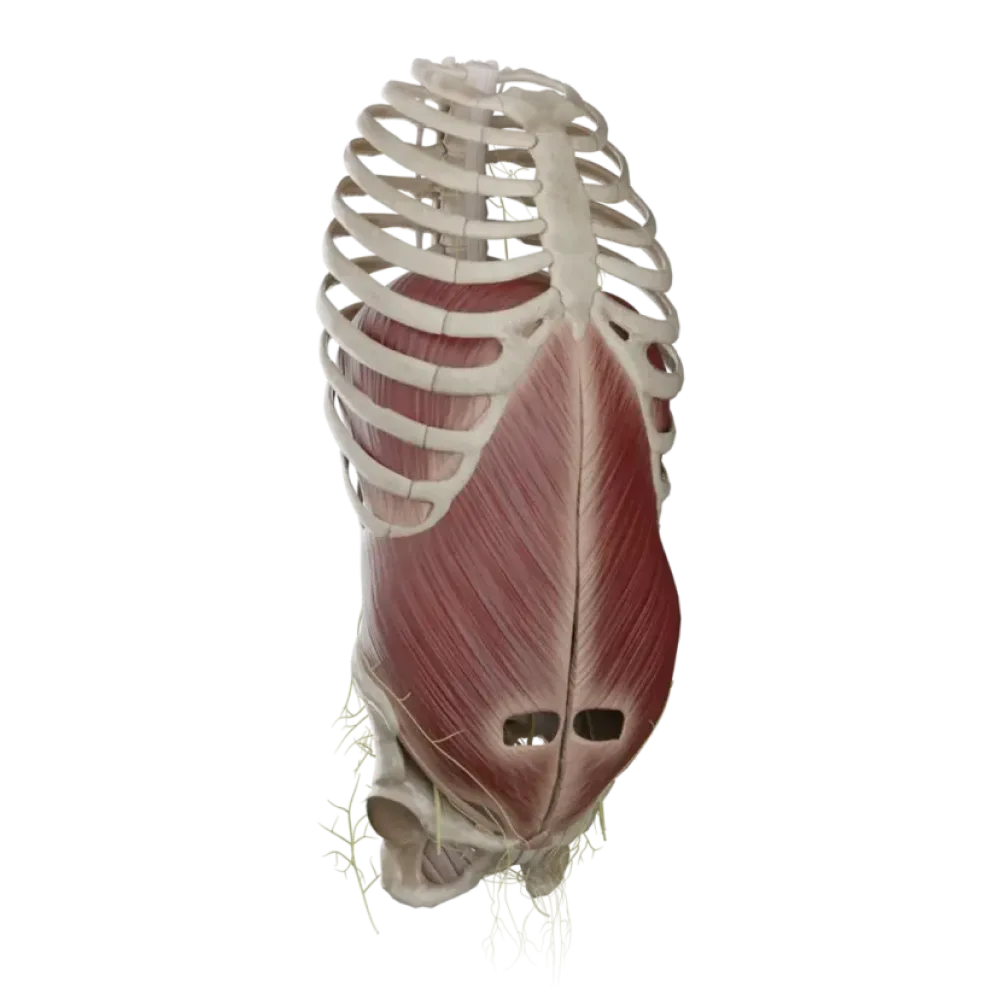


Test on the anatomy of abdominal and pelvic nerves.
Evaluate the knowledge of the anatomy of abdominal and pelvic nerves. The test examines the topography and branching of the lumbar, sacral, and autonomic plexuses.
1. Which nerve penetrates the thickness of the psoas major muscle and emerges on its anterior surface?
-
N. iliohypogastricus
The genitofemoral nerve (n. genitofemoralis) pierces the psoas major and divides into genital and femoral branches on its anterior surface. psoas major and divides into genital and femoral branches on its anterior surface.
-
N. genitofemoralis
The genitofemoral nerve (n. genitofemoralis) pierces the psoas major and divides into genital and femoral branches on its anterior surface. psoas major and divides into genital and femoral branches on its anterior surface.
-
N. ilioinguinalis
The genitofemoral nerve (n. genitofemoralis) pierces the psoas major and divides into genital and femoral branches on its anterior surface. psoas major and divides into genital and femoral branches on its anterior surface.
-
N. cutaneus femoris lateralis
The genitofemoral nerve (n. genitofemoralis) pierces the psoas major and divides into genital and femoral branches on its anterior surface. psoas major and divides into genital and femoral branches on its anterior surface.
-
I find it difficult to answer
The genitofemoral nerve (n. genitofemoralis) pierces the psoas major and divides into genital and femoral branches on its anterior surface. psoas major and divides into genital and femoral branches on its anterior surface.
2. From which spinal cord segments does the obturator nerve (n. obturatorius) predominantly form?
-
Th12 - L1
The obturator nerve is formed from the anterior branches of spinal nerves L2, L3, and L4.
-
L1 - L2
The obturator nerve is formed from the anterior branches of spinal nerves L2, L3, and L4.
-
L2 - L4
The obturator nerve is formed from the anterior branches of spinal nerves L2, L3, and L4.
-
L4 - S3
The obturator nerve is formed from the anterior branches of spinal nerves L2, L3, and L4.
-
I find it difficult to answer
The obturator nerve is formed from the anterior branches of spinal nerves L2, L3, and L4.
3. Which structure exits the pelvic cavity through the suprapiriform foramen (foramen suprapiriforme)?
-
N. pudendus
The superior gluteal neurovascular bundle, including the n. gluteus superior.
-
N. ischiadicus
The superior gluteal neurovascular bundle, including the n. gluteus superior.
-
N. cutaneus femoris posterior
The superior gluteal neurovascular bundle, including the n. gluteus superior.
-
N. gluteus superior
The superior gluteal neurovascular bundle, including the n. gluteus superior.
-
I find it difficult to answer
The superior gluteal neurovascular bundle, including the n. gluteus superior.
4. From which plexus is the n. ilioinguinalis?
-
Lumbar plexus
The ilioinguinal nerve is a short branch of the lumbar plexus (plexus lumbalis).
-
Sacral plexus
The ilioinguinal nerve is a short branch of the lumbar plexus (plexus lumbalis).
-
Coccygeal plexus
The ilioinguinal nerve is a short branch of the lumbar plexus (plexus lumbalis).
-
Celiac plexus
The ilioinguinal nerve is a short branch of the lumbar plexus (plexus lumbalis).
-
I find it difficult to answer
The ilioinguinal nerve is a short branch of the lumbar plexus (plexus lumbalis).
5. What nerve fibers are predominantly contained in the pelvic splanchnic nerves (nn. splanchnici pelvici)?
-
Postganglionic sympathetic
Pelvic splanchnic nerves carry preganglionic parasympathetic fibers from sacral segments S2-S4.
-
Preganglionic parasympathetic
Pelvic splanchnic nerves carry preganglionic parasympathetic fibers from sacral segments S2-S4.
-
Postganglionic parasympathetic
Pelvic splanchnic nerves carry preganglionic parasympathetic fibers from sacral segments S2-S4.
-
Motor somatic
Pelvic splanchnic nerves carry preganglionic parasympathetic fibers from sacral segments S2-S4.
-
I find it difficult to answer
Pelvic splanchnic nerves carry preganglionic parasympathetic fibers from sacral segments S2-S4.
6. Which nerve passes through the inguinal canal alongside the spermatic cord in men or the round ligament of the uterus in women?
-
N. pudendus
The ilioinguinal nerve (n. ilioinguinalis) runs in the inguinal canal, exiting through the superficial inguinal ring.
-
R. femoralis n. genitofemoralis originate
The ilioinguinal nerve (n. ilioinguinalis) runs in the inguinal canal, exiting through the superficial inguinal ring.
-
N. iliohypogastricus
The ilioinguinal nerve (n. ilioinguinalis) runs in the inguinal canal, exiting through the superficial inguinal ring.
-
N. ilioinguinalis
The ilioinguinal nerve (n. ilioinguinalis) runs in the inguinal canal, exiting through the superficial inguinal ring.
-
I find it difficult to answer
The ilioinguinal nerve (n. ilioinguinalis) runs in the inguinal canal, exiting through the superficial inguinal ring.
7. Where is the unpaired ganglion (ganglion impar) of the sympathetic trunk located?
-
On the anterior surface of the sacral promontory
The ganglion impar is a conjoined inferior node of the sympathetic trunks, lying on the anterior surface of the coccyx.
-
In the thickness of the sacrospinous ligament
The ganglion impar is a conjoined inferior node of the sympathetic trunks, lying on the anterior surface of the coccyx.
-
On the anterior surface of the coccyx
The ganglion impar is a conjoined inferior node of the sympathetic trunks, lying on the anterior surface of the coccyx.
-
At the aortic bifurcation point
The ganglion impar is a conjoined inferior node of the sympathetic trunks, lying on the anterior surface of the coccyx.
-
I find it difficult to answer
The ganglion impar is a conjoined inferior node of the sympathetic trunks, lying on the anterior surface of the coccyx.
8. Branches of which plexus form the inferior hypogastric plexus (plexus hypogastricus inferior)?
-
Nn. splanchnici pelvici, nn. splanchnici sacrales and branches of the superior hypogastric plexus
The inferior hypogastric plexus is formed by nn. splanchnici pelvici, sacral splanchnic nerves, and continuation of the superior hypogastric plexus.
-
Nn. splanchnici lumbales and posterior vagal trunk
The inferior hypogastric plexus is formed by nn. splanchnici pelvici, sacral splanchnic nerves, and continuation of the superior hypogastric plexus.
-
N. pudendus and n. ischiadicus
The inferior hypogastric plexus is formed by nn. splanchnici pelvici, sacral splanchnic nerves, and continuation of the superior hypogastric plexus.
-
Branches of the celiac plexus and the vagus nerve
The inferior hypogastric plexus is formed by nn. splanchnici pelvici, sacral splanchnic nerves, and continuation of the superior hypogastric plexus.
-
I find it difficult to answer
The inferior hypogastric plexus is formed by nn. splanchnici pelvici, sacral splanchnic nerves, and continuation of the superior hypogastric plexus.
9. Which nerve innervates the m. cremaster?
-
R. femoralis n. genitofemoralis originate
The genital branch of the genitofemoral nerve passes through the inguinal canal and innervates the cremaster muscle.
-
N. ilioinguinalis
The genital branch of the genitofemoral nerve passes through the inguinal canal and innervates the cremaster muscle.
-
N. pudendus
The genital branch of the genitofemoral nerve passes through the inguinal canal and innervates the cremaster muscle.
-
R. genitalis n. genitofemoralis originate
The genital branch of the genitofemoral nerve passes through the inguinal canal and innervates the cremaster muscle.
-
I find it difficult to answer
The genital branch of the genitofemoral nerve passes through the inguinal canal and innervates the cremaster muscle.
10. From which roots is the n. pudendus (pudendal nerve) formed?
-
Th12 - L2
The pudendal nerve (n. pudendus) is formed from the anterior branches of the second to fourth sacral spinal nerves.
-
L4 - S1
The pudendal nerve (n. pudendus) is formed from the anterior branches of the second to fourth sacral spinal nerves.
-
S2 - S4
The pudendal nerve (n. pudendus) is formed from the anterior branches of the second to fourth sacral spinal nerves.
-
S4 - Co1
The pudendal nerve (n. pudendus) is formed from the anterior branches of the second to fourth sacral spinal nerves.
-
I find it difficult to answer
The pudendal nerve (n. pudendus) is formed from the anterior branches of the second to fourth sacral spinal nerves.
11. Which anatomical structure does the pudendal nerve loop around, exiting the pelvic cavity and returning to the ischioanal fossa?
-
Sacrotuberous ligament
The pudendal nerve exits through the infrapiriform foramen, loops around the ischial spine (spina ischiadica), and enters the ischioanal fossa through the lesser sciatic foramen.
-
Ischial spine
The pudendal nerve exits through the infrapiriform foramen, loops around the ischial spine (spina ischiadica), and enters the ischioanal fossa through the lesser sciatic foramen.
-
Obturator membrane
The pudendal nerve exits through the infrapiriform foramen, loops around the ischial spine (spina ischiadica), and enters the ischioanal fossa through the lesser sciatic foramen.
-
Femoral neck
The pudendal nerve exits through the infrapiriform foramen, loops around the ischial spine (spina ischiadica), and enters the ischioanal fossa through the lesser sciatic foramen.
-
I find it difficult to answer
The pudendal nerve exits through the infrapiriform foramen, loops around the ischial spine (spina ischiadica), and enters the ischioanal fossa through the lesser sciatic foramen.
12. Which nerve of the lumbar plexus emerges from under the lateral edge of the m. psoas major and travels to the anterior superior iliac spine?
-
N. obturatorius
The lateral femoral cutaneous nerve (n. cutaneus femoris lateralis) emerges from beneath the lateral edge of the psoas major muscle and proceeds to the anterior superior iliac spine.
-
N. genitofemoralis
The lateral femoral cutaneous nerve (n. cutaneus femoris lateralis) emerges from beneath the lateral edge of the psoas major muscle and proceeds to the anterior superior iliac spine.
-
N. cutaneus femoris lateralis
The lateral femoral cutaneous nerve (n. cutaneus femoris lateralis) emerges from beneath the lateral edge of the psoas major muscle and proceeds to the anterior superior iliac spine.
-
N. ischiadicus
The lateral femoral cutaneous nerve (n. cutaneus femoris lateralis) emerges from beneath the lateral edge of the psoas major muscle and proceeds to the anterior superior iliac spine.
-
I find it difficult to answer
The lateral femoral cutaneous nerve (n. cutaneus femoris lateralis) emerges from beneath the lateral edge of the psoas major muscle and proceeds to the anterior superior iliac spine.
13. What is the main source of parasympathetic innervation for the descending colon?
-
Truncus vagalis anterior
The descending colon, sigmoid colon, and rectum receive parasympathetic innervation from the pelvic splanchnic nerves, not from the vagus nerve.
-
Truncus vagalis posterior
The descending colon, sigmoid colon, and rectum receive parasympathetic innervation from the pelvic splanchnic nerves, not from the vagus nerve.
-
Nn. splanchnici lumbales
The descending colon, sigmoid colon, and rectum receive parasympathetic innervation from the pelvic splanchnic nerves, not from the vagus nerve.
-
Nn. splanchnici pelvici
The descending colon, sigmoid colon, and rectum receive parasympathetic innervation from the pelvic splanchnic nerves, not from the vagus nerve.
-
I find it difficult to answer
The descending colon, sigmoid colon, and rectum receive parasympathetic innervation from the pelvic splanchnic nerves, not from the vagus nerve.
14. What are the nodes of the celiac plexus (plexus celiacus) called that have a semilunar shape?
-
Ganglia celiaca
Paired celiac ganglia (ganglia celiaca), located laterally to the celiac trunk, have a characteristic semilunar shape.
-
Ganglia mesenterica superiora
Paired celiac ganglia (ganglia celiaca), located laterally to the celiac trunk, have a characteristic semilunar shape.
-
Ganglia aortorenalia
Paired celiac ganglia (ganglia celiaca), located laterally to the celiac trunk, have a characteristic semilunar shape.
-
Ganglia lumbalia
Paired celiac ganglia (ganglia celiaca), located laterally to the celiac trunk, have a characteristic semilunar shape.
-
I find it difficult to answer
Paired celiac ganglia (ganglia celiaca), located laterally to the celiac trunk, have a characteristic semilunar shape.
15. Which nerves travel in the thickness of the broad ligament of the uterus along the uterine arteries?
-
Ilioinguinal nerves
The uterovaginal plexus, a derivative of the inferior hypogastric plexus, runs in the parametrium along the uterine vessels.
-
Branches of the inferior hypogastric plexus
The uterovaginal plexus, a derivative of the inferior hypogastric plexus, runs in the parametrium along the uterine vessels.
-
Pudendal nerves
The uterovaginal plexus, a derivative of the inferior hypogastric plexus, runs in the parametrium along the uterine vessels.
-
Obturator nerves
The uterovaginal plexus, a derivative of the inferior hypogastric plexus, runs in the parametrium along the uterine vessels.
-
I find it difficult to answer
The uterovaginal plexus, a derivative of the inferior hypogastric plexus, runs in the parametrium along the uterine vessels.
16. Through which hiatus in the diaphragm does the n. splanchnicus major penetrates into the abdominal cavity?
-
Aortic hiatus
The greater splanchnic nerve penetrates into the abdominal cavity through the gap between the medial and intermediate crura of the diaphragmatic crura.
-
Between the medial and intermediate crura of the diaphragm
The greater splanchnic nerve penetrates into the abdominal cavity through the gap between the medial and intermediate crura of the diaphragmatic crura.
-
Esophageal hiatus
The greater splanchnic nerve penetrates into the abdominal cavity through the gap between the medial and intermediate crura of the diaphragmatic crura.
-
Through the central tendon
The greater splanchnic nerve penetrates into the abdominal cavity through the gap between the medial and intermediate crura of the diaphragmatic crura.
-
I find it difficult to answer
The greater splanchnic nerve penetrates into the abdominal cavity through the gap between the medial and intermediate crura of the diaphragmatic crura.
17. Which plexus is the direct continuation of the intermesenteric plexus below the aortic bifurcation?
-
Superior hypogastric plexus
The superior hypogastric plexus (n. presacralis) is situated on the promontory of the sacrum as the caudal continuation of the aortic (intermesenteric) plexus.
-
Celiac plexus
The superior hypogastric plexus (n. presacralis) is situated on the promontory of the sacrum as the caudal continuation of the aortic (intermesenteric) plexus.
-
Inferior hypogastric plexus
The superior hypogastric plexus (n. presacralis) is situated on the promontory of the sacrum as the caudal continuation of the aortic (intermesenteric) plexus.
-
Sacral plexus
The superior hypogastric plexus (n. presacralis) is situated on the promontory of the sacrum as the caudal continuation of the aortic (intermesenteric) plexus.
-
I find it difficult to answer
The superior hypogastric plexus (n. presacralis) is situated on the promontory of the sacrum as the caudal continuation of the aortic (intermesenteric) plexus.
18. Which pelvic muscle serves as a landmark for dividing the greater sciatic foramen into the suprapiriformis and infrapiriformis foramina through which the sacral plexus nerves exit?
-
M. obturatorius internus
The piriformis muscle (m. piriformis) passes through the greater sciatic foramen, dividing it into foramen suprapiriforme and foramen infrapiriforme.
-
M. levator ani
The piriformis muscle (m. piriformis) passes through the greater sciatic foramen, dividing it into foramen suprapiriforme and foramen infrapiriforme.
-
M. gemellus superior
The piriformis muscle (m. piriformis) passes through the greater sciatic foramen, dividing it into foramen suprapiriforme and foramen infrapiriforme.
-
M. piriformis
The piriformis muscle (m. piriformis) passes through the greater sciatic foramen, dividing it into foramen suprapiriforme and foramen infrapiriforme.
-
I find it difficult to answer
The piriformis muscle (m. piriformis) passes through the greater sciatic foramen, dividing it into foramen suprapiriforme and foramen infrapiriforme.
19. Which nerve of the sacral plexus innervates the posterior group of thigh muscles?
-
N. ischiadicus
The sciatic nerve (n. ischiadicus) innervates the posterior group of thigh muscles (semitendinosus, semimembranosus, and long head of biceps) with its muscular branches.
-
N. femoralis
The sciatic nerve (n. ischiadicus) innervates the posterior group of thigh muscles (semitendinosus, semimembranosus, and long head of biceps) with its muscular branches.
-
N. obturatorius
The sciatic nerve (n. ischiadicus) innervates the posterior group of thigh muscles (semitendinosus, semimembranosus, and long head of biceps) with its muscular branches.
-
Inferior gluteal nerve
The sciatic nerve (n. ischiadicus) innervates the posterior group of thigh muscles (semitendinosus, semimembranosus, and long head of biceps) with its muscular branches.
-
I find it difficult to answer
The sciatic nerve (n. ischiadicus) innervates the posterior group of thigh muscles (semitendinosus, semimembranosus, and long head of biceps) with its muscular branches.
20. Where is the superior hypogastric plexus (plexus hypogastricus superior) projected and topographically located?
-
In the lesser pelvis laterally to the rectum
The superior hypogastric plexus is located retroperitoneally at the level of the aortic bifurcation, L5 vertebral body, and anterior surface of the sacral promontory (promontory).
-
On the anterior surface of the fifth lumbar vertebra and the promontory of the sacrum
The superior hypogastric plexus is located retroperitoneally at the level of the aortic bifurcation, L5 vertebral body, and anterior surface of the sacral promontory (promontory).
-
Around the opening of the superior mesenteric artery
The superior hypogastric plexus is located retroperitoneally at the level of the aortic bifurcation, L5 vertebral body, and anterior surface of the sacral promontory (promontory).
-
In the iliac fossa
The superior hypogastric plexus is located retroperitoneally at the level of the aortic bifurcation, L5 vertebral body, and anterior surface of the sacral promontory (promontory).
-
I find it difficult to answer
The superior hypogastric plexus is located retroperitoneally at the level of the aortic bifurcation, L5 vertebral body, and anterior surface of the sacral promontory (promontory).
Retake this quiz?
Your current progress will be reset.
Abdominal and pelvic nerves.
Male abdominal and pelvic nerves
0/20