
Vessels of the abdomen and pelvis
0/20
By topic

Abdominal aorta and branches in men
0/20

Abdominal aorta and branches of the female
0/20
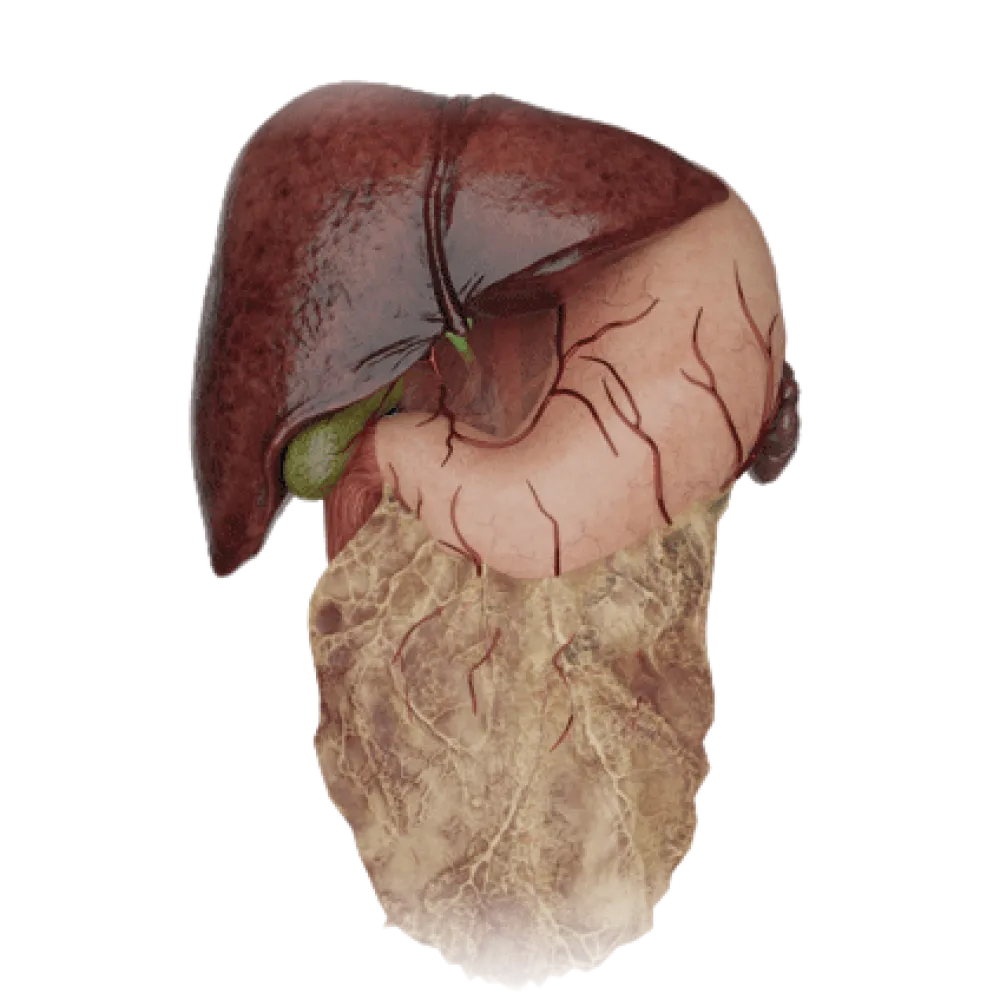
Celiac trunk
0/20

Female pelvic vessels and lymph nodes
0/20

Inferior vena cava and tributaries in females
0/20

Inferior vena cava and tributaries of the male
0/20

Portal vein and its tributaries
0/20

Vessels and lymph nodes of the male pelvis
0/20

Vessels of the abdomen and pelvis of the woman
0/20

Vessels of the male abdomen and pelvis
0/20
Test on the anatomy of the vessels of the woman's abdomen and pelvis
Evaluate the knowledge of the anatomy of the vessels of the woman's abdomen and pelvis. The test covers the topography, sources of blood supply to the uterus and appendages, as well as the features of venous outflow and anastomosis.
1/20
bold
text
1. At what level do the ovarian arteries (aa. ovaricae) normally branch from the abdominal part of the aorta?
-
At the level of the twelfth thoracic vertebra
The ovarian arteries branch from the anterolateral surface of the abdominal aorta, slightly below the renal arteries, at the level of the body of the second lumbar vertebra.
-
At the level of the sacral promontory
The ovarian arteries branch from the anterolateral surface of the abdominal aorta, slightly below the renal arteries, at the level of the body of the second lumbar vertebra.
-
At the level of the second lumbar vertebra
The ovarian arteries branch from the anterolateral surface of the abdominal aorta, slightly below the renal arteries, at the level of the body of the second lumbar vertebra.
-
Directly above the bifurcation of the aorta
The ovarian arteries branch from the anterolateral surface of the abdominal aorta, slightly below the renal arteries, at the level of the body of the second lumbar vertebra.
-
I find it difficult to answer
The ovarian arteries branch from the anterolateral surface of the abdominal aorta, slightly below the renal arteries, at the level of the body of the second lumbar vertebra.
2. Which blood vessel predominantly branches into the uterine artery (a. uterina)?
-
Internal iliac artery
The uterine artery is a large visceral branch of the anterior trunk of the internal iliac artery, supplying the uterus and appendages
-
External iliac artery
The uterine artery is a large visceral branch of the anterior trunk of the internal iliac artery, supplying the uterus and appendages
-
Abdominal part of the aorta
The uterine artery is a large visceral branch of the anterior trunk of the internal iliac artery, supplying the uterus and appendages
-
The obturator artery
The uterine artery is a large visceral branch of the anterior trunk of the internal iliac artery, supplying the uterus and appendages
-
I find it difficult to answer
The uterine artery is a large visceral branch of the anterior trunk of the internal iliac artery, supplying the uterus and appendages
3. Indicate the classical topographic relationship of the uterine artery and the ureter at the base of the broad ligament of the uterus:
-
The ureter crosses the artery anteriorly and superiorly
At the base of the broad ligament of the uterus (1.5-2 cm from the cervix), the uterine artery crosses the ureter anteriorly and superiorly (the 'water under the bridge' rule).
-
The artery and the ureter run parallel without intersection
At the base of the broad ligament of the uterus (1.5-2 cm from the cervix), the uterine artery crosses the ureter anteriorly and superiorly (the 'water under the bridge' rule).
-
The artery passes behind and laterally to the ureter
At the base of the broad ligament of the uterus (1.5-2 cm from the cervix), the uterine artery crosses the ureter anteriorly and superiorly (the 'water under the bridge' rule).
-
The artery crosses the ureter anteriorly and superiorly
At the base of the broad ligament of the uterus (1.5-2 cm from the cervix), the uterine artery crosses the ureter anteriorly and superiorly (the 'water under the bridge' rule).
-
I find it difficult to answer
At the base of the broad ligament of the uterus (1.5-2 cm from the cervix), the uterine artery crosses the ureter anteriorly and superiorly (the 'water under the bridge' rule).
4. Where does the direct venous outflow via the right ovarian vein (v. ovarica dextra) occur?
-
Into the right renal vein
The right ovarian vein drains directly into the inferior vena cava at an acute angle, while the left drains into the left renal vein.
-
Into the inferior vena cava
The right ovarian vein drains directly into the inferior vena cava at an acute angle, while the left drains into the left renal vein.
-
Into the internal iliac vein
The right ovarian vein drains directly into the inferior vena cava at an acute angle, while the left drains into the left renal vein.
-
Into the portal vein
The right ovarian vein drains directly into the inferior vena cava at an acute angle, while the left drains into the left renal vein.
-
I find it difficult to answer
The right ovarian vein drains directly into the inferior vena cava at an acute angle, while the left drains into the left renal vein.
5. Which vessel predominantly branches into the vaginal artery (a. vaginalis), supplying the lower and middle sections of the vagina?
-
From the uterine artery
The vaginal artery most often branches directly from the internal iliac artery (sometimes sharing a common trunk with the uterine artery) and descends to the vagina.
-
From the external pudendal artery
The vaginal artery most often branches directly from the internal iliac artery (sometimes sharing a common trunk with the uterine artery) and descends to the vagina.
-
From the internal iliac artery.
The vaginal artery most often branches directly from the internal iliac artery (sometimes sharing a common trunk with the uterine artery) and descends to the vagina.
-
From the umbilical artery
The vaginal artery most often branches directly from the internal iliac artery (sometimes sharing a common trunk with the uterine artery) and descends to the vagina.
-
I find it difficult to answer
The vaginal artery most often branches directly from the internal iliac artery (sometimes sharing a common trunk with the uterine artery) and descends to the vagina.
6. Which artery supplies the corpora cavernosa of the clitoris?
-
Artery of bulb of vestibule
The deep artery of the clitoris (a. profunda clitoridis), being a branch of the internal pudendal artery, penetrates the crura of the clitoris and supplies its corpora cavernosa.
-
The external pudendal artery
The deep artery of the clitoris (a. profunda clitoridis), being a branch of the internal pudendal artery, penetrates the crura of the clitoris and supplies its corpora cavernosa.
-
Dorsal artery of clitoris
The deep artery of the clitoris (a. profunda clitoridis), being a branch of the internal pudendal artery, penetrates the crura of the clitoris and supplies its corpora cavernosa.
-
Deep artery of clitoris
The deep artery of the clitoris (a. profunda clitoridis), being a branch of the internal pudendal artery, penetrates the crura of the clitoris and supplies its corpora cavernosa.
-
I find it difficult to answer
The deep artery of the clitoris (a. profunda clitoridis), being a branch of the internal pudendal artery, penetrates the crura of the clitoris and supplies its corpora cavernosa.
7. Which artery runs within the round ligament of the uterus (a. ligamenti teretis uteri) and anastomoses with branches of the uterine artery?
-
Branch of the inferior epigastric artery
The artery of the round ligament of the uterus branches from the inferior epigastric artery, enters through the deep inguinal ring, and anastomoses with the uterine artery in the region of the uterine cornua.
-
Branch of the obturator artery
The artery of the round ligament of the uterus branches from the inferior epigastric artery, enters through the deep inguinal ring, and anastomoses with the uterine artery in the region of the uterine cornua.
-
Branch of the external pudendal artery
The artery of the round ligament of the uterus branches from the inferior epigastric artery, enters through the deep inguinal ring, and anastomoses with the uterine artery in the region of the uterine cornua.
-
Branch of the internal pudendal artery
The artery of the round ligament of the uterus branches from the inferior epigastric artery, enters through the deep inguinal ring, and anastomoses with the uterine artery in the region of the uterine cornua.
-
I find it difficult to answer
The artery of the round ligament of the uterus branches from the inferior epigastric artery, enters through the deep inguinal ring, and anastomoses with the uterine artery in the region of the uterine cornua.
8. Into which veins does the blood from the uterine venous plexus (plexus venosus uterinus) predominantly drain?
-
Into the ovarian veins
The uterine venous plexus is located on the sides of the uterus; from it, the uterine veins form, draining into the internal iliac veins.
-
Into the internal iliac veins
The uterine venous plexus is located on the sides of the uterus; from it, the uterine veins form, draining into the internal iliac veins.
-
Into the external iliac veins
The uterine venous plexus is located on the sides of the uterus; from it, the uterine veins form, draining into the internal iliac veins.
-
Into the inferior mesenteric veins
The uterine venous plexus is located on the sides of the uterus; from it, the uterine veins form, draining into the internal iliac veins.
-
I find it difficult to answer
The uterine venous plexus is located on the sides of the uterus; from it, the uterine veins form, draining into the internal iliac veins.
9. Which vessels run within the thickness of the ligament suspending the ovary (ligamentum suspensorium ovarii)?
-
Ovarian artery and vein
In the ligament suspending the ovary, from the lateral wall of the pelvis to the ovary, the ovarian artery (from the abdominal aorta) and ovarian vein run.
-
The uterine artery and vein
In the ligament suspending the ovary, from the lateral wall of the pelvis to the ovary, the ovarian artery (from the abdominal aorta) and ovarian vein run.
-
Internal pudendal vessels
In the ligament suspending the ovary, from the lateral wall of the pelvis to the ovary, the ovarian artery (from the abdominal aorta) and ovarian vein run.
-
Branches of the inferior epigastric artery
In the ligament suspending the ovary, from the lateral wall of the pelvis to the ovary, the ovarian artery (from the abdominal aorta) and ovarian vein run.
-
I find it difficult to answer
In the ligament suspending the ovary, from the lateral wall of the pelvis to the ovary, the ovarian artery (from the abdominal aorta) and ovarian vein run.
10. Indicate the characteristic of the outflow of the left ovarian vein (v. ovarica sinistra):
-
Drains into the inferior vena cava at an acute angle
The left ovarian vein drains into the left renal vein at a right angle, providing specific hemodynamic conditions for the outflow.
-
Drains into the internal iliac vein
The left ovarian vein drains into the left renal vein at a right angle, providing specific hemodynamic conditions for the outflow.
-
Drains into the external iliac vein
The left ovarian vein drains into the left renal vein at a right angle, providing specific hemodynamic conditions for the outflow.
-
Drains into the left renal vein at a right angle
The left ovarian vein drains into the left renal vein at a right angle, providing specific hemodynamic conditions for the outflow.
-
I find it difficult to answer
The left ovarian vein drains into the left renal vein at a right angle, providing specific hemodynamic conditions for the outflow.
11. Which of the following arteries is a parietal branch of the internal iliac artery?
-
Uterine artery
The iliolumbar artery (a. iliolumbalis) is a parietal branch of the posterior trunk of the internal iliac artery.
-
Middle rectal artery
The iliolumbar artery (a. iliolumbalis) is a parietal branch of the posterior trunk of the internal iliac artery.
-
Psoas artery (iliolumbar artery)
The iliolumbar artery (a. iliolumbalis) is a parietal branch of the posterior trunk of the internal iliac artery.
-
Internal pudendal artery
The iliolumbar artery (a. iliolumbalis) is a parietal branch of the posterior trunk of the internal iliac artery.
-
I find it difficult to answer
The iliolumbar artery (a. iliolumbalis) is a parietal branch of the posterior trunk of the internal iliac artery.
12. In which anatomical structure does the ovarian branch of the uterine artery (ramus ovaricus a. uterinae) pass?
-
In the broad ligament of the uterus (at the base)
The ovarian branch of the uterine artery passes within the thickness of the mesovarium, where it anastomoses with the branches of the ovarian artery
-
In the mesovarium
The ovarian branch of the uterine artery passes within the thickness of the mesovarium, where it anastomoses with the branches of the ovarian artery
-
In the round ligament of the uterus
The ovarian branch of the uterine artery passes within the thickness of the mesovarium, where it anastomoses with the branches of the ovarian artery
-
In the suspensory ligament of the ovary
The ovarian branch of the uterine artery passes within the thickness of the mesovarium, where it anastomoses with the branches of the ovarian artery
-
I find it difficult to answer
The ovarian branch of the uterine artery passes within the thickness of the mesovarium, where it anastomoses with the branches of the ovarian artery
13. Which venous plexus does the vaginal venous plexus most directly and extensively anastomose with?
-
With the uterine venous plexus
The vaginal venous plexus (plexus venosus vaginalis) surrounds the vagina and communicates extensively with the uterine venous plexus above.
-
With the sacral venous plexus
The vaginal venous plexus (plexus venosus vaginalis) surrounds the vagina and communicates extensively with the uterine venous plexus above.
-
With the prostatic venous plexus
The vaginal venous plexus (plexus venosus vaginalis) surrounds the vagina and communicates extensively with the uterine venous plexus above.
-
With the ovarian venous plexus
The vaginal venous plexus (plexus venosus vaginalis) surrounds the vagina and communicates extensively with the uterine venous plexus above.
-
I find it difficult to answer
The vaginal venous plexus (plexus venosus vaginalis) surrounds the vagina and communicates extensively with the uterine venous plexus above.
14. Through which topographic opening does the inferior gluteal artery (a. glutea inferior) exit the lesser pelvis?
-
Suprapiriform foramen
The inferior gluteal artery exits the lesser pelvis together with the sciatic nerve and internal pudendal vessels through the infrapiriform foramen.
-
Obturator canal.
The inferior gluteal artery exits the lesser pelvis together with the sciatic nerve and internal pudendal vessels through the infrapiriform foramen.
-
Lesser sciatic foramen
The inferior gluteal artery exits the lesser pelvis together with the sciatic nerve and internal pudendal vessels through the infrapiriform foramen.
-
Infrapiriform foramen
The inferior gluteal artery exits the lesser pelvis together with the sciatic nerve and internal pudendal vessels through the infrapiriform foramen.
-
I find it difficult to answer
The inferior gluteal artery exits the lesser pelvis together with the sciatic nerve and internal pudendal vessels through the infrapiriform foramen.
15. Which vessels provide arterial blood supply to the uterine tube?
-
Only the uterine artery
The blood supply to the uterine tube is provided by tubal branches (rami tubarii) branching from both the uterine and ovarian arteries, forming an anastomosis in the mesosalpinx.
-
Only the ovarian artery
The blood supply to the uterine tube is provided by tubal branches (rami tubarii) branching from both the uterine and ovarian arteries, forming an anastomosis in the mesosalpinx.
-
Tubal branches from the uterine and ovarian arteries
The blood supply to the uterine tube is provided by tubal branches (rami tubarii) branching from both the uterine and ovarian arteries, forming an anastomosis in the mesosalpinx.
-
Branches of the vaginal artery and artery of the round ligament of the uterus
The blood supply to the uterine tube is provided by tubal branches (rami tubarii) branching from both the uterine and ovarian arteries, forming an anastomosis in the mesosalpinx.
-
I find it difficult to answer
The blood supply to the uterine tube is provided by tubal branches (rami tubarii) branching from both the uterine and ovarian arteries, forming an anastomosis in the mesosalpinx.
16. In which structure of the perineum do the internal pudendal vessels (a. et v. pudendae internae) run?
-
In the superficial perineal space
The internal pudendal vessels and the pudendal nerve run on the lateral wall of the ischioanal fossa within the slit of the internal obturator fascia (Alcock's canal).
-
In the Alcock canal
The internal pudendal vessels and the pudendal nerve run on the lateral wall of the ischioanal fossa within the slit of the internal obturator fascia (Alcock's canal).
-
In the rectouterine pouch
The internal pudendal vessels and the pudendal nerve run on the lateral wall of the ischioanal fossa within the slit of the internal obturator fascia (Alcock's canal).
-
In the inguinal canal
The internal pudendal vessels and the pudendal nerve run on the lateral wall of the ischioanal fossa within the slit of the internal obturator fascia (Alcock's canal).
-
I find it difficult to answer
The internal pudendal vessels and the pudendal nerve run on the lateral wall of the ischioanal fossa within the slit of the internal obturator fascia (Alcock's canal).
17. Which artery supplies the ampulla of the rectum and often branches from the internal iliac artery along with the inferior vesical or vaginal artery?
-
Middle rectal artery
The middle rectal artery (a. rectalis media) is a visceral branch of the internal iliac artery, supplying the middle section (ampulla) of the rectum.
-
Superior rectal artery
The middle rectal artery (a. rectalis media) is a visceral branch of the internal iliac artery, supplying the middle section (ampulla) of the rectum.
-
Inferior mesenteric artery
The middle rectal artery (a. rectalis media) is a visceral branch of the internal iliac artery, supplying the middle section (ampulla) of the rectum.
-
Median sacral artery
The middle rectal artery (a. rectalis media) is a visceral branch of the internal iliac artery, supplying the middle section (ampulla) of the rectum.
-
I find it difficult to answer
The middle rectal artery (a. rectalis media) is a visceral branch of the internal iliac artery, supplying the middle section (ampulla) of the rectum.
18. Which part of the umbilical artery (a. umbilicalis) in a mature woman retains a lumen and gives off the superior vesical arteries?
-
Distal part, running to the navel
The proximal part of the umbilical artery (pars patens) remains functional in adults and gives off 1 to 3 superior vesical arteries to the apex of the bladder.
-
Obliterated part
The proximal part of the umbilical artery (pars patens) remains functional in adults and gives off 1 to 3 superior vesical arteries to the apex of the bladder.
-
Medial umbilical ligament
The proximal part of the umbilical artery (pars patens) remains functional in adults and gives off 1 to 3 superior vesical arteries to the apex of the bladder.
-
Proximal (patent) part
The proximal part of the umbilical artery (pars patens) remains functional in adults and gives off 1 to 3 superior vesical arteries to the apex of the bladder.
-
I find it difficult to answer
The proximal part of the umbilical artery (pars patens) remains functional in adults and gives off 1 to 3 superior vesical arteries to the apex of the bladder.
19. How does the trunk of the uterine artery proceed in relation to the wall of the uterus after approaching its cervix?
-
Descends along the vagina to its vestibule
Upon reaching the cervix, the uterine artery gives off a vaginal branch, and then ascends in a highly tortuous course along the lateral edge of the body of the uterus to its angle.
-
Ascends in a winding course along the lateral edge of the uterus
Upon reaching the cervix, the uterine artery gives off a vaginal branch, and then ascends in a highly tortuous course along the lateral edge of the body of the uterus to its angle.
-
Passes horizontally through the fundus of the uterus
Upon reaching the cervix, the uterine artery gives off a vaginal branch, and then ascends in a highly tortuous course along the lateral edge of the body of the uterus to its angle.
-
Goes back to the rectum
Upon reaching the cervix, the uterine artery gives off a vaginal branch, and then ascends in a highly tortuous course along the lateral edge of the body of the uterus to its angle.
-
I find it difficult to answer
Upon reaching the cervix, the uterine artery gives off a vaginal branch, and then ascends in a highly tortuous course along the lateral edge of the body of the uterus to its angle.
20. Which major artery do the external pudendal arteries originate from, providing blood supply to the labia majora?
-
From the internal iliac artery.
The external pudendal arteries originate from the femoral artery (a. femoralis) at the area of the subcutaneous slit and are directed towards the external genital organs (giving off anterior labial branches).
-
From the external iliac artery.
The external pudendal arteries originate from the femoral artery (a. femoralis) at the area of the subcutaneous slit and are directed towards the external genital organs (giving off anterior labial branches).
-
From the femoral artery
The external pudendal arteries originate from the femoral artery (a. femoralis) at the area of the subcutaneous slit and are directed towards the external genital organs (giving off anterior labial branches).
-
From the obturator artery
The external pudendal arteries originate from the femoral artery (a. femoralis) at the area of the subcutaneous slit and are directed towards the external genital organs (giving off anterior labial branches).
-
I find it difficult to answer
The external pudendal arteries originate from the femoral artery (a. femoralis) at the area of the subcutaneous slit and are directed towards the external genital organs (giving off anterior labial branches).
Retake this quiz?
Your current progress will be reset.