
Vessels of the abdomen and pelvis
0/20
By topic

Abdominal aorta and branches in men
0/20

Abdominal aorta and branches of the female
0/20
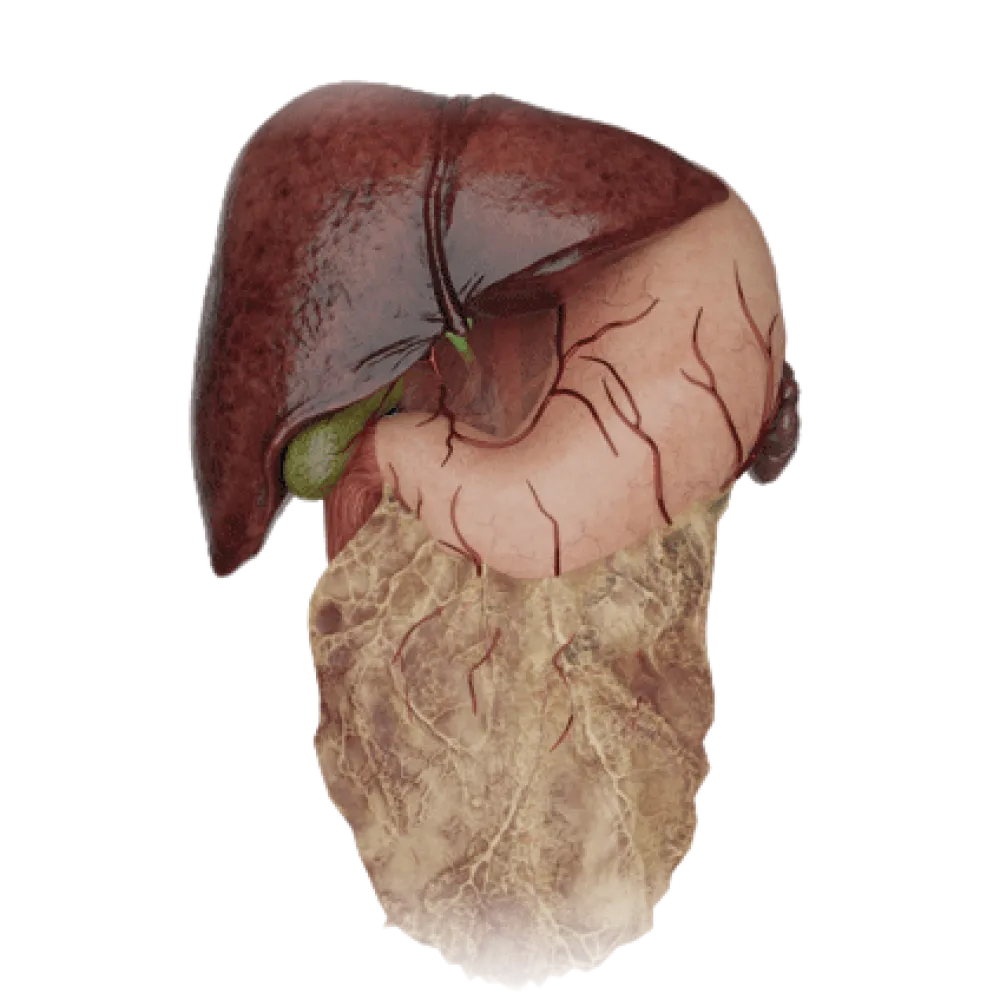
Celiac trunk
0/20

Female pelvic vessels and lymph nodes
0/20

Inferior vena cava and tributaries in females
0/20

Inferior vena cava and tributaries of the male
0/20

Portal vein and its tributaries
0/20

Vessels and lymph nodes of the male pelvis
0/20

Vessels of the abdomen and pelvis of the woman
0/20

Vessels of the male abdomen and pelvis
0/20
Test on the anatomy of male abdominal and pelvic vessels
Evaluate the knowledge of the anatomy of male abdominal and pelvic vessels. The test assesses the topography, blood supply of the male reproductive system organs, venous plexuses, and specific anastomoses.
1/20
bold
text
1. At what level do the testicular arteries (aa. testiculares) usually branch off from the abdominal aorta?
-
At the level of the twelfth thoracic vertebra
The testicular arteries branch from the anterior surface of the abdominal aorta slightly below the renal arteries, at the level of the second lumbar vertebra.
-
Directly above the bifurcation of the aorta
The testicular arteries branch from the anterior surface of the abdominal aorta slightly below the renal arteries, at the level of the second lumbar vertebra.
-
At the level of the fourth lumbar vertebra
The testicular arteries branch from the anterior surface of the abdominal aorta slightly below the renal arteries, at the level of the second lumbar vertebra.
-
At the level of the second lumbar vertebra
The testicular arteries branch from the anterior surface of the abdominal aorta slightly below the renal arteries, at the level of the second lumbar vertebra.
-
I find it difficult to answer
The testicular arteries branch from the anterior surface of the abdominal aorta slightly below the renal arteries, at the level of the second lumbar vertebra.
2. From which artery does the artery of the ductus deferens (a. ductus deferentis) usually originate?
-
Internal pudendal artery
The artery of the ductus deferens (a. ductus deferentis) most often branches off from the patent part of the umbilical artery (pars patens a. umbilicalis).
-
Testicular artery
The artery of the ductus deferens (a. ductus deferentis) most often branches off from the patent part of the umbilical artery (pars patens a. umbilicalis).
-
Umbilical artery
The artery of the ductus deferens (a. ductus deferentis) most often branches off from the patent part of the umbilical artery (pars patens a. umbilicalis).
-
Middle rectal artery
The artery of the ductus deferens (a. ductus deferentis) most often branches off from the patent part of the umbilical artery (pars patens a. umbilicalis).
-
I find it difficult to answer
The artery of the ductus deferens (a. ductus deferentis) most often branches off from the patent part of the umbilical artery (pars patens a. umbilicalis).
3. Where does the right testicular vein (v. testicularis dextra) usually drain into?
-
Into the right renal vein
The right testicular vein drains directly into the inferior vena cava at an acute angle, as opposed to the left, which drains into the left renal vein.
-
Into the internal iliac vein
The right testicular vein drains directly into the inferior vena cava at an acute angle, as opposed to the left, which drains into the left renal vein.
-
Into the portal vein
The right testicular vein drains directly into the inferior vena cava at an acute angle, as opposed to the left, which drains into the left renal vein.
-
Into the inferior vena cava
The right testicular vein drains directly into the inferior vena cava at an acute angle, as opposed to the left, which drains into the left renal vein.
-
I find it difficult to answer
The right testicular vein drains directly into the inferior vena cava at an acute angle, as opposed to the left, which drains into the left renal vein.
4. Specify the characteristic feature of the left testicular vein (v. testicularis sinistra) drainage:
-
Drains into the left renal vein at a right angle
The left testicular vein drains into the left renal vein at a right angle, which results in poorer hemodynamic conditions for blood outflow.
-
Drains into the inferior vena cava at an acute angle
The left testicular vein drains into the left renal vein at a right angle, which results in poorer hemodynamic conditions for blood outflow.
-
Drains into the azygos vein via lumbar veins
The left testicular vein drains into the left renal vein at a right angle, which results in poorer hemodynamic conditions for blood outflow.
-
Drains into the left internal iliac vein
The left testicular vein drains into the left renal vein at a right angle, which results in poorer hemodynamic conditions for blood outflow.
-
I find it difficult to answer
The left testicular vein drains into the left renal vein at a right angle, which results in poorer hemodynamic conditions for blood outflow.
5. Into which vein does the prostatic venous plexus (plexus venosus prostaticus) primarily drain?
-
Into the inferior mesenteric vein
Blood from the prostatic venous plexus drains into the inferior vesical veins, which empty into the internal iliac vein.
-
Into the external iliac vein
Blood from the prostatic venous plexus drains into the inferior vesical veins, which empty into the internal iliac vein.
-
Into the internal iliac vein
Blood from the prostatic venous plexus drains into the inferior vesical veins, which empty into the internal iliac vein.
-
Into the median sacral vein
Blood from the prostatic venous plexus drains into the inferior vesical veins, which empty into the internal iliac vein.
-
I find it difficult to answer
Blood from the prostatic venous plexus drains into the inferior vesical veins, which empty into the internal iliac vein.
6. Into which venous plexus or vessel does the deep dorsal vein of the penis (v. dorsalis profunda penis) drain?
-
Into the prostatic venous plexus
The deep dorsal vein of the penis passes under the pubic symphysis and drains into the prostatic venous plexus.
-
Into the femoral vein
The deep dorsal vein of the penis passes under the pubic symphysis and drains into the prostatic venous plexus.
-
Into the external pudendal vein
The deep dorsal vein of the penis passes under the pubic symphysis and drains into the prostatic venous plexus.
-
Into the pampiniform plexus
The deep dorsal vein of the penis passes under the pubic symphysis and drains into the prostatic venous plexus.
-
I find it difficult to answer
The deep dorsal vein of the penis passes under the pubic symphysis and drains into the prostatic venous plexus.
7. Which artery, a branch of the internal pudendal, supplies the bulb of the penis and the bulbourethral gland?
-
Dorsal artery of the penis
The artery of the bulb of the penis (a. bulbi penis) arises from the internal pudendal artery and supplies the bulb and the bulbourethral gland.
-
Artery of bulb of penis
The artery of the bulb of the penis (a. bulbi penis) arises from the internal pudendal artery and supplies the bulb and the bulbourethral gland.
-
Deep artery of the penis
The artery of the bulb of the penis (a. bulbi penis) arises from the internal pudendal artery and supplies the bulb and the bulbourethral gland.
-
Perineal artery
The artery of the bulb of the penis (a. bulbi penis) arises from the internal pudendal artery and supplies the bulb and the bulbourethral gland.
-
I find it difficult to answer
The artery of the bulb of the penis (a. bulbi penis) arises from the internal pudendal artery and supplies the bulb and the bulbourethral gland.
8. Which vascular structure is formed from the testicular vein in the spermatic cord?
-
Vesical venous plexus
The pampiniform plexus (plexus pampiniformis) is a dense network of veins within the spermatic cord that coalesce into the testicular vein above the superficial inguinal ring.
-
Pampiniform plexus
The pampiniform plexus (plexus pampiniformis) is a dense network of veins within the spermatic cord that coalesce into the testicular vein above the superficial inguinal ring.
-
Prostatic plexus
The pampiniform plexus (plexus pampiniformis) is a dense network of veins within the spermatic cord that coalesce into the testicular vein above the superficial inguinal ring.
-
Inferior rectal plexus
The pampiniform plexus (plexus pampiniformis) is a dense network of veins within the spermatic cord that coalesce into the testicular vein above the superficial inguinal ring.
-
I find it difficult to answer
The pampiniform plexus (plexus pampiniformis) is a dense network of veins within the spermatic cord that coalesce into the testicular vein above the superficial inguinal ring.
9. Which arteries are primarily involved in supplying the prostate gland?
-
Branches of the superior vesical and external pudendal arteries
The prostate gland is supplied by prostatic branches from the inferior vesical and middle rectal arteries (branches of the internal iliac artery).
-
Branches of the obturator and umbilical arteries
The prostate gland is supplied by prostatic branches from the inferior vesical and middle rectal arteries (branches of the internal iliac artery).
-
Branches of the testicular artery and the artery to the ductus deferens
The prostate gland is supplied by prostatic branches from the inferior vesical and middle rectal arteries (branches of the internal iliac artery).
-
Branches of the inferior vesical and middle rectal arteries
The prostate gland is supplied by prostatic branches from the inferior vesical and middle rectal arteries (branches of the internal iliac artery).
-
I find it difficult to answer
The prostate gland is supplied by prostatic branches from the inferior vesical and middle rectal arteries (branches of the internal iliac artery).
10. How is the artery of the ductus deferens positioned along with the duct itself in relation to the ureter in the lesser pelvis?
-
They run lateral and inferior to the ureter
In the pelvic cavity, the ductus deferens and its accompanying artery cross the pelvic part of the ureter anteriorly and superiorly, heading towards the bladder's base.
-
They cross the ureter anteriorly and superiorly
In the pelvic cavity, the ductus deferens and its accompanying artery cross the pelvic part of the ureter anteriorly and superiorly, heading towards the bladder's base.
-
They run parallel to the ureter to the bladder
In the pelvic cavity, the ductus deferens and its accompanying artery cross the pelvic part of the ureter anteriorly and superiorly, heading towards the bladder's base.
-
They cross the ureter posteriorly and inferiorly
In the pelvic cavity, the ductus deferens and its accompanying artery cross the pelvic part of the ureter anteriorly and superiorly, heading towards the bladder's base.
-
I find it difficult to answer
In the pelvic cavity, the ductus deferens and its accompanying artery cross the pelvic part of the ureter anteriorly and superiorly, heading towards the bladder's base.
11. At what topographical level does the bifurcation of the abdominal aorta into the right and left common iliac arteries occur?
-
At the level of the twelfth thoracic vertebra
The abdominal part of the aorta divides into the two common iliac arteries at the level of the middle of the fourth lumbar vertebra.
-
At the level of the sacral promontory
The abdominal part of the aorta divides into the two common iliac arteries at the level of the middle of the fourth lumbar vertebra.
-
At the level of the fourth lumbar vertebra
The abdominal part of the aorta divides into the two common iliac arteries at the level of the middle of the fourth lumbar vertebra.
-
At the level of the second lumbar vertebra
The abdominal part of the aorta divides into the two common iliac arteries at the level of the middle of the fourth lumbar vertebra.
-
I find it difficult to answer
The abdominal part of the aorta divides into the two common iliac arteries at the level of the middle of the fourth lumbar vertebra.
12. Which artery is NOT considered a visceral branch of the male internal iliac artery?
-
Umbilical artery
The iliolumbar artery (a. iliolumbalis) is a parietal branch of the internal iliac artery that supplies the pelvic and back muscles.
-
Inferior vesical artery
The iliolumbar artery (a. iliolumbalis) is a parietal branch of the internal iliac artery that supplies the pelvic and back muscles.
-
Psoas artery (iliolumbar artery)
The iliolumbar artery (a. iliolumbalis) is a parietal branch of the internal iliac artery that supplies the pelvic and back muscles.
-
Middle rectal artery
The iliolumbar artery (a. iliolumbalis) is a parietal branch of the internal iliac artery that supplies the pelvic and back muscles.
-
I find it difficult to answer
The iliolumbar artery (a. iliolumbalis) is a parietal branch of the internal iliac artery that supplies the pelvic and back muscles.
13. From what source do the anterior scrotal arteries (aa. scrotales anteriores) arise?
-
From the external pudendal arteries (branches of the femoral artery)
The anterior scrotal arteries branch off from the external pudendal arteries, which are branches of the femoral artery. The posterior scrotal arteries stem from the perineal artery.
-
From the internal pudendal arteries (branches of the internal iliac artery)
The anterior scrotal arteries branch off from the external pudendal arteries, which are branches of the femoral artery. The posterior scrotal arteries stem from the perineal artery.
-
From the obturator artery
The anterior scrotal arteries branch off from the external pudendal arteries, which are branches of the femoral artery. The posterior scrotal arteries stem from the perineal artery.
-
From the inferior epigastric artery
The anterior scrotal arteries branch off from the external pudendal arteries, which are branches of the femoral artery. The posterior scrotal arteries stem from the perineal artery.
-
I find it difficult to answer
The anterior scrotal arteries branch off from the external pudendal arteries, which are branches of the femoral artery. The posterior scrotal arteries stem from the perineal artery.
14. Which artery, branching from the external iliac artery, anastomoses with the superior epigastric artery in the thickness of the anterior abdominal wall?
-
Deep circumflex iliac artery
The inferior epigastric artery ascends along the posterior surface of the rectus abdominis and anastomoses with the superior epigastric artery (a branch of the internal thoracic artery).
-
Superficial epigastric artery
The inferior epigastric artery ascends along the posterior surface of the rectus abdominis and anastomoses with the superior epigastric artery (a branch of the internal thoracic artery).
-
Superficial circumflex iliac artery
The inferior epigastric artery ascends along the posterior surface of the rectus abdominis and anastomoses with the superior epigastric artery (a branch of the internal thoracic artery).
-
Inferior epigastric artery
The inferior epigastric artery ascends along the posterior surface of the rectus abdominis and anastomoses with the superior epigastric artery (a branch of the internal thoracic artery).
-
I find it difficult to answer
The inferior epigastric artery ascends along the posterior surface of the rectus abdominis and anastomoses with the superior epigastric artery (a branch of the internal thoracic artery).
15. Which vessels provide arterial blood supply to the seminal vesicles?
-
Branches of the internal pudendal and obturator arteries
Seminal vesicles receive arterial blood from branches of the artery to the ductus deferens, inferior vesical and middle rectal arteries.
-
Branches of the testicular artery and middle rectal artery
Seminal vesicles receive arterial blood from branches of the artery to the ductus deferens, inferior vesical and middle rectal arteries.
-
Branches of the superior vesical artery and umbilical artery
Seminal vesicles receive arterial blood from branches of the artery to the ductus deferens, inferior vesical and middle rectal arteries.
-
Branches of the artery to the ductus deferens and inferior vesical artery
Seminal vesicles receive arterial blood from branches of the artery to the ductus deferens, inferior vesical and middle rectal arteries.
-
I find it difficult to answer
Seminal vesicles receive arterial blood from branches of the artery to the ductus deferens, inferior vesical and middle rectal arteries.
16. Which venous structure forms a portocaval anastomosis in the wall of the rectum?
-
Rectal venous plexus
In the rectal venous plexus, the superior rectal vein (tributary of the portal vein) and the middle/inferior rectal veins (from the inferior vena cava system) anastomose.
-
Prostatic venous plexus
In the rectal venous plexus, the superior rectal vein (tributary of the portal vein) and the middle/inferior rectal veins (from the inferior vena cava system) anastomose.
-
Vesical venous plexus
In the rectal venous plexus, the superior rectal vein (tributary of the portal vein) and the middle/inferior rectal veins (from the inferior vena cava system) anastomose.
-
Sacral venous plexus
In the rectal venous plexus, the superior rectal vein (tributary of the portal vein) and the middle/inferior rectal veins (from the inferior vena cava system) anastomose.
-
I find it difficult to answer
In the rectal venous plexus, the superior rectal vein (tributary of the portal vein) and the middle/inferior rectal veins (from the inferior vena cava system) anastomose.
17. How is the external iliac vein positioned relative to the external iliac artery at the level of the inguinal ligament (in the vascular lacuna)?
-
Lateral to the artery
In the vascular lacuna under the inguinal ligament, the external iliac (femoral) vein is located medially to the corresponding artery, following the rule "VAN" (Vein, Artery, Nerve from inside to outside).
-
Medial to the artery
In the vascular lacuna under the inguinal ligament, the external iliac (femoral) vein is located medially to the corresponding artery, following the rule "VAN" (Vein, Artery, Nerve from inside to outside).
-
In front of the artery.
In the vascular lacuna under the inguinal ligament, the external iliac (femoral) vein is located medially to the corresponding artery, following the rule "VAN" (Vein, Artery, Nerve from inside to outside).
-
Behind the artery
In the vascular lacuna under the inguinal ligament, the external iliac (femoral) vein is located medially to the corresponding artery, following the rule "VAN" (Vein, Artery, Nerve from inside to outside).
-
I find it difficult to answer
In the vascular lacuna under the inguinal ligament, the external iliac (femoral) vein is located medially to the corresponding artery, following the rule "VAN" (Vein, Artery, Nerve from inside to outside).
18. From which artery does the cremasteric artery (a. cremasterica), supplying the cremaster muscle, originate?
-
From the testicular artery
The cremasteric artery (a. cremasterica) is a branch of the inferior epigastric artery and enters the spermatic cord, supplying the m. cremaster and testicular membranes.
-
From the inferior epigastric artery
The cremasteric artery (a. cremasterica) is a branch of the inferior epigastric artery and enters the spermatic cord, supplying the m. cremaster and testicular membranes.
-
From the external pudendal artery
The cremasteric artery (a. cremasterica) is a branch of the inferior epigastric artery and enters the spermatic cord, supplying the m. cremaster and testicular membranes.
-
From the internal pudendal artery.
The cremasteric artery (a. cremasterica) is a branch of the inferior epigastric artery and enters the spermatic cord, supplying the m. cremaster and testicular membranes.
-
I find it difficult to answer
The cremasteric artery (a. cremasterica) is a branch of the inferior epigastric artery and enters the spermatic cord, supplying the m. cremaster and testicular membranes.
19. Which artery passes through the corpus cavernosum of the penis, providing engorgement during erection?
-
Dorsal artery of the penis
The deep artery of the penis (a. profunda penis), a branch of the internal pudendal artery, runs within the corpus cavernosum, giving off helicine arteries.
-
Artery of bulb of penis
The deep artery of the penis (a. profunda penis), a branch of the internal pudendal artery, runs within the corpus cavernosum, giving off helicine arteries.
-
Deep artery of the penis
The deep artery of the penis (a. profunda penis), a branch of the internal pudendal artery, runs within the corpus cavernosum, giving off helicine arteries.
-
Urethral artery
The deep artery of the penis (a. profunda penis), a branch of the internal pudendal artery, runs within the corpus cavernosum, giving off helicine arteries.
-
I find it difficult to answer
The deep artery of the penis (a. profunda penis), a branch of the internal pudendal artery, runs within the corpus cavernosum, giving off helicine arteries.
20. Which branch of the inferior mesenteric artery descends into the pelvic cavity, participating in the supply of the rectum?
-
Inferior rectal artery
The superior rectal artery (a. rectalis superior) is the terminal branch of the inferior mesenteric artery, descending into the pelvis and supplying the rectal ampulla.
-
Middle rectal artery
The superior rectal artery (a. rectalis superior) is the terminal branch of the inferior mesenteric artery, descending into the pelvis and supplying the rectal ampulla.
-
Sigmoid artery
The superior rectal artery (a. rectalis superior) is the terminal branch of the inferior mesenteric artery, descending into the pelvis and supplying the rectal ampulla.
-
Superior rectal artery
The superior rectal artery (a. rectalis superior) is the terminal branch of the inferior mesenteric artery, descending into the pelvis and supplying the rectal ampulla.
-
I find it difficult to answer
The superior rectal artery (a. rectalis superior) is the terminal branch of the inferior mesenteric artery, descending into the pelvis and supplying the rectal ampulla.
Retake this quiz?
Your current progress will be reset.