
Vessels of the abdomen and pelvis
0/20
By topic

Abdominal aorta and branches in men
0/20

Abdominal aorta and branches of the female
0/20
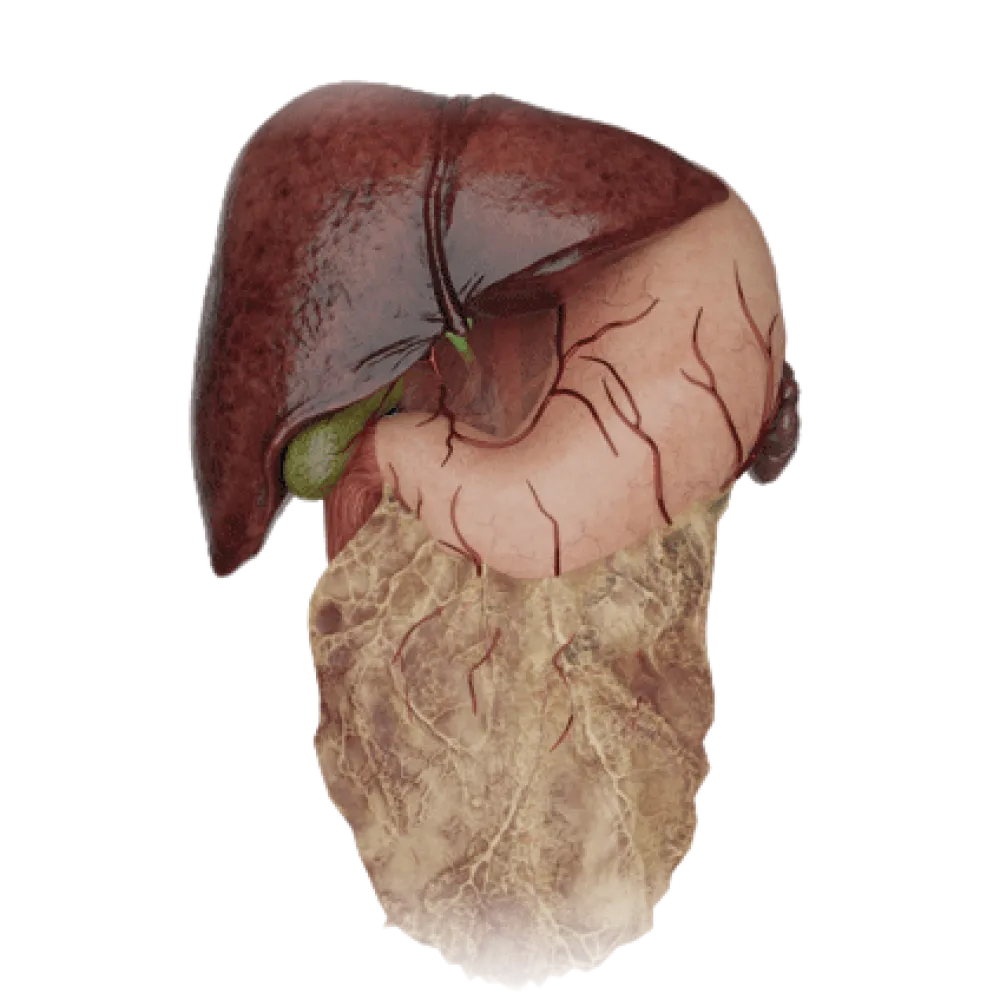
Celiac trunk
0/20

Female pelvic vessels and lymph nodes
0/20

Inferior vena cava and tributaries in females
0/20

Inferior vena cava and tributaries of the male
0/20

Portal vein and its tributaries
0/20

Vessels and lymph nodes of the male pelvis
0/20

Vessels of the abdomen and pelvis of the woman
0/20

Vessels of the male abdomen and pelvis
0/20
Test on the anatomy of female pelvic vessels and lymph nodes.
Assess knowledge of angiology and lymphatic drainage of female pelvis. The test evaluates the topography of vessels, plexuses, and regional lymph nodes.
1/20
bold
text
1. From which artery does the uterine artery (a. uterina) originate?
-
From the external iliac artery.
The uterine artery (a. uterina) is a major visceral branch of the anterior trunk of the internal iliac artery.
-
From the internal iliac artery.
The uterine artery (a. uterina) is a major visceral branch of the anterior trunk of the internal iliac artery.
-
From the common iliac artery.
The uterine artery (a. uterina) is a major visceral branch of the anterior trunk of the internal iliac artery.
-
From the ovarian artery.
The uterine artery (a. uterina) is a major visceral branch of the anterior trunk of the internal iliac artery.
-
I find it difficult to answer
The uterine artery (a. uterina) is a major visceral branch of the anterior trunk of the internal iliac artery.
2. What is the classical topographic relationship between the uterine artery and the ureter at the base of the broad ligament?
-
The artery passes behind the ureter
At the base of the broad ligament of the uterus, the artery crosses anteriorly and superiorly (ventrally), which is of critical clinical significance. The uterine artery crosses the ureter anteriorly and superiorly (ventrally), which holds critical clinical significance.
-
The artery passes medially to the ureter.
At the base of the broad ligament of the uterus, the artery crosses anteriorly and superiorly (ventrally), which is of critical clinical significance. The uterine artery crosses the ureter anteriorly and superiorly (ventrally), which holds critical clinical significance.
-
The artery passes anteriorly and superiorly to the ureter.
At the base of the broad ligament of the uterus, the artery crosses anteriorly and superiorly (ventrally), which is of critical clinical significance. The uterine artery crosses the ureter anteriorly and superiorly (ventrally), which holds critical clinical significance.
-
The artery and the ureter run parallel.
At the base of the broad ligament of the uterus, the artery crosses anteriorly and superiorly (ventrally), which is of critical clinical significance. The uterine artery crosses the ureter anteriorly and superiorly (ventrally), which holds critical clinical significance.
-
I find it difficult to answer
At the base of the broad ligament of the uterus, the artery crosses anteriorly and superiorly (ventrally), which is of critical clinical significance. The uterine artery crosses the ureter anteriorly and superiorly (ventrally), which holds critical clinical significance.
3. At what level does the ovarian artery (a. ovarica) branch from the abdominal aorta?
-
At the level of the second lumbar vertebra
The ovarian artery arises from the anterolateral surface of the abdominal aorta at the level of L2, slightly below the origin of the renal arteries.
-
At the level of the twelfth thoracic vertebra
The ovarian artery arises from the anterolateral surface of the abdominal aorta at the level of L2, slightly below the origin of the renal arteries.
-
At the level of the fourth lumbar vertebra
The ovarian artery arises from the anterolateral surface of the abdominal aorta at the level of L2, slightly below the origin of the renal arteries.
-
At the level of the sacral promontory.
The ovarian artery arises from the anterolateral surface of the abdominal aorta at the level of L2, slightly below the origin of the renal arteries.
-
I find it difficult to answer
The ovarian artery arises from the anterolateral surface of the abdominal aorta at the level of L2, slightly below the origin of the renal arteries.
4. Which lymph nodes primarily receive lymph drainage from the ovaries?
-
To the external iliac nodes.
The lymphatic vessels of the ovaries follow the ovarian vessels (vasa ovarica) and drain directly into the lumbar lymph nodes.
-
To the superficial inguinal nodes.
The lymphatic vessels of the ovaries follow the ovarian vessels (vasa ovarica) and drain directly into the lumbar lymph nodes.
-
To the internal iliac nodes.
The lymphatic vessels of the ovaries follow the ovarian vessels (vasa ovarica) and drain directly into the lumbar lymph nodes.
-
To the lumbar (para-aortic and paracaval) nodes.
The lymphatic vessels of the ovaries follow the ovarian vessels (vasa ovarica) and drain directly into the lumbar lymph nodes.
-
I find it difficult to answer
The lymphatic vessels of the ovaries follow the ovarian vessels (vasa ovarica) and drain directly into the lumbar lymph nodes.
5. The artery of the round ligament of the uterus (a. ligamenti teretis uteri) is a branch of which artery?
-
Internal pudendal artery
The artery of the round ligament of the uterus originates from the inferior epigastric artery (of the external iliac artery system) and anastomoses with branches of the uterine artery.
-
From the inferior epigastric artery.
The artery of the round ligament of the uterus originates from the inferior epigastric artery (of the external iliac artery system) and anastomoses with branches of the uterine artery.
-
Uterine artery
The artery of the round ligament of the uterus originates from the inferior epigastric artery (of the external iliac artery system) and anastomoses with branches of the uterine artery.
-
From the ovarian artery.
The artery of the round ligament of the uterus originates from the inferior epigastric artery (of the external iliac artery system) and anastomoses with branches of the uterine artery.
-
I find it difficult to answer
The artery of the round ligament of the uterus originates from the inferior epigastric artery (of the external iliac artery system) and anastomoses with branches of the uterine artery.
6. Which artery most commonly supplies the upper and middle thirds of the vagina?
-
Obturator artery.
The vaginal artery (a. vaginalis) may arise directly from the internal iliac or be a branch of the uterine artery; it supplies the upper and middle parts of the vagina.
-
Internal pudendal artery
The vaginal artery (a. vaginalis) may arise directly from the internal iliac or be a branch of the uterine artery; it supplies the upper and middle parts of the vagina.
-
Vaginal artery.
The vaginal artery (a. vaginalis) may arise directly from the internal iliac or be a branch of the uterine artery; it supplies the upper and middle parts of the vagina.
-
Inferior rectal artery
The vaginal artery (a. vaginalis) may arise directly from the internal iliac or be a branch of the uterine artery; it supplies the upper and middle parts of the vagina.
-
I find it difficult to answer
The vaginal artery (a. vaginalis) may arise directly from the internal iliac or be a branch of the uterine artery; it supplies the upper and middle parts of the vagina.
7. To which lymph nodes does lymph from the lower third of the vagina and external genitalia flow?
-
To the superficial inguinal lymph nodes.
Lymphatic drainage from the lower third of the vagina, vulva, and perineum primarily flows to the superficial inguinal lymph nodes.
-
To the internal iliac lymph nodes.
Lymphatic drainage from the lower third of the vagina, vulva, and perineum primarily flows to the superficial inguinal lymph nodes.
-
To the sacral lymph nodes.
Lymphatic drainage from the lower third of the vagina, vulva, and perineum primarily flows to the superficial inguinal lymph nodes.
-
To the lumbar lymph nodes.
Lymphatic drainage from the lower third of the vagina, vulva, and perineum primarily flows to the superficial inguinal lymph nodes.
-
I find it difficult to answer
Lymphatic drainage from the lower third of the vagina, vulva, and perineum primarily flows to the superficial inguinal lymph nodes.
8. Which blood vessels run through the ligament that suspends the ovary (lig. suspensorium ovarii)?
-
The uterine artery and vein
In the suspensory ligament of the ovary, the ovarian artery and vein run.
-
The artery and vein of the round ligament of the uterus.
In the suspensory ligament of the ovary, the ovarian artery and vein run.
-
The obturator artery and vein.
In the suspensory ligament of the ovary, the ovarian artery and vein run.
-
The ovarian artery and vein (vasa ovarica).
In the suspensory ligament of the ovary, the ovarian artery and vein run.
-
I find it difficult to answer
In the suspensory ligament of the ovary, the ovarian artery and vein run.
9. Into which vessel does the right ovarian vein (v. ovarica dextra) directly drain?
-
Into the right renal vein
The right ovarian vein drains acutely into the inferior vena cava, while the left drains into the left renal vein.
-
Into the inferior vena cava
The right ovarian vein drains acutely into the inferior vena cava, while the left drains into the left renal vein.
-
Into the right internal iliac vein
The right ovarian vein drains acutely into the inferior vena cava, while the left drains into the left renal vein.
-
Into the portal vein
The right ovarian vein drains acutely into the inferior vena cava, while the left drains into the left renal vein.
-
I find it difficult to answer
The right ovarian vein drains acutely into the inferior vena cava, while the left drains into the left renal vein.
10. Where is the uterine venous plexus (plexus venosus uterinus) predominantly located?
-
In the uterovesical pouch.
The uterine venous plexus is richly developed and located in the parametrium (between the layers of the broad ligament) along the lateral surfaces of the uterus.
-
Under the serous membrane of the uterine fundus.
The uterine venous plexus is richly developed and located in the parametrium (between the layers of the broad ligament) along the lateral surfaces of the uterus.
-
Between the layers of the broad ligament of the uterus (parametrium) at its margins.
The uterine venous plexus is richly developed and located in the parametrium (between the layers of the broad ligament) along the lateral surfaces of the uterus.
-
In the rectouterine pouch
The uterine venous plexus is richly developed and located in the parametrium (between the layers of the broad ligament) along the lateral surfaces of the uterus.
-
I find it difficult to answer
The uterine venous plexus is richly developed and located in the parametrium (between the layers of the broad ligament) along the lateral surfaces of the uterus.
11. Which artery supplies the corpora cavernosa of the clitoris (a. profunda clitoridis)?
-
Internal pudendal artery
The deep and dorsal arteries of the clitoris are terminal branches of the internal pudendal artery (a. pudenda interna).
-
The external pudendal artery
The deep and dorsal arteries of the clitoris are terminal branches of the internal pudendal artery (a. pudenda interna).
-
Obturator artery.
The deep and dorsal arteries of the clitoris are terminal branches of the internal pudendal artery (a. pudenda interna).
-
Inferior epigastric artery
The deep and dorsal arteries of the clitoris are terminal branches of the internal pudendal artery (a. pudenda interna).
-
I find it difficult to answer
The deep and dorsal arteries of the clitoris are terminal branches of the internal pudendal artery (a. pudenda interna).
12. To which lymph nodes does lymph primarily drain from the uterine fundus (including the region of the uterine tubes)?
-
To the internal iliac nodes
Lymph from the uterine fundus and uterine tubes drains along the ovarian vessels into the lumbar (para-aortic) lymph nodes.
-
To the superficial inguinal nodes
Lymph from the uterine fundus and uterine tubes drains along the ovarian vessels into the lumbar (para-aortic) lymph nodes.
-
To the sacral lymph nodes.
Lymph from the uterine fundus and uterine tubes drains along the ovarian vessels into the lumbar (para-aortic) lymph nodes.
-
To the lumbar (para-aortic) lymph nodes.
Lymph from the uterine fundus and uterine tubes drains along the ovarian vessels into the lumbar (para-aortic) lymph nodes.
-
I find it difficult to answer
Lymph from the uterine fundus and uterine tubes drains along the ovarian vessels into the lumbar (para-aortic) lymph nodes.
13. To which lymph nodes might lymph from the uterine corners drain following its course along the round ligament?
-
To the internal iliac lymph nodes.
Some lymph vessels from the region of the uterine horns course along the round ligament into the inguinal canal to reach superficial inguinal lymph nodes.
-
To the superficial inguinal lymph nodes.
Some lymph vessels from the region of the uterine horns course along the round ligament into the inguinal canal to reach superficial inguinal lymph nodes.
-
To the lumbar lymph nodes.
Some lymph vessels from the region of the uterine horns course along the round ligament into the inguinal canal to reach superficial inguinal lymph nodes.
-
To the sacral lymph nodes.
Some lymph vessels from the region of the uterine horns course along the round ligament into the inguinal canal to reach superficial inguinal lymph nodes.
-
I find it difficult to answer
Some lymph vessels from the region of the uterine horns course along the round ligament into the inguinal canal to reach superficial inguinal lymph nodes.
14. In which anatomical area does the uterine artery form a prominent anastomosis with the ovarian artery?
-
In the mesovarium and mesosalpinx.
The ovarian branch of the uterine artery forms a strong arterial anastomosis with the ovarian artery in the hilum of the ovary (mesovarium) and the mesosalpinx.
-
In the region of the uterine isthmus.
The ovarian branch of the uterine artery forms a strong arterial anastomosis with the ovarian artery in the hilum of the ovary (mesovarium) and the mesosalpinx.
-
Within the sacrouterine ligaments.
The ovarian branch of the uterine artery forms a strong arterial anastomosis with the ovarian artery in the hilum of the ovary (mesovarium) and the mesosalpinx.
-
On the anterior surface of the uterine cervix.
The ovarian branch of the uterine artery forms a strong arterial anastomosis with the ovarian artery in the hilum of the ovary (mesovarium) and the mesosalpinx.
-
I find it difficult to answer
The ovarian branch of the uterine artery forms a strong arterial anastomosis with the ovarian artery in the hilum of the ovary (mesovarium) and the mesosalpinx.
15. Through which foramen does the internal pudendal artery exit the lesser pelvic cavity before entering the ischioanal fossa?
-
Through the suprapiriform foramen.
The internal pudendal artery exits the pelvic cavity through the infrapiriform foramen of the greater sciatic foramen.
-
Through the obturator canal
The internal pudendal artery exits the pelvic cavity through the infrapiriform foramen of the greater sciatic foramen.
-
Through the muscular lacuna
The internal pudendal artery exits the pelvic cavity through the infrapiriform foramen of the greater sciatic foramen.
-
Through the infrapiriform foramen.
The internal pudendal artery exits the pelvic cavity through the infrapiriform foramen of the greater sciatic foramen.
-
I find it difficult to answer
The internal pudendal artery exits the pelvic cavity through the infrapiriform foramen of the greater sciatic foramen.
16. From which artery does the middle rectal artery (a. rectalis media) typically arise in females?
-
From the inferior mesenteric artery.
The middle rectal artery is a visceral branch of the internal iliac artery, supplying the middle part of the rectal ampulla.
-
From the uterine artery
The middle rectal artery is a visceral branch of the internal iliac artery, supplying the middle part of the rectal ampulla.
-
From the internal iliac artery.
The middle rectal artery is a visceral branch of the internal iliac artery, supplying the middle part of the rectal ampulla.
-
From the internal pudendal artery.
The middle rectal artery is a visceral branch of the internal iliac artery, supplying the middle part of the rectal ampulla.
-
I find it difficult to answer
The middle rectal artery is a visceral branch of the internal iliac artery, supplying the middle part of the rectal ampulla.
17. Which lymph nodes are the primary regional nodes of the first order for the uterine cervix?
-
Lumbar lymph nodes
Lymph from the cervix drains predominantly into the nodi iliaci interni, externi, obturatorii, and sacrales.
-
Internal, external iliac, and sacral lymph nodes.
Lymph from the cervix drains predominantly into the nodi iliaci interni, externi, obturatorii, and sacrales.
-
Superficial inguinal lymph nodes
Lymph from the cervix drains predominantly into the nodi iliaci interni, externi, obturatorii, and sacrales.
-
Para-aortic lymph nodes.
Lymph from the cervix drains predominantly into the nodi iliaci interni, externi, obturatorii, and sacrales.
-
I find it difficult to answer
Lymph from the cervix drains predominantly into the nodi iliaci interni, externi, obturatorii, and sacrales.
18. Where is a major portocaval anastomosis located in the wall of the female pelvic rectum?
-
Anastomosis between the superior rectal (portal vein system) and the middle/inferior rectal veins (inferior vena cava system).
In the rectal venous plexus, blood from the superior rectal vein (tributary of the inferior mesenteric vein) mixes with blood from the middle and inferior rectal veins.
-
Anastomosis between the uterine and rectal venous plexuses.
In the rectal venous plexus, blood from the superior rectal vein (tributary of the inferior mesenteric vein) mixes with blood from the middle and inferior rectal veins.
-
Anastomosis between the vaginal plexus and the internal pudendal vein.
In the rectal venous plexus, blood from the superior rectal vein (tributary of the inferior mesenteric vein) mixes with blood from the middle and inferior rectal veins.
-
Anastomosis between the ovarian vein and the vesical plexus.
In the rectal venous plexus, blood from the superior rectal vein (tributary of the inferior mesenteric vein) mixes with blood from the middle and inferior rectal veins.
-
I find it difficult to answer
In the rectal venous plexus, blood from the superior rectal vein (tributary of the inferior mesenteric vein) mixes with blood from the middle and inferior rectal veins.
19. Which arteries directly participate in the blood supply to the uterine tube (tuba uterina)?
-
Branches of the artery of the round ligament of the uterus.
The blood supply to the fallopian tube is provided by the tubal branch (ramus tubarius) from the uterine artery. and a similar branch from the ovarian artery. which anastomose in the mesosalpinx.
-
Only the tubal branches of the uterine artery.
The blood supply to the fallopian tube is provided by the tubal branch (ramus tubarius) from the uterine artery. and a similar branch from the ovarian artery. which anastomose in the mesosalpinx.
-
Only the tubal branches of the ovarian artery.
The blood supply to the fallopian tube is provided by the tubal branch (ramus tubarius) from the uterine artery. and a similar branch from the ovarian artery. which anastomose in the mesosalpinx.
-
Tubal branches from the uterine and ovarian arteries
The blood supply to the fallopian tube is provided by the tubal branch (ramus tubarius) from the uterine artery. and a similar branch from the ovarian artery. which anastomose in the mesosalpinx.
-
I find it difficult to answer
The blood supply to the fallopian tube is provided by the tubal branch (ramus tubarius) from the uterine artery. and a similar branch from the ovarian artery. which anastomose in the mesosalpinx.
20. Which major artery do the external pudendal arteries originate from, providing blood supply to the labia majora?
-
Internal iliac artery
The external pudendal arteries (aa. pudendae externae) arise from the femoral artery at the saphenous opening, supplying the anterior portions of the labia majora.
-
Internal pudendal artery
The external pudendal arteries (aa. pudendae externae) arise from the femoral artery at the saphenous opening, supplying the anterior portions of the labia majora.
-
The femoral artery
The external pudendal arteries (aa. pudendae externae) arise from the femoral artery at the saphenous opening, supplying the anterior portions of the labia majora.
-
External iliac artery
The external pudendal arteries (aa. pudendae externae) arise from the femoral artery at the saphenous opening, supplying the anterior portions of the labia majora.
-
I find it difficult to answer
The external pudendal arteries (aa. pudendae externae) arise from the femoral artery at the saphenous opening, supplying the anterior portions of the labia majora.
Retake this quiz?
Your current progress will be reset.