
Vessels of the abdomen and pelvis
0/20
By topic

Abdominal aorta and branches in men
0/20

Abdominal aorta and branches of the female
0/20
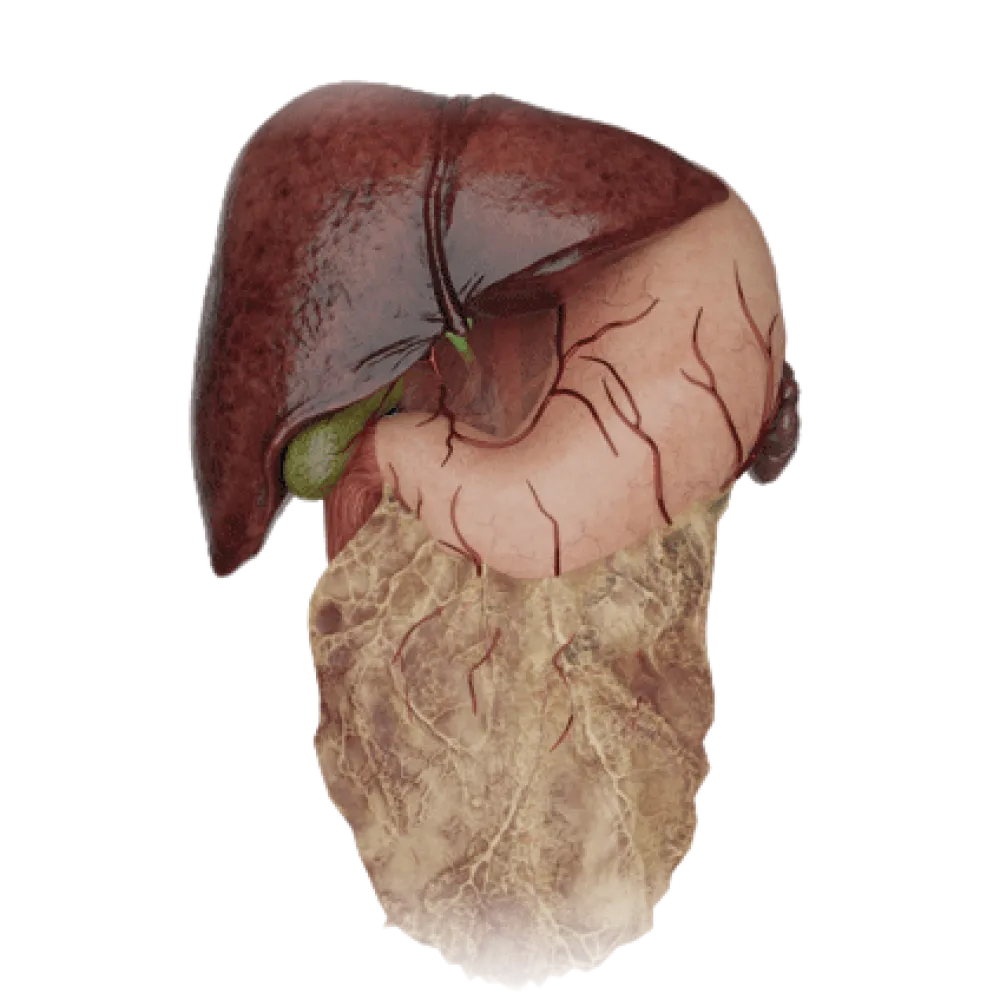
Celiac trunk
0/20

Female pelvic vessels and lymph nodes
0/20

Inferior vena cava and tributaries in females
0/20

Inferior vena cava and tributaries of the male
0/20

Portal vein and its tributaries
0/20

Vessels and lymph nodes of the male pelvis
0/20

Vessels of the abdomen and pelvis of the woman
0/20

Vessels of the male abdomen and pelvis
0/20
Test on the anatomy of vessels and lymph nodes of the male pelvis
Assess knowledge of angiology and lymphatic drainage of the male pelvis. The test evaluates the topography of vessels, plexuses, and regional lymph nodes.
1/20
bold
text
1. At what anatomical landmark does the common iliac artery divide into the external and internal iliac arteries?
-
Level of the sacral promontory (promontorium)
Bifurcation of the common iliac artery occurs at the level of the sacroiliac joint (articulatio sacroiliaca).
-
Level of the fourth lumbar vertebra
Bifurcation of the common iliac artery occurs at the level of the sacroiliac joint (articulatio sacroiliaca).
-
Level of the sacroiliac joint
Bifurcation of the common iliac artery occurs at the level of the sacroiliac joint (articulatio sacroiliaca).
-
Upper edge of the symphysis
Bifurcation of the common iliac artery occurs at the level of the sacroiliac joint (articulatio sacroiliaca).
-
I find it difficult to answer
Bifurcation of the common iliac artery occurs at the level of the sacroiliac joint (articulatio sacroiliaca).
2. Which of the following arteries arises from the posterior trunk of the internal iliac artery?
-
Obturator artery.
The posterior trunk of the internal iliac artery gives off the iliolumbar, lateral sacral, and superior gluteal arteries.
-
Inferior gluteal artery
The posterior trunk of the internal iliac artery gives off the iliolumbar, lateral sacral, and superior gluteal arteries.
-
Internal pudendal artery
The posterior trunk of the internal iliac artery gives off the iliolumbar, lateral sacral, and superior gluteal arteries.
-
Psoas artery (iliolumbar artery)
The posterior trunk of the internal iliac artery gives off the iliolumbar, lateral sacral, and superior gluteal arteries.
-
I find it difficult to answer
The posterior trunk of the internal iliac artery gives off the iliolumbar, lateral sacral, and superior gluteal arteries.
3. From which artery does the artery of the ductus deferens (a. ductus deferentis) usually originate?
-
From the inferior vesical artery
The artery of the ductus deferens is most often a branch of the patent (functioning) part of the umbilical artery.
-
From the umbilical artery (a. umbilicalis)
The artery of the ductus deferens is most often a branch of the patent (functioning) part of the umbilical artery.
-
From the obturator artery
The artery of the ductus deferens is most often a branch of the patent (functioning) part of the umbilical artery.
-
From the internal pudendal artery.
The artery of the ductus deferens is most often a branch of the patent (functioning) part of the umbilical artery.
-
I find it difficult to answer
The artery of the ductus deferens is most often a branch of the patent (functioning) part of the umbilical artery.
4. Into which lymph nodes does lymph from the testis primarily drain?
-
To the lumbar lymph nodes.
Lymphatic vessels of the testis ascend in the spermatic cord and drain into lumbar lymph nodes, which is associated with the site of embryonic gonadal development.
-
To the internal iliac lymph nodes.
Lymphatic vessels of the testis ascend in the spermatic cord and drain into lumbar lymph nodes, which is associated with the site of embryonic gonadal development.
-
To the superficial inguinal lymph nodes.
Lymphatic vessels of the testis ascend in the spermatic cord and drain into lumbar lymph nodes, which is associated with the site of embryonic gonadal development.
-
Into deep inguinal lymph nodes
Lymphatic vessels of the testis ascend in the spermatic cord and drain into lumbar lymph nodes, which is associated with the site of embryonic gonadal development.
-
I find it difficult to answer
Lymphatic vessels of the testis ascend in the spermatic cord and drain into lumbar lymph nodes, which is associated with the site of embryonic gonadal development.
5. Into which venous plexus or vessel does the deep dorsal vein of the penis (v. dorsalis profunda penis) drain?
-
Into the internal pudendal vein
The deep dorsal vein of the penis passes under the pubic symphysis and drains into the prostatic venous plexus (plexus venosus prostaticus).
-
Into the external pudendal vein
The deep dorsal vein of the penis passes under the pubic symphysis and drains into the prostatic venous plexus (plexus venosus prostaticus).
-
Into the prostatic venous plexus
The deep dorsal vein of the penis passes under the pubic symphysis and drains into the prostatic venous plexus (plexus venosus prostaticus).
-
Into the vesical venous plexus
The deep dorsal vein of the penis passes under the pubic symphysis and drains into the prostatic venous plexus (plexus venosus prostaticus).
-
I find it difficult to answer
The deep dorsal vein of the penis passes under the pubic symphysis and drains into the prostatic venous plexus (plexus venosus prostaticus).
6. What structures does the inferior vesical artery (a. vesicalis inferior) supply in men apart from the base of the bladder?
-
Corpus spongiosum penis
The inferior vesical artery in men gives off branches to the prostate gland (rr. prostatici) and seminal vesicles.
-
Bulbourethral glands and urogenital diaphragm
The inferior vesical artery in men gives off branches to the prostate gland (rr. prostatici) and seminal vesicles.
-
Rectum and anal canal
The inferior vesical artery in men gives off branches to the prostate gland (rr. prostatici) and seminal vesicles.
-
Prostate gland and seminal vesicles
The inferior vesical artery in men gives off branches to the prostate gland (rr. prostatici) and seminal vesicles.
-
I find it difficult to answer
The inferior vesical artery in men gives off branches to the prostate gland (rr. prostatici) and seminal vesicles.
7. Through which anatomical opening does the internal pudendal artery (a. pudenda interna) exit the lesser pelvis?
-
Through the suprapiriform foramen.
The internal pudendal artery exits the pelvic cavity through the infrapiriform foramen (foramen infrapiriforme) along with the accompanying veins and pudendal nerve.
-
Through the infrapiriform foramen.
The internal pudendal artery exits the pelvic cavity through the infrapiriform foramen (foramen infrapiriforme) along with the accompanying veins and pudendal nerve.
-
Through the obturator canal
The internal pudendal artery exits the pelvic cavity through the infrapiriform foramen (foramen infrapiriforme) along with the accompanying veins and pudendal nerve.
-
Through the lesser sciatic foramen
The internal pudendal artery exits the pelvic cavity through the infrapiriform foramen (foramen infrapiriforme) along with the accompanying veins and pudendal nerve.
-
I find it difficult to answer
The internal pudendal artery exits the pelvic cavity through the infrapiriform foramen (foramen infrapiriforme) along with the accompanying veins and pudendal nerve.
8. Where does the cremasteric artery (a. cremasterica), which supplies the cremaster muscle, originate?
-
From the external iliac artery.
The cremasteric artery branches from the inferior epigastric artery (a. epigastrica inferior), which is a branch of the external iliac artery.
-
From the femoral artery
The cremasteric artery branches from the inferior epigastric artery (a. epigastrica inferior), which is a branch of the external iliac artery.
-
From the inferior epigastric artery
The cremasteric artery branches from the inferior epigastric artery (a. epigastrica inferior), which is a branch of the external iliac artery.
-
From the internal iliac artery.
The cremasteric artery branches from the inferior epigastric artery (a. epigastrica inferior), which is a branch of the external iliac artery.
-
I find it difficult to answer
The cremasteric artery branches from the inferior epigastric artery (a. epigastrica inferior), which is a branch of the external iliac artery.
9. Into which lymph nodes does the lymph from the scrotal skin drain?
-
To the superficial inguinal lymph nodes.
Lymphatic drainage from the skin and tunica dartos of the scrotum proceeds to the superficial inguinal lymph nodes (nodi lymphatici inguinales superficiales).
-
To the internal iliac lymph nodes.
Lymphatic drainage from the skin and tunica dartos of the scrotum proceeds to the superficial inguinal lymph nodes (nodi lymphatici inguinales superficiales).
-
To the lumbar lymph nodes.
Lymphatic drainage from the skin and tunica dartos of the scrotum proceeds to the superficial inguinal lymph nodes (nodi lymphatici inguinales superficiales).
-
To the sacral lymph nodes.
Lymphatic drainage from the skin and tunica dartos of the scrotum proceeds to the superficial inguinal lymph nodes (nodi lymphatici inguinales superficiales).
-
I find it difficult to answer
Lymphatic drainage from the skin and tunica dartos of the scrotum proceeds to the superficial inguinal lymph nodes (nodi lymphatici inguinales superficiales).
10. How does the deep artery of the penis (a. profunda penis) course?
-
In the thickness of the corpus spongiosum
The deep artery of the penis (a branch of the internal pudendal artery) runs longitudinally in the center of the corpus cavernosum penis
-
In the thickness of the corpus cavernosum
The deep artery of the penis (a branch of the internal pudendal artery) runs longitudinally in the center of the corpus cavernosum penis
-
Along the dorsal surface of the penis beneath the fascia
The deep artery of the penis (a branch of the internal pudendal artery) runs longitudinally in the center of the corpus cavernosum penis
-
Under the skin of the penis
The deep artery of the penis (a branch of the internal pudendal artery) runs longitudinally in the center of the corpus cavernosum penis
-
I find it difficult to answer
The deep artery of the penis (a branch of the internal pudendal artery) runs longitudinally in the center of the corpus cavernosum penis
11. Which vessel forms the portocaval anastomosis in the wall of the rectum by joining with the branches of the middle and inferior rectal veins?
-
Left colic vein
The superior rectal vein drains blood into the portal vein system, anastomosing with the middle and inferior rectal veins (inferior vena cava system).
-
Sigmoid vein
The superior rectal vein drains blood into the portal vein system, anastomosing with the middle and inferior rectal veins (inferior vena cava system).
-
Ileocolic vein
The superior rectal vein drains blood into the portal vein system, anastomosing with the middle and inferior rectal veins (inferior vena cava system).
-
Superior rectal vein
The superior rectal vein drains blood into the portal vein system, anastomosing with the middle and inferior rectal veins (inferior vena cava system).
-
I find it difficult to answer
The superior rectal vein drains blood into the portal vein system, anastomosing with the middle and inferior rectal veins (inferior vena cava system).
12. Which artery is the primary source of blood supply to the bulb of the penis (bulbus penis)?
-
Artery of the bulb of the penis (branch of the internal pudendal)
The artery of the bulb of the penis (a. bulbi penis) is a major branch of the internal pudendal artery and supplies the corpus spongiosum.
-
The external pudendal artery
The artery of the bulb of the penis (a. bulbi penis) is a major branch of the internal pudendal artery and supplies the corpus spongiosum.
-
Inferior vesical artery
The artery of the bulb of the penis (a. bulbi penis) is a major branch of the internal pudendal artery and supplies the corpus spongiosum.
-
Obturator artery.
The artery of the bulb of the penis (a. bulbi penis) is a major branch of the internal pudendal artery and supplies the corpus spongiosum.
-
I find it difficult to answer
The artery of the bulb of the penis (a. bulbi penis) is a major branch of the internal pudendal artery and supplies the corpus spongiosum.
13. Where are the sacral lymph nodes (nodi lymphatici sacrales) located?
-
On the posterior surface of the sacrum
Sacral lymph nodes are located in the pelvic cavity on the pelvic (anterior) surface of the sacrum, accompanying the medial and lateral sacral arteries.
-
Along the iliolumbar artery
Sacral lymph nodes are located in the pelvic cavity on the pelvic (anterior) surface of the sacrum, accompanying the medial and lateral sacral arteries.
-
On the pelvic surface of the sacrum along the corresponding arteries
Sacral lymph nodes are located in the pelvic cavity on the pelvic (anterior) surface of the sacrum, accompanying the medial and lateral sacral arteries.
-
At the sacral promontory (promontorium)
Sacral lymph nodes are located in the pelvic cavity on the pelvic (anterior) surface of the sacrum, accompanying the medial and lateral sacral arteries.
-
I find it difficult to answer
Sacral lymph nodes are located in the pelvic cavity on the pelvic (anterior) surface of the sacrum, accompanying the medial and lateral sacral arteries.
14. Which branch of the internal iliac artery exits through the suprapiriform foramen (foramen suprapiriforme)?
-
Inferior gluteal artery
The superior gluteal artery (a. glutea superior) traverses the suprapiriform foramen along with the accompanying veins and nerve.
-
Superior gluteal artery
The superior gluteal artery (a. glutea superior) traverses the suprapiriform foramen along with the accompanying veins and nerve.
-
Internal pudendal artery
The superior gluteal artery (a. glutea superior) traverses the suprapiriform foramen along with the accompanying veins and nerve.
-
Obturator artery.
The superior gluteal artery (a. glutea superior) traverses the suprapiriform foramen along with the accompanying veins and nerve.
-
I find it difficult to answer
The superior gluteal artery (a. glutea superior) traverses the suprapiriform foramen along with the accompanying veins and nerve.
15. Into which formation does venous blood from the prostate and seminal vesicles drain?
-
Into the pampiniform plexus
Blood from the prostate and seminal vesicles is collected into the dense prostatic venous plexus (plexus venosus prostaticus) located behind the pubic symphysis.
-
Into the internal pudendal vein
Blood from the prostate and seminal vesicles is collected into the dense prostatic venous plexus (plexus venosus prostaticus) located behind the pubic symphysis.
-
Into the external iliac vein
Blood from the prostate and seminal vesicles is collected into the dense prostatic venous plexus (plexus venosus prostaticus) located behind the pubic symphysis.
-
Into the prostatic venous plexus
Blood from the prostate and seminal vesicles is collected into the dense prostatic venous plexus (plexus venosus prostaticus) located behind the pubic symphysis.
-
I find it difficult to answer
Blood from the prostate and seminal vesicles is collected into the dense prostatic venous plexus (plexus venosus prostaticus) located behind the pubic symphysis.
16. From which artery does the middle rectal artery (a. rectalis media) originate?
-
From the internal iliac artery.
The middle rectal artery is a visceral branch of the anterior trunk of the internal iliac artery.
-
From the inferior mesenteric artery.
The middle rectal artery is a visceral branch of the anterior trunk of the internal iliac artery.
-
From the external iliac artery.
The middle rectal artery is a visceral branch of the anterior trunk of the internal iliac artery.
-
From the internal pudendal artery.
The middle rectal artery is a visceral branch of the anterior trunk of the internal iliac artery.
-
I find it difficult to answer
The middle rectal artery is a visceral branch of the anterior trunk of the internal iliac artery.
17. How does the obturator artery (a. obturatoria) exit the lesser pelvic cavity?
-
Through the lesser sciatic foramen
The obturator artery runs forward and downward along the lateral pelvic wall and exits to the thigh through the obturator canal (canalis obturatorius).
-
Through the muscular lacuna
The obturator artery runs forward and downward along the lateral pelvic wall and exits to the thigh through the obturator canal (canalis obturatorius).
-
Through the obturator canal
The obturator artery runs forward and downward along the lateral pelvic wall and exits to the thigh through the obturator canal (canalis obturatorius).
-
Through the infrapiriform foramen.
The obturator artery runs forward and downward along the lateral pelvic wall and exits to the thigh through the obturator canal (canalis obturatorius).
-
I find it difficult to answer
The obturator artery runs forward and downward along the lateral pelvic wall and exits to the thigh through the obturator canal (canalis obturatorius).
18. Which lymph nodes are the primary regional nodes for the prostate gland?
-
Lumbar lymph nodes
Lymph from the prostate drains primarily into the internal iliac (nodi lymphatici iliaci interni) and sacral lymph nodes.
-
External iliac lymph nodes
Lymph from the prostate drains primarily into the internal iliac (nodi lymphatici iliaci interni) and sacral lymph nodes.
-
Superficial inguinal lymph nodes
Lymph from the prostate drains primarily into the internal iliac (nodi lymphatici iliaci interni) and sacral lymph nodes.
-
Internal iliac and sacral lymph nodes
Lymph from the prostate drains primarily into the internal iliac (nodi lymphatici iliaci interni) and sacral lymph nodes.
-
I find it difficult to answer
Lymph from the prostate drains primarily into the internal iliac (nodi lymphatici iliaci interni) and sacral lymph nodes.
19. Which vein forms by the convergence of the pampiniform plexus veins (plexus pampiniformis)?
-
Internal pudendal vein
The veins of the pampiniform plexus, ascending with the spermatic cord, merge into the testicular vein (right or left).
-
Testicular vein (v. testicularis)
The veins of the pampiniform plexus, ascending with the spermatic cord, merge into the testicular vein (right or left).
-
Vein of the ductus deferens
The veins of the pampiniform plexus, ascending with the spermatic cord, merge into the testicular vein (right or left).
-
Cremasteric vein
The veins of the pampiniform plexus, ascending with the spermatic cord, merge into the testicular vein (right or left).
-
I find it difficult to answer
The veins of the pampiniform plexus, ascending with the spermatic cord, merge into the testicular vein (right or left).
20. Where does the right testicular vein (v. testicularis dextra) drain into?
-
Into the portal vein
The right testicular vein drains directly into the inferior vena cava (v. cava inferior) at an acute angle, unlike the left, which drains into the left renal vein.
-
Into the right renal vein
The right testicular vein drains directly into the inferior vena cava (v. cava inferior) at an acute angle, unlike the left, which drains into the left renal vein.
-
Directly into the inferior vena cava
The right testicular vein drains directly into the inferior vena cava (v. cava inferior) at an acute angle, unlike the left, which drains into the left renal vein.
-
Into the right internal iliac vein
The right testicular vein drains directly into the inferior vena cava (v. cava inferior) at an acute angle, unlike the left, which drains into the left renal vein.
-
I find it difficult to answer
The right testicular vein drains directly into the inferior vena cava (v. cava inferior) at an acute angle, unlike the left, which drains into the left renal vein.
Retake this quiz?
Your current progress will be reset.