
Vessels of the abdomen and pelvis
0/20
By topic

Abdominal aorta and branches in men
0/20

Abdominal aorta and branches of the female
0/20
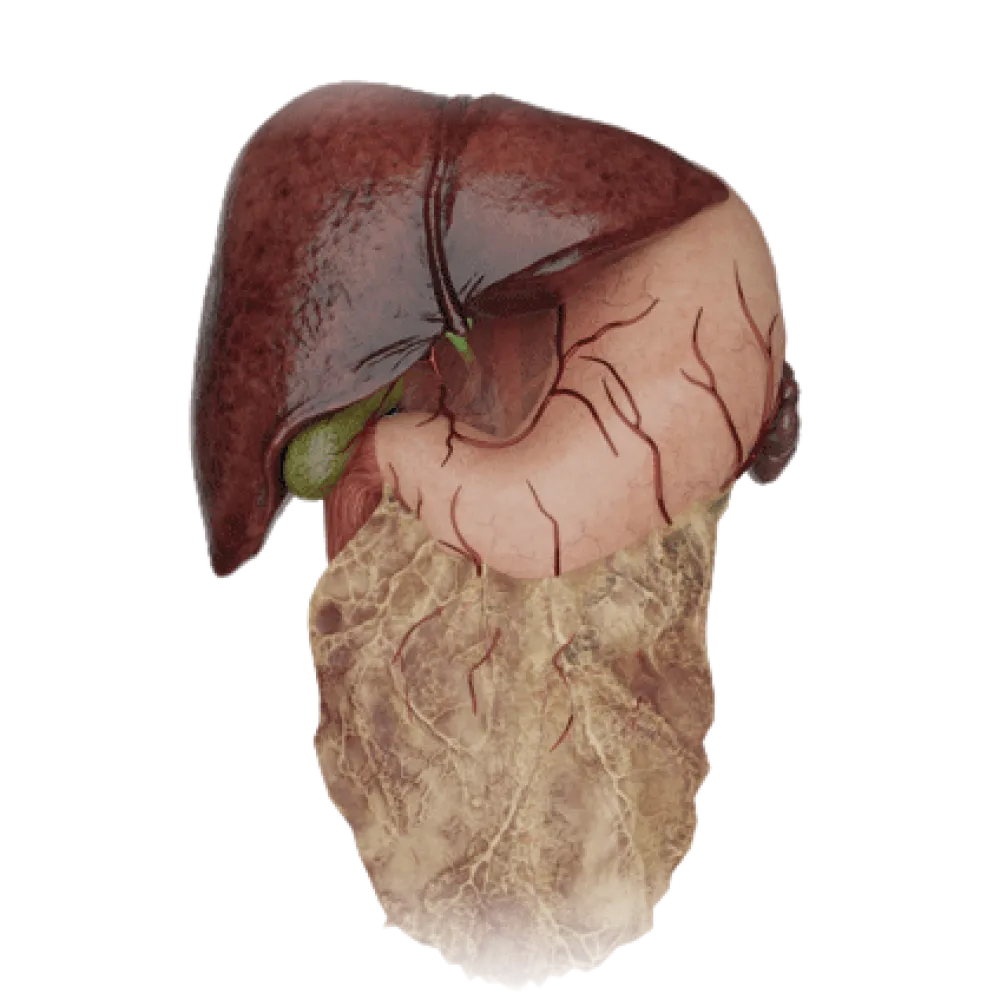
Celiac trunk
0/20

Female pelvic vessels and lymph nodes
0/20

Inferior vena cava and tributaries in females
0/20

Inferior vena cava and tributaries of the male
0/20

Portal vein and its tributaries
0/20

Vessels and lymph nodes of the male pelvis
0/20

Vessels of the abdomen and pelvis of the woman
0/20

Vessels of the male abdomen and pelvis
0/20
Anatomy test on the inferior vena cava and its tributaries in females
Evaluate the knowledge of the anatomy of the inferior vena cava in females. The test assesses its topography, tributaries (including ovarian veins), and syntopy.
1/20
bold
text
1. At what level is the formation of the inferior vena cava by merging the right and left common iliac veins?
-
Sacral promontory level
The inferior vena cava forms by the merging of the common iliac veins at the level of the intervertebral disc between L4 and L5, or the body of L5 to the right of the midline.
-
Twelfth thoracic vertebra level
The inferior vena cava forms by the merging of the common iliac veins at the level of the intervertebral disc between L4 and L5, or the body of L5 to the right of the midline.
-
At the level of the intervertebral disc between the IV and V lumbar vertebrae
The inferior vena cava forms by the merging of the common iliac veins at the level of the intervertebral disc between L4 and L5, or the body of L5 to the right of the midline.
-
Second lumbar vertebra level
The inferior vena cava forms by the merging of the common iliac veins at the level of the intervertebral disc between L4 and L5, or the body of L5 to the right of the midline.
-
I find it difficult to answer
The inferior vena cava forms by the merging of the common iliac veins at the level of the intervertebral disc between L4 and L5, or the body of L5 to the right of the midline.
2. Which structure crosses the anterior wall of the inferior vena cava in the retroperitoneal space in females?
-
Left renal artery
The right ovarian artery (a. ovarica dextra), branching from the abdominal aorta, descends and moves to the right, crossing anteriorly to the inferior vena cava.
-
Right ovarian artery
The right ovarian artery (a. ovarica dextra), branching from the abdominal aorta, descends and moves to the right, crossing anteriorly to the inferior vena cava.
-
Left ureter
The right ovarian artery (a. ovarica dextra), branching from the abdominal aorta, descends and moves to the right, crossing anteriorly to the inferior vena cava.
-
Right internal iliac artery
The right ovarian artery (a. ovarica dextra), branching from the abdominal aorta, descends and moves to the right, crossing anteriorly to the inferior vena cava.
-
I find it difficult to answer
The right ovarian artery (a. ovarica dextra), branching from the abdominal aorta, descends and moves to the right, crossing anteriorly to the inferior vena cava.
3. Where does the right ovarian vein (v. ovarica dextra) drain?
-
Directly into the inferior vena cava at an acute angle
Unlike the left ovarian vein, the right one drains directly into the anterolateral wall of the inferior vena cava.
-
Into the right renal vein at a right angle
Unlike the left ovarian vein, the right one drains directly into the anterolateral wall of the inferior vena cava.
-
Into the internal iliac vein
Unlike the left ovarian vein, the right one drains directly into the anterolateral wall of the inferior vena cava.
-
Into the right common iliac vein
Unlike the left ovarian vein, the right one drains directly into the anterolateral wall of the inferior vena cava.
-
I find it difficult to answer
Unlike the left ovarian vein, the right one drains directly into the anterolateral wall of the inferior vena cava.
4. Into which vessel does blood from the left ovary flow through the left ovarian vein (v. ovarica sinistra)?
-
Directly into the inferior vena cava
The left ovarian vein drains into the left renal vein at a right angle, which defines the features of venous outflow on the left side.
-
Into the left suprarenal vein
The left ovarian vein drains into the left renal vein at a right angle, which defines the features of venous outflow on the left side.
-
Into the internal iliac vein
The left ovarian vein drains into the left renal vein at a right angle, which defines the features of venous outflow on the left side.
-
At a right angle into the left renal vein
The left ovarian vein drains into the left renal vein at a right angle, which defines the features of venous outflow on the left side.
-
I find it difficult to answer
The left ovarian vein drains into the left renal vein at a right angle, which defines the features of venous outflow on the left side.
5. From which venous plexus do the ovarian veins (vv. ovaricae) primarily form?
-
Vesical venous plexus
The ovarian vein is formed from numerous vessels of the pampiniform plexus (plexus pampiniformis), located in the mesovarium.
-
Rectal venous plexus
The ovarian vein is formed from numerous vessels of the pampiniform plexus (plexus pampiniformis), located in the mesovarium.
-
Pampiniform plexus in the ovarian hilum area
The ovarian vein is formed from numerous vessels of the pampiniform plexus (plexus pampiniformis), located in the mesovarium.
-
Uterine venous plexus
The ovarian vein is formed from numerous vessels of the pampiniform plexus (plexus pampiniformis), located in the mesovarium.
-
I find it difficult to answer
The ovarian vein is formed from numerous vessels of the pampiniform plexus (plexus pampiniformis), located in the mesovarium.
6. How is the inferior vena cava positioned relative to the abdominal aorta in the retroperitoneal space?
-
Strictly anterior to the aorta
In the retroperitoneal space, the inferior vena cava lies on the anterior surface of the vertebral column to the right of the abdominal aorta.
-
To the right of the abdominal aorta
In the retroperitoneal space, the inferior vena cava lies on the anterior surface of the vertebral column to the right of the abdominal aorta.
-
To the left of the abdominal aorta
In the retroperitoneal space, the inferior vena cava lies on the anterior surface of the vertebral column to the right of the abdominal aorta.
-
Strictly posterior to the aorta
In the retroperitoneal space, the inferior vena cava lies on the anterior surface of the vertebral column to the right of the abdominal aorta.
-
I find it difficult to answer
In the retroperitoneal space, the inferior vena cava lies on the anterior surface of the vertebral column to the right of the abdominal aorta.
7. At what vertebral level does the inferior vena cava pass through the central tendon of the diaphragm?
-
Eighth thoracic vertebra (ThVIII)
The inferior vena cava enters the thoracic cavity through the foramen venae cavae in the central tendon of the diaphragm at the level of the eighth thoracic vertebra.
-
Tenth thoracic vertebra (ThX)
The inferior vena cava enters the thoracic cavity through the foramen venae cavae in the central tendon of the diaphragm at the level of the eighth thoracic vertebra.
-
Twelfth thoracic vertebra (ThXII)
The inferior vena cava enters the thoracic cavity through the foramen venae cavae in the central tendon of the diaphragm at the level of the eighth thoracic vertebra.
-
Second lumbar vertebra (LII)
The inferior vena cava enters the thoracic cavity through the foramen venae cavae in the central tendon of the diaphragm at the level of the eighth thoracic vertebra.
-
I find it difficult to answer
The inferior vena cava enters the thoracic cavity through the foramen venae cavae in the central tendon of the diaphragm at the level of the eighth thoracic vertebra.
8. Which part of the duodenum crosses the inferior vena cava anteriorly?
-
Ascending part
The horizontal part of the duodenum crosses the inferior vena cava and abdominal aorta anteriorly.
-
Descending part
The horizontal part of the duodenum crosses the inferior vena cava and abdominal aorta anteriorly.
-
Superior part
The horizontal part of the duodenum crosses the inferior vena cava and abdominal aorta anteriorly.
-
Horizontal (inferior) part
The horizontal part of the duodenum crosses the inferior vena cava and abdominal aorta anteriorly.
-
I find it difficult to answer
The horizontal part of the duodenum crosses the inferior vena cava and abdominal aorta anteriorly.
9. Where does the venous drainage via the right suprarenal vein (v. suprarenalis dextra) occur?
-
Into the right renal vein
The right suprarenal vein is short and drains directly into the posterolateral wall of the inferior vena cava.
-
Into the azygos vein.
The right suprarenal vein is short and drains directly into the posterolateral wall of the inferior vena cava.
-
Directly into the inferior vena cava
The right suprarenal vein is short and drains directly into the posterolateral wall of the inferior vena cava.
-
Into the inferior phrenic vein
The right suprarenal vein is short and drains directly into the posterolateral wall of the inferior vena cava.
-
I find it difficult to answer
The right suprarenal vein is short and drains directly into the posterolateral wall of the inferior vena cava.
10. How many major hepatic veins (vv. hepaticae) typically drain into the inferior vena cava in its hepatic segment?
-
One common vein
There are three main major hepatic veins (v. hepatica dextra, intermedia, sinistra) flowing into the inferior vena cava directly below the diaphragm.
-
Three (right, intermediate, left)
There are three main major hepatic veins (v. hepatica dextra, intermedia, sinistra) flowing into the inferior vena cava directly below the diaphragm.
-
Five or six
There are three main major hepatic veins (v. hepatica dextra, intermedia, sinistra) flowing into the inferior vena cava directly below the diaphragm.
-
Two (right and left)
There are three main major hepatic veins (v. hepatica dextra, intermedia, sinistra) flowing into the inferior vena cava directly below the diaphragm.
-
I find it difficult to answer
There are three main major hepatic veins (v. hepatica dextra, intermedia, sinistra) flowing into the inferior vena cava directly below the diaphragm.
11. Which liver lobe is adjacent to the groove of the inferior vena cava on the medial side?
-
Caudate lobe
The inferior vena cava settles in the sulcus venae cavae on the visceral surface of the liver between the right (laterally) and caudate (medially) lobes.
-
Quadrate lobe
The inferior vena cava settles in the sulcus venae cavae on the visceral surface of the liver between the right (laterally) and caudate (medially) lobes.
-
Right lobe
The inferior vena cava settles in the sulcus venae cavae on the visceral surface of the liver between the right (laterally) and caudate (medially) lobes.
-
Left lobe
The inferior vena cava settles in the sulcus venae cavae on the visceral surface of the liver between the right (laterally) and caudate (medially) lobes.
-
I find it difficult to answer
The inferior vena cava settles in the sulcus venae cavae on the visceral surface of the liver between the right (laterally) and caudate (medially) lobes.
12. Which of the following veins belong to the parietal (parietal) tributaries of the inferior vena cava?
-
Hepatic veins
Lumbar veins (vv. lumbales) collect blood from the abdominal walls and belong to parietal tributaries.
-
Renal veins
Lumbar veins (vv. lumbales) collect blood from the abdominal walls and belong to parietal tributaries.
-
Ovarian veins
Lumbar veins (vv. lumbales) collect blood from the abdominal walls and belong to parietal tributaries.
-
Lumbar veins
Lumbar veins (vv. lumbales) collect blood from the abdominal walls and belong to parietal tributaries.
-
I find it difficult to answer
Lumbar veins (vv. lumbales) collect blood from the abdominal walls and belong to parietal tributaries.
13. Which veins form the cavocaval anastomosis, linking lumbar veins with the azygos and hemiazygos systems?
-
Superior epigastric veins
The ascending lumbar veins connect the lumbar veins (from the inferior vena cava system) with the azygos and hemiazygos veins (superior vena cava system).
-
Hepatic veins
The ascending lumbar veins connect the lumbar veins (from the inferior vena cava system) with the azygos and hemiazygos veins (superior vena cava system).
-
Ascending lumbar veins (vv. lumbales ascendentes)
The ascending lumbar veins connect the lumbar veins (from the inferior vena cava system) with the azygos and hemiazygos veins (superior vena cava system).
-
Internal thoracic veins
The ascending lumbar veins connect the lumbar veins (from the inferior vena cava system) with the azygos and hemiazygos veins (superior vena cava system).
-
I find it difficult to answer
The ascending lumbar veins connect the lumbar veins (from the inferior vena cava system) with the azygos and hemiazygos veins (superior vena cava system).
14. How does the right renal artery (a. renalis dextra) pass in relation to the inferior vena cava?
-
Crosses the vein anteriorly
The right renal artery is longer than the left and passes retrocavally (behind the inferior vena cava).
-
Passes behind the inferior vena cava
The right renal artery is longer than the left and passes retrocavally (behind the inferior vena cava).
-
Perforates the vein wall
The right renal artery is longer than the left and passes retrocavally (behind the inferior vena cava).
-
Goes strictly laterally, not crossing the vein
The right renal artery is longer than the left and passes retrocavally (behind the inferior vena cava).
-
I find it difficult to answer
The right renal artery is longer than the left and passes retrocavally (behind the inferior vena cava).
15. What structure partially covers the opening of the inferior vena cava from the right atrium side?
-
Inferior vena cava valve (Eustachian valve)
The ostium of the inferior vena cava in the right atrium is partially restricted by the inferior vena cava valve (valvula venae cavae inferioris).
-
Thebesian valve
The ostium of the inferior vena cava in the right atrium is partially restricted by the inferior vena cava valve (valvula venae cavae inferioris).
-
Bauhin's valve
The ostium of the inferior vena cava in the right atrium is partially restricted by the inferior vena cava valve (valvula venae cavae inferioris).
-
Aranzio's duct
The ostium of the inferior vena cava in the right atrium is partially restricted by the inferior vena cava valve (valvula venae cavae inferioris).
-
I find it difficult to answer
The ostium of the inferior vena cava in the right atrium is partially restricted by the inferior vena cava valve (valvula venae cavae inferioris).
16. In which topographic entity does the left renal vein, into which the left ovarian vein drains, pass?
-
Behind the abdominal aorta
The left renal vein passes in the aortomesenteric clamp (between the superior mesenteric artery anteriorly and the aorta posteriorly).
-
Anterior to the superior mesenteric artery
The left renal vein passes in the aortomesenteric clamp (between the superior mesenteric artery anteriorly and the aorta posteriorly).
-
In the hepatoduodenal ligament
The left renal vein passes in the aortomesenteric clamp (between the superior mesenteric artery anteriorly and the aorta posteriorly).
-
In the aortomesenteric clamp
The left renal vein passes in the aortomesenteric clamp (between the superior mesenteric artery anteriorly and the aorta posteriorly).
-
I find it difficult to answer
The left renal vein passes in the aortomesenteric clamp (between the superior mesenteric artery anteriorly and the aorta posteriorly).
17. Which venous plexus of the female pelvis forms direct anastomoses between the portal vein system and the inferior vena cava?
-
Vesical venous plexus
In the rectal venous plexus, a portocaval anastomosis forms between the superior rectal (portal vein) and middle/inferior rectal (inferior vena cava) veins.
-
Vaginal venous plexus
In the rectal venous plexus, a portocaval anastomosis forms between the superior rectal (portal vein) and middle/inferior rectal (inferior vena cava) veins.
-
Rectal venous plexus
In the rectal venous plexus, a portocaval anastomosis forms between the superior rectal (portal vein) and middle/inferior rectal (inferior vena cava) veins.
-
Uterine venous plexus
In the rectal venous plexus, a portocaval anastomosis forms between the superior rectal (portal vein) and middle/inferior rectal (inferior vena cava) veins.
-
I find it difficult to answer
In the rectal venous plexus, a portocaval anastomosis forms between the superior rectal (portal vein) and middle/inferior rectal (inferior vena cava) veins.
18. Which muscle is directly adjacent to the inferior vena cava posteriorly on the posterior abdominal wall?
-
Right quadratus lumborum muscle
In the retroperitoneal space, the inferior vena cava lies on the medial edge of the right psoas major muscle.
-
Right psoas major muscle (m. psoas major dexter)
In the retroperitoneal space, the inferior vena cava lies on the medial edge of the right psoas major muscle.
-
Right iliacus muscle
In the retroperitoneal space, the inferior vena cava lies on the medial edge of the right psoas major muscle.
-
Erector spinae
In the retroperitoneal space, the inferior vena cava lies on the medial edge of the right psoas major muscle.
-
I find it difficult to answer
In the retroperitoneal space, the inferior vena cava lies on the medial edge of the right psoas major muscle.
19. Where does the blood most commonly drain from the left inferior phrenic vein (v. phrenica inferior sinistra)?
-
Into the left renal or left suprarenal vein
The left inferior phrenic vein often drains into the left suprarenal or left renal vein.
-
Into the left ovarian vein
The left inferior phrenic vein often drains into the left suprarenal or left renal vein.
-
Into the hemiazygos vein
The left inferior phrenic vein often drains into the left suprarenal or left renal vein.
-
Directly into the inferior vena cava
The left inferior phrenic vein often drains into the left suprarenal or left renal vein.
-
I find it difficult to answer
The left inferior phrenic vein often drains into the left suprarenal or left renal vein.
20. What anatomical feature is characteristic of the right and left common iliac veins in the formation of the inferior vena cava?
-
Both veins have the same length and course
Due to the position of the inferior vena cava to the right of the midline, the right common iliac vein is shorter and courses more vertically than the left.
-
The right common iliac vein is longer and lies more horizontally than the left
Due to the position of the inferior vena cava to the right of the midline, the right common iliac vein is shorter and courses more vertically than the left.
-
The left common iliac vein is absent under normal conditions
Due to the position of the inferior vena cava to the right of the midline, the right common iliac vein is shorter and courses more vertically than the left.
-
The right common iliac vein is shorter than the left and has a more vertical course
Due to the position of the inferior vena cava to the right of the midline, the right common iliac vein is shorter and courses more vertically than the left.
-
I find it difficult to answer
Due to the position of the inferior vena cava to the right of the midline, the right common iliac vein is shorter and courses more vertically than the left.
Retake this quiz?
Your current progress will be reset.