


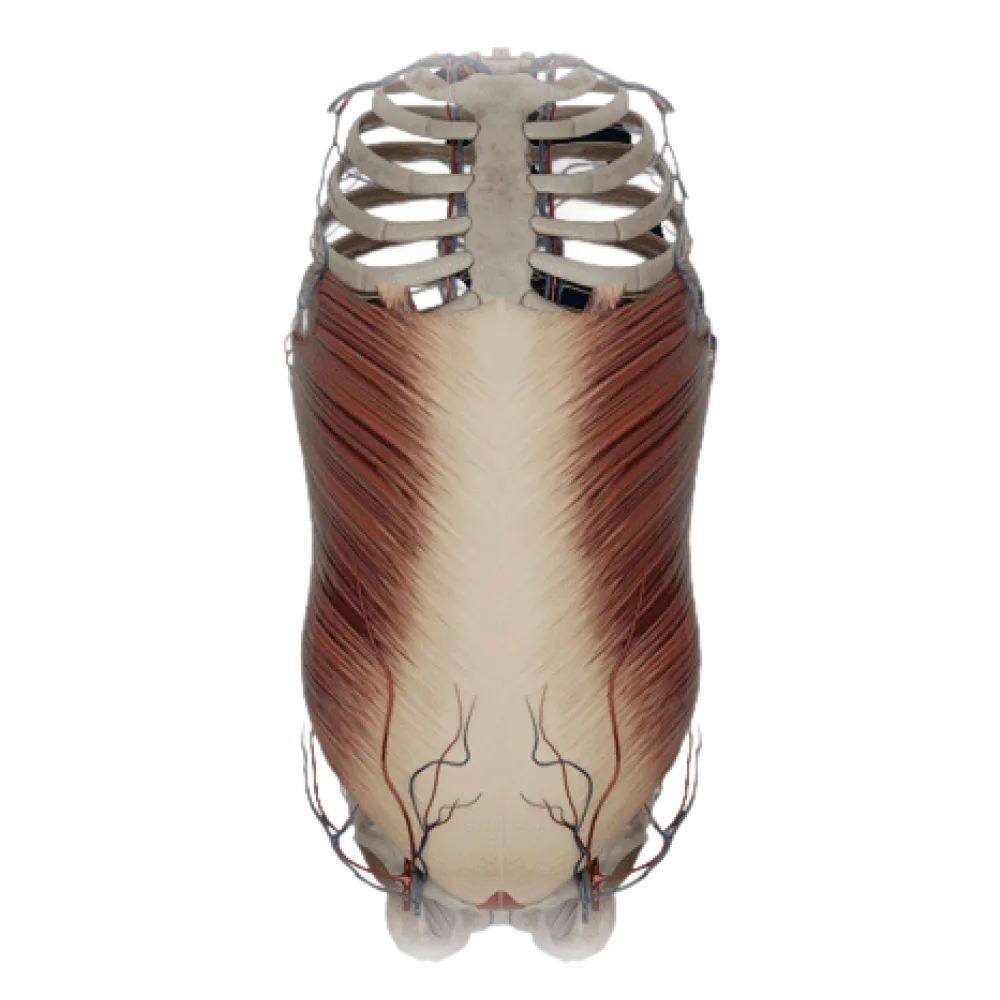

Test on the anatomy of male pelvic floor muscles and fasciae
Evaluate knowledge of the male pelvic floor anatomy. The test covers the topography, fasciae, muscles, their innervation, and blood supply.
1/20
bold
text
1. Which muscle is the primary component of the male pelvic diaphragm?
-
Levator ani muscle (m. levator ani)
The pelvic diaphragm is formed by the levator ani muscle and the coccygeus muscle along with their covering fasciae.
-
External anal sphincter (m. sphincter ani externus)
The pelvic diaphragm is formed by the levator ani muscle and the coccygeus muscle along with their covering fasciae.
-
Deep transverse perineal muscle
The pelvic diaphragm is formed by the levator ani muscle and the coccygeus muscle along with their covering fasciae.
-
Ischiocavernosus muscle
The pelvic diaphragm is formed by the levator ani muscle and the coccygeus muscle along with their covering fasciae.
-
I find it difficult to answer
The pelvic diaphragm is formed by the levator ani muscle and the coccygeus muscle along with their covering fasciae.
2. From which plexus does the levator ani muscle receive innervation?
-
Lumbar plexus
The levator ani muscle receives motor innervation directly from muscle branches of the sacral plexus (S3-S4).
-
Inferior hypogastric plexus
The levator ani muscle receives motor innervation directly from muscle branches of the sacral plexus (S3-S4).
-
Sacral plexus (branches S3-S4)
The levator ani muscle receives motor innervation directly from muscle branches of the sacral plexus (S3-S4).
-
Coccygeal plexus
The levator ani muscle receives motor innervation directly from muscle branches of the sacral plexus (S3-S4).
-
I find it difficult to answer
The levator ani muscle receives motor innervation directly from muscle branches of the sacral plexus (S3-S4).
3. Which of the listed muscles is NOT a structural part of the levator ani muscle?
-
Pubococcygeus muscle (m. pubococcygeus)
The coccygeus muscle is an independent muscle of the pelvic diaphragm and is not part of the levator ani. levator ani, which consists of the iliococcygeus, pubococcygeus, and puborectalis muscles.
-
Coccygeus muscle (m. coccygeus)
The coccygeus muscle is an independent muscle of the pelvic diaphragm and is not part of the levator ani. levator ani, which consists of the iliococcygeus, pubococcygeus, and puborectalis muscles.
-
Iliococcygeus muscle (m. iliococcygeus)
The coccygeus muscle is an independent muscle of the pelvic diaphragm and is not part of the levator ani. levator ani, which consists of the iliococcygeus, pubococcygeus, and puborectalis muscles.
-
Puborectalis muscle (m. puborectalis)
The coccygeus muscle is an independent muscle of the pelvic diaphragm and is not part of the levator ani. levator ani, which consists of the iliococcygeus, pubococcygeus, and puborectalis muscles.
-
I find it difficult to answer
The coccygeus muscle is an independent muscle of the pelvic diaphragm and is not part of the levator ani. levator ani, which consists of the iliococcygeus, pubococcygeus, and puborectalis muscles.
4. Which muscle in men is part of the deep perineal space?
-
Bulbospongiosus muscle
The deep transverse perineal muscle is located in the deep perineal space (urogenital diaphragm).
-
Ischiocavernosus muscle
The deep transverse perineal muscle is located in the deep perineal space (urogenital diaphragm).
-
Superficial transverse perineal muscle
The deep transverse perineal muscle is located in the deep perineal space (urogenital diaphragm).
-
Deep transverse perineal muscle (m. transversus perinei profundus)
The deep transverse perineal muscle is located in the deep perineal space (urogenital diaphragm).
-
I find it difficult to answer
The deep transverse perineal muscle is located in the deep perineal space (urogenital diaphragm).
5. Between which fasciae is the deep perineal space (spatium perinei profundum) located in men?
-
Superior and inferior fasciae of the urogenital diaphragm (perineal membrane)
The deep perineal space is bounded by the superior and inferior fasciae of the urogenital diaphragm.
-
Superior and inferior fasciae of the pelvic diaphragm
The deep perineal space is bounded by the superior and inferior fasciae of the urogenital diaphragm.
-
Superficial perineal fascia and inferior fascia of the urogenital diaphragm
The deep perineal space is bounded by the superior and inferior fasciae of the urogenital diaphragm.
-
Peritoneum and upper fascia of the pelvic diaphragm
The deep perineal space is bounded by the superior and inferior fasciae of the urogenital diaphragm.
-
I find it difficult to answer
The deep perineal space is bounded by the superior and inferior fasciae of the urogenital diaphragm.
6. Which muscle is located in the superficial perineal space (spatium perinei superficiale) in men?
-
Sphincter urethrae muscle (m. sphincter urethrae)
The bulbospongiosus muscle is located in the superficial perineal space along with the ischiocavernosus and superficial transverse muscles.
-
Coccygeus muscle (m. coccygeus)
The bulbospongiosus muscle is located in the superficial perineal space along with the ischiocavernosus and superficial transverse muscles.
-
Bulbospongiosus muscle (m. bulbospongiosus)
The bulbospongiosus muscle is located in the superficial perineal space along with the ischiocavernosus and superficial transverse muscles.
-
Deep transverse perineal muscle
The bulbospongiosus muscle is located in the superficial perineal space along with the ischiocavernosus and superficial transverse muscles.
-
I find it difficult to answer
The bulbospongiosus muscle is located in the superficial perineal space along with the ischiocavernosus and superficial transverse muscles.
7. What function does the bulbospongiosus muscle (m. bulbospongiosus) perform in men?
-
Depresses the pelvic floor
Upon contraction, the bulbospongiosus muscle compresses the bulb of the penis and the corpus spongiosum, expelling the contents of the urethra (urine or semen).
-
Compresses the bulb of the penis and aids in expelling sperm and urine
Upon contraction, the bulbospongiosus muscle compresses the bulb of the penis and the corpus spongiosum, expelling the contents of the urethra (urine or semen).
-
Assists in voluntary fecal retention
Upon contraction, the bulbospongiosus muscle compresses the bulb of the penis and the corpus spongiosum, expelling the contents of the urethra (urine or semen).
-
Lifts the prostate gland
Upon contraction, the bulbospongiosus muscle compresses the bulb of the penis and the corpus spongiosum, expelling the contents of the urethra (urine or semen).
-
I find it difficult to answer
Upon contraction, the bulbospongiosus muscle compresses the bulb of the penis and the corpus spongiosum, expelling the contents of the urethra (urine or semen).
8. What forms the medial wall of the ischioanal fossa?
-
Internal obturator muscle and its fascia.
The medial wall of the ischioanal fossa is formed by the levator ani muscle and the external anal sphincter, covered by the inferior fascia of the pelvic diaphragm.
-
Tuberosity of the ischium
The medial wall of the ischioanal fossa is formed by the levator ani muscle and the external anal sphincter, covered by the inferior fascia of the pelvic diaphragm.
-
Superficial transverse perineal muscle
The medial wall of the ischioanal fossa is formed by the levator ani muscle and the external anal sphincter, covered by the inferior fascia of the pelvic diaphragm.
-
Lower surface of the levator ani muscle and the external anal sphincter
The medial wall of the ischioanal fossa is formed by the levator ani muscle and the external anal sphincter, covered by the inferior fascia of the pelvic diaphragm.
-
I find it difficult to answer
The medial wall of the ischioanal fossa is formed by the levator ani muscle and the external anal sphincter, covered by the inferior fascia of the pelvic diaphragm.
9. In the splitting of which fascia is the pudendal canal (Alcock's canal) formed?
-
Fascia of the obturator internus muscle (fascia obturatoria)
The pudendal canal is located on the lateral wall of the ischioanal fossa and is formed by the splitting of the fascia of the internal obturator muscle
-
Fascia of the levator ani muscle
The pudendal canal is located on the lateral wall of the ischioanal fossa and is formed by the splitting of the fascia of the internal obturator muscle
-
Lower fascia of the pelvic diaphragm
The pudendal canal is located on the lateral wall of the ischioanal fossa and is formed by the splitting of the fascia of the internal obturator muscle
-
Superficial perineal fascia (Colles' fascia)
The pudendal canal is located on the lateral wall of the ischioanal fossa and is formed by the splitting of the fascia of the internal obturator muscle
-
I find it difficult to answer
The pudendal canal is located on the lateral wall of the ischioanal fossa and is formed by the splitting of the fascia of the internal obturator muscle
10. What structure forms the tendinous center of the perineum (centrum tendineum perinei)?
-
Coccygeus muscle attachment to the sacrum
The tendinous center of the perineum is a dense fibrous structure along the median line, serving as an attachment point for many pelvic floor and perineal muscles.
-
Thickening of the fascia of the internal obturator muscle
The tendinous center of the perineum is a dense fibrous structure along the median line, serving as an attachment point for many pelvic floor and perineal muscles.
-
Fibromuscular node between the anal canal and the bulb of the penis where perineal muscles converge
The tendinous center of the perineum is a dense fibrous structure along the median line, serving as an attachment point for many pelvic floor and perineal muscles.
-
Ligament connecting the ischial tuberosities
The tendinous center of the perineum is a dense fibrous structure along the median line, serving as an attachment point for many pelvic floor and perineal muscles.
-
I find it difficult to answer
The tendinous center of the perineum is a dense fibrous structure along the median line, serving as an attachment point for many pelvic floor and perineal muscles.
11. What nerve innervates the superficial perineal muscles (bulbospongiosus, ischiocavernosus)?
-
Genitofemoral nerve
All perineal muscles (superficial and deep) are innervated by branches of the pudendal nerve (n. pudendus).
-
Pudendal nerve (n. pudendus)
All perineal muscles (superficial and deep) are innervated by branches of the pudendal nerve (n. pudendus).
-
Ilioinguinal nerve
All perineal muscles (superficial and deep) are innervated by branches of the pudendal nerve (n. pudendus).
-
Obturator nerve
All perineal muscles (superficial and deep) are innervated by branches of the pudendal nerve (n. pudendus).
-
I find it difficult to answer
All perineal muscles (superficial and deep) are innervated by branches of the pudendal nerve (n. pudendus).
12. On which anatomical structure does the ischiocavernosus muscle (m. ischiocavernosus) primarily act when contracting?
-
On the bulb of the penis
The ischiocavernosus muscle covers the legs of the penis; upon contraction, it compresses the veins draining blood from the corpora cavernosa, aiding in erection.
-
On the membranous part of the urethra
The ischiocavernosus muscle covers the legs of the penis; upon contraction, it compresses the veins draining blood from the corpora cavernosa, aiding in erection.
-
On the prostate gland
The ischiocavernosus muscle covers the legs of the penis; upon contraction, it compresses the veins draining blood from the corpora cavernosa, aiding in erection.
-
On the corpora cavernosa, assisting in maintaining erection
The ischiocavernosus muscle covers the legs of the penis; upon contraction, it compresses the veins draining blood from the corpora cavernosa, aiding in erection.
-
I find it difficult to answer
The ischiocavernosus muscle covers the legs of the penis; upon contraction, it compresses the veins draining blood from the corpora cavernosa, aiding in erection.
13. Between which structures does the deep dorsal vein of the penis (v. dorsalis profunda penis) pass as it enters the pelvic cavity?
-
Between the arcuate ligament of the pubis and the transverse perineal ligament
The deep dorsal vein of the penis passes into the lesser pelvis below the pubic symphysis (between the lig. arcuatum pubis and lig. transversum perinei).
-
Through the inguinal canal
The deep dorsal vein of the penis passes into the lesser pelvis below the pubic symphysis (between the lig. arcuatum pubis and lig. transversum perinei).
-
Through the ischioanal fossa
The deep dorsal vein of the penis passes into the lesser pelvis below the pubic symphysis (between the lig. arcuatum pubis and lig. transversum perinei).
-
Through the obturator canal
The deep dorsal vein of the penis passes into the lesser pelvis below the pubic symphysis (between the lig. arcuatum pubis and lig. transversum perinei).
-
I find it difficult to answer
The deep dorsal vein of the penis passes into the lesser pelvis below the pubic symphysis (between the lig. arcuatum pubis and lig. transversum perinei).
14. From which artery does the internal pudendal artery (a. pudenda interna), providing blood supply to the perineum, branch off?
-
External iliac artery
The internal pudendal artery (a. pudenda interna) is a visceral branch of the internal iliac artery and the primary source of blood supply to the perineum.
-
The femoral artery
The internal pudendal artery (a. pudenda interna) is a visceral branch of the internal iliac artery and the primary source of blood supply to the perineum.
-
Internal iliac artery
The internal pudendal artery (a. pudenda interna) is a visceral branch of the internal iliac artery and the primary source of blood supply to the perineum.
-
Inferior mesenteric artery
The internal pudendal artery (a. pudenda interna) is a visceral branch of the internal iliac artery and the primary source of blood supply to the perineum.
-
I find it difficult to answer
The internal pudendal artery (a. pudenda interna) is a visceral branch of the internal iliac artery and the primary source of blood supply to the perineum.
15. What is the name of the membranous layer of the superficial perineal fascia that continues onto the scrotum and penis (Colles' fascia)?
-
Fascia diaphragmatis pelvis superior
The membranous layer of the superficial perineal fascia is called Colles' fascia and anteriorly continues into the dartos fascia of the scrotum
-
Fascia perinei superficialis (stratum membranosum)
The membranous layer of the superficial perineal fascia is called Colles' fascia and anteriorly continues into the dartos fascia of the scrotum
-
Fascia obturatoria
The membranous layer of the superficial perineal fascia is called Colles' fascia and anteriorly continues into the dartos fascia of the scrotum
-
Fascia prostatae
The membranous layer of the superficial perineal fascia is called Colles' fascia and anteriorly continues into the dartos fascia of the scrotum
-
I find it difficult to answer
The membranous layer of the superficial perineal fascia is called Colles' fascia and anteriorly continues into the dartos fascia of the scrotum
16. Where is the external urethral sphincter (m. sphincter urethrae externus) located in men?
-
In the wall of the prostatic urethra
The external (voluntary) urethral sphincter is located in the deep perineal space, surrounding the membranous part of the urethra.
-
Around the spongy part of the urethra
The external (voluntary) urethral sphincter is located in the deep perineal space, surrounding the membranous part of the urethra.
-
Around the membranous part of the urethra in the deep perineal space
The external (voluntary) urethral sphincter is located in the deep perineal space, surrounding the membranous part of the urethra.
-
In the bulb of the penis.
The external (voluntary) urethral sphincter is located in the deep perineal space, surrounding the membranous part of the urethra.
-
I find it difficult to answer
The external (voluntary) urethral sphincter is located in the deep perineal space, surrounding the membranous part of the urethra.
17. What is the tendinous arch of the levator ani muscle (arcus tendineus m. levatoris ani)?
-
Thickening of the obturator fascia from which part of the levator ani muscle arises
The tendinous arch of the levator ani muscle (arcus tendineus m. levatoris ani) is a linear thickening of the fascia of the internal obturator muscle.
-
Ligament between the ischial spine and the sacrum
The tendinous arch of the levator ani muscle (arcus tendineus m. levatoris ani) is a linear thickening of the fascia of the internal obturator muscle.
-
Thickening of the superficial fascia of the perineum
The tendinous arch of the levator ani muscle (arcus tendineus m. levatoris ani) is a linear thickening of the fascia of the internal obturator muscle.
-
Fibrous ring around the anal canal
The tendinous arch of the levator ani muscle (arcus tendineus m. levatoris ani) is a linear thickening of the fascia of the internal obturator muscle.
-
I find it difficult to answer
The tendinous arch of the levator ani muscle (arcus tendineus m. levatoris ani) is a linear thickening of the fascia of the internal obturator muscle.
18. What is the name of the connective tissue space located between the pubic symphysis anteriorly and the prostate and urinary bladder posteriorly?
-
Ischioanal fossa
The retropubic (prevesical) space of Retzius is filled with adipose tissue and is located between the pubic symphysis and the anterior wall of the urinary bladder/prostate.
-
Pudendal canal
The retropubic (prevesical) space of Retzius is filled with adipose tissue and is located between the pubic symphysis and the anterior wall of the urinary bladder/prostate.
-
Retrorectal space
The retropubic (prevesical) space of Retzius is filled with adipose tissue and is located between the pubic symphysis and the anterior wall of the urinary bladder/prostate.
-
Retropubic space (Retzius' space)
The retropubic (prevesical) space of Retzius is filled with adipose tissue and is located between the pubic symphysis and the anterior wall of the urinary bladder/prostate.
-
I find it difficult to answer
The retropubic (prevesical) space of Retzius is filled with adipose tissue and is located between the pubic symphysis and the anterior wall of the urinary bladder/prostate.
19. Which nerves provide voluntary motor innervation to the external anal sphincter (m. sphincter ani externus)?
-
Pelvic splanchnic nerves
The external anal sphincter receives somatic (voluntary) innervation from the inferior rectal nerves originating from the pudendal nerve (n. pudendus).
-
Inferior rectal nerves (branches of the pudendal nerve)
The external anal sphincter receives somatic (voluntary) innervation from the inferior rectal nerves originating from the pudendal nerve (n. pudendus).
-
Ilioinguinal nerve
The external anal sphincter receives somatic (voluntary) innervation from the inferior rectal nerves originating from the pudendal nerve (n. pudendus).
-
Superior hypogastric plexus
The external anal sphincter receives somatic (voluntary) innervation from the inferior rectal nerves originating from the pudendal nerve (n. pudendus).
-
I find it difficult to answer
The external anal sphincter receives somatic (voluntary) innervation from the inferior rectal nerves originating from the pudendal nerve (n. pudendus).
20. Which fascia (Denonvilliers' fascia) separates the prostate and seminal vesicles from the rectum in men?
-
Septum rectovesical (rectovesical septum)
The rectovesical septum (Denonvilliers’ fascia) is a firm frontal fascia plate that separates the rectum from the prostate, seminal vesicles, and urinary bladder.
-
Cremasteric fascia
The rectovesical septum (Denonvilliers’ fascia) is a firm frontal fascia plate that separates the rectum from the prostate, seminal vesicles, and urinary bladder.
-
Fascia lata
The rectovesical septum (Denonvilliers’ fascia) is a firm frontal fascia plate that separates the rectum from the prostate, seminal vesicles, and urinary bladder.
-
Superficial fascia of the perineum
The rectovesical septum (Denonvilliers’ fascia) is a firm frontal fascia plate that separates the rectum from the prostate, seminal vesicles, and urinary bladder.
-
I find it difficult to answer
The rectovesical septum (Denonvilliers’ fascia) is a firm frontal fascia plate that separates the rectum from the prostate, seminal vesicles, and urinary bladder.
Retake this quiz?
Your current progress will be reset.